Curated recipes from 193 countries  •  New seasonal Mediterranean issue out now

Overview

Surinamese Bami

Bami, Bami Goreng Surinaams, Surinamese Fried Noodles

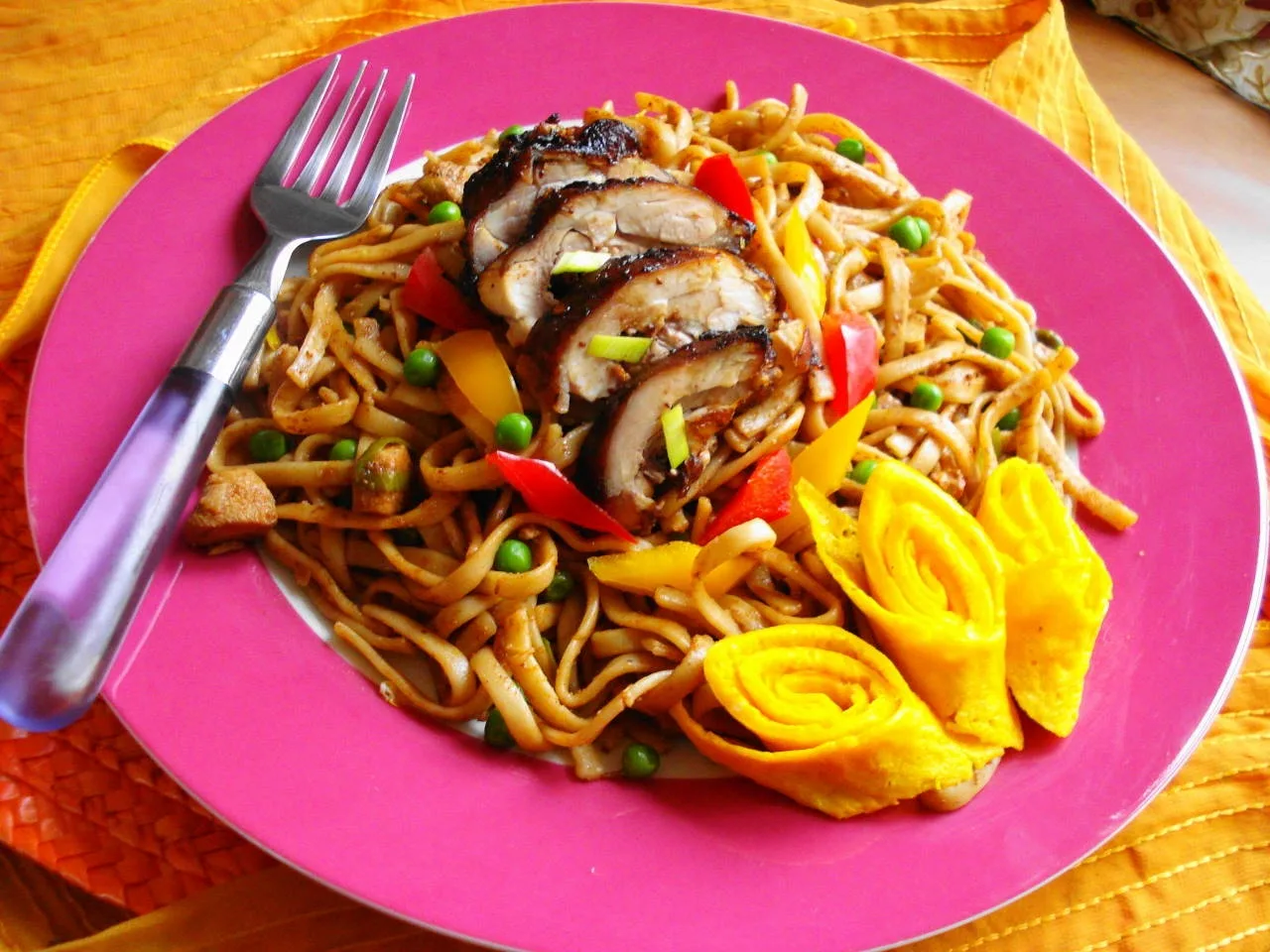
This surinamese bami recipe turns wheat noodles, chicken and sweet ketjap manis into Suriname's Javanese-style fried noodles, tossed in a hot wok with peppers, peas and fresh herbs until every strand is glossy and dark. It is served with thin omelette strips, just like the plate in the photo, and lands on the table in about 45 minutes. One serving is about 520 g.

Bami came to Suriname with Javanese workers who began arriving from the Dutch East Indies in 1890, bringing their fried-noodle dishes with them. In Suriname the dish kept its Javanese base — wheat noodles fried with sweet ketjap manis — and took on local habits: fresh Surinamese herbs such as celery leaves, and serving with omelette strips and atjar, the pickled vegetables that cut the sweetness. It is now everyday food in Suriname, sold at warungs and cooked at home for family dinners.

Pairs well with: Thin omelette strips and atjar (pickled vegetables) on the side, with a fried egg if you like.

Provenance

Suriname flag Suriname

Surinamese Heritage

Latin America & Caribbean

Time Dedication

45m

15m prep • 30m cook

Batch Yield

4 Servings

729 kcal per serving

1 serving ≈ 520 g

Technical Skill

Intermediate

Medium (Stir-Fried Noodles)

Meal Timing & Digestive Fit

Breakfast

Not Advised

Lunch

Hearty Midday Main

Dinner

Ideal Hearty Main

Snack & Tea

Inappropriate

Pasta & Noodles Occasions: Family dinners, weeknight dinners, casual gatherings, lunchboxes Cost: Low — about $3–4 per serving at home
Surinamese bami on a pink plate — dark stir-fried wheat noodles with sliced chicken, red and yellow peppers, green peas and rolled omelette strips

Surinamese Heritage

Photo: Laig, CC BY-SA 3.0, via Wikimedia Commons

The Heritage Formulary

Measured Ingredients

Estimated cost: Low — about $3–4 per serving at home (USD)

Made the Surinamese way: wheat noodles tossed in a hot wok with ketjap manis until dark and glossy, finished with omelette strips and atjar.

Execution Methodology & Culinary Technique

Step-by-Step Cooking Guide

Active 45m
P

Prep Stage: Noodles, Chicken & Vegetables

15 Mins • Slicing & Measuring

Slice the chicken into thin strips and season with the salt and white pepper. Slice the onion and pepper, cut the carrot into matchsticks, chop the garlic and ginger, and slice the spring onions, keeping the whites and greens apart. Mix the ketjap manis and soy sauce in a small bowl, and beat the eggs with a pinch of salt.

Maestro Tip: Have everything ready before the wok gets hot — stir-frying moves fast and there is no time to chop once you start.

  1. 1

    Cook the Noodles

    8 Mins Boiling water, 100°C (212°F)

    Boil the dried wheat noodles in a large pot of water for about 6 minutes until just tender, a little firmer than you would eat them. Drain, rinse briefly under cold water to stop the cooking, and toss with a teaspoon of the oil so the strands do not stick.

    Undercook the noodles slightly — they finish cooking in the wok and go soft if they start out fully cooked.

    Done when: Noodles that are tender but still springy, with no hard white centre.

  2. 2

    Fry the Omelette & Slice It

    4 Mins Medium heat, ~175°C (350°F)

    Heat a little oil in a small pan, pour in the beaten eggs and cook for about 2 minutes until just set, then flip or fold and cook 1 minute more. Slide the omelette onto a board, roll it up and slice into thin strips.

    Cook the omelette thin and pale — it is a garnish, not a thick omelette, and brown edges look wrong against the dark noodles.

    Done when: A thin, pale-yellow omelette that slices into neat ribbons.

  3. 3

    Brown the Chicken

    7 Mins Medium-high heat, ~190°C (375°F); chicken to 74°C (165°F)

    Heat the remaining oil in a large wok or wide pan until it shimmers. Add the chicken strips in one layer and fry for about 5 minutes, turning once, until browned at the edges and cooked right through to 74°C (165°F) in the thickest piece. Lift the chicken out and set it aside.

    Do not crowd the pan — chicken that steams instead of frying stays pale and the wok loses its heat.

    Done when: Browned strips with no pink inside and clear juices.

  4. 4

    Soften the Vegetables

    4 Mins Medium heat, ~175°C (350°F)

    In the same wok, fry the onion, spring onion whites, garlic and ginger for 2 minutes until fragrant. Add the pepper strips, carrot matchsticks and peas and fry for 2 minutes more, keeping them crisp.

    Keep the vegetables moving and the heat up — they should stay bright and crisp, not stew soft.

    Done when: Peppers still bright, carrots just bendable, peas hot through.

  5. 5

    Toss the Noodles in Ketjap

    5 Mins High heat, ~200°C (400°F)

    Return the chicken to the wok, add the drained noodles, pour over the ketjap manis and soy sauce, and add the sambal if you are using it. Toss everything constantly for about 4 minutes until the noodles are evenly dark, glossy and steaming hot.

    Lift and turn the noodles from underneath rather than stirring in circles — that coats every strand without breaking them.

    Done when: Noodles evenly dark brown and glossy, with no pale patches and no sauce pooling at the bottom.

  6. 6

    Rest & Serve

    2 Mins Resting, ~60°C (140°F) or above

    Take the wok off the heat, fold in the spring onion greens and celery leaves, and let the bami rest for 1 minute. Divide between four plates and lay the omelette strips over the top.

    The short rest lets the sauce settle into the noodles instead of sliding to the bottom of the plate.

    Done when: A steaming mound of dark noodles topped with golden omelette ribbons.

Finishing Touches & Plating

Scatter the celery leaves and spring onion greens over the hot noodles, top each plate with omelette strips, and serve at once with atjar on the side.

Nutritional Physiology & Benefits

Nutrition

Energy

729

kcal / serving

Protein

48g

Complete AA

Carbs

98g

Complex

Fats

15g

Healthy

Per serving (4 servings · 1 serving ≈ 520 g)
Energy729 kcal
Protein48 g
Carbohydrates98 g
Fat15 g
Fibre7.3 g
Sugar16.1 g
Sodium1335 mg
Per 100g
Energy140 kcal
Protein9.3 g
Carbohydrates18.8 g
Fat2.8 g
Fibre1.4 g
Sugar3.1 g
Sodium257 mg

Nutrition values are estimated — calculated from USDA FoodData Central values for the listed ingredients.

Vitamins & minerals: The peppers and peas add vitamin C and vitamin A, the chicken and egg supply vitamin B12 and B vitamins, and the vegetables add potassium and folate.

High in Protein

One serving carries about 48.4 g of protein from the chicken and egg, which makes this a filling dinner that keeps you full.

Colourful Vegetables

Peppers, carrot, peas and spring onions add fibre, vitamin C and vitamin A, and give the plate colour and crunch.

B Vitamins & Iron

The chicken and egg supply vitamin B12 and B vitamins, and the vegetables add folate and potassium.

Food Pairings

What to Eat With

To optimize nutrient absorption and elevate the sensory depth, pair with these authentic accompaniments:

Vegetables

Atjar (Pickled Vegetables)

Sharp pickled cucumber, carrot and onion cut through the sweet, dark ketjap sauce and refresh the palate between bites.

Sides

Omelette Strips

The soft, pale egg ribbons are the classic Surinamese topping — they add mild protein and a gentle contrast to the dark, savoury noodles.

Fried Egg on Top

A fried egg with a runny yolk turns the bami into a richer meal, and the yolk coats the noodles like a sauce.

Drinks

Iced Tea with Lime

Cold, lightly sweet tea with lime cools the palate after the sweet soy and chilli heat, and suits a warm-climate meal.

Complete menu

Serve the bami with atjar and a fried egg, follow with fresh fruit, and finish with iced tea with lime.

Digestive Guardrails

What NOT to Combine

To prevent digestive distress, sluggishness, or palate clash, avoid pairing the dish with these elements:

Very Salty Sides

The ketjap manis and soy sauce already make this dish salty, so salty snacks or heavily salted sauces on the side push one meal too far. This is general food information, not medical advice.

Overcooking the Noodles

Noodles boiled soft before they reach the wok turn to mush when tossed in the hot sauce, so cook them just tender and finish them in the wok. This is general food information, not medical advice.

General information only, not medical advice — consult a doctor for personal dietary decisions.

Who Should Eat It

Who Should Eat

  • General adultsA satisfying dinner — about 48.4 g protein and 7.3 g fibre per serving, best eaten hot with atjar on the side.
  • ChildrenChildren usually like the sweet noodles — leave out the sambal for them and cut the chicken strips smaller.
  • ElderlySoft noodles and tender chicken are easy to eat; serve a modest portion and keep the vegetables cut small.
  • Pregnant womenFine as an occasional dinner when the chicken is cooked right through to 74°C (165°F) and the egg is fully set. Ask your clinician about portions.
  • Breastfeeding womenAn energy-rich meal with plenty of protein; one serving is enough because the dish is filling.
  • AthletesGood recovery food, with about 48.4 g protein and 98.0 g carbohydrate per serving — add extra vegetables rather than extra sauce.
  • Weight gainEnergy-dense and easy to eat in a good amount, especially with a fried egg on top, so it suits weight gain.
  • Weight lossAt about 729 kcal per serving it is a full meal — keep to one serving, go light on the ketjap manis, and load the plate with extra vegetables.

Health Conditions — Adjust or Avoid

Conditions

  • DiabetesOne serving carries about 98.0 g of carbohydrate, mostly from the noodles and the sweet sauce, so keep the portion as stated and do not add extra ketjap manis. Ask your clinician about portions.
  • High blood pressureOne serving carries about 1335 mg sodium from the soy sauces and salt, so keep other salty foods out of the same meal. Ask your clinician about portions.
  • Kidney diseasePortions should stay modest, and the salt and protein content matter for some kidney diets. Ask your clinician about portions.
  • GoutChicken is the main purine source here, so keep to one modest serving and drink water with the meal. Ask your clinician about portions.
  • Stomach issuesA rich, sweet-savoury fried dish can be heavy on a sensitive stomach; eat slowly, take a smaller portion, and skip the sambal if chilli bothers you. Ask your clinician about portions.
  • Cardiovascular diseaseThe dish is moderate in fat but salty, so one modest serving with plenty of vegetables is a better balance than a second helping. Ask your clinician about portions.
  • Fatty liverThe dish is energy-dense and the sauce is sweet, so keep portions modest and avoid eating it late at night. Ask your clinician about portions.
  • Food allergiesContains wheat (gluten), soy and egg. People with wheat, soy or egg allergy should not eat it unless a safe substitute is used. Ask your clinician about safe alternatives.
  • Special therapeutic dietsNot suitable for a low-sodium or gluten-free therapeutic diet as written; any lighter version changes the dish and should be discussed with a clinician.

If you have a medical condition, consult your doctor before changing your diet.

Storage & Use

Storage & Use

How to store
Cool the noodles quickly and store in a covered container; keep the omelette strips separate.
In the fridge
The bami keeps 3 days in the fridge at 4°C (40°F) or below.
In the freezer
Up to 2 months; the noodles soften on thawing, so it is best eaten fresh.
How to reheat
Reheat in a hot wok or pan with a splash of water until steaming hot, to 74°C (165°F).
Freezing recommended
No — the noodles go soft; fridge storage is better.
Signs it has spoiled
Sour smell, slimy noodles, or mould.

More recipes to explore

A plate of Surinamese roti with yellow masala chicken, potatoes and long beans, folded roti flatbreads behind Suriname flag Suriname 1h 30m
Lunch •Surinamese Heritage

Surinamese Roti

This surinamese roti recipe makes soft, puffy flatbreads to tear and scoop with a golden masala chicken curry, simmered with potatoes and long beans and served with a boiled egg. It is the Indo-Surinamese lunch that Surinamese families cook for weekends and gatherings, eaten with the hands and shared from the middle of the table. One serving is about 630 g.

Hearty & Comforting

Soft flour roti with turmeric masala chicken, potatoes, long beans and a boiled egg.

Pairs Well With
Warm roti, masala chicken and potatoes, long beans, boiled egg and sambal
A bowl of saoto soup with shredded chicken, boiled egg and tomato, served with a dome of rice, lime and sambal Suriname flag Suriname 1h 20m
Lunch •Surinamese Heritage

Saoto Soup

This saoto soup recipe is the Surinamese-Javanese answer to chicken soup: a clear, golden turmeric broth simmered with ginger, galangal and lemongrass, ladled over shredded chicken, rice vermicelli, bean sprouts and a boiled egg, then finished with fried shallots, lime and sambal. A dome of rice comes on the side, and everyone seasons their own bowl. One serving is about 870 g, soup and rice together.

Comfort & Warmth

Clear turmeric chicken broth with shredded chicken, bean sprouts, egg and fried shallots, served with rice.

Pairs Well With
Steamed jasmine rice, lime wedges, sambal and kecap manis
Soups & Broths
Bœuf bourguignon — French beef braised in red wine France flag France 4h
Dinner •Burgundy Terroir

Bœuf Bourguignon

Beef braised gently in red wine until the connective tissue melts into a velvet, gelatin-rich sauce — the classic Burgundy Sunday dinner.

Cellular Repair

Beef braised in red wine until spoon-tender, with mushrooms and pearl onions.

Pairs Well With
Parsnip Purée & Steamed French Haricots Verts
High Protein
Vietnamese braised pork belly with golden eggs in caramel sauce Vietnam flag Vietnam 1h 45m
Dinner •One Pot

Vietnamese Braised Pork and Eggs

Pork belly slowly braised in coconut water and caramel until meltingly tender, with golden eggs that soak up the sweet-savoury sauce — the Vietnamese family dish that tastes better the next day.

Comfort & Sustained Energy

Slow-braised pork belly and eggs in coconut water and caramel.

Pairs Well With
Steamed rice & pickled mustard greens
High Protein

The Dinner Gazette

Never wonder what’s for dinner again

One email a week with easy dinner ideas from around the world — ingredients, steps and nutrition, tested in our kitchen first.

Delivered every Thursday morning. Unsubscribe anytime.