Curated recipes from 193 countries  •  New seasonal Mediterranean issue out now

Overview

Swiss Malakoff

Malakoff vaudois, Vinzel beignet, fried Gruyere dome

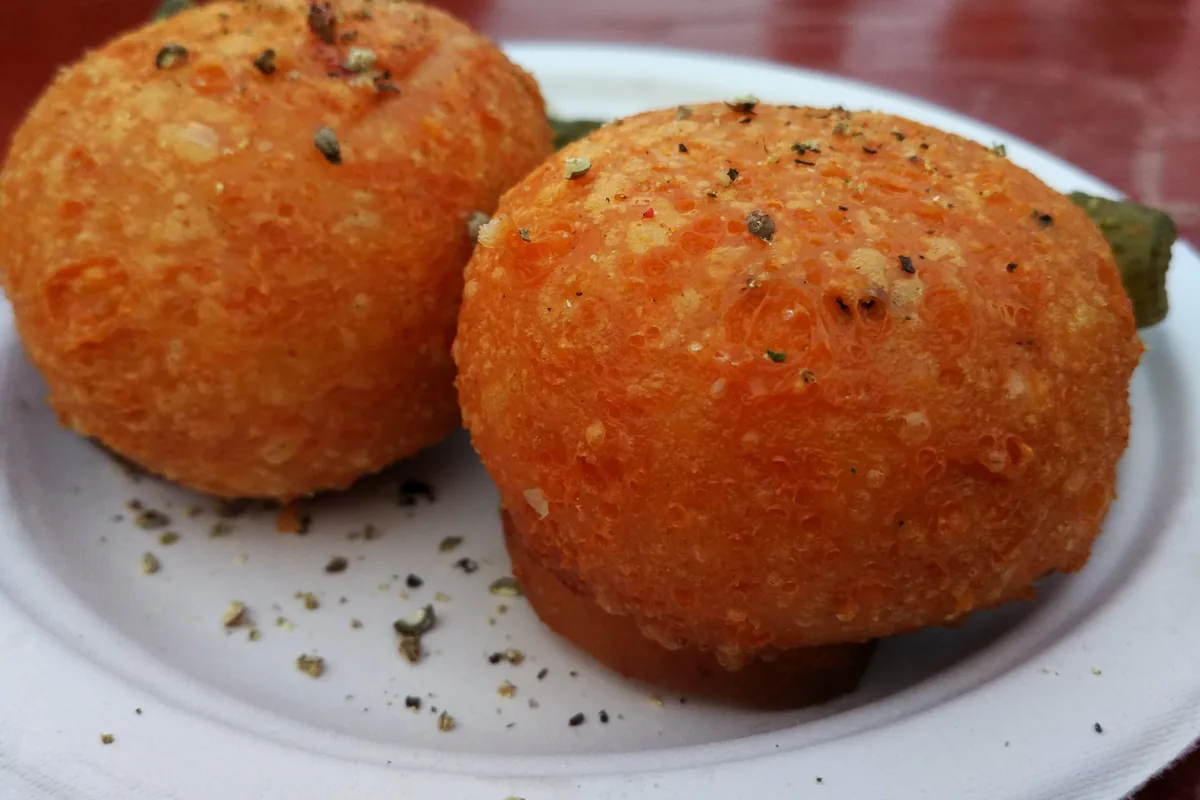
A Malakoff is a dome of Gruyere cheese paste on a round of bread, deep-fried until the crust turns golden and crisp while the inside melts into something close to fondue. It is the classic snack of the canton of Vaud, on the shores of Lake Geneva, and it is eaten hot, with cornichons and pickled onions to cut the richness. One serving is about 208 g (two domes).

The Malakoff is named after Fort Malakoff at Sevastopol: legend says Swiss mercenaries fighting in the Crimean War (1853–1856) fried slices of cheese at their campfires, and on returning home to the La Côte villages of Vaud they named the dish after the fort — though no written source confirms the story. The modern dome-on-bread form took shape between 1880 and 1891, when Jules and Ida Larpin, cooks at the Prangins villa of Prince Napoléon-Jérôme Bonaparte, served it to veterans of the war at a reception. Today it is the signature dish of the villages along Lake Geneva — Eysins, Begnins, Bursins, Luins and Vinzel — where it is also known as the Vinzel beignet.

Pairs well with: Cornichons, pickled cocktail onions and a green salad, with a glass of dry white wine such as Chasselas.

Provenance

Switzerland flag Switzerland

Vaud Heritage

Nordic & European

Time Dedication

35m

20m prep • 15m cook

Batch Yield

4 Servings

738 kcal per serving

1 serving ≈ 208 g

Technical Skill

Intermediate

Medium (Deep-Frying)

Meal Timing & Digestive Fit

Breakfast

Not Advised

Lunch

Inappropriate

Dinner

Inappropriate

Snack & Tea

Ideal Light Bite

Occasions: Aperitif with friends, wine-bar snacks, celebration starters, Swiss-themed dinners, winter evenings Cost: Medium — about $4–5 per serving at home
Two golden deep-fried Swiss Malakoff cheese domes on a white plate, dusted with cracked pepper

Vaud Heritage

Photo: Popo le Chien, CC BY-SA 3.0, via Wikimedia Commons

The Heritage Formulary

Measured Ingredients

Estimated cost: Medium — about $4–5 per serving at home (USD)

A traditional Vaud cheese dome, deep-fried until crisp outside and molten inside, made with aged Gruyere and served hot with pickles.

Execution Methodology & Culinary Technique

Step-by-Step Cooking Guide

Active 35m
P

Prep Stage: Grate, Mix & Shape

20 Mins • Grater, Bowl & Cutter

Everything is ready before the oil is heated: cheese grated and mixed into a paste, bread rounds cut, domes shaped. Once the oil is hot the frying takes only 8 minutes, so the domes, the lined tray and the pickles must all be waiting.

Maestro Tip: Shape the domes with wet hands and keep them chilled for 15 minutes if your kitchen is warm — cold domes hold their shape better in the fryer.

  1. 1

    Grate the Gruyere and mix the cheese paste

    10 minutes Room temperature, about 20°C (68°F)

    Grate the Gruyere (400 g) finely into a large bowl. Stir in the flour (30 g), salt (1 g), pepper and nutmeg, then toss with your hands until the cheese is evenly coated. Add the beaten eggs, white wine (60 ml), kirsch (15 ml) and grated garlic, and stir with a spoon until a stiff, sticky paste forms that holds its shape when scooped.

    If the paste feels loose and slumps, stir in another tablespoon of flour; if it feels dry and crumbly, add a spoonful of wine.

    Done when: A thick paste that stands up in a spoon and does not slide off.

  2. 2

    Cut the bread rounds and shape the domes

    10 minutes Room temperature, about 20°C (68°F)

    Cut 8 rounds about 7 cm (2.75 in) across from the bread slices and lay them on a tray. Divide the cheese paste into 8 equal portions, set one on each bread round, and shape it with wet hands into a smooth dome at least 4 cm (1.5 in) high in the centre, pressing the base firmly onto the bread so it sticks.

    Wet hands stop the paste sticking to your fingers and give a smooth, even dome.

    Done when: Eight even domes, smooth on top, firmly seated on their bread rounds.

  3. 3

    Heat the oil

    5 minutes 175°C (350°F)

    Pour the oil (750 ml) into a deep, heavy pan to a depth of about 5 cm (2 in) and heat over medium-high heat until a thermometer reads 175°C (350°F). Line a tray with kitchen paper and set it beside the pan.

    If you have no thermometer, a cube of bread should turn golden in about 30 seconds.

    Done when: Oil shimmering and holding steady at 175°C (350°F).

  4. 4

    Fry the Malakoffs cheese-side down

    8 minutes 175°C (350°F)

    Lower 4 domes into the oil cheese-side down with a slotted spoon and fry for about 4 minutes, turning once halfway, until the cheese crust is deep golden and the bread base is crisp. Lift out, drain briefly, and fry the second batch the same way. Keep the oil at 175°C (350°F) between batches.

    Do not crowd the pan — too many domes at once cools the oil and the crust turns greasy instead of crisp.

    Done when: Deep golden crust all over, bread base crisp, cheese inside fully melted.

  5. 5

    Drain, rest and serve

    2 minutes Serve hot, about 70°C (158°F)

    Set the Malakoffs on the lined tray for 2 minutes so excess oil drains and the crust sets. Serve at once, two domes per person, with cornichons and pickled onions on the side and mustard if you like.

    Eat them while the centres are still molten — after 10 minutes the cheese firms up again.

    Done when: Crust crisp and dry to the touch, centres soft and flowing when cut.

Finishing Touches & Plating

Serve at once, while the centres are still molten, with cornichons and pickled onions on the side. A Malakoff waits for no one — the first bite should be crisp outside and flowing inside.

Nutritional Physiology & Benefits

Nutrition

Energy

738

kcal / serving

Protein

37g

Complete AA

Carbs

27g

Complex

Fats

51g

Healthy

Per serving (4 servings · 1 serving ≈ 208 g)
Energy738 kcal
Protein37 g
Carbohydrates27 g
Fat51 g
Fibre1.4 g
Sugar2.7 g
Sodium1044 mg
Per 100g
Energy356 kcal
Protein18 g
Carbohydrates12.9 g
Fat24.6 g
Fibre0.7 g
Sugar1.3 g
Sodium503 mg

Nutrition values are estimated — calculated from USDA FoodData Central values for the listed ingredients.

Vitamins & minerals: Gruyere supplies calcium and phosphorus, while the egg adds vitamin B12 and vitamin D; the bread and garlic add small amounts of B vitamins and manganese. Nutrition is estimated.

High in protein

One serving gives 37.4 g of protein from the Gruyere and egg, which helps you feel full long after a small snack.

Rich in calcium

Gruyere is naturally rich in calcium and phosphorus, minerals that help keep bones and teeth healthy as part of a balanced diet.

Simple, real ingredients

Cheese, egg, bread, wine and a pinch of spice — a short list of everyday foods with nothing ultra-processed in it.

Food Pairings

What to Eat With

To optimize nutrient absorption and elevate the sensory depth, pair with these authentic accompaniments:

Vegetables

Cornichons and pickled onions

Their sharp acidity cuts straight through the rich, salty cheese, which is why every Vaud restaurant serves them with Malakoffs.

Green salad with vinaigrette

Crisp leaves and a light dressing give freshness and crunch against the hot, soft cheese, and turn a snack into a light lunch.

Drinks

Dry white wine (Chasselas)

The local wine of the Vaud vineyards, its mineral acidity matches the nutty Gruyere and cleanses the palate between bites.

Sauces

Wholegrain mustard

A dab of sharp mustard adds heat and tang that stands up to the melted cheese without overpowering it.

Complete menu

Start with a green salad, then Malakoffs with cornichons and pickled onions and a glass of Chasselas, and finish with something light such as fresh fruit or a sorbet.

Digestive Guardrails

What NOT to Combine

To prevent digestive distress, sluggishness, or palate clash, avoid pairing the dish with these elements:

Sugary soft drinks

Sweet fizzy drinks add sugar on top of an already rich, salty snack and do nothing to balance the fat — water or a dry white wine is a better match. This is general information, not medical advice.

A second helping right away

Two domes are already very rich and salty, and a heavy portion can leave you feeling sluggish and thirsty. Wait a little before deciding you want more. This is general information, not medical advice.

Leaving leftovers out

Cooked cheese and egg spoil quickly at room temperature. Refrigerate any leftovers within 2 hours and reheat them properly before eating.

General information only, not medical advice — consult a doctor for personal dietary decisions.

Who Should Eat It

Who Should Eat

  • General adultsA rich, salty snack as written — two domes with salad and pickles make a satisfying portion, not a whole meal on its own.
  • ChildrenChildren usually love the crispy cheese, but cut each dome into small pieces and let it cool a little first — the centre stays molten-hot long after the crust feels safe to touch.
  • ElderlyThe inside is soft once it has cooled slightly, which is easy to eat, but the dish is high in salt and fat, so a small portion is best.
  • Pregnant womenThe cheese is cooked through and served piping hot, but Gruyere is traditionally made from raw milk — use a pasteurised Gruyere if you can, eat it steaming hot, and ask your clinician if you are unsure.
  • Breastfeeding womenFine in moderation; the salt will make you thirsty, so drink water alongside.
  • AthletesHigh in protein and energy, so it works well as an occasional post-training treat, but the fat slows digestion — not a good choice just before exercise.
  • Weight gainEnergy-dense at 738 kcal a serving, so it is an easy way to add calories when you need them.
  • Weight lossVery energy-dense, so enjoy one dome with a big salad instead of a full serving, and treat it as an occasional snack rather than an everyday one.

Health Conditions — Adjust or Avoid

Conditions

  • DiabetesOne serving carries 26.7 g of carbohydrate, so its effect on blood sugar is modest, but it is very rich in fat and salt. Keep the portion small and ask your clinician.
  • High blood pressureAt 1,044 mg of sodium a serving, this is a salty dish. Keep the portion small, skip any extra salt, and ask your clinician.
  • Kidney diseaseHigh in protein, sodium and phosphorus, so it is not a good choice in large amounts. Ask your clinician before eating it.
  • GoutCheese is low in purines, but this is a rich, fatty meal, so keep the portion small and occasional. Ask your clinician.
  • Stomach issuesDeep-fried, fatty food can feel heavy and trigger reflux in some people. Eat slowly and keep the portion small, and ask your clinician if symptoms are frequent.
  • Cardiovascular diseaseHigh in saturated fat and salt, so treat it as an occasional small portion rather than a regular snack. Ask your clinician.
  • Fatty liverHigh in fat and calories, so keep portions small and infrequent. Ask your clinician.
  • Food allergiesContains milk (Gruyere), egg, wheat (gluten) and a little alcohol from the wine and kirsch, most of which cooks off. Check every label if you have an allergy.
  • Special therapeutic dietsAs written it does not fit low-fat, low-sodium, dairy-free or gluten-free diets. Ask your clinician or dietitian about an adapted version.

If you have a medical condition, consult your doctor before changing your diet.

Storage & Use

Storage & Use

How to store
Cool completely, then store in a sealed container in the fridge.
In the fridge
Keeps 1 day in the fridge at 4°C (40°F) or below, though the crust will soften.
In the freezer
Do not freeze — fried cheese turns rubbery and the crust collapses.
How to reheat
Reheat in an oven at 180°C (350°F) for about 5 minutes until crisp and steaming hot throughout, to 74°C (165°F); do not microwave.
Freezing recommended
Not recommended.
Signs it has spoiled
Sour smell, slimy surface, or visible mould — discard if any appear.

More recipes to explore

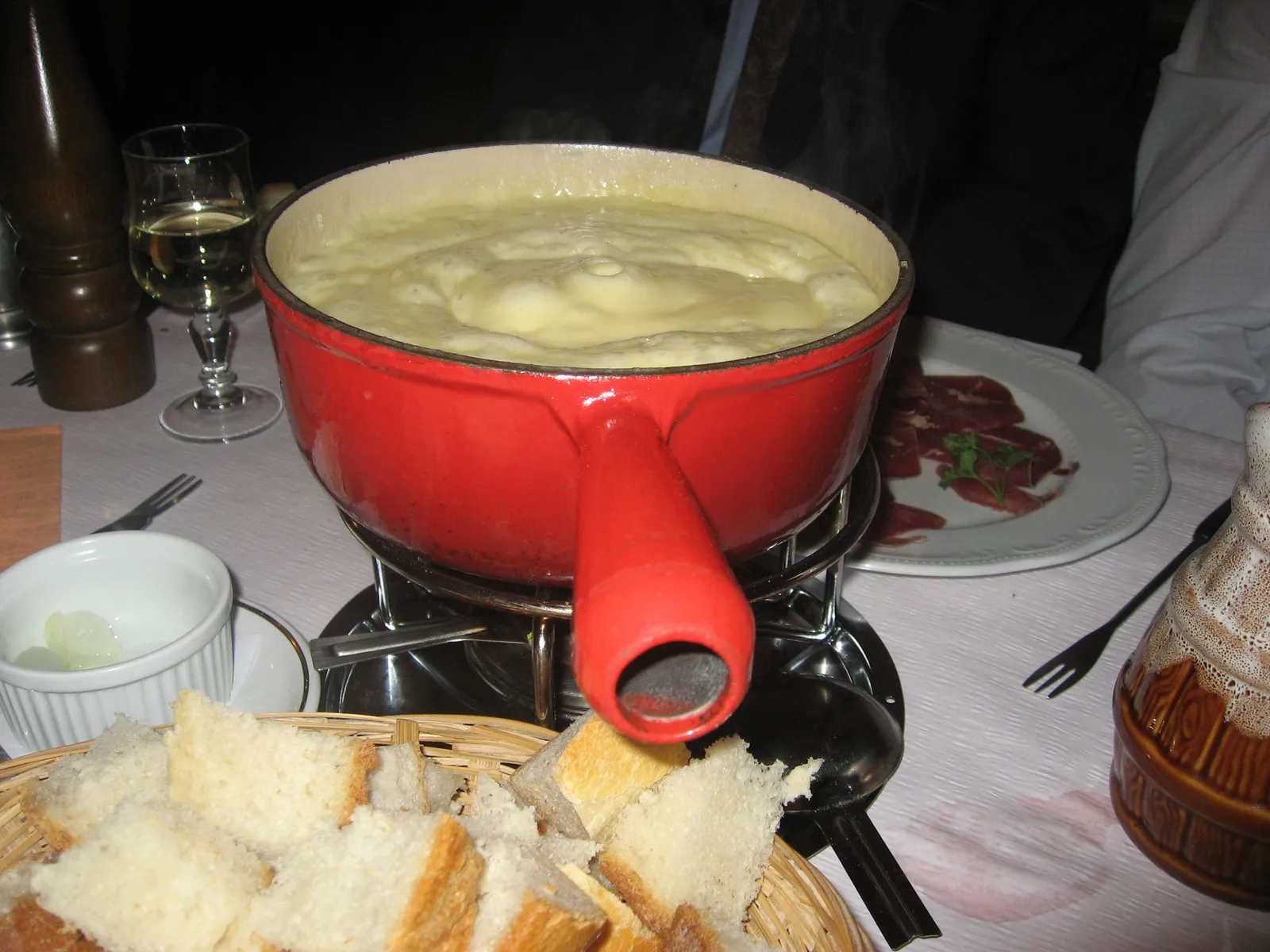
A red fondue pot of melted cheese with bread cubes and a glass of white wine Switzerland flag Switzerland 40m
Dinner •Swiss Alpine Classic

Swiss Cheese Fondue

Swiss cheese fondue is the Alps in a pot: Gruyere and Emmental melted slowly into dry white wine with garlic and a splash of kirsch, kept warm at the table while everyone dips cubes of bread into the bubbling cheese. One serving is about 310 g.

Comfort & Togetherness

Gruyere and Emmental melted in white wine, shared from one pot.

Pairs Well With
Cubes of crusty bread, boiled potatoes and cornichons on the side
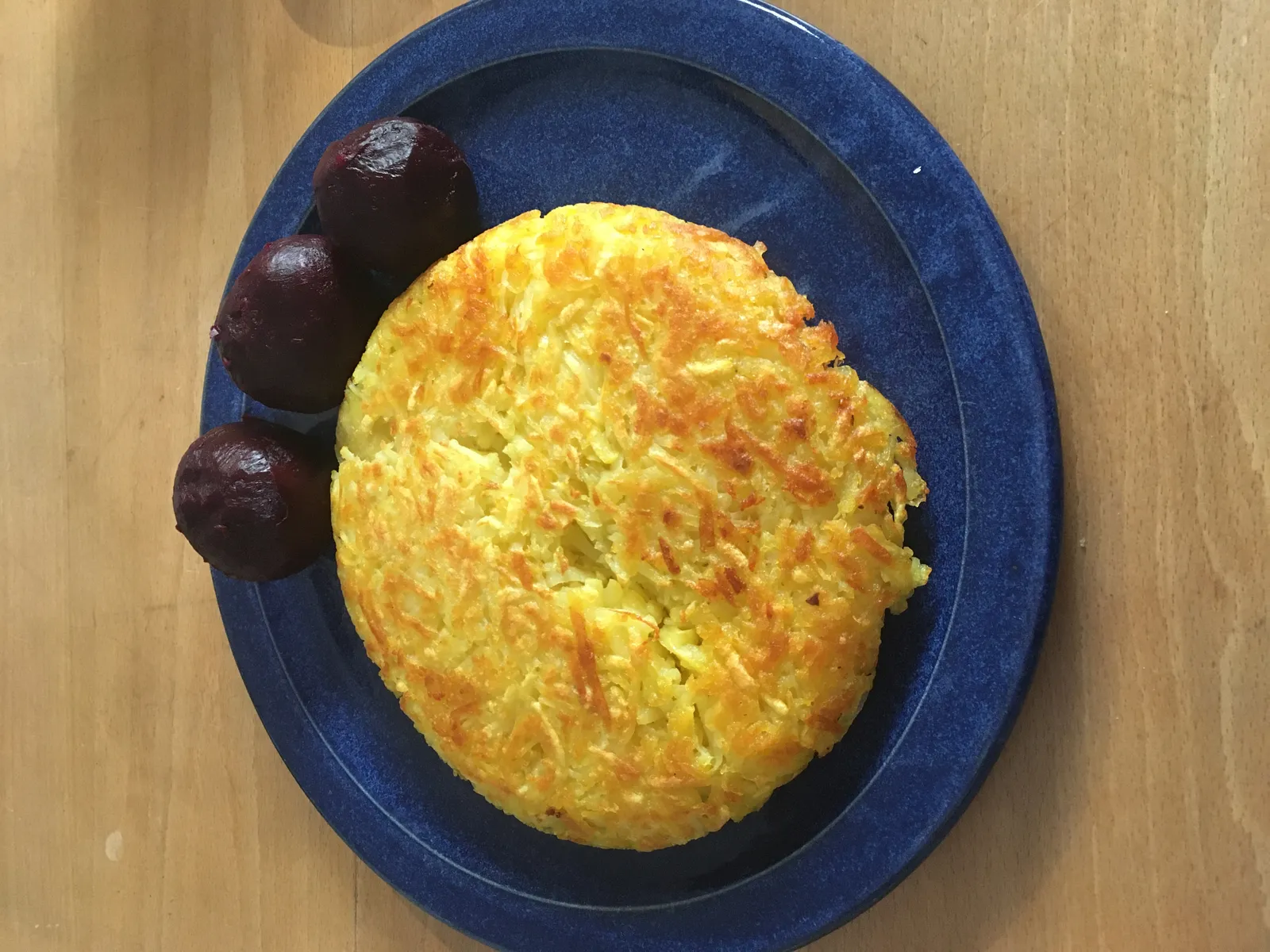
A large golden rosti potato cake on a blue plate Switzerland flag Switzerland 40m
Lunch •Bernese Farmhouse Classic

Rösti

Rösti is Switzerland's crisp potato cake: grated potato pressed into one large golden disc and fried in butter until the outside shatters and the inside stays soft, then topped with a fried egg. One serving is about 240 g.

Simple & Satisfying

One large crisp cake of grated potato, pan-fried in butter and topped with a fried egg.

Pairs Well With
A fried egg on top and a simple green salad with sharp vinaigrette
Quick Prep (<30m)
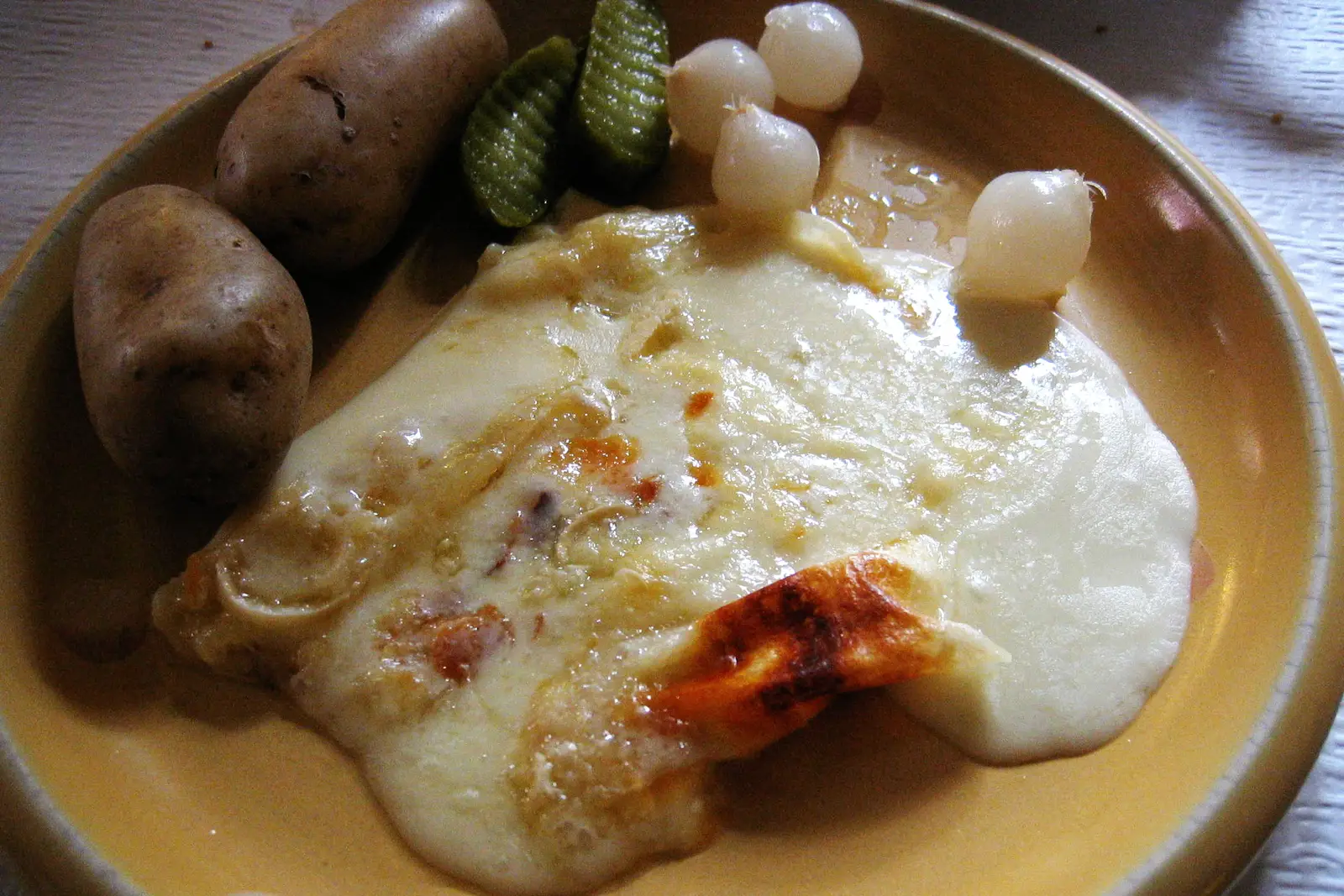
Melted raclette cheese scraped over a plate with boiled potatoes and pickles Switzerland flag Switzerland 40m
Dinner •Valais Alpine Classic

Raclette

Raclette is the Swiss Alps' other great melted-cheese meal: a half-wheel of raclette cheese is warmed until the cut face bubbles, then scraped in ribbons over boiled potatoes, with cornichons and pickled onions to cut the richness. One serving is about 365 g.

Comfort & Togetherness

Melted raclette cheese scraped over boiled potatoes with pickles.

Pairs Well With
Boiled potatoes, cornichons, pickled onions and a green salad
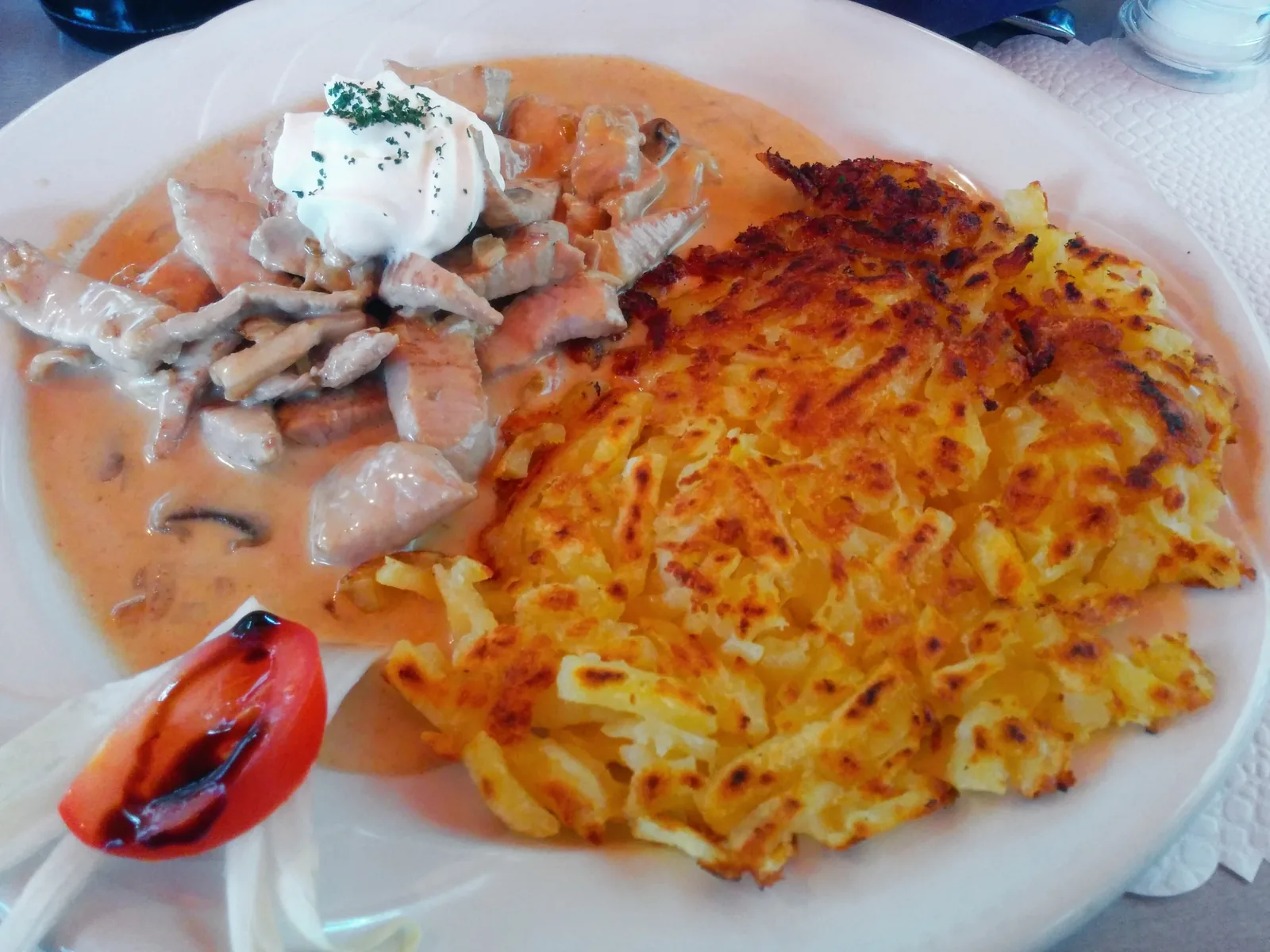
A plate of Zürcher Geschnetzeltes — veal strips in cream sauce with a dollop of cream — beside golden rösti. Switzerland flag Switzerland 40m
Dinner •Zurich Classic

Zürcher Geschnetzeltes

Zürcher Geschnetzeltes is Zurich's signature dish: thin strips of veal quickly seared, then finished in a white-wine and cream sauce with mushrooms and onion. One serving is about 335 g, before the rösti it is traditionally served with.

Rich & Comforting

Tender strips of veal in a white-wine cream sauce with mushrooms — Zurich's classic, with rösti.

Pairs Well With
Serve with golden rösti and a glass of dry Swiss white wine.
High Protein

The Dinner Gazette

Never wonder what’s for dinner again

One email a week with easy dinner ideas from around the world — ingredients, steps and nutrition, tested in our kitchen first.

Delivered every Thursday morning. Unsubscribe anytime.