Curated recipes from 193 countries  •  New seasonal Mediterranean issue out now

Overview

Tamal Tolimense

Tamales Tolimenses, Tolima Tamales

This tamal tolimense recipe makes six big Tolima tamales: a golden corn masa mixed with cooked rice and yellow split peas, spread on banana leaves and layered with marinated pork shoulder and belly, a piece of chicken, potato, carrot and half a hard-boiled egg, then tied up and steamed for hours. One serving is about 492 g — one whole tamal.

Tamales were already being made in the Americas long before the Spanish arrived, and each region of Colombia made the form its own. Tolima's version, from the department around Ibagué, is the biggest and richest of them: corn masa mixed with cooked rice and yellow peas, layered with pork ribs and belly, chicken, potato, carrot and egg, and steamed for hours in banana leaves. It is the tamal of Christmas, of Sundays and of celebrations, and it is so large that one is a whole meal.

Pairs well with: Hogao sauce, hot chocolate & arepas

Provenance

Colombia flag Colombia

Colombia Heritage

Latin America & Caribbean

Time Dedication

4h

90m prep • 150m cook

Batch Yield

6 Servings

832 kcal per serving

1 serving ≈ 492 g

Technical Skill

Advanced

Advanced (Banana-Leaf Parcels & Long Steam)

Meal Timing & Digestive Fit

Breakfast

Not Advised

Lunch

Prime Metabolic Fit

Dinner

Ideal Hearty Main

Snack & Tea

Inappropriate

Occasions: Christmas, Sundays, family celebrations, festive lunches, holiday mornings Cost: Moderate — about $4–5 per serving at home
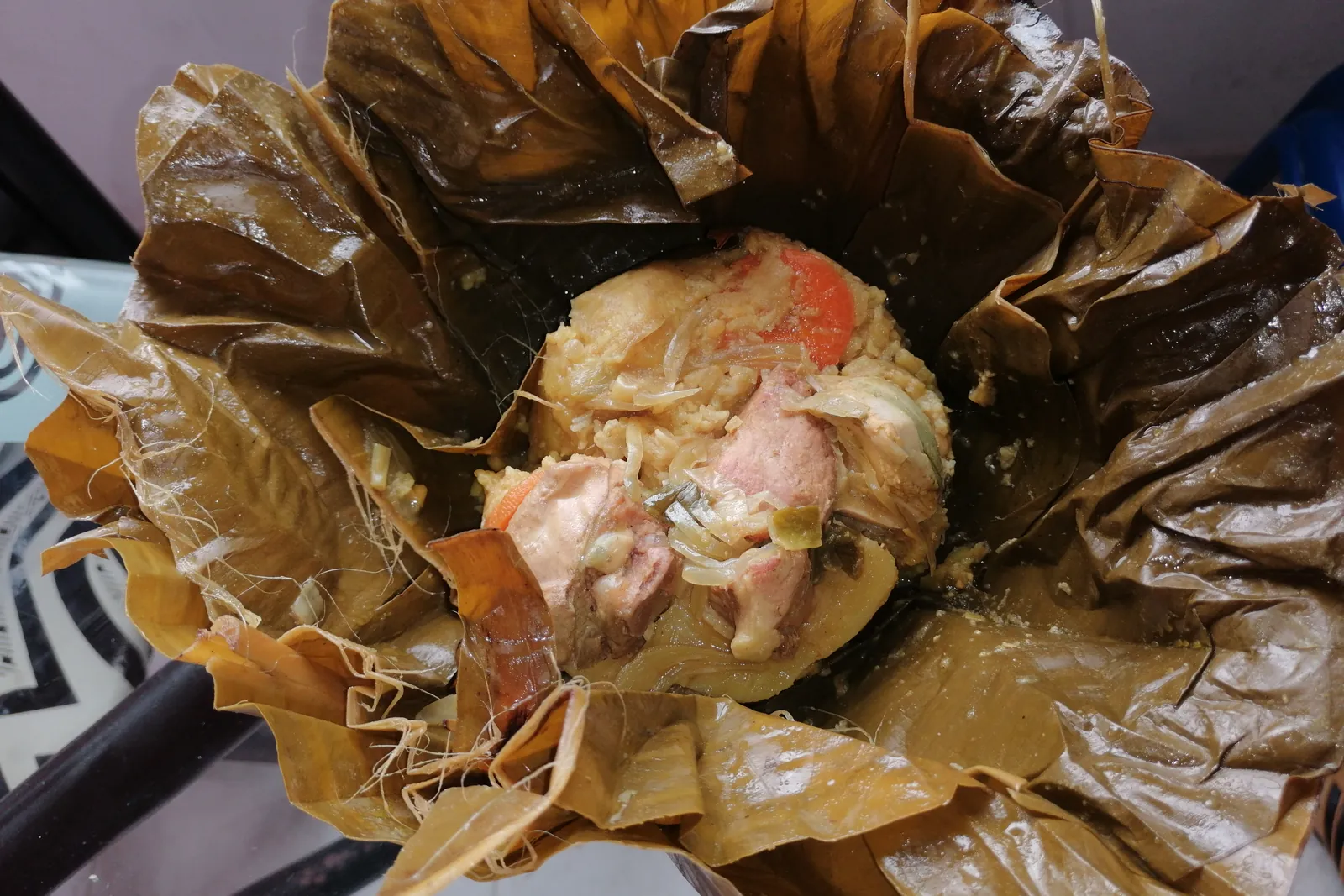
An opened tamal tolimense in its banana leaf, showing seasoned rice, pork, chicken and carrot

Colombia Heritage

Photo: JOAN, CC BY-SA 4.0, via Wikimedia Commons

The Heritage Formulary

Measured Ingredients

Estimated cost: Moderate — about $4–5 per serving at home (USD)

A traditional Tolima tamal: corn masa with rice and yellow peas, pork, chicken, potato, carrot and egg, steamed in banana leaves.

Execution Methodology & Culinary Technique

Step-by-Step Cooking Guide

Active 4h
P

Marinate the meats and cook the masa

90 minutes (plus overnight marinating)

Rub the pork and chicken with onion, garlic, cumin, achiote and salt and leave them to marinate overnight — this is what makes Tolima tamales taste of Tolima. The next day, stir the warm water, masarepa, cooked rice, peas and melted lard into a thick, golden masa. Wilt the banana leaves over heat so they bend without splitting, and slice the potatoes, carrots and eggs.

Maestro Tip: Do not skip the overnight marinade. The meat steams inside the leaf, so the marinade is the only seasoning it gets — an hour is not enough.

  1. 1

    Marinate the pork and chicken

    15 minutes + overnight rest Cold — refrigerator, about 4°C (39°F)

    Mix half the chopped onion, the crushed garlic, cumin, achiote and half the salt into a paste. Rub it all over the pork shoulder, pork belly and chicken thighs, cover and refrigerate overnight. Keep the meats in separate containers so the pieces stay easy to find.

    Massage the marinade into every piece — the leaf will not add flavour later, so this step carries the whole dish.

    Done when: Meats are evenly coated and smell of garlic, cumin and achiote.

  2. 2

    Cook the golden masa

    20 minutes Medium heat, about 160°C (320°F)

    Heat the 600 ml of water in a large pot until just steaming. Stir in the masarepa a little at a time, then the cooked rice, the drained peas, the melted lard, the remaining salt and a pinch of achiote. Stir constantly with a wooden spoon for about 15 minutes until the masa is thick like porridge, pulls away from the sides and holds its shape.

    Stir without stopping — cornmeal scorches on the bottom in seconds. If the masa gets too thick to stir, add a splash of hot water.

    Done when: Masa is thick, golden and holds a ridge when you drag the spoon through it.

  3. 3

    Make the guiso and prepare the leaves

    15 minutes Medium heat, about 160°C (320°F)

    Cook the remaining onion, the spring onions and the chopped tomato in a little of the lard for about 5 minutes until soft, to make a quick guiso. Meanwhile, wipe the banana leaves clean, cut them into rectangles about 40 cm long and pass each one briefly over a low flame or through boiling water until soft and glossy.

    Wilted leaves bend without cracking — a dry leaf splits the moment you fold it, and the tamal leaks.

    Done when: Leaves are soft, glossy and pliable; guiso is soft and fragrant.

  4. 4

    Assemble the parcels

    30 minutes No heat — room temperature, about 20°C (68°F)

    Lay two leaf rectangles in a cross on the work surface. Spread about 200 g of masa in the centre and top with a spoonful of guiso. Add one piece of pork shoulder, one piece of pork belly and one piece of chicken, then two potato slices, two carrot slices and half a hard-boiled egg. Bring the corners of the leaves up over the filling and tie firmly with kitchen string, leaving a small tuft of leaf above the knot.

    Pack the filling in the middle, not at the edges, and tie firmly — a loose parcel opens in the pot and the masa washes away.

    Done when: Six firm, neatly tied parcels with the filling buried in the middle.

  5. 5

    Steam the tamales

    150 minutes Boiling, 100°C (212°F)

    Set a rack or a layer of spare leaves in the bottom of a large pot, stand the parcels upright with the tied ends up, and pour in boiling water to come halfway up the parcels. Cover tightly and steam for about 2.5 hours, topping up with boiling water whenever the level drops. The chicken must reach 74°C (165°F) and the pork 71°C (160°F) at the thickest part.

    Keep the water at a steady simmer, never a rolling boil, and never let the pot run dry — a dry pot scorches the leaves and ruins the tamales.

    Done when: Leaves are dark and fragrant; the masa is firm, moist and fully set.

  6. 6

    Rest and serve

    10 minutes Serving hot, above 60°C (140°F)

    Lift the parcels out, cut the strings and rest for 10 minutes. Open each tamal at the table, folding the leaf back like a flower, and serve with hogao sauce on the side.

    Letting the tamal rest lets the masa firm up just enough to hold its shape when the leaf opens.

    Done when: Tamales open cleanly, steaming hot, with meat, egg and vegetables visible in the masa.

Finishing Touches & Plating

Open the leaf at the table and eat the tamal straight from it, with a spoonful of hogao over the top. The leaf is the plate — it keeps everything hot and perfumes the masa.

Nutritional Physiology & Benefits

Nutrition

Energy

832

kcal / serving

Protein

32g

Complete AA

Carbs

76g

Complex

Fats

45g

Healthy

Per serving (6 servings · 1 serving ≈ 492 g)
Energy832 kcal
Protein32 g
Carbohydrates76 g
Fat45 g
Fibre8.4 g
Sugar4.1 g
Sodium928 mg
Per 100g
Energy169 kcal
Protein6.6 g
Carbohydrates15.4 g
Fat9.1 g
Fibre1.7 g
Sugar0.8 g
Sodium189 mg

Nutrition values are estimated — calculated from USDA FoodData Central values for the listed ingredients.

Vitamins & minerals: Pork and chicken supply protein, iron, zinc and vitamin B12, the peas and cornmeal add fibre and B vitamins, and the carrot and potato add vitamin A, vitamin C and potassium. All nutrition values are estimated.

A complete meal in one parcel

One tamal carries about 32 g of protein and 832 calories, so a single parcel with a drink is a full lunch that needs nothing else.

Peas, corn and rice for fibre

Yellow split peas, cornmeal and rice give about 8 g of fibre per tamal, along with B vitamins, iron and slow-release energy.

Steamed, not fried

Everything steams inside the leaf, so no frying is involved and the meats cook gently in their own juices and the marinade.

Food Pairings

What to Eat With

To optimize nutrient absorption and elevate the sensory depth, pair with these authentic accompaniments:

Sauces

Hogao sauce

Colombia's cooked tomato and spring onion sauce is the classic topping — its bright, savoury acidity lifts the rich pork and the mild masa.

Drinks

Hot chocolate with cheese

In Tolima, tamales are often eaten with hot chocolate and a piece of cheese on the side — the sweet, warm drink is the traditional breakfast and lunch pairing.

Sides

Arepas

A small arepa alongside gives something to scoop with and soaks up the juices, and it is the everyday bread of the region.

Full Menus

Fresh fruit juice

A cold glass of lulo or passion fruit juice cuts through the richness of the pork belly and refreshes the palate between bites.

Complete menu

Serve one hot tamal tolimense per person opened at the table, with hogao sauce to spoon over, a small arepa on the side and hot chocolate or fresh lulo juice to drink.

Digestive Guardrails

What NOT to Combine

To prevent digestive distress, sluggishness, or palate clash, avoid pairing the dish with these elements:

Very salty extras

One tamal already carries about 929 mg of sodium, so salty cheese, salty sauces or extra soy sauce on the same plate can push sodium far higher. This is general information, not medical advice — ask a clinician about your own sodium limits.

Eating the banana leaf

The banana leaf is a wrapper and a cooking vessel, not food — it adds aroma while steaming but is tough, fibrous and not meant to be eaten. Open it, eat what is inside, and leave the leaf aside. This is general information, not medical advice.

General information only, not medical advice — consult a doctor for personal dietary decisions.

Who Should Eat It

Who Should Eat

  • General adultsOne tamal is a full meal on its own. It is rich and salty, so balance the rest of the day with lighter foods.
  • ChildrenSuitable from about age 3 in a half portion, with the meat cut up and the egg mashed a little. Skip the hogao if it is spicy and let the tamal cool before serving.
  • ElderlySoft, moist and easy to chew once the meats are cut into small pieces. A half tamal is often enough, since a whole one is very filling.
  • Pregnant womenSafe when the chicken reaches 74°C (165°F) and the pork 71°C (160°F) all the way through, and the tamal is served steaming hot. Keep portions moderate because of the salt; ask your clinician if you have concerns.
  • Breastfeeding womenA nourishing, energy-rich meal that fits well during breastfeeding. Drink water alongside it and keep to one tamal because of the salt and fat.
  • AthletesGood after training: about 32 g of protein and 76 g of carbohydrates per tamal support recovery. Add an arepa if you need more energy.
  • Weight gainA good choice — energy-dense, protein-rich and easy to eat in a large portion. One tamal with an arepa makes a substantial lunch.
  • Weight lossHard to fit at about 832 calories a parcel — take half a tamal, load the plate with salad, and skip the arepa and hot chocolate if you are counting calories.

Health Conditions — Adjust or Avoid

Conditions

  • DiabetesAbout 76 g of carbohydrates per tamal from the masa, rice and peas, so portion size matters and blood sugar should be monitored. Half a tamal with more meat and vegetables is easier to manage; ask your clinician or dietitian for a portion that fits your plan.
  • High blood pressureAt about 929 mg of sodium per serving, this is a salty dish. Skip extra salty sides and keep to half a tamal if you are watching sodium. Ask your clinician about your sodium limit.
  • Kidney diseaseThe dish is high in protein, potassium and sodium, all of which may need limiting in kidney disease. This dish may not fit a renal diet — ask your clinician or renal dietitian before eating it.
  • GoutPork and chicken are moderate in purines, so people prone to gout should keep portions moderate and not eat tamales every day; ask your clinician for personal guidance.
  • Stomach issuesThe rich pork belly and the large, starchy parcel can feel heavy and may trigger bloating. Eat a small portion slowly and skip the spicy hogao during a flare-up; ask your clinician if symptoms persist.
  • Cardiovascular diseasePork belly and lard make saturated fat significant, and the dish is salty. An occasional tamal fits most patterns, but it is not an everyday food; ask your clinician about your portion and frequency limits.
  • Fatty liverA large parcel with pork belly and lard is high in saturated fat and energy, so keep the portion to half a tamal with salad; ask your clinician or dietitian for guidance.
  • Food allergiesContains egg. The tamal itself is free of gluten, milk, fish, nuts and shellfish, but check the hogao and any arepa served alongside for added allergens. If you have a food allergy, confirm every ingredient before eating.
  • Special therapeutic dietsNaturally gluten-free and dairy-free, which suits several therapeutic patterns, but the salt, fat and starchy masa need adjusting for renal, diabetic or low-sodium plans. Ask your clinician or dietitian to adapt the portion for your diet.

If you have a medical condition, consult your doctor before changing your diet.

Storage & Use

Storage & Use

How to store
Cool quickly, then store in the banana leaf in an airtight container.
In the fridge
3–4 days in the refrigerator, still wrapped in the leaf.
In the freezer
Up to 3 months, wrapped tightly in the leaf and then in foil.
How to reheat
Steam for 20–25 minutes until hot through, to 74°C (165°F); a microwave works but softens the leaf.
Freezing recommended
Yes, up to 3 months; re-steam from frozen for 35–40 minutes.
Signs it has spoiled
Sour smell, slimy masa, or mould on the leaf or filling.

More recipes to explore

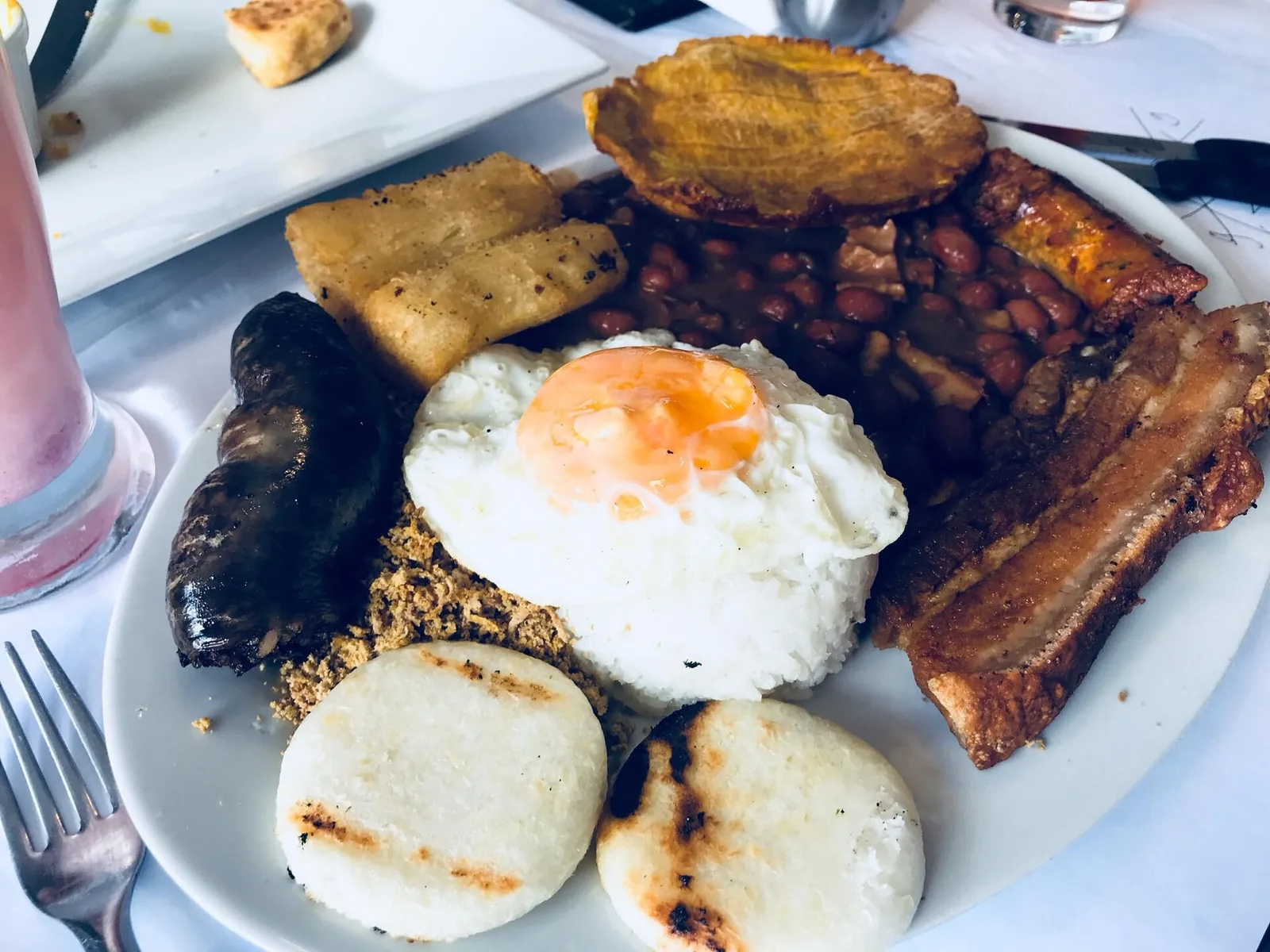
Bandeja paisa on a white plate with red beans, white rice, a fried egg, chicharrón, morcilla, chorizo, fried plantain and two small arepas Colombia flag Colombia 2h
Lunch •Antioquia Heritage

Bandeja Paisa

This bandeja paisa recipe builds the famous platter from Antioquia: red beans simmered with pork, white rice, crisp chicharrón, seasoned ground beef, chorizo and morcilla, a fried egg, sweet fried plantain, avocado, hogao sauce and a small grilled arepa. Every part is cooked separately, then piled onto one wide plate so each bite can mix a little of everything. One serving is about 894 g.

Hearty & Filling

A generous Antioquia platter of beans, rice, meats, egg, plantain and avocado, built to fuel a long working day.

Pairs Well With
A cold glass of panela lemonade or a light lager, with a small green salad on the side.
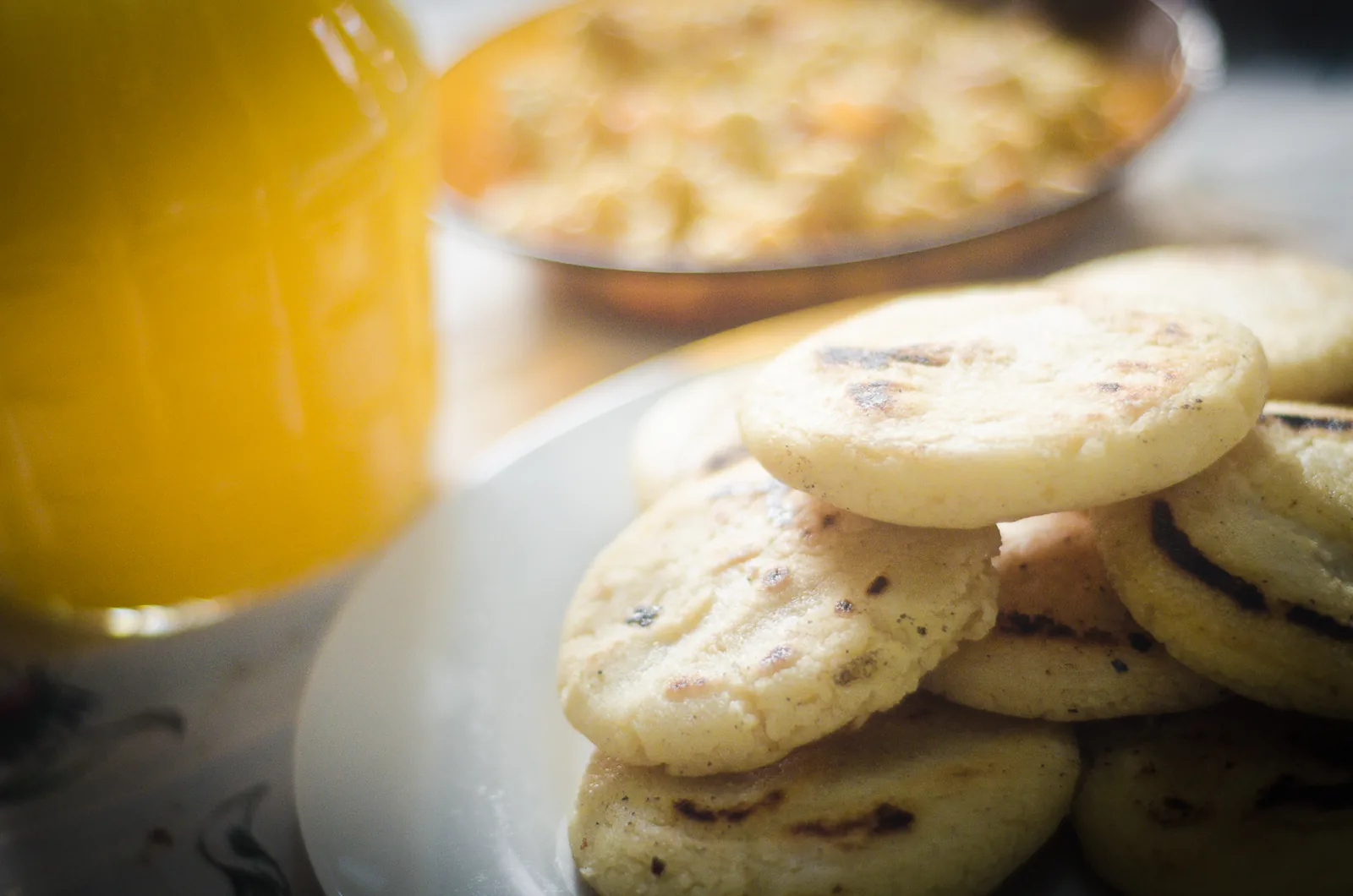
A stack of golden grilled Colombian arepas on a white plate, with a glass of orange juice beside them Colombia flag Colombia 35m
Breakfast •Andean Heritage

Colombian Arepas

This Colombian arepas recipe turns pre-cooked white cornmeal, warm water, butter and cheese into round corn cakes that are grilled until crisp outside and soft inside. The cheese is kneaded right into the dough, so every bite is savoury and gently melty. Colombian arepas are thinner and plainer than the stuffed Venezuelan kind: they are a breakfast bread, split open and filled at the table. One serving is about 220 g, two arepas.

Comfort & Warmth

Golden grilled corn cakes made from white masarepa, with melting cheese kneaded into the dough.

Pairs Well With
Hot chocolate or coffee, with butter and a slice of fresh cheese on the side.
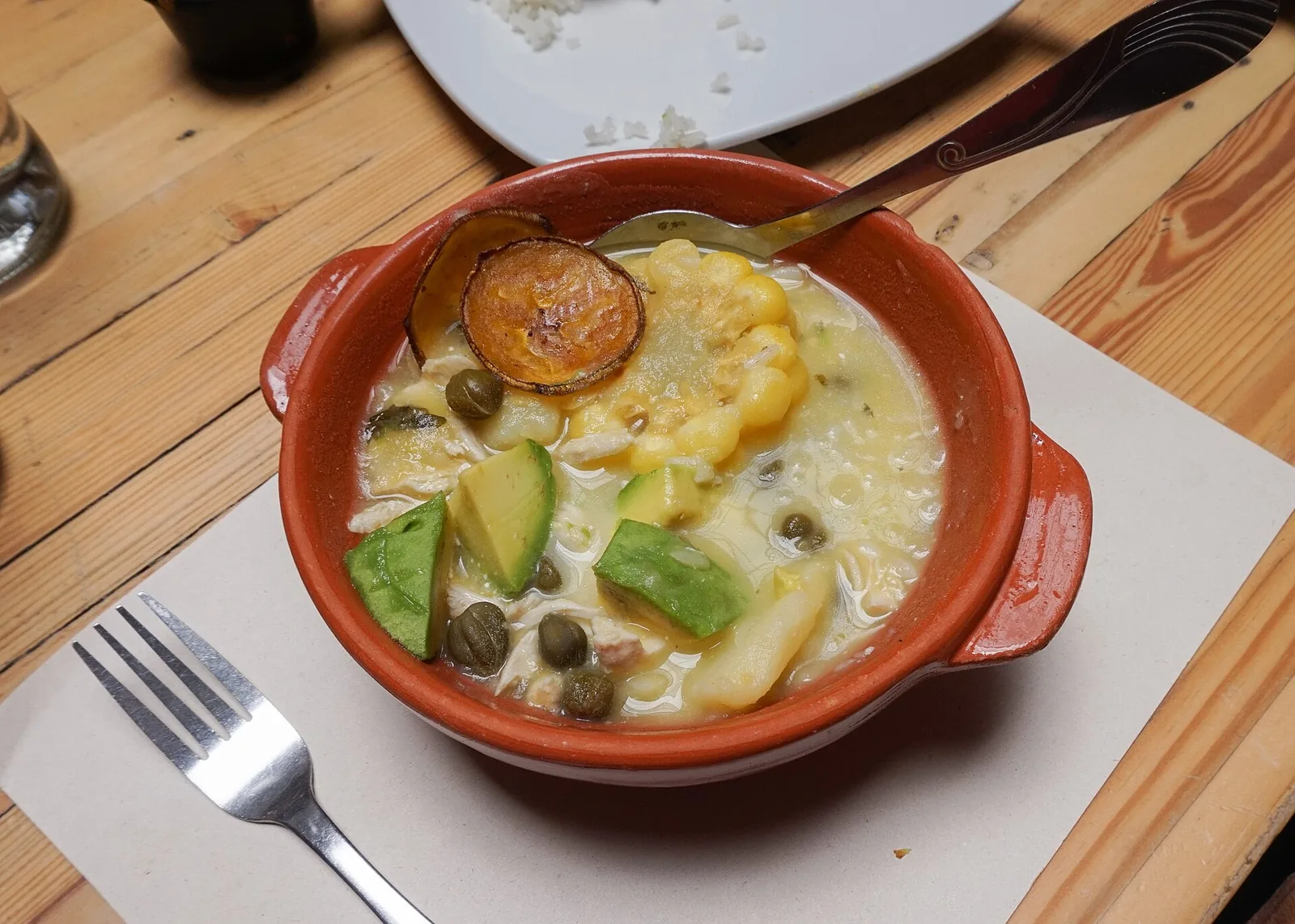
A bowl of ajiaco in a clay bowl, thick golden soup with corn, avocado, capers and shredded chicken Colombia flag Colombia 1h 30m
Lunch •Bogotá Heritage

Ajiaco

This ajiaco recipe is Bogotá's signature soup: chicken simmered with corn on the cob and three kinds of potato — pastusa, sabanera and criolla — until the criolla melts and thickens the broth golden. The herb guascas gives it its unmistakable earthy flavour, and every bowl is finished at the table with heavy cream, briny capers and sliced avocado. One serving is about 750 g, soup and toppings together.

Comfort & Warmth

Bogotá's thick chicken and potato soup, flavoured with guascas and served with cream, capers and avocado.

Pairs Well With
White rice and a small side salad, with the cream, capers and avocado passed around the table.
Soups & Broths
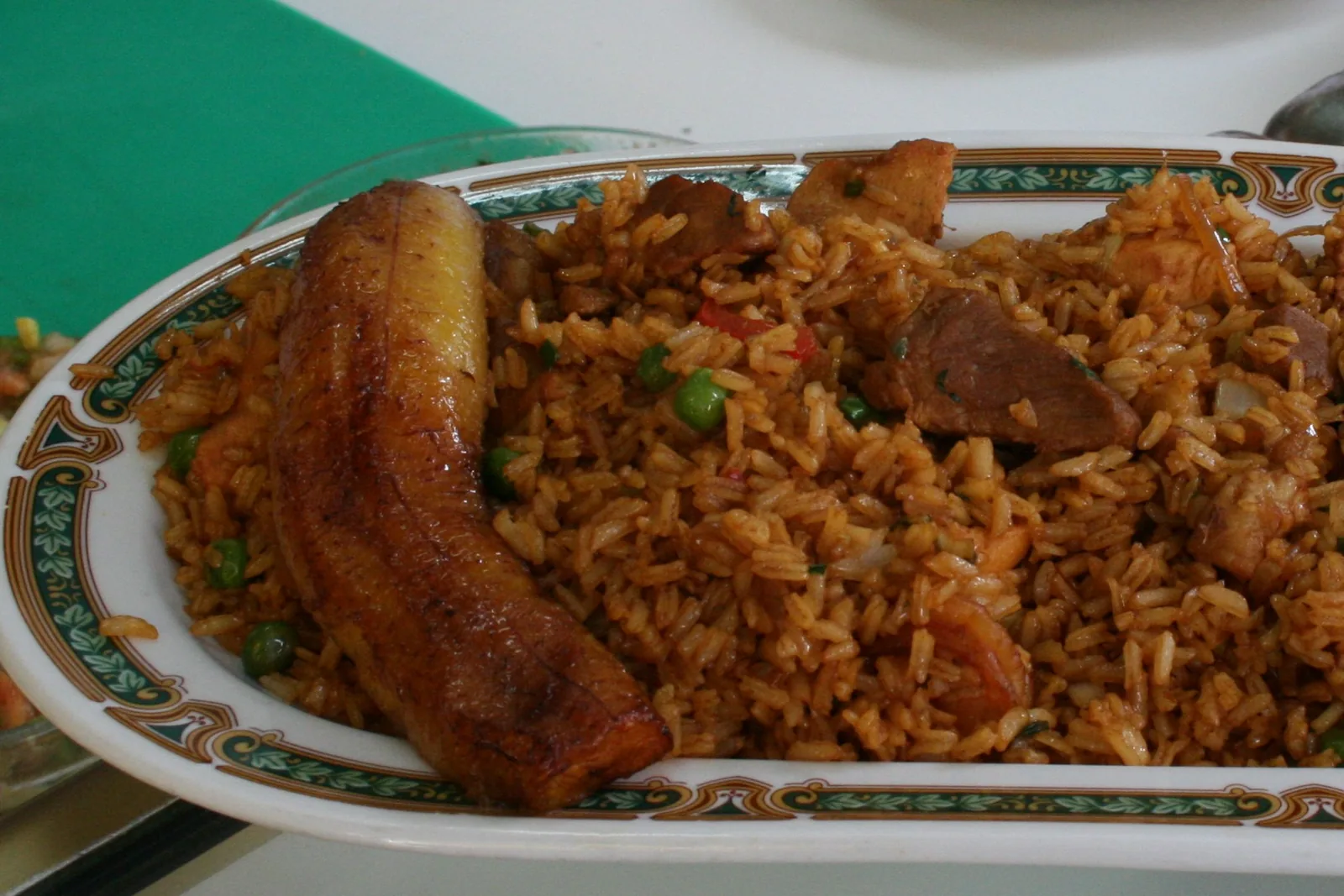
A platter of lechona with golden rice, roast pork pieces, green peas and a fried plantain Colombia flag Colombia 6h
Dinner •Tolima Heritage

Lechona

Lechona is Tolima's great festive roast: a deboned pig — here a pork shoulder with its skin — stuffed with rice and peas, sewn shut and roasted for hours until the meat is spoon-tender and the skin crackles. It is served chopped, a spoon of golden rice with every piece of pork, with arepas and fried plantain on the side. One serving is about 444 g.

Festive & Filling

Pork shoulder stuffed with rice and peas, roasted for hours until the meat is tender and the skin crackles.

Pairs Well With
White arepas, fried plantain and a cold beer
High Protein

The Dinner Gazette

Never wonder what’s for dinner again

One email a week with easy dinner ideas from around the world — ingredients, steps and nutrition, tested in our kitchen first.

Delivered every Thursday morning. Unsubscribe anytime.