
Curated recipes from 193 countries  •  New seasonal Mediterranean issue out now

Overview

Tarta de Santiago

Spanish Almond Cake; Cake of St. James

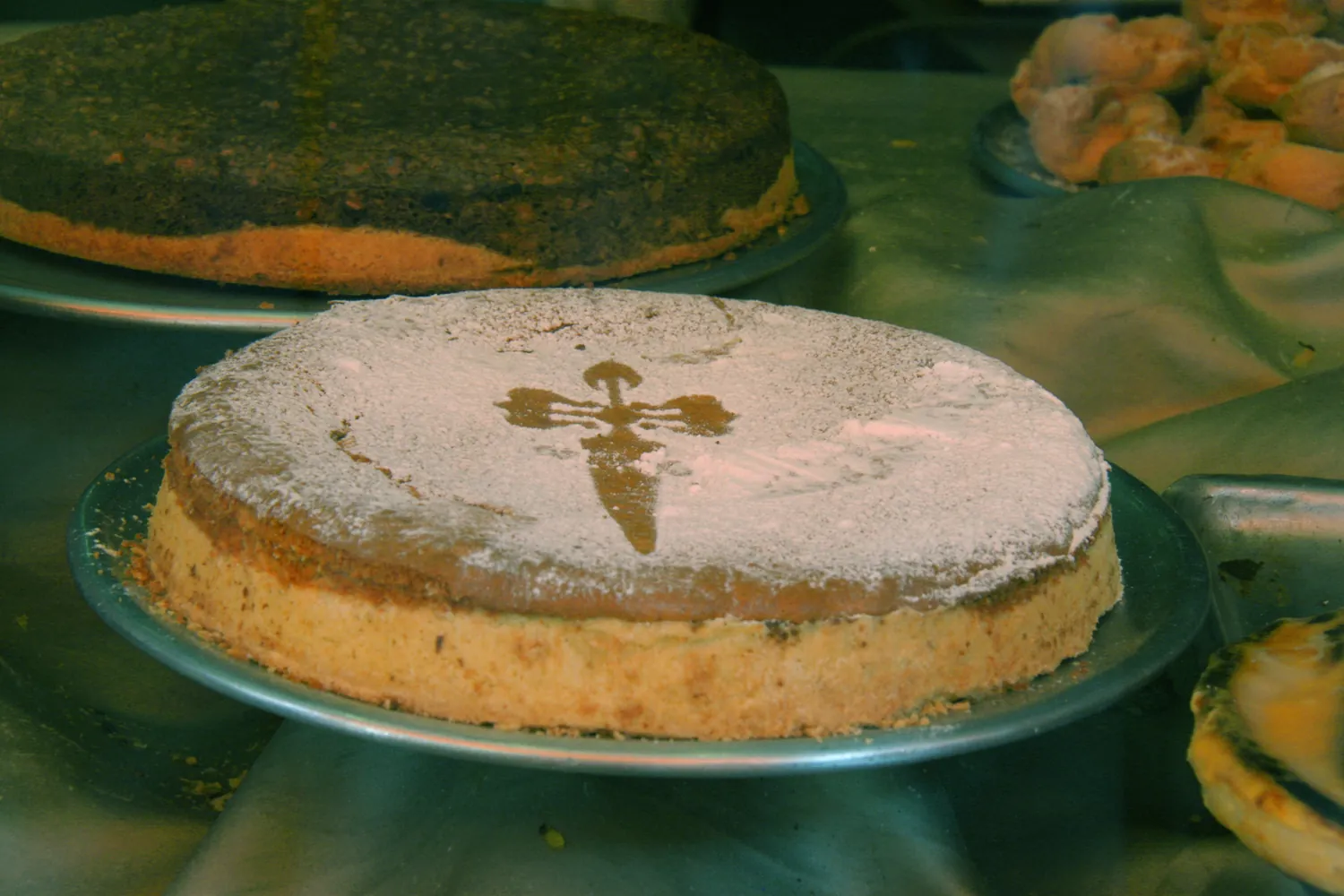
Tarta de Santiago is Galicia's almond cake: ground almonds, sugar and eggs baked into a dense, moist, golden cake, dusted with powdered sugar through a stencil of the Cross of St. James. It contains no wheat flour at all, so it is naturally gluten-free. One serving is about 80 g.

The cake's first mention dates to 1577, when it was served as Torta Real, the royal cake, at the University of Santiago de Compostela. It became the food of pilgrims on the Camino de Santiago, who carried it because almonds, sugar and eggs keep well on the road, and in 2010 it was granted protected geographical indication status as Tarta de Santiago.

Pairs well with: Coffee, sweet wine & vanilla ice cream

Provenance

Spain flag Spain

Galicia Pilgrim Cake

Mediterranean & Italy

Time Dedication

55m

20m prep • 35m cook

Batch Yield

8 Servings

328 kcal per serving

1 serving ≈ 80 g

Technical Skill

Easy

Easy (One Bowl Cake)

Meal Timing & Digestive Fit

Breakfast

Not Advised

Lunch

Inappropriate

Dinner

Inappropriate

Snack & Tea

Ideal Light Bite

Occasions: Afternoon coffee, pilgrim celebrations, dessert after a light lunch, festive tables Cost: Medium — about $2–3 per serving at home
A whole tarta de Santiago dusted with powdered sugar and the Cross of St. James

Galicia Pilgrim Cake

Photo: Tamorlan, CC BY 3.0, via Wikimedia Commons

The Heritage Formulary

Measured Ingredients

Estimated cost: Medium — about $2–3 per serving at home (USD)

A true tarta de Santiago is dense and moist, not fluffy, with the cross of St. James clearly stencilled in powdered sugar on top.

Execution Methodology & Culinary Technique

Step-by-Step Cooking Guide

Active 55m
P

Prep Stage: Tin, Oven, Eggs

20 Mins • Baking Prep

Heat the oven, grease and line a 23 cm round tin, and bring the eggs to room temperature. The whole cake comes together in one bowl, so the only real work is beating the eggs and sugar until they are pale and thick — that air is what lifts a cake with no flour in it.

Maestro Tip: Line the base with baking paper even in a non-stick tin; almond cakes stick more than flour cakes.

  1. 1

    Beat the Eggs and Sugar

    8 Mins No heat; oven preheating to 180°C (350°F)

    Beat the eggs and sugar together with an electric whisk for 6-8 minutes until pale, thick and tripled in volume; the mixture should fall from the whisk in a ribbon that sits on the surface for a second. Stir in the lemon zest, cinnamon and brandy if using.

    Do not rush this step: the beaten eggs are the only leavening in the cake.

    Done when: Pale, thick ribbon that holds its shape for a moment.

  2. 2

    Fold in the Almonds

    3 Mins No heat — room temperature, about 20°C (68°F)

    Sprinkle the almond flour over the egg mixture in two batches and fold gently with a large spoon, cutting down the middle and turning the bowl, until no dry patches remain. Stop as soon as it is mixed; over-folding knocks the air out.

    Fold, do not stir: stirring in circles deflates the eggs.

    Done when: Even batter with no dry almond flour visible.

  3. 3

    Bake Until Golden

    35 Mins 180°C (350°F)

    Pour the batter into the prepared tin and smooth the top. Bake for 30-35 minutes until deep golden and the centre springs back when pressed lightly; a skewer pushed into the centre should come out with moist crumbs, not wet batter.

    If the top browns too fast, lay a sheet of foil loosely over it for the last 10 minutes.

    Done when: Deep golden top; skewer comes out with moist crumbs.

  4. 4

    Cool and Dust the Cross

    30 Mins cooling Room temperature, about 20°C (68°F)

    Leave the cake in the tin for 10 minutes, then turn it out and cool completely on a rack. Cut a Cross of St. James out of paper, lay it in the centre, dust the whole top generously with powdered sugar through a sieve, then lift the paper off to reveal the cross.

    Dust only when the cake is fully cool, or the sugar melts into the surface.

    Done when: Cool to the touch; a crisp white cross on a golden top.

Finishing Touches & Plating

Serve at room temperature in thin slices, as the Galicians do, with coffee or a glass of sweet wine. The cake is at its best the day after baking, when the almond flavour has deepened.

Nutritional Physiology & Benefits

Nutrition

Energy

328

kcal / serving

Protein

10g

Complete AA

Carbs

34g

Complex

Fats

19g

Healthy

Per serving (8 servings · 1 serving ≈ 80 g)
Energy328 kcal
Protein10 g
Carbohydrates34 g
Fat19 g
Fibre3.9 g
Sugar28.3 g
Sodium31 mg
Per 100g
Energy410 kcal
Protein12.3 g
Carbohydrates42.5 g
Fat23.4 g
Fibre4.9 g
Sugar35.4 g
Sodium39 mg

Nutrition values are estimated — calculated from USDA FoodData Central values for the listed ingredients.

Vitamins & minerals: Vitamin E and magnesium (almonds), vitamin B2 and B12 (eggs), vitamin C (lemon zest).

Vitamin E from Almonds

Almonds are a rich source of vitamin E, and a slice of this cake carries a useful amount of it.

Protein Without Flour

With about 10 g of protein per slice from almonds and eggs, this cake is more filling than most flour cakes.

Naturally Gluten-Free

The cake is made with almond flour and no wheat at all, so people who avoid gluten can enjoy it as written.

Food Pairings

What to Eat With

To optimize nutrient absorption and elevate the sensory depth, pair with these authentic accompaniments:

Drinks

Black Coffee

Bitter black coffee balances the cake's sweetness and the richness of the almonds, which is how it is eaten on the Camino.

Sweet Wine

A small glass of sweet wine echoes the brandy in the cake and turns a slice into a dessert course.

Sides

Vanilla Ice Cream

Cold, creamy ice cream against the dense, warm-spiced cake is the classic restaurant serving.

Full Menus

After a Light Lunch

The cake is rich, so it works best after a light meal rather than a heavy one; a thin slice is enough.

Complete menu

Serve a thin slice of tarta de Santiago after a light lunch, with black coffee or a glass of sweet wine, and vanilla ice cream if you like.

Digestive Guardrails

What NOT to Combine

To prevent digestive distress, sluggishness, or palate clash, avoid pairing the dish with these elements:

Serving Warm from the Oven

Cut while warm, the cake crumbles and the sugar decoration melts; let it cool fully so it slices cleanly. This is general information, not medical advice.

Storing Uncovered

Left uncovered, the cake dries out and the powdered sugar absorbs moisture and disappears; keep it in an airtight tin. This is general information, not medical advice.

General information only, not medical advice — consult a doctor for personal dietary decisions.

Who Should Eat It

Who Should Eat

  • General adultsA rich, satisfying cake: best in a thin slice with coffee, as a treat rather than an everyday food.
  • ChildrenSuitable for children over 3 years in a small slice; it contains egg, tree nuts and alcohol that bakes off, so check for allergies first.
  • ElderlySoft and easy to chew, and naturally gluten-free; keep the slice small because it is sweet and rich.
  • Pregnant womenGenerally suitable in a small slice; the brandy bakes off, but keep portions modest and ask your clinician if unsure.
  • Breastfeeding womenGenerally suitable in a small slice; almonds and eggs add nutrients, but the cake is high in sugar.
  • AthletesA useful energy-dense snack after training, with protein from almonds and eggs.
  • Weight gainAn easy way to add energy: a generous slice with ice cream is a filling dessert.
  • Weight lossKeep to a thin slice and skip the ice cream; the cake is energy-dense and high in sugar.

Health Conditions — Adjust or Avoid

Conditions

  • DiabetesOne slice carries about 34 g of carbohydrate and 28 g of sugar, so count it carefully and keep the slice thin; ask your clinician if unsure.
  • High blood pressureVery low in sodium as written, so it fits a low-salt eating pattern; ask your clinician about your overall diet.
  • Kidney diseaseAlmonds are moderately high in potassium and phosphorus; keep to a thin slice if you follow a limit, and ask your clinician.
  • GoutThe cake is low in purines, so it is not a gout concern; ask your clinician if you are unsure.
  • Stomach issuesThe cake is rich and sweet, so eat it slowly and in a small portion if your stomach is sensitive; ask your clinician if unsure.
  • Cardiovascular diseaseAlmond fat is mostly unsaturated, but the cake is energy-dense; keep the slice thin and enjoy it occasionally, and ask your clinician about your overall diet.
  • Fatty liverHigh in sugar and energy-dense, so keep portions small and occasional; ask your clinician if you follow a prescribed diet.
  • Food allergiesContains tree nuts (almonds) and egg. Naturally gluten-free — no wheat flour is used — but check that your almond flour is certified gluten-free if you have coeliac disease, as some mills also process wheat. Contains milk only in the small amount of butter used to grease the tin; use oil instead if you avoid milk.
  • Special therapeutic dietsFits a gluten-free therapeutic diet as written; for a low-sugar or carbohydrate-counted plan, keep the slice thin and check with your clinician.

If you have a medical condition, consult your doctor before changing your diet.

Storage & Use

Storage & Use

How to store
Cool completely, then store in an airtight tin at room temperature or in the fridge.
In the fridge
Keeps 5 days in the fridge at 4°C (40°F) or below; bring back to room temperature before serving.
In the freezer
Up to 3 months, wrapped well; thaw overnight in the fridge and dust with sugar after thawing.
How to reheat
Not usually reheated; if you like it warm, heat a slice gently to 74°C (165°F) in a low oven for a few minutes.
Freezing recommended
Yes — it freezes well without the sugar dusting.
Signs it has spoiled
Sour or stale smell, mould, or a hard, dry texture.

More recipes to explore

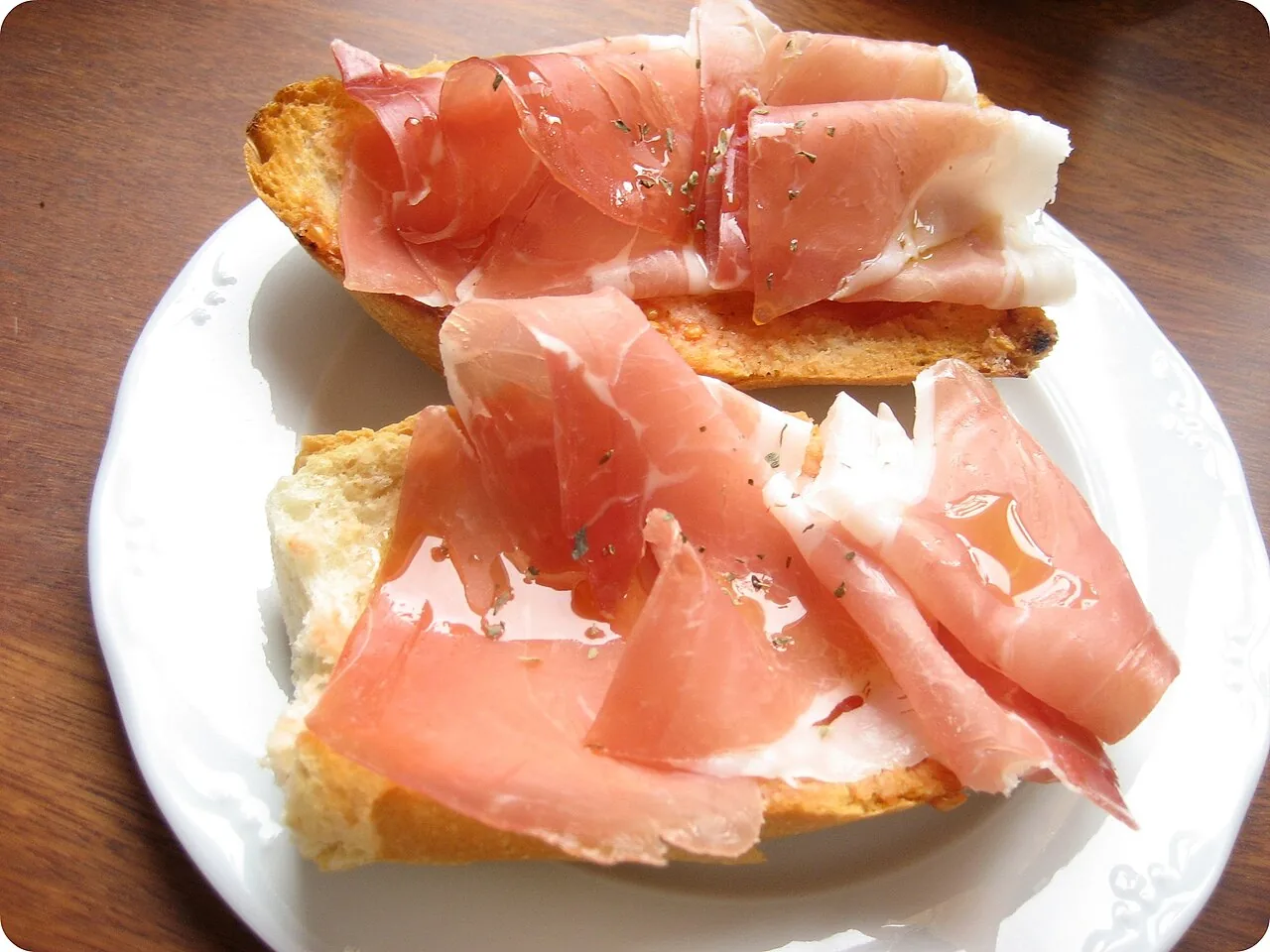
Pan con tomate with jamón ibérico on toasted bread Spain flag Spain 15m
Snack & Tea •Catalan Aperitivo

Pan con Tomate & Jamón Ibérico

Country bread rubbed with ripe Ramallet tomato, drizzled with cold-pressed Arbequina olive oil and topped with jamón ibérico.

Vascular Health

Toasted tomato bread with jamón ibérico, olive oil and olives.

Pairs Well With
Castelvetrano Olives & Sparkling Mineral Water
Quick Prep (<30m)
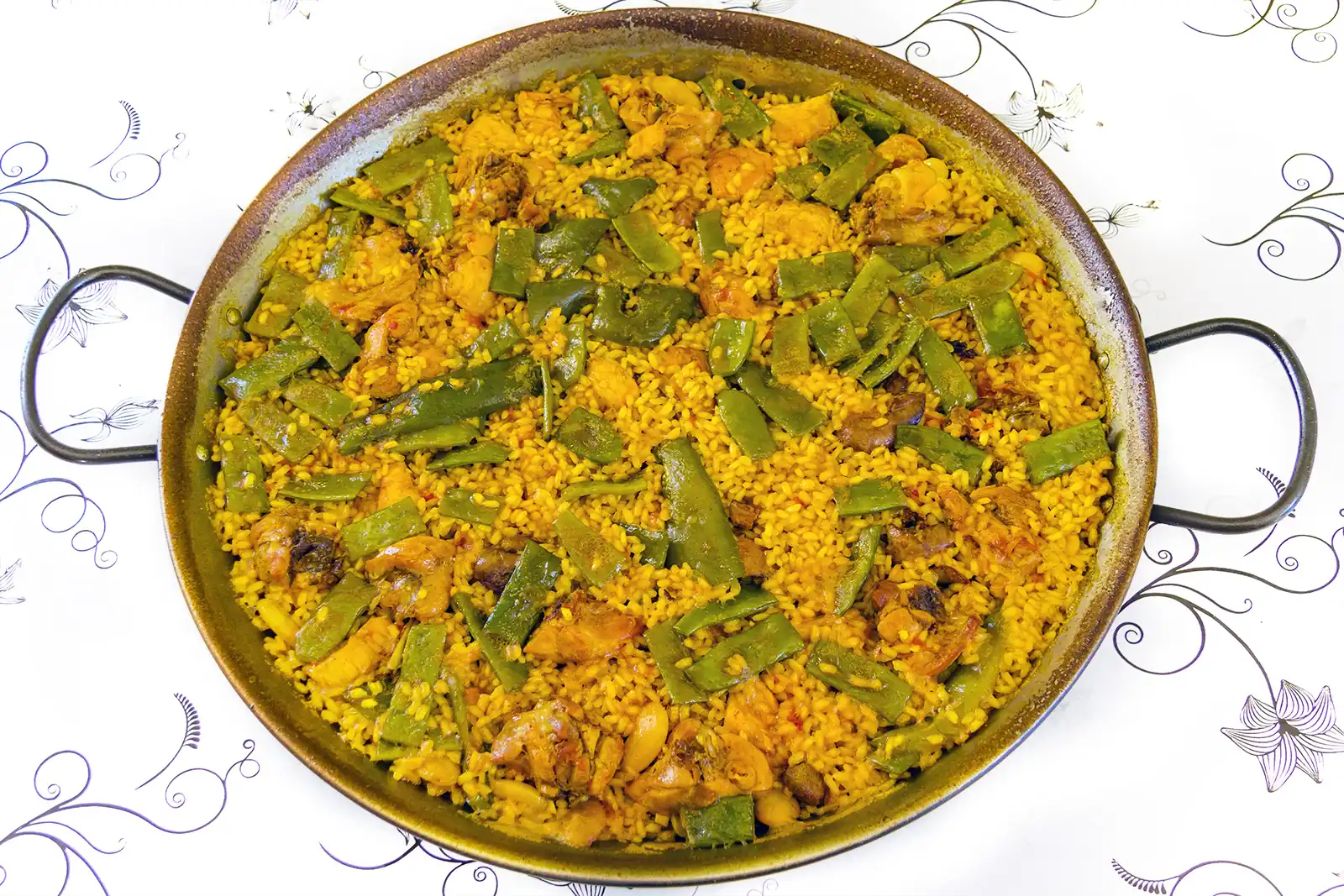
A wide paella pan of paella valenciana with saffron rice, green beans and chicken Spain flag Spain 1h 10m
Dinner •Valencia Rice Fields

Paella Valenciana

This paella valenciana recipe cooks Bomba rice in a wide, shallow pan with chicken, rabbit, green beans and garrofó beans, scented with saffron and rosemary. One serving is about 470 g.

Comfort & Warmth

Saffron rice cooked in a wide pan with chicken, rabbit and green beans.

Pairs Well With
A green salad and a glass of white wine
High Protein
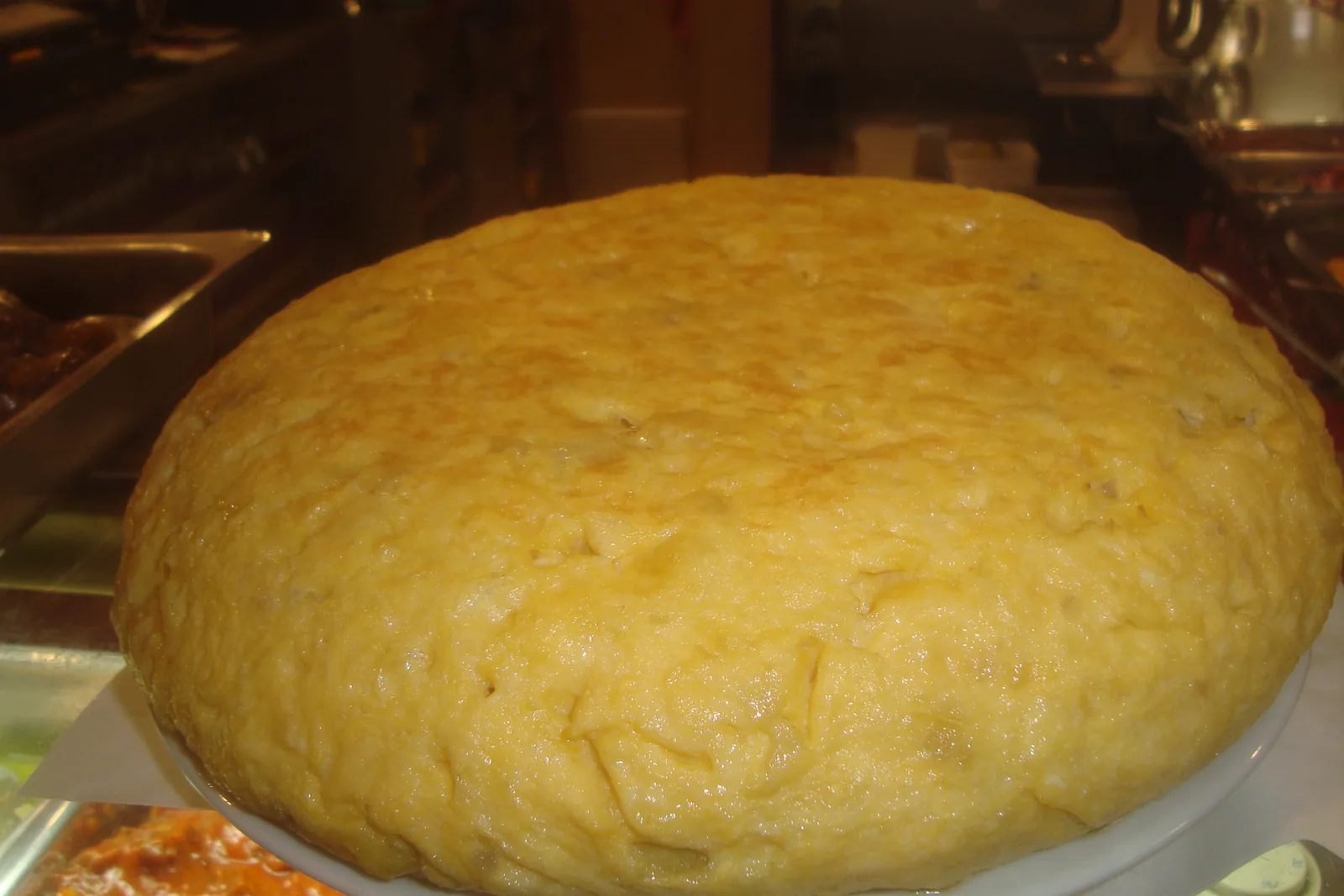
A whole golden tortilla española, a thick Spanish potato omelette, on a plate Spain flag Spain 55m
Snack & Tea •Navarre Bar Classic

Tortilla Española

This spanish tortilla recipe slowly cooks potatoes and onion in olive oil, folds them into beaten eggs, and turns out a thick, golden cake that is soft in the middle. One serving is about 220 g.

Comfort & Warmth

A thick, golden omelette of slow-cooked potatoes, onion and egg.

Pairs Well With
Pan con tomate and a glass of red wine
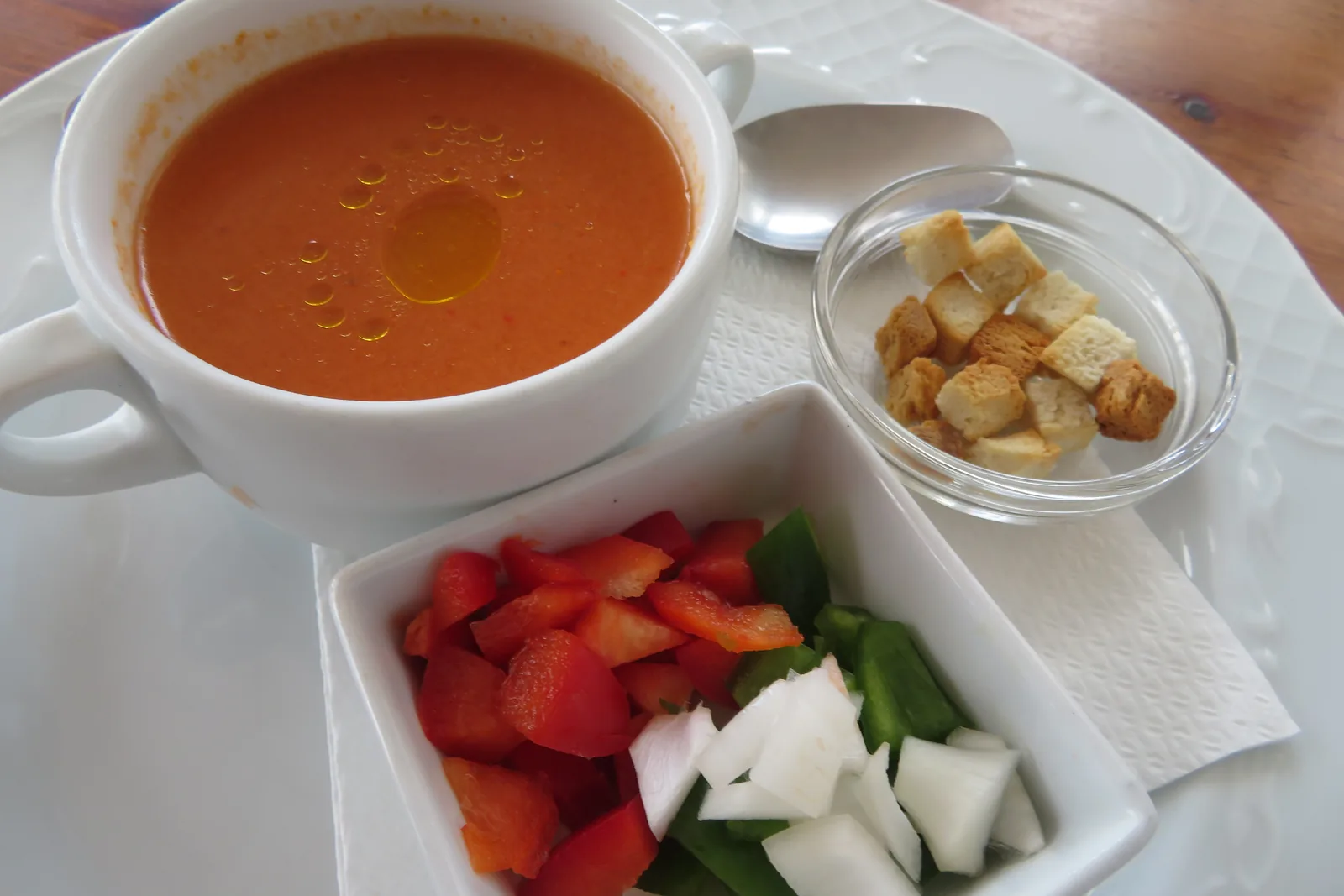
A cup of chilled orange-red gazpacho with olive oil, served with diced peppers and onion and a bowl of croutons Spain flag Spain 20m
Lunch •Andalusian Classic

Gazpacho

This gazpacho recipe is the Andalusian classic: ripe tomatoes, cucumber, green pepper, onion and garlic blended raw with bread, sherry vinegar and olive oil, then chilled until ice cold. One serving is about 395 g. It takes 20 minutes plus chilling, and there is no cooking at all.

Light & Refreshing

Chilled raw tomato soup blended with cucumber, pepper and olive oil, served cold with diced vegetables and croutons.

Pairs Well With
Croutons, diced vegetables & crusty bread
Soups & Broths • Quick Prep (<30m)

The Dinner Gazette

Never wonder what’s for dinner again

One email a week with easy dinner ideas from around the world — ingredients, steps and nutrition, tested in our kitchen first.

Delivered every Thursday morning. Unsubscribe anytime.