
Curated recipes from 193 countries  •  New seasonal Mediterranean issue out now

Overview

Thai Roti

Roti Gluay, Roti Kluai Khai, Thai Banana Pancake

This Thai roti recipe makes Bangkok's famous street pancake: a stretchy flour dough pulled paper-thin, wrapped around banana and beaten egg, fried crisp in a hot pan and cut into squares under a drizzle of condensed milk. It is sweet, buttery and best eaten hot off the pan, with the banana soft inside and the edges shattering crisp. One serving is about 218 g — one whole roti, cut into pieces.

Roti came to Thailand with Muslim traders from South Asia and was embraced by Thai cooks, who made it sweet. In Bangkok it became a night-market institution: vendors stretch the dough paper-thin on oiled carts, wrap it around banana and beaten egg, fry it crisp and finish it with condensed milk. The best-known version, roti kluai khai — banana-and-egg roti — is sold from carts on almost every busy corner after dark, and it is one of the most craved street snacks in the city.

Pairs well with: Thai iced tea, fresh coconut, and a plate of cut fruit.

Provenance

Thailand flag Thailand

Thai Heritage

East & South Asia

Time Dedication

1h 5m

50m prep • 15m cook

Batch Yield

4 Servings

458 kcal per serving

1 serving ≈ 218 g

Technical Skill

Intermediate

Medium (Stretching Dough)

Meal Timing & Digestive Fit

Breakfast

Not Advised

Lunch

Inappropriate

Dinner

Inappropriate

Snack & Tea

Ideal Light Bite

Occasions: Night-market snacking, afternoon tea, dessert, street-food cravings, when you want something sweet and hot Cost: Low — about $1–2 per serving at home
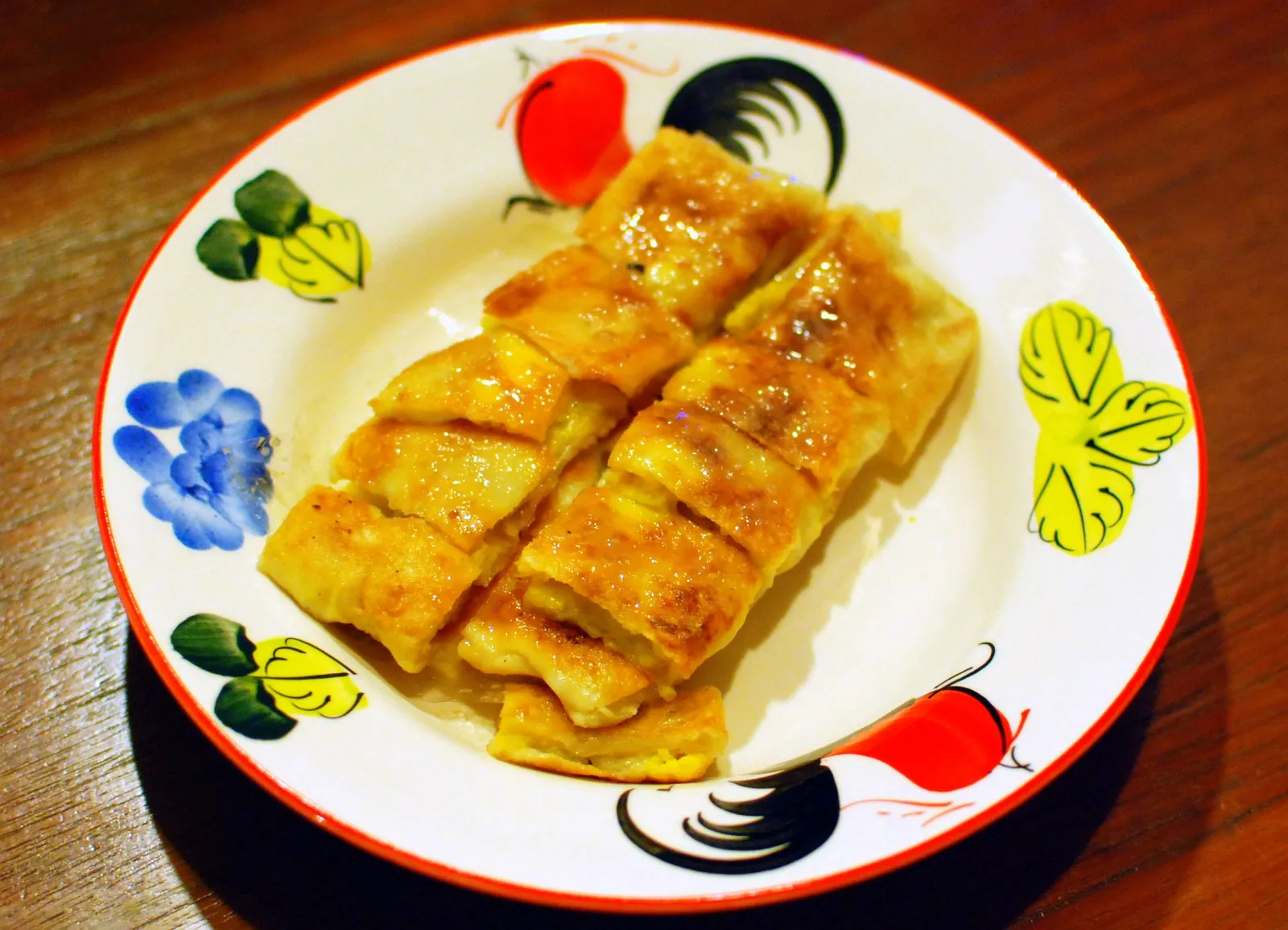
Golden Thai roti with banana and egg, cut into pieces and drizzled with condensed milk on a plate

Thai Heritage

Photo: Takeaway, CC BY-SA 3.0, via Wikimedia Commons

The Heritage Formulary

Measured Ingredients

Estimated cost: Low — about $1–2 per serving at home (USD)

Good Thai roti is judged by the stretch: the dough must be thin enough to see your hand through it, and the finished pancake must shatter crisp at the edges with soft banana inside.

Execution Methodology & Culinary Technique

Step-by-Step Cooking Guide

Active 1h 5m
P

Prep Stage: Dough, Rest and Filling

50 Mins • Kneading & Resting

Make the dough first, because it needs a long rest to relax — that rest is what lets you stretch it paper-thin without tearing. While it rests, slice the bananas and beat the eggs, so the filling is ready the moment the dough is.

Maestro Tip: Oil your hands and the work surface before stretching: a dry dough sticks and tears, an oiled one slides thin.

  1. 1

    Make the Dough

    10 Mins No heat

    Sift the flour into a large bowl and stir in the salt and sugar. Make a well, add the beaten egg, the condensed milk and the lukewarm water, and mix into a shaggy dough. Knead on an oiled surface for 8-10 minutes until smooth and elastic, then divide into 4 equal balls and coat each with a little oil.

    Knead until the dough is truly smooth — an under-kneaded dough tears when you stretch it.

    Done when: The dough is smooth, soft and slightly tacky, and springs back slowly when poked.

  2. 2

    Rest the Dough

    30 Mins Room temperature, about 25°C (77°F)

    Put the oiled dough balls in a covered bowl and leave at room temperature for 30 minutes. This rest relaxes the gluten, which is what makes the dough stretchable instead of springy.

    Do not skip the rest: a rested dough stretches paper-thin, an unrested one fights you and tears.

    Done when: The dough feels softer and more relaxed, and stretches easily without snapping back.

  3. 3

    Stretch and Fill

    10 Mins No heat

    Oil the work surface and your hands. Take one dough ball and press it flat, then stretch it from the centre outwards, lifting and pulling the edges until it is a thin sheet about 30 cm across — thin enough to see the table through it. Fold the edges in to make a square parcel, spoon in a quarter of the banana slices, pour over a quarter of the beaten egg, and fold the parcel closed.

    Stretch with the backs of your hands, not your fingertips — fingertips poke holes.

    Done when: The parcel is a neat square with the banana and egg sealed inside and no holes in the dough.

  4. 4

    Fry Until Golden and Crisp

    12 Mins Medium heat, about 170°C (340°F)

    Heat the frying oil in a flat pan over medium heat, about 170°C (340°F). Slide in the parcel, seam-side down, and fry for about 3 minutes a side until deep golden and crisp. Lift out and drain briefly. Repeat with the remaining parcels, adding a little more oil if the pan dries out.

    If the oil is too cool the roti soaks up fat and turns soggy; if it smokes, it is too hot and the outside burns before the egg sets.

    Done when: The roti is deep golden brown, crisp at the edges and puffed slightly in the middle; the egg inside is set.

  5. 5

    Cut and Serve

    3 Mins Serve hot, about 70°C (158°F)

    Cut each hot roti into bite-size squares, drizzle over the condensed milk and sprinkle with sugar. Serve at once, while the edges are still crisp.

    Eat it within minutes: a roti that sits goes soft and loses its crunch.

    Done when: The roti is golden, crisp and sweet, with soft banana and set egg inside.

Finishing Touches & Plating

Cut the hot roti into bite-size squares, drizzle over the condensed milk and sprinkle with sugar. Eat at once, while the edges are still crisp and the banana is soft.

Nutritional Physiology & Benefits

Nutrition

Energy

458

kcal / serving

Protein

13g

Complete AA

Carbs

75g

Complex

Fats

12g

Healthy

Per serving (4 servings · 1 serving ≈ 218 g)
Energy458 kcal
Protein13 g
Carbohydrates75 g
Fat12 g
Fibre3.2 g
Sugar21.4 g
Sodium557 mg
Per 100g
Energy210 kcal
Protein5.9 g
Carbohydrates34.6 g
Fat5.4 g
Fibre1.5 g
Sugar9.8 g
Sodium256 mg

Nutrition values are estimated — calculated from USDA FoodData Central values for the listed ingredients.

Vitamins & minerals: Banana and egg add potassium, vitamin B6 and vitamin D; the flour supplies B vitamins and iron.

Quick Energy from Banana and Egg

Banana, egg and flour give fast, satisfying energy — which is why Bangkok's roti carts are busiest late at night, when people want a quick, warm boost.

Made Fresh, No Preservatives

Made fresh from flour, egg and banana with nothing artificial — the sweetness comes from fruit and condensed milk, not syrups or flavourings.

A Defined, Portion-Controlled Treat

One roti is a defined, portion-controlled treat: about 458 kcal, with 13 g of protein from the egg and real fruit inside, rather than an open-ended bag of sweets.

Food Pairings

What to Eat With

To optimize nutrient absorption and elevate the sensory depth, pair with these authentic accompaniments:

Sides

Fresh Mango or Papaya

Cold, sweet mango and papaya beside a hot, fried pancake give the snack its contrast — the fruit's freshness cuts the richness of the roti.

Drinks

Thai Iced Tea

Thai iced tea is the drink Bangkok's roti carts are paired with: cold, sweet and spiced, it washes down the fried dough without competing with it.

Full Menus

As a Bangkok Night-Market Snack

Eat the roti hot from a night-market cart with iced tea in hand — that is how Bangkok eats it, standing up, straight off the pan.

More Pairings

Coconut Ice Cream

A scoop of coconut ice cream beside the hot roti melts into the crispy edges and turns a snack into a dessert.

Complete menu

Serve the roti hot with Thai iced tea and a plate of cut mango and papaya — the cold tea and fresh fruit balance the sweet, fried pancake.

Digestive Guardrails

What NOT to Combine

To prevent digestive distress, sluggishness, or palate clash, avoid pairing the dish with these elements:

Drowning It in Extra Condensed Milk

A roti already carries about 21 g of sugar per serving from the banana, condensed milk and sugar topping; piling on more condensed milk turns a snack into a sugar bomb. This is general guidance, not medical advice.

Eating Four Roti in One Sitting

One roti is about 458 kcal — a fair snack, but four of them is a full day's worth of sweet food in one sitting. This is general guidance, not medical advice.

General information only, not medical advice — consult a doctor for personal dietary decisions.

Who Should Eat It

Who Should Eat

  • General adultsA sweet, satisfying street snack — best eaten hot, one roti per person as a treat.
  • ChildrenChildren love it, but it is sweet: one roti is enough, and the condensed milk is the sweetest part.
  • ElderlySoft and easy to chew when warm; keep the portion small because of the sugar.
  • Pregnant womenGenerally suitable; the eggs and bananas are cooked through, but keep the sugar moderate.
  • Breastfeeding womenGenerally suitable as an occasional energy-rich snack.
  • AthletesA good quick energy snack after training — banana, egg and fast carbohydrate in one plate.
  • Weight gainA useful choice at about 458 kcal a serving, with egg and banana adding real nutrients.
  • Weight lossA poor everyday choice at about 458 kcal with 21 g of sugar; save it for an occasional treat and share the plate.

Health Conditions — Adjust or Avoid

Conditions

  • DiabetesThe banana, condensed milk and sugar add up to about 21 g of sugar per serving — a large amount for one snack. Eat half a roti, or skip the sugar topping. Ask your clinician about portion size.
  • High blood pressureThe sodium is moderate at about 557 mg per serving, mostly from the salted dough; one roti is fine, but do not make it a daily habit. Ask your clinician about frequency.
  • Kidney diseaseThe egg and flour add a moderate protein load; keep to one roti and skip the extra condensed milk. Ask your clinician about portion size.
  • GoutEggs and banana are low in purines, so the occasional roti is not a particular problem.
  • Stomach issuesFried dough can sit heavily on a sensitive stomach — eat a small portion while it is warm and fresh, not cold and greasy.
  • Cardiovascular diseaseThe roti is fried, so it carries about 12 g of fat per serving; an occasional treat is fine, but it is not an everyday food. Ask your clinician about frequency.
  • Fatty liverThe sugar and fried dough make this a sometimes food; enjoy it occasionally rather than daily.
  • Food allergiesContains gluten (wheat flour), egg and milk (condensed milk). The frying oil may be shared with other foods at street stalls — ask if you have a severe allergy.
  • Special therapeutic dietsIf you follow a prescribed low-sugar diet, skip the sugar topping and use less condensed milk, and check with your clinician.

If you have a medical condition, consult your doctor before changing your diet.

Storage & Use

Storage & Use

How to store
Store cooked roti in an airtight container at room temperature for a few hours, or in the fridge for a day. Keep uncooked dough balls oiled and covered.
In the fridge
Cooked roti 1 day; reheat in a dry pan to bring back some crispness.
In the freezer
Uncooked dough balls freeze well for 1 month (thaw overnight in the fridge, then rest 30 minutes before stretching).
How to reheat
Warm in a dry pan over medium heat for 1-2 minutes a side, until crisp again; reheat to 74°C (165°F) inside.
Freezing recommended
Only the uncooked dough, not the finished roti.
Signs it has spoiled
Sour smell, sticky or slimy dough, or mould on the surface.

More recipes to explore

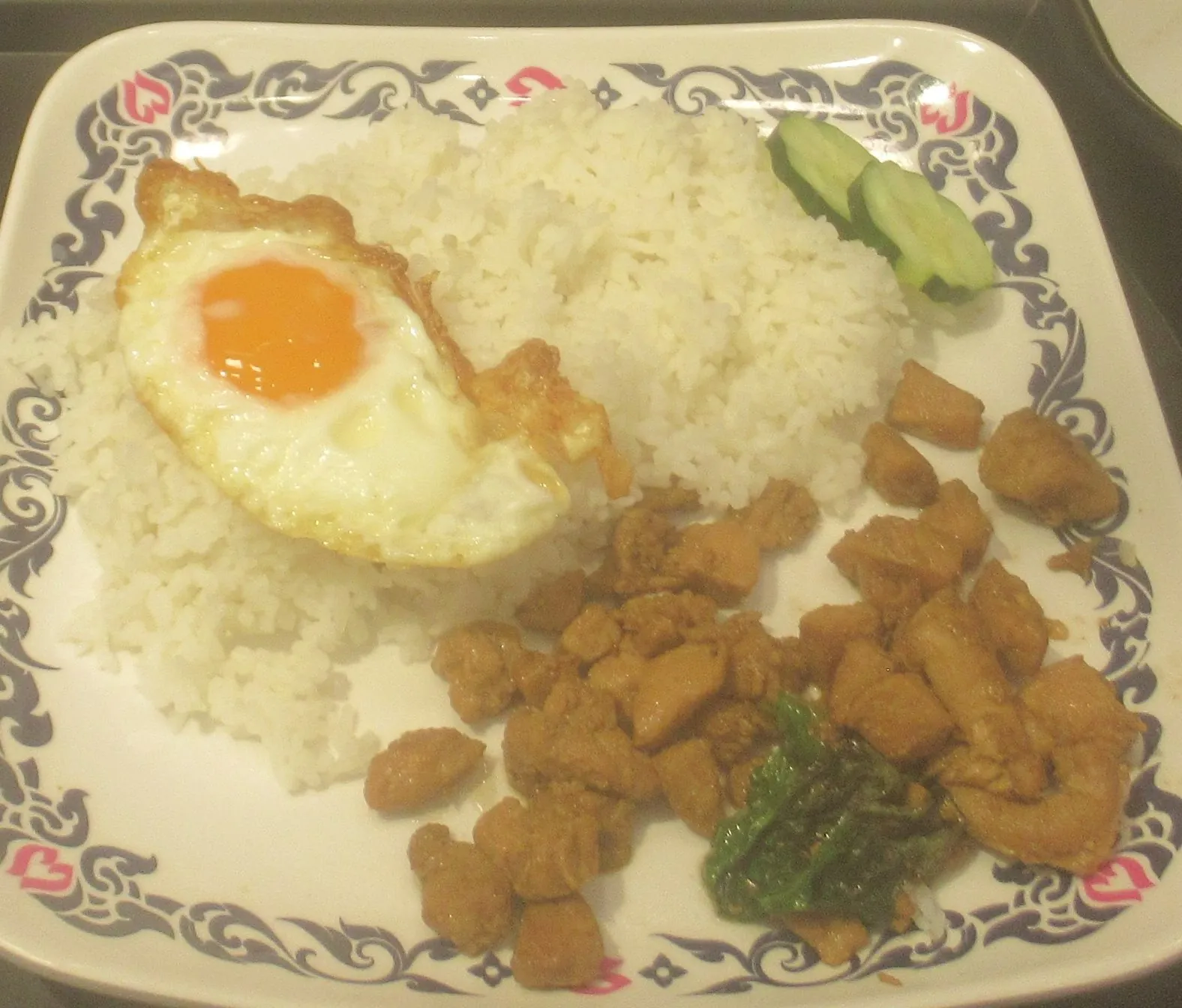
Pad kra pao gai — Thai holy basil chicken with fried egg and rice Thailand flag Thailand 30m
Lunch •Bangkok Street Flame

Pad Kra Pao Gai

High-heat wok flash of holy basil and crushed chillies over minced chicken, served over jasmine rice with a crispy-edged fried egg.

High Energy

Capsaicin brings the heat; holy basil adds a peppery, clove-like aroma.

Pairs Well With
Chilled Cucumber Salad & Fish Sauce Lime Dip
High Protein • Quick Prep (<30m)
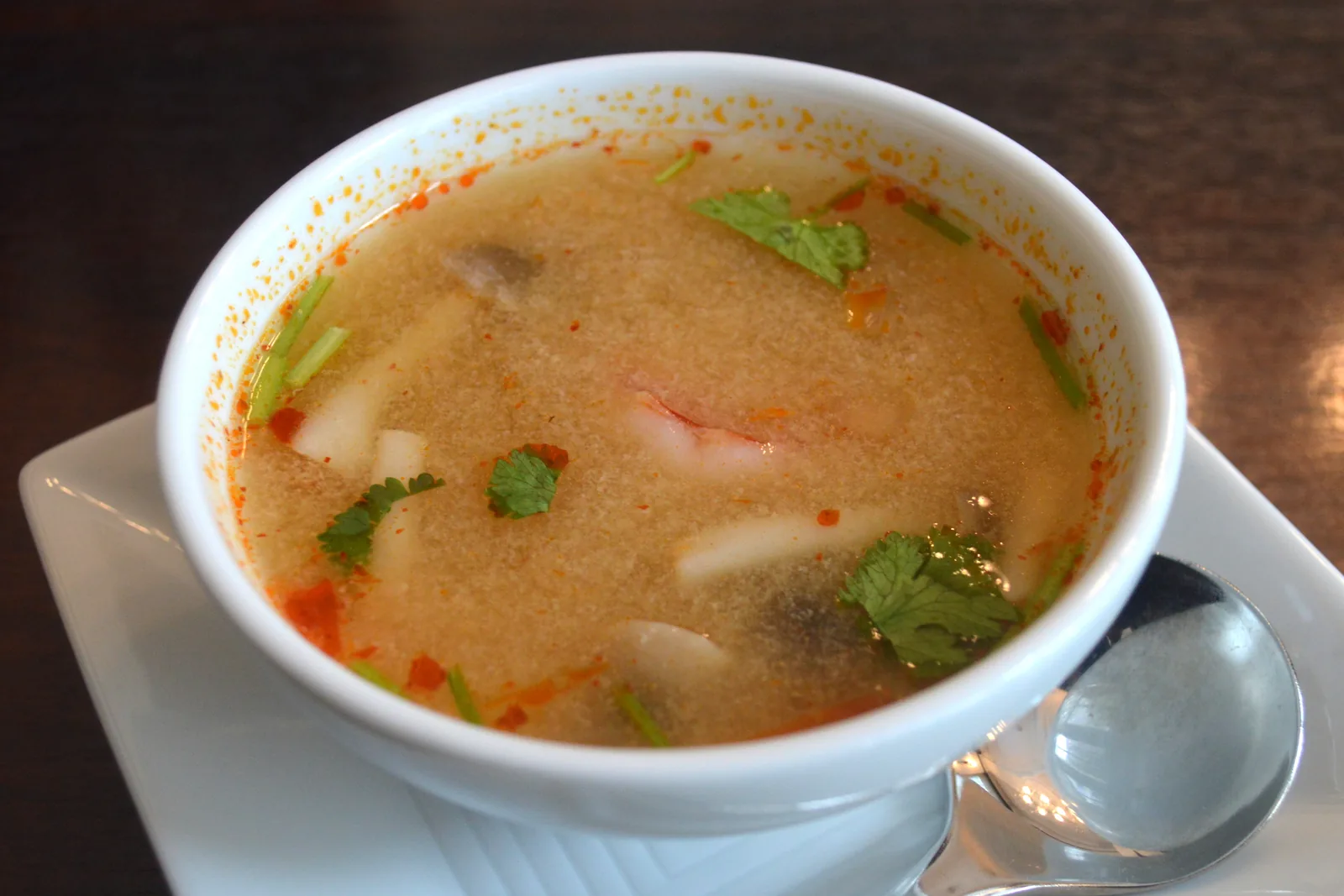
A white bowl of clear tom yum goong with a pink prawn, mushrooms and fresh cilantro Thailand flag Thailand 35m
Lunch •Central Thai Rivers

Tom Yum Goong

This tom yum goong recipe builds a clear, fiery-sour broth from lemongrass, galangal and makrut lime leaves, then finishes it with plump prawns, mushrooms and lime juice. One serving is about 460 g.

Comfort & Warmth

Hot, sour and fragrant prawn soup with lemongrass, galangal and lime.

Pairs Well With
Steamed jasmine rice and a cold Thai iced tea
Soups & Broths • High Protein
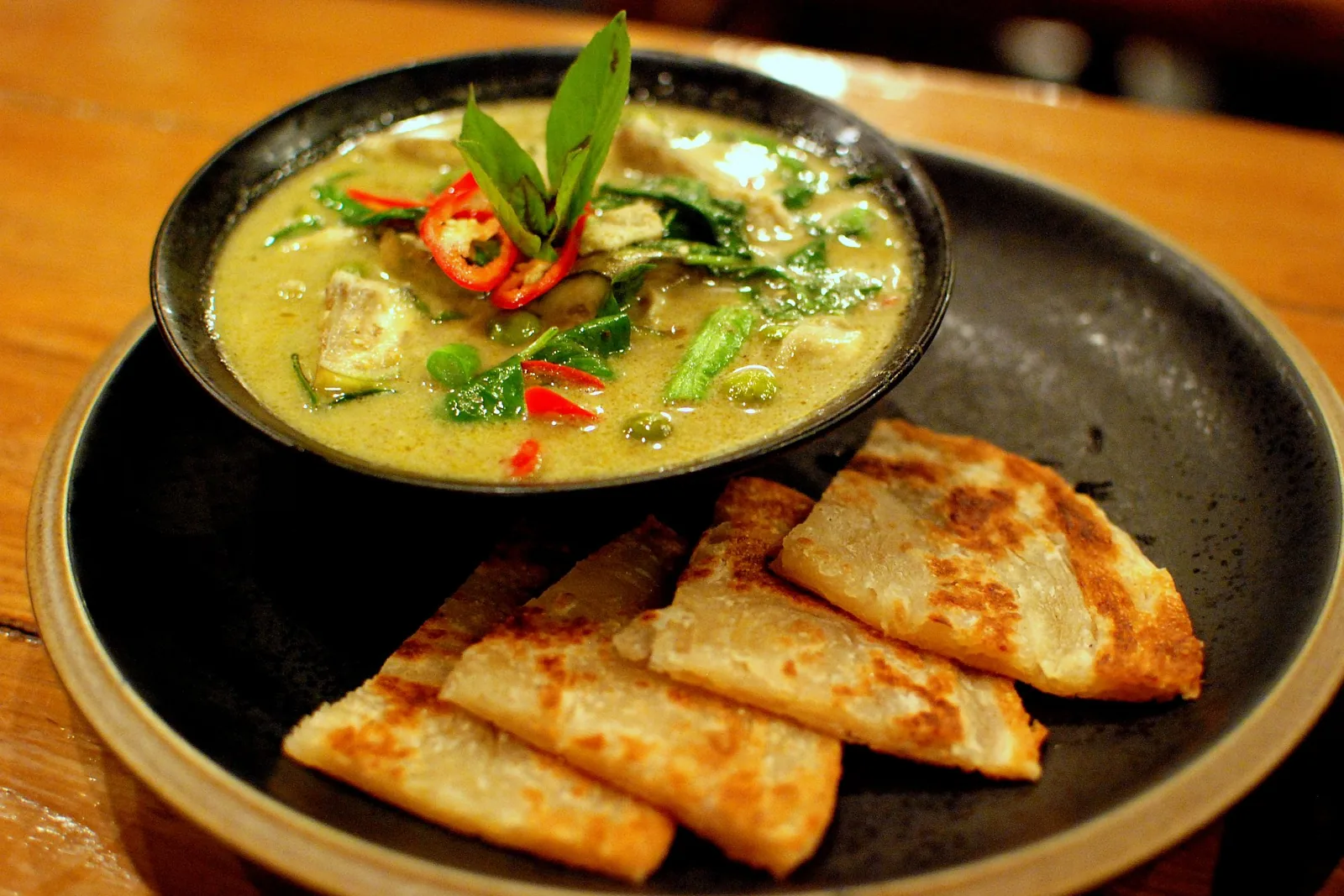
A black bowl of Thai green curry with chicken, Thai basil and red chilli, with roti on the side Thailand flag Thailand 40m
Dinner •Central Thai Classic

Thai Green Curry

This thai green curry recipe simmers chicken in coconut milk with green curry paste, Thai eggplant and bamboo shoots, finished with basil and a squeeze of lime. One serving is about 480 g, rice included.

Comfort & Warmth

Creamy coconut curry with green chillies, Thai basil and tender chicken.

Pairs Well With
Jasmine rice and a cucumber salad
High Protein
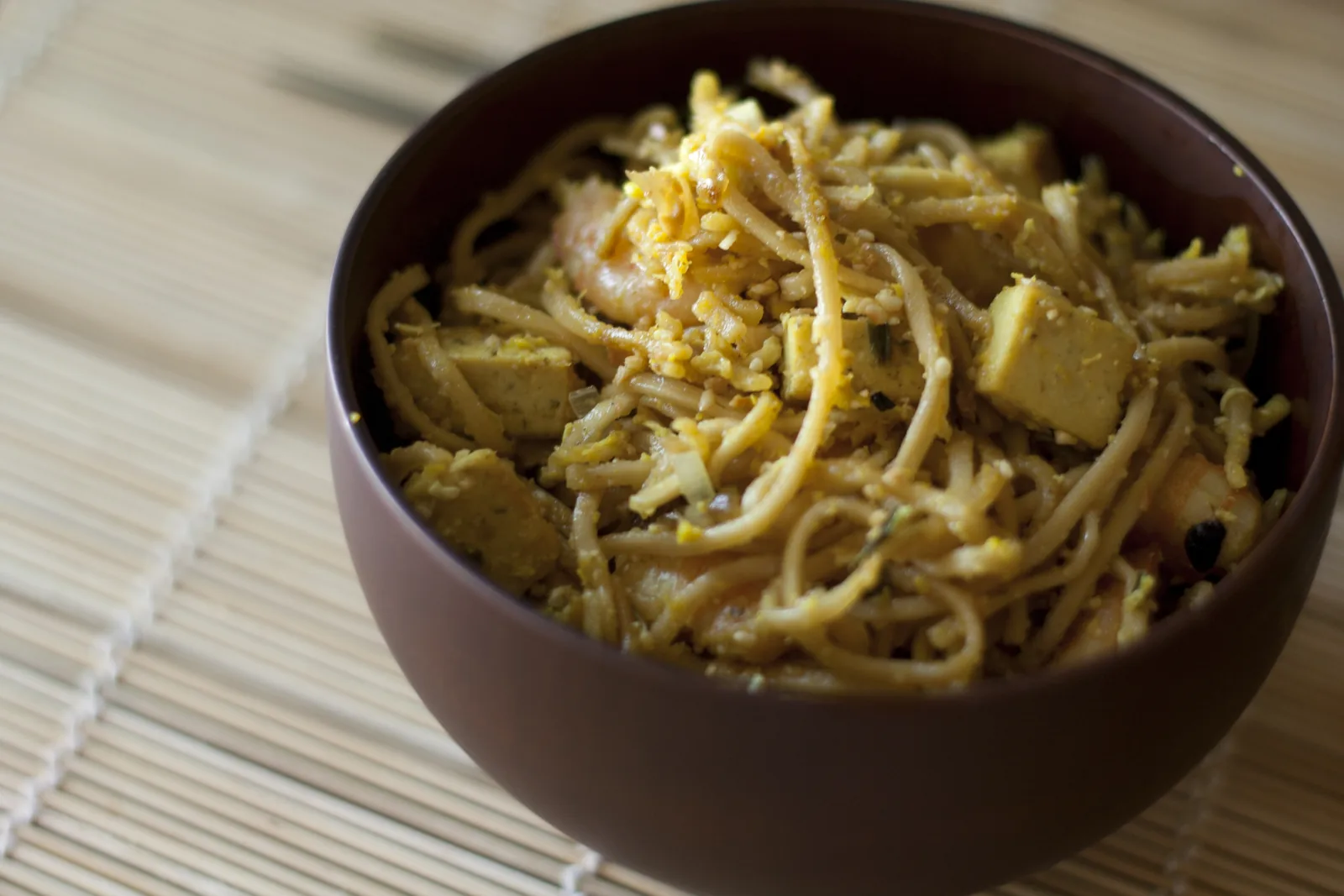
A dark bowl of pad thai with shrimp, tofu and egg, served on a bamboo mat Thailand flag Thailand 35m
Lunch •Thai Street-Food Classic

Pad Thai

This pad thai recipe stir-fries flat rice noodles with shrimp, egg and tofu in a tamarind, fish-sauce and palm-sugar glaze, finished with bean sprouts, peanuts and lime. One serving is about 350 g.

Street-Food Comfort

Stir-fried rice noodles in a sweet, sour and salty tamarind glaze, with shrimp, egg and tofu — the balance of flavours is the whole point.

Pairs Well With
Iced lime tea and a crisp cucumber salad
Pasta & Noodles

The Dinner Gazette

Never wonder what’s for dinner again

One email a week with easy dinner ideas from around the world — ingredients, steps and nutrition, tested in our kitchen first.

Delivered every Thursday morning. Unsubscribe anytime.