Curated recipes from 193 countries  •  New seasonal Mediterranean issue out now

Overview

Tigrillo

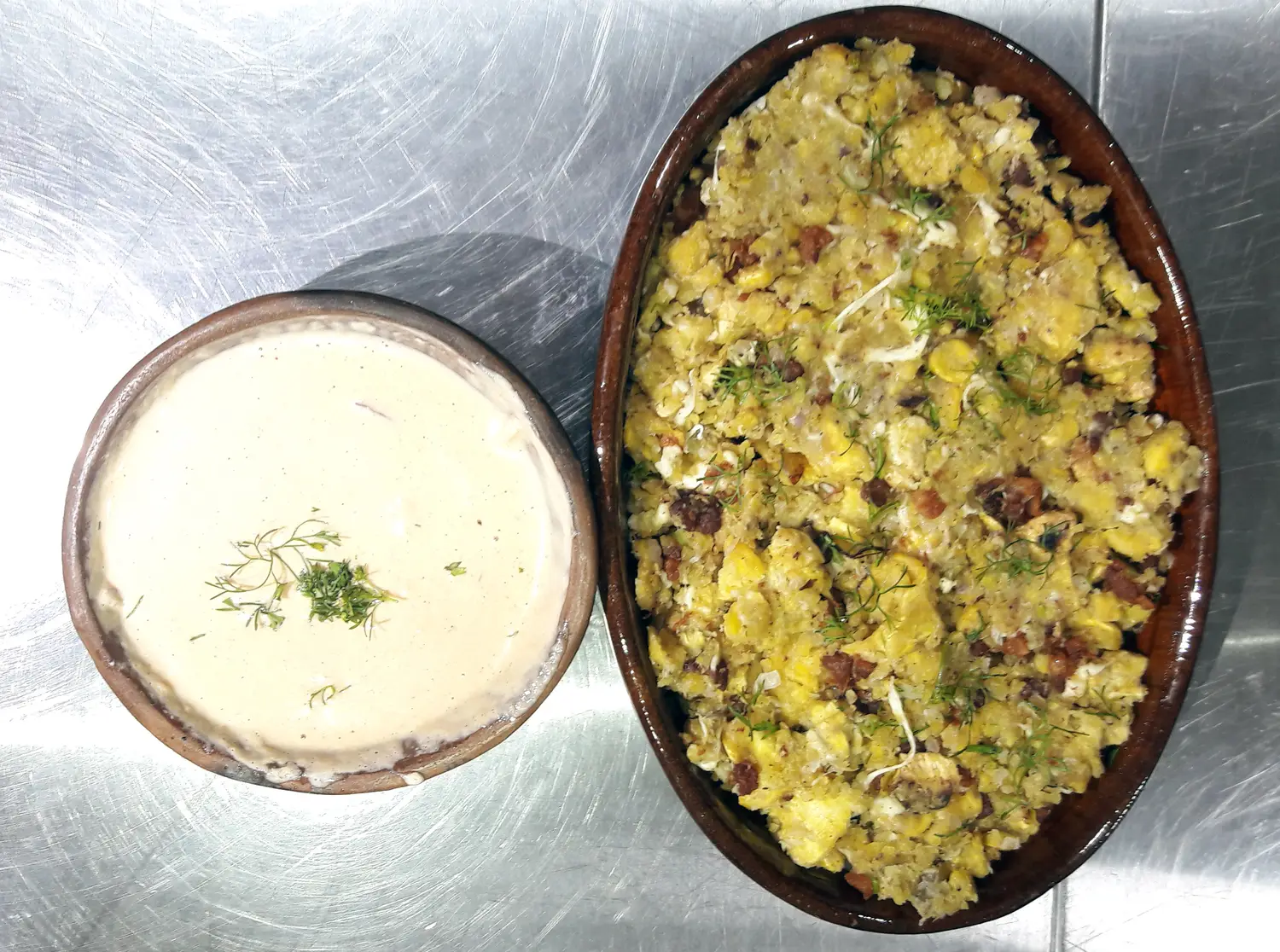
Tigrillo Ecuatoriano, Mashed Plantain with Egg and Cheese

This tigrillo recipe is Ecuador's coastal breakfast: green plantains boiled until tender, mashed with butter and milk, then scrambled in the pan with egg and cubes of cheese until everything is soft, golden and steaming. It is hearty, cheap and eaten with coffee and a fried egg on the side. One serving is about 267 g.

Tigrillo is the breakfast of Ecuador's coastal provinces — Guayas, Manabi, Los Rios and El Oro — where green plantain is the daily starch. Its name is said to come from the dish's mottled, tiger-striped look once the egg and cheese are folded through the golden mash. Farm workers ate it before dawn with coffee, and it is still sold in the morning markets of Guayaquil, piled high in clay dishes with a fried egg on top.

Pairs well with: Strong coffee, a fried egg and a slice of fresh cheese

Provenance

Ecuador flag Ecuador

Ecuadorian Coastal Breakfast

Latin America & Caribbean

Time Dedication

40m

15m prep • 25m cook

Batch Yield

4 Servings

414 kcal per serving

1 serving ≈ 267 g

Technical Skill

Easy

Easy (One Pan)

Meal Timing & Digestive Fit

Breakfast

Prime Morning Fit

Lunch

Inappropriate

Dinner

Inappropriate

Snack & Tea

Inappropriate

Occasions: Weekend breakfast, brunch, hearty morning meal, coastal breakfast Cost: Low — about $2–3 per serving at home
A dish of Ecuadorian tigrillo — golden mashed green plantain mixed with egg and melted cheese, served with a creamy sauce

Ecuadorian Coastal Breakfast

Photo: Kevinmero, CC BY-SA 4.0, via Wikimedia Commons

The Heritage Formulary

Measured Ingredients

Estimated cost: Low — about $2–3 per serving at home (USD)

Made with green plantains boiled, mashed and scrambled with egg and queso fresco; nutrition is estimated from USDA values.

Execution Methodology & Culinary Technique

Step-by-Step Cooking Guide

Active 40m
P

Prep Stage: Peel, Cube and Beat

15 Mins • Peel, Cube & Beat

Peel the green plantains — score the skin lengthways in three places and pull it off in strips, as green skin will not peel like a banana. Cut them into thick rounds, dice the onion, mince the garlic, cube the cheese and beat the eggs lightly in a bowl.

Maestro Tip: Oil your hands and knife lightly before peeling green plantain — its sap is sticky and stains.

  1. 1

    Boil the Plantains

    15 Mins High heat, about 100°C (212°F) — a rolling boil

    Put the plantain rounds in a pot, cover with water, add half the salt and bring to a rolling boil. Cook for 12 to 15 minutes, until the rounds are completely tender and a fork slides through with no resistance.

    Undercooked plantain will not mash — if the fork meets resistance, give it another 3 minutes.

    Done when: A fork slides through a round with no resistance at all.

  2. 2

    Mash with Butter and Milk

    5 Mins Off the heat, about 80°C (175°F)

    Drain the plantains well, return them to the hot pot and add the butter and warm milk. Mash with a potato masher until soft and fairly smooth — a few small lumps are fine and traditional. Season with the remaining salt.

    Mash while the plantains are still steaming hot; cold plantain turns gluey and stiff.

    Done when: The mash is soft, smooth and holds its shape on the masher.

  3. 3

    Soften the Onion and Garlic

    5 Mins Medium heat, about 175°C (350°F)

    Warm the oil in a wide frying pan over medium heat. Add the onion and garlic and cook for 4 to 5 minutes, stirring, until soft and sweet-smelling but not browned.

    A wide pan matters — the mash needs room to spread and fry, not pile up and steam.

    Done when: The onion is soft and translucent and smells sweet.

  4. 4

    Scramble in the Egg and Cheese

    8 Mins Medium heat, about 175°C (350°F)

    Add the mashed plantain to the pan and stir it through the onion. Pour in the beaten eggs and cook, stirring and folding constantly, for 4 to 5 minutes, until the egg is set through the mash. Fold in the cheese cubes and cook for 1 to 2 minutes more, until they soften into the mash. Egg dishes should reach 71°C (160°F).

    Keep the mash moving — left still, the bottom crisps while the egg on top stays raw.

    Done when: The egg is fully set with no runny streaks, the cheese is soft, and the mash is steaming hot.

  5. 5

    Serve Hot

    2 Mins Off the heat, about 65°C (150°F)

    Spoon the tigrillo into a wide dish or onto plates, scatter the coriander over the top and serve at once with coffee — it stiffens quickly as it cools, so it is eaten hot, straight from the pan.

    A hot plate keeps the mash soft for longer at the table.

    Done when: The tigrillo is soft, golden and steaming, with cheese melting through it.

Finishing Touches & Plating

Serve the tigrillo piled high in a warm dish, cheese still melting through the golden mash, with a cup of strong coffee and a fried egg alongside — breakfast on the Ecuadorian coast is not a light affair.

Nutritional Physiology & Benefits

Nutrition

Energy

414

kcal / serving

Protein

13g

Complete AA

Carbs

52g

Complex

Fats

20g

Healthy

Per serving (4 servings · 1 serving ≈ 267 g)
Energy414 kcal
Protein13 g
Carbohydrates52 g
Fat20 g
Fibre3.9 g
Sugar25.2 g
Sodium442 mg
Per 100g
Energy155 kcal
Protein4.9 g
Carbohydrates19.6 g
Fat7.3 g
Fibre1.5 g
Sugar9.4 g
Sodium165 mg

Nutrition values are estimated — calculated from USDA FoodData Central values for the listed ingredients.

Vitamins & minerals: Provides vitamin B6 and potassium from the plantain, vitamin B12 and calcium from the egg and cheese, and vitamin A from the egg yolk. Nutrition is estimated.

Filling and Energising

About 52.4 g of carbohydrate per serving from the green plantain gives slow, steady energy for a long morning.

Potassium and B6

Green plantain is rich in potassium and vitamin B6, and the mash keeps the fibre — about 3.9 g per serving.

Protein from Egg and Cheese

The egg beaten through the mash and the melted cheese bring about 13.1 g of protein per serving.

Food Pairings

What to Eat With

To optimize nutrient absorption and elevate the sensory depth, pair with these authentic accompaniments:

Sides

Fried Egg on Top

A fried egg on top of the mash is the classic coastal serving — its runny yolk turns the tigrillo even richer.

Fresh Cheese and Avocado

A slice of fresh cheese and avocado on the side adds cool, creamy contrast to the hot mash.

Drinks

Strong Black Coffee

Bitter, strong coffee is the essential partner; it cuts the richness of the cheese and egg.

Fresh Orange Juice

A glass of fresh orange juice brightens the plate and its acidity balances the starchy mash.

Complete menu

Serve the tigrillo with a fried egg on top, fresh cheese and avocado on the side, and strong black coffee for a complete Ecuadorian coastal breakfast.

Digestive Guardrails

What NOT to Combine

To prevent digestive distress, sluggishness, or palate clash, avoid pairing the dish with these elements:

Ripe Plantains

Ripe yellow plantains make a sweet, soft mash that falls apart — tigrillo needs the starch of green plantain to hold together. This is general food information, not medical advice.

Letting It Sit and Cool

The mash stiffens fast as it cools and turns heavy and dry, so serve it straight from the pan. This is general food information, not medical advice.

Undercooked Egg

Stir until the egg is fully set through the mash — runny streaks of egg in a hot mash are a food-safety risk. This is general food information, not medical advice.

General information only, not medical advice — consult a doctor for personal dietary decisions.

Who Should Eat It

Who Should Eat

  • General adultsA big, filling breakfast — one serving keeps most adults going until lunch.
  • ChildrenChildren love the soft, cheesy mash; make sure it is not too hot and the egg is fully set.
  • ElderlySoft, easy to chew and gentle — a good breakfast for older diners.
  • Pregnant womenFine when the egg is cooked through to 71°C (160°F); skip it if any egg is runny.
  • Breastfeeding womenHearty and energy-rich — a solid breakfast that keeps hunger away for hours.
  • AthletesAbout 52.4 g of carbohydrate and 414 kcal per serving makes it good fuel before a long morning.
  • Weight gainEasy to enrich: a fried egg on top and an extra spoonful of cheese.
  • Weight lossAt about 414 kcal a serving this is a substantial breakfast; keep the portion as written and skip the fried egg on top.

Health Conditions — Adjust or Avoid

Conditions

  • DiabetesThe plantain adds up to about 52.4 g of carbohydrate per serving. Keep the portion as written and skip the juice. Ask your clinician about portion size.
  • High blood pressureThe mash carries about 442 mg of sodium per serving, mostly from the cheese and salt. Use less salt and a lighter hand with the cheese. Ask your clinician about your sodium target.
  • Kidney diseasePlantain and cheese are both high in potassium, so this dish may not suit a restricted diet. Ask your clinician before making it a regular meal.
  • GoutThe dish has no meat or seafood, so purines are low. Ask your clinician if flare-ups are frequent.
  • Stomach issuesA starchy, cheesy mash is usually gentle, but the onion can bother some sensitive stomachs — use less onion if needed. Ask your clinician if symptoms persist.
  • Cardiovascular diseaseButter and cheese bring saturated fat, so this is a breakfast to enjoy in moderation. Keep the portion to one serving. Ask your clinician about fitting it into your eating plan.
  • Fatty liverA rich, starchy breakfast is a lot for one sitting; keep portions modest and balance the day with lighter meals. Ask your clinician for personal guidance.
  • Food allergiesContains milk, cheese and egg. Milk and egg are key allergens — there is no simple swap that keeps this dish.
  • Special therapeutic dietsSuitable for vegetarian diets and naturally gluten-free. Not suitable for vegan or dairy-free diets. Ask your clinician or dietitian about your specific plan.

If you have a medical condition, consult your doctor before changing your diet.

Storage & Use

Storage & Use

How to store
Cool quickly and store in an airtight container in the fridge.
In the fridge
2 days; the mash firms up when cold.
In the freezer
Freezes for up to 1 month, though the texture softens on thawing.
How to reheat
Reheat in a pan over low heat with a splash of milk, stirring, until steaming hot at 74°C (165°F).
Freezing recommended
Only if needed — best eaten fresh from the pan.
Signs it has spoiled
Sour smell, slimy surface, or mould.

More recipes to explore

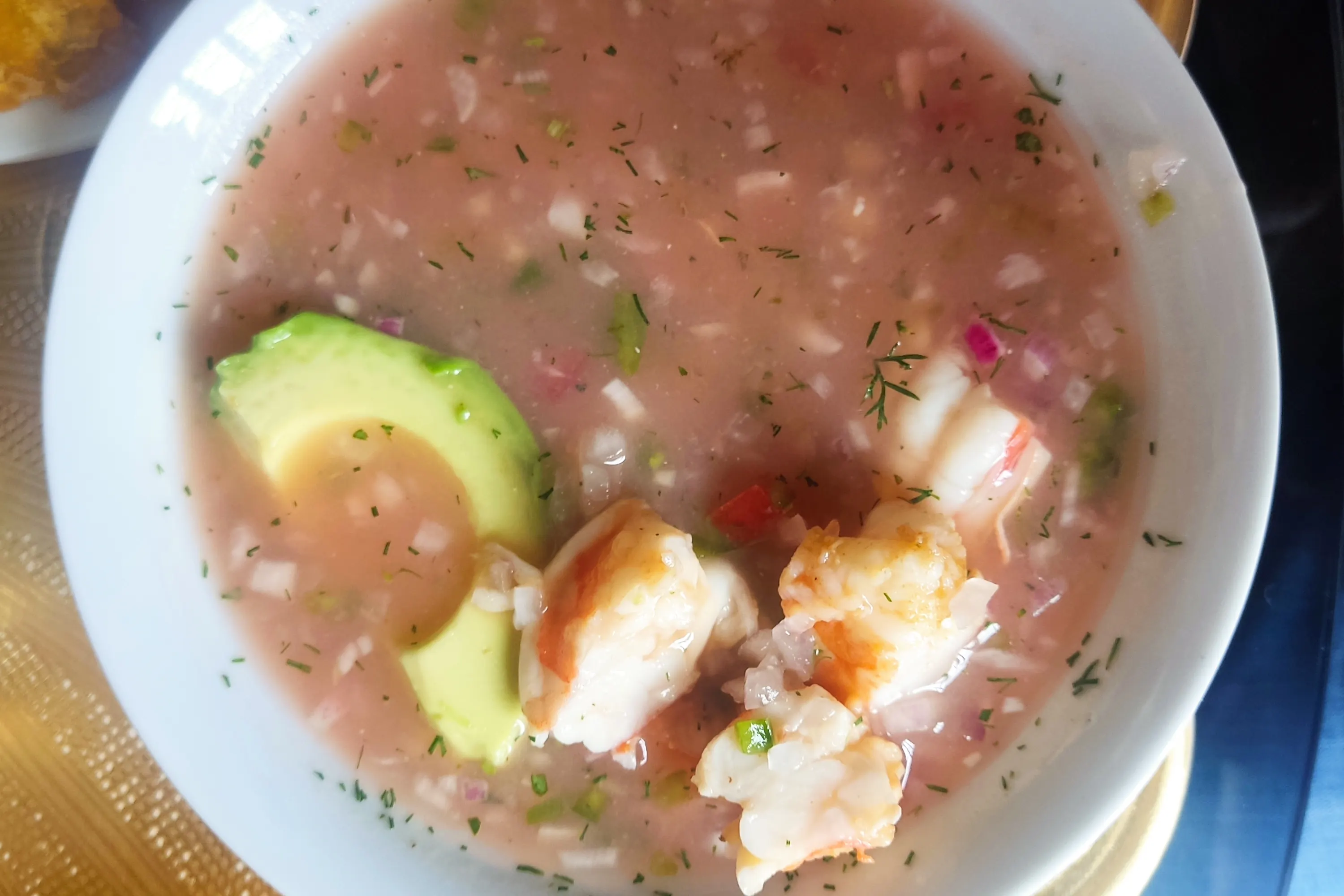
A white bowl of Ecuadorian shrimp ceviche in pink tomato-citrus sauce with cooked shrimp, red onion, cilantro and an avocado slice Ecuador flag Ecuador 30m
Lunch •Coastal Ecuador

Ecuadorian Ceviche

Ecuadorian ceviche is a bowl of poached shrimp in a pink-orange sauce of tomato, lime and orange juice, with red onion and cilantro. Unlike the Peruvian version, where raw fish is cured in lime juice, the shrimp here is cooked first, so the dish is saucy, cold and gentle rather than sharp. One serving is about 341 g.

Light & Fresh

Poached shrimp in a bright lime, orange and tomato sauce, served chilled with crunchy sides.

Pairs Well With
Chifles, popcorn and avocado slices
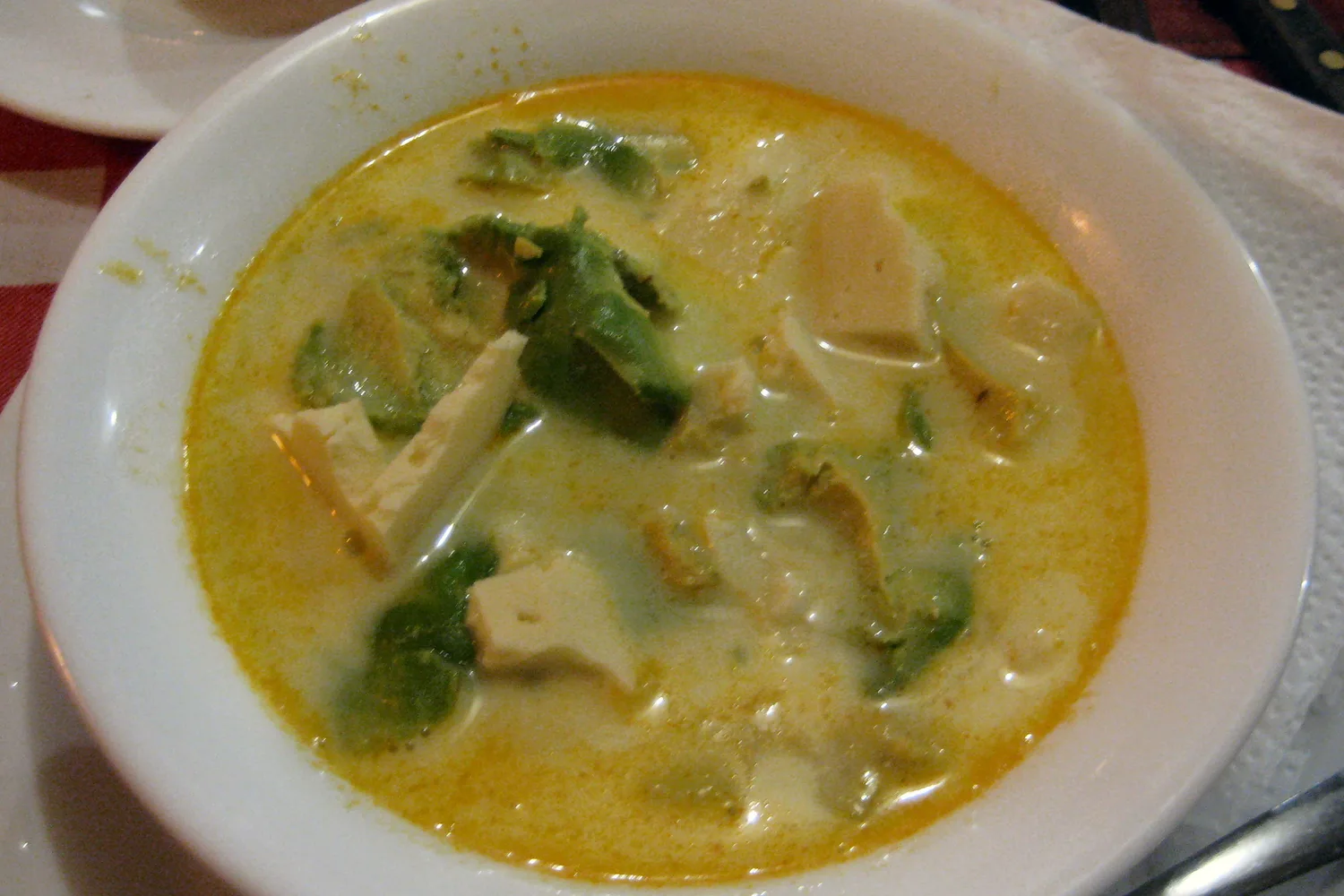
A bowl of golden locro de papa, Ecuadorian potato and cheese soup, topped with avocado chunks and cubes of white cheese Ecuador flag Ecuador 55m
Dinner •Andean Heritage

Locro de Papa

Locro de papa is Ecuador's golden potato and cheese soup, thickened by the potatoes themselves and finished with creamy avocado and crumbled queso fresco. One serving is about 675 g. It is a one-pot, meat-free dinner that tastes like the cool Andean evenings it comes from.

Comfort & Warmth

A thick, golden potato and cheese soup from the Ecuadorian highlands, finished with fresh avocado.

Pairs Well With
Crusty bread and a simple lettuce and tomato salad, with hot panela water or herbal tea to drink.
Soups & Broths
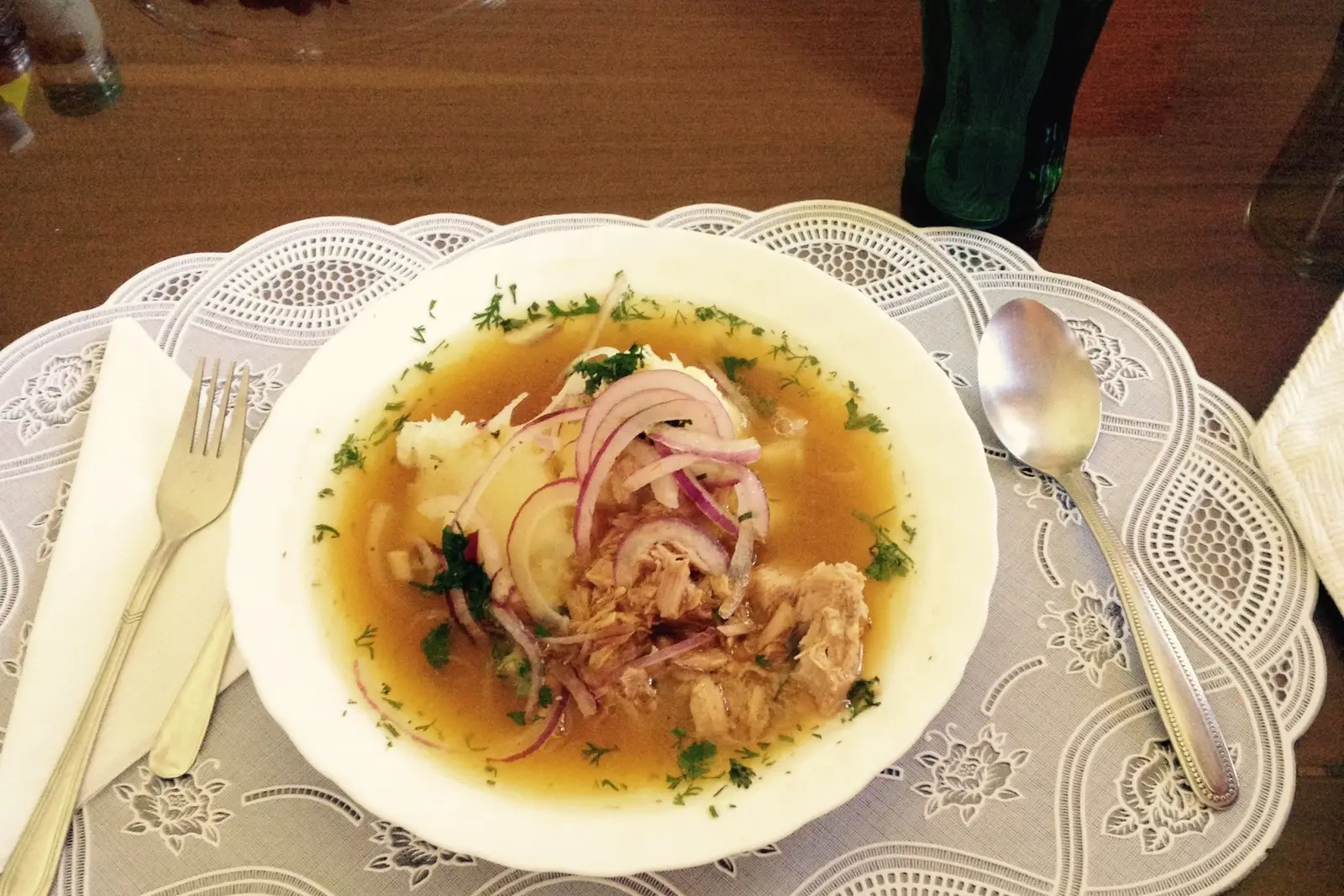
A bowl of encebollado with flaked tuna, pickled red onion rings, yuca and golden broth, sprinkled with cilantro Ecuador flag Ecuador 1h 20m
Lunch •Guayaquil Heritage

Encebollado

This encebollado recipe is Ecuador's beloved coastal soup: fresh albacore tuna simmered in a tomato, onion and cumin broth with tender chunks of yuca, then ladled into bowls under a bright mound of lime-pickled red onion and tomato. The broth is light and savoury, the onion topping is sharp and fresh, and the chifles and tostado on the side add the crunch every Ecuadorian expects. One serving is about 600 g, soup and toppings together.

Comfort & Warmth

Fresh tuna and yuca simmered in a tomato-cumin broth, finished with lime-pickled red onion and crunchy plantain chips.

Pairs Well With
Chifles (plantain chips) and tostado (toasted corn) for crunch, avocado slices, and lime wedges to squeeze over the bowl.
Soups & Broths
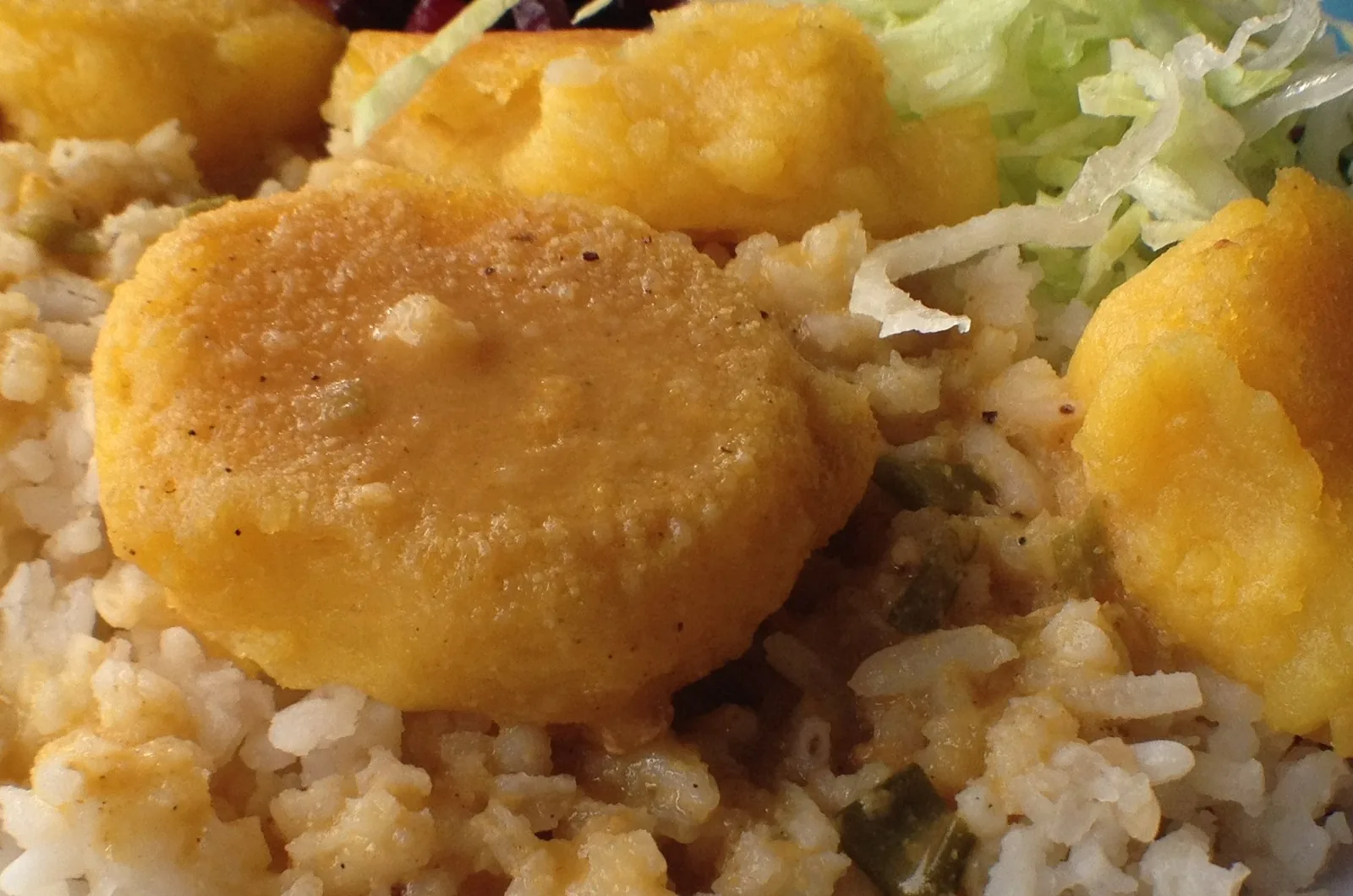
Golden llapingacho potato patties on rice with peanut sauce and shredded lettuce Ecuador flag Ecuador 1h
Lunch •Andean Heritage

Llapingacho

Llapingacho is Ecuador's most loved potato dish: mashed potato mixed with onion and annatto oil, wrapped around fresh cheese, flattened into cakes and fried until the outside is crisp and golden and the centre turns gooey. It is served with a fried egg, peanut sauce and a little salad. One serving is about 464 g.

Golden & Comforting

Mashed potato mixed with onion and annatto oil, stuffed with fresh cheese and fried golden.

Pairs Well With
Fried egg, peanut sauce and a fresh salad

The Dinner Gazette

Never wonder what’s for dinner again

One email a week with easy dinner ideas from around the world — ingredients, steps and nutrition, tested in our kitchen first.

Delivered every Thursday morning. Unsubscribe anytime.