
Curated recipes from 193 countries  •  New seasonal Mediterranean issue out now

Overview

Tteokguk

Tteok-guk, Korean rice cake soup

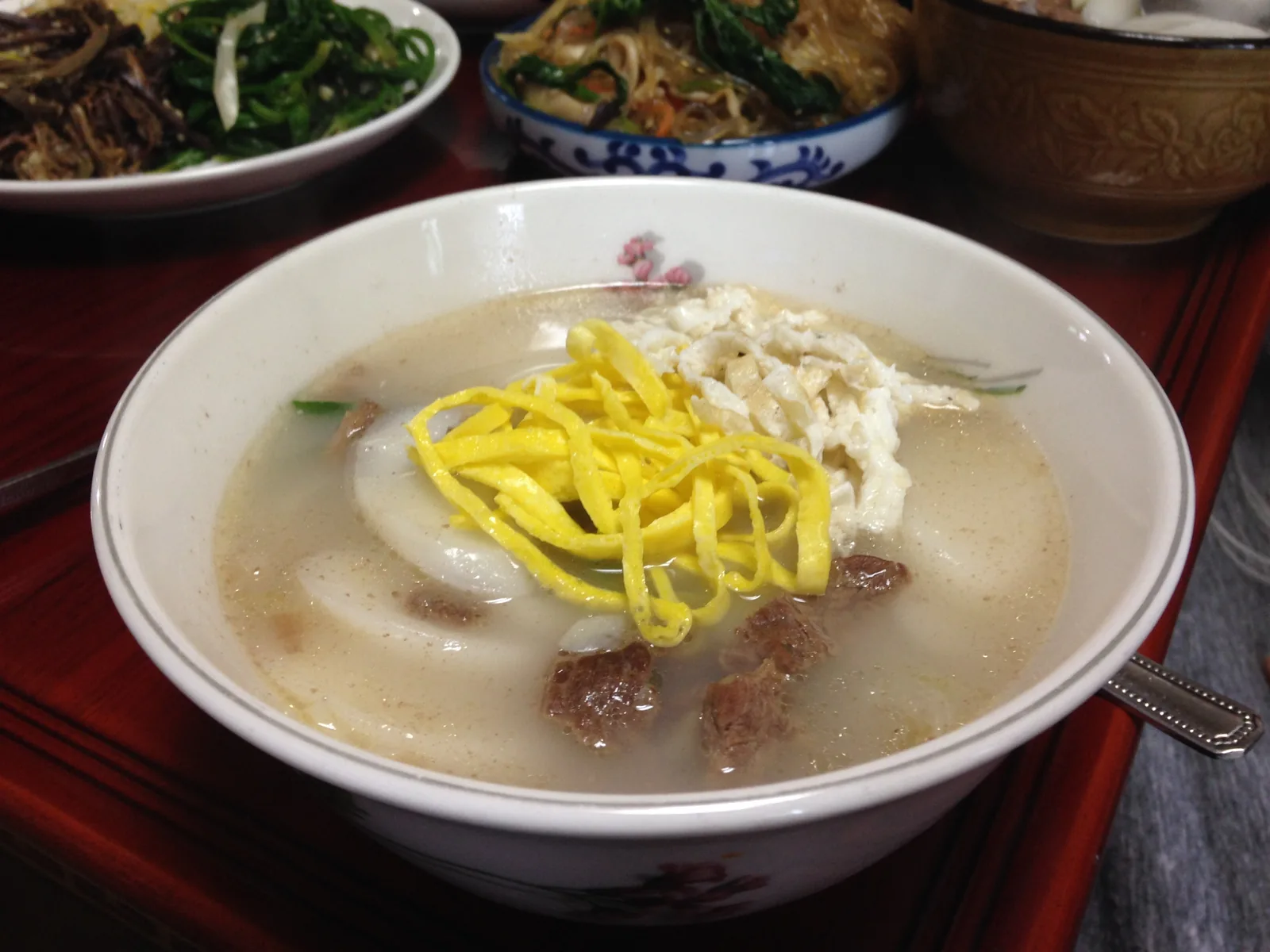
This tteokguk recipe simmers beef brisket into a clear, gently savoury broth, then cooks sliced rice cakes in it until soft and chewy, and finishes each bowl with yellow and white egg ribbons, green onion and sesame. It is the classic Lunar New Year soup, eaten to mark another year. One serving is about 560 g.

Tteokguk is the soup of Seollal, the Korean Lunar New Year: eating a bowl is said to mark turning a year older, and families gather for it on New Year's morning. The white, oval rice cakes are shaped like old coins, a symbol of good fortune for the year ahead.

Pairs well with: Serve hot with kimchi and a small plate of seasoned seaweed on the side.

Provenance

South Korea flag South Korea

Korean New Year Classic

East & South Asia

Time Dedication

1h 5m

20m prep • 45m cook

Batch Yield

4 Servings

452 kcal per serving

1 serving ≈ 560 g

Technical Skill

Intermediate

Medium (Simmered Soup)

Meal Timing & Digestive Fit

Breakfast

Not Advised

Lunch

Hearty Midday Main

Dinner

Ideal Hearty Main

Snack & Tea

Inappropriate

Soups & Broths Occasions: Lunar New Year, family dinners, cold winter evenings, comfort food Cost: Low - about $3-4 per serving at home
A bowl of tteokguk - sliced white rice cakes and beef in a clear broth, topped with yellow and white egg ribbons

Korean New Year Classic

Photo: soscs, CC0, via Wikimedia Commons

The Heritage Formulary

Measured Ingredients

Estimated cost: Low - about $3-4 per serving at home (USD)

Good tteokguk has a clear broth, rice cakes that are soft but still chewy, and bright yellow and white egg ribbons - never cloudy, mushy or grey.

Execution Methodology & Culinary Technique

Step-by-Step Cooking Guide

Active 1h 5m
P

Prep Stage: Soak, Separate, Slice

20 Mins • Pot, Pan & Bowls

Soak the rice cakes in cold water while the broth simmers, separate the eggs into yolks and whites for the ribbons, and slice the green onions. Everything for the garnish is ready before the soup is finished, so the bowls go out hot.

Maestro Tip: Soaking cold rice cakes for 10 minutes is what keeps them from cooking unevenly - dry, fridge-hard slices go gummy outside and chalky inside.

  1. 1

    Simmer the beef broth

    40 minutes Boiling 100°C (212°F), then simmering 95°C (203°F)

    Put the water (1600 ml) and the brisket (300 g) in a large pot. Bring to a boil over high heat, skim off the foam, then lower the heat so the broth barely bubbles. Cover and simmer for 40 minutes until the beef is tender.

    Skim patiently in the first 10 minutes - a clear broth is the whole point of tteokguk.

    Done when: Beef yields easily to a fork and reaches at least 71°C (160°F) inside; broth is clear, not cloudy.

  2. 2

    Slice the beef and season the broth

    5 minutes Simmering 95°C (203°F)

    Lift the beef out, let it rest for 5 minutes, then slice it thinly across the grain. Stir the garlic (12 g), soy sauce (20 ml) and salt (2 g) into the broth and taste - it should be gently savoury, not salty.

    Slice the beef thin so it stays tender in the soup; thick slices turn chewy.

    Done when: Broth tastes clean and lightly seasoned; beef slices are pink-free and tender.

  3. 3

    Cook the egg ribbons (jidan)

    5 minutes Medium heat, pan about 160°C (320°F)

    Whisk the yolks in one bowl and the whites in another, each with a pinch of salt. Film a small pan with a drop of oil, pour in the yolk, and cook a thin yellow omelette for about 1 minute without browning it. Repeat with the white. Roll each omelette up and slice into thin ribbons.

    Keep the heat medium-low - browned egg ribbons lose their bright yellow and white contrast.

    Done when: Two flat, pale omelettes that roll up without cracking; ribbons about 3 mm wide.

  4. 4

    Cook the rice cakes in the broth

    6 minutes Simmering 95°C (203°F)

    Bring the broth back to a gentle simmer and add the drained rice cakes (400 g). Cook for 5-6 minutes, stirring once or twice so they do not stick to the bottom, until they are soft, chewy and slightly puffed.

    Do not boil hard - violent bubbling makes the rice cakes go mushy on the outside before the middle softens.

    Done when: Rice cakes are soft all the way through with a springy chew; broth has thickened very slightly.

  5. 5

    Finish and serve

    3 minutes Serving hot, about 75°C (167°F)

    Stir the sesame oil (10 ml) into the pot. Ladle the soup into four bowls, about 560 g each, dividing the rice cakes and beef evenly. Top each bowl with egg ribbons, green onions (40 g), sesame seeds (5 g) and black pepper (1 g). Serve immediately.

    Divide the rice cakes first, then the broth - otherwise one bowl gets all the cakes.

    Done when: Steaming hot bowls, rice cakes floating in clear broth, yellow and white ribbons on top.

Finishing Touches & Plating

Serve the tteokguk the moment it is ladled - rice cakes firm up as they cool, and the soup is at its best steaming hot with the egg ribbons still bright.

Nutritional Physiology & Benefits

Nutrition

Energy

452

kcal / serving

Protein

20g

Complete AA

Carbs

46g

Complex

Fats

20g

Healthy

Per serving (4 servings · 1 serving ≈ 560 g)
Energy452 kcal
Protein20 g
Carbohydrates46 g
Fat20 g
Fibre1.3 g
Sugar0.4 g
Sodium570 mg
Per 100g
Energy81 kcal
Protein3.6 g
Carbohydrates8.3 g
Fat3.5 g
Fibre0.2 g
Sugar0.1 g
Sodium102 mg

Nutrition values are estimated — calculated from USDA FoodData Central values for the listed ingredients.

Vitamins & minerals: B vitamins and iron from the beef and egg, vitamin K from the green onion, and iodine in small amounts. Nutrition values are estimated.

Light, clear comfort

A clear broth, lean beef and rice cakes make a warming bowl that feels light rather than heavy - about 452 kcal a serving.

Steady energy from rice cakes

Each serving carries about 46.5 g of carbohydrate from the rice cakes, with 20.2 g of protein from the beef and egg.

Simple, unprocessed ingredients

Beef, rice, egg, garlic and green onion - the whole soup is built from plain ingredients, with nothing artificial.

Food Pairings

What to Eat With

To optimize nutrient absorption and elevate the sensory depth, pair with these authentic accompaniments:

Vegetables

Kimchi

Sharp, crunchy kimchi cuts through the mild broth and gives the meal its contrast - the classic partner for tteokguk.

Sides

Seasoned seaweed (gim)

Crisp, salty seaweed sheets are torn over the soup or eaten alongside; their savoury flavour suits the clear broth.

Drinks

Barley tea (boricha)

Toasty, caffeine-free barley tea is the usual table drink - it is mild enough not to fight the delicate broth.

Full Menus

Full New Year table

For Lunar New Year, serve tteokguk first, then jeon (savoury pancakes) and japchae - the soup opens the meal, the pancakes follow.

Complete menu

Tteokguk with kimchi and seasoned seaweed, followed by jeon pancakes and japchae for a full Korean New Year table.

Digestive Guardrails

What NOT to Combine

To prevent digestive distress, sluggishness, or palate clash, avoid pairing the dish with these elements:

Boiling the rice cakes hard

A rolling boil breaks rice cakes apart and clouds the broth. Keep the soup at a gentle simmer once the cakes go in. This is general information, not medical advice.

Leaving cooked rice cakes in the pot

Rice cakes left sitting in hot broth keep absorbing liquid and turn bloated and soft. Ladle the soup out as soon as the cakes are done. This is general information, not medical advice.

General information only, not medical advice — consult a doctor for personal dietary decisions.

Who Should Eat It

Who Should Eat

  • General adultsA satisfying dinner at about 452 kcal a serving - the clear broth, beef and rice cakes make a complete bowl on their own.
  • ChildrenUsually enjoyed - the rice cakes are soft and the broth is mild. Cut the rice cakes smaller for young children and go easy on the pepper.
  • ElderlySoft, easy to chew and warming; serve in a smaller bowl if a full serving is too much.
  • Pregnant womenA gentle, fully cooked soup; the eggs and beef are cooked through. Keep the soy sauce light if you are watching sodium.
  • Breastfeeding womenFine as a main dish - beef, egg and rice give protein and energy; keep the portion moderate and the broth light.
  • AthletesRice cakes give quick carbohydrate and the bowl carries 20.2 g of protein; add kimchi and an extra egg for a fuller recovery meal.
  • Weight gainEasy to eat in quantity - a second helping of rice cakes adds energy without much effort.
  • Weight lossThe 1.3 g of fibre per serving is low, so the soup is not very filling on its own; pair it with kimchi and vegetables rather than a second bowl.

Health Conditions — Adjust or Avoid

Conditions

  • DiabetesOne serving carries about 46.5 g of carbohydrate from the rice cakes, so count the portion and ask your clinician about serving size.
  • High blood pressureSodium is about 570 mg per serving; keep the soy sauce and salt light and ask your clinician if you are on a low-sodium plan.
  • Kidney diseaseBeef and soy sauce are both high in purines and sodium, so this soup is not ideal for a kidney diet. Ask your clinician before eating it regularly.
  • GoutBeef is moderate in purines; a smaller portion with extra vegetables is the safer approach. Ask your clinician if you are managing gout.
  • Stomach issuesA mild, clear broth is usually easy on the stomach, but the sesame oil and pepper can irritate a sensitive stomach - leave them out if needed. Ask your clinician if symptoms persist.
  • Cardiovascular diseaseThe broth is light and the fat is about 19.8 g per serving; keep portions moderate and ask your clinician about saturated fat.
  • Fatty liverKeep the portion to one bowl and go easy on the sesame oil; ask your clinician about fat and sodium for your situation.
  • Food allergiesContains egg, beef, soy (soy sauce) and sesame - all common allergens. Check the labels and ask your clinician if you have a food allergy.
  • Special therapeutic dietsA plain soup that can be adjusted - less salt, no pepper, extra vegetables - but any therapeutic diet should be checked with your clinician.

If you have a medical condition, consult your doctor before changing your diet.

Storage & Use

Storage & Use

How to store
Cool the soup quickly, then keep the broth and the rice cakes in separate sealed containers.
In the fridge
Keeps 2 days in the fridge at 4°C (40°F) or below; the rice cakes firm up when cold.
In the freezer
Freeze the broth only, without the rice cakes, for up to 2 months; rice cakes go grainy when frozen.
How to reheat
Reheat the broth to a full boil, 100°C (212°F), then add fresh or leftover rice cakes and simmer 3-4 minutes until soft; reheat leftovers to 74°C (165°F) throughout.
Freezing recommended
Only the broth - not the finished soup with rice cakes.
Signs it has spoiled
Sour smell, slimy rice cakes, or a cloudy, off-smelling broth - discard if any appear.

More recipes to explore

Dolsot bibimbap in a hot black stone bowl — bulgogi beef, egg yolk, carrots, zucchini, bean sprouts and sesame seeds over rice South Korea flag South Korea 1h 5m
Dinner •Korean Heritage

Bibimbap

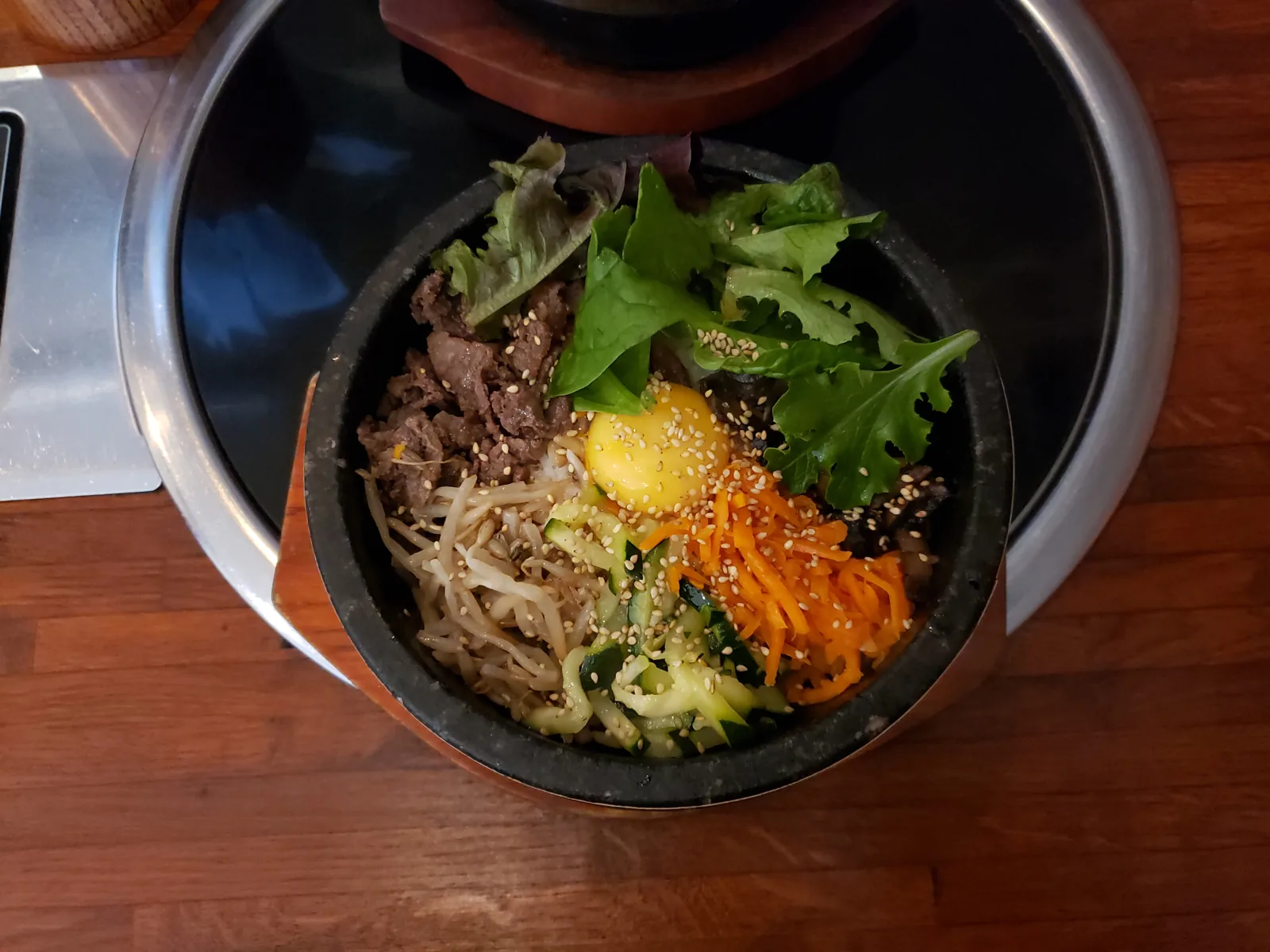
This bibimbap recipe builds Korea's most famous rice bowl the dolsot way: hot rice in a sizzling stone pot, ringed with five separately seasoned namul vegetables, bulgogi beef and a fried egg, with gochujang to stir through at the table. The stone bowl crisps the bottom layer of rice into golden nurungji while you eat. One serving is about 510 g.

Colourful & Satisfying

Warm rice, five seasoned vegetables, bulgogi beef and a fried egg, mixed at the table with gochujang.

Pairs Well With
Kimchi, kongnamul-guk (bean sprout soup) & barley tea
Korean fried chicken pieces coated in a glossy red yangnyeom glaze South Korea flag South Korea 45m
Dinner •Korean Heritage

Korean Fried Chicken

This Korean fried chicken recipe is the real thing: boneless chicken in a thin potato-starch batter, fried twice — once to cook it through, once at higher heat to drive out moisture and shatter the crust — then tossed in a glossy yangnyeom glaze of gochujang, honey and garlic. The double fry is what keeps the skin crisp under the sauce. One serving is about 250 g.

Crispy & Bold

Double-fried chicken in a thin potato-starch crust, tossed in a sticky sweet-spicy yangnyeom glaze.

Pairs Well With
Pickled radish (chikin-mu), cold beer & steamed rice
High Protein • Quick Prep (<30m)
Kimchi jjigae — a red kimchi stew with tofu and spring onions in a black stone pot, served with a bowl of rice South Korea flag South Korea 45m
Dinner •Korean Heritage

Kimchi Jjigae

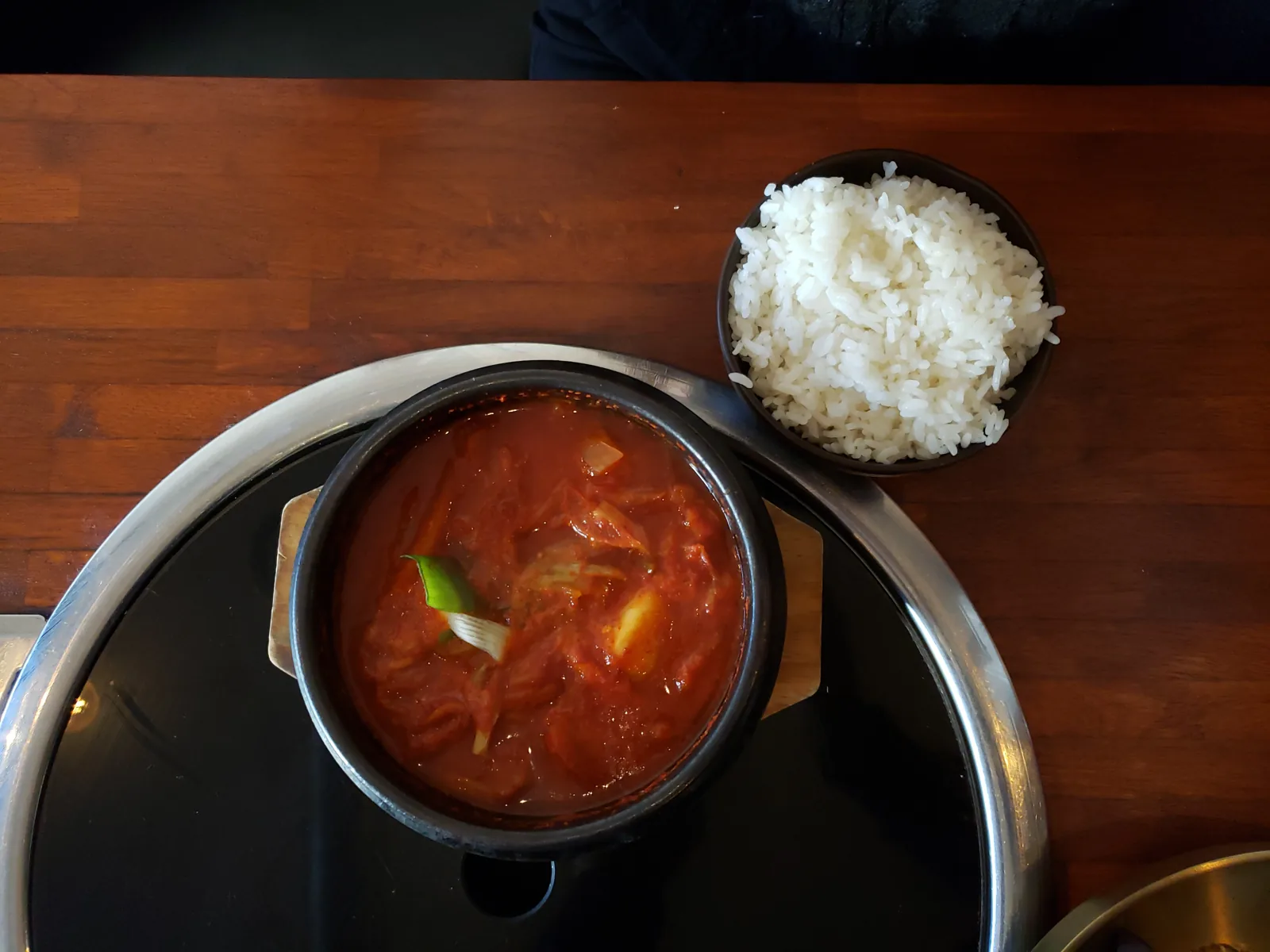
This kimchi jjigae recipe is the Korean comfort stew: aged, well-fermented kimchi fried with pork belly, then simmered in its own brine with tofu until the broth turns brick-red and rich. It is a stew, not the kimchi itself — the North Korean white kimchi published earlier is the pickled cabbage, while this is what you cook with it. One serving is about 425 g.

Comfort & Warmth

Aged kimchi and pork belly simmered in kimchi brine with tofu — sour, spicy and deeply savoury.

Pairs Well With
Steamed rice, fried egg & banchan
Soups & Broths • Fermented / Gut Health
Whole heads of baechu kimchi coated in red gochugaru paste on a white platter South Korea flag South Korea 2h 35m
Dinner •Korean Kimjang Heritage

Baechu Kimchi

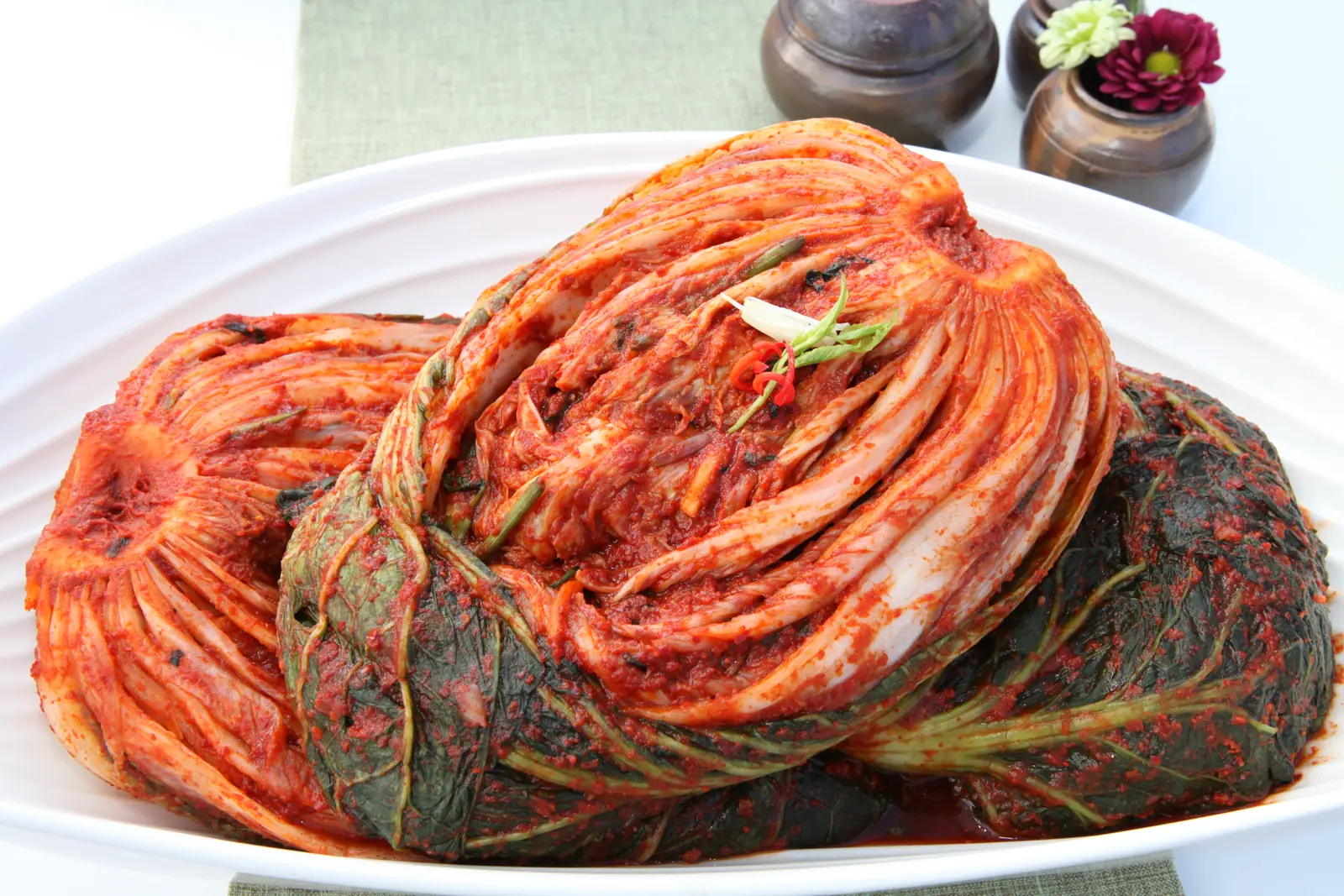
This kimchi recipe turns one head of napa cabbage into classic baechu kimchi: salted leaves packed with a bright red gochugaru paste, then left to ferment until tangy and fizzy. It is the spicy southern-style kimchi most people picture when they hear the word kimchi, and it keeps for weeks in the fridge. One serving is about 165 g.

Fermented & Fiery

Crisp, spicy, sour napa cabbage kimchi — Korea's everyday banchan, fermented at home in a jar.

Pairs Well With
Serve a small bowl with steamed rice, grilled meat or a fried egg.
Fermented / Gut Health

The Dinner Gazette

Never wonder what’s for dinner again

One email a week with easy dinner ideas from around the world — ingredients, steps and nutrition, tested in our kitchen first.

Delivered every Thursday morning. Unsubscribe anytime.