Curated recipes from 193 countries  •  New seasonal Mediterranean issue out now

Overview

Turron

Turron de Alicante, Spanish Almond Nougat, Turron Duro

This turron recipe makes turron de Alicante, Spain's hard almond nougat: whole roasted almonds bound in a honey-sugar syrup with whipped egg white, pressed between sheets of wafer paper until firm, then cut into bars. It snaps cleanly, tastes of toasted almond and honey, and keeps for weeks. One serving is about 35 g, one small bar.

Turron comes from the town of Jijona in Alicante, where almond nougat has been made since at least the 16th century — the first written mention dates to 1582, and the Moors are credited with bringing the almond-and-honey sweet to Spain centuries earlier. The hard version, turron de Alicante, is made with whole roasted almonds, while the soft version, turron de Jijona, grinds the almonds into a paste. Today turron is protected as a Spanish speciality and is the sweet every Spanish family expects on the Christmas table.

Pairs well with: Cava, sweet sherry, or coffee, with a plate of other Christmas sweets.

Provenance

Spain flag Spain

Alicante Christmas Classic

Mediterranean & Italy

Time Dedication

45m

20m prep • 25m cook

Batch Yield

16 Servings

163 kcal per serving

1 serving ≈ 35 g

Technical Skill

Intermediate

Moderate (Sugar Syrup)

Meal Timing & Digestive Fit

Breakfast

Not Advised

Lunch

Inappropriate

Dinner

Inappropriate

Snack & Tea

Ideal Light Bite

Occasions: Christmas, New Year, festive sweet plates, Spanish celebrations, gift hampers, after-dinner sweets Cost: Moderate — about $1.50 per bar at home (almonds are the main cost)

A plate of assorted turron pieces, including hard almond nougat, soft nougat and chocolate turron

Alicante Christmas Classic

Photo: Aidafuste, CC BY-SA 3.0, via Wikimedia Commons

The Heritage Formulary

Measured Ingredients

Estimated cost: Moderate — about $1.50 per bar at home (almonds are the main cost) (USD)
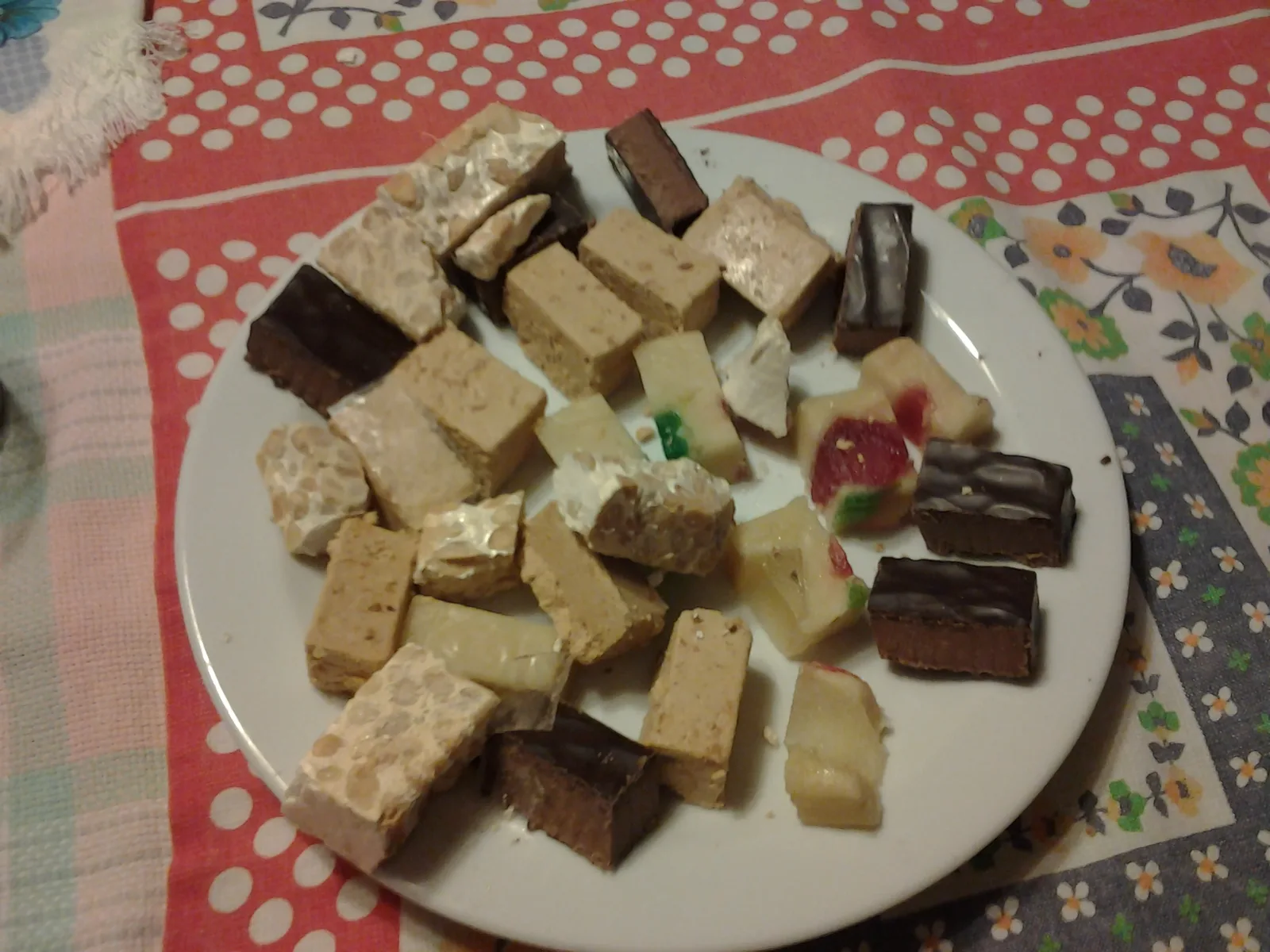
Good turron de Alicante snaps cleanly, shows whole golden almonds on the cut face, and tastes of toasted almond and honey, never of burnt sugar.

Execution Methodology & Culinary Technique

Step-by-Step Cooking Guide

Active 45m
P

Prep Stage: Roast the Almonds and Line the Mould

20 Mins • Roasting & Lining

Roast the almonds until golden and keep them warm — cold almonds seize the syrup and make a crumbly nougat. Line a small loaf tin or rectangular mould with a sheet of wafer paper, and have the second sheet, a spatula and a heavy weight ready, because once the syrup is cooked everything moves fast.

Maestro Tip: Warm the almonds in a low oven while you cook the syrup; warm nuts fold into the syrup smoothly instead of shocking it.

  1. 1

    Roast the Almonds

    10 Mins 180°C (350°F)

    Spread the 300 g of blanched almonds on a tray and roast at 180°C (350°F) for 8-10 minutes, shaking the tray once, until evenly golden and fragrant. Turn the oven down to 120°C (250°F) and keep the almonds warm in it while you cook the syrup.

    Watch them closely in the last 2 minutes — almonds go from golden to burnt very fast.

    Done when: Evenly golden, fragrant, and warm to the touch.

  2. 2

    Cook the Honey Syrup

    10 Mins Medium heat, to 135°C (275°F)

    Put the 150 g of honey and the 100 g of sugar in a heavy saucepan with 2 tablespoons of water. Cook on medium heat, stirring until the sugar dissolves, then stop stirring and boil until the syrup reaches 135°C (275°F) on a sugar thermometer — the hard-ball stage.

    Do not stir once it boils, or the syrup can crystallise and turn grainy.

    Done when: The syrup reads 135°C (275°F) and a drop in cold water forms a hard, brittle ball.

  3. 3

    Whip the Egg White

    5 Mins No heat

    While the syrup cooks, whisk the 1 egg white in a large, clean bowl until it forms soft peaks. When the syrup reaches 135°C (275°F), pour it into the white in a thin, steady stream, whisking constantly, until the mixture is thick, pale and glossy.

    Pour the syrup down the side of the bowl, not straight onto the whisk, so it does not spray.

    Done when: Thick, pale, glossy and holding soft peaks.

  4. 4

    Fold in the Almonds

    5 Mins Low heat

    Return the bowl to a very low heat or a bain-marie and stir in the warm almonds and the lemon zest. Keep stirring for 3-4 minutes until the mixture thickens, turns creamy-white and pulls away from the sides of the bowl.

    This last cooking step is what makes the nougat hard rather than chewy — do not skip it.

    Done when: Thick, pale and creamy, with the almonds evenly coated.

  5. 5

    Press and Set

    5 Mins + 6 Hours Setting Room temperature, about 20°C (68°F)

    Scrape the mixture into the lined mould, press it down firmly with a spatula, lay the second sheet of wafer paper on top and press again. Put a board and a heavy weight on top and leave at room temperature for at least 6 hours, or overnight, until completely firm.

    Press hard — air pockets make the bar crumble when you cut it.

    Done when: Firm and solid all the way through, with no give when pressed.

  6. 6

    Cut into Bars

    5 Mins No heat

    Turn the set nougat out of the mould and cut it into 16 bars with a large, sharp knife, using a firm, straight cut. Wipe the knife between cuts so the edges stay clean.

    A hot, dry knife cuts cleaner — dip it in hot water and dry it between slices.

    Done when: Clean, straight bars with whole almonds visible on the cut faces.

Finishing Touches & Plating

Wrap each bar in waxed paper and keep in an airtight tin. Turron improves after a day or two, once the flavours have settled — serve it at room temperature so it snaps cleanly.

Nutritional Physiology & Benefits

Nutrition

Energy

163

kcal / serving

Protein

4g

Complete AA

Carbs

18g

Complex

Fats

9g

Healthy

Per serving (16 servings · 1 serving ≈ 35 g)
Energy163 kcal
Protein4 g
Carbohydrates18 g
Fat9 g
Fibre2.4 g
Sugar14.8 g
Sodium4 mg
Per 100g
Energy467 kcal
Protein12.1 g
Carbohydrates52.3 g
Fat26.7 g
Fibre6.8 g
Sugar42.3 g
Sodium11 mg

Nutrition values are estimated — calculated from USDA FoodData Central values for the listed ingredients.

Vitamins & minerals: Almonds add vitamin E, magnesium, calcium and iron; honey adds small amounts of B vitamins and potassium.

Almonds Do the Work

Three hundred grams of almonds go into one batch, so each bar brings vitamin E, magnesium and fibre — the nutrition of the nut, not just sugar.

A Little Goes a Long Way

At about 163 kcal per 35 g bar, turron is a small, dense sweet that satisfies with one piece — the traditional way it is eaten at Christmas.

Naturally Gluten-Free

Almonds, honey, sugar and egg white are all naturally gluten-free, and the potato-starch wafer paper keeps it that way — no flour at all.

Food Pairings

What to Eat With

To optimize nutrient absorption and elevate the sensory depth, pair with these authentic accompaniments:

Drinks

Cava

Cold, dry cava cuts through the honey sweetness and cleanses the palate — the classic Spanish pairing for turron at Christmas.

Coffee

Strong black coffee balances the sweet nougat and makes one small bar feel like a proper finish to a meal.

Sides

A Christmas Sweet Plate

Serve turron beside polvorones, marzipan and dried fruit — the traditional Spanish Christmas spread, where each sweet is different and the turron is the crunchy one.

Full Menus

Sweet Sherry

A small glass of Pedro Ximenez sherry with a bar of turron after Christmas dinner is the Andalusian way to end the meal — the sherry's dried-fruit notes echo the almonds.

Complete menu

Serve turron on a Christmas sweet plate with polvorones, marzipan and dried fruit, with cava or coffee — the hard almond nougat is the crunchy centrepiece of the Spanish festive table.

Digestive Guardrails

What NOT to Combine

To prevent digestive distress, sluggishness, or palate clash, avoid pairing the dish with these elements:

Cutting It Before It Sets

Warm turron crumbles and will not hold a clean bar — leave it a full 6 hours under a weight, or overnight, before cutting. This is general cooking guidance, not medical advice.

Storing It in the Fridge

The fridge makes turron damp and sticky, and the wafer paper goes soft; keep it in a dry, airtight tin at room temperature instead. This is general guidance, not medical advice.

General information only, not medical advice — consult a doctor for personal dietary decisions.

Who Should Eat It

Who Should Eat

  • General adultsA festive sweet for most adults; one 35 g bar at about 163 kcal is the right portion, and the sugar is high, so enjoy it as a treat.
  • ChildrenChildren love the sweet crunch, but one small bar is plenty — the sugar is high and the hard texture is not suitable for very young children.
  • ElderlyHard nougat can be difficult to chew; break it into small pieces or choose the soft turron de Jijona instead, and keep the portion small.
  • Pregnant womenGenerally fine in a small portion; the egg white is cooked in the hot syrup, but the sugar is high, so keep to one bar.
  • Breastfeeding womenFine in a small portion; the almonds bring calcium and magnesium, but the sugar is high, so one bar is enough.
  • AthletesA dense, portable source of energy before or after training, with almonds for protein and fat — good as a snack, not a meal.
  • Weight gainEnergy-dense at about 163 kcal per small bar, with almonds, honey and sugar — a useful extra when you need calories.
  • Weight lossA treat to enjoy occasionally: about 163 kcal and 12 g of sugar per bar, so keep to one bar and balance the rest of the day.

Health Conditions — Adjust or Avoid

Conditions

  • DiabetesAbout 16 g of carbohydrate and 12 g of sugar per bar, so keep to one small bar and eat it after a meal. Ask your clinician about portion size.
  • High blood pressureSodium is very low at about 4 mg per bar, but the sugar is high; one small bar fits most days. Ask your clinician about a suitable portion.
  • Kidney diseaseRich in fat and sugar from almonds and honey, so keep the portion to one bar and occasional. Ask your clinician about portion size.
  • GoutAlmonds are moderately high in purines, and the sugar is high, so this is an occasional treat rather than a daily snack. Ask your clinician about frequency.
  • Stomach issuesHard nougat needs careful chewing; the honey and sugar can feel heavy on an empty stomach, so eat a small piece after a meal. Ask your clinician if you are unsure.
  • Cardiovascular diseaseHigh in sugar and fat, so enjoy it as an occasional festive treat and balance it with unsweetened drinks. Ask your clinician about frequency.
  • Fatty liverA rich, sugary sweet that is best kept to Christmas rather than eaten daily. Ask your clinician about a suitable portion.
  • Food allergiesContains almonds (tree nuts) and egg white. It is gluten-free as written, but check your wafer paper, which must be potato-starch, not wheat — ask your clinician if any of these affect you.
  • Special therapeutic dietsIf you follow a prescribed low-sugar or low-fat diet, this turron does not fit as written; a sugar-free version changes the texture. Check with your clinician.

If you have a medical condition, consult your doctor before changing your diet.

Storage & Use

Storage & Use

How to store
Wrap each bar in waxed paper and keep in an airtight tin in a cool, dry place.
In the fridge
Not recommended — the fridge makes turron damp and the wafer paper soft.
In the freezer
Up to 3 months, wrapped tightly; thaw at room temperature in the wrapper.
How to reheat
Do not reheat; serve at room temperature so it snaps cleanly.
Freezing recommended
Yes — turron freezes well and keeps its crunch after thawing.
Signs it has spoiled
Sticky or damp surface, rancid smell from the almonds, or wafer paper that has gone soft and papery.

More recipes to explore

Pan con tomate with jamón ibérico on toasted bread Spain flag Spain 15m
Snack & Tea •Catalan Aperitivo

Pan con Tomate & Jamón Ibérico

Country bread rubbed with ripe Ramallet tomato, drizzled with cold-pressed Arbequina olive oil and topped with jamón ibérico.

Vascular Health

Toasted tomato bread with jamón ibérico, olive oil and olives.

Pairs Well With
Castelvetrano Olives & Sparkling Mineral Water
Quick Prep (<30m)
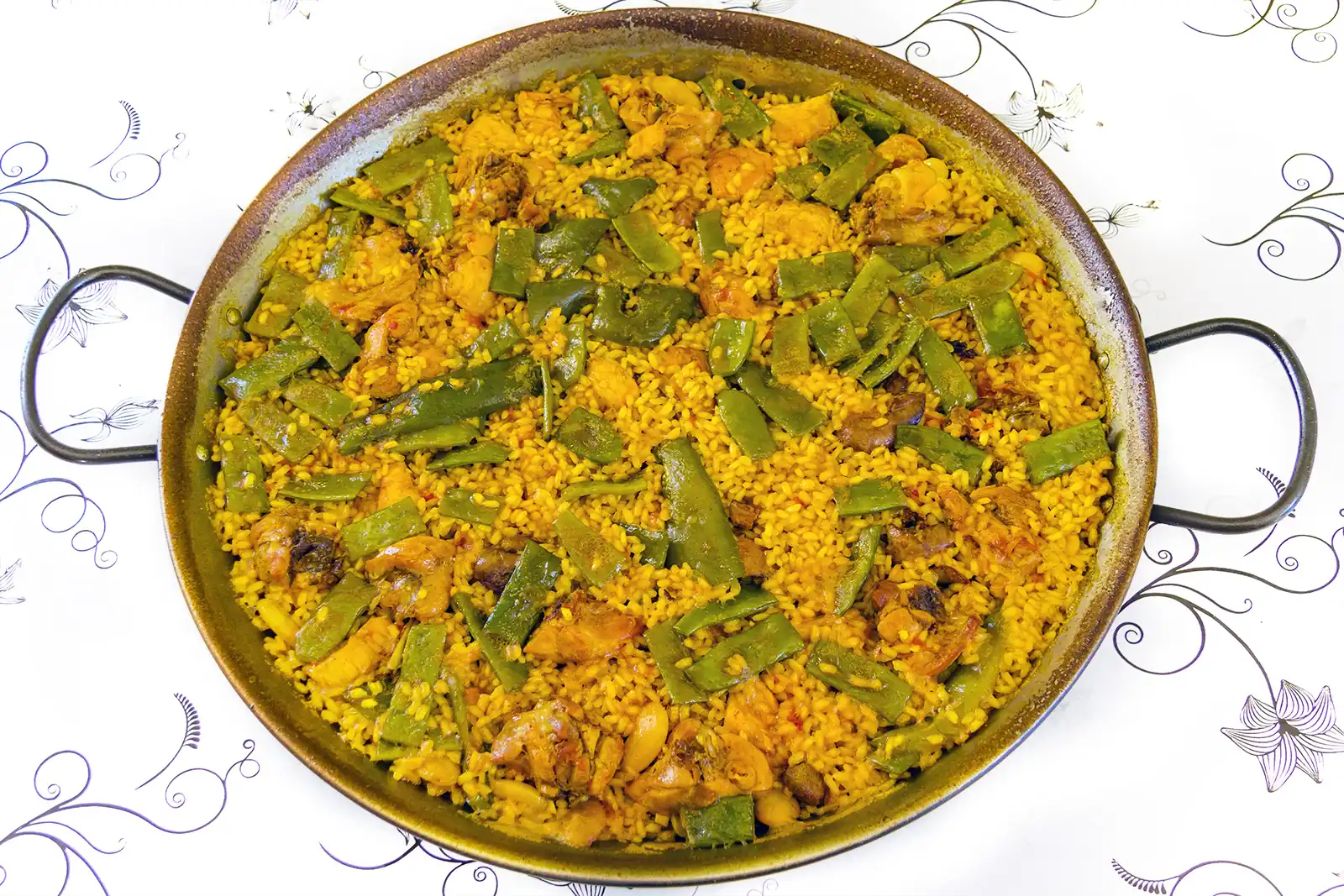
A wide paella pan of paella valenciana with saffron rice, green beans and chicken Spain flag Spain 1h 10m
Dinner •Valencia Rice Fields

Paella Valenciana

This paella valenciana recipe cooks Bomba rice in a wide, shallow pan with chicken, rabbit, green beans and garrofó beans, scented with saffron and rosemary. One serving is about 470 g.

Comfort & Warmth

Saffron rice cooked in a wide pan with chicken, rabbit and green beans.

Pairs Well With
A green salad and a glass of white wine
High Protein
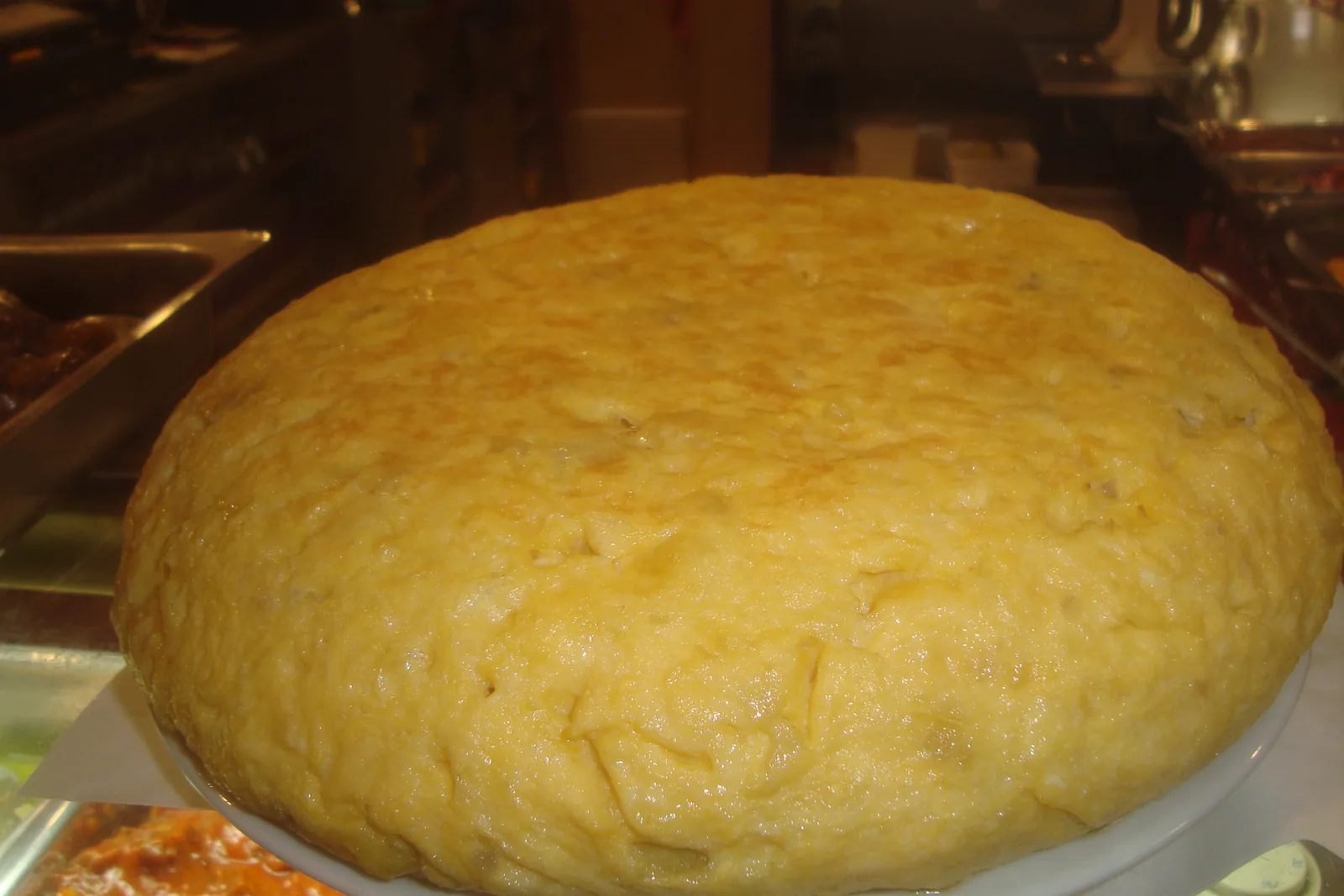
A whole golden tortilla española, a thick Spanish potato omelette, on a plate Spain flag Spain 55m
Snack & Tea •Navarre Bar Classic

Tortilla Española

This spanish tortilla recipe slowly cooks potatoes and onion in olive oil, folds them into beaten eggs, and turns out a thick, golden cake that is soft in the middle. One serving is about 220 g.

Comfort & Warmth

A thick, golden omelette of slow-cooked potatoes, onion and egg.

Pairs Well With
Pan con tomate and a glass of red wine
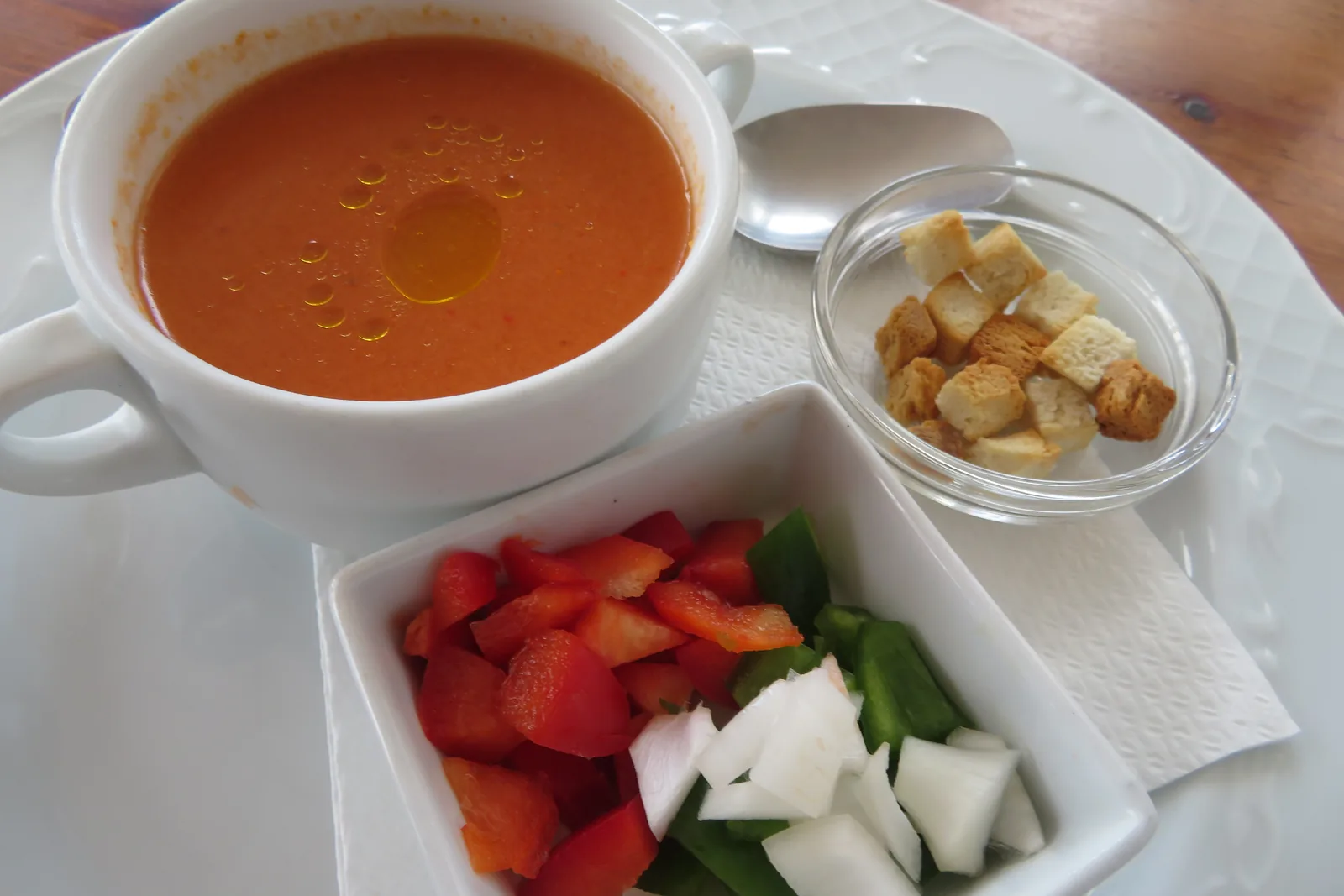
A cup of chilled orange-red gazpacho with olive oil, served with diced peppers and onion and a bowl of croutons Spain flag Spain 20m
Lunch •Andalusian Classic

Gazpacho

This gazpacho recipe is the Andalusian classic: ripe tomatoes, cucumber, green pepper, onion and garlic blended raw with bread, sherry vinegar and olive oil, then chilled until ice cold. One serving is about 395 g. It takes 20 minutes plus chilling, and there is no cooking at all.

Light & Refreshing

Chilled raw tomato soup blended with cucumber, pepper and olive oil, served cold with diced vegetables and croutons.

Pairs Well With
Croutons, diced vegetables & crusty bread
Soups & Broths • Quick Prep (<30m)

The Dinner Gazette

Never wonder what’s for dinner again

One email a week with easy dinner ideas from around the world — ingredients, steps and nutrition, tested in our kitchen first.

Delivered every Thursday morning. Unsubscribe anytime.