
Curated recipes from 193 countries  •  New seasonal Mediterranean issue out now

Overview

Vaca Frita

Cuban Fried Shredded Beef, Vaca Frita de Res

This vaca frita recipe boils flank steak until it falls into shreds, marinates it in lime juice, garlic and oregano, then pan-fries it in hot oil until the edges turn crisp and dark golden. One serving is about 205 g. It is Cuba's answer to shredded beef — dry, crunchy and sour-bright, not stewed in sauce.

Vaca frita, literally 'fried cow', is one of Cuba's most loved home dishes, born from the same Spanish shredded-beef tradition as ropa vieja but cooked the opposite way. Where ropa vieja simmers the beef in tomato sauce, vaca frita dries it out in a hot pan until the shreds turn crisp and dark, sharpened with lime and garlic. Cuban cooks say the dish was a way to make tough flank steak delicious with nothing but a pan, a lime and time — and it is now a fixture of Cuban restaurants from Havana to Miami.

Pairs well with: White rice, black beans and fried plantains

Provenance

Cuba flag Cuba

Cuban Classic

Latin America & Caribbean

Time Dedication

2h 20m

50m prep • 90m cook

Batch Yield

4 Servings

450 kcal per serving

1 serving ≈ 205 g

Technical Skill

Intermediate

Medium (Boil, Shred & Fry)

Meal Timing & Digestive Fit

Breakfast

Not Advised

Lunch

Hearty Midday Main

Dinner

Ideal Hearty Main

Snack & Tea

Inappropriate

High Protein Occasions: Family dinners, Cuban-themed meals, feeding a crowd Cost: Medium — about $5–6 per serving at home
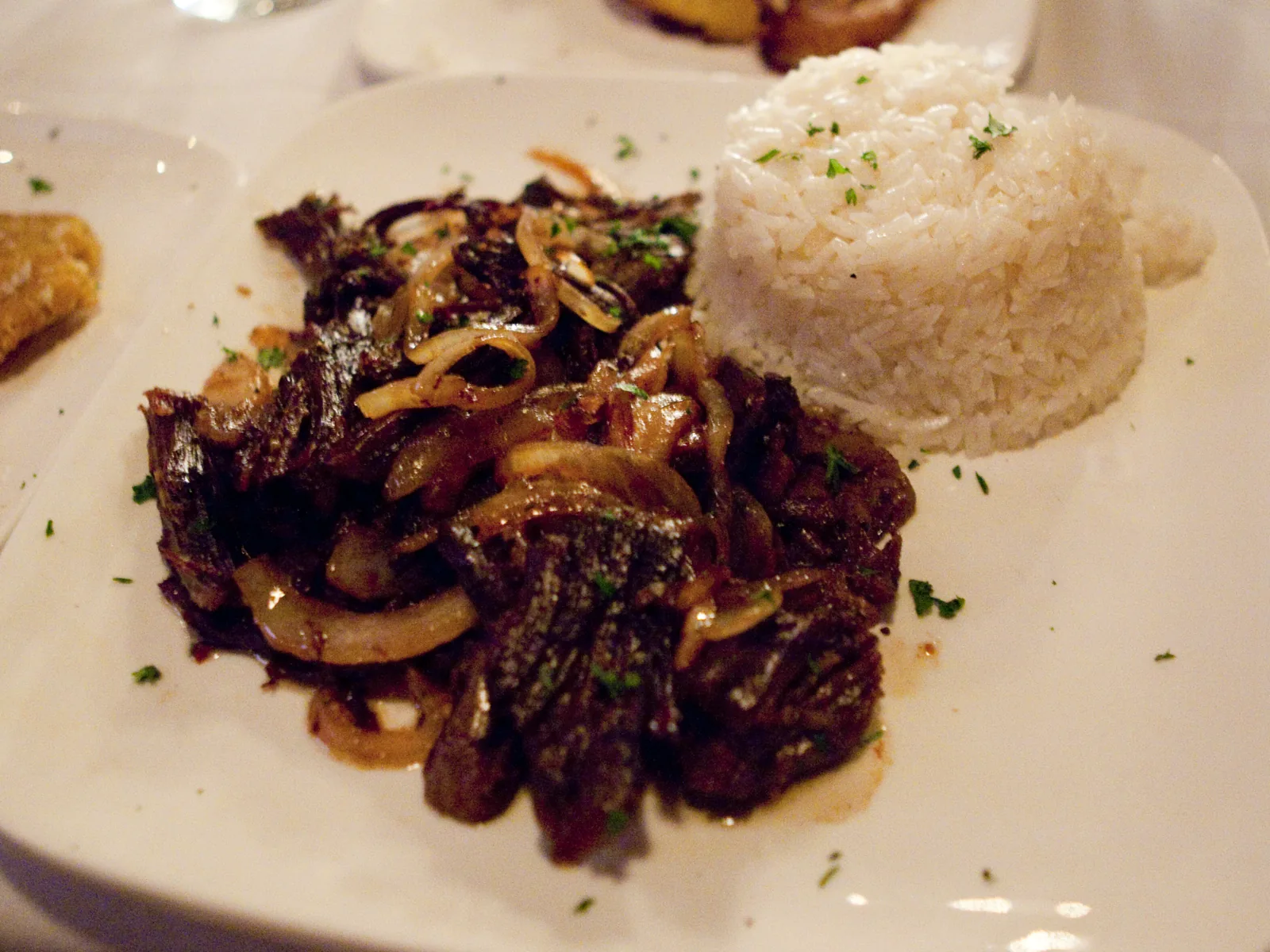
A plate of Cuban vaca frita, dark crispy shredded beef with fried onions, beside a mound of white rice

Cuban Classic

Photo: Anthony Quintano, CC BY 2.0, via Wikimedia Commons

The Heritage Formulary

Measured Ingredients

Estimated cost: Medium — about $5–6 per serving at home (USD)

Flank steak boiled until tender, shredded long, marinated in lime and garlic, then pan-fried until crisp — never stewed in sauce.

Execution Methodology & Culinary Technique

Step-by-Step Cooking Guide

Active 2h 20m
P

Prep Stage: Slice the Onions and Squeeze the Limes

50 Mins • Slice + Marinate

Halve one onion for the boiling pot and slice the other into thin half-rings for frying. Slice the pepper, mince the garlic and squeeze the limes before the beef goes on — the marinade needs to be ready the moment the meat is shredded, while it is still warm and thirsty. The 30-minute marinade is passive time; use it to cook the rice and beans.

Maestro Tip: Slice the frying onion thinly and evenly so it crisps at the same pace as the beef instead of steaming in clumps.

  1. 1

    Boil the Beef Until Tender

    75 Mins Boiling, 100°C (212°F), then gentle simmer ~95°C (200°F)

    Put the flank steak in a large pot with the halved onion, the bay leaf, 2 g of the salt and the water. Bring to a boil, skim off any foam, then lower to a gentle simmer, cover, and cook for about 75 minutes until the meat pulls apart easily with two forks. Lift the beef out and let it rest 10 minutes; discard the cooking liquid.

    Skim the foam in the first 10 minutes — it keeps the cooking liquid clean and the meat tasting sweet rather than grey.

    Done when: The beef shreds with almost no resistance when pulled with two forks.

  2. 2

    Shred and Marinate

    40 Mins Room temperature, ~20°C (68°F)

    Shred the warm beef into thin strips along the grain, keeping the shreds long. Toss them in a bowl with the lime juice, minced garlic, oregano, cumin, black pepper and the remaining 2 g of salt. Leave to marinate for 30 minutes so the lime and garlic soak into every strand.

    Shred while the meat is still warm — cold beef resists shredding and breaks into short crumbs instead of long strands.

    Done when: Long, even shreds, glossy with lime juice and flecked with garlic.

  3. 3

    Fry the Onions and Pepper

    5 Mins Medium-high heat, ~190°C (375°F)

    Heat 15 g of the oil in a large heavy frying pan over medium-high heat. Fry the sliced onion and pepper strips for about 5 minutes, stirring often, until the onion edges turn golden. Lift them out and set aside.

    Use a wide pan and do not crowd it — the vegetables need contact with the hot surface to brown instead of steam.

    Done when: Onions are soft with golden edges; peppers are tender-crisp.

  4. 4

    Fry the Beef Until Crisp

    10 Mins High heat, ~200°C (400°F)

    Add the remaining 30 g of oil to the same pan and heat until it shimmers. Spread the marinated beef in a thin, even layer and fry without stirring for 3 minutes, then turn and fry 3 minutes more, working in two batches if needed. The shreds should turn dark golden and crisp at the edges. Return the onions and pepper to the pan, toss everything together for 1 minute, and serve at once over white rice.

    Do not stir the beef while it crisps — pressing it flat against the pan is what makes the crunchy edges that define vaca frita.

    Done when: Shreds are dark golden, dry and crackly at the edges, not wet or saucy.

Finishing Touches & Plating

Pile the crispy beef over white rice with black beans and fried plantains, and serve with lime wedges for squeezing over the top.

Nutritional Physiology & Benefits

Nutrition

Energy

450

kcal / serving

Protein

44g

Complete AA

Carbs

10g

Complex

Fats

25g

Healthy

Per serving (4 servings · 1 serving ≈ 205 g)
Energy450 kcal
Protein44 g
Carbohydrates10 g
Fat25 g
Fibre1.9 g
Sugar3.2 g
Sodium503 mg
Per 100g
Energy220 kcal
Protein21.7 g
Carbohydrates4.8 g
Fat12.2 g
Fibre0.9 g
Sugar1.6 g
Sodium245 mg

Nutrition values are estimated — calculated from USDA FoodData Central values for the listed ingredients.

Vitamins & minerals: Vitamin B12 and iron (beef), vitamin C (lime juice, bell pepper, onion), vitamin B6 (garlic, beef), potassium (beef, onion).

Very high in protein

One serving provides about 44 g of protein, which supports muscle maintenance and keeps you full for hours.

Iron and B12 from beef

Flank steak is a strong source of easily absorbed iron and vitamin B12, nutrients that support healthy blood and energy levels.

Bright, fresh acidity

Fresh lime juice and onion add vitamin C and sharp flavour without sugar, keeping the dish light despite the frying.

Food Pairings

What to Eat With

To optimize nutrient absorption and elevate the sensory depth, pair with these authentic accompaniments:

Sides

White rice and black beans

Plain rice and beans are the classic Cuban plate for vaca frita — they catch the crisp beef and its lime-garlic juices without competing with them.

Vegetables

Fried plantains

Sweet, caramelised plantains balance the sour lime and salty crisp beef, giving the plate its sweet-savoury contrast.

Drinks

Iced limeade or light beer

Something cold and sharp — limeade or a light lager — cuts the frying fat and refreshes the palate between bites.

Full Menus

A simple salad first

Start with avocado and tomato salad so the meal opens fresh before the rich, crispy main course arrives.

Complete menu

Serve the vaca frita over white rice with black beans and fried plantains, start with avocado and tomato salad, and finish with fresh mango.

Digestive Guardrails

What NOT to Combine

To prevent digestive distress, sluggishness, or palate clash, avoid pairing the dish with these elements:

Do not stew it in sauce

Vaca frita is defined by its dry, crispy fry — adding tomato sauce or braising liquid turns it into ropa vieja, a different dish entirely, and loses the crunch. This is a cooking note, not medical advice.

Very rich, heavy desserts

The beef is fried and salty, so a heavy cream dessert straight after can feel overwhelming; fresh fruit is a lighter finish. This is general information, not medical advice.

General information only, not medical advice — consult a doctor for personal dietary decisions.

Who Should Eat It

Who Should Eat

  • General adultsA satisfying high-protein dinner for healthy adults; balance the fried beef with rice, beans and salad.
  • ChildrenChildren can eat the beef cut into small pieces; make sure it is cooked through and cooled enough, and skip the extra lime for younger children.
  • ElderlyShredded beef is easy to chew, which suits older adults; keep the crisp edges small and serve with soft rice and beans.
  • Pregnant womenBeef cooked through to 74°C (165°F) when reheated is fine; avoid undercooked meat during pregnancy. If unsure, ask a clinician.
  • Breastfeeding womenA strong source of iron and protein while breastfeeding; keep portions moderate and drink plenty of water with the salty, fried dish.
  • AthletesAbout 44 g of protein per serving makes it a solid post-training dinner; add rice and beans for the carbohydrate to go with it.
  • Weight gainProtein- and energy-dense, so it suits healthy weight gain in normal portions with starchy sides.
  • Weight lossFried and fairly salty, so a smaller portion with extra salad and less rice fits better for weight loss; measure the oil carefully.

Health Conditions — Adjust or Avoid

Conditions

  • DiabetesThe beef itself has almost no carbohydrate; watch the rice and plantains served with it and keep portions moderate. Ask a clinician for personal targets.
  • High blood pressureThe dish is salty and fried, so keep portions moderate and do not add extra salt at the table. Ask a clinician for personal advice.
  • Kidney diseaseBeef is high in potassium and phosphorus, which some kidney diets limit; portions matter. This is general information — ask a clinician before eating it regularly.
  • GoutRed meat is purine-rich; people prone to gout should eat it rarely and in small portions. Ask a clinician for personal advice.
  • Stomach issuesLime juice and fried food can both aggravate reflux; eat a moderate portion and avoid eating late at night if that is a problem for you.
  • Cardiovascular diseaseFried beef is high in saturated fat, so keep it an occasional meal and balance it with vegetables. Ask a clinician for personal advice.
  • Fatty liverFried and energy-dense, so a small portion with plenty of salad fits better than a large plate. Ask a clinician for personal advice.
  • Food allergiesContains no major allergens in the beef itself; check any sauces or sides served with it for their own ingredients. This is general information, not medical advice.
  • Special therapeutic dietsThe recipe is naturally low-carbohydrate and gluten-free; any therapeutic diet still needs a clinician or dietitian to approve portions.

If you have a medical condition, consult your doctor before changing your diet.

Storage & Use

Storage & Use

How to store
Cool within 2 hours, then store in a sealed container.
In the fridge
Up to 3 days in the refrigerator at 0-4°C (32-39°F).
In the freezer
Up to 3 months; freeze the fried beef on its own for the best texture.
How to reheat
Reheat in a hot frying pan at about 190°C (375°F) until steaming and at least 74°C (165°F) throughout — the pan restores the crisp edges. Avoid the microwave, which makes it soggy.
Freezing recommended
Yes; re-crisp in a hot pan after thawing overnight in the fridge.
Signs it has spoiled
Sour smell, slimy texture, or any mould — discard the whole batch.

More recipes to explore

A plate of ropa vieja, shredded beef in tomato sauce, with yellow rice, black beans and fried plantains Cuba flag Cuba 3h
Dinner •Cuba's National Dish

Ropa Vieja

This ropa vieja recipe braises flank steak low and slow until it falls into long shreds, then simmers it in a tomato, pepper and olive sauce. One serving is about 310 g. Serve it over white rice with black beans and fried plantains, the way Cuban families do.

Comfort & Warmth

Slow-braised shredded beef in a tomato and pepper sauce, served with rice and black beans.

Pairs Well With
White rice, black beans and fried plantains
High Protein
A pressed Cuban sandwich cut in half, with melted Swiss cheese and layers of ham and pork, served with pickle spears Cuba flag Cuba 25m
Lunch •Havana Classic

Cuban Sandwich

This cuban sandwich recipe layers mojo roast pork, ham, Swiss cheese, pickles and mustard on Cuban bread, then presses it flat until the crust crackles and the cheese melts. One serving is about 345 g. It is a great use for leftover roast pork and comes together in 25 minutes.

Comfort & Warmth

A pressed sandwich of roast pork, ham, Swiss cheese, pickles and mustard on Cuban bread.

Pairs Well With
Plantain chips and a cold lager or lime soda
A plate of dark moros y cristianos rice cooked with black beans, served with slices of roast pork and golden fried plantains Cuba flag Cuba 1h 30m
Lunch •Cuban Heritage

Moros y Cristianos

This moros y cristianos recipe cooks Cuban black beans and rice together in one pot: dried black beans simmered until tender, then long-grain rice cooked in the dark bean liquid with a sofrito of onion, green pepper and garlic, cumin, oregano and bay leaf. The grains come out dark, fragrant and fluffy, never pale or plain. One serving is about 272 g.

Comfort & Warmth

Cuban black beans and white rice cooked together in one pot with sofrito, cumin, oregano and bay leaf, until the grains turn dark.

Pairs Well With
Roast pork or ropa vieja with fried sweet plantains and a crisp cabbage salad, the classic Cuban plate.
A plate of Cuban lechon asado with shredded mojo pork, onions and lime, yellow rice with black beans and fried plantains Cuba flag Cuba 5h 30m
Dinner •Havana Heritage

Cuban Lechon Asado

This cuban lechon asado recipe marinates a pork shoulder overnight in mojo — sour orange juice, a whole head of garlic, oregano and cumin — then roasts it low and slow until the meat is so tender it pulls apart with a fork. It is the centrepiece of Nochebuena, the Cuban Christmas Eve feast, and it is nothing like Filipino lechon: there is no whole crispy-skinned pig here, just a mojo-soaked shoulder roast. One serving is about 250 g.

Celebration & Sharing

A whole pork shoulder marinated overnight in sour-orange mojo, then roasted low and slow until it pulls apart — the centrepiece of Nochebuena.

Pairs Well With
Shredded mojo pork with black beans, yellow rice and fried plantains
High Protein

The Dinner Gazette

Never wonder what’s for dinner again

One email a week with easy dinner ideas from around the world — ingredients, steps and nutrition, tested in our kitchen first.

Delivered every Thursday morning. Unsubscribe anytime.