Curated recipes from 193 countries  •  New seasonal Mediterranean issue out now

Overview

Valais Cholera

Cholera Valaisan, Gommer Cholera, Valais Leek Pie

This valais cholera recipe makes the famous pie of the Swiss canton of Valais: buttery shortcrust pastry packed with leeks, sliced potatoes, tart apple and generous raclette cheese, baked until the top is deep gold and the filling is bubbling. One serving is about 280 g and carries 593 calories. Slice it hot at the table and eat it with a green salad and a glass of white wine.

Cholera is a pastry filled with potatoes, vegetables, fruit and cheese, from the Valais region of Switzerland. The local ingredients for such a dish were originally apples, pears, potatoes, onions, leeks, raclette cheese — usually the Gomser cheese of the Goms valley — and bacon. The origin of the unusual name is unclear: a folk explanation says that during an epidemic of the disease cholera in 1836, people in the region improvised a dish from whatever food they had at hand, as normal trade was disrupted, while other theories link the name to Chola or Cholu, the Valais German word for coal, as the pastry was baked on coals. This version leaves out the bacon some Valais recipes add, keeping the leek, potato, apple and raclette core. Cook test: cholera is a closed pie of leek, potato, fruit and cheese — it is not pissaladiere, the open onion and anchovy tart of Nice, and not a quiche, which is an open tart with an egg custard; no live recipe for cholera exists on the site.

Pairs well with: A crisp green salad with a sharp vinaigrette, and a glass of dry Swiss white wine such as Fendant.

Provenance

Switzerland flag Switzerland

Valais Mountain Pie

Nordic & European

Time Dedication

1h 35m

45m prep • 50m cook

Batch Yield

6 Servings

593 kcal per serving

1 serving ≈ 280 g

Technical Skill

Intermediate

Intermediate (Pastry & Filling)

Meal Timing & Digestive Fit

Breakfast

Not Advised

Lunch

Hearty Midday Main

Dinner

Ideal Hearty Main

Snack & Tea

Inappropriate

Occasions: Winter dinners, family gatherings, alpine suppers, potlucks Cost: Medium — about $4–5 per serving at home

A golden slice of Valais cholera pie with leek, potato and cheese layers on a plate

Valais Mountain Pie

Photo: Popo le Chien, CC0, via Wikimedia Commons

The Heritage Formulary

Measured Ingredients

Estimated cost: Medium — about $4–5 per serving at home (USD)
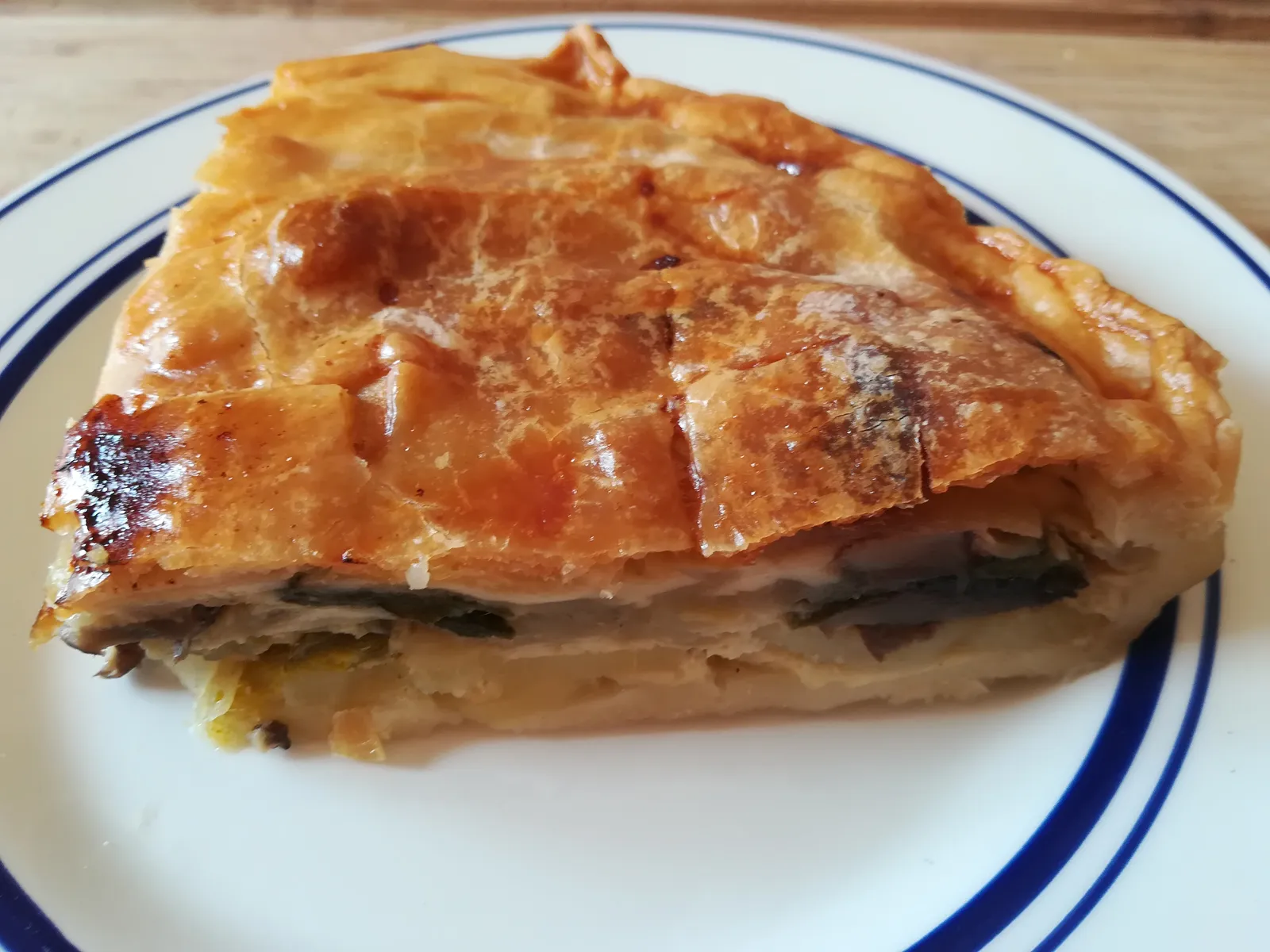
This version boils the potatoes before slicing them, sweats the leeks until soft, and bakes the closed pie at 190°C (375°F) until the crust is deep gold.

Execution Methodology & Culinary Technique

Step-by-Step Cooking Guide

Active 1h 35m
P

Prep Stage: Pastry, Potatoes and Filling

45 Mins • Pastry, Potatoes and Filling

Rub the cold butter into the flour and salt, add the ice-cold water, and bring the dough together. Wrap it and chill for 30 minutes. Meanwhile, boil the potatoes until just tender, cool, peel and slice them. Slice the leeks and onion, and grate the cheese.

Maestro Tip: Cold pastry is the whole secret — warm butter makes a tough crust, so chill the dough and work fast.

  1. 1

    Make and chill the pastry

    15 Mins Cold, about 4°C (39°F)

    Rub the cold butter cubes into the flour and the 3 g of pastry salt until the mixture looks like breadcrumbs. Add the ice-cold water a spoonful at a time and bring the dough together with your hands. Flatten it into a disc, wrap it, and chill for 30 minutes.

    Handle the dough as little as possible — overworked pastry shrinks in the oven.

    Done when: A smooth, firm disc of dough, cold to the touch.

  2. 2

    Sweat the leeks and onion

    10 Mins Medium heat, about 160°C (320°F)

    Melt the 20 g of butter in a wide pan over medium heat. Add the leek rings and the sliced onion with a pinch of salt and cook for 10 minutes, stirring often, until soft and sweet-smelling but not browned. Season with the nutmeg and black pepper and set aside to cool.

    Cool the filling before it meets the pastry, or the bottom crust turns soggy.

    Done when: Soft, glossy leeks with no colour on them.

  3. 3

    Line the tin and layer the filling

    15 Mins Room temperature, about 20°C (68°F)

    Heat the oven to 190°C (375°F). Divide the dough into two pieces, one slightly larger. Roll the larger piece out and line a 23 cm pie dish with it. Layer in the potato slices, the leeks and onion, the apple slices and the grated cheese, in that order, seasoning the potato layer with the 3 g of filling salt as you go.

    Layering, not mixing, is what gives the pie its clean slices — potato at the bottom, cheese melting down through the leeks.

    Done when: A dish filled to the rim in neat layers, with cheese on top.

  4. 4

    Close the pie and bake

    45 Mins Hot oven, 190°C (375°F)

    Roll the second piece of dough out, lay it over the filling, and crimp the edges to seal. Cut two small slits in the top for steam, brush with the beaten egg, and bake for 40 to 45 minutes until the crust is deep gold and the filling is bubbling at the slits.

    The steam slits are not decoration — without them the lid lifts off the filling as the pie bakes.

    Done when: A deep-gold crust, crisp at the edges, with filling bubbling at the slits.

  5. 5

    Rest and slice

    10 Mins Rest at room temperature, about 20°C (68°F)

    Rest the pie for 10 minutes before slicing, so the cheese sets a little and the slices hold together. Cut into 6 wedges and serve hot with a green salad.

    Cutting a hot pie straight from the oven spills the filling — ten minutes of patience is what keeps the slices neat.

    Done when: Neat wedges that hold their layers, with melted cheese running through them.

Finishing Touches & Plating

Serve the pie hot, in thick wedges, with the salad on the side — the contrast of the crisp, buttery crust and the soft, cheesy filling is the whole point of the dish.

Nutritional Physiology & Benefits

Nutrition

Energy

593

kcal / serving

Protein

18g

Complete AA

Carbs

61g

Complex

Fats

32g

Healthy

Per serving (6 servings · 1 serving ≈ 280 g)
Energy593 kcal
Protein18 g
Carbohydrates61 g
Fat32 g
Fibre5.0 g
Sugar6.9 g
Sodium807 mg
Per 100g
Energy212 kcal
Protein6.4 g
Carbohydrates21.8 g
Fat11.3 g
Fibre1.8 g
Sugar2.5 g
Sodium288 mg

Nutrition values are estimated — calculated from USDA FoodData Central values for the listed ingredients.

Vitamins & minerals: Calcium and vitamin B12 (cheese), vitamin K and vitamin C (leeks), vitamin B6 and potassium (potatoes).

A Proper Winter Dinner

About 61 g of carbohydrate and 18 g of protein per slice makes this a dinner that actually fills you up on a cold night.

Leeks, Potato and Apple

The filling is mostly vegetables and fruit — leeks and potatoes for body, apple for a sharp, fresh note against the cheese.

Real Cheese, Real Calcium

About 200 g of raclette in the pie brings calcium and vitamin B12 to a dinner that is otherwise built on vegetables.

Food Pairings

What to Eat With

To optimize nutrient absorption and elevate the sensory depth, pair with these authentic accompaniments:

Vegetables

Green Salad with Vinaigrette

A sharp vinaigrette cuts the richness of the cheese and pastry, which is why the salad is not optional in Valais.

Drinks

Dry Swiss White Wine

A dry Fendant from Valais is the classic glass — its acidity stands up to the melted cheese without fighting it.

Sides

Cured Ham on the Side

A few slices of cured ham next to the pie echo the bacon that some Valais versions bake inside it, without changing the pie itself.

Pickled Gherkins

Sharp pickled gherkins reset the palate between bites of rich, cheesy pie.

Complete menu

Serve hot Valais cholera with a green salad and white wine, followed by fresh fruit and a small piece of cheese.

Digestive Guardrails

What NOT to Combine

To prevent digestive distress, sluggishness, or palate clash, avoid pairing the dish with these elements:

Cutting the Pie Straight from the Oven

The cheese is molten and the filling loose for the first minutes out of the oven; cutting too soon spills the layers. This is general food information, not medical advice.

Leaving the Pie Out Overnight

A cheese and potato pie left warm on the counter is a good place for bacteria to grow; refrigerate leftovers within 2 hours. This is general food safety information, not medical advice.

General information only, not medical advice — consult a doctor for personal dietary decisions.

Who Should Eat It

Who Should Eat

  • General adultsA hearty dinner — one wedge with salad is a full meal.
  • ChildrenChildren like the cheesy pie, but serve it cooled a little and cut into small wedges; the apple surprises some of them.
  • ElderlySoft and easy to eat once cooled slightly; serve a smaller wedge with salad.
  • Pregnant womenFine when freshly baked and served hot; the egg wash is fully cooked in the oven.
  • Breastfeeding womenA satisfying dinner; keep to one wedge and balance the day with lighter meals.
  • AthletesCarbohydrate with a good protein load makes it a solid post-training dinner, eaten within a couple of hours of exercise.
  • Weight gainAdd a second wedge or cured ham on the side to raise the energy of the meal.
  • Weight lossOne wedge with a large salad and the crust left partly uneaten keeps the portion lighter.

Health Conditions — Adjust or Avoid

Conditions

  • DiabetesAbout 61 g of carbohydrate per slice, mostly from the pastry and potato — take one wedge and ask a clinician about portion size.
  • High blood pressureAbout 807 mg of sodium per slice, mostly from the cheese; keep the portion to one wedge and ask a clinician.
  • Kidney diseaseA rich, high-protein pie; keep the portion to one wedge and ask a clinician about what fits your plan.
  • GoutA buttery, cheesy pie; keep it an occasional dinner rather than a weekly one, and ask a clinician.
  • Stomach issuesRich pastry and cheese can sit heavily on a sensitive stomach; eat a small portion slowly and ask a clinician if symptoms flare.
  • Cardiovascular diseaseHigh in saturated fat from the butter and cheese; one wedge with a large salad is the lighter way to eat it, and ask a clinician.
  • Fatty liverButter, pastry and cheese are high in saturated fat; keep it occasional and ask a clinician about fat intake.
  • Food allergiesContains wheat, milk (butter, cheese) and egg (wash). Ask a clinician about any allergy.
  • Special therapeutic dietsA soft, easy-to-eat pie that suits many therapeutic diets; ask a clinician or dietitian before changing your diet.

If you have a medical condition, consult your doctor before changing your diet.

Storage & Use

Storage & Use

How to store
Cool completely, then keep covered in the fridge.
In the fridge
3 days in the fridge, covered.
In the freezer
Up to 1 month, wrapped in foil; thaw in the fridge overnight.
How to reheat
Reheat in an oven at 180°C (350°F) for 15 minutes until hot through, about 74°C (165°F) in the centre; cover with foil if the crust darkens.
Freezing recommended
Yes — it freezes well, baked or unbaked.
Signs it has spoiled
Sour smell, slimy filling, or mould on the crust — discard it.

More recipes to explore

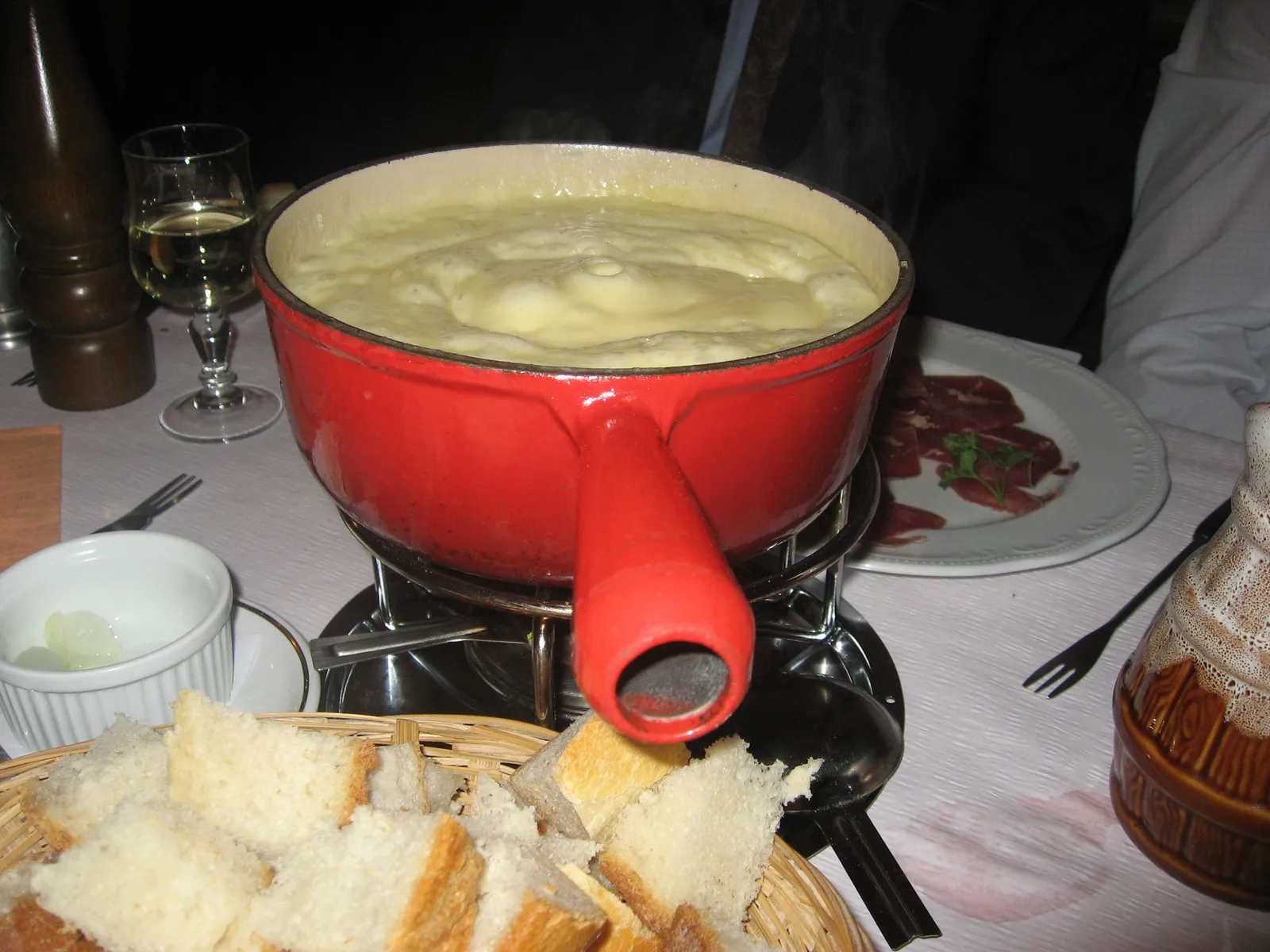
A red fondue pot of melted cheese with bread cubes and a glass of white wine Switzerland flag Switzerland 40m
Dinner •Swiss Alpine Classic

Swiss Cheese Fondue

Swiss cheese fondue is the Alps in a pot: Gruyere and Emmental melted slowly into dry white wine with garlic and a splash of kirsch, kept warm at the table while everyone dips cubes of bread into the bubbling cheese. One serving is about 310 g.

Comfort & Togetherness

Gruyere and Emmental melted in white wine, shared from one pot.

Pairs Well With
Cubes of crusty bread, boiled potatoes and cornichons on the side
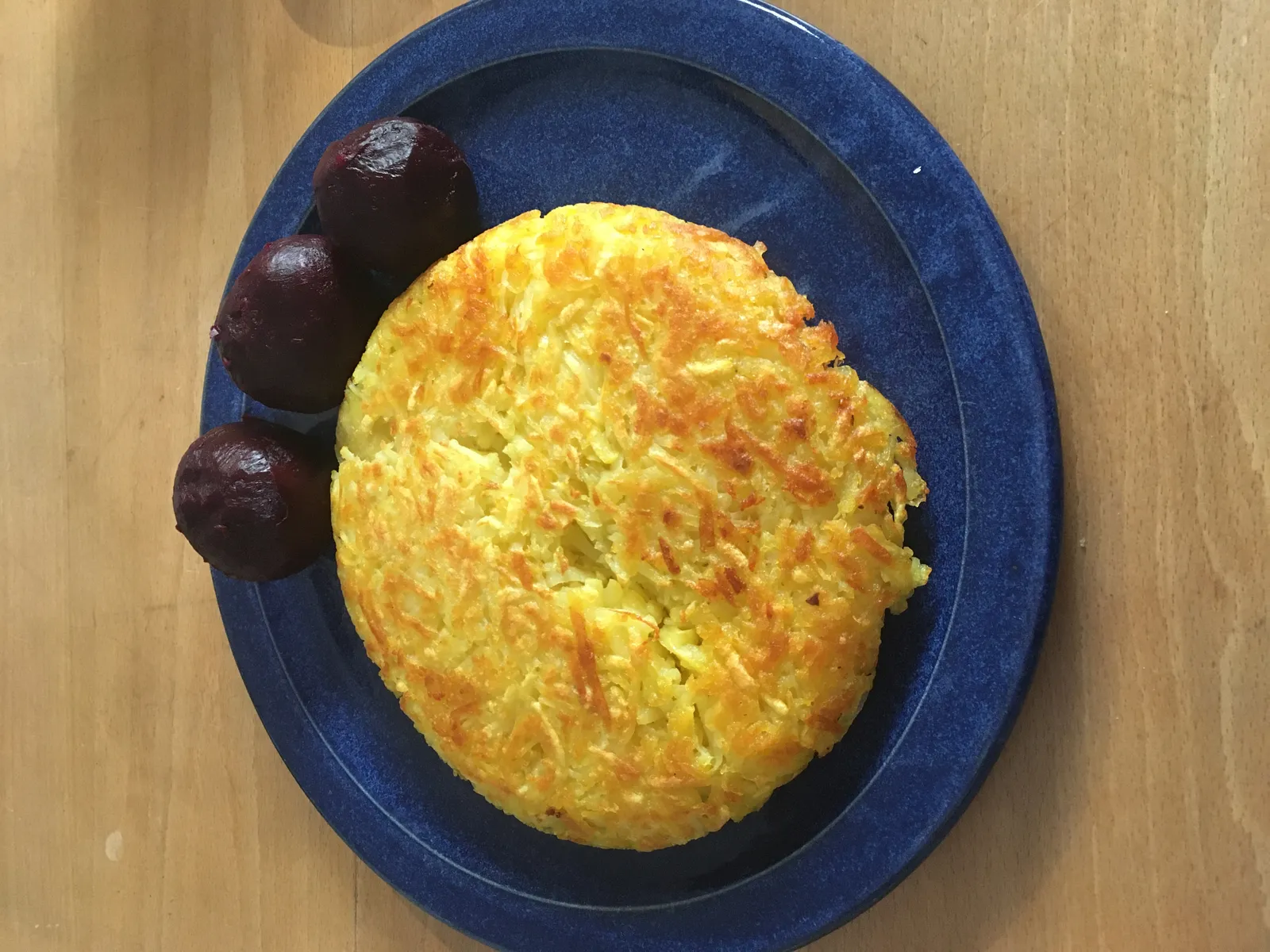
A large golden rosti potato cake on a blue plate Switzerland flag Switzerland 40m
Lunch •Bernese Farmhouse Classic

Rösti

Rösti is Switzerland's crisp potato cake: grated potato pressed into one large golden disc and fried in butter until the outside shatters and the inside stays soft, then topped with a fried egg. One serving is about 240 g.

Simple & Satisfying

One large crisp cake of grated potato, pan-fried in butter and topped with a fried egg.

Pairs Well With
A fried egg on top and a simple green salad with sharp vinaigrette
Quick Prep (<30m)
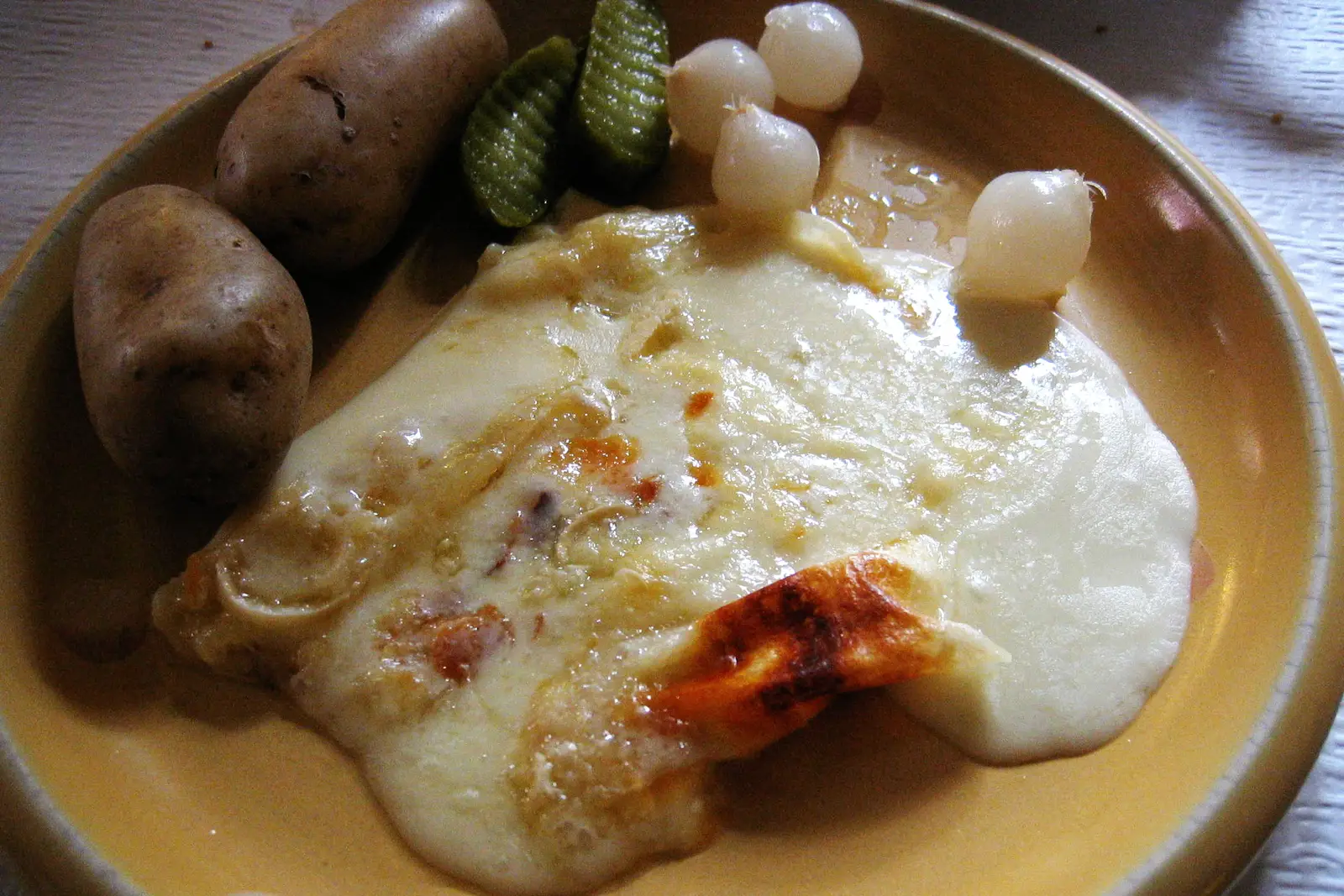
Melted raclette cheese scraped over a plate with boiled potatoes and pickles Switzerland flag Switzerland 40m
Dinner •Valais Alpine Classic

Raclette

Raclette is the Swiss Alps' other great melted-cheese meal: a half-wheel of raclette cheese is warmed until the cut face bubbles, then scraped in ribbons over boiled potatoes, with cornichons and pickled onions to cut the richness. One serving is about 365 g.

Comfort & Togetherness

Melted raclette cheese scraped over boiled potatoes with pickles.

Pairs Well With
Boiled potatoes, cornichons, pickled onions and a green salad
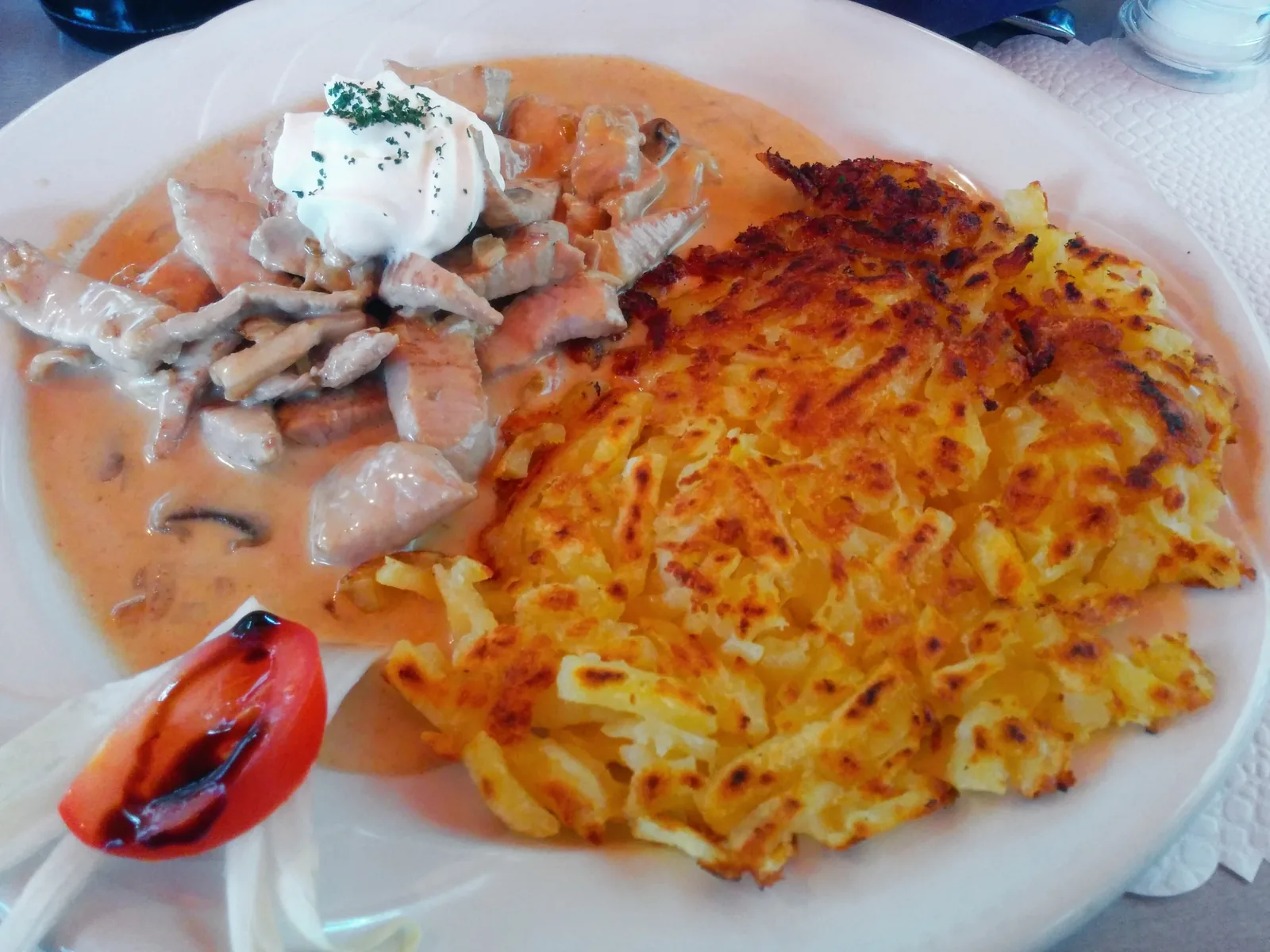
A plate of Zürcher Geschnetzeltes — veal strips in cream sauce with a dollop of cream — beside golden rösti. Switzerland flag Switzerland 40m
Dinner •Zurich Classic

Zürcher Geschnetzeltes

Zürcher Geschnetzeltes is Zurich's signature dish: thin strips of veal quickly seared, then finished in a white-wine and cream sauce with mushrooms and onion. One serving is about 335 g, before the rösti it is traditionally served with.

Rich & Comforting

Tender strips of veal in a white-wine cream sauce with mushrooms — Zurich's classic, with rösti.

Pairs Well With
Serve with golden rösti and a glass of dry Swiss white wine.
High Protein

The Dinner Gazette

Never wonder what’s for dinner again

One email a week with easy dinner ideas from around the world — ingredients, steps and nutrition, tested in our kitchen first.

Delivered every Thursday morning. Unsubscribe anytime.