Curated recipes from 193 countries  •  New seasonal Mediterranean issue out now

Overview

Vanuatu Beef Curry with Boiled Taro

Vanuatu Beef Curry with Taro Boiled in Coconut Milk

This Vanuatu beef curry recipe simmers grass-fed beef chunks in a warm, brown coconut-milk curry sauce until they turn spoon-tender, while taro boils gently in coconut milk in a second pot until soft and creamy. The two meet on the plate with carrots and island cabbage, so every bite has rich curry, mild starchy taro and fresh vegetables together. One serving is about 540 g.

Vanuatu cooking is built on root vegetables such as taro and yams, coconut, and island vegetables, and beef from the islands' grass-fed cattle is a source of pride — the Vanuatu Tourism Office notes the local beef is renowned for its quality and is served in restaurants across the country. This dish is the one Wikipedia's Vanuatu cuisine page chooses for its infobox photograph: beef curry with taro boiled in coconut milk and island vegetables, served on a plate in Port Vila. It is a modern island plate rather than an ancient feast dish — curry powder arrived with the wider Pacific trade in spices, and island cooks made it their own by pairing it with the two foods that define Vanuatu cooking, taro and coconut.

Pairs well with: Steamed rice, fresh island salad and cold coconut water

Provenance

Vanuatu flag Vanuatu

Vanuatu Heritage

Oceania & Pacific

Time Dedication

1h 35m

20m prep • 75m cook

Batch Yield

4 Servings

790 kcal per serving

1 serving ≈ 540 g

Technical Skill

Intermediate

Intermediate (One Pot + Taro Pot)

Meal Timing & Digestive Fit

Breakfast

Not Advised

Lunch

Hearty Midday Main

Dinner

Ideal Hearty Main

Snack & Tea

Inappropriate

High Protein Occasions: Family dinners, Sunday meals, island feasts, gatherings with friends Cost: Moderate — about $5–6 per serving at home
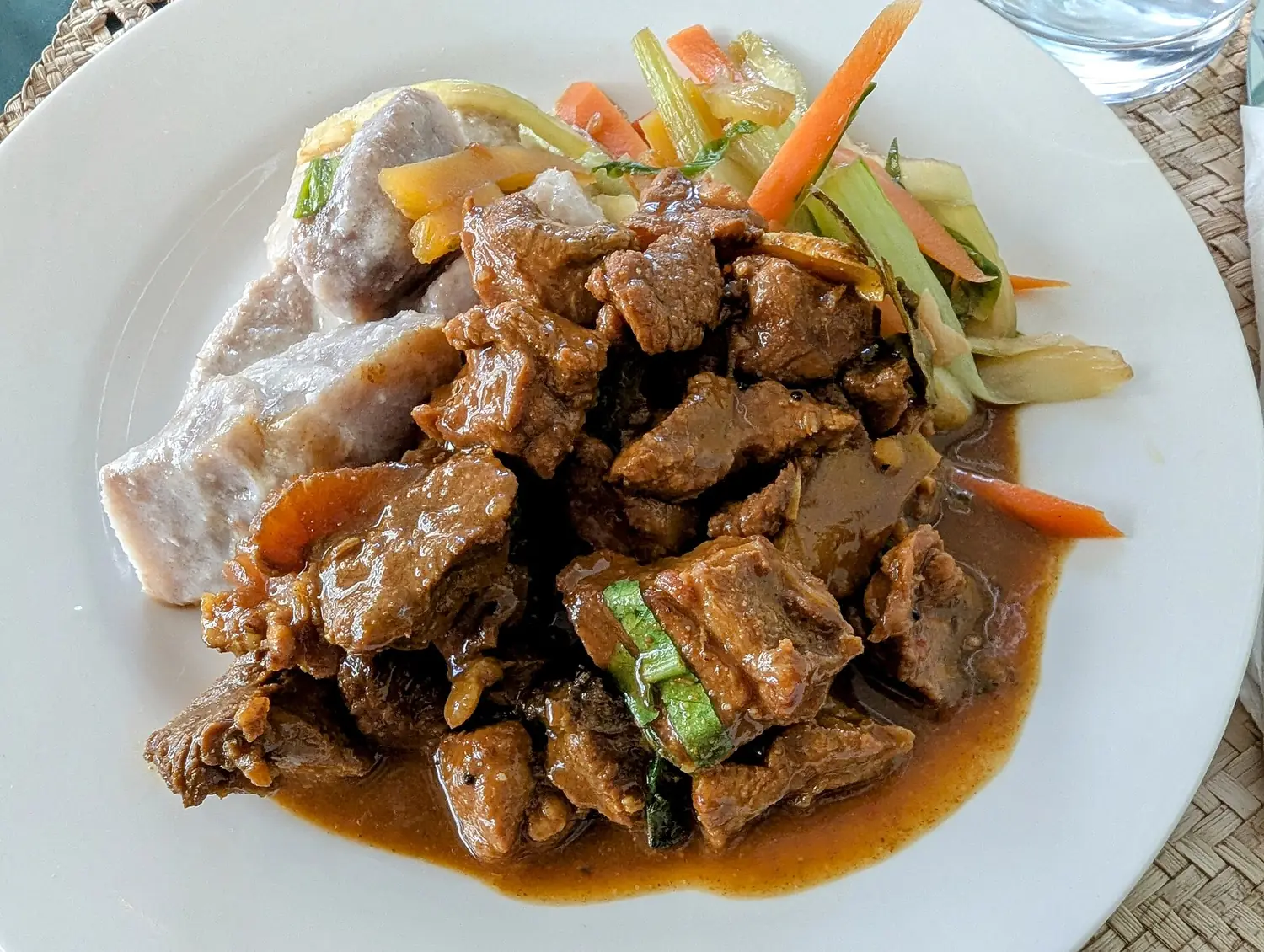
A plate of Vanuatu beef curry: brown-sauced beef chunks with pale boiled taro pieces and carrot and cabbage island vegetables

Vanuatu Heritage

Photo: Asamboi, CC BY-SA 4.0, via Wikimedia Commons

The Heritage Formulary

Measured Ingredients

Estimated cost: Moderate — about $5–6 per serving at home (USD)

A good plate is judged by its contrasts: fork-tender beef in a glossy brown sauce, taro soft and creamy from its coconut-milk boil, and vegetables still bright — never a dry curry or a gluey taro.

Execution Methodology & Culinary Technique

Step-by-Step Cooking Guide

Active 1h 35m
P

Prep Stage: Cut the Beef, Peel the Taro & Mix the Spices

20 Mins • Cutting & Spice Prep

Cut the beef into chunky 4 cm pieces and season with half the salt. Wearing gloves, peel the taro, cut it into thick wedges and rinse it well. Chop the onion, mince the garlic, grate the ginger, slice the carrots, chop the island cabbage and spring onions, and stir the coconut milk smooth, dividing it into two 200 ml portions — one for the curry, one for the taro.

Maestro Tip: Raw taro can irritate the skin and the mouth, so wear gloves while peeling and never taste it raw — thorough boiling in coconut milk is what makes it safe and creamy.

  1. 1

    Brown the Beef

    10 Mins Medium-high heat, about 190°C (375°F)

    Heat the oil in a large heavy pot over medium-high heat. Add the beef pieces in a single layer, without crowding the pot, and brown them for about 8 minutes, turning once or twice so each side picks up a deep brown crust. Work in two batches if the pot is small. Lift the beef out onto a plate.

    Do not stir the beef constantly — leave each piece alone for a couple of minutes so the crust can form; that browning is where the curry's flavour starts.

    Done when: Beef is browned on most sides, with a dark crust and juices still sealed inside.

  2. 2

    Soften the Onion and Bloom the Spices

    8 Mins Medium heat, about 160°C (320°F)

    Turn the heat down to medium. In the same pot, cook the onion for about 4 minutes until soft and translucent, then stir in the garlic and ginger and cook for 1 minute more. Sprinkle in the curry powder and tomato paste and stir for 2 minutes, until the spices smell fragrant and the paste darkens slightly. Pour in the water and scrape the bottom of the pot to lift up all the browned bits.

    Frying the curry powder in the oil for a full 2 minutes takes away its raw, dusty taste — if it smells sharp, it needs another minute.

    Done when: Onion is soft, spices smell warm and toasty, and the liquid is a rich brown.

  3. 3

    Simmer the Curry Until Tender

    50 Mins Gentle simmer, about 95°C (200°F)

    Return the beef to the pot with any juices from the plate. Pour in 200 ml of the coconut milk and the carrots, stir, and bring to a gentle simmer. Put the lid on, leaving it slightly ajar, and simmer for about 50 minutes, stirring now and then, until the beef is fork-tender and the sauce has thickened to a glossy brown that coats a spoon.

    Keep it at a lazy simmer, not a rolling boil — a hard boil toughens the beef and splits the coconut milk.

    Done when: Beef yields easily to a fork, the sauce is thick and brown, and the meat is steaming hot right through, well past the 63°C (145°F) safe minimum for beef.

  4. 4

    Boil the Taro in Coconut Milk

    25 Mins Gentle simmer, about 95°C (200°F)

    While the curry simmers, put the taro wedges in a second pot with the remaining 200 ml of coconut milk and the remaining salt, adding just enough water to barely cover them. Bring to a gentle simmer and cook for about 25 minutes, until the taro is completely soft when pierced with a knife and the coconut milk has turned creamy around it. Drain off any excess liquid, keeping a spoonful of the creamy milk to spoon over the taro.

    Start the taro about 25 minutes before the curry finishes so both pots are ready at the same time — taro that sits too long goes gluey.

    Done when: A knife slides through a wedge with no resistance, and the taro is soft and steaming all the way to the centre.

  5. 5

    Add the Greens and Serve

    5 Mins Simmer, about 95°C (200°F)

    Stir the chopped island cabbage into the curry and cook for 3 to 5 minutes, just until the leaves wilt and turn bright green. Taste the sauce and adjust the salt. Spoon the taro onto warm plates, ladle the beef curry and its brown sauce beside it — not on top, so the taro stays creamy — and scatter the spring onions over the whole plate.

    Serve the curry beside the taro, as in the photo: the taro is there to scoop up the sauce, and burying it under the curry hides the very thing the dish is named for.

    Done when: Greens are wilted but still bright; the plate holds glossy brown curry, pale creamy taro and green vegetables side by side.

Finishing Touches & Plating

Serve hot on warm plates, with the taro creamy from its coconut-milk boil and the curry sauce spooned around it, and let everyone mix the two together as they eat.

Nutritional Physiology & Benefits

Nutrition

Energy

790

kcal / serving

Protein

42g

Complete AA

Carbs

59g

Complex

Fats

44g

Healthy

Per serving (4 servings · 1 serving ≈ 540 g)
Energy790 kcal
Protein42 g
Carbohydrates59 g
Fat44 g
Fibre12.1 g
Sugar9.0 g
Sodium682 mg
Per 100g
Energy146 kcal
Protein7.8 g
Carbohydrates10.9 g
Fat8.2 g
Fibre2.2 g
Sugar1.7 g
Sodium126 mg

Nutrition values are estimated — calculated from USDA FoodData Central values for the listed ingredients.

Vitamins & minerals: Vitamin C and potassium (taro and vegetables), iron, zinc and vitamin B12 (beef), vitamin A (carrots), vitamin K and folate (island cabbage), manganese (coconut milk).

Protein That Keeps You Full

With about 42.1 g of protein per serving from the beef, this is a genuinely filling dinner that holds you for hours after the meal.

Taro, Slow and Steady Energy

Taro is a starchy root that digests slowly, giving steady energy plus about 12.1 g of fibre per serving from the taro and vegetables.

Iron, Zinc and B12 from Beef

Beef brings iron, zinc and vitamin B12, nutrients that support normal energy levels and the formation of red blood cells.

Food Pairings

What to Eat With

To optimize nutrient absorption and elevate the sensory depth, pair with these authentic accompaniments:

Sides

Steamed Rice

A small mound of plain steamed rice soaks up the brown curry sauce, so none of the coconut gravy is wasted.

Boiled Green Bananas

Mild boiled green bananas add a second gentle starch to the plate, the way root crops and bananas are served together at Vanuatu meals.

Vegetables

Fresh Island Salad

Crisp cucumber, tomato and lime cut through the rich coconut curry and refresh the palate between bites of beef and taro.

Drinks

Coconut Water

Cold coconut water is the natural partner — light, unsweetened and refreshing against a rich, salty, steaming curry.

Complete menu

Serve the beef curry and coconut-boiled taro with steamed rice, a fresh island salad of cucumber and tomato with lime, and cold coconut water to drink.

Digestive Guardrails

What NOT to Combine

To prevent digestive distress, sluggishness, or palate clash, avoid pairing the dish with these elements:

Raw or Undercooked Taro

Raw taro contains calcium oxalate crystals that irritate the mouth, throat and skin. Never taste the taro raw and never serve it undercooked — it must boil right through in the coconut milk until completely soft. This is general information, not medical advice.

Very Salty Foods Alongside

The curry is already seasoned with salt and coconut milk, so avoid piling on other salty foods such as soy sauce or salty snacks in the same meal — the combined salt load is what strains blood pressure. This is general information, not medical advice.

General information only, not medical advice — consult a doctor for personal dietary decisions.

Who Should Eat It

Who Should Eat

  • General adultsA hearty, satisfying dinner — one plate with taro and vegetables makes a complete meal.
  • ChildrenSuitable once the beef is tender and the taro is soft right through; cut the beef small and check for hot spots, as the curry holds heat.
  • ElderlySoft and easy to chew once the beef is fully tender, but rich — a smaller plate with extra vegetables is a lighter serve.
  • Pregnant womenGenerally suitable when the beef is cooked right through and the taro is steaming hot in the centre; keep the salty portion modest.
  • Breastfeeding womenGenerally suitable; the coconut milk and beef make it energy-dense, so balance the plate with fresh vegetables.
  • AthletesA good energy-dense meal after training, with about 42.1 g of protein per serving plus slow starch from the taro.
  • Weight gainA good choice — the coconut milk, beef and taro make it naturally calorie-dense; eat a full plate with rice.
  • Weight lossEat a smaller plate with more island vegetables and less coconut sauce, and skip the extra rice; the coconut milk is the main source of calories.

Health Conditions — Adjust or Avoid

Conditions

  • DiabetesTaro is starchy and will raise blood sugar, so keep the taro portion moderate and check your blood sugar as usual. Ask your clinician about portion size.
  • High blood pressureSeasoned beef and added salt make this a moderately salty dish — use less added salt and skip extra salty condiments. Ask your clinician about portion size.
  • Kidney diseaseTaro and coconut milk are sources of potassium; eat a small portion only, and ask your clinician whether it fits your diet.
  • GoutBeef is moderately high in purines, so eat this occasionally and in a modest portion. Ask your clinician if you have frequent flares.
  • Stomach issuesA mild curry is usually gentle, but the rich coconut milk can feel heavy; eat slowly and keep the portion modest if your stomach is sensitive.
  • Cardiovascular diseaseHigh in saturated fat from the coconut milk and beef fat — treat it as an occasional hearty dinner and balance the plate with vegetables. Ask your clinician about how often it fits your diet.
  • Fatty liverKeep the portion modest and favour the taro and vegetables over the beef and sauce; using leaner beef cuts the saturated fat. Ask your clinician about portion size.
  • Food allergiesContains coconut. This recipe is naturally gluten-free, but check any canned coconut milk and curry powder labels if you have coeliac disease, as some brands add wheat-based thickeners.
  • Special therapeutic dietsIf you follow a prescribed low-sodium, low-fat or low-potassium diet, use less salt and coconut milk and choose lean beef, and check with your clinician.

If you have a medical condition, consult your doctor before changing your diet.

Storage & Use

Storage & Use

How to store
Cool the curry and the taro separately and quickly, then store each in its own airtight container.
In the fridge
3 days.
In the freezer
Up to 1 month for the curry only — the taro turns grainy when frozen, so freeze the curry alone and cook fresh taro.
How to reheat
Reheat the curry in a covered pot over low heat, with a splash of water, until steaming hot right through, at least 74°C (165°F); warm the taro gently in a little coconut milk.
Freezing recommended
Yes for the curry, up to 1 month; not recommended for the boiled taro.
Signs it has spoiled
Sour smell, slimy surface on the beef, or mould on the sauce or taro — discard if any appear.

More recipes to explore

Laplap sosor being assembled on banana leaves — grated root vegetable paste topped with raw pork pieces, onion and greens, with coconut milk poured over Vanuatu flag Vanuatu 2h 10m
Dinner •Vanuatu Heritage

Vanuatu Laplap

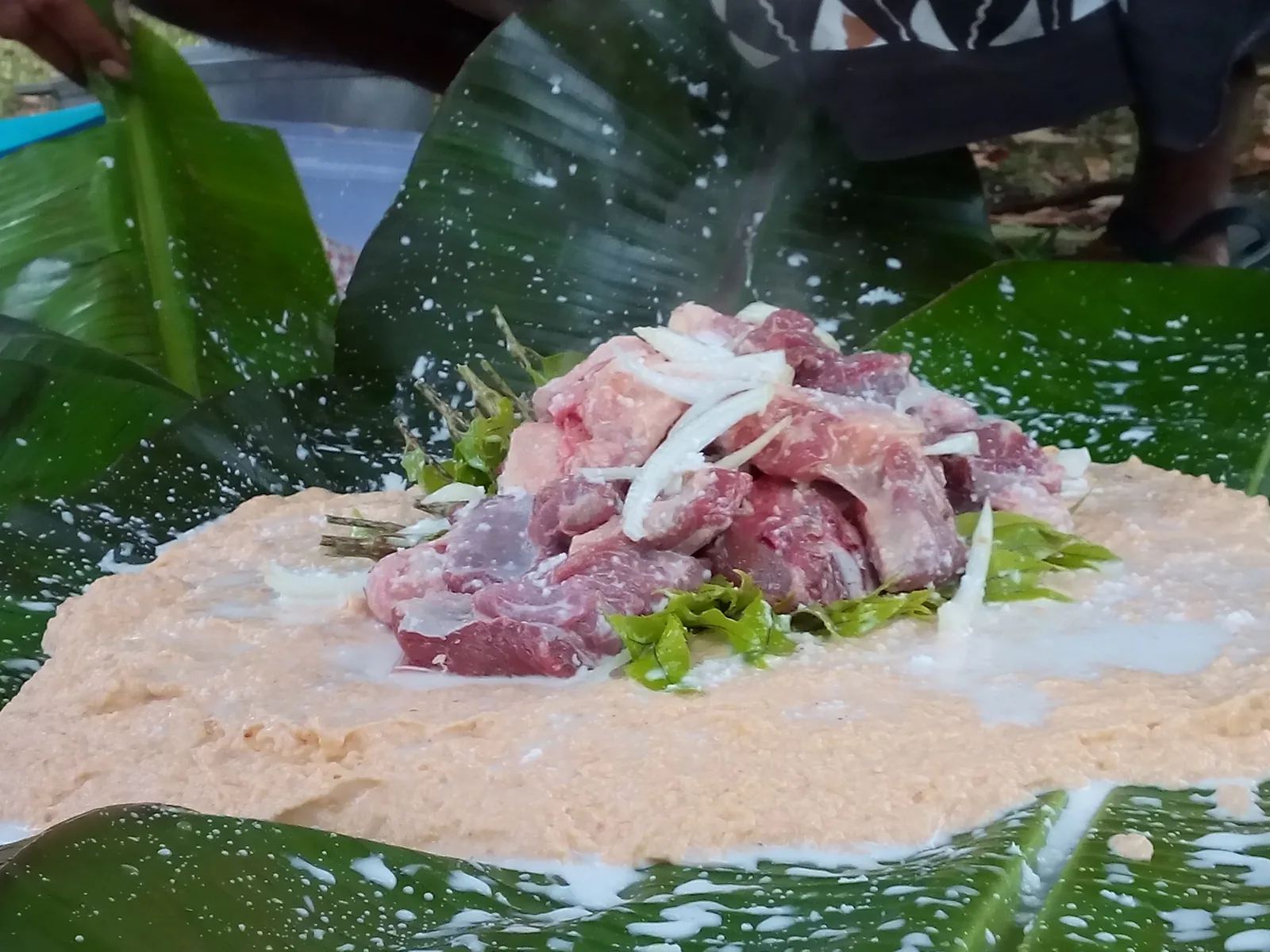
Laplap is Vanuatu's national dish: yam and taro are grated into a thick paste, mixed with coconut milk, spread over banana leaves, layered with pork, onion and island cabbage, then folded into a parcel and baked until the roots set into a dense, moist cake. One serving is about 400 g.

Comfort & Warmth

Grated yam and taro mixed with coconut milk, layered with pork and island cabbage, then wrapped in banana leaves and baked until firm and fragrant.

Pairs Well With
Simboro parcels, fresh island salad and coconut water
High Protein
Tropical fruit platter on a banana leaf — yellow and pink pomelo wedges, banana slices, papaya spears, passion fruit halves, pineapple chunks, red Vanuatu raspberries and lime wedges Vanuatu flag Vanuatu 20m
Snack & Tea •Vanuatu Heritage

Vanuatu Tropical Fruit Platter

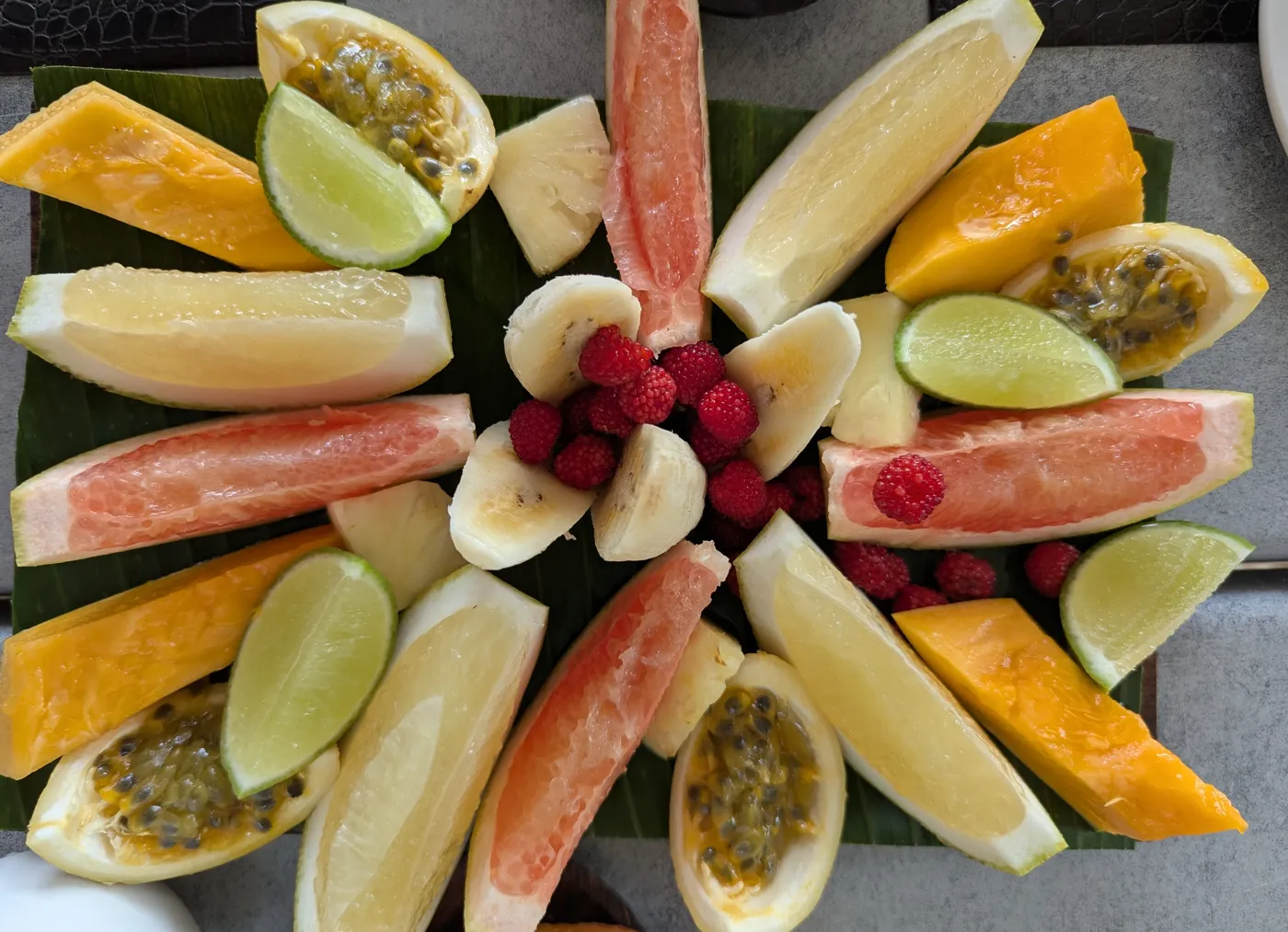
This Vanuatu fruit platter recipe is the simplest way to serve the islands' best fruit: slices of yellow and pink pomelo, banana, papaya, passion fruit, pineapple and Vanuatu raspberries, laid out unmixed on a fresh banana leaf with lime wedges to squeeze over. Nothing is cooked and nothing is dressed, so every fruit keeps its own colour, scent and bite. One serving is about 375 g.

Light & Refreshing

Raw tropical fruit, cut fresh and arranged on a banana leaf, with no cooking, no dressing and nothing added but a squeeze of lime.

Pairs Well With
Cold coconut water and lime wedges
Quick Prep (<30m)
Bœuf bourguignon — French beef braised in red wine France flag France 4h
Dinner •Burgundy Terroir

Bœuf Bourguignon

Beef braised gently in red wine until the connective tissue melts into a velvet, gelatin-rich sauce — the classic Burgundy Sunday dinner.

Cellular Repair

Beef braised in red wine until spoon-tender, with mushrooms and pearl onions.

Pairs Well With
Parsnip Purée & Steamed French Haricots Verts
High Protein
Vietnamese braised pork belly with golden eggs in caramel sauce Vietnam flag Vietnam 1h 45m
Dinner •One Pot

Vietnamese Braised Pork and Eggs

Pork belly slowly braised in coconut water and caramel until meltingly tender, with golden eggs that soak up the sweet-savoury sauce — the Vietnamese family dish that tastes better the next day.

Comfort & Sustained Energy

Slow-braised pork belly and eggs in coconut water and caramel.

Pairs Well With
Steamed rice & pickled mustard greens
High Protein

The Dinner Gazette

Never wonder what’s for dinner again

One email a week with easy dinner ideas from around the world — ingredients, steps and nutrition, tested in our kitchen first.

Delivered every Thursday morning. Unsubscribe anytime.