
Curated recipes from 193 countries  •  New seasonal Mediterranean issue out now

Overview

Vanuatu Tropical Fruit Platter

Tropical Fruit Platter of Vanuatu

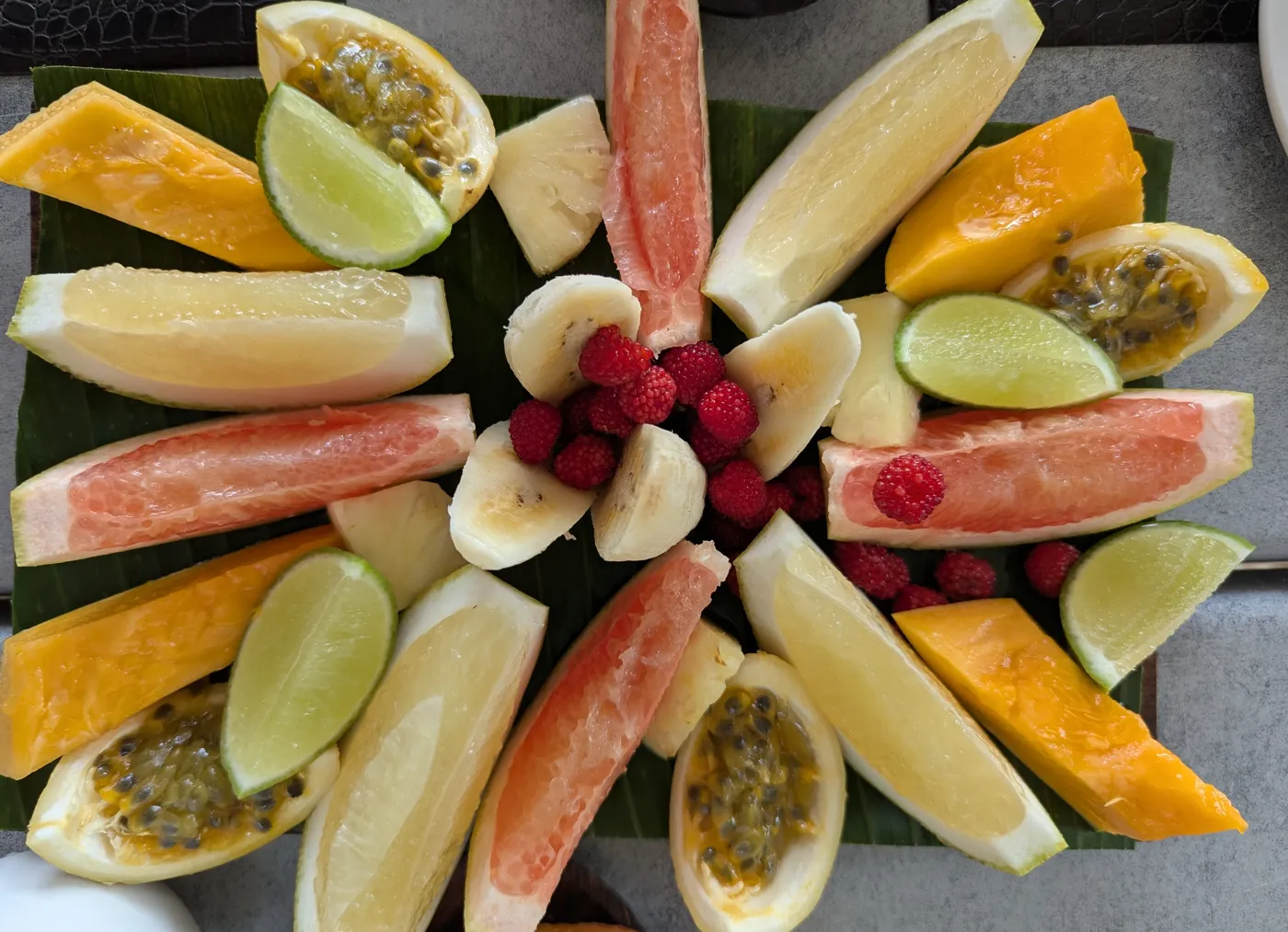
This Vanuatu fruit platter recipe is the simplest way to serve the islands' best fruit: slices of yellow and pink pomelo, banana, papaya, passion fruit, pineapple and Vanuatu raspberries, laid out unmixed on a fresh banana leaf with lime wedges to squeeze over. Nothing is cooked and nothing is dressed, so every fruit keeps its own colour, scent and bite. One serving is about 375 g.

Vanuatu grows an abundance of tropical fruit — pomelo (Citrus grandis), papaya and passion fruit are all recorded among the islands' food plants in Gardens of Oceania, the ACIAR survey of Pacific food crops, and pineapple and banana are staples of Vanuatu desserts. In Port Vila, hotels and resorts serve the harvest the simplest way: sliced, unmixed and laid out on a banana leaf, the same leaf that wraps laplap and simboro. The photograph for this recipe was taken at Paradise Cove Resort in Port Vila, and it shows the platter exactly as it is served there — yellow and pink pomelo, banana, papaya, passion fruit, pineapple and the small red island raspberries known as Rubus rosifolius, with lime wedges to squeeze over.

Pairs well with: Cold coconut water and lime wedges

Provenance

Vanuatu flag Vanuatu

Vanuatu Heritage

Oceania & Pacific

Time Dedication

20m

20m prep • 0m cook

Batch Yield

4 Servings

203 kcal per serving

1 serving ≈ 375 g

Technical Skill

Easy

Easy (No Cooking)

Meal Timing & Digestive Fit

Breakfast

Not Advised

Lunch

Inappropriate

Dinner

Inappropriate

Snack & Tea

Ideal Light Bite

Quick Prep (<30m) Occasions: Poolside snacks, breakfast buffets, tropical parties, light desserts, picnics Cost: Low — about $2–3 per serving at home
Tropical fruit platter on a banana leaf — yellow and pink pomelo wedges, banana slices, papaya spears, passion fruit halves, pineapple chunks, red Vanuatu raspberries and lime wedges

Vanuatu Heritage

Photo: Asamboi, CC BY-SA 4.0, via Wikimedia Commons

The Heritage Formulary

Measured Ingredients

Estimated cost: Low — about $2–3 per serving at home (USD)

A good fruit platter is judged by the fruit itself: fully ripe, freshly cut, unmixed so each fruit keeps its own flavour, and served the same day it is cut.

Execution Methodology & Culinary Technique

Step-by-Step Cooking Guide

Active 20m
P

Prep Stage: Pick, Peel & Slice the Fruit

20 Mins • Selecting & Cutting

Check every fruit for ripeness first, then rinse the raspberries and lime. Peel the pomelos, papaya and pineapple, halve the passion fruit, and keep the banana until last so it does not brown. Rinse the banana leaf, cut away its stiff centre rib and lay it flat on a tray — it is the serving plate.

Maestro Tip: Chill the pomelo, papaya and pineapple for an hour before you start; cold fruit cuts cleanly and tastes far more refreshing.

  1. 1

    Pick Ripe Fruit

    5 Mins No heat, about 20°C (68°F)

    Choose fruit that is ready today, not tomorrow: the pomelos should feel heavy for their size, the papaya skin mostly yellow-orange with flesh that gives gently when pressed, the pineapple sweet-smelling at its base, and the passion fruit heavy with slightly wrinkled yellow skin. Set aside any fruit that is bruised, mouldy or under-ripe — a raw platter has nowhere to hide a poor piece of fruit.

    Buy the fruit the same day you serve the platter; cut tropical fruit loses its scent and texture fast.

    Done when: Every fruit smells sweet, yields slightly to a gentle press, and has no bruises or mould.

  2. 2

    Peel and Cut the Pomelo, Papaya and Pineapple

    8 Mins No heat, about 20°C (68°F)

    Peel both pomelos, pulling away the thick rind and bitter white pith, then separate the flesh into long wedges and pick out any seeds. Peel the papaya, halve it lengthways, scoop out the seeds and cut each half into spears about 3 cm wide. Cut the top and base off the pineapple, slice away the skin, cut out the tough core and cut the flesh into bite-sized chunks. Keep each fruit in its own pile — the platter is arranged unmixed.

    A sharp knife matters more than speed here: a dull blade crushes the pomelo segments and tears the papaya.

    Done when: Clean wedges, spears and chunks with no rind, pith, seeds or core left in them.

  3. 3

    Halve the Passion Fruit, Slice the Banana and Cut the Lime

    5 Mins No heat, about 20°C (68°F)

    Cut each passion fruit in half across the middle and leave the golden pulp and black seeds sitting in the shell — they are scooped out with a spoon at the table. Peel the bananas and slice them thickly on a slant, about 2 cm thick, then squeeze a little lime juice over the slices so they stay pale. Rinse the lime and cut it into 4 wedges, and rinse the raspberries gently and pat them dry.

    Cut the banana last of all; even a few minutes in the air turns the slices brown.

    Done when: Passion fruit halves full of pulp, pale banana slices, and dry, uncrushed raspberries.

  4. 4

    Arrange on the Banana Leaf and Serve

    2 Mins No heat, about 20°C (68°F)

    Lay the banana leaf flat on a tray. Fan the yellow and pink pomelo wedges around the edges, alternating the two colours, then lay the papaya spears and pineapple chunks between them. Set the passion fruit halves cut-side up, tuck the banana slices in the gaps, pile the raspberries in the centre and scatter the lime wedges on top. Serve at once, with a spoon for the passion fruit.

    Do not stack the fruit in a heap — a flat, single layer on the leaf shows off every colour and keeps the soft fruit from being crushed.

    Done when: A flat, colourful spread on the leaf with each fruit visible and the raspberries heaped in the middle.

Finishing Touches & Plating

Serve at once, while the banana is still pale and the pomelo is cold and juicy, with the lime wedges on top for squeezing over just before eating.

Nutritional Physiology & Benefits

Nutrition

Energy

203

kcal / serving

Protein

3g

Complete AA

Carbs

52g

Complex

Fats

1g

Healthy

Per serving (4 servings · 1 serving ≈ 375 g)
Energy203 kcal
Protein3 g
Carbohydrates52 g
Fat1 g
Fibre10.0 g
Sugar32.0 g
Sodium16 mg
Per 100g
Energy54 kcal
Protein0.8 g
Carbohydrates13.8 g
Fat0.2 g
Fibre2.7 g
Sugar8.5 g
Sodium4 mg

Nutrition values are estimated — calculated from USDA FoodData Central values for the listed ingredients.

Vitamins & minerals: Vitamin C (pomelo, papaya, pineapple and lime), vitamin A (papaya), potassium (banana and passion fruit), folate and manganese (raspberries and pineapple).

Fibre That Keeps You Full

With about 10.0 g of fibre per serving, mostly from the passion fruit and raspberries, the platter is filling for very few calories — 203 kcal a serving.

Vitamin C and Vitamin A

Pomelo, papaya, pineapple and lime are all rich in vitamin C, and the papaya adds vitamin A — nutrients that support normal immune function as part of an everyday diet.

Light, Hydrating and Low in Fat

The fruit is mostly water, and the platter carries almost no fat — 0.8 g per serving — and no added salt or sugar, so it is a light, hydrating snack.

Food Pairings

What to Eat With

To optimize nutrient absorption and elevate the sensory depth, pair with these authentic accompaniments:

Drinks

Coconut Water

Cold coconut water is the natural partner — light, unsweetened and refreshing, and it echoes the island setting without adding sugar.

Lime and Mint Iced Tea

Lime and mint iced tea adds a cool herbal note that suits the sharp passion fruit and pomelo, and the ice keeps the fruit cold on a hot day.

More Pairings

Toasted Coconut Flakes

A small bowl of toasted coconut flakes gives a crisp, nutty contrast to the soft fruit, and guests can sprinkle as much or as little as they like.

Full Menus

After Laplap or Grilled Fish

As the fresh finish to a feast, the platter works best after laplap or grilled fish — the cool, sharp fruit cleans the palate after rich coconut and root vegetables.

Complete menu

Serve the platter as a light snack on its own with cold coconut water, or as the fresh finish to a Vanuatu feast after laplap or grilled fish with rice.

Digestive Guardrails

What NOT to Combine

To prevent digestive distress, sluggishness, or palate clash, avoid pairing the dish with these elements:

Unwashed Fruit

Rinse every fruit well under running water before cutting, and wash your hands and knife first. Cut fruit is eaten raw, so soil or bacteria on the skin can end up on the flesh — discard any piece that smells sour or looks mouldy. This is general information, not medical advice.

Sugary Sauces Poured Over

The fruit is sweet enough on its own. Pouring syrup, condensed milk or chocolate sauce over the platter adds a large amount of free sugar and turns a light snack into a dessert — serve any sweet dip on the side instead, so each person can choose. This is general information, not medical advice.

Very Large Portions of Acidic Fruit

Pomelo, passion fruit and lime are acidic, and a very large portion on an empty stomach can bother people with acid reflux or a sensitive stomach. Eat a moderate serving and pair it with something mild, such as coconut water, if citrus usually troubles you. This is general information, not medical advice.

General information only, not medical advice — consult a doctor for personal dietary decisions.

Who Should Eat It

Who Should Eat

  • General adultsA light, refreshing snack any time of day — one serving is about 375 g of fresh fruit.
  • ChildrenSuitable for children over 2 years; cut the fruit into small pieces, watch for the small passion fruit seeds, and keep the lime wedges out of small hands.
  • ElderlySoft, easy to chew and hydrating; serve the fruit at room temperature rather than fridge-cold if cold food is uncomfortable.
  • Pregnant womenGenerally suitable when all the fruit is washed well and cut fresh; avoid any piece that has sat out for hours, and skip it if your clinician has advised limiting fruit sugar.
  • Breastfeeding womenGenerally suitable; the fruit and its water content fit well into a varied diet, and the vitamin C is a bonus.
  • AthletesA good post-training snack — the fruit replaces fluid and gives quick carbohydrate, about 51.6 g per serving, though it is low in protein, so pair it with something protein-rich.
  • Weight gainA poor choice on its own, since it is very light at 203 kcal a serving — eat it alongside an energy-dense food such as coconut or nuts.
  • Weight lossA good choice — high in fibre and water for only 203 kcal, so a full serving feels generous; watch the portion, since the natural sugars still add up.

Health Conditions — Adjust or Avoid

Conditions

  • DiabetesThe platter is naturally sweet, with about 32.0 g of sugar per serving, so keep to one serving and check your blood sugar as usual. Ask your clinician about portion size.
  • High blood pressureNaturally very low in sodium, about 16 mg per serving, with potassium from the banana and passion fruit — a suitable snack as part of a balanced diet. Ask your clinician if you follow a prescribed diet.
  • Kidney diseaseBanana, papaya and passion fruit are all sources of potassium, so eat a small portion only if you limit potassium, and ask your clinician whether it fits your diet.
  • GoutFresh fruit is generally low in purines; the platter is a suitable snack, but keep the portion moderate because of its natural sugars. Ask your clinician if you have frequent flares.
  • Stomach issuesThe acidic fruits (pomelo, passion fruit, lime) can irritate a sensitive stomach, so eat a small portion with something mild if citrus usually troubles you. Ask your clinician if symptoms persist.
  • Cardiovascular diseaseLow in fat and sodium and rich in fibre and potassium, so it fits well into a heart-healthy eating pattern. Ask your clinician about how it fits your overall diet.
  • Fatty liverA better snack choice than sugary processed foods, but the natural sugars still count — keep to one serving and skip any sweet sauce. Ask your clinician about portion size.
  • Food allergiesContains no common allergens; the only caution is a rare allergy to pineapple or papaya (latex-fruit cross-reaction) — if you have a latex allergy, check with your clinician first.
  • Special therapeutic dietsNaturally vegan, gluten-free and dairy-free, and suitable for most plant-based diets; if you follow a prescribed low-sugar, low-potassium or low-acid diet, check with your clinician first.

If you have a medical condition, consult your doctor before changing your diet.

Storage & Use

Storage & Use

How to store
Cut the fruit as close to serving as you can. If you must hold it, cover the platter tightly with cling film and keep it in the fridge.
In the fridge
1 day, covered — the banana browns and the pomelo dries out after that.
In the freezer
Not recommended — thawed cut fruit turns soft and watery.
How to reheat
Not applicable — this is a raw, no-cook platter served cold; do not reheat.
Freezing recommended
No — the texture is badly damaged by freezing; serve fresh instead.
Signs it has spoiled
Brown, slimy banana, sour or fermented smell, mould on any piece, or fruit that has gone soft and watery — discard the whole platter if any appear.

More recipes to explore

Laplap sosor being assembled on banana leaves — grated root vegetable paste topped with raw pork pieces, onion and greens, with coconut milk poured over Vanuatu flag Vanuatu 2h 10m
Dinner •Vanuatu Heritage

Vanuatu Laplap

Laplap is Vanuatu's national dish: yam and taro are grated into a thick paste, mixed with coconut milk, spread over banana leaves, layered with pork, onion and island cabbage, then folded into a parcel and baked until the roots set into a dense, moist cake. One serving is about 400 g.

Comfort & Warmth

Grated yam and taro mixed with coconut milk, layered with pork and island cabbage, then wrapped in banana leaves and baked until firm and fragrant.

Pairs Well With
Simboro parcels, fresh island salad and coconut water
High Protein
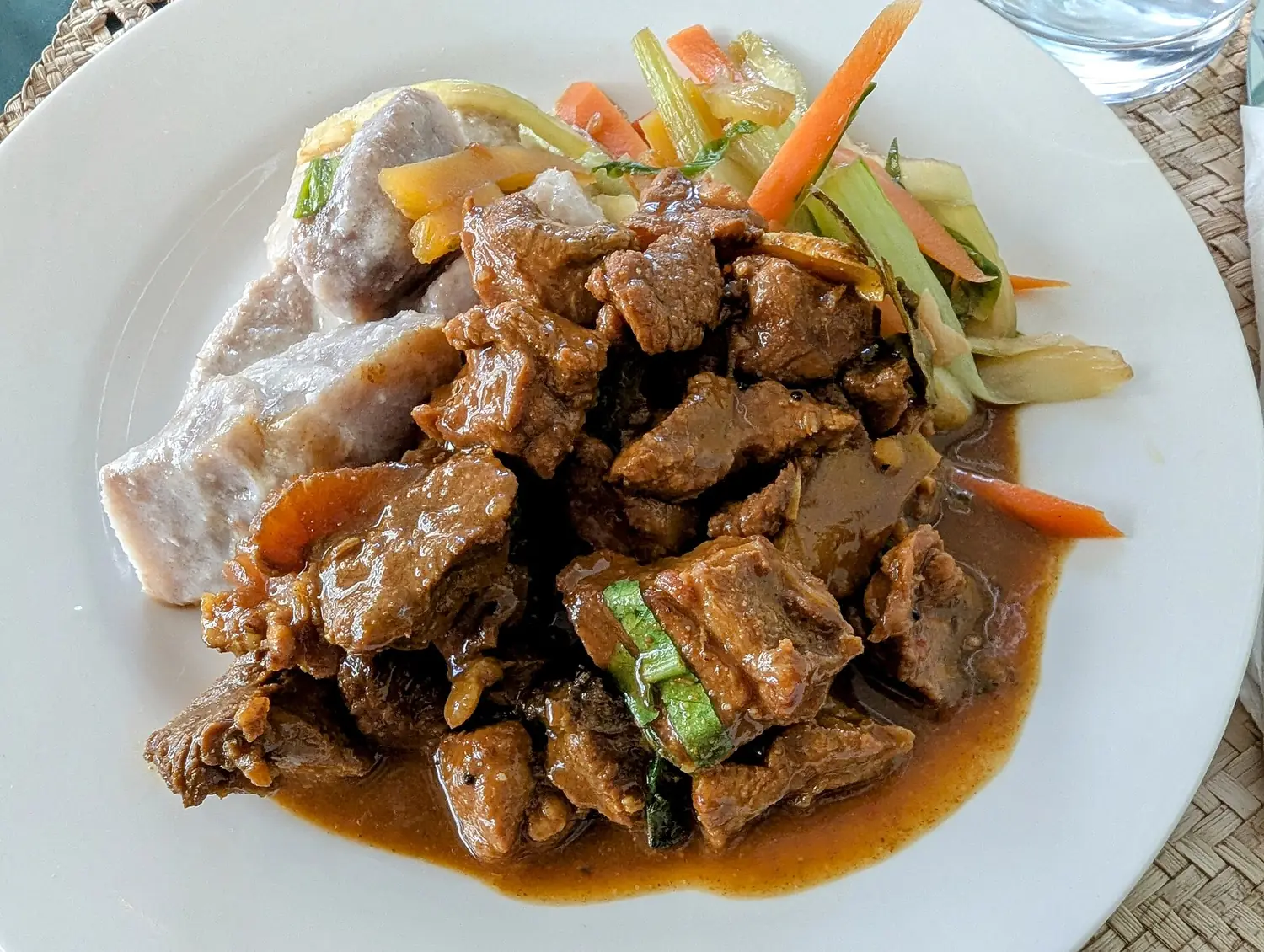
A plate of Vanuatu beef curry: brown-sauced beef chunks with pale boiled taro pieces and carrot and cabbage island vegetables Vanuatu flag Vanuatu 1h 35m
Dinner •Vanuatu Heritage

Vanuatu Beef Curry with Boiled Taro

This Vanuatu beef curry recipe simmers grass-fed beef chunks in a warm, brown coconut-milk curry sauce until they turn spoon-tender, while taro boils gently in coconut milk in a second pot until soft and creamy. The two meet on the plate with carrots and island cabbage, so every bite has rich curry, mild starchy taro and fresh vegetables together. One serving is about 540 g.

Hearty & Comforting

Tender beef simmered in a brown coconut curry sauce, served with taro boiled in coconut milk and island vegetables.

Pairs Well With
Steamed rice, fresh island salad and cold coconut water
High Protein
Pan con tomate with jamón ibérico on toasted bread Spain flag Spain 15m
Snack & Tea •Catalan Aperitivo

Pan con Tomate & Jamón Ibérico

Country bread rubbed with ripe Ramallet tomato, drizzled with cold-pressed Arbequina olive oil and topped with jamón ibérico.

Vascular Health

Toasted tomato bread with jamón ibérico, olive oil and olives.

Pairs Well With
Castelvetrano Olives & Sparkling Mineral Water
Quick Prep (<30m)
Gỏi cuốn — Vietnamese fresh spring rolls with prawn and pork Vietnam flag Vietnam 1h 5m
Snack & Tea •Saigon Refresh

Gỏi Cuốn Tôm Thịt

Fresh rice paper rolls filled with poached prawns, tender pork, rice vermicelli, lettuce, herbs and carrot, served with a peanut dipping sauce.

Light Digestion

Nothing is fried, so the rolls stay light and fresh — a cool, herb-filled snack for hot days.

Pairs Well With
Artisanal Peanut Dip & Fresh Lotus Root Water
High Protein

The Dinner Gazette

Never wonder what’s for dinner again

One email a week with easy dinner ideas from around the world — ingredients, steps and nutrition, tested in our kitchen first.

Delivered every Thursday morning. Unsubscribe anytime.