
Curated recipes from 193 countries  •  New seasonal Mediterranean issue out now

Overview

Vigilante

Queso y Dulce, Cheese and Sweet Potato Paste

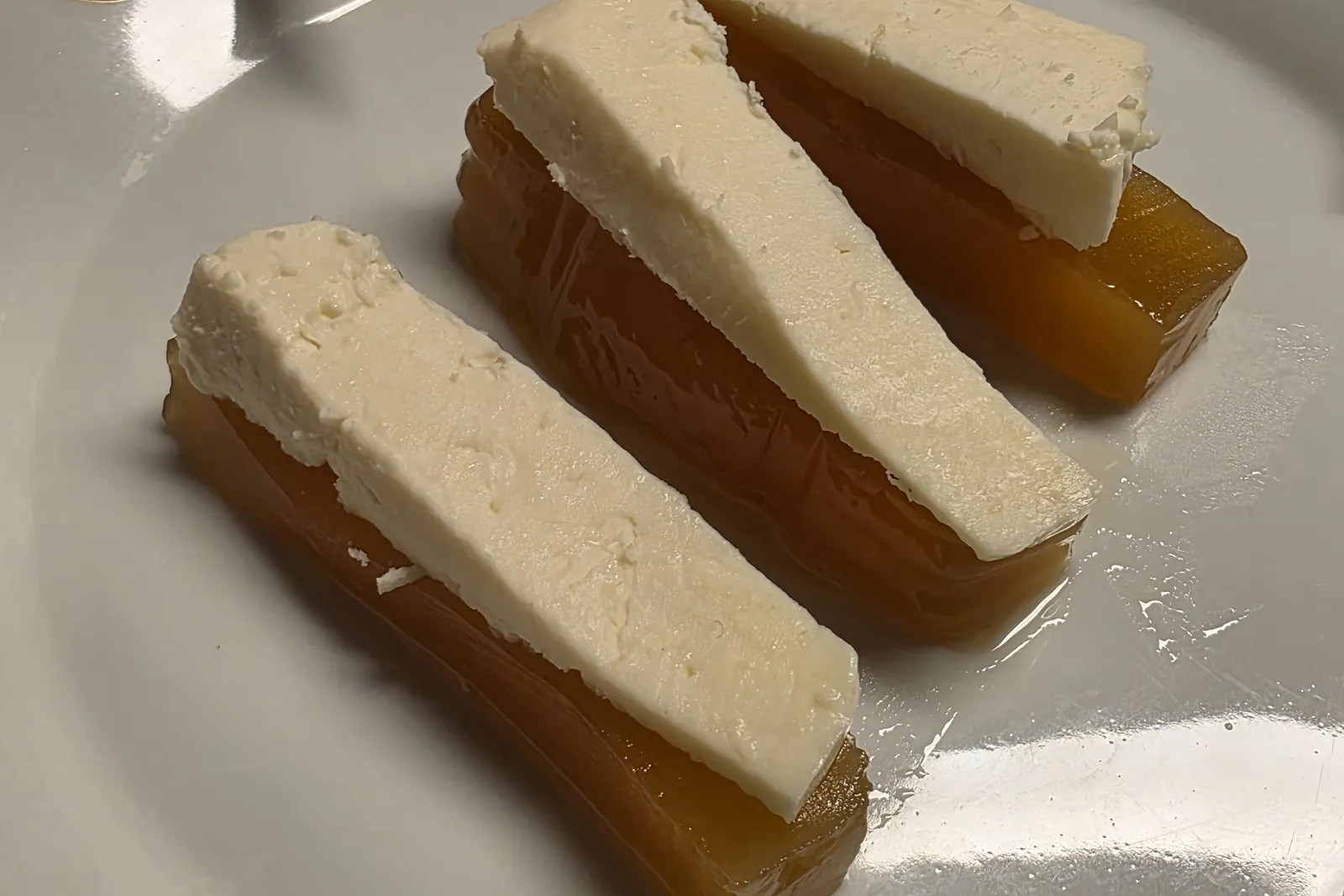
This vigilante recipe pairs a slice of creamy fresh cheese with a slice of glossy sweet-potato paste, the two-bite Argentine dessert found in every corner cafe and family lunch. One serving is about 110 g. There is nothing to cook: slice, stack, and eat, letting the salty cheese balance the sweet, dense paste.

Vigilante — literally 'the watchman' — is Argentina's simplest dessert: a slice of cheese on a slice of sweet paste, eaten at the end of lunch or with afternoon coffee. The classic version uses dulce de batata, sweet-potato paste, while the quince-paste version is called queso y dulce de membrillo. It is a everyday food rather than a celebration dish, found in school canteens, corner cafes and family kitchens across the country.

Pairs well with: A small cup of black coffee or mate, and nothing else — the dessert is the whole point

Provenance

Argentina flag Argentina

Argentine Classic

Latin America & Caribbean

Time Dedication

10m

10m prep • 0m cook

Batch Yield

4 Servings

278 kcal per serving

1 serving ≈ 110 g

Technical Skill

Easy

Easy (No Cooking)

Meal Timing & Digestive Fit

Breakfast

Not Advised

Lunch

Inappropriate

Dinner

Inappropriate

Snack & Tea

Ideal Light Bite

Occasions: Afternoon snacks, after asado lunches, coffee breaks, simple family desserts Cost: Low — about $1–2 per serving at home
Three portions of vigilante on a white plate: slices of white fresh cheese on glossy amber sweet-potato paste

Argentine Classic

Photo: Horacio Cambeiro, CC BY-SA 3.0, via Wikimedia Commons

The Heritage Formulary

Measured Ingredients

Estimated cost: Low — about $1–2 per serving at home (USD)

True vigilante is just two things: mild fresh cheese and firm sweet-potato paste, sliced to match — never melted, never baked, never dressed up.

Execution Methodology & Culinary Technique

Step-by-Step Cooking Guide

Active 10m
P

Prep Stage: Chill, Slice and Match

10 Mins • Slice & Match

Keep the cheese and the sweet-potato paste chilled until serving time. Slice the paste into 4 even pieces about 1 cm thick, then slice the cheese to match each piece so every portion has the same cheese-to-paste balance.

Maestro Tip: Use a thin, sharp knife wiped clean between cuts — a warm or serrated blade drags the paste and tears the cheese. Chill both blocks for at least 30 minutes first so they slice cleanly.

  1. 1

    Chill the Cheese and the Paste

    5 Mins Chilled, about 4°C (39°F) — no heat

    Put the block of dulce de batata and the cheese in the fridge for at least 30 minutes before serving. Cold blocks slice cleanly; warm paste smears and warm cheese tears.

    If the paste block is very firm from the fridge, let it sit at room temperature for 5 minutes — just enough to cut without cracking.

    Done when: Both blocks are cold, firm and easy to slice.

  2. 2

    Slice the Sweet-Potato Paste

    2 Mins No heat — serve chilled, about 4°C (39°F)

    Cut the dulce de batata into 4 slices, each about 60 g and 1 cm thick. Wipe the knife clean between cuts so each slice has a neat edge.

    Cut the block in half, then halve each half — four equal slices with no measuring.

    Done when: Four even, glossy amber slices.

  3. 3

    Slice the Cheese to Match

    2 Mins No heat — serve chilled, about 4°C (39°F)

    Cut the cheese into 4 slices, each about 50 g and 1 cm thick, the same size as the paste slices. A slice of cheese slightly smaller than the paste looks tidy; a larger one slides off.

    Use a separate clean knife for the cheese so crumbs of paste do not stick to it.

    Done when: Four even white slices, the same size as the paste.

  4. 4

    Stack and Serve at Once

    1 Min Serve chilled, about 4°C (39°F)

    Lay one cheese slice on top of each paste slice and set the four portions on a plate. Serve immediately, while the cheese is still cool and the paste is firm.

    Eat each portion in one or two bites so the salty cheese and the sweet paste meet in the same mouthful — that contrast is the whole dessert.

    Done when: Four neat stacks, cheese on paste, ready to eat.

Finishing Touches & Plating

Serve the vigilante cold on a plain plate with a small cup of coffee or mate. No garnish is needed — the amber paste against the white cheese is the presentation.

Nutritional Physiology & Benefits

Nutrition

Energy

278

kcal / serving

Protein

12g

Complete AA

Carbs

33g

Complex

Fats

11g

Healthy

Per serving (4 servings · 1 serving ≈ 110 g)
Energy278 kcal
Protein12 g
Carbohydrates33 g
Fat11 g
Fibre1.2 g
Sugar27.8 g
Sodium316 mg
Per 100g
Energy253 kcal
Protein10.5 g
Carbohydrates30.4 g
Fat10.1 g
Fibre1.1 g
Sugar25.3 g
Sodium287 mg

Nutrition values are estimated — calculated from USDA FoodData Central values for the listed ingredients.

Vitamins & minerals: Calcium and phosphorus (cheese), vitamin A and potassium (sweet potato). Nutrition is estimated.

Simple, Honest Ingredients

Two ingredients and nothing hidden: fresh cheese for protein and calcium, sweet-potato paste for slow, filling carbohydrates.

Quick Energy, Small Portion

At about 278 kcal a serving, one portion is a satisfying snack that delivers energy without a heavy meal.

Naturally Vegetarian

No meat, no gelatine, no cooking — a vegetarian dessert that suits almost any table.

Food Pairings

What to Eat With

To optimize nutrient absorption and elevate the sensory depth, pair with these authentic accompaniments:

Drinks

Black Coffee

A small, strong black coffee cuts the sweetness of the paste and sharpens the salty cheese — the classic Argentine pairing.

Mate

Bitter mate is the traditional partner: its herbal bitterness balances the sweet paste the way coffee does, and it is how most Argentines actually eat vigilante.

Full Menus

After an Asado Lunch

Vigilante is the traditional light finish to a heavy grilled-meat lunch — sweet, cool and small after all that rich food.

Sides

Fresh Fruit

A few slices of pear or apple add freshness and crunch, and their mild acidity keeps the sweet paste from feeling too rich.

Complete menu

Serve vigilante as the light finish to an asado lunch, with black coffee or mate and a few slices of fresh pear.

Digestive Guardrails

What NOT to Combine

To prevent digestive distress, sluggishness, or palate clash, avoid pairing the dish with these elements:

Leaving It Out in the Heat

Fresh cheese spoils quickly at warm temperatures, so do not leave plated vigilante sitting out for hours. This is general information, not medical advice.

Very Salty Cheese

A salty, aged cheese overwhelms the gentle sweetness of the paste — the pairing only works with a mild, fresh cheese.

General information only, not medical advice — consult a doctor for personal dietary decisions.

Who Should Eat It

Who Should Eat

  • General adultsA small, sweet snack at about 278 kcal a serving — enjoy one portion with coffee.
  • ChildrenChildren usually love it — cut each portion into smaller bites and keep the serving to one portion because of the sugar.
  • ElderlySoft, easy to chew and easy to digest; keep the portion small if sugar intake is a concern.
  • Pregnant womenFine in a normal portion if the cheese is made from pasteurised milk — check the label, and ask your clinician if you are unsure.
  • Breastfeeding womenA handy, filling snack; the calcium is welcome, but keep portions modest because of the sugar.
  • AthletesA quick source of energy after training, with about 11.5 g of protein a serving — pair it with a bigger protein meal, not as the main recovery food.
  • Weight gainA useful, calorie-dense snack: two portions add about 556 kcal without feeling heavy.
  • Weight lossKeep it to one portion — the sweet paste is high in sugar, so it is a treat rather than an everyday snack.

Health Conditions — Adjust or Avoid

Conditions

  • DiabetesHigh in sugar from the paste — about 27.8 g a serving — so keep the portion small and ask your clinician about a suitable portion.
  • High blood pressureAbout 316 mg of sodium a serving, mostly from the cheese — choose a low-salt cheese and ask your clinician about a suitable portion.
  • Kidney diseaseModerate protein and potassium from the cheese and sweet potato; keep portions small and ask your clinician.
  • GoutLow in purines and fine in a normal portion; ask your clinician if you are unsure.
  • Stomach issuesSoft and easy to digest; the sweet paste can feel heavy on a very sensitive stomach, so eat a small portion and ask your clinician about your triggers.
  • Cardiovascular diseaseThe cheese brings saturated fat, so keep portions modest and occasional; ask your clinician.
  • Fatty liverHigh in sugar, so keep it an occasional small treat rather than a daily snack. Ask your clinician.
  • Food allergiesContains milk (cheese) — a major allergen. Free from gluten, egg, peanut, tree nuts, fish and soy.
  • Special therapeutic dietsNot suitable as written for low-sugar or dairy-free diets; ask your clinician or dietitian before adapting it.

If you have a medical condition, consult your doctor before changing your diet.

Storage & Use

Storage & Use

How to store
Store the cheese and the paste separately, each wrapped tightly, in the fridge. Assemble only what you will eat.
In the fridge
Cheese: 3–5 days; dulce de batata: up to 2 weeks, wrapped. Assembled portions: eat within a few hours.
In the freezer
The paste freezes well for up to 3 months; the cheese does not freeze well and turns crumbly.
How to reheat
Do not reheat — this is a cold dessert. Serve chilled at about 4°C (39°F).
Freezing recommended
Only for the paste, not for the cheese or the assembled dessert.
Signs it has spoiled
Sour smell from the cheese, slimy surface, or mould on either part — discard at once.

More recipes to explore

Golden baked Argentine beef empanadas with crimped edges on a plate Argentina flag Argentina 1h 25m
Lunch •Buenos Aires Heritage

Argentine Empanadas

Argentine empanadas are half-moon pastries of short, flaky wheat pastry — no yeast, no puff — folded over a savoury filling of seasoned ground beef, onion, hard-boiled egg, green olives and a few raisins, then sealed with the classic rope crimp called the repulgue and baked until deep gold. This is the beef empanada de carne found in bakeries and rotisseries across Buenos Aires. One serving (two empanadas) is about 260 g.

Hearty & Satisfying

Golden baked pastry wrapped around spiced beef, olive and egg — the hand-held lunch Argentina runs on.

Pairs Well With
Chimichurri & a simple green salad
Sliced flat iron steak topped with green chimichurri on a plate Argentina flag Argentina 32m
Dinner •Pampas Asado Heritage

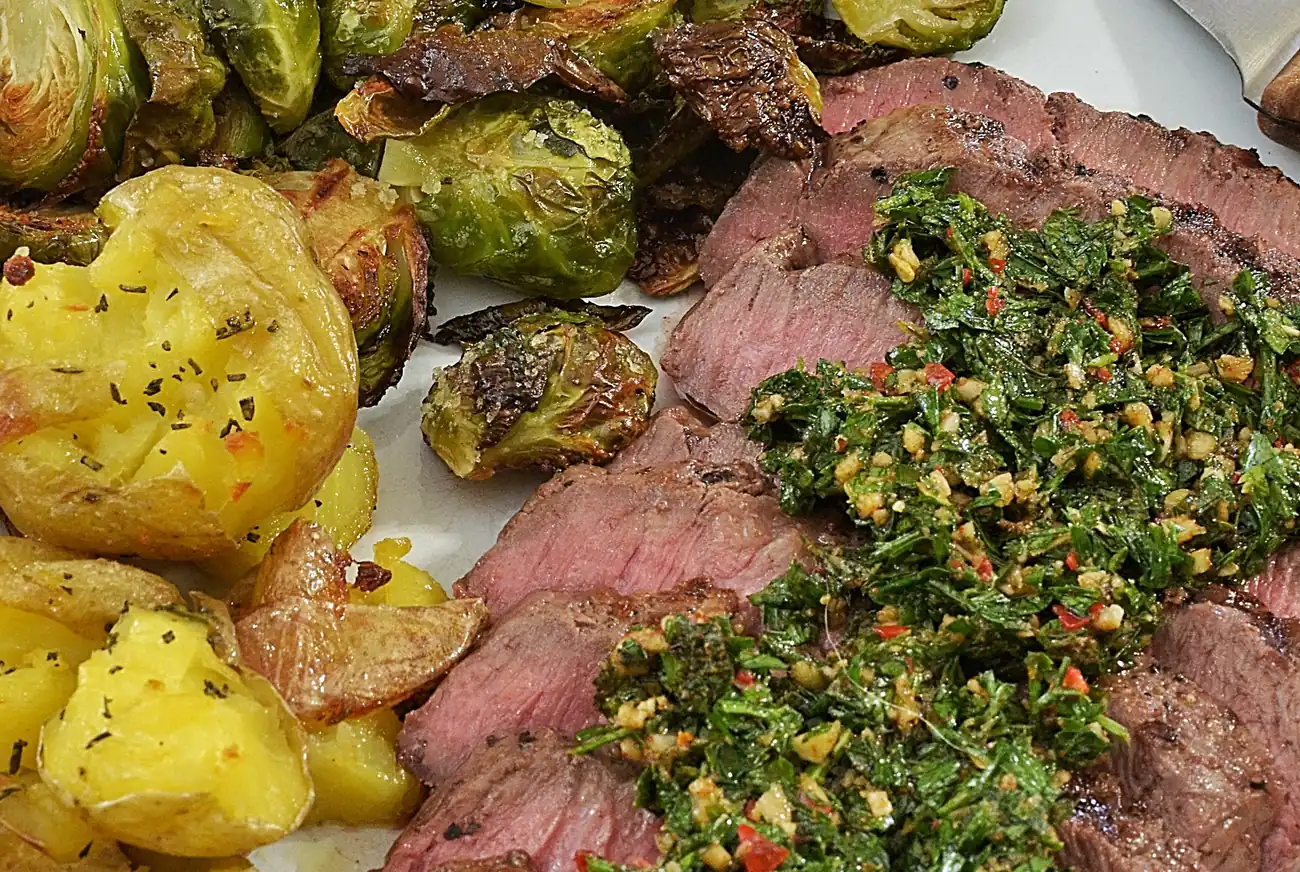
Chimichurri Steak

Chimichurri steak is the centrepiece of the Argentine asado: a thick sirloin grilled over high heat until charred outside and juicy inside, rested, sliced, and served with chimichurri — the raw sauce of parsley, garlic, oregano, red wine vinegar and olive oil that Argentina puts on almost everything grilled. The sauce is made first so its flavours can meld while the steak cooks. One serving is about 215 g.

High-Protein & Satisfying

A thick grilled sirloin, rested and sliced, drowned in bright garlicky chimichurri — the heart of the Argentine asado.

Pairs Well With
Roasted potatoes & grilled vegetables
High Protein
Breaded milanesa steak topped with tomato sauce and melted cheese Argentina flag Argentina 45m
Dinner •Buenos Aires Heritage

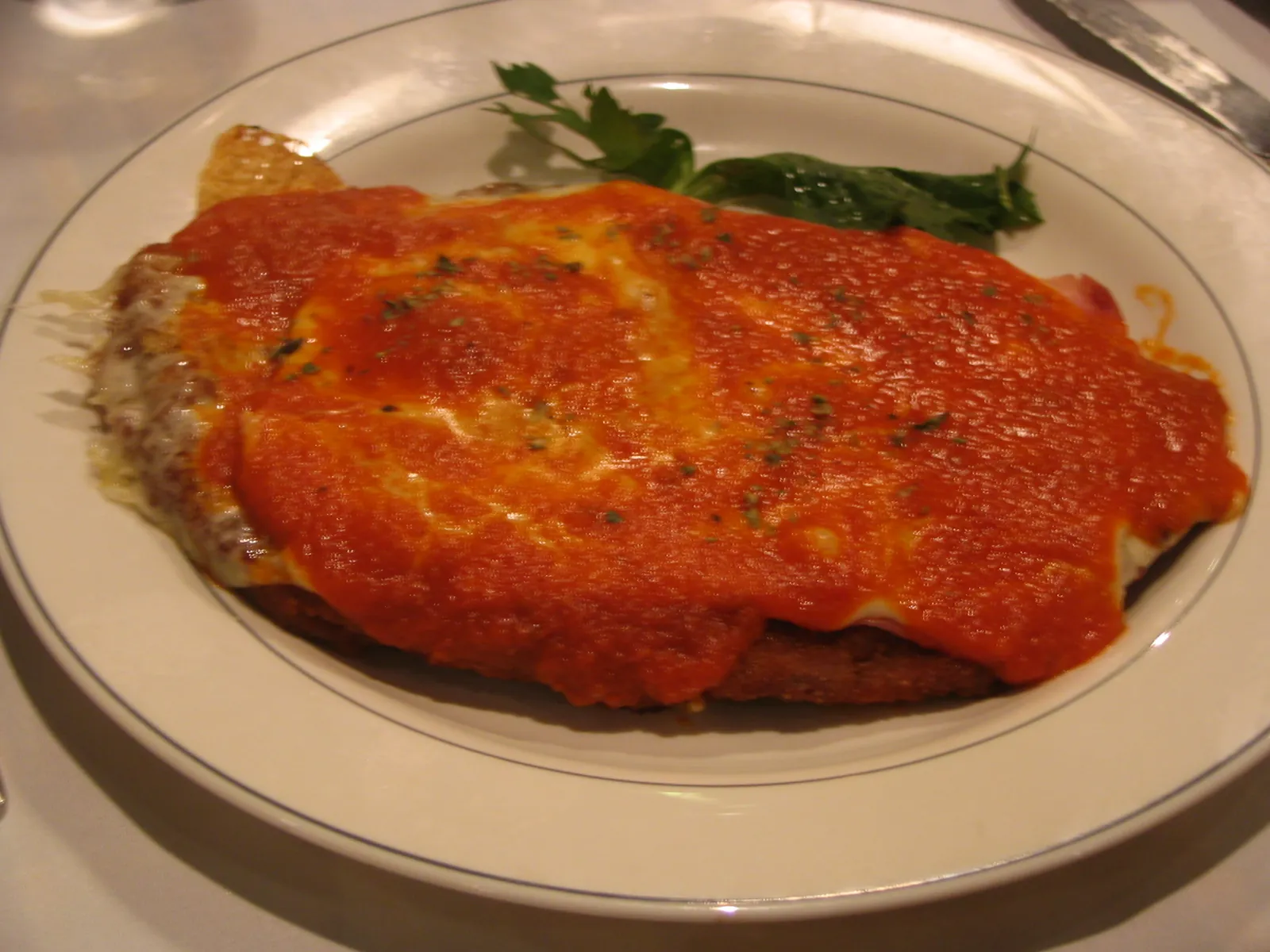
Milanesa a la Napolitana

Milanesa a la napolitana starts as a milanesa — a thin beef steak pounded flat, dredged in flour and egg, coated in breadcrumbs and fried until crisp — and then becomes something else entirely: topped with tomato sauce, a slice of ham and a blanket of mozzarella, it goes back into the oven until the cheese bubbles. It is the dish Argentine families order at the neighbourhood bodegon, always with French fries. One serving is about 350 g, before the fries.

Comforting & Satisfying

A crisp breaded steak, fried golden, then finished in the oven under tomato sauce, ham and bubbling mozzarella — Argentina's favourite comfort plate.

Pairs Well With
French fries & a green salad
A grilled bife de chorizo steak, pink inside, with green salad on a wooden board Argentina flag Argentina 2h 30m
Dinner •Buenos Aires Parrilla Heritage

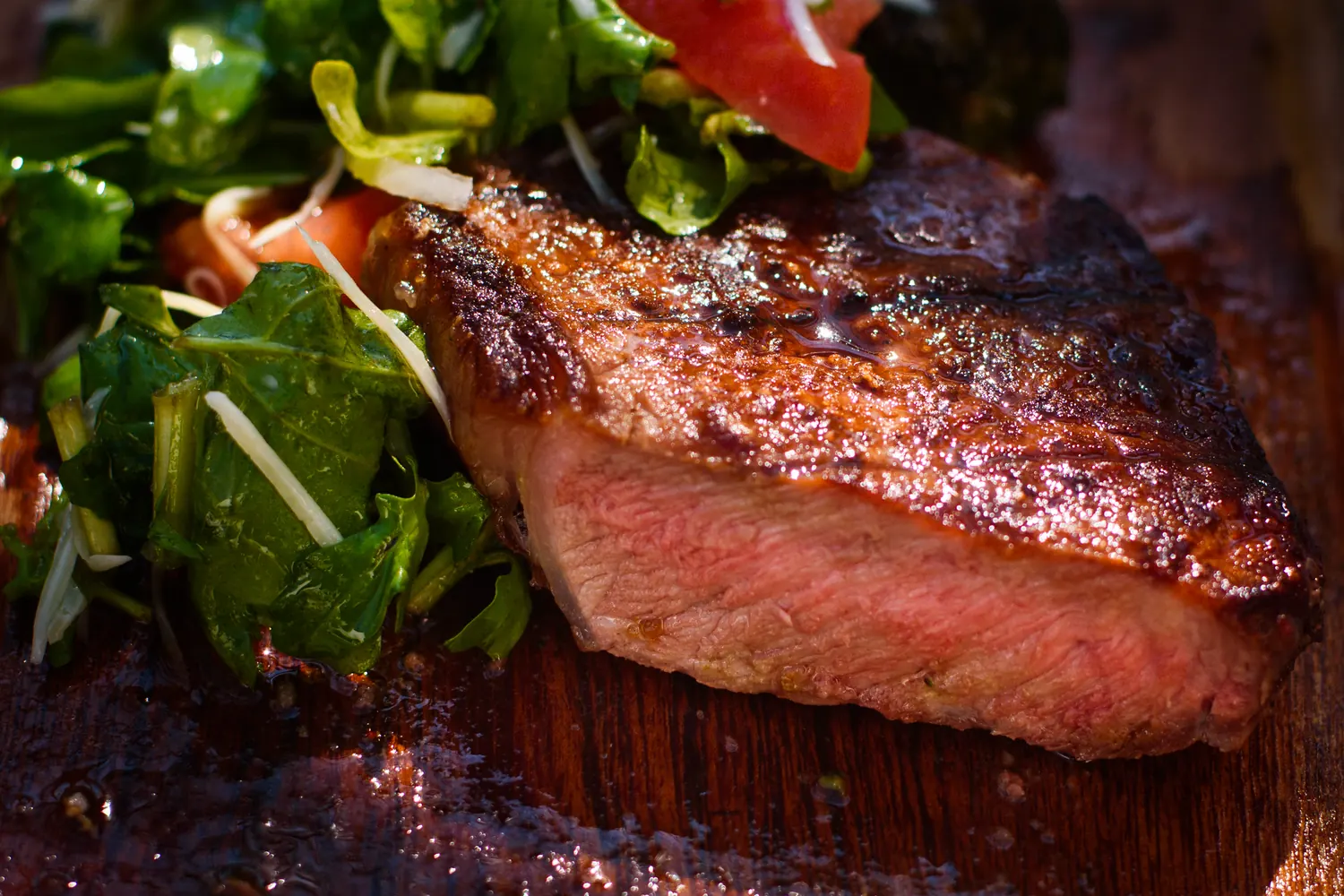
Argentine Asado

This argentine asado recipe is the full Sunday parrillada: tira de asado, vacio, entrana and bife de chorizo, plus chorizo, morcilla, mollejas and chinchulines, all cooked slowly over quebracho charcoal embers and seasoned with nothing but coarse salt. It opens with provoleta, grilled provolone with oregano, and the meat is served piece by piece as each cut is ready, with chimichurri and salsa criolla on the table. One serving is about 460 g.

High-Protein & Satisfying

A slow mixed grill of beef cuts, chorizo, morcilla and achuras over quebracho embers, opened with grilled provoleta and served with chimichurri and salsa criolla.

Pairs Well With
Chimichurri, salsa criolla & Malbec
High Protein

The Dinner Gazette

Never wonder what’s for dinner again

One email a week with easy dinner ideas from around the world — ingredients, steps and nutrition, tested in our kitchen first.

Delivered every Thursday morning. Unsubscribe anytime.