
Curated recipes from 193 countries  •  New seasonal Mediterranean issue out now

Overview

Wurstsalat

Swiss Sausage Salad, Schweizer Wurstsalat

This wurstsalat recipe is the Swiss cold classic: thin strips of cooked pork sausage and Emmental cheese tossed in a sharp white-wine-vinegar dressing with red onion, pickles, radish and chives. One serving is about 215 g. Nothing is cooked: the salad is made by slicing, whisking and resting, and the 20 minutes it spends in the dressing is what turns good ingredients into a proper Wurstsalat.

Wurstsalat is the cold sausage salad of Switzerland and southern Germany, born as a way to use up cooked sausage: sliced thin, dressed in vinegar and oil, and left to rest so the flavours marry. In Switzerland it is most often made with Cervelat or Lyoner sausage and Emmental, and it is a staple of mountain restaurants, beer gardens and packed lunches.

Pairs well with: Crusty bread, pickled vegetables, a cold lager or apple juice

Provenance

Switzerland flag Switzerland

Swiss Cold-Salad Classic

Nordic & European

Time Dedication

20m

20m prep • 0m cook

Batch Yield

4 Servings

473 kcal per serving

1 serving ≈ 215 g

Technical Skill

Easy

Easy (No Cooking)

Meal Timing & Digestive Fit

Breakfast

Not Advised

Lunch

Prime Metabolic Fit

Dinner

Ideal Hearty Main

Snack & Tea

Inappropriate

Occasions: Summer lunches, beer gardens, picnics, packed lunches, cold buffets Cost: Low — about $3–4 per serving at home
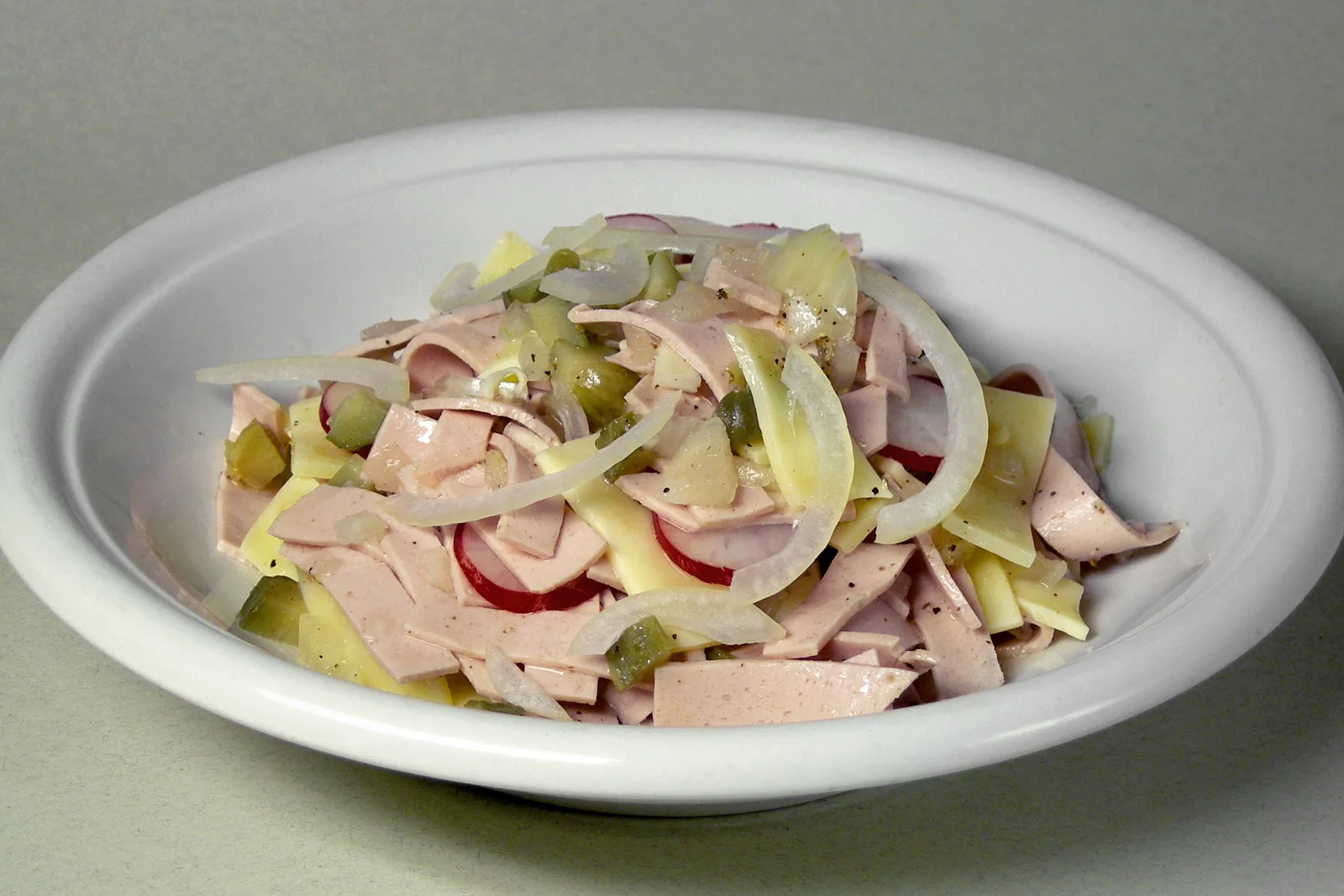
A bowl of wurstsalat with sliced sausage, Emmental cheese strips, onion rings, pickles and radish

Swiss Cold-Salad Classic

Photo: Rainer Zenz, CC BY-SA 3.0, via Wikimedia Commons

The Heritage Formulary

Measured Ingredients

Estimated cost: Low — about $3–4 per serving at home (USD)

A good wurstsalat is judged by the balance: sharp vinegar against rich sausage and cheese, with the onion softened by the rest, never harsh.

Execution Methodology & Culinary Technique

Step-by-Step Cooking Guide

Active 20m
P

Prep Stage: Slice Thin, Whisk Sharp

20 Mins • Knife Work

Slice the sausage and the Emmental into thin, even strips, the onion into rings, the pickles into dice and the radishes into thin rounds — even sizes matter, because every forkful should have a little of everything. Whisk the vinegar, oil, mustard, salt and pepper until the dressing turns slightly cloudy and thick. Then toss everything together and leave it to rest for 20 minutes: the onion softens, the dressing soaks into the sausage, and the flavours come together.

Maestro Tip: Slice the sausage cold, straight from the fridge: warm sausage tears and the strips go ragged.

  1. 1

    Slice the Sausage and Cheese

    8 Mins No heat — cold, straight from the fridge

    Peel the casing from the sausage and cut it into thin strips about 5 mm wide and 4 cm long. Cut the Emmental into strips the same size, so the two match on the fork. Put both in a large bowl.

    Cut against the grain of the sausage for neat strips that hold their shape.

    Done when: Two neat piles of even strips, sausage and cheese the same size.

  2. 2

    Slice the Vegetables

    5 Mins No heat — room temperature, about 20°C (68°F)

    Slice the red onion into thin rings and separate them, dice the drained pickles, and slice the radishes thinly. Add everything to the bowl with the sausage and cheese.

    Slice the onion as thin as you can: thick rings overpower the salad.

    Done when: A colourful mix with onion rings, green pickle dice and pink radish rounds visible.

  3. 3

    Whisk the Dressing

    3 Mins No heat — room temperature, about 20°C (68°F)

    Whisk the white wine vinegar, sunflower oil, Dijon mustard, salt and pepper together until the dressing turns slightly cloudy and thick enough to coat a spoon. Taste it: it should be sharp and savoury, not oily.

    Whisk hard for a full 30 seconds; the mustard is what holds the oil and vinegar together.

    Done when: A cloudy, sharp dressing that coats the back of a spoon.

  4. 4

    Toss and Rest

    4 Mins + 20 Mins Rest Rest at room temperature, about 20°C (68°F)

    Pour the dressing over the bowl and toss gently until every strip is coated. Scatter the chives on top, cover, and leave to rest for 20 minutes so the onion softens and the dressing soaks in. Taste once more and adjust the salt or vinegar before serving.

    Toss with two spoons, not a fork: forks break the cheese strips.

    Done when: Every strip glossy with dressing; the onion slightly softened, the flavours blended.

Finishing Touches & Plating

Serve at room temperature with crusty bread to mop up the dressing. Wurstsalat is at its best after its 20-minute rest — and it is even better the next day, once the dressing has had a night to work.

Nutritional Physiology & Benefits

Nutrition

Energy

473

kcal / serving

Protein

23g

Complete AA

Carbs

7g

Complex

Fats

39g

Healthy

Per serving (4 servings · 1 serving ≈ 215 g)
Energy473 kcal
Protein23 g
Carbohydrates7 g
Fat39 g
Fibre1.1 g
Sugar2.6 g
Sodium1478 mg
Per 100g
Energy220 kcal
Protein10.8 g
Carbohydrates3.4 g
Fat18.2 g
Fibre0.5 g
Sugar1.2 g
Sodium687 mg

Nutrition values are estimated — calculated from USDA FoodData Central values for the listed ingredients.

Vitamins & minerals: Vitamin B12 and niacin (sausage), calcium (Emmental), vitamin C (radish and onion), vitamin K (chives).

High in Protein

Sausage and Emmental together give a large amount of protein per serving, which keeps you full through the afternoon.

Calcium from Emmental

Emmental is a hard cheese and a useful source of calcium, which supports normal bone health.

Fresh and Light for Lunch

Served cold with raw onion, radish and pickles, this is a fresh, crunchy lunch that needs no cooking at all.

Food Pairings

What to Eat With

To optimize nutrient absorption and elevate the sensory depth, pair with these authentic accompaniments:

Sides

Crusty Bread

Crusty bread is essential: it mops up the sharp dressing left at the bottom of the bowl.

Vegetables

Pickled Vegetables

Extra pickled cucumber or beetroot on the side doubles down on the sharp, vinegary character of the salad.

Drinks

Cold Lager or Apple Juice

A cold lager is the Swiss choice with sausage salad; apple juice gives the same crisp refreshment without alcohol.

Full Menus

Boiled Potatoes

Warm boiled potatoes in their skins turn the salad into a full lunch and soften the sharpness of the dressing.

Complete menu

Serve the wurstsalat with crusty bread and pickled vegetables, and finish with fresh fruit.

Digestive Guardrails

What NOT to Combine

To prevent digestive distress, sluggishness, or palate clash, avoid pairing the dish with these elements:

Serving It Straight Away

Served immediately, the dressing sits on top and the onion is raw and harsh; the 20-minute rest is part of the recipe, not a suggestion. This is general information, not medical advice.

Leaving It Out in the Heat

This is a cold salad with cooked meat and cheese, so it should not sit out at room temperature for more than 2 hours, especially in warm weather; keep it chilled until serving. This is general information, not medical advice.

General information only, not medical advice — consult a doctor for personal dietary decisions.

Who Should Eat It

Who Should Eat

  • General adultsA fresh, satisfying cold lunch: rich sausage and cheese balanced by sharp vinegar and raw vegetables.
  • ChildrenSuitable for children who like pickles and onion; use half the onion and a milder mustard if the dressing is too sharp for them.
  • ElderlySuitable and easy to eat: everything is soft and sliced thin, though the salt is high, so keep the portion moderate.
  • Pregnant womenGenerally suitable: the sausage is fully cooked and the cheese is a hard pasteurised cheese, but keep portions moderate and ask your clinician if unsure.
  • Breastfeeding womenGenerally suitable; the raw onion can make some babies fussy, so keep the onion modest if you notice a reaction.
  • AthletesA strong post-training lunch: plenty of protein from sausage and cheese, with bread for carbohydrate.
  • Weight gainAdd a second helping and more bread to make the meal more filling.
  • Weight lossKeep to one serving, use half the cheese, and fill the plate with extra radish and pickles.

Health Conditions — Adjust or Avoid

Conditions

  • DiabetesThe salad itself is very low in carbohydrate; the bread is the main carbohydrate, so measure your portion, and ask your clinician if unsure.
  • High blood pressureSausage, cheese, pickles and mustard are all high in sodium; keep to one serving and skip extra salty sides, and ask your clinician about your sodium target.
  • Kidney diseaseSausage and cheese are sources of potassium and phosphorus; keep portions moderate if you follow a limit, and ask your clinician.
  • GoutProcessed pork sausage is moderate in purines; keep to one serving during a flare-up, and ask your clinician.
  • Stomach issuesRaw onion and vinegar can irritate reflux and gastritis; use less onion and a milder dressing if your stomach is sensitive, and ask your clinician if unsure.
  • Cardiovascular diseaseProcessed sausage and cheese are high in saturated fat and sodium; treat this as an occasional lunch rather than a daily one, and ask your clinician about your overall diet.
  • Fatty liverKeep the portion modest and the cheese light; the dressing itself is very low in fat, and ask your clinician if you follow a prescribed diet.
  • Food allergiesContains pork (sausage), milk (Emmental) and mustard. Check the sausage label for gluten, soy or celery if you have those allergies.
  • Special therapeutic dietsFits a high-protein diet well; it does not fit low-sodium or low-fat plans without reducing the sausage and cheese, and check with your clinician.

If you have a medical condition, consult your doctor before changing your diet.

Storage & Use

Storage & Use

How to store
Store in an airtight container in the fridge; the dressing keeps the salad moist.
In the fridge
Wurstsalat keeps 2-3 days in the fridge at 4°C (40°F) or below; the flavour improves overnight.
In the freezer
Not recommended: the onion and pickles go soft and the cheese turns crumbly on thawing.
How to reheat
Do not reheat: this is a cold salad. Serve chilled or at room temperature.
Freezing recommended
No — best eaten within 2-3 days, cold.
Signs it has spoiled
Sour or off smell, slimy sausage strips, or a cloudy dressing that smells fermented.

More recipes to explore

A red fondue pot of melted cheese with bread cubes and a glass of white wine Switzerland flag Switzerland 40m
Dinner •Swiss Alpine Classic

Swiss Cheese Fondue

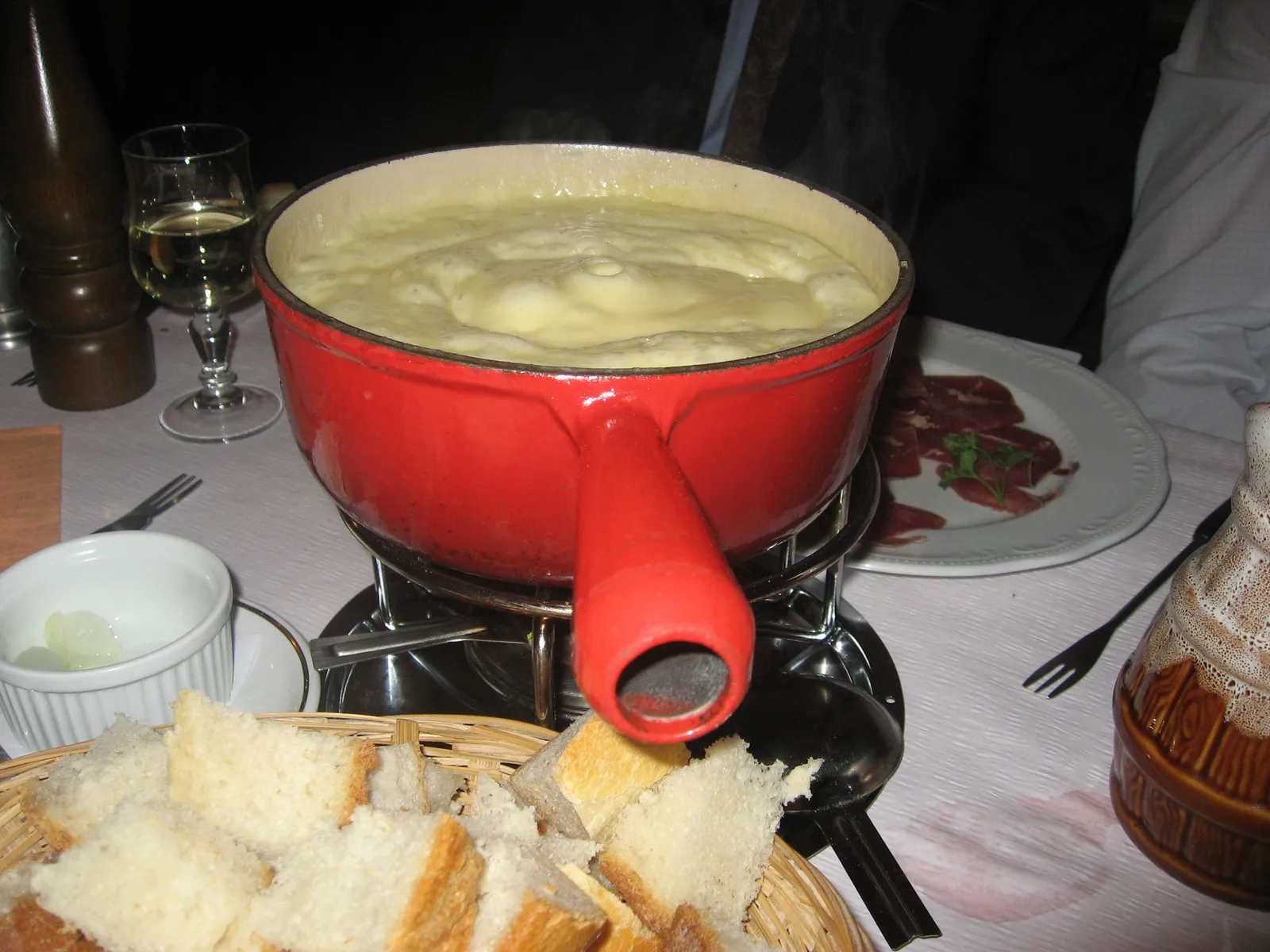
Swiss cheese fondue is the Alps in a pot: Gruyere and Emmental melted slowly into dry white wine with garlic and a splash of kirsch, kept warm at the table while everyone dips cubes of bread into the bubbling cheese. One serving is about 310 g.

Comfort & Togetherness

Gruyere and Emmental melted in white wine, shared from one pot.

Pairs Well With
Cubes of crusty bread, boiled potatoes and cornichons on the side
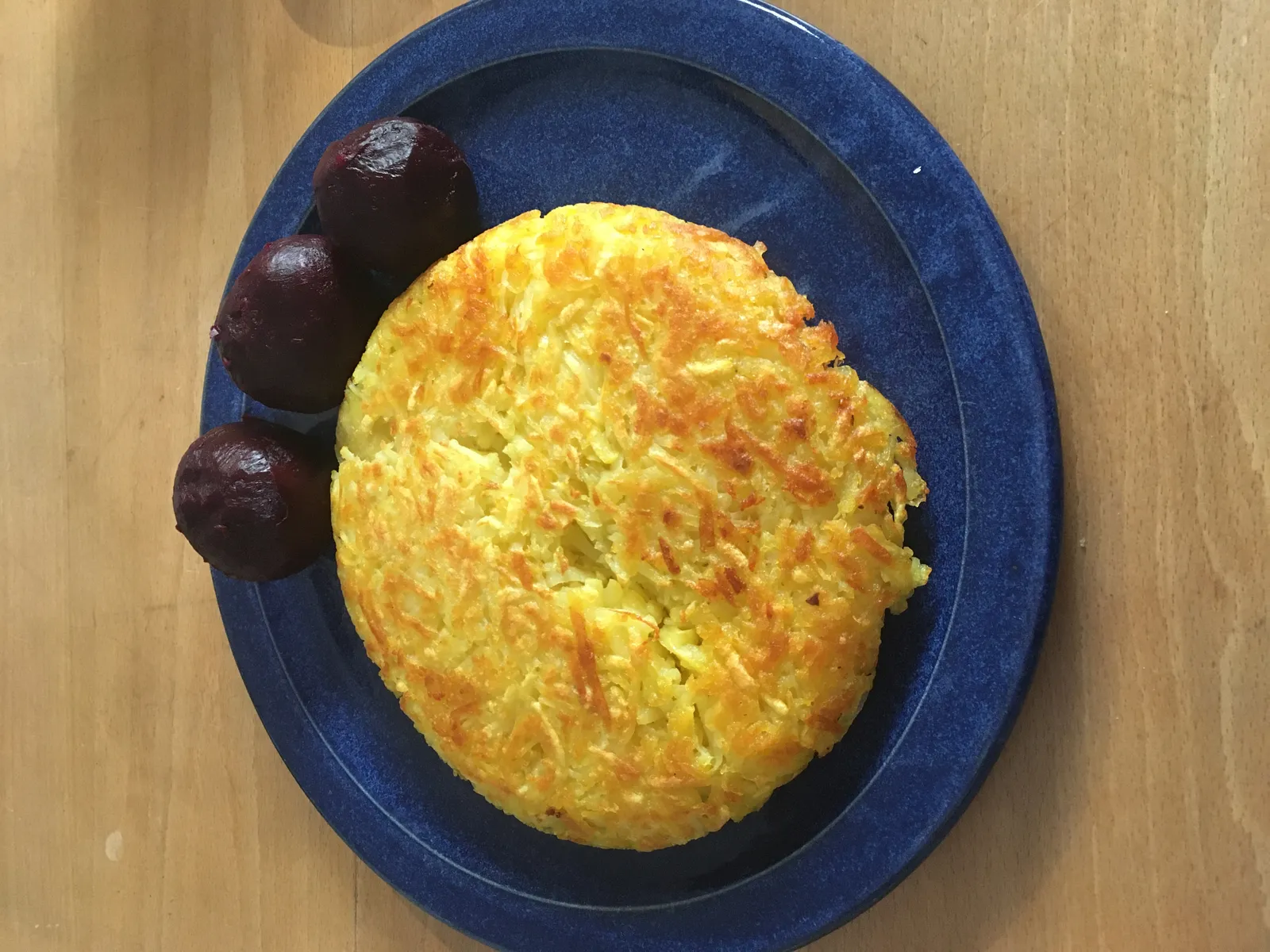
A large golden rosti potato cake on a blue plate Switzerland flag Switzerland 40m
Lunch •Bernese Farmhouse Classic

Rösti

Rösti is Switzerland's crisp potato cake: grated potato pressed into one large golden disc and fried in butter until the outside shatters and the inside stays soft, then topped with a fried egg. One serving is about 240 g.

Simple & Satisfying

One large crisp cake of grated potato, pan-fried in butter and topped with a fried egg.

Pairs Well With
A fried egg on top and a simple green salad with sharp vinaigrette
Quick Prep (<30m)
Melted raclette cheese scraped over a plate with boiled potatoes and pickles Switzerland flag Switzerland 40m
Dinner •Valais Alpine Classic

Raclette

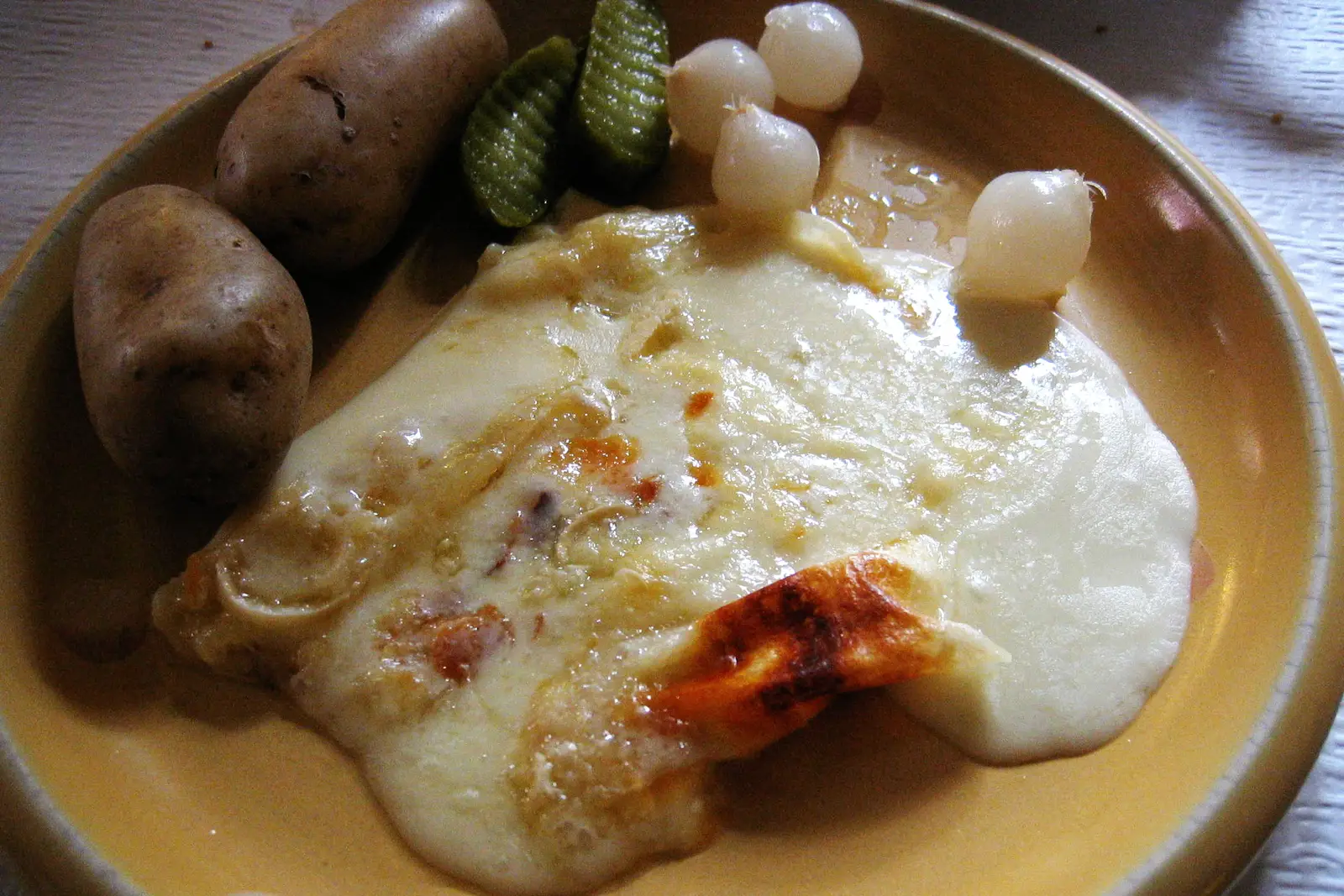
Raclette is the Swiss Alps' other great melted-cheese meal: a half-wheel of raclette cheese is warmed until the cut face bubbles, then scraped in ribbons over boiled potatoes, with cornichons and pickled onions to cut the richness. One serving is about 365 g.

Comfort & Togetherness

Melted raclette cheese scraped over boiled potatoes with pickles.

Pairs Well With
Boiled potatoes, cornichons, pickled onions and a green salad
A plate of Zürcher Geschnetzeltes — veal strips in cream sauce with a dollop of cream — beside golden rösti. Switzerland flag Switzerland 40m
Dinner •Zurich Classic

Zürcher Geschnetzeltes

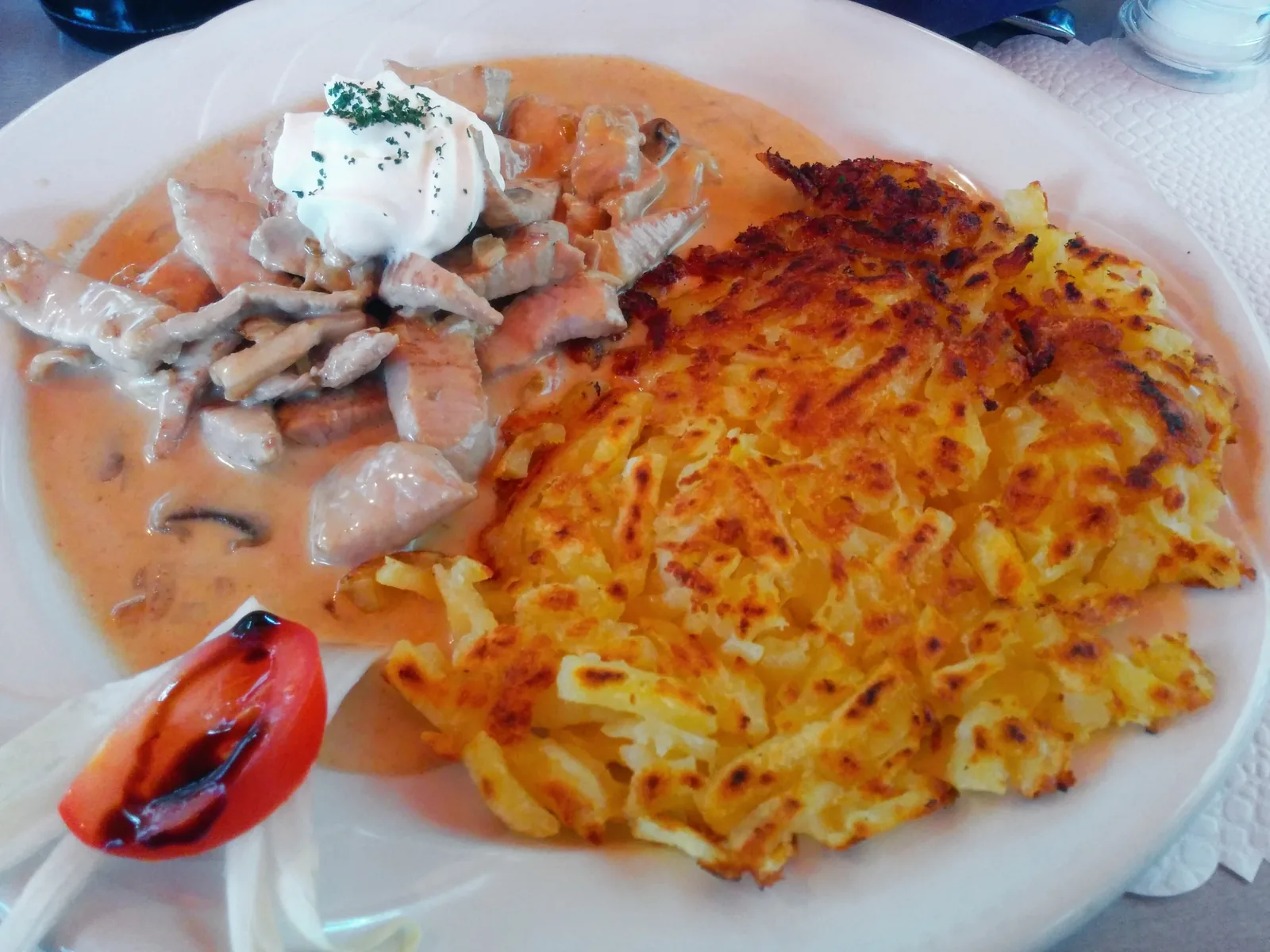
Zürcher Geschnetzeltes is Zurich's signature dish: thin strips of veal quickly seared, then finished in a white-wine and cream sauce with mushrooms and onion. One serving is about 335 g, before the rösti it is traditionally served with.

Rich & Comforting

Tender strips of veal in a white-wine cream sauce with mushrooms — Zurich's classic, with rösti.

Pairs Well With
Serve with golden rösti and a glass of dry Swiss white wine.
High Protein

The Dinner Gazette

Never wonder what’s for dinner again

One email a week with easy dinner ideas from around the world — ingredients, steps and nutrition, tested in our kitchen first.

Delivered every Thursday morning. Unsubscribe anytime.