-
1
Mix and knead the dough
15 Mins
Room temperature, about 22°C (72°F); milk lukewarm at 37°C (98°F)
Stir the yeast and sugar into the lukewarm milk and leave for 5 minutes until foamy. Tip the flour and salt into a large bowl, pour in the yeasty milk and mix to a shaggy dough. Knead on a clean surface for about 8 minutes, then work in the soft butter a little at a time, kneading until the dough is smooth, elastic and slightly tacky. This zopf recipe needs a proper knead: it is what gives the loaf its fine, even crumb.
Do not add extra flour to stop the sticking: a slightly tacky dough makes a softer loaf. Flour your hands, not the dough.
Done when: A smooth, elastic dough that springs back when poked and stretches thin without tearing.
-
2
First rise until doubled
60 Mins
Warm place, about 25°C (77°F)
Shape the dough into a ball, put it in a lightly oiled bowl, cover with a damp cloth or cling film and leave in a warm, draught-free place for about 60 minutes until doubled in size. The dough is ready when a finger pressed in leaves a dent that springs back only slowly.
If your kitchen is cold, put the bowl in the oven with just the light on: that is usually warm enough.
Done when: Doubled in size, soft and puffy, with a dent that springs back slowly.
-
3
Braid the loaf
10 Mins
Room temperature, about 22°C (72°F)
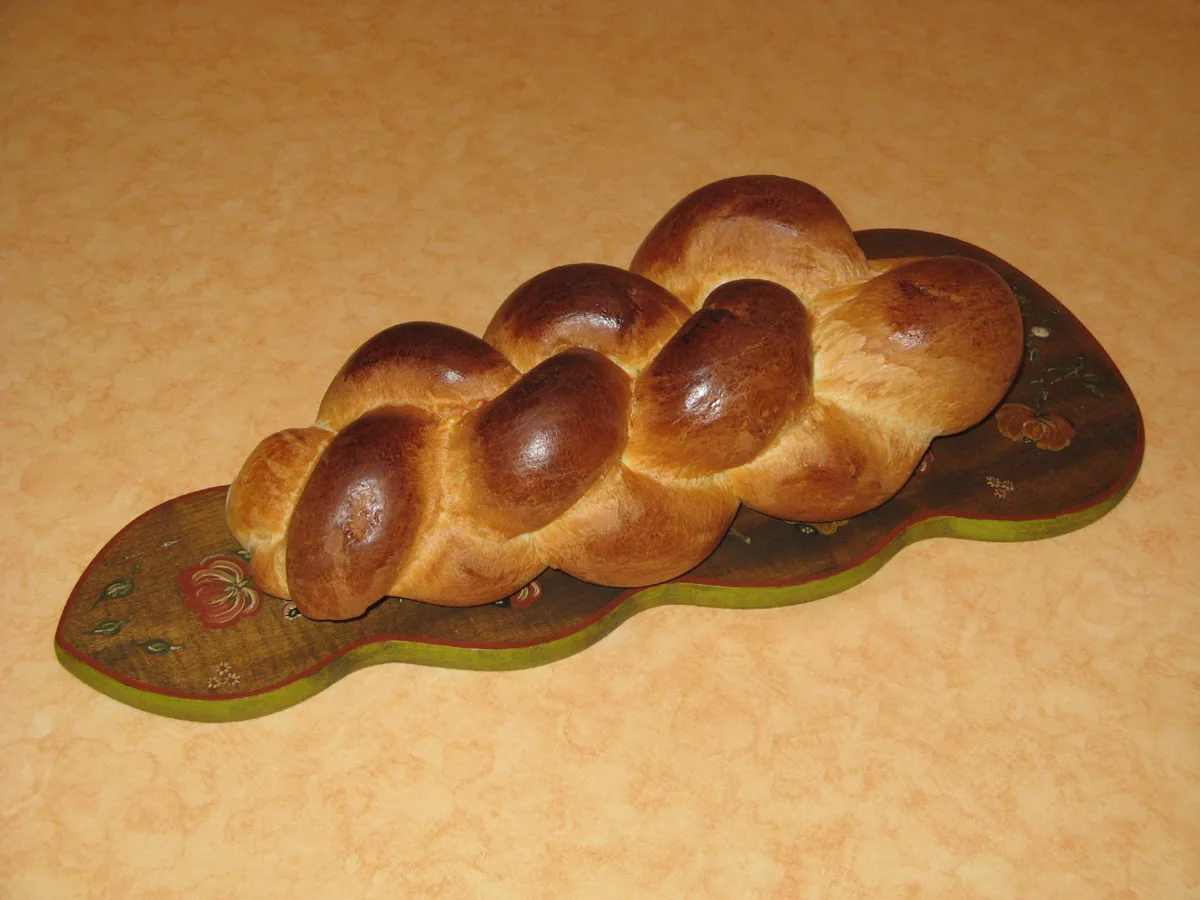
Tip the dough onto a lightly floured surface and press it flat to knock out the big air bubbles. Divide it into 2 equal pieces and roll each into a rope about 45 cm long, thicker in the middle and tapering at the ends. Lay the ropes in a cross, then braid them over and under each other from the centre outwards, tucking the ends underneath. The classic zopf is a two-strand plait: simple, and it gives the loaf its famous shape.
Roll the ropes with your palms from the centre outwards so they stay even; uneven ropes make a lopsided loaf.
Done when: A neat, even plait with the ends tucked under and the middle slightly higher than the ends.
-
4
Second rise and bake
35 Mins
Oven at 200°C (400°F); loaf centre 93°C (200°F)
Place the braid on a lined baking tray, cover loosely and leave for 30 minutes until puffy. Heat the oven to 200°C (400°F). Brush the loaf all over with the beaten egg yolk and milk, then bake for 30 to 35 minutes until deep golden and glossy. The loaf is done when it sounds hollow when tapped underneath and the centre reaches 93°C (200°F).
Brush the glaze gently so you do not deflate the risen loaf, and get it into the cracks: that is where the shine shows.
Done when: Deep golden and glossy, hollow-sounding when tapped, centre 93°C (200°F).
-
5
Cool and slice
30 Mins
Room temperature, about 22°C (72°F)
Move the loaf to a wire rack and leave for at least 30 minutes before slicing: the crumb is still setting inside, and cutting too soon makes it gummy. Slice thickly, about 1.5 cm, and serve with butter, jam and honey.
Use a serrated bread knife and a gentle sawing motion so you do not squash the soft crumb.
Done when: Cool enough to handle, with a soft, even crumb and a crisp, glossy crust.
auto_awesome Finishing Touches & Plating
Serve the loaf warm from the oven, or at room temperature, with plenty of butter. A zopf is at its best on the day it is baked.

 Switzerland
40m