Seasonal Cooking
Autumn’s Best: Cooking with Squash and Root Vegetables
When the air turns cool, the garden answers with squash, sweet potatoes, carrots, parsnips and beets. Roasted low and slow, these autumn vegetables turn sweet, caramelised and deeply satisfying — here is how to cook them well.
By the Dinner Ideas editors • November 5, 2026 • 597 words
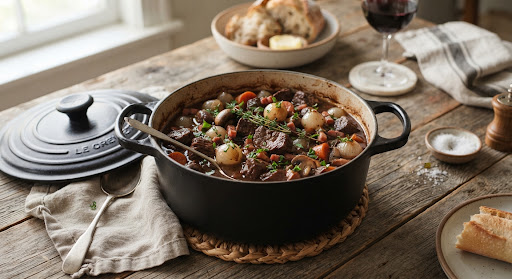
There is a particular smell that means autumn has arrived in a kitchen: squash roasting in a hot oven, its edges turning amber, its sugars caramelising against the pan. As the days shorten, the garden trades delicate summer produce for something sturdier — pumpkins, butternut and acorn squash, sweet potatoes, carrots, parsnips, turnips and beets. These are vegetables built for slow cooking, and they reward patience like nothing else in the market.
Why autumn vegetables love the ovenRoot vegetables and winter squash store their energy as starch. Roasting at a steady, fairly high heat converts that starch into sugars while the outside crisps — the same browning reaction that makes good bread and seared steak so appealing. The trick is giving them room: crowded on a tray, vegetables steam and turn soggy; spread in a single layer with space between the pieces, they roast and caramelise instead.
The method that works every timeHeat the oven to 200°C (400°F). Peel and cut the vegetables into even pieces, roughly three centimetres across, so they finish at the same time. Toss them with just enough oil to coat — about a tablespoon per tray — plus salt and pepper. Spread them on a heavy baking tray and roast for 35 to 45 minutes, turning once halfway through. They are done when a knife slides in easily and the cut faces are deeply golden.
Hard squash needs a little respect at the cutting board. A large, sharp knife and a stable board are essential; microwave the whole squash for two minutes first if the skin resists. Once halved, scoop out the seeds with a spoon — roasted with oil and salt, those seeds make a crunchy snack of their own.
Pairings that make roots singAutumn vegetables are sweet, so they shine next to sharp, salty or sour flavours. A crumble of feta or a spoonful of yoghurt, a squeeze of lemon, a drizzle of cider vinegar, or a handful of toasted walnuts all cut through the richness. Fresh herbs that survive the cold — rosemary, thyme and sage — are their natural partners; toss the leaves in for the last ten minutes so they crisp instead of burning.
For a complete meal, roast a tray of roots and serve them over grains with a soft cheese, or fold them into a stew where their starch thickens the sauce. A butternut soup needs little more than onion, stock and a blender, finished with brown butter and fried sage leaves.
Storing the harvestWhole winter squash keeps for two to three months in a cool, dry place — a pantry shelf or a garage corner, never the fridge. Cut squash should be wrapped and refrigerated, and used within four days. Carrots, parsnips and beets last for weeks in the crisper drawer if you trim the green tops first, which would otherwise keep drawing moisture out of the roots.
Five autumn vegetables worth knowing- Butternut squash: sweet and nutty, the easiest to peel; perfect for soups and roasting.
- Acorn squash: bake it in halves, fill with grains or sausage, and serve in its own shell.
- Sweet potatoes: roast whole at 190°C until collapsing-soft, then split and butter.
- Parsnips: sweeter than carrots, with a warm, almost spiced flavour when roasted.
- Beets: roast whole in foil until tender, then slip the skins off under running water.
Autumn cooking asks for very little: a hot oven, a sharp knife and vegetables that have spent the summer storing sunshine in their roots. Cook them simply, season them boldly, and let the season do the rest.


 Vietnam

 France
 Japan

 Mexico