Curated recipes from 193 countries  •  New seasonal Mediterranean issue out now

Overview

Acaraje

Akara, acarajé

This acaraje recipe makes the Afro-Brazilian street food of Salvador, Bahia: black-eyed peas, soaked, peeled and ground with onion into a fluffy batter, then deep-fried in dendê — red palm oil — until the outside turns crisp and golden while the inside stays soft. Each fritter is split open and filled with creamy vatapá, dried shrimp and a sharp tomato salad, the way the baianas have sold them on the streets for generations. One serving is about 295 g.

Acaraje began as àkàrà, the bean fritter of the Yoruba people of West Africa, and it reached Brazil with enslaved Yoruba people during the colonial period. In Bahia it became the food of the baianas, the women who have sold it on the streets of Salvador since the 19th century, dressed in white cotton and headscarves, frying the fritters in dendê oil in front of their customers. It is also sacred food in Candomblé, offered to the orixás. In 2004 the Brazilian heritage institute IPHAN listed the craft of the baianas do acarajé as part of Brazil's national intangible heritage.

Pairs well with: Serve hot and filled with vatapá, dried shrimp and tomato salad, with chilli sauce on the side.

Provenance

Brazil flag Brazil

Bahian Street-Food Heritage

Latin America & Caribbean

Time Dedication

1h 25m

60m prep • 25m cook

Batch Yield

4 Servings

643 kcal per serving

1 serving ≈ 295 g

Technical Skill

Advanced

Hard (Peeling & Frying)

Meal Timing & Digestive Fit

Breakfast

Not Advised

Lunch

Inappropriate

Dinner

Inappropriate

Snack & Tea

Ideal Light Bite

Occasions: Street-food nights, festivals, beach snacks, parties, Brazilian nights Cost: Low — about $2–3 per serving at home
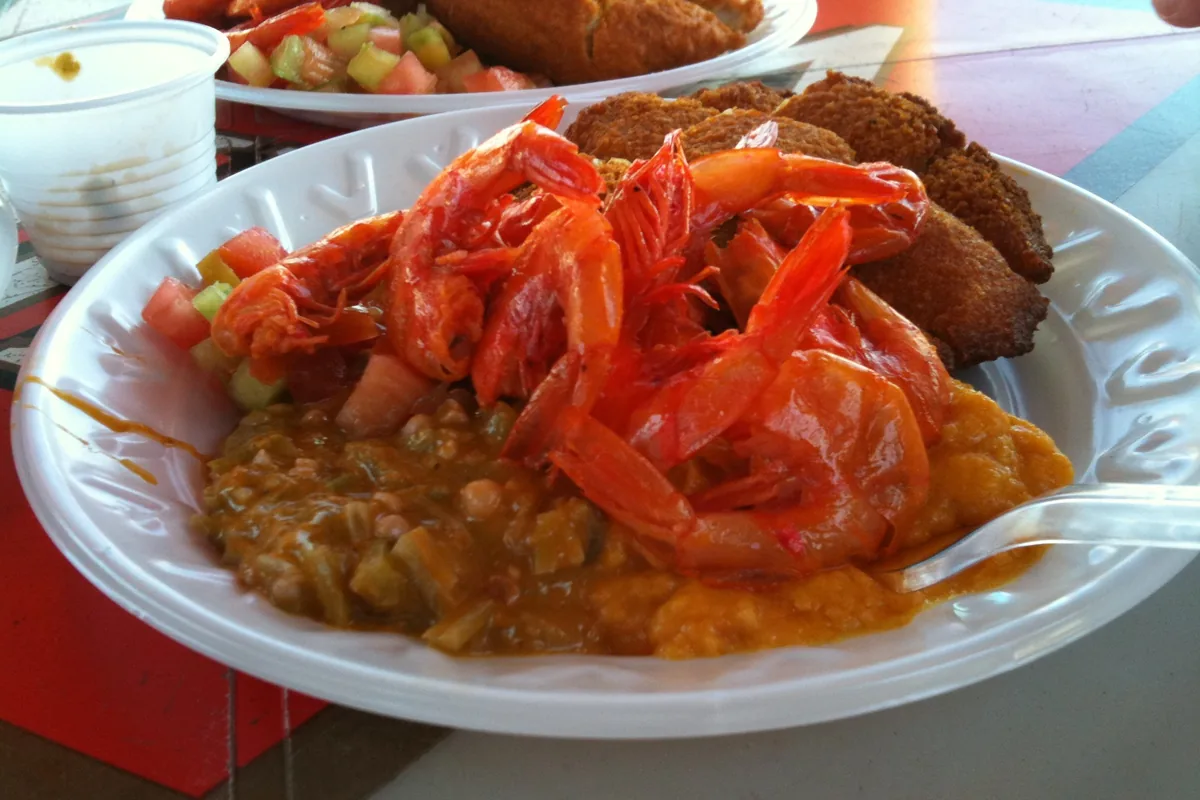
Acaraje fritters served on a plate with dried shrimp, vatapa, caruru and tomato salad in Salvador, Bahia

Bahian Street-Food Heritage

Photo: Ben Tavener, CC BY 2.0, via Wikimedia Commons

The Heritage Formulary

Measured Ingredients

Estimated cost: Low — about $2–3 per serving at home (USD)

Good acaraje is crisp and golden outside, soft and almost fluffy inside, and stained orange by the dendê — never pale, greasy or dense.

Execution Methodology & Culinary Technique

Step-by-Step Cooking Guide

Active 1h 25m
P

Prep Stage: Soak, Peel, Beat

60 Mins active + overnight soak • Bowl, Food Processor & Pan

Soak the peas overnight before you start — the 60 minutes below is active prep. Peeling is the slow part: rub the soaked peas between your hands under running water until the skins float off, then grind them with the onion and ginger and beat the batter hard with a wooden spoon until it turns pale and fluffy. Make the vatapá and the salad while the batter rests.

Maestro Tip: Beat the batter for a full 5 minutes — the air you beat in is what makes the fritters light instead of dense.

  1. 1

    Soak and peel the peas

    15 minutes active + overnight soak Room temperature, about 20°C (68°F)

    Cover the black-eyed peas (300 g) with cold water and soak overnight, at least 8 hours. Drain, then rub the peas between your hands under running water, letting the loose skins float away, until the peas are pale and clean. Pick out any peas that still have skins or dark spots.

    A handful at a time under a running tap is faster than trying to peel the whole bowl at once.

    Done when: Peas pale, clean and skin-free.

  2. 2

    Grind and beat the batter

    10 minutes Room temperature, about 20°C (68°F)

    Put the peeled peas in a food processor with the onion (100 g), ginger (10 g) and salt (4 g) and grind to a thick, smooth paste, stopping to scrape the sides. Turn the paste into a bowl and beat it hard with a wooden spoon for 5 minutes until it turns pale, light and fluffy — it should hold a soft peak.

    If the batter will not whip, add a spoonful of water at a time — too dry and the fritters turn out dense.

    Done when: Batter pale, fluffy and holding a soft peak.

  3. 3

    Make the vatapá

    15 minutes Low heat 120°C (250°F)

    Heat the dendê oil (15 ml) in a small pan and fry the garlic (6 g) and ginger (5 g) for 1 minute. Add the torn bread (40 g) and coconut milk (120 ml) and cook over low heat, stirring, for 5 minutes until the bread dissolves. Stir in the ground peanuts (40 g) and cook for 5 more minutes until the mixture is thick, smooth and glossy like a paste. Season lightly and keep warm.

    Keep the heat low — coconut milk splits and turns oily if it boils hard.

    Done when: Thick, smooth, glossy paste that holds its shape on a spoon.

  4. 4

    Make the tomato salad

    5 minutes Room temperature, about 20°C (68°F)

    Toss the diced tomato (120 g) and onion (60 g) with the lime juice (15 ml), the chopped malagueta chilli (5 g) and the coriander (10 g). Season lightly and leave the salad to sit for 5 minutes so the flavours mix.

    Make the salad last so the tomato stays firm — salt draws the juice out if it sits too long.

    Done when: Salad bright, juicy and lightly seasoned.

  5. 5

    Fry the fritters

    15 minutes Deep-fry 175°C (350°F)

    Heat the dendê oil (200 ml) in a deep, heavy pan to 175°C (350°F). Wet two spoons, shape the batter into ovals about the size of an egg, and slide them gently into the oil, 3 or 4 at a time. Fry for 3 to 4 minutes a side until deep golden brown and crisp, turning once. Lift out with a slotted spoon and drain on paper. You should get 8 fritters.

    Do not crowd the pan — the oil temperature drops and the fritters soak up oil instead of crisping.

    Done when: Deep golden brown and crisp outside, cooked through inside, oil at 175°C (350°F).

  6. 6

    Fill and serve

    5 minutes Room temperature, about 20°C (68°F)

    Split each fritter open lengthways, leaving one side hinged, and fill with a spoonful of warm vatapá, a few dried shrimp (80 g in total) and a spoonful of tomato salad. Serve at once, with extra chilli sauce on the side for anyone who wants it quente.

    Split the fritters with a knife, not your fingers — the inside is steaming hot.

    Done when: Fritters split and filled while hot, fillings generous, salad fresh.

Finishing Touches & Plating

Serve the acaraje at once, split open and filled while the fritters are still hot and crisp — cold fritters go soft and heavy. Let everyone choose their own heat: the malagueta chilli sauce is served on the side, and in Bahia a fritter with chilli is called quente, one without it frio.

Nutritional Physiology & Benefits

Nutrition

Energy

643

kcal / serving

Protein

35g

Complete AA

Carbs

60g

Complex

Fats

31g

Healthy

Per serving (4 servings · 1 serving ≈ 295 g)
Energy643 kcal
Protein35 g
Carbohydrates60 g
Fat31 g
Fibre11.0 g
Sugar4.6 g
Sodium980 mg
Per 100g
Energy218 kcal
Protein11.8 g
Carbohydrates20.3 g
Fat10.6 g
Fibre3.7 g
Sugar1.6 g
Sodium332 mg

Nutrition values are estimated — calculated from USDA FoodData Central values for the listed ingredients.

Vitamins & minerals: Folate and iron from the black-eyed peas, vitamin C from the tomato salad, vitamin E from the peanuts, and iodine from the dried shrimp. Nutrition values are estimated.

Fibre from the peas

Black-eyed peas bring about 11.0 g of fibre per serving, along with plant protein and folate, which is why the fritters keep you full for hours.

Very high in protein

Each serving carries about 34.8 g of protein from the peas, peanuts and dried shrimp, a strong amount for a street snack.

Iron, magnesium and potassium

The peas, peanuts and coconut together supply iron, magnesium and potassium as part of a varied diet, and the tomato salad adds vitamin C.

Food Pairings

What to Eat With

To optimize nutrient absorption and elevate the sensory depth, pair with these authentic accompaniments:

Sides

Tomato and onion salad

The sharp tomato, onion and lime salad cuts through the rich fried fritter and the creamy vatapá, which is why no baiana serves acaraje without it.

Caruru

A spoonful of caruru, the okra stew of Bahia, adds a second, slippery texture and more dendê flavour to the plate.

Drinks

Cold beer or sugar-cane juice

A cold beer or sugar-cane juice cools the malagueta heat and matches the street-food mood of the dish.

Sauces

Vatapá

Vatapá, the shrimp, peanut and coconut paste, is the classic filling — creamy and rich against the crisp fritter.

Complete menu

Serve acaraje with coconut rice, a cold beer or sugar-cane juice, and a spoonful of caruru if you want the full Bahian plate.

Digestive Guardrails

What NOT to Combine

To prevent digestive distress, sluggishness, or palate clash, avoid pairing the dish with these elements:

Frying in oil that is too cool

Fritters fried in oil that is not hot enough soak up oil and turn greasy and heavy instead of crisp. Keep the dendê at 175°C (350°F) and fry in small batches. This is general information, not medical advice.

Serving the fillings without warning about allergens

Dried shrimp and peanuts are common allergens, and the vatapá contains both. Tell anyone with a shellfish or peanut allergy before serving, and keep their fritters plain. This is general information, not medical advice.

General information only, not medical advice — consult a doctor for personal dietary decisions.

Who Should Eat It

Who Should Eat

  • General adultsA rich, filling street snack as written; two fritters with the fillings is a full portion.
  • ChildrenChildren enjoy the crisp fritters, but keep the chilli out of their portion and cut the fritters into small pieces.
  • ElderlySoft inside and easy to chew once cut open, but the fritters are fried and salty — keep to one fritter with salad.
  • Pregnant womenFine when the fritters are fried fresh and served hot and the dried shrimp is from a trusted source; avoid any lukewarm street-stall leftovers. Ask your clinician if unsure.
  • Breastfeeding womenFine in a normal portion; no special restriction, though very spicy food can occasionally unsettle a sensitive baby.
  • AthletesA strong recovery snack — about 34.8 g of protein and 59.9 g of carbohydrate per serving — with fibre from the peas.
  • Weight gainAt 643 kcal a serving with plenty of protein and healthy fat from the peanuts and coconut, it is a solid meal for gaining weight.
  • Weight lossA heavy, energy-dense plate as written, so take one fritter with extra tomato salad and less vatapá.

Health Conditions — Adjust or Avoid

Conditions

  • DiabetesOne serving carries about 59.9 g of carbohydrate, mostly from the peas and bread, but the fibre slows digestion. Take one fritter with extra salad and ask your clinician about portion size.
  • High blood pressureAt about 980 mg of sodium per serving this is a salty dish, mostly from the dried shrimp and the salt. Use less salt in the batter and ask your clinician.
  • Kidney diseaseHigh in protein, potassium and sodium, so it may not fit a restricted diet. Ask your clinician or dietitian before eating it.
  • GoutDried shrimp and peas are high in purines, so this dish may matter for some people with gout. Keep portions small and ask your clinician if you have gout.
  • Stomach issuesFried food, chilli and raw onion can trigger reflux or discomfort for some people. If that is you, skip the chilli and the raw onion. Ask your clinician if symptoms persist.
  • Cardiovascular diseaseFried in palm oil and rich in saturated fat as written, so this is an occasional treat rather than a regular meal. Ask your clinician about how often it fits your diet.
  • Fatty liverEnergy-dense and fried, so keep the portion to one fritter, load up the tomato salad and skip the extra vatapá. Ask your clinician for personalised advice.
  • Food allergiesContains crustacean (dried shrimp), peanut, gluten (bread in the vatapá) and coconut. The plain fritter alone contains none of these except the peas. Ask your clinician if you have a food allergy.
  • Special therapeutic dietsNot suitable for peanut or shellfish allergy diets; for a gluten-free version, leave the bread out of the vatapá and thicken it with more peanut. Ask your clinician or dietitian before adapting it.

If you have a medical condition, consult your doctor before changing your diet.

Storage & Use

Storage & Use

How to store
Store the fritters, vatapá and salad in separate sealed containers; fill only when serving.
In the fridge
Cooked fritters keep 2 days in the fridge at 4°C (40°F) or below; vatapá keeps 3 days; salad keeps 1 day.
In the freezer
Unfilled fritters freeze well for up to 1 month; do not freeze the filled fritters or the salad.
How to reheat
Reheat the fritters in a hot oven at 200°C (400°F) for 5 minutes until crisp and steaming hot, to 74°C (165°F); warm the vatapá gently in a pan.
Freezing recommended
Only the unfilled fritters, up to 1 month.
Signs it has spoiled
Sour smell from the vatapá or fritters, slimy salad, or visible mould — discard if any appear.

More recipes to explore

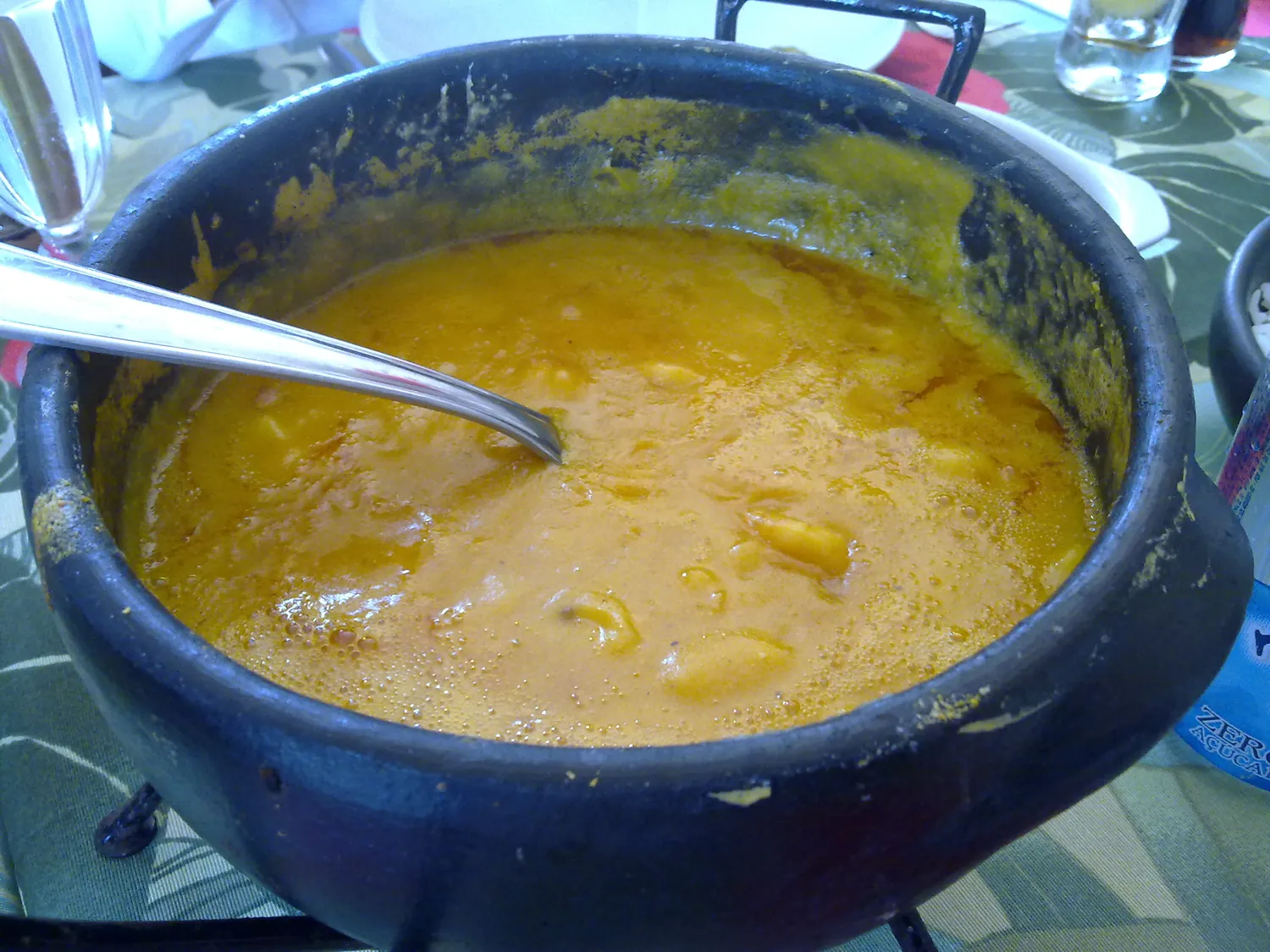
A black clay pot of golden-orange bobó de camarão, a thick cassava cream with shrimp, with a serving spoon Brazil flag Brazil 1h 5m
Dinner •Bahian Cassava Cream

Bobó de Camarão

This bobo de camarao recipe is Bahia's creamy shrimp dish: fresh shrimp folded into a thick purée of boiled cassava blended with coconut milk, coloured golden-orange with dendê oil and finished with lime and cilantro. Unlike a stew, the cassava is blended smooth, so the whole dish eats like a rich, spoonable cream. One serving is about 470 g.

Rich & Comforting

Shrimp folded into a thick, smooth cassava cream made with coconut milk and red palm oil, served hot with rice.

Pairs Well With
Steamed white rice, farofa and a crisp green salad
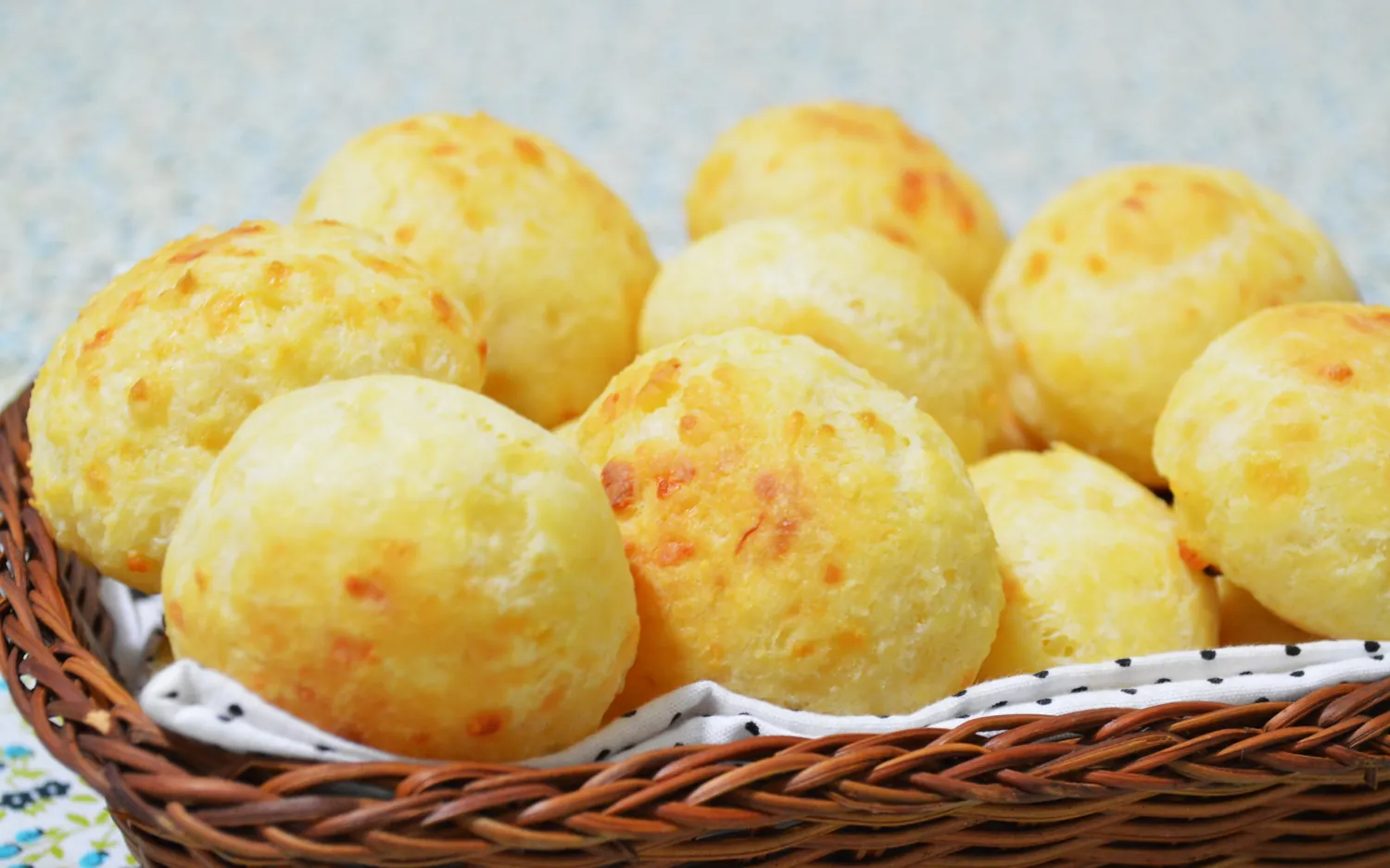
A basket of golden, round pão de queijo, Brazilian cheese bread rolls Brazil flag Brazil 45m
Snack & Tea •Minas Gerais Cheese Bread

Pão de Queijo

This pao de queijo recipe makes Brazil's famous cheese bread: small, golden rolls with a crisp shell and a soft, stretchy, chewy centre, made from tapioca starch, milk, oil, eggs and cheese. There is no wheat flour and no yeast — the rolls puff up on steam in a hot oven. One serving is 4 rolls, about 134 g.

Warm & Chewy Snack

Golden tapioca cheese rolls with a crisp shell and a soft, stretchy centre, baked in under half an hour.

Pairs Well With
Black coffee, fresh fruit, or a light soup
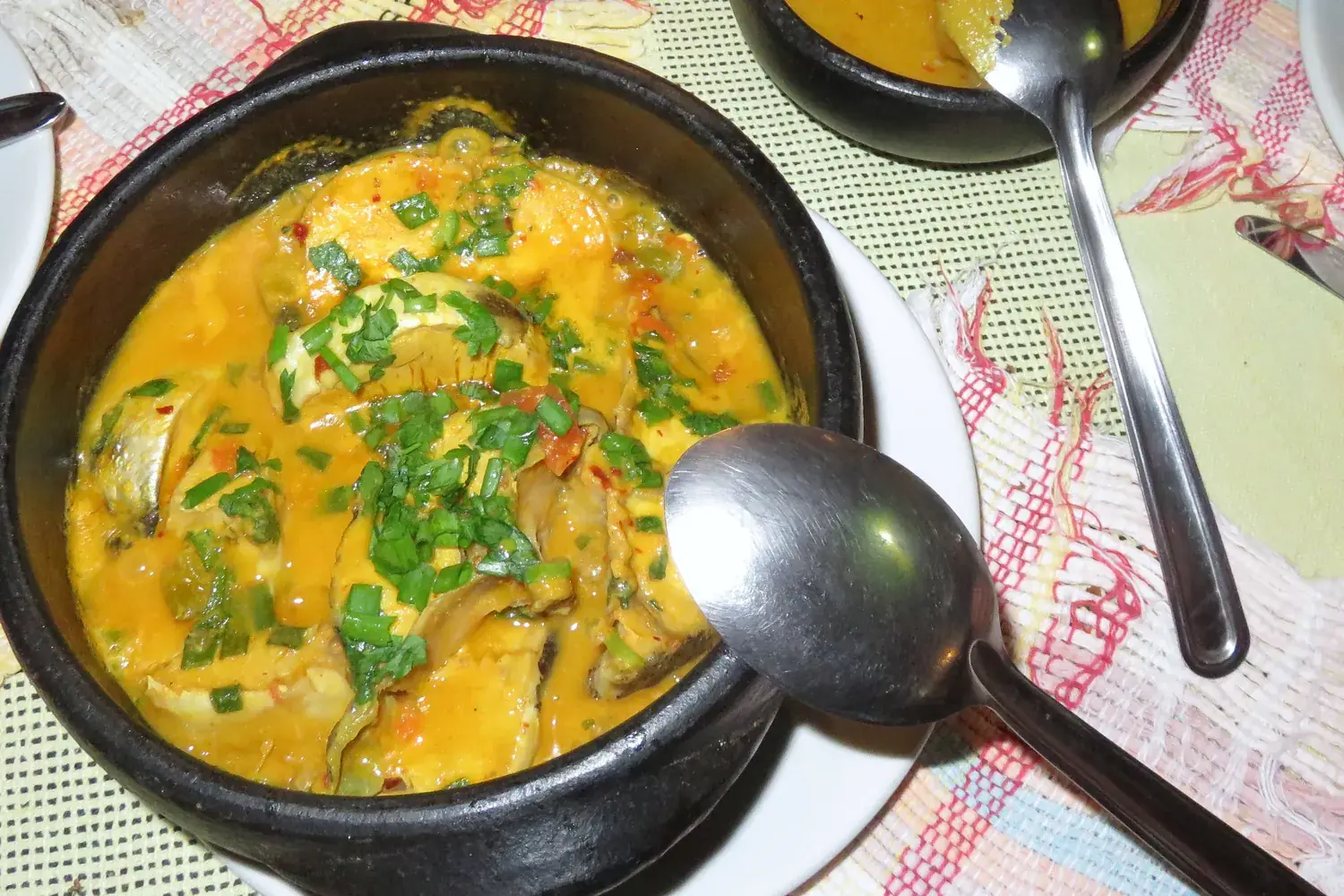
A black clay pot of moqueca baiana, fish chunks in a golden-orange coconut sauce with fresh herbs, beside rice and pirão Brazil flag Brazil 55m
Dinner •Bahian Fish Stew

Moqueca Baiana

This moqueca baiana recipe is Bahia's famous fish stew: thick fillets of white fish layered with onion, peppers and tomato, then simmered gently in coconut milk with dendê oil until the sauce turns golden-orange. The fish stays in whole, flaky pieces in a fragrant broth — a stew, not a purée. One serving is about 450 g.

Coastal & Aromatic

Firm white fish simmered in coconut milk and red palm oil with peppers and tomato, served hot in its clay pot.

Pairs Well With
Steamed white rice, pirão and farofa
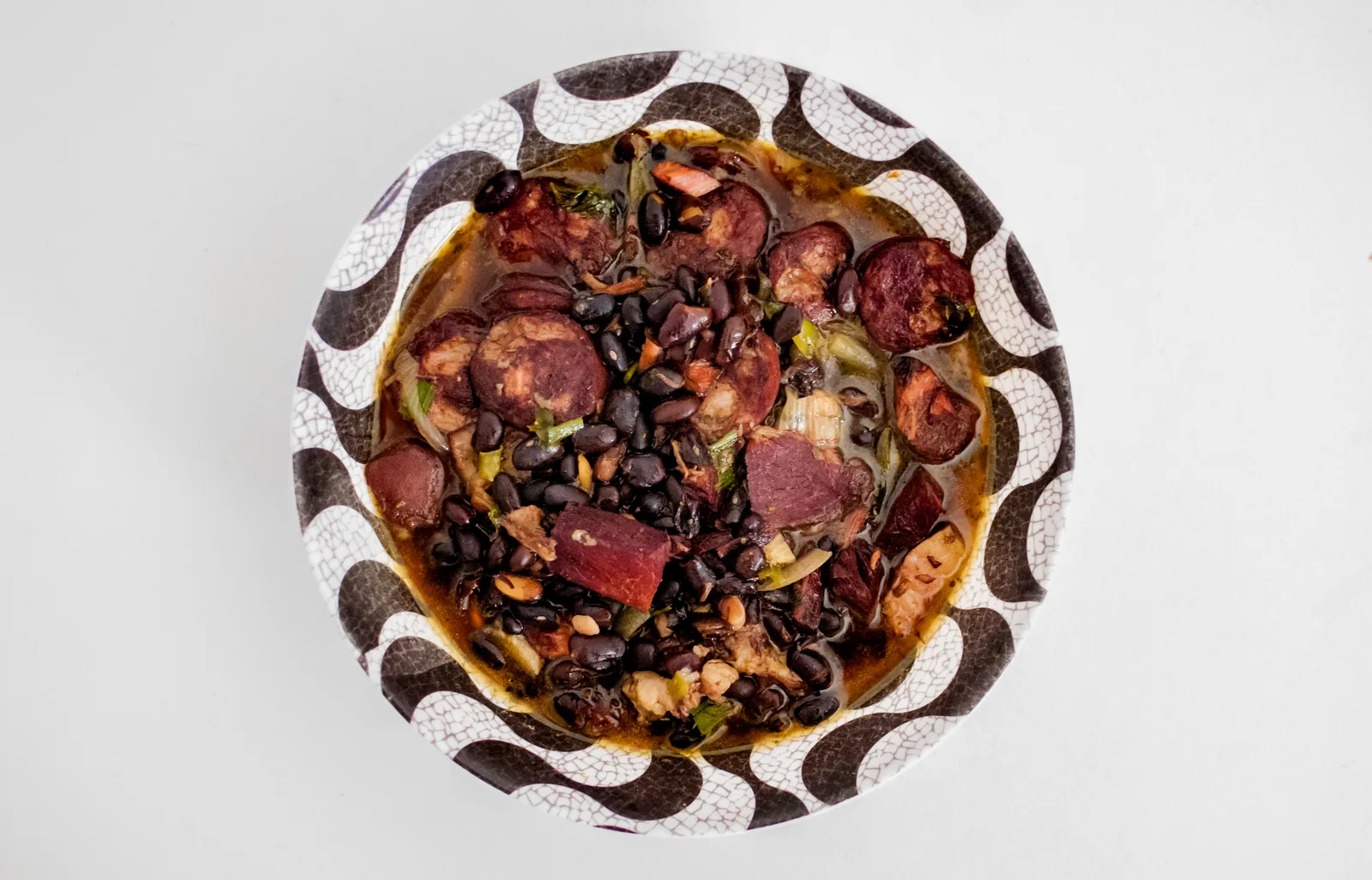
A bowl of Brazilian feijoada — black beans with rounds of sausage and pieces of pork Brazil flag Brazil 3h 30m
Dinner •Brazilian National Dish

Brazilian Feijoada

This Brazilian feijoada recipe is the real Saturday lunch: black beans simmered for hours with pork shoulder, smoky linguiça, bacon and beef until the broth turns thick and dark, then served with white rice, garlicky collard greens, orange slices and farofa. It is a slow, generous pot built for sharing. One serving is about 450 g.

Rich & Hearty

Brazil's national dish — black beans slow-cooked with pork, sausage and beef, served with rice, greens and orange.

Pairs Well With
Serve with white rice, sautéed collard greens, orange slices and farofa.

The Dinner Gazette

Never wonder what’s for dinner again

One email a week with easy dinner ideas from around the world — ingredients, steps and nutrition, tested in our kitchen first.

Delivered every Thursday morning. Unsubscribe anytime.