
Curated recipes from 193 countries  •  New seasonal Mediterranean issue out now

Overview

Brazilian Feijoada

Feijoada à brasileira, feijoada completa

This Brazilian feijoada recipe is the real Saturday lunch: black beans simmered for hours with pork shoulder, smoky linguiça, bacon and beef until the broth turns thick and dark, then served with white rice, garlicky collard greens, orange slices and farofa. It is a slow, generous pot built for sharing. One serving is about 450 g.

Feijoada grew out of the bean stews of Portugal, where pork and beans were cooked together in the northern provinces. In Brazil it became something of its own: black beans and a mix of pork cuts, slow-cooked and served with rice, collard greens, orange and farofa. By the 19th century it had gone from a working meal to Brazil's national dish, eaten slowly with family and friends, most famously at Saturday lunch.

Pairs well with: Serve with white rice, sautéed collard greens, orange slices and farofa.

Provenance

Brazil flag Brazil

Brazilian National Dish

Latin America & Caribbean

Time Dedication

3h 30m

30m prep • 180m cook

Batch Yield

6 Servings

803 kcal per serving

1 serving ≈ 450 g

Technical Skill

Intermediate

Medium (Slow Simmer)

Meal Timing & Digestive Fit

Breakfast

Not Advised

Lunch

Hearty Midday Main

Dinner

Ideal Hearty Main

Snack & Tea

Inappropriate

Occasions: Saturday family lunches, celebrations, festive gatherings, Carnival season Cost: Low — about $3–4 per serving at home
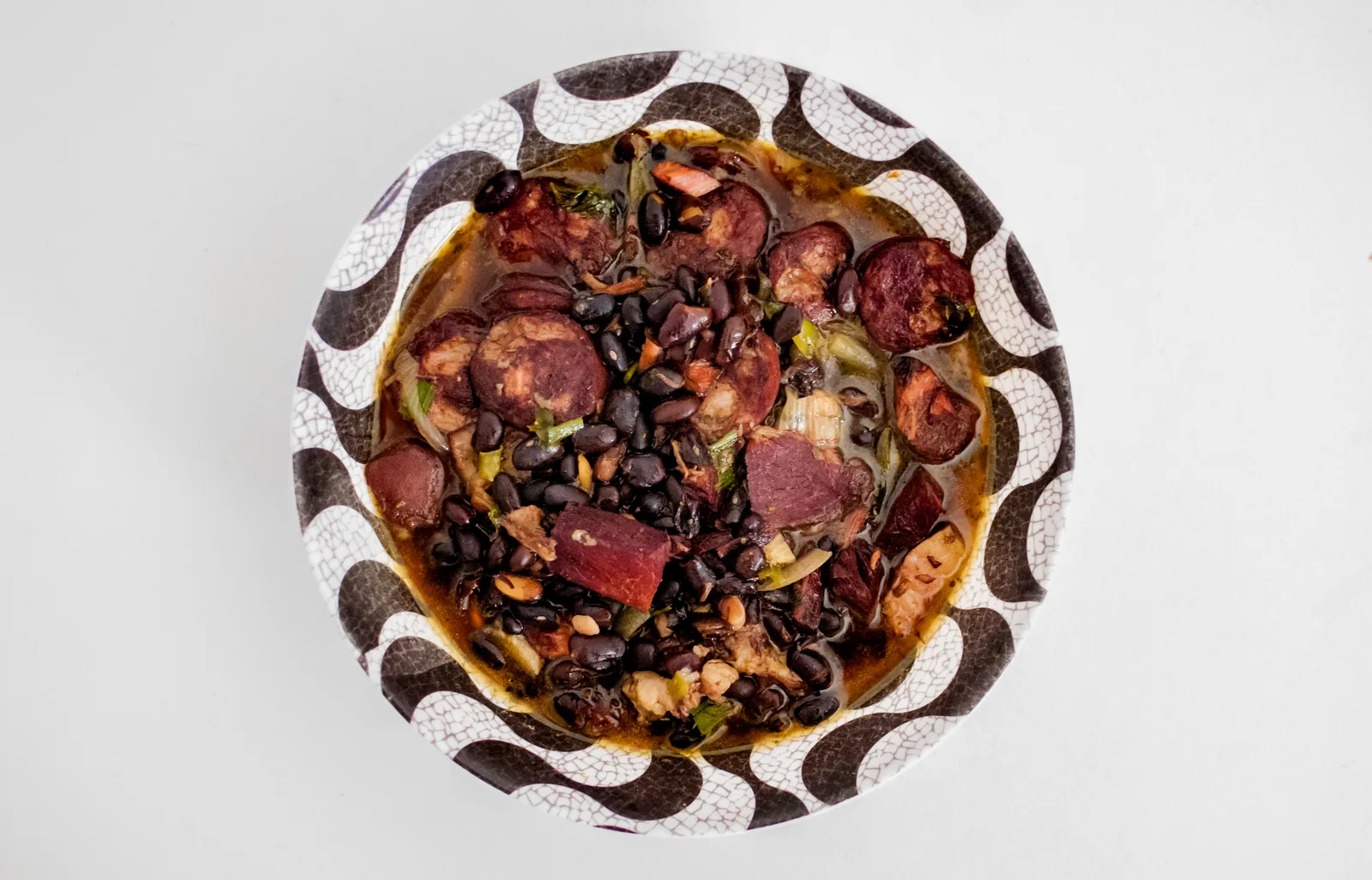
A bowl of Brazilian feijoada — black beans with rounds of sausage and pieces of pork

Brazilian National Dish

Photo: Wilfredor, CC0, via Wikimedia Commons

The Heritage Formulary

Measured Ingredients

Estimated cost: Low — about $3–4 per serving at home (USD)

Good feijoada has a thick, dark, glossy broth that coats a spoon, beans that are creamy rather than broken, and meats so tender they fall apart — never watery, and never just boiled beans.

Execution Methodology & Culinary Technique

Step-by-Step Cooking Guide

Active 3h 30m
P

Prep Stage: Soak, Cut, Dice

30 Mins active + overnight soak • Large Pot & Board

Soak the beans overnight before you start — that is the only long step, and it happens while you sleep. In the morning, cut the pork, beef and bacon, slice the sausage, and dice the onion and garlic so everything goes into the pot in order.

Maestro Tip: Soak the beans the night before; everything else takes 30 minutes in the morning.

  1. 1

    Simmer the beans and meats

    2 hours Low heat 95°C (203°F)

    Put the drained soaked beans (400 g), pork shoulder (500 g), beef chuck (300 g), bacon (150 g) and bay leaves (3) in a large heavy pot with the water (1,500 ml). Bring to a gentle boil, skim off any foam, then turn down to the lowest simmer, cover loosely and cook for 2 hours until the beans are tender and the meats are soft.

    Keep it at a bare simmer — a hard boil breaks the beans and clouds the broth.

    Done when: Beans tender when pressed, meats soft, broth darkening.

  2. 2

    Fry the onion, garlic and sausage

    10 minutes Medium heat 160°C (320°F)

    Heat the olive oil (15 ml) in a pan over medium heat and fry the diced onion (200 g) for 5 minutes until soft, then add the crushed garlic (20 g), cumin (3 g) and black pepper (2 g) and cook for 1 minute more. Add the sliced linguiça (250 g) and fry for 3 to 4 minutes until its edges crisp and the fat runs orange.

    Let the sausage fat render — it colours and flavours the whole pot.

    Done when: Onion soft and golden, sausage edges crisped, fat orange.

  3. 3

    Combine and simmer the pot

    45 minutes Low heat 95°C (203°F)

    Stir the onion, garlic and sausage mixture into the bean pot. Simmer uncovered for 45 minutes, stirring now and then, until the broth thickens enough to coat a spoon and the beans start to break down slightly at the edges. Taste and add the salt (4 g) only if it needs it — the bacon and sausage are already salty.

    If the broth is still thin, mash a spoonful of beans against the side of the pot and stir it back in.

    Done when: Broth thick and glossy, coating a spoon, beans creamy at the edges.

  4. 4

    Rest and serve

    15 minutes Room temperature, about 20°C (68°F)

    Take the pot off the heat, fish out the bay leaves and let the feijoada rest for 15 minutes so the flavours settle. Serve in deep bowls with white rice, sautéed collard greens, the orange rounds (130 g) and farofa on the side.

    Resting matters — the pot tastes noticeably better after 15 minutes than straight off the heat.

    Done when: Rich, thick stew, meats tender, served steaming hot.

Finishing Touches & Plating

Ladle the feijoada into deep bowls over white rice, with the orange slices on the side for squeezing — the fresh citrus against the rich beans is the finishing touch that makes the dish. Sprinkle farofa over the top for crunch.

Nutritional Physiology & Benefits

Nutrition

Energy

803

kcal / serving

Protein

52g

Complete AA

Carbs

49g

Complex

Fats

44g

Healthy

Per serving (6 servings · 1 serving ≈ 450 g)
Energy803 kcal
Protein52 g
Carbohydrates49 g
Fat44 g
Fibre11.5 g
Sugar5.3 g
Sodium1157 mg
Per 100g
Energy179 kcal
Protein11.6 g
Carbohydrates11 g
Fat9.9 g
Fibre2.6 g
Sugar1.2 g
Sodium257 mg

Nutrition values are estimated — calculated from USDA FoodData Central values for the listed ingredients.

Vitamins & minerals: Iron and folate from the black beans, vitamin B12 and zinc from the pork and beef, vitamin C from the orange and vitamin K from the collard greens. Nutrition values are estimated.

Very high in protein

Each serving carries about 52.2 g of protein from the beans, pork, sausage and beef, which keeps you full for hours.

Fibre from the beans

Black beans bring about 11.5 g of fibre per serving, which supports normal digestion as part of a varied diet.

Iron and folate

Black beans are a good source of iron and folate, and the meats add vitamin B12 and zinc — a small bowl covers several nutrients at once.

Food Pairings

What to Eat With

To optimize nutrient absorption and elevate the sensory depth, pair with these authentic accompaniments:

Sides

White rice

Plain white rice is non-negotiable with feijoada — it soaks up the thick dark broth and balances the salt and richness.

Orange slices

Fresh orange is the classic feijoada partner — its acidity and sweetness lift the rich beans, and Brazilians eat it between spoonfuls to refresh the palate.

Farofa

Toasted cassava flour sprinkled over the top adds crunch and soaks up broth, which is why it is on every feijoada table.

Vegetables

Sautéed collard greens

Couve refogada, collard greens fried with garlic, adds a bitter green note and crunch that cuts through the fatty meats.

Drinks

Caipirinha

Brazil's lime and cachaça cocktail is the traditional feijoada drink — cold, sharp and sweet against the hot, salty stew.

Complete menu

Serve the feijoada with white rice, sautéed collard greens, orange slices and farofa, plus a caipirinha — finish with brigadeiros if you want something sweet afterwards.

Digestive Guardrails

What NOT to Combine

To prevent digestive distress, sluggishness, or palate clash, avoid pairing the dish with these elements:

Salting early

Salt added at the start can keep dried beans tough and, with salty bacon and sausage already in the pot, the finished stew can end up far too salty. Taste at the end and salt only if needed. This is general information, not medical advice.

Leaving it out after serving

A big pot of beans and meat left warm on the stove for hours can grow bacteria quickly. Cool leftovers fast and refrigerate within 2 hours, then reheat to 74°C (165°F). This is general information, not medical advice.

General information only, not medical advice — consult a doctor for personal dietary decisions.

Who Should Eat It

Who Should Eat

  • General adultsA rich, filling meal as written; one serving is a full lunch, so there is no need for a second helping.
  • ChildrenFine for children in a smaller portion with extra rice — pick out the meats and mash the beans if they are young.
  • ElderlySoft beans and tender meat are easy to chew; keep the portion modest and watch the salt.
  • Pregnant womenSafe when the meats are cooked through and the stew is served steaming hot; avoid any pot that has sat out warm. Ask your clinician if unsure.
  • Breastfeeding womenFine in a normal portion; no special restriction, though beans can make some babies gassy through the mother's diet.
  • AthletesAn excellent post-training meal — about 52.2 g of protein and 49.3 g of carbohydrate per serving for recovery.
  • Weight gainAt 803 kcal a serving with plenty of protein, it is a solid meal for gaining weight; add an extra spoonful of rice and farofa if you want more energy.
  • Weight lossA heavy plate as written, so take a half portion of stew with extra greens and less rice, and skip the farofa.

Health Conditions — Adjust or Avoid

Conditions

  • DiabetesOne serving carries about 49.3 g of carbohydrate, mostly from the beans, and the fibre slows digestion. Keep to one serving with a modest scoop of rice, and ask your clinician about portion size.
  • High blood pressureAt about 1,157 mg of sodium per serving this is a salty dish, mostly from the bacon, sausage and added salt. Use low-sodium bacon and sausage if you are watching sodium, and ask your clinician.
  • Kidney diseaseHigh in protein, potassium and sodium, so it may not fit a restricted diet. Ask your clinician or dietitian before eating it regularly.
  • GoutRed meat, sausage and bacon are high in purines, and beans add more, so very large or frequent portions may matter for some people with gout. Keep portions modest and ask your clinician if you have gout.
  • Stomach issuesBeans and fatty meats can cause bloating and discomfort for some people. If that is you, eat a smaller portion, chew well, and ask your clinician if symptoms persist.
  • Cardiovascular diseaseBacon and sausage are high in saturated fat and salt, so this is an occasional celebration meal rather than an everyday one; the beans and greens help balance the plate. Ask your clinician about how often it fits your diet.
  • Fatty liverRich and energy-dense as written, so keep the portion modest, load up the greens and skip the farofa and caipirinha. Ask your clinician for personalised advice.
  • Food allergiesFree of gluten, dairy, egg, nuts, soy and fish as written — farofa is cassava flour and naturally gluten-free, but check the packet. Ask your clinician if you have a food allergy.
  • Special therapeutic dietsSuitable for gluten-free and dairy-free diets as written; for a lighter version, use lean pork and chicken sausage and skip the bacon. Ask your clinician or dietitian before adapting it.

If you have a medical condition, consult your doctor before changing your diet.

Storage & Use

Storage & Use

How to store
Cool quickly and store in sealed containers in the fridge; keep the rice and greens separate.
In the fridge
Keeps 3–4 days in the fridge at 4°C (40°F) or below.
In the freezer
Freezes well for up to 3 months in portions; thaw overnight in the fridge.
How to reheat
Reheat in a pot over medium heat until steaming hot all the way through, to 74°C (165°F), adding a splash of water if it has thickened.
Freezing recommended
Yes — it freezes well and the flavour holds up after thawing.
Signs it has spoiled
Sour smell, slimy surface, or visible mould — discard if any appear.

More recipes to explore

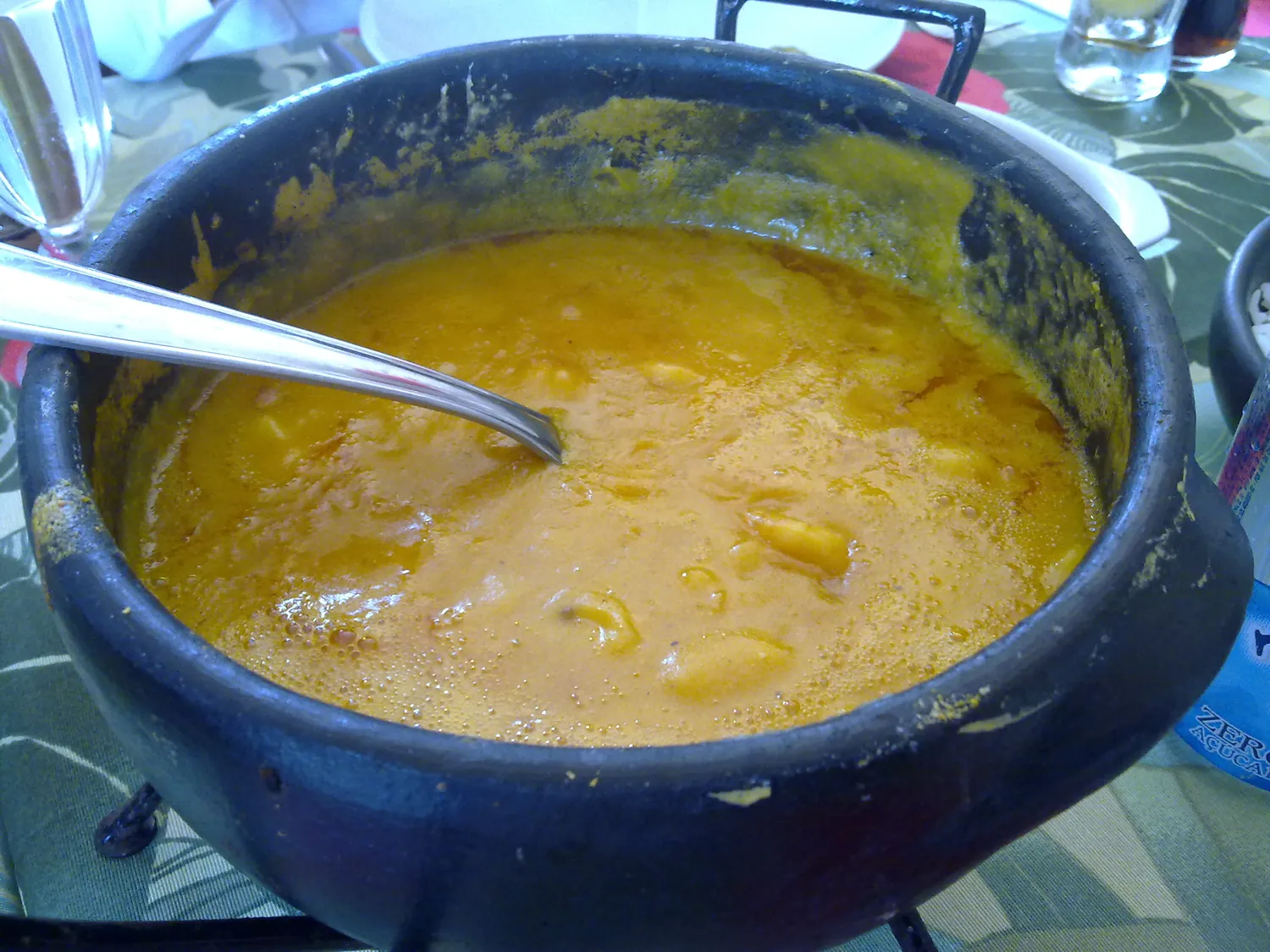
A black clay pot of golden-orange bobó de camarão, a thick cassava cream with shrimp, with a serving spoon Brazil flag Brazil 1h 5m
Dinner •Bahian Cassava Cream

Bobó de Camarão

This bobo de camarao recipe is Bahia's creamy shrimp dish: fresh shrimp folded into a thick purée of boiled cassava blended with coconut milk, coloured golden-orange with dendê oil and finished with lime and cilantro. Unlike a stew, the cassava is blended smooth, so the whole dish eats like a rich, spoonable cream. One serving is about 470 g.

Rich & Comforting

Shrimp folded into a thick, smooth cassava cream made with coconut milk and red palm oil, served hot with rice.

Pairs Well With
Steamed white rice, farofa and a crisp green salad
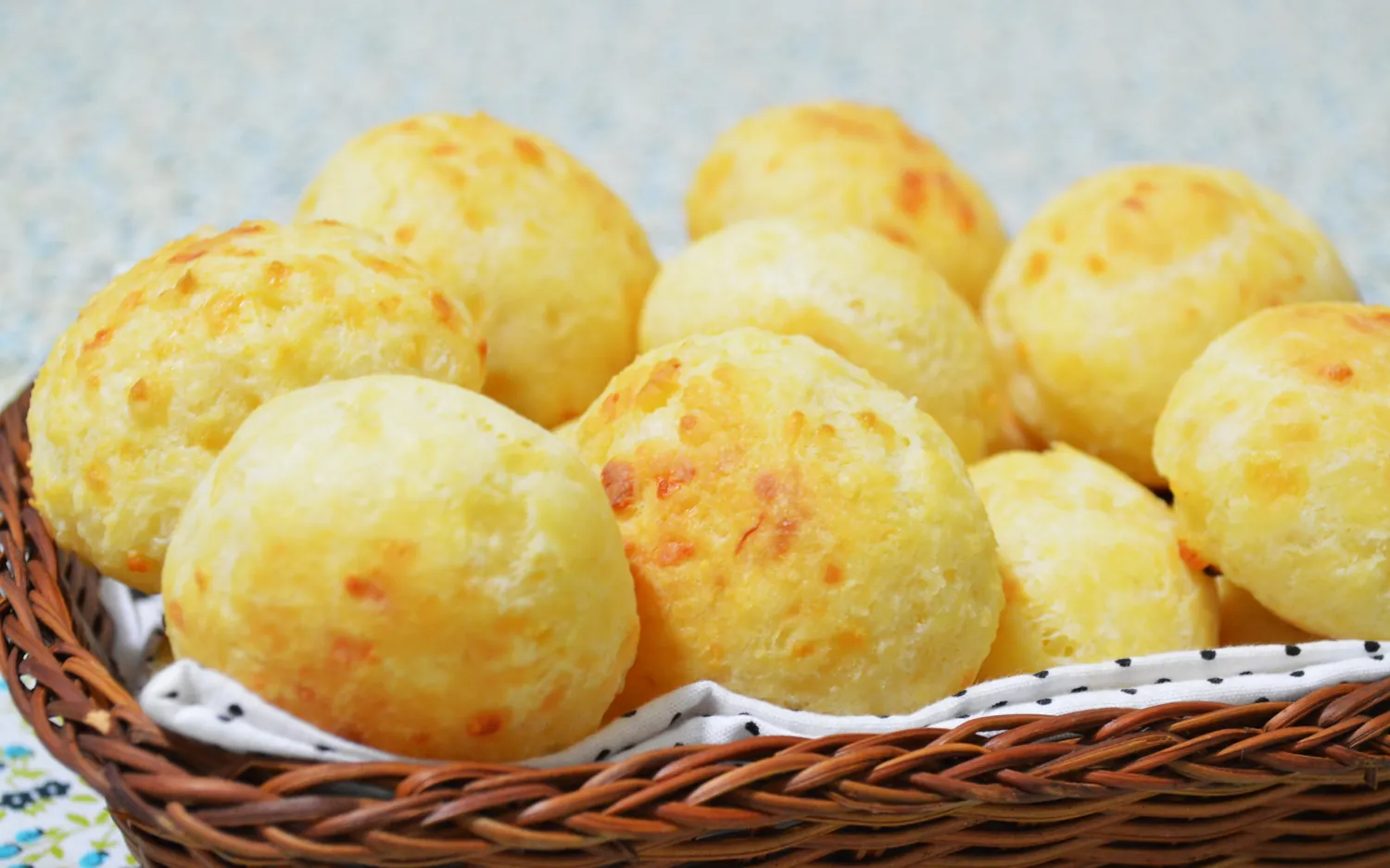
A basket of golden, round pão de queijo, Brazilian cheese bread rolls Brazil flag Brazil 45m
Snack & Tea •Minas Gerais Cheese Bread

Pão de Queijo

This pao de queijo recipe makes Brazil's famous cheese bread: small, golden rolls with a crisp shell and a soft, stretchy, chewy centre, made from tapioca starch, milk, oil, eggs and cheese. There is no wheat flour and no yeast — the rolls puff up on steam in a hot oven. One serving is 4 rolls, about 134 g.

Warm & Chewy Snack

Golden tapioca cheese rolls with a crisp shell and a soft, stretchy centre, baked in under half an hour.

Pairs Well With
Black coffee, fresh fruit, or a light soup
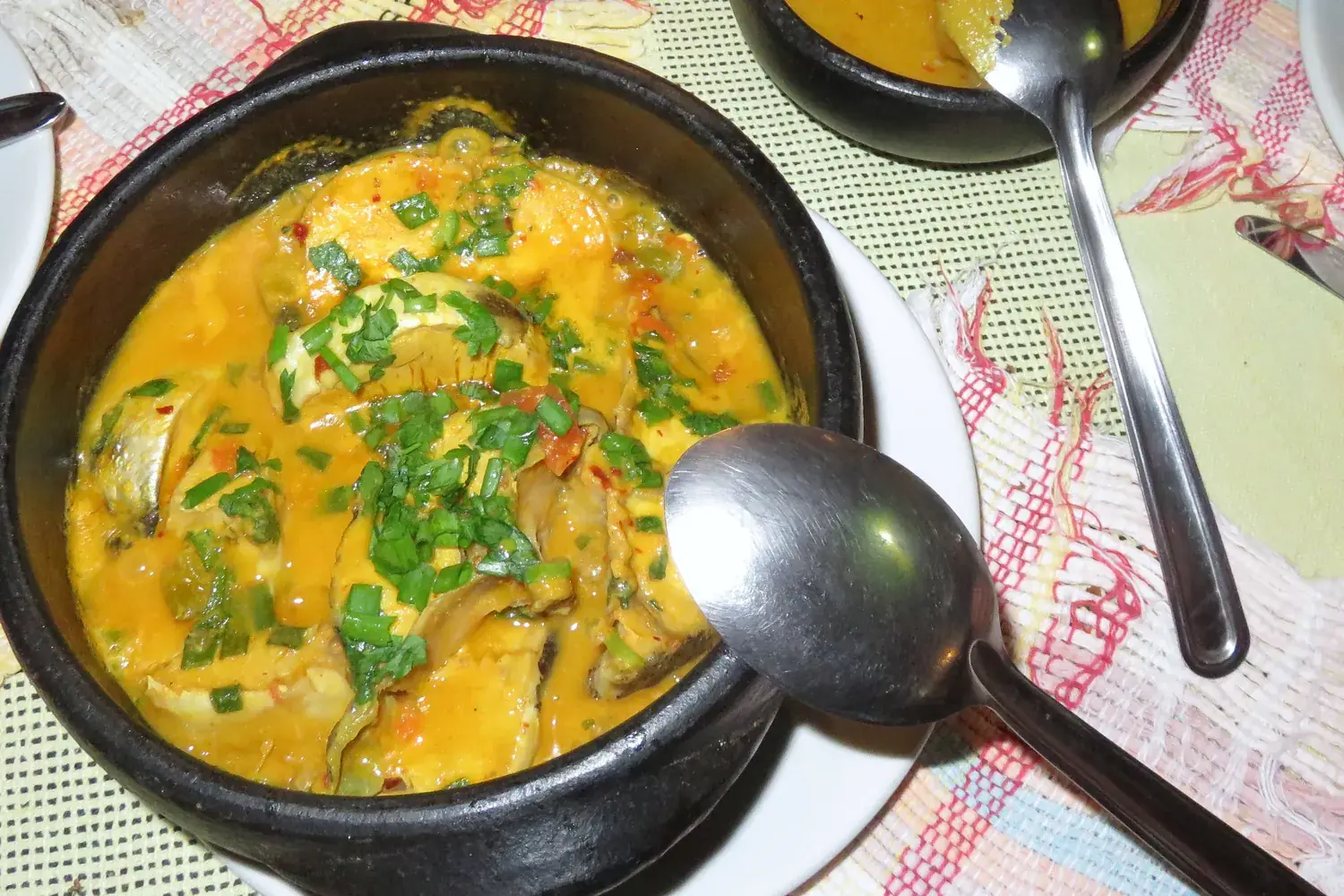
A black clay pot of moqueca baiana, fish chunks in a golden-orange coconut sauce with fresh herbs, beside rice and pirão Brazil flag Brazil 55m
Dinner •Bahian Fish Stew

Moqueca Baiana

This moqueca baiana recipe is Bahia's famous fish stew: thick fillets of white fish layered with onion, peppers and tomato, then simmered gently in coconut milk with dendê oil until the sauce turns golden-orange. The fish stays in whole, flaky pieces in a fragrant broth — a stew, not a purée. One serving is about 450 g.

Coastal & Aromatic

Firm white fish simmered in coconut milk and red palm oil with peppers and tomato, served hot in its clay pot.

Pairs Well With
Steamed white rice, pirão and farofa
Chocolate brigadeiro balls rolled in chocolate sprinkles sitting in gold paper cups Brazil flag Brazil 57m
Snack & Tea •Brazilian Party Classic

Brigadeiro

This brigadeiro recipe cooks sweetened condensed milk, cocoa and butter into a thick chocolate fudge, chills it until firm, then rolls it into bite-size balls coated in chocolate sprinkles. No oven, no mixer, just one pan and a little patience. One serving is about 88 g (four balls).

Fudgy, Chocolatey & Fun

Condensed milk and cocoa stirred into a thick fudge, rolled into balls and coated in chocolate sprinkles — the sweet at the centre of every Brazilian birthday.

Pairs Well With
Serve in small paper cups with strong coffee or a cold glass of milk.

The Dinner Gazette

Never wonder what’s for dinner again

One email a week with easy dinner ideas from around the world — ingredients, steps and nutrition, tested in our kitchen first.

Delivered every Thursday morning. Unsubscribe anytime.