Curated recipes from 193 countries  •  New seasonal Mediterranean issue out now

Overview

Adana Kebab

Adana kebabı, Kıyma kebabı, Acılı kıyma kebabı

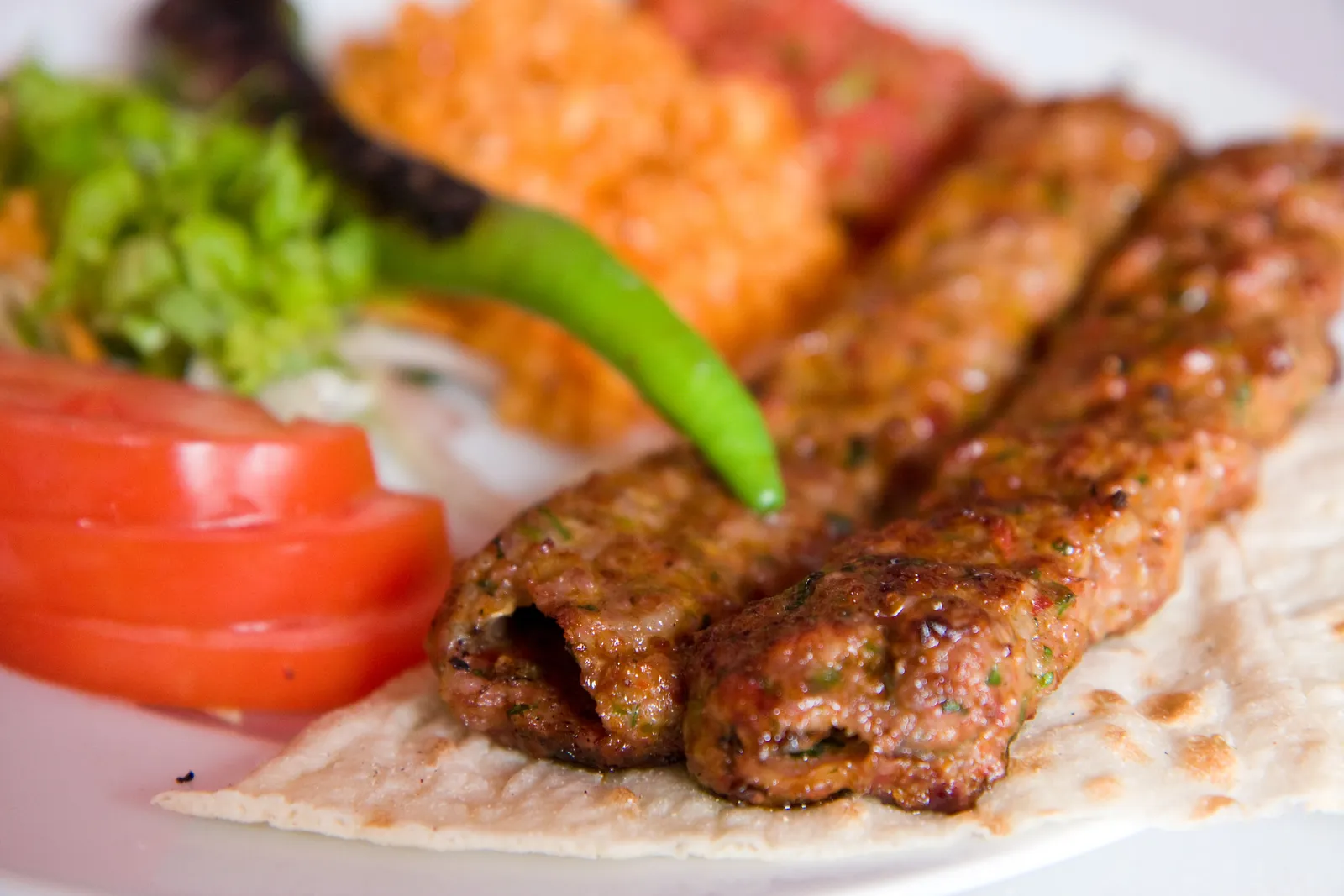
This adana kebab recipe is Adana's famous charcoal-grilled skewer: hand-minced lamb and beef mixed with lamb tail fat, sweet red pepper and pul biber, pressed onto wide flat skewers and grilled over glowing charcoal until the edges char and the juices run. It is served on warm lavash with grilled tomato, green chillies and a sharp sumac onion salad. One serving is about 439 g.

Adana kebab is named after Adana, the fifth-largest city of Turkey, in the south of the country, and was originally known as kıyma kebabı, meaning minced-meat kebab. The meat is traditionally hand-minced with a long curved knife called a zırh, mixed with red pepper and lamb tail fat, then pressed onto wide flat iron skewers and grilled over a charcoal mangal. The city has celebrated its kebab with a festival since 2010, and the short, strict ingredient list — meat, fat, pepper, salt — is what sets an Adana apart from other Turkish kebabs.

Pairs well with: Lavash, grilled tomato & sumac onion salad

Provenance

Turkey flag Turkey

Adana Heritage

Middle Eastern

Time Dedication

50m

30m prep • 20m cook

Batch Yield

4 Servings

979 kcal per serving

1 serving ≈ 439 g

Technical Skill

Intermediate

Medium (Charcoal-Grilled)

Meal Timing & Digestive Fit

Breakfast

Not Advised

Lunch

Hearty Midday Main

Dinner

Ideal Hearty Main

Snack & Tea

Inappropriate

High Protein Occasions: Barbecues, family dinners, summer grilling nights, Eid gatherings Cost: Moderate — about $5–6 per serving at home
Adana kebab — long grilled minced-meat skewers on lavash with tomato, green chilli and salad

Adana Heritage

Photo: Garrett Ziegler, CC BY-SA 4.0, via Wikimedia Commons

The Heritage Formulary

Measured Ingredients

Estimated cost: Moderate — about $5–6 per serving at home (USD)

A true Adana is judged by its texture and its skewer: hand-minced meat that grips a wide flat skewer, charred at the edges and juicy inside.

Execution Methodology & Culinary Technique

Step-by-Step Cooking Guide

Active 50m
P

Prep Stage: Chop, Knead & Shape

30 Mins

Finely chop the red bell pepper and squeeze it dry in a cloth; grate the onion and squeeze it dry too. Mix the cold lamb, beef and tail fat with the pepper, onion, garlic, red pepper paste, pul biber, salt, black pepper, cumin and 10 g of the parsley, and knead for 5–7 minutes until sticky. Shape the mixture onto 8 wide flat skewers, then toss the sliced red onion with sumac, lemon juice and the remaining parsley for the salad.

Maestro Tip: Wet vegetables are the reason Adana kebabs slide off the skewer — squeeze the pepper and onion until almost no liquid comes out, and keep the meat cold the whole time.

  1. 1

    Chop and Knead the Meat

    15 Mins Room temperature

    Put the cold ground lamb, ground beef and chopped tail fat in a large bowl. Add the squeezed-dry red bell pepper and grated onion, the grated garlic, red pepper paste, pul biber, salt, black pepper, cumin and 10 g of the chopped parsley. Knead with your hands for 5–7 minutes until the mixture turns sticky, pale and paste-like and holds together when squeezed.

    Knead until the mix clings to your hand — under-kneaded kebabs fall off the skewer, over-kneaded ones turn rubbery. Do not taste the raw mixture.

    Done when: The mixture is sticky, evenly red-flecked and holds its shape firmly when squeezed into a ball.

  2. 2

    Shape the Kebabs onto Flat Skewers

    10 Mins Room temperature

    With damp hands, divide the mixture into 8 equal portions of about 145 g. Press each portion firmly around a wide flat metal skewer, shaping it into a long flat strip about 20 cm long and 1 cm thick, sealing the ends against the metal. Press lightly with thumb and forefinger along the strip to make the characteristic shallow indentations.

    Wide flat skewers are essential — round or thin skewers let the heavy minced meat spin and slide off. If the kitchen is warm, chill the shaped skewers for 20 minutes before grilling.

    Done when: Each kebab is an even, flat strip that grips the skewer along its whole length with no loose ends.

  3. 3

    Grill the Kebabs over Charcoal

    15 Mins 230°C (450°F)

    Light the charcoal and let it burn down to glowing coals with no flames. Lay the skewers across the grill so the meat sits just above the heat, not touching the coals. Grill for 12–15 minutes, turning every 3–4 minutes, until the outside is browned and lightly charred at the edges and the centre reaches at least 71°C (160°F) on a food thermometer.

    Do not press the kebabs down — pressing squeezes out the juices. If fat drips and flares up, move the skewer to a cooler spot for a few seconds.

    Done when: Browned and charred at the edges, firm to the touch, and at least 71°C (160°F) in the thickest part.

  4. 4

    Grill the Tomatoes and Peppers, Warm the Lavash

    5 Mins 230°C (450°F)

    While the kebabs rest for 2 minutes, put the halved tomatoes cut-side down and the whole green chillies on the grill for 4–5 minutes until softened and lightly charred. Lay each lavash sheet on the grill for 20–30 seconds per side until warm and pliable.

    The lavash catches the meat juices on the plate, so warm it last and serve it under the kebabs, not beside them.

    Done when: Tomatoes softened and charred at the edges, peppers blistered, lavash warm and flexible.

  5. 5

    Serve the Adana Plate

    2 Mins Serve hot, above 60°C (140°F)

    Slide two kebabs off their skewers onto a warm lavash sheet for each person, add a grilled tomato half and a grilled green chilli, and pile the sumac onion salad alongside. Serve at once with a glass of cold ayran.

    Eat it the Adana way: tear off pieces of lavash, wrap them around the kebab with a little onion salad, and eat with your hands.

    Done when: Kebabs steaming hot on warm lavash, with charred tomato, peppers and bright sumac onion salad.

Finishing Touches & Plating

Slide the kebabs off the skewers onto the warm lavash, top with the grilled tomato and peppers, and serve at once with the sumac onion salad and cold ayran — the classic Adana plate, eaten hot.

Nutritional Physiology & Benefits

Nutrition

Energy

979

kcal / serving

Protein

52g

Complete AA

Carbs

51g

Complex

Fats

62g

Healthy

Per serving (4 servings · 1 serving ≈ 439 g)
Energy979 kcal
Protein52 g
Carbohydrates51 g
Fat62 g
Fibre6.1 g
Sugar8.8 g
Sodium1248 mg
Per 100g
Energy223 kcal
Protein11.7 g
Carbohydrates11.7 g
Fat14.2 g
Fibre1.4 g
Sugar2 g
Sodium284 mg

Nutrition values are estimated — calculated from USDA FoodData Central values for the listed ingredients.

Vitamins & minerals: Iron and zinc (lamb, beef), vitamin B12 (lamb, beef), vitamin B6 (beef, peppers), vitamin C (red pepper, tomatoes, lemon). Nutrition values are estimated.

High in Protein

Lamb and beef give about 51 g of protein per serving, so one plate is a substantial, filling dinner.

Real Spices, Short Ingredient List

The flavour comes from pul biber, sweet red pepper, cumin and parsley — a short list of real spices, with no packet mix.

Charcoal-Grilled, Not Fried

Grilling over charcoal lets fat drip away instead of soaking back in, and gives the smoky char that defines an Adana kebab.

Food Pairings

What to Eat With

To optimize nutrient absorption and elevate the sensory depth, pair with these authentic accompaniments:

Sides

Warm Lavash

Soft lavash is the classic base: it wraps around the kebab, soaks up the juices, and turns the skewers into a meal you can eat with your hands.

Vegetables

Sumac Onion Salad

Thinly sliced red onion with tart sumac and lemon cuts through the rich, fatty kebab and adds the sharp crunch the plate needs.

Grilled Tomato & Green Peppers

Charred tomato and blistered green peppers are grilled on the same coals, so their smoky softness matches the kebab and their juice keeps the lavash moist.

Drinks

Cold Ayran

A cold salted yoghurt drink is the traditional Adana accompaniment — it cools the pul biber heat and refreshes the palate between bites.

Complete menu

Serve two Adana kebabs per person on warm lavash with grilled tomato, green chillies and sumac onion salad, and a glass of cold ayran — the classic Adana plate.

Digestive Guardrails

What NOT to Combine

To prevent digestive distress, sluggishness, or palate clash, avoid pairing the dish with these elements:

A Heavy Cream Sauce on Top

Adana kebab is already rich from the tail fat, so a heavy cream sauce adds a large amount of fat on top; plain yoghurt or ayran is the lighter choice. This is general information, not medical advice.

Round Wooden Skewers

Thin round skewers cannot hold the heavy minced meat — it spins, slides and falls into the coals. Wide flat metal skewers are part of the dish, not an accessory. This is general cooking advice, not medical advice.

General information only, not medical advice — consult a doctor for personal dietary decisions.

Who Should Eat It

Who Should Eat

  • General adultsA hearty grilled dinner — best eaten hot, two kebabs to a plate, on lavash with salad and ayran.
  • ChildrenChildren enjoy the kebabs wrapped in lavash; make their portion with half the pul biber and serve with plain yoghurt instead of chilli.
  • ElderlyThe kebabs are soft and easy to chew; serve a smaller portion, as they are rich from the tail fat.
  • Pregnant womenGround meat cooked to at least 71°C (160°F) and served hot is fine; keep portions moderate and ask your clinician about rich, fatty foods if unsure.
  • Breastfeeding womenA filling, protein-rich meal that suits breastfeeding; the kebabs, lavash and salad together make a complete meal.
  • AthletesHigh in protein, so it refuels well after training — eat it with lavash and salad for the carbohydrate to go with it.
  • Weight gainEnergy-dense from the tail fat and lavash, so it suits people who need extra calories.
  • Weight lossEnergy-dense at about 979 kcal a plate, so keep to one kebab, eat more of the salad and skip a second lavash.

Health Conditions — Adjust or Avoid

Conditions

  • DiabetesThe kebab itself is low in carbohydrate, but the lavash adds a lot — keep the bread portion modest; ask your clinician about portions.
  • High blood pressureContains sodium from added salt and lavash; use less salt if you need to limit sodium, and ask your clinician.
  • Kidney diseaseHigh in protein from the lamb and beef; people with kidney disease should watch portion size and ask their clinician.
  • GoutLamb and beef are high in purines; a large portion may not suit people prone to gout — ask your clinician.
  • Stomach issuesThe kebabs are rich and spiced, and the pul biber and raw onion can irritate a sensitive stomach; eat a small portion and skip the raw chilli if your stomach is sensitive.
  • Cardiovascular diseaseHigh in saturated fat from the tail fat and meats, so people with cardiovascular disease should eat a smaller portion with plenty of salad; ask your clinician.
  • Fatty liverRich and high in fat, so keep portions modest and balance the plate with salad; ask your clinician.
  • Food allergiesContains wheat (gluten) in the lavash. If you have any food allergy, check every ingredient and ask your clinician.
  • Special therapeutic dietsNot suitable as a low-fat, low-sodium or low-purine therapeutic diet without changes (leaner mince, no tail fat, less salt, gluten-free flatbread); discuss adaptations with your clinician or dietitian.

If you have a medical condition, consult your doctor before changing your diet.

Storage & Use

Storage & Use

How to store
Cool quickly and store in airtight containers in the fridge.
In the fridge
Cooked kebabs 2 days; onion salad 1 day.
In the freezer
Up to 2 months.
How to reheat
Reheat in a hot oven at 180°C (350°F) until steaming hot throughout, to 74°C (165°F); microwaving makes them soft.
Freezing recommended
Yes, up to 2 months; freeze the uncooked shaped kebabs separated by baking paper, and grill from thawed.
Signs it has spoiled
Sour smell, slimy surface, or mould.

More recipes to explore

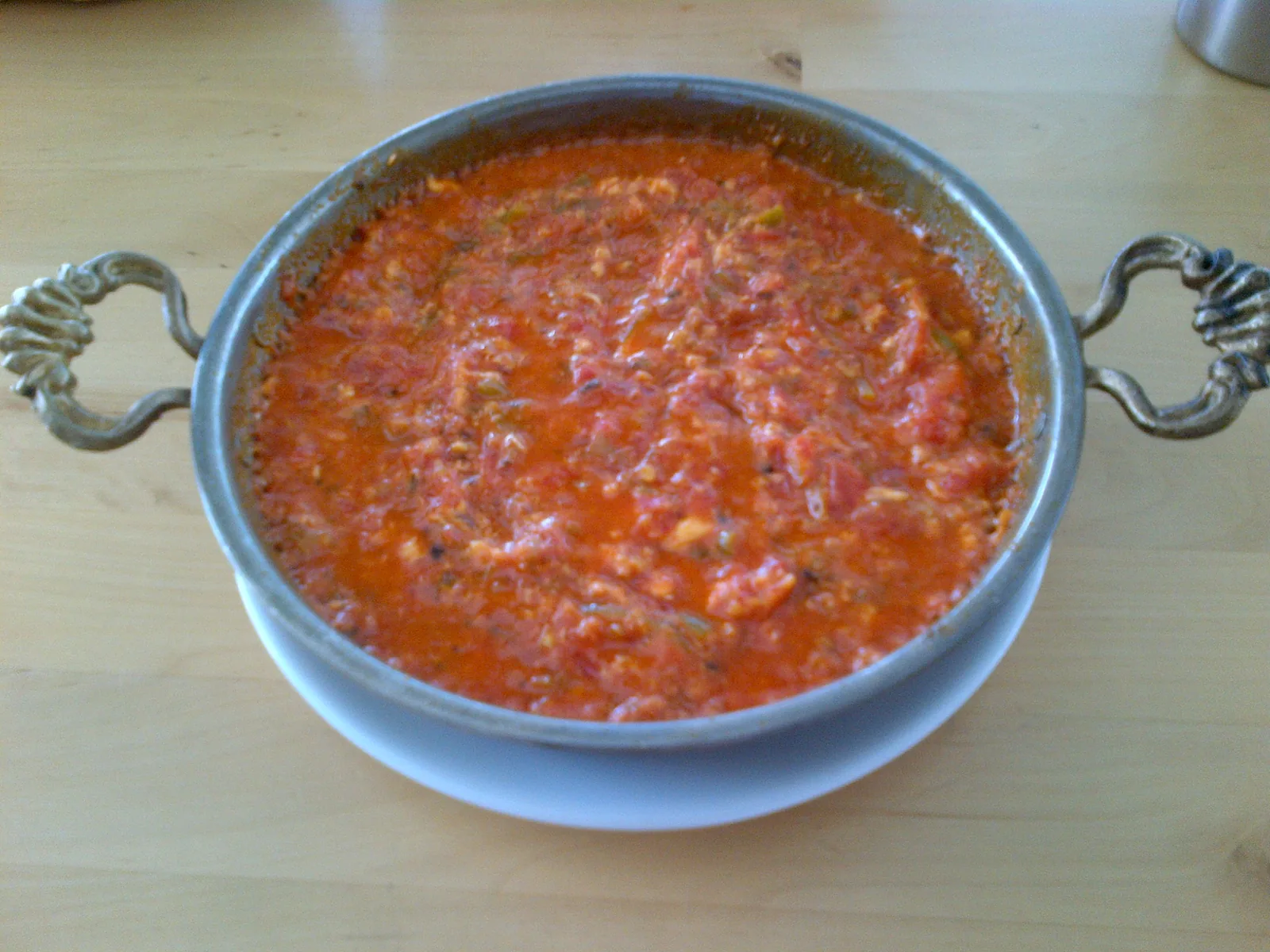
Menemen in a copper sahan pan — soft scrambled eggs stirred through a red tomato and green pepper sauce Turkey flag Turkey 30m
Breakfast •Izmir Breakfast Table

Menemen

This menemen recipe stirs beaten eggs into a soft tomato and green pepper sauce until they set into creamy curds — never poached whole, the way shakshuka does it. Cooked in one pan and served straight from it with bread, it is the classic Turkish breakfast. One serving is about 300 g.

Comfort & Warmth

Beaten eggs stirred into a soft tomato and green pepper sauce, scooped up with warm bread.

Pairs Well With
Crusty white bread, Turkish tea and sliced cucumber and tomato
Quick Prep (<30m)
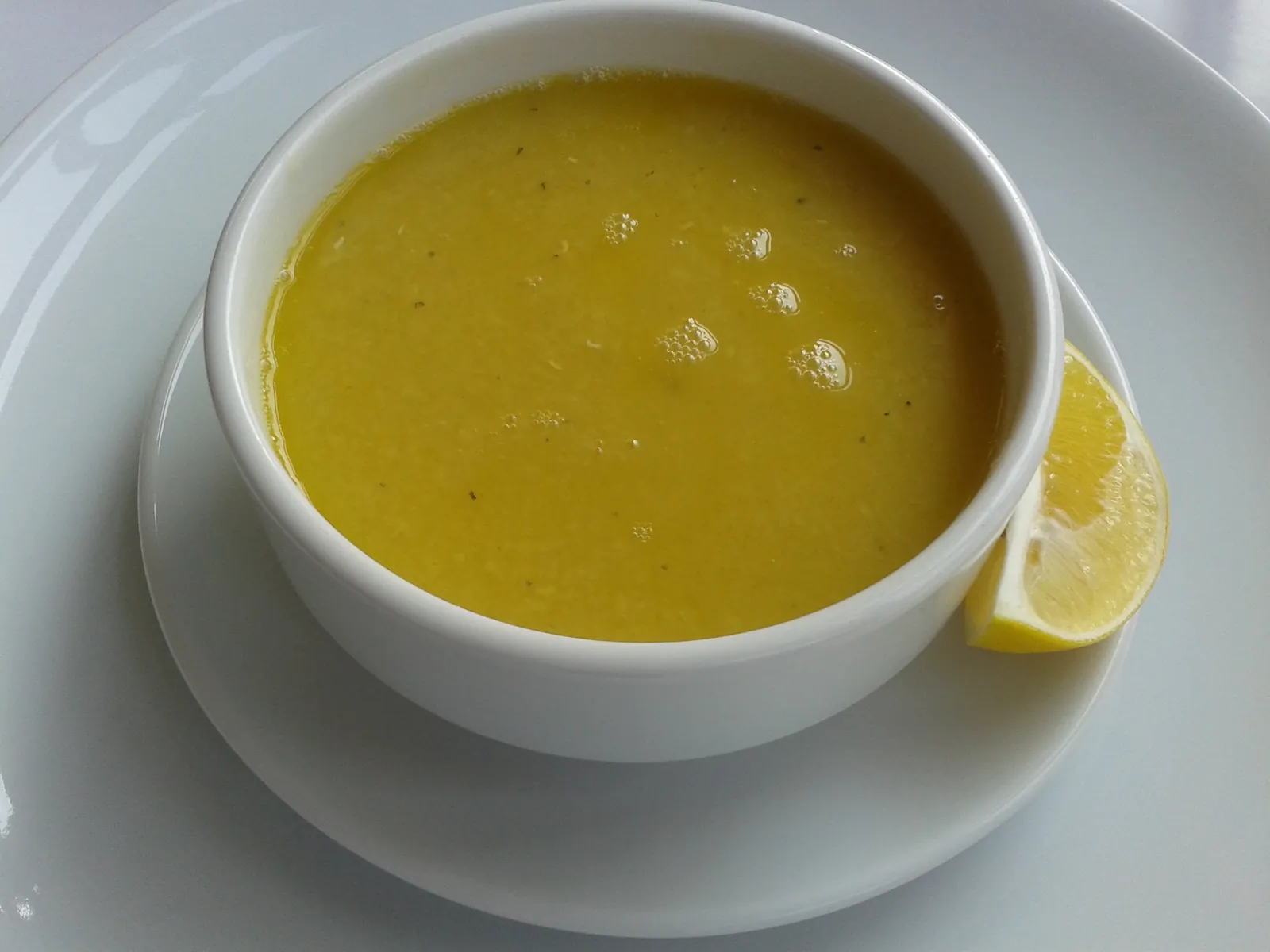
A white bowl of smooth golden Turkish lentil soup with a lemon wedge on the side Turkey flag Turkey 45m
Lunch •Ankara Lokanta Classic

Turkish Lentil Soup

This turkish lentil soup recipe turns red lentils, onion, carrot and potato into a smooth, golden soup, finished with lemon and a drizzle of paprika butter. One serving is about 325 g.

Comfort & Warmth

A silky red lentil soup, light enough for lunch and warm enough for a cold day.

Pairs Well With
Warm pide bread, lemon wedges and ayran
Soups & Broths
Bœuf bourguignon — French beef braised in red wine France flag France 4h
Dinner •Burgundy Terroir

Bœuf Bourguignon

Beef braised gently in red wine until the connective tissue melts into a velvet, gelatin-rich sauce — the classic Burgundy Sunday dinner.

Cellular Repair

Beef braised in red wine until spoon-tender, with mushrooms and pearl onions.

Pairs Well With
Parsnip Purée & Steamed French Haricots Verts
High Protein
Vietnamese braised pork belly with golden eggs in caramel sauce Vietnam flag Vietnam 1h 45m
Dinner •One Pot

Vietnamese Braised Pork and Eggs

Pork belly slowly braised in coconut water and caramel until meltingly tender, with golden eggs that soak up the sweet-savoury sauce — the Vietnamese family dish that tastes better the next day.

Comfort & Sustained Energy

Slow-braised pork belly and eggs in coconut water and caramel.

Pairs Well With
Steamed rice & pickled mustard greens
High Protein

The Dinner Gazette

Never wonder what’s for dinner again

One email a week with easy dinner ideas from around the world — ingredients, steps and nutrition, tested in our kitchen first.

Delivered every Thursday morning. Unsubscribe anytime.