Curated recipes from 193 countries  •  New seasonal Mediterranean issue out now

Overview

Appenzeller Biber

Appenzeller Biberli, Appenzell Honey Gingerbread

This Appenzeller Biber recipe bakes Appenzell's famous filled gingerbread: a soft honey dough spiced with cinnamon, cloves, nutmeg, coriander and aniseed, wrapped around a sweet almond filling, stamped with a picture and baked until well risen and golden. The large round biber and the small biberli are the same dough — the big ones are stamped with a bear or a country scene, the small ones are cut into bite-size pieces. One serving is about 100 g: three small biberli.

Biber come from Appenzell, the small canton in north-eastern Switzerland famous for its cheese, its folk customs and its gingerbread. The word biber is the local name for the honey cake, and the biscuits are traditionally pressed in wooden moulds carved with pictures — a bear, the Appenzell coat of arms, or a country scene — which is why the large round biber look like edible postcards. The filled version, the biberli, wraps a sweet almond paste inside the spiced honey dough, and the small pieces are a fixture of Christmas and festive tables across eastern Switzerland. Like all honey gingerbread, biberli keep for weeks and taste better after the flavours have had time to mellow.

Pairs well with: Black coffee, hot chocolate & mulled wine

Provenance

Switzerland flag Switzerland

Appenzell Heritage

Nordic & European

Time Dedication

1h 15m

50m prep • 25m cook

Batch Yield

8 Servings

385 kcal per serving

1 serving ≈ 100 g

Technical Skill

Intermediate

Intermediate (Filled Gingerbread)

Meal Timing & Digestive Fit

Breakfast

Not Advised

Lunch

Inappropriate

Dinner

Inappropriate

Snack & Tea

Ideal Light Bite

Occasions: Christmas, Advent, festivals, coffee breaks, gifts Cost: Low — about $1–2 per serving at home
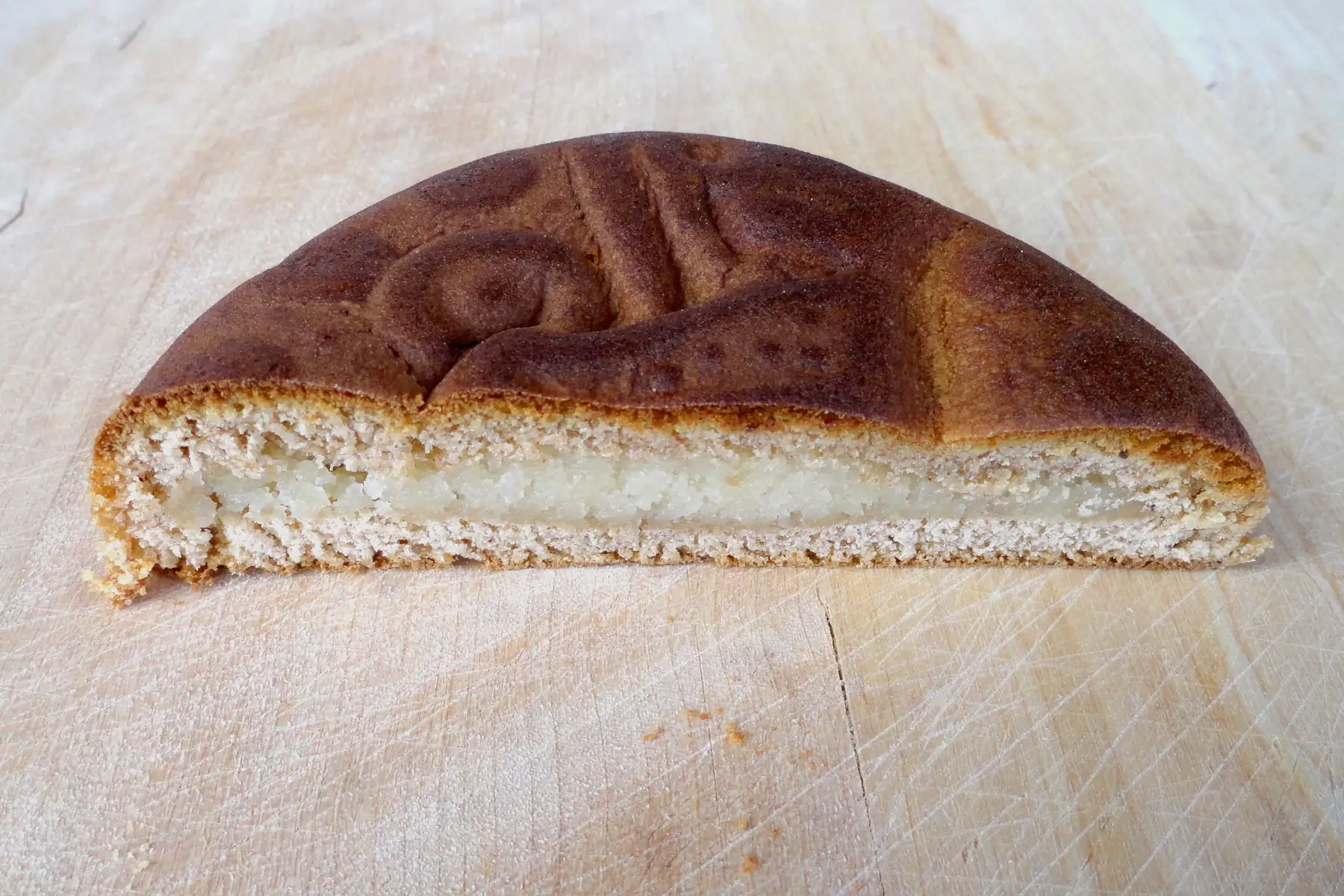
A large Appenzeller Biber cut in half on a wooden board, showing the pale almond filling inside the dark spiced gingerbread

Appenzell Heritage

Photo: Adrian Michael, CC BY-SA 3.0, via Wikimedia Commons

The Heritage Formulary

Measured Ingredients

Estimated cost: Low — about $1–2 per serving at home (USD)

A good biber is well risen and firm, pale golden on top, with a distinct layer of almond filling and a mellow spice flavour.

Execution Methodology & Culinary Technique

Step-by-Step Cooking Guide

Active 1h 15m
P

Prep Stage: Honey Dough and Almond Filling

50 Mins • Dough, Filling, Shaping

Make the dough the day before you bake, if you can: warm the honey, sugar and molasses, stir in the flour and spices, and rest the dough overnight in the fridge. Make the filling while the dough rests, and line two trays with baking paper before you start shaping — the shaped biberli go straight into the oven.

Maestro Tip: Warm honey is runny and easy to mix, but hot honey cooks the egg. Let the honey mixture cool until it is just warm to the touch before the egg goes in.

  1. 1

    Make the Honey Dough

    20 Mins Low heat, about 60°C (140°F)

    Put the honey, molasses and granulated sugar in a large pan over low heat and warm gently, stirring, until the sugar dissolves and the mixture just simmers. Take it off the heat, stir in the water and half the lemon zest, and let it cool until just warm to the touch. Stir in the beaten egg, then add the sifted flour, baking powder, baking soda, cinnamon, cloves, nutmeg, coriander, aniseed and salt, and mix to a soft, sticky dough. Cover and rest in the fridge overnight, or for at least 2 hours.

    Do not add the egg while the honey is hot, or you will scramble it. Patience here is the whole recipe.

    Done when: A soft, sticky, dark dough that holds together in a ball.

  2. 2

    Make the Almond Filling

    10 Mins No heat — room temperature, about 20°C (68°F)

    Grind the blanched almonds with the icing sugar in a food processor until fine, then add the remaining lemon zest and the kirsch a teaspoon at a time, pulsing until the filling comes together into a soft ball. If it will not hold, add water half a teaspoon at a time. Divide into 3 pieces and roll each into a log about 30 cm long, using a little granulated sugar on the outside if it sticks.

    The filling should be soft enough to roll, not crumbly and not wet. Too much kirsch and it oozes out in the oven.

    Done when: Three smooth logs of almond filling, firm enough to handle.

  3. 3

    Fill and Shape the Biberli

    20 Mins No heat — room temperature, about 20°C (68°F)

    Divide the rested dough into 3 pieces and roll each into a log the same length as the filling. Flatten each log on a floured surface into a rectangle about 30 cm by 7 cm, lay a log of filling along one long edge, and roll the dough tightly around it until the filling is fully enclosed. Press the seam shut. Cut each roll diagonally into 8 small trapezoid pieces, about 4 cm long, and arrange them on the lined trays, leaving 3 cm between them.

    Roll the dough tightly with no air around the filling — air pockets puff up and burst in the oven.

    Done when: Twenty-four neat trapezoid biberli, seams pressed shut, spaced on the trays.

  4. 4

    Bake Until Well Risen

    25 Mins 180°C (350°F)

    Bake one tray at a time in a preheated oven at 180°C (350°F) for about 25 minutes, until the biberli are well risen, firm to the touch and pale golden on top. Do not overbake — the filling will ooze out and harden if they stay in too long. If you are making one large stamped biber instead, roll the dough out, press a stamp or a patterned glass firmly into the top, and bake for 30–35 minutes.

    Check at 20 minutes: the tops should be set and springy, not soft and dented.

    Done when: Well risen, firm, pale golden biberli with no filling leaking out.

  5. 5

    Cool and Mature

    10 Mins No heat — room temperature, about 20°C (68°F)

    Leave the biberli on the tray for 10 minutes, then lift them onto a wire rack to cool completely. Store in a tin for at least a week before eating — like all honey gingerbread, biberli taste better after the flavours have mellowed and the crumb has softened.

    Resist eating them on day one: the spices are harsh when fresh and gentle after a week in the tin.

    Done when: Cool, firm biberli, ready for the tin and a week of patience.

Finishing Touches & Plating

Cool the biberli completely on a wire rack, then keep them in a tin for a week before eating — like all honey gingerbread, they taste better after the flavours have mellowed. Serve with coffee or hot chocolate.

Nutritional Physiology & Benefits

Nutrition

Energy

385

kcal / serving

Protein

9g

Complete AA

Carbs

67g

Complex

Fats

10g

Healthy

Per serving (8 servings · 1 serving ≈ 100 g)
Energy385 kcal
Protein9 g
Carbohydrates67 g
Fat10 g
Fibre3.6 g
Sugar34.8 g
Sodium195 mg
Per 100g
Energy385 kcal
Protein8.5 g
Carbohydrates67.2 g
Fat9.8 g
Fibre3.6 g
Sugar34.8 g
Sodium195 mg

Nutrition values are estimated — calculated from USDA FoodData Central values for the listed ingredients.

Vitamins & minerals: Vitamin E and magnesium (almonds), B vitamins and iron (flour, egg).

Almonds and Honey

The almond filling brings vitamin E and magnesium, and honey gives the biscuits their moisture without any butter in the dough.

Slow Winter Energy

Honey, sugar and flour give slow, steady energy — which is why biberli have fuelled Appenzell winters for generations.

Five Real Spices

Cinnamon, cloves, nutmeg, coriander and aniseed flavour the biscuits with no artificial colour or flavouring at all.

Food Pairings

What to Eat With

To optimize nutrient absorption and elevate the sensory depth, pair with these authentic accompaniments:

Drinks

Black Coffee

Black coffee cuts the honey sweetness and matches the warm spices — the classic way to eat a biber in Appenzell.

Hot Chocolate

Hot chocolate with a biber is a cold-afternoon classic: the cocoa and the gingerbread spices warm each other up.

Mulled Wine

A small glass of mulled wine at Christmas echoes the cinnamon and cloves in the biscuit.

Full Menus

A Christmas Cookie Plate

Put biberli on a Christmas cookie plate with lebkuchen and zimtsterne — the filled gingerbread is always the first to go.

Complete menu

Serve two or three biberli with black coffee after a light lunch of soup and bread, or with hot chocolate on a cold afternoon.

Digestive Guardrails

What NOT to Combine

To prevent digestive distress, sluggishness, or palate clash, avoid pairing the dish with these elements:

Overbaking the Biberli

Overbaking dries the gingerbread and makes the almond filling ooze out and harden. Take the biscuits out when they are well risen and firm but still pale on top. This is general information, not medical advice.

Skipping the Dough Rest

Skipping the rest makes the dough sticky and hard to shape, and the biscuits spread flat in the oven. Rest the dough overnight in the fridge, or at least 2 hours, before you shape it. This is general information, not medical advice.

General information only, not medical advice — consult a doctor for personal dietary decisions.

Who Should Eat It

Who Should Eat

  • General adultsA rich festive biscuit: two or three biberli with coffee is a proper Swiss afternoon treat.
  • ChildrenSuitable for children over 3 years; the biscuits are soft and chewy, but they are sweet and spiced, so keep to one or two. Use milk instead of kirsch in the filling.
  • ElderlyExcellent: soft and chewy, no hard crust, and the spices are gentle; serve with tea and keep the portion modest.
  • Pregnant womenGenerally suitable — the egg is fully baked and the kirsch mostly bakes off, but use milk instead of kirsch to be safe. Ask your clinician if unsure.
  • Breastfeeding womenGenerally suitable; a biscuit or two gives useful energy, though they are sweet, so keep portions moderate.
  • AthletesA good carbohydrate snack for quick energy before training, with a little protein from the almonds and egg.
  • Weight gainEnjoy three biscuits with a glass of milk for extra energy.
  • Weight lossKeep to one biscuit and enjoy it slowly with black coffee; they are sweet and filling, so one is enough.

Health Conditions — Adjust or Avoid

Conditions

  • DiabetesAbout 67 g of carbohydrate and 35 g of sugar per serving, so count them carefully in your meal plan and keep to one biscuit; ask your clinician if unsure.
  • High blood pressureSodium is about 195 mg per serving; the sugar is the main thing to watch, and ask your clinician about your target.
  • Kidney diseaseAlmonds and honey are sources of potassium and phosphorus; keep to one biscuit if you follow a limit, and ask your clinician.
  • GoutThe biscuits are low in purines and contain no meat or seafood; the sugar is the main thing to watch, and ask your clinician if unsure.
  • Stomach issuesSoft and mild once baked, but the spices and honey can feel heavy; eat slowly and keep the portion small if your stomach is sensitive, and ask your clinician if unsure.
  • Cardiovascular diseaseNo butter in the dough and mostly unsaturated fat from the almonds, but the sugar adds up; enjoy as an occasional treat and balance the day with lighter meals, and ask your clinician about your overall diet.
  • Fatty liverKeep the portion small; the honey and sugar are the main concern here, and ask your clinician if you follow a prescribed diet.
  • Food allergiesContains wheat (flour), egg, tree nuts (almonds) and alcohol (kirsch — use milk instead if you avoid alcohol). Do not serve to anyone with a nut allergy.
  • Special therapeutic dietsFits a vegetarian diet; for a lower-sugar plan there is no good sugar-free version — keep to one biscuit and check with your clinician.

If you have a medical condition, consult your doctor before changing your diet.

Storage & Use

Storage & Use

How to store
Store in an airtight tin at room temperature, away from damp.
In the fridge
No need for the fridge; the tin at room temperature is best. They keep for weeks in an airtight tin — the flavour improves with time.
In the freezer
Freeze the baked biberli for up to 3 months in a sealed box; thaw at room temperature. The raw dough also freezes well for 1 month.
How to reheat
No reheating needed; warm gently for 3 minutes in an oven at 150°C (300°F) if you like them soft.
Freezing recommended
Yes — baked biberli freeze well.
Signs it has spoiled
Hard as stone after months, mould, or a sour smell from the filling.

More recipes to explore

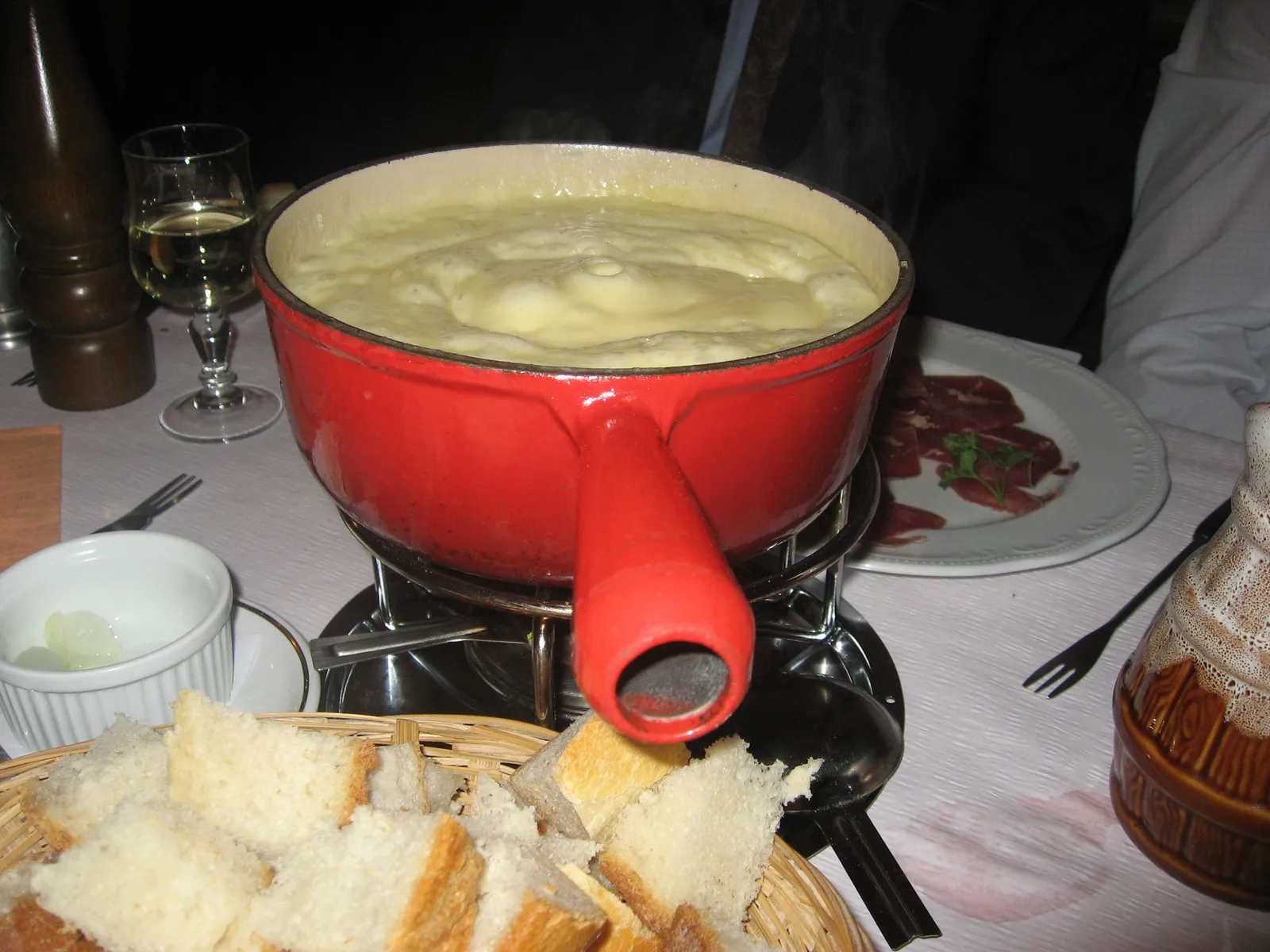
A red fondue pot of melted cheese with bread cubes and a glass of white wine Switzerland flag Switzerland 40m
Dinner •Swiss Alpine Classic

Swiss Cheese Fondue

Swiss cheese fondue is the Alps in a pot: Gruyere and Emmental melted slowly into dry white wine with garlic and a splash of kirsch, kept warm at the table while everyone dips cubes of bread into the bubbling cheese. One serving is about 310 g.

Comfort & Togetherness

Gruyere and Emmental melted in white wine, shared from one pot.

Pairs Well With
Cubes of crusty bread, boiled potatoes and cornichons on the side
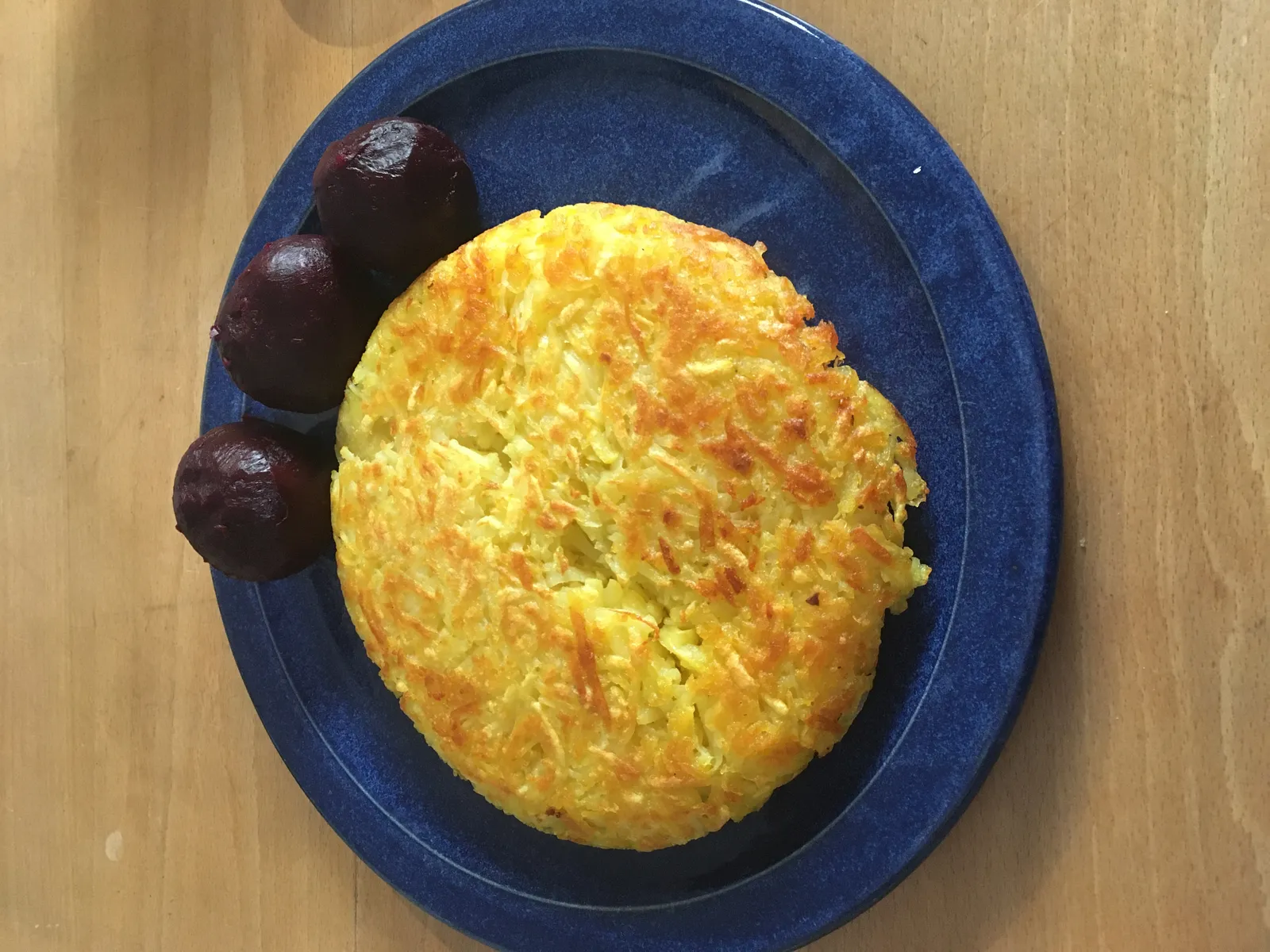
A large golden rosti potato cake on a blue plate Switzerland flag Switzerland 40m
Lunch •Bernese Farmhouse Classic

Rösti

Rösti is Switzerland's crisp potato cake: grated potato pressed into one large golden disc and fried in butter until the outside shatters and the inside stays soft, then topped with a fried egg. One serving is about 240 g.

Simple & Satisfying

One large crisp cake of grated potato, pan-fried in butter and topped with a fried egg.

Pairs Well With
A fried egg on top and a simple green salad with sharp vinaigrette
Quick Prep (<30m)
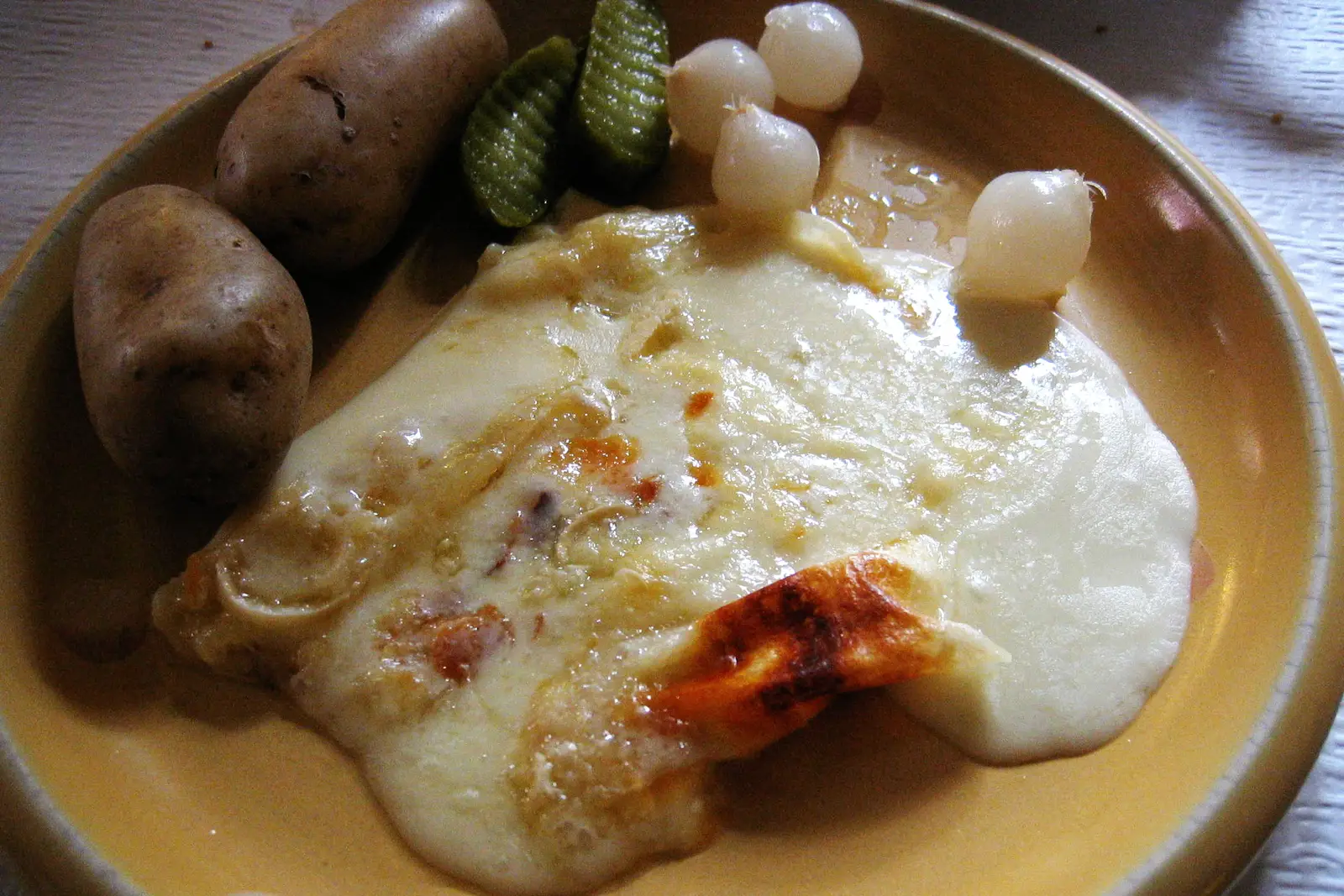
Melted raclette cheese scraped over a plate with boiled potatoes and pickles Switzerland flag Switzerland 40m
Dinner •Valais Alpine Classic

Raclette

Raclette is the Swiss Alps' other great melted-cheese meal: a half-wheel of raclette cheese is warmed until the cut face bubbles, then scraped in ribbons over boiled potatoes, with cornichons and pickled onions to cut the richness. One serving is about 365 g.

Comfort & Togetherness

Melted raclette cheese scraped over boiled potatoes with pickles.

Pairs Well With
Boiled potatoes, cornichons, pickled onions and a green salad
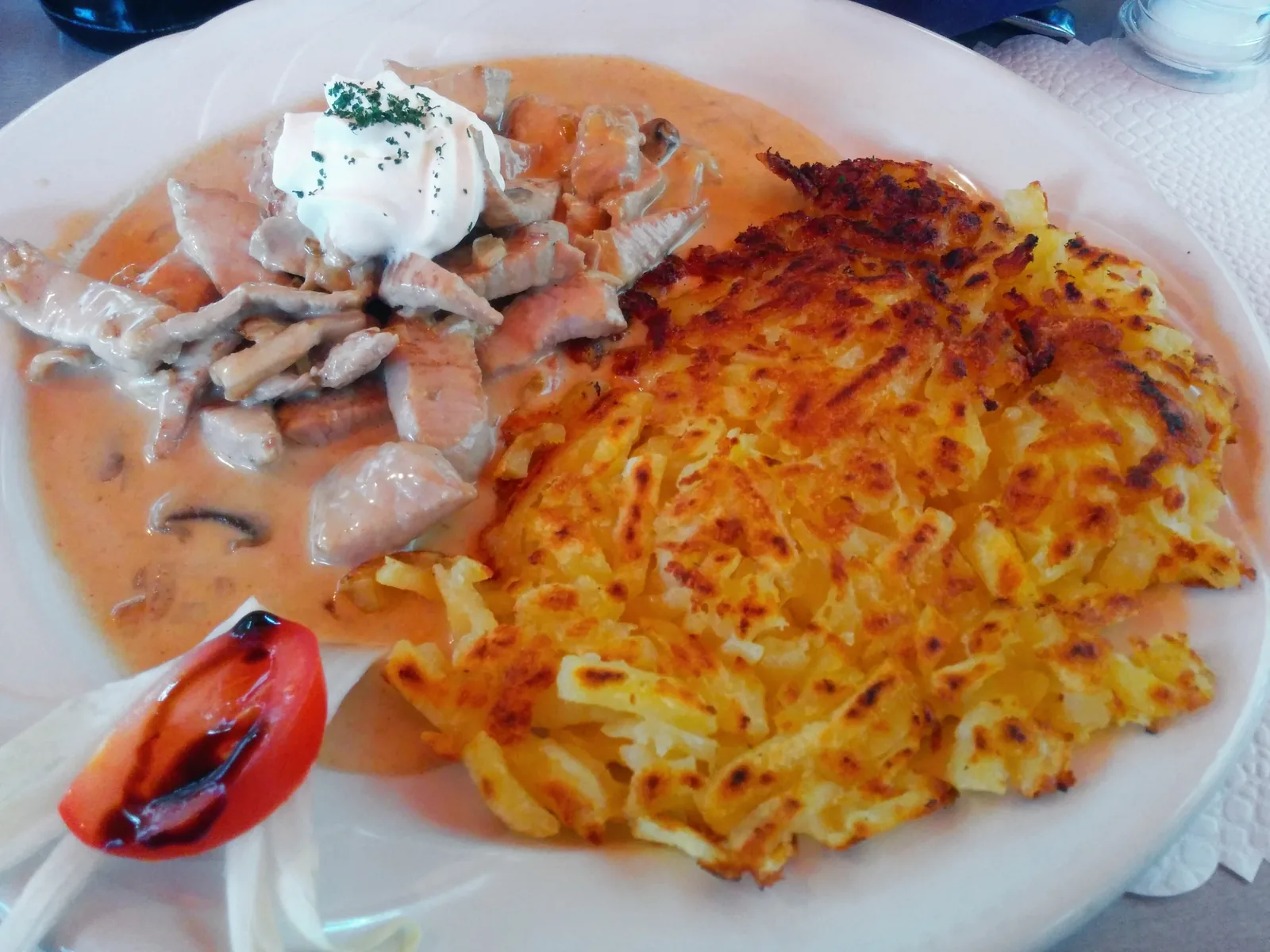
A plate of Zürcher Geschnetzeltes — veal strips in cream sauce with a dollop of cream — beside golden rösti. Switzerland flag Switzerland 40m
Dinner •Zurich Classic

Zürcher Geschnetzeltes

Zürcher Geschnetzeltes is Zurich's signature dish: thin strips of veal quickly seared, then finished in a white-wine and cream sauce with mushrooms and onion. One serving is about 335 g, before the rösti it is traditionally served with.

Rich & Comforting

Tender strips of veal in a white-wine cream sauce with mushrooms — Zurich's classic, with rösti.

Pairs Well With
Serve with golden rösti and a glass of dry Swiss white wine.
High Protein

The Dinner Gazette

Never wonder what’s for dinner again

One email a week with easy dinner ideas from around the world — ingredients, steps and nutrition, tested in our kitchen first.

Delivered every Thursday morning. Unsubscribe anytime.