
Curated recipes from 193 countries  •  New seasonal Mediterranean issue out now

Overview

Arepa de Choclo

Arepas de Choclo, Colombian Sweet Corn Cakes

This arepa de choclo recipe grinds fresh sweet corn into a thick batter, binds it with a little cornmeal, and griddles it into a golden cake with a slab of quesito tucked inside. It is the Andean breakfast Colombians buy from roadside stands and make at home for weekend mornings, sweet from the corn and salty from the cheese in the same bite. One serving is about 260 g.

Arepa de choclo comes from the Andean region of Colombia, where choclo — tender, milky corn eaten fresh off the cob — is ground and griddled into thick cakes. Unlike the everyday arepa made from dried cornmeal, this one is built on fresh corn, which is why it is sweet, soft and custardy inside, and it is a fixture of roadside stands and family breakfasts across Antioquia and the coffee region. The cheese slab inside is the classic finish: salty farmer's cheese against the sweet corn.

Pairs well with: Golden sweet-corn cakes with melted farmer's cheese, butter and hot chocolate

Provenance

Colombia flag Colombia

Andean Colombia Heritage

Latin America & Caribbean

Time Dedication

45m

15m prep • 30m cook

Batch Yield

4 Servings

440 kcal per serving

1 serving ≈ 260 g

Technical Skill

Intermediate

Medium (Griddle)

Meal Timing & Digestive Fit

Breakfast

Prime Morning Fit

Lunch

Inappropriate

Dinner

Inappropriate

Snack & Tea

Inappropriate

Occasions: Family breakfasts, weekend brunch, afternoon coffee, Colombian Independence Day (20 July) Cost: Low — about $2–3 per serving at home
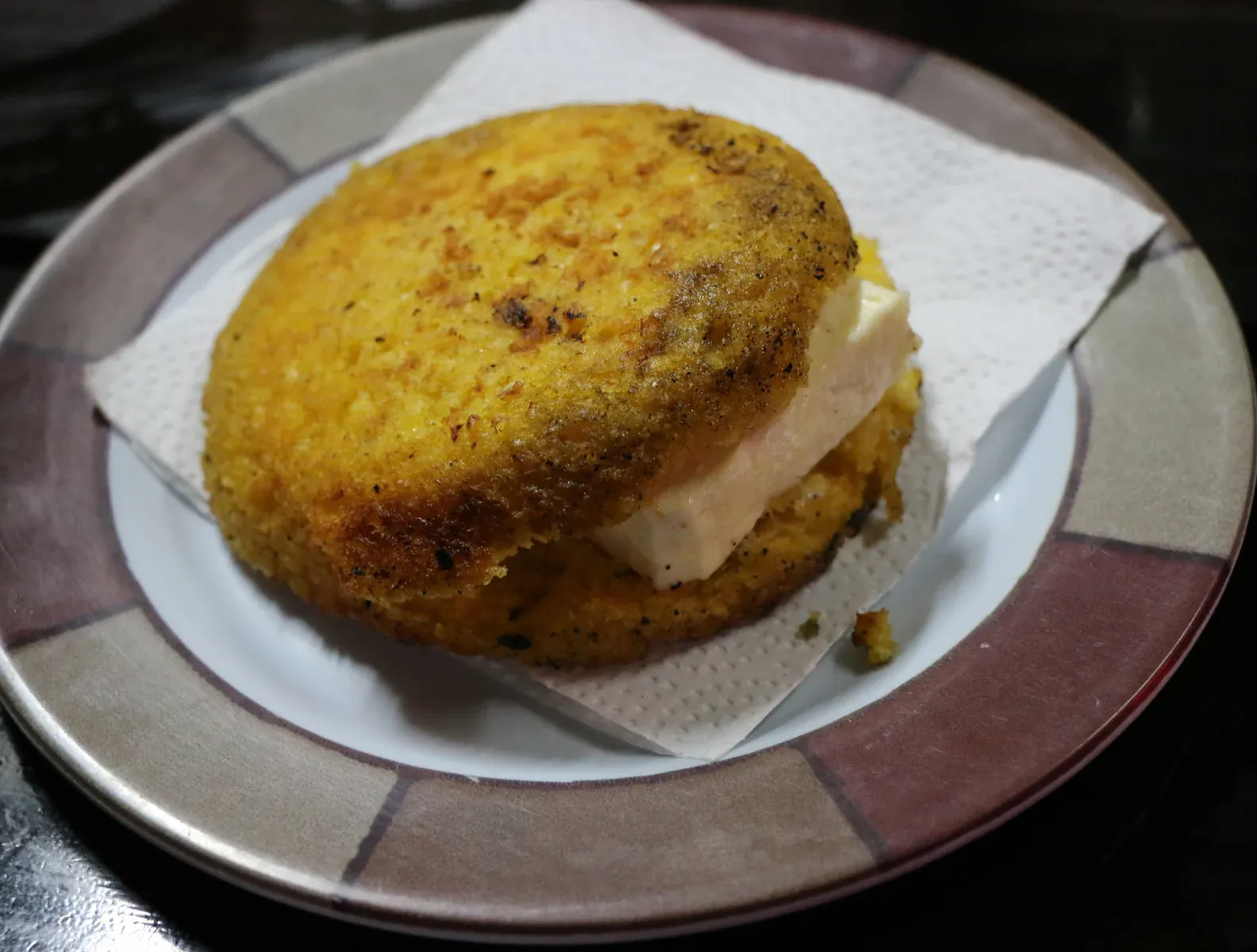
Arepa de choclo: a thick golden sweet-corn cake split open with a slab of white farmer's cheese inside, on a white paper napkin on a plate

Andean Colombia Heritage

Photo: John Alexis Guerra Gómez, CC BY-SA 2.0, via Wikimedia Commons

The Heritage Formulary

Measured Ingredients

Estimated cost: Low — about $2–3 per serving at home (USD)

A good arepa de choclo is thick and golden outside, soft and sweet inside, with the cheese slab melting but still holding its shape.

Execution Methodology & Culinary Technique

Step-by-Step Cooking Guide

Active 45m
P

Prep Stage: Corn Cut, Cheese Sliced

15 Mins • Cutting & Blending

Arepa de choclo is a griddle dish, so everything happens fast once the pan is hot: the corn is ground, the batter is mixed, the cakes are shaped and they go straight onto the griddle. Cut the kernels off the cobs and slice the cheese into thick slabs before you start blending, because the batter thickens as it sits and the cakes are easiest to shape while it is fresh.

Maestro Tip: Grind the corn in two batches so the blender can move — a jammed blender leaves whole kernels in the batter.

  1. 1

    Grind the Fresh Corn

    5 Mins No heat

    Put the corn kernels in a blender with the milk and blend in short pulses until you have a thick, slightly chunky batter — smooth enough to hold together, with a little texture left. Do it in two batches if the blender struggles, and scrape down the sides between pulses.

    Stop while the batter is still a little coarse; over-blending makes the cakes gummy.

    Done when: The batter is thick like porridge and drops slowly off a spoon.

  2. 2

    Mix the Batter

    5 Mins No heat

    Scrape the ground corn into a bowl and stir in the cornmeal, sugar, salt and butter until the butter melts into the warm batter and everything is evenly mixed. Let the batter rest for 5 minutes so the cornmeal absorbs moisture and the mixture firms up enough to shape.

    If the batter is too wet to shape, add another tablespoon of cornmeal and rest it 2 more minutes.

    Done when: The batter holds a mound on a spoon and does not run off the sides.

  3. 3

    Shape the Thick Cakes

    5 Mins No heat

    Wet your hands, divide the batter into 4 equal portions, and press each one into a thick round cake about 12 cm across and 2 cm thick. Lay a slab of queso fresco on two of the cakes, press the other two cakes gently on top, and pinch the edges closed so the cheese is sealed inside.

    Wet hands stop the sticky batter from clinging to your fingers while you shape.

    Done when: Each cake is a thick, even round with the cheese hidden inside and the seam pressed shut.

  4. 4

    Griddle the First Side

    8 Mins Medium-low heat, about 160°C (320°F)

    Heat a large flat griddle or frying pan over medium-low heat and brush it with half the oil. Lay the cakes in the pan without crowding it and cook for about 8 minutes, until the underside is deep golden with browned spots. Do not move them while they cook, or the crust will tear.

    Medium-low heat is the secret — high heat burns the outside before the inside sets.

    Done when: The underside is golden brown and the cake lifts cleanly off the pan.

  5. 5

    Flip and Finish

    8 Mins Medium-low heat, about 160°C (320°F)

    Slide a wide spatula under each cake and flip it in one confident move. Brush the pan with the rest of the oil, cook the second side for about 8 minutes until equally golden, then press the centre of each cake gently — it should feel set and springy, and the cheese inside will be soft.

    A wide spatula and one quick flip keep the thick cakes from breaking.

    Done when: Both sides are deep golden and the cake feels firm and springy in the middle.

  6. 6

    Rest and Serve Hot

    4 Mins No heat

    Lift the arepas onto a plate lined with a paper napkin and let them rest for 2 minutes so the cheese settles. Serve at once, split open if you like, with a knob of butter and extra cheese on the side.

    Resting stops the cheese from running out when the cake is cut open.

    Done when: The arepas are hot and golden, the cheese inside soft and creamy when split.

Finishing Touches & Plating

Serve the arepas hot from the griddle, split open to show the melted cheese, with butter on the side. They are eaten with the hands, like bread, and are best in the first ten minutes.

Nutritional Physiology & Benefits

Nutrition

Energy

440

kcal / serving

Protein

17g

Complete AA

Carbs

55g

Complex

Fats

21g

Healthy

Per serving (4 servings · 1 serving ≈ 260 g)
Energy440 kcal
Protein17 g
Carbohydrates55 g
Fat21 g
Fibre5.1 g
Sugar18.5 g
Sodium772 mg
Per 100g
Energy169 kcal
Protein6.7 g
Carbohydrates21.1 g
Fat7.9 g
Fibre2 g
Sugar7.1 g
Sodium297 mg

Nutrition values are estimated — calculated from USDA FoodData Central values for the listed ingredients.

Vitamins & minerals: Sweet corn provides fiber, folate and vitamin C; the cheese adds calcium and protein; butter and milk add vitamin A. All nutrition values are estimated.

Sweet Corn Energy for the Morning

With about 54.9 g of carbohydrate per serving, the fresh corn gives a slow, steady morning energy that suits a breakfast meant to carry you to lunch.

Fiber and Folate From Fresh Corn

Fresh sweet corn brings fiber and folate to the plate, and the 5.1 g of fiber per serving helps the rich cheese feel lighter.

Calcium and Protein From the Cheese

The slab of queso fresco adds about 17.4 g of protein per serving along with calcium, turning a corn cake into a properly filling breakfast.

Food Pairings

What to Eat With

To optimize nutrient absorption and elevate the sensory depth, pair with these authentic accompaniments:

Drinks

Hot Chocolate

A mug of thick Colombian hot chocolate is the classic partner — the sweet, warm drink balances the salty cheese and the corn's sweetness.

Panela Coffee

Black coffee sweetened with panela, the unrefined cane sugar of the Andes, is the everyday morning drink with arepas and suits the corn's sweetness.

Sides

Butter and Extra Cheese

A knob of butter melting on the hot cake and an extra slice of cheese on the side are how the arepas are served at Colombian roadside stands.

Vegetables

Hogao (Tomato and Onion Sauce)

A spoonful of hogao, the slow-cooked tomato and onion sauce of the Colombian kitchen, adds a savoury, slightly sharp note that cuts the richness.

Complete menu

Serve the arepas hot from the griddle with butter, extra cheese on the side, and a mug of hot chocolate or panela coffee.

Digestive Guardrails

What NOT to Combine

To prevent digestive distress, sluggishness, or palate clash, avoid pairing the dish with these elements:

Very Hot Griddle

A griddle that is too hot burns the corn's sugars black before the thick cake cooks through, leaving a bitter crust and a raw centre — keep the heat medium-low and be patient. This is general information, not medical advice.

Stale Corn

Corn that has sat for days loses its sweetness and its milky starch, so the cakes turn dry and crumbly instead of tender — use the freshest cobs you can find, or frozen kernels. This is general information, not medical advice.

General information only, not medical advice — consult a doctor for personal dietary decisions.

Who Should Eat It

Who Should Eat

  • General adultsA filling, sweet-savoury breakfast — one cake with hot chocolate is a complete morning meal.
  • ChildrenSoft, sweet and cheesy, and easy to hold — cut into wedges for small hands and serve warm, not hot.
  • ElderlySoft and easy to chew once the crust is trimmed; the cheese adds protein and calcium.
  • Pregnant womenMade from cooked corn and pasteurised cheese, it is a safe breakfast choice; use pasteurised queso fresco. Ask your clinician about any concerns.
  • Breastfeeding womenAn energy-rich breakfast that fits well; enjoy it with hot chocolate or coffee in moderation.
  • AthletesAbout 54.9 g of carbohydrate and 17.4 g of protein per serving — a solid pre-training breakfast with slow energy.
  • Weight gainEnergy-dense from the corn, butter and cheese, and easy to eat — add extra butter and a second cake.
  • Weight lossFilling for its calories thanks to the fiber and protein, but the butter and cheese add up — keep to one cake and skip the extra butter.

Health Conditions — Adjust or Avoid

Conditions

  • DiabetesSweet corn and its sugars are the main carbohydrates — keep to one cake and balance it with a salad or unsweetened drink. Ask your clinician about portion sizes.
  • High blood pressureThe cheese is the main source of salt; the batter itself uses only 4 g of salt for the whole batch. Ask your clinician about sodium limits.
  • Kidney diseaseA cheese-rich breakfast with a large protein portion — smaller servings and lighter sides are kinder to the kidneys. Ask your clinician about protein and sodium limits.
  • GoutCheese and butter are low in purines, so the dish is generally gentle, but keep portions modest. Ask your clinician about purine limits.
  • Stomach issuesThe cake is soft and easy on the stomach, but the butter and cheese can feel heavy — eat a small portion and avoid eating it late at night. Ask your clinician if symptoms persist.
  • Cardiovascular diseaseThe cheese and butter add saturated fat; use a lighter cheese and less butter, and keep to one cake. Ask your clinician about fat intake.
  • Fatty liverThe butter and cheese add fat; use less butter on the griddle and keep portions moderate. Ask your clinician about fat intake.
  • Food allergiesContains milk and cheese; the dish is naturally gluten-free as written, but check the cornmeal is certified gluten-free. Anyone with a milk allergy must not eat it. This is general information, not medical advice.
  • Special therapeutic dietsA home-cooked griddle cake whose salt and portions can be adjusted — discuss the right portion with your clinician or dietitian.

If you have a medical condition, consult your doctor before changing your diet.

Storage & Use

Storage & Use

How to store
Cool completely, then wrap each arepa in cling film and store in an airtight container.
In the fridge
2 days at 4°C (40°F) or below.
In the freezer
1 month, wrapped individually; thaw overnight in the fridge.
How to reheat
Warm on a dry griddle over medium-low heat until the centre reaches 74°C (165°F) and the cheese softens again.
Freezing recommended
Yes, wrapped individually.
Signs it has spoiled
Sour smell, slimy surface, or mould.

More recipes to explore

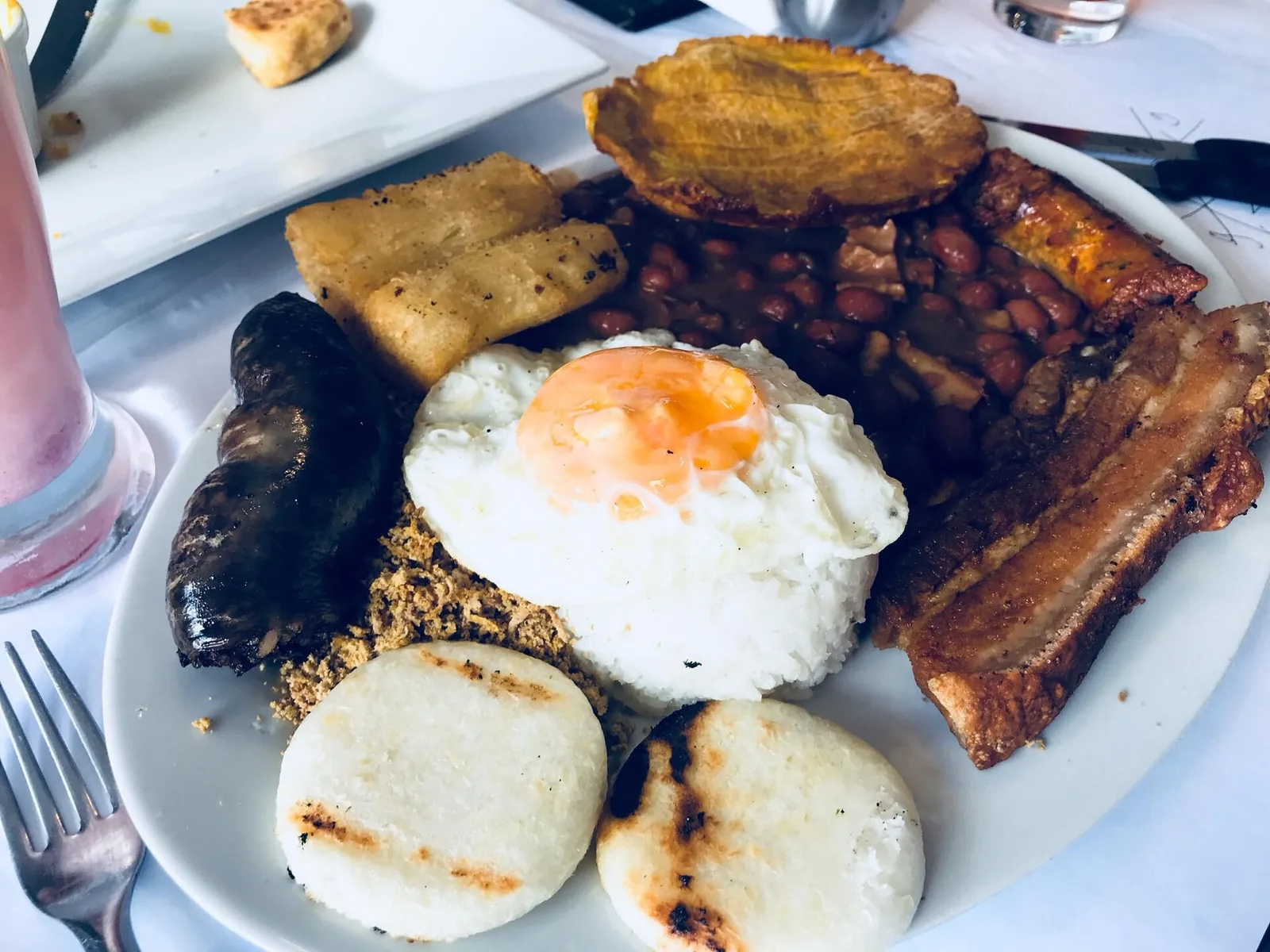
Bandeja paisa on a white plate with red beans, white rice, a fried egg, chicharrón, morcilla, chorizo, fried plantain and two small arepas Colombia flag Colombia 2h
Lunch •Antioquia Heritage

Bandeja Paisa

This bandeja paisa recipe builds the famous platter from Antioquia: red beans simmered with pork, white rice, crisp chicharrón, seasoned ground beef, chorizo and morcilla, a fried egg, sweet fried plantain, avocado, hogao sauce and a small grilled arepa. Every part is cooked separately, then piled onto one wide plate so each bite can mix a little of everything. One serving is about 894 g.

Hearty & Filling

A generous Antioquia platter of beans, rice, meats, egg, plantain and avocado, built to fuel a long working day.

Pairs Well With
A cold glass of panela lemonade or a light lager, with a small green salad on the side.
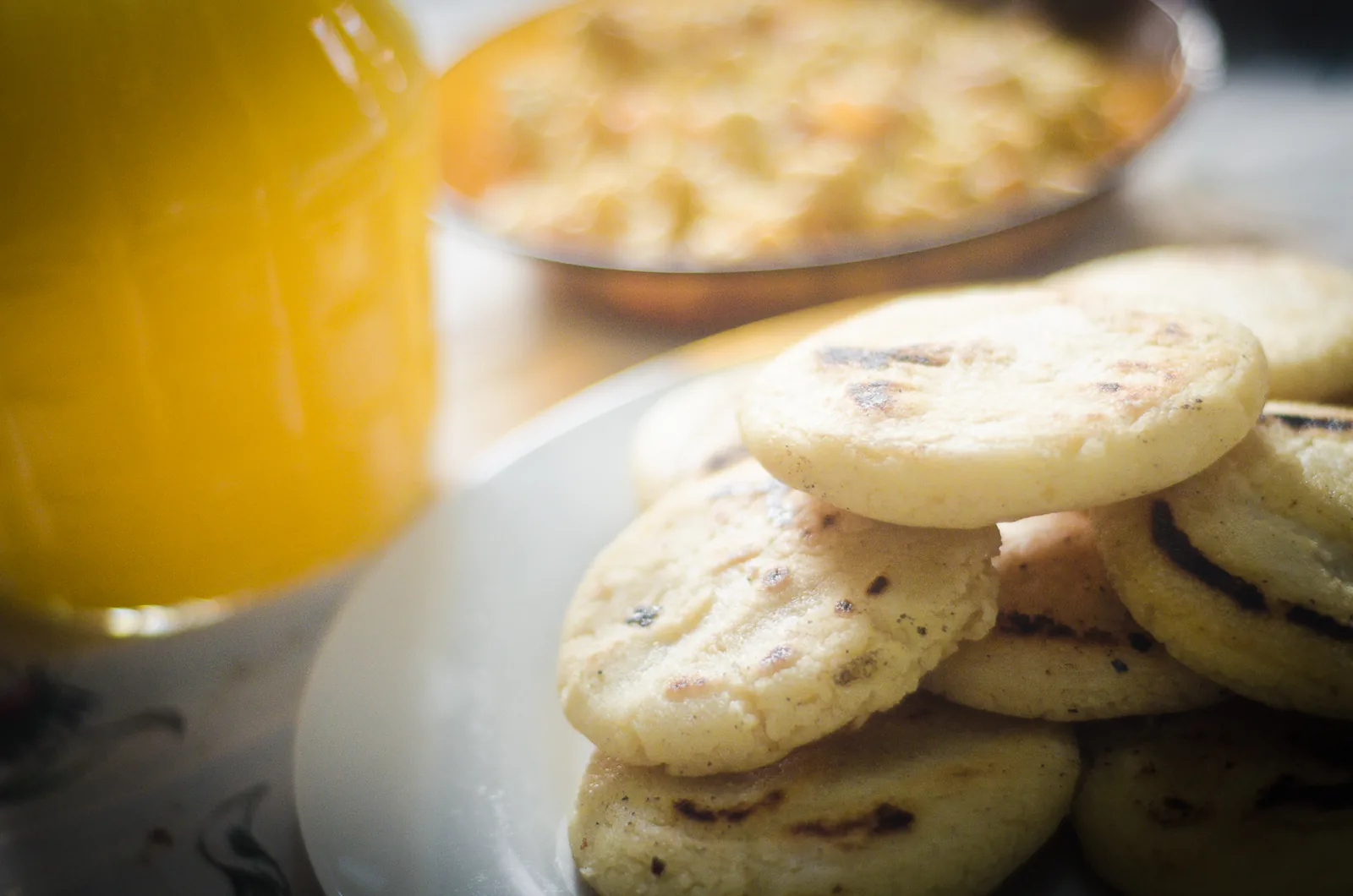
A stack of golden grilled Colombian arepas on a white plate, with a glass of orange juice beside them Colombia flag Colombia 35m
Breakfast •Andean Heritage

Colombian Arepas

This Colombian arepas recipe turns pre-cooked white cornmeal, warm water, butter and cheese into round corn cakes that are grilled until crisp outside and soft inside. The cheese is kneaded right into the dough, so every bite is savoury and gently melty. Colombian arepas are thinner and plainer than the stuffed Venezuelan kind: they are a breakfast bread, split open and filled at the table. One serving is about 220 g, two arepas.

Comfort & Warmth

Golden grilled corn cakes made from white masarepa, with melting cheese kneaded into the dough.

Pairs Well With
Hot chocolate or coffee, with butter and a slice of fresh cheese on the side.
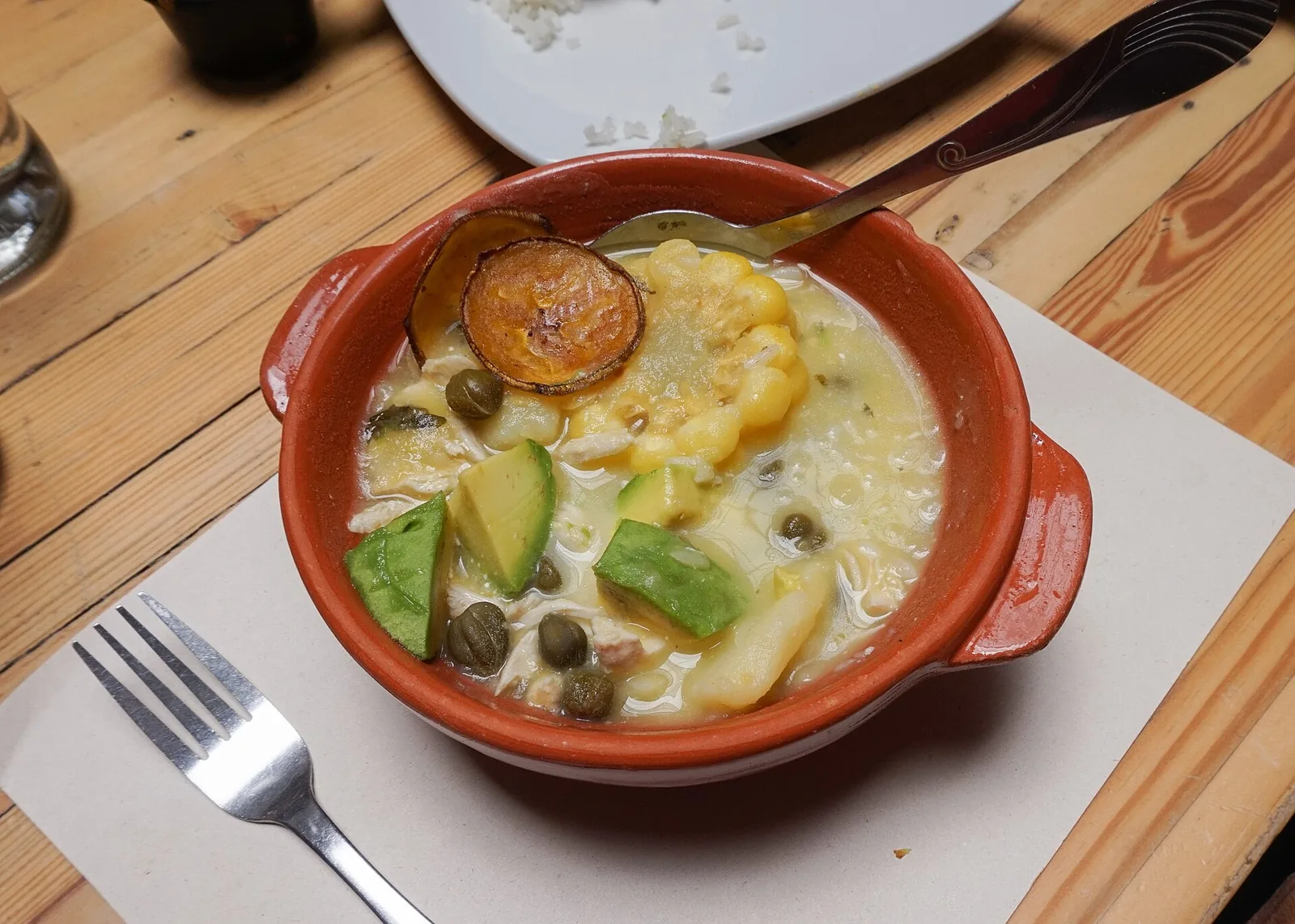
A bowl of ajiaco in a clay bowl, thick golden soup with corn, avocado, capers and shredded chicken Colombia flag Colombia 1h 30m
Lunch •Bogotá Heritage

Ajiaco

This ajiaco recipe is Bogotá's signature soup: chicken simmered with corn on the cob and three kinds of potato — pastusa, sabanera and criolla — until the criolla melts and thickens the broth golden. The herb guascas gives it its unmistakable earthy flavour, and every bowl is finished at the table with heavy cream, briny capers and sliced avocado. One serving is about 750 g, soup and toppings together.

Comfort & Warmth

Bogotá's thick chicken and potato soup, flavoured with guascas and served with cream, capers and avocado.

Pairs Well With
White rice and a small side salad, with the cream, capers and avocado passed around the table.
Soups & Broths
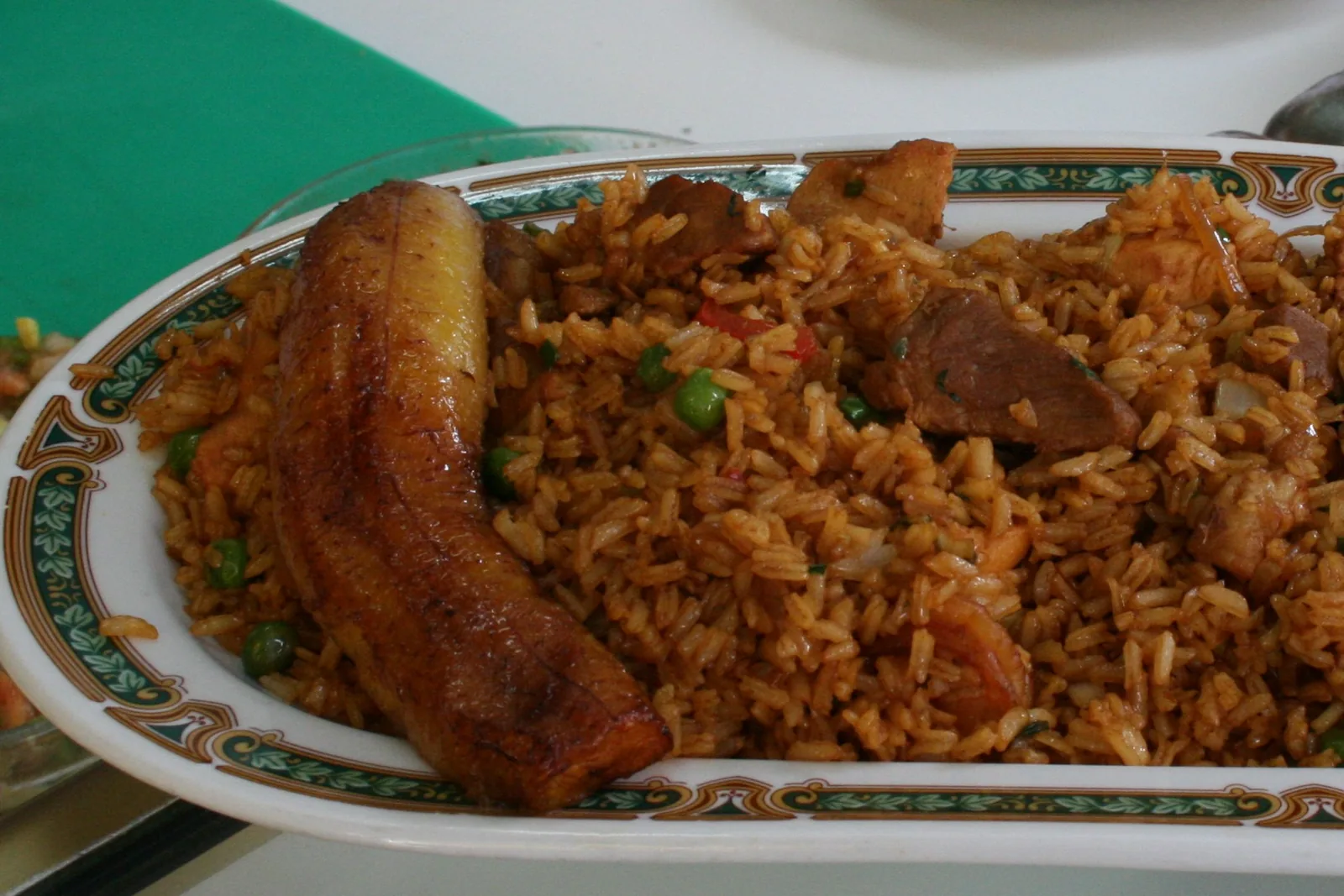
A platter of lechona with golden rice, roast pork pieces, green peas and a fried plantain Colombia flag Colombia 6h
Dinner •Tolima Heritage

Lechona

Lechona is Tolima's great festive roast: a deboned pig — here a pork shoulder with its skin — stuffed with rice and peas, sewn shut and roasted for hours until the meat is spoon-tender and the skin crackles. It is served chopped, a spoon of golden rice with every piece of pork, with arepas and fried plantain on the side. One serving is about 444 g.

Festive & Filling

Pork shoulder stuffed with rice and peas, roasted for hours until the meat is tender and the skin crackles.

Pairs Well With
White arepas, fried plantain and a cold beer
High Protein

The Dinner Gazette

Never wonder what’s for dinner again

One email a week with easy dinner ideas from around the world — ingredients, steps and nutrition, tested in our kitchen first.

Delivered every Thursday morning. Unsubscribe anytime.