
Curated recipes from 193 countries  •  New seasonal Mediterranean issue out now

Overview

Arepa de Yuca

Cassava Arepas, Arepas de Yuca con Queso, Yuca Cheese Cakes

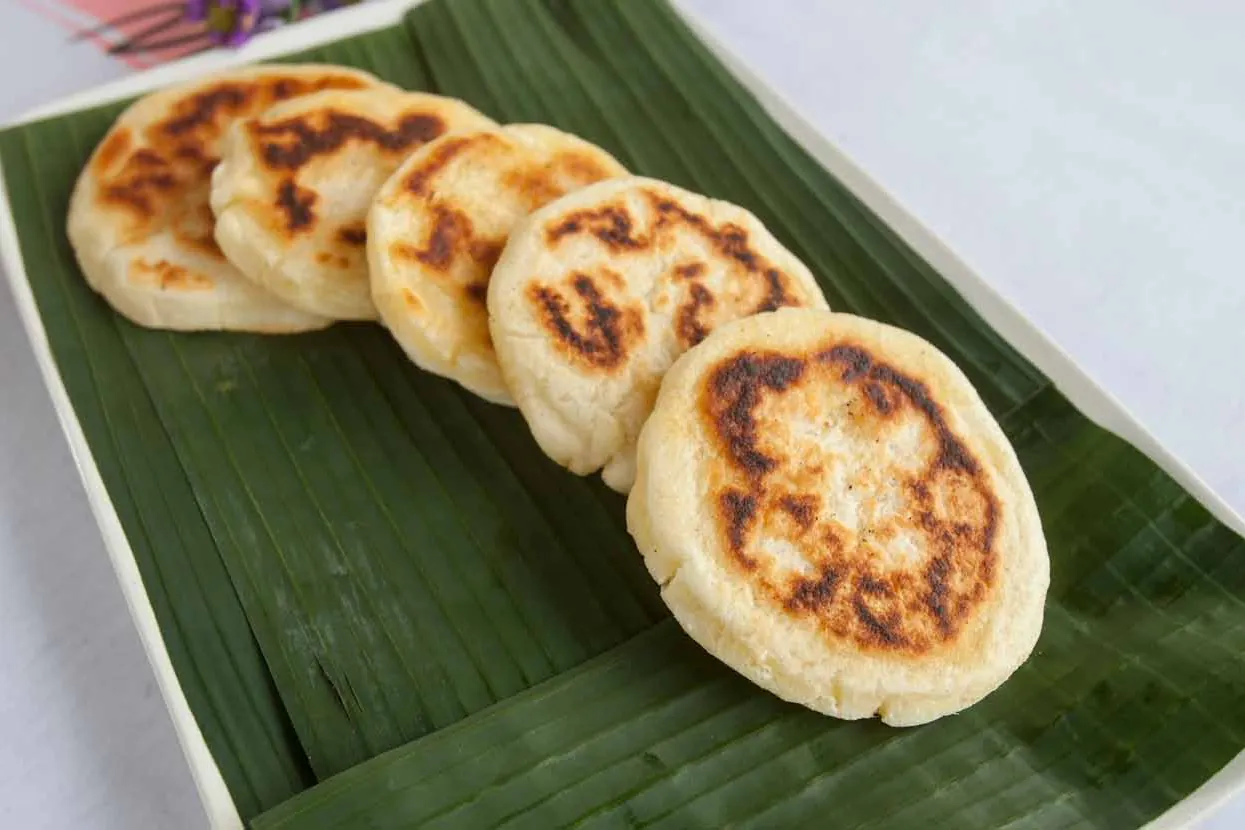
This arepa de yuca recipe grates raw cassava the Caribbean-coast way, then kneads it with queso fresco, butter and a pinch of sugar into round cakes that fry golden on the griddle — crisp outside, soft and cheesy inside, nothing like a corn arepa. One serving is about 240 g, two arepas.

Arepas are the daily bread of Colombia and Venezuela, made from maize dough since long before either country existed, but the cassava version belongs to the Caribbean coast and the Llanos, where yuca grows in every garden. There, cooks grate the raw root, knead it with salty white cheese and fry the cakes on a hot griddle — no corn flour at all. In the department of Meta, arepas de yuca are a point of pride, served for breakfast with hot chocolate or as an afternoon snack with coffee and avocado. This version follows the coastal way: grated raw yuca, queso fresco, a little butter and a pinch of sugar.

Pairs well with: Hot chocolate or coffee, with avocado slices on the side.

Provenance

Colombia flag Colombia

Colombian Heritage

Latin America & Caribbean

Time Dedication

45m

25m prep • 20m cook

Batch Yield

4 Servings

564 kcal per serving

1 serving ≈ 240 g

Technical Skill

Easy

Easy (Griddle Cakes)

Meal Timing & Digestive Fit

Breakfast

Prime Morning Fit

Lunch

Inappropriate

Dinner

Inappropriate

Snack & Tea

Inappropriate

Occasions: Weekday breakfasts, weekend family breakfasts, afternoon snack with coffee Cost: Low — about $1–2 per serving at home
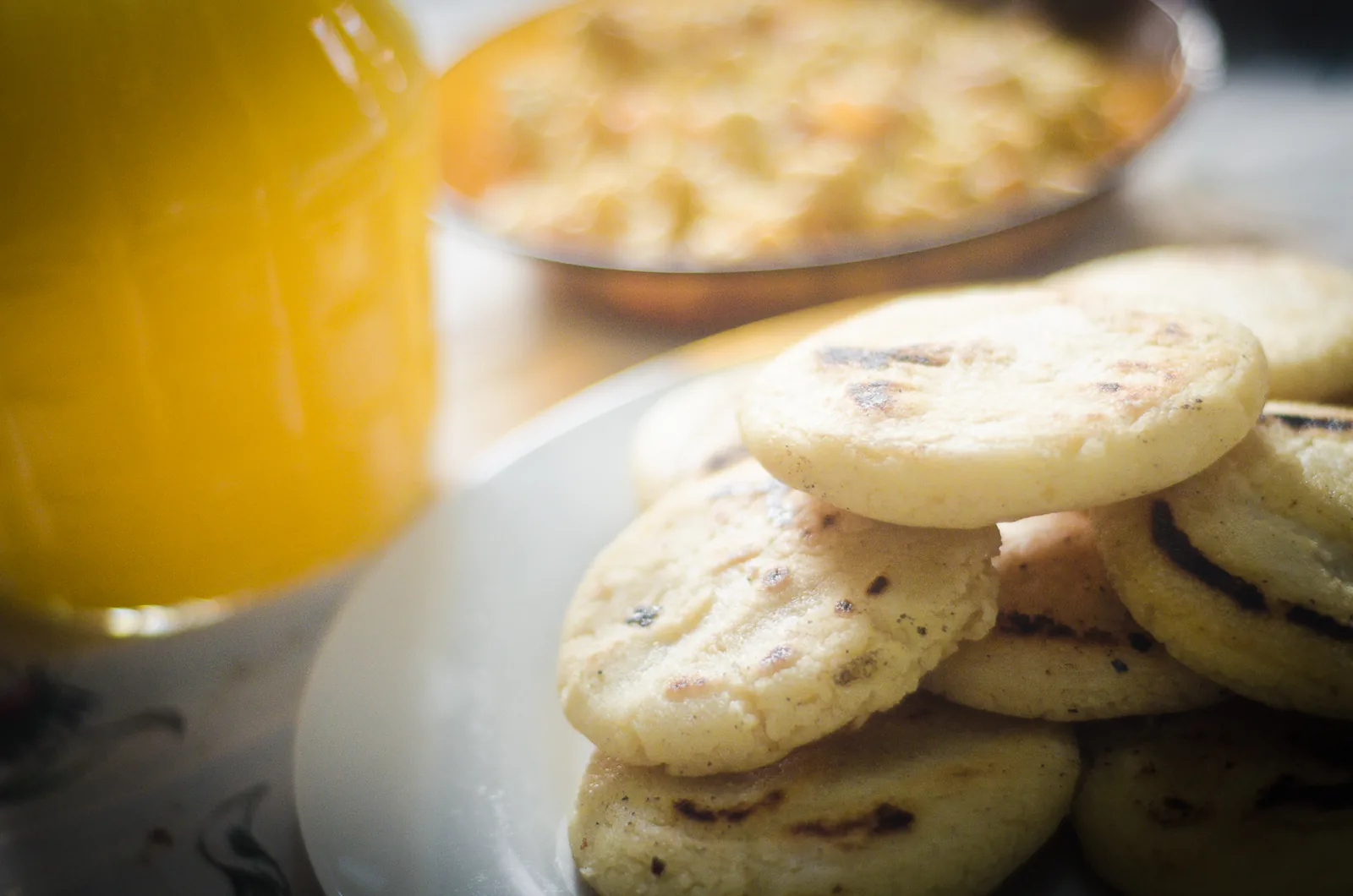
Five golden grilled arepas de yuca on a banana leaf on a white plate

Colombian Heritage

Photo: Castelblanco, Constantino (Instituto de Turismo del Meta), CC BY-SA 4.0, via Wikimedia Commons

The Heritage Formulary

Measured Ingredients

Estimated cost: Low — about $1–2 per serving at home (USD)

Made the Colombian way: grated raw cassava, queso fresco kneaded in, shaped into flat cakes and fried golden on the griddle.

Execution Methodology & Culinary Technique

Step-by-Step Cooking Guide

Active 45m
P

Prep Stage: Grate & Mix

25 Mins • Grating & Shaping

Peel the cassava, remove the woody core and grate it finely into a bowl. Squeeze the grated cassava in a clean cloth to remove excess liquid, then knead in the grated queso fresco, melted butter, sugar and salt until a soft dough forms. Shape into 8 round cakes about 12 cm across and 1 cm thick.

Maestro Tip: Squeeze the grated cassava well: wet cassava makes a dough that falls apart on the griddle.

  1. 1

    Peel & Grate the Yuca

    15 Mins Room temperature

    Peel the cassava, cut it in half lengthwise and pull out the woody core. Grate it finely into a large bowl, then gather it in a clean cloth and squeeze hard to remove as much liquid as you can.

    Grate on the fine side of a box grater for a smooth, even dough.

    Done when: A mound of fine, pale grated cassava, squeezed dry.

  2. 2

    Mix the Dough

    5 Mins Room temperature

    Add the grated queso fresco, melted butter, sugar and salt to the cassava and knead with your hands until everything is evenly mixed and the dough holds together in a soft ball.

    Knead just until it holds together: overworking makes the cakes tough.

    Done when: A soft dough that holds its shape without sticking to your hands.

  3. 3

    Shape the Arepas

    5 Mins Room temperature

    Divide the dough into 8 equal balls, about 130 g each. Flatten each ball between your palms into a round cake about 12 cm across and 1 cm thick, smoothing any cracks at the edges with wet fingers.

    Oil your palms lightly so the dough does not stick.

    Done when: Even rounds, 1 cm thick, with smooth edges and no cracks.

  4. 4

    Fry Until Golden

    16 Mins Medium heat, griddle about 190°C (375°F)

    Brush the griddle or a heavy pan with the oil and cook the arepas for about 4 minutes per side, in batches, until deep golden brown with a crisp edge and firm to the touch. The cassava cooks through on the griddle, so you are frying for colour, crispness and melted cheese.

    Medium heat is the key: too hot and the outside burns before the cheese melts; too low and they dry out.

    Done when: Both sides deep golden, edges crisp, centre soft and hot.

  5. 5

    Rest & Serve

    2 Mins Serve hot

    Let the arepas rest for 2 minutes so the cheese sets slightly, then serve hot with avocado slices on the side.

    Cut them open while hot: the cheese inside should still be melting.

    Done when: Hot, crisp outside, soft and cheesy inside.

Finishing Touches & Plating

Serve hot off the griddle with avocado slices, so the cheese inside is still melting.

Nutritional Physiology & Benefits

Nutrition

Energy

564

kcal / serving

Protein

12g

Complete AA

Carbs

80g

Complex

Fats

22g

Healthy

Per serving (4 servings · 1 serving ≈ 240 g)
Energy564 kcal
Protein12 g
Carbohydrates80 g
Fat22 g
Fibre3.6 g
Sugar7.0 g
Sodium937 mg
Per 100g
Energy235 kcal
Protein4.9 g
Carbohydrates33.4 g
Fat9.2 g
Fibre1.5 g
Sugar2.9 g
Sodium390 mg

Nutrition values are estimated — calculated from USDA FoodData Central values for the listed ingredients.

Vitamins & minerals: Cassava supplies vitamin C and potassium, and the queso fresco adds calcium and vitamin B12.

Naturally Gluten-Free

Cassava, not wheat, makes the dough, so these arepas are naturally free of gluten and suit a gluten-free breakfast.

Calcium & Protein from Cheese

The queso fresco adds calcium and a useful amount of protein to a simple cassava cake.

Simple, Filling Start

Cassava, cheese and butter make a slow, steady breakfast that keeps you full until lunch without a long ingredient list.

Food Pairings

What to Eat With

To optimize nutrient absorption and elevate the sensory depth, pair with these authentic accompaniments:

Drinks

Hot Chocolate

In Colombia, arepas and hot chocolate are a classic breakfast pair: the sweet, warm drink balances the salty, savoury cassava cake.

Sides

Scrambled Eggs

Soft scrambled eggs tucked into a split arepa turn a light cassava cake into a complete breakfast with more protein.

Vegetables

Avocado Slices

Creamy avocado against the crisp, salty arepa adds freshness and healthy fats without any extra cooking.

Sauces

Hogao Sauce

A spoonful of hogao, the Colombian tomato-onion sauce, gives the plain cassava cake a savoury, saucy topping.

Complete menu

Serve the arepas with scrambled eggs, avocado and hot chocolate for a full Colombian breakfast.

Digestive Guardrails

What NOT to Combine

To prevent digestive distress, sluggishness, or palate clash, avoid pairing the dish with these elements:

Wet Cassava Straight to the Pan

Grated cassava holds a lot of water, and a wet dough falls apart on the griddle. Squeeze it dry in a clean cloth first. This is general food information, not medical advice.

Corn Flour Instead of Cassava

Masarepa makes a different arepa entirely; this recipe is built on grated raw cassava, and swapping the base changes the dish. This is general food information, not medical advice.

General information only, not medical advice — consult a doctor for personal dietary decisions.

Who Should Eat It

Who Should Eat

  • General adultsA quick, filling breakfast for most adults; two arepas with eggs or avocado make a complete meal.
  • ChildrenChildren usually love arepas: soft inside, easy to hold, and the cheese is familiar. Cut into wedges for small hands.
  • ElderlySoft, easy to chew and gentle on the stomach; serve warm with butter and keep the crust light if chewing is hard.
  • Pregnant womenMade from cassava and cheese with no raw egg or cured meat, so it is a safe breakfast choice; keep the salt as written.
  • Breastfeeding womenA satisfying breakfast that covers energy and calcium; pair with fruit for a fuller meal.
  • AthletesGood quick energy before training, and the cheese adds some protein; add eggs for a fuller recovery meal.
  • Weight gainTwo arepas with cheese and butter are energy-dense, which helps when more calories are needed.
  • Weight lossOne arepa with avocado instead of extra butter is the lighter choice; the cheese already adds richness.

Health Conditions — Adjust or Avoid

Conditions

  • DiabetesCassava is starchy, so one arepa with eggs or avocado is a better portion than two plain ones. Ask your clinician about portions.
  • High blood pressureThe cheese and butter add salt; keep to one arepa and skip extra salty toppings. Ask your clinician about portions.
  • Kidney diseaseCheese is high in potassium and phosphorus, so keep the cheese modest and ask your clinician about portions.
  • GoutCassava and cheese are low in purines, so arepas are a reasonable choice; keep butter modest. Ask your clinician about portions.
  • Stomach issuesPlain arepas are gentle and easy to digest; the grilled crust can be trimmed if it feels rough. Ask your clinician about portions.
  • Cardiovascular diseaseButter and cheese add saturated fat, so one arepa with avocado is kinder than two with extra butter. Ask your clinician about portions.
  • Fatty liverThe butter and cheese make this energy-dense; one arepa with vegetables fits better than two plain ones. Ask your clinician about portions.
  • Food allergiesContains milk (butter, queso fresco). Naturally gluten-free, but check the cassava and cheese labels for cross-contact. Ask your clinician about allergies.
  • Special therapeutic dietsNaturally gluten-free and simple, which suits many therapeutic diets; reduce cheese and butter where salt or fat is limited. Ask your clinician about portions.

If you have a medical condition, consult your doctor before changing your diet.

Storage & Use

Storage & Use

How to store
Cool completely and store in a sealed container or bag; keep fillings separate.
In the fridge
Cooked arepas keep 3 days in the fridge at 4°C (40°F) or below.
In the freezer
Uncooked dough discs freeze up to 2 months, separated by baking paper; thaw in the fridge.
How to reheat
Reheat on a dry griddle or in a hot oven until hot through, to 74°C (165°F); they crisp up again.
Freezing recommended
Yes — uncooked discs freeze best.
Signs it has spoiled
Sour smell, slimy surface, or mould.

More recipes to explore

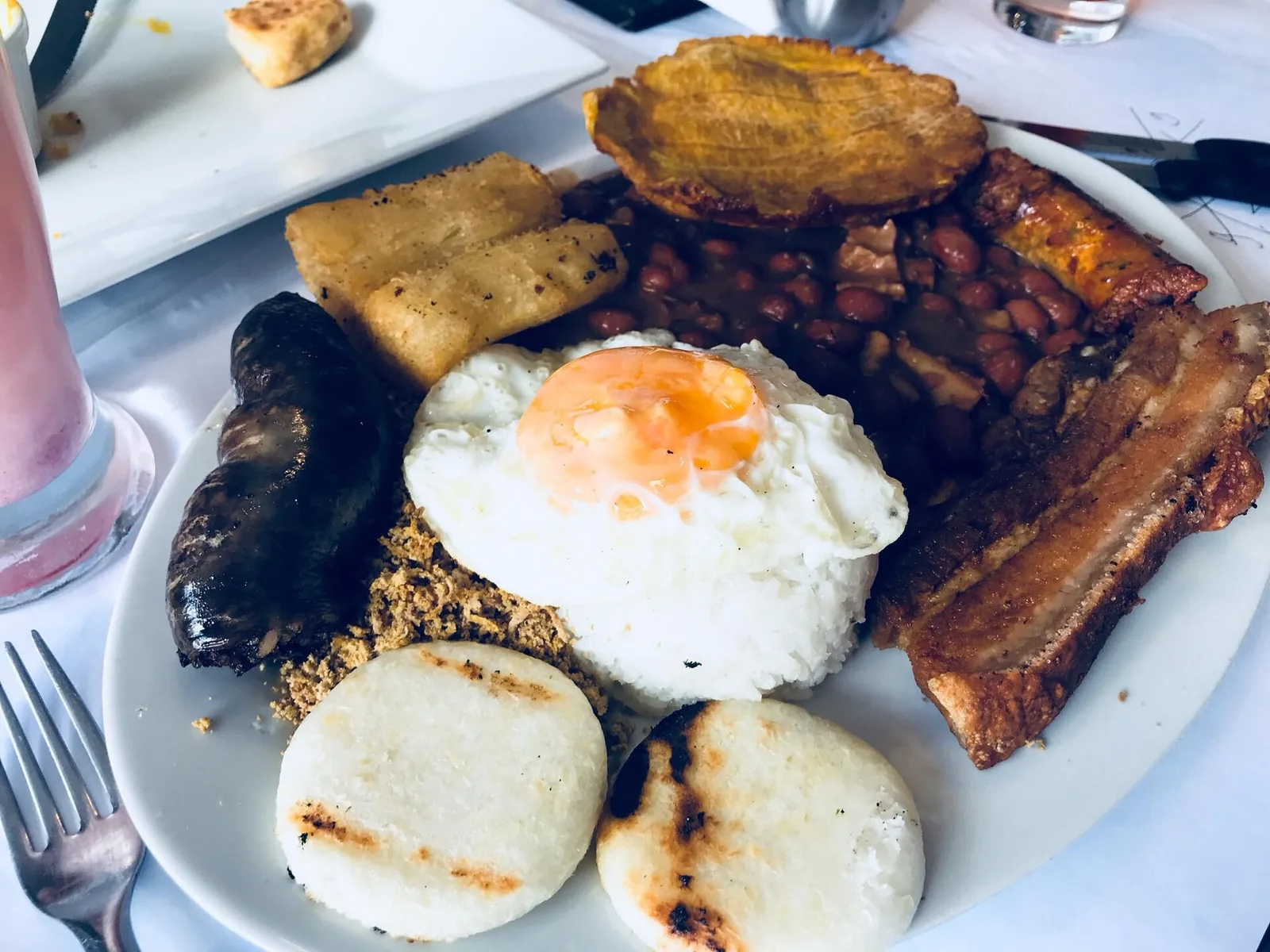
Bandeja paisa on a white plate with red beans, white rice, a fried egg, chicharrón, morcilla, chorizo, fried plantain and two small arepas Colombia flag Colombia 2h
Lunch •Antioquia Heritage

Bandeja Paisa

This bandeja paisa recipe builds the famous platter from Antioquia: red beans simmered with pork, white rice, crisp chicharrón, seasoned ground beef, chorizo and morcilla, a fried egg, sweet fried plantain, avocado, hogao sauce and a small grilled arepa. Every part is cooked separately, then piled onto one wide plate so each bite can mix a little of everything. One serving is about 894 g.

Hearty & Filling

A generous Antioquia platter of beans, rice, meats, egg, plantain and avocado, built to fuel a long working day.

Pairs Well With
A cold glass of panela lemonade or a light lager, with a small green salad on the side.
A stack of golden grilled Colombian arepas on a white plate, with a glass of orange juice beside them Colombia flag Colombia 35m
Breakfast •Andean Heritage

Colombian Arepas

This Colombian arepas recipe turns pre-cooked white cornmeal, warm water, butter and cheese into round corn cakes that are grilled until crisp outside and soft inside. The cheese is kneaded right into the dough, so every bite is savoury and gently melty. Colombian arepas are thinner and plainer than the stuffed Venezuelan kind: they are a breakfast bread, split open and filled at the table. One serving is about 220 g, two arepas.

Comfort & Warmth

Golden grilled corn cakes made from white masarepa, with melting cheese kneaded into the dough.

Pairs Well With
Hot chocolate or coffee, with butter and a slice of fresh cheese on the side.
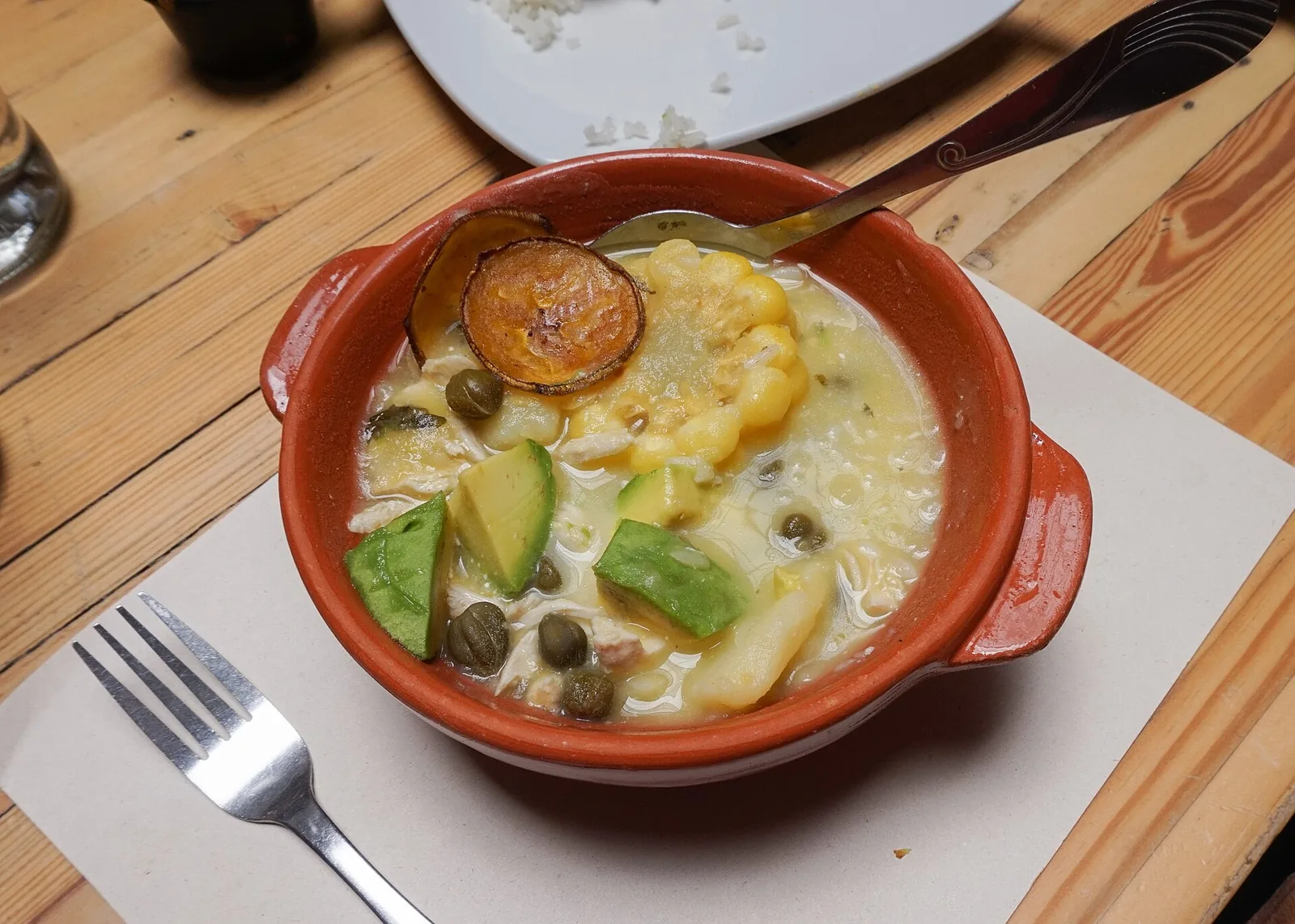
A bowl of ajiaco in a clay bowl, thick golden soup with corn, avocado, capers and shredded chicken Colombia flag Colombia 1h 30m
Lunch •Bogotá Heritage

Ajiaco

This ajiaco recipe is Bogotá's signature soup: chicken simmered with corn on the cob and three kinds of potato — pastusa, sabanera and criolla — until the criolla melts and thickens the broth golden. The herb guascas gives it its unmistakable earthy flavour, and every bowl is finished at the table with heavy cream, briny capers and sliced avocado. One serving is about 750 g, soup and toppings together.

Comfort & Warmth

Bogotá's thick chicken and potato soup, flavoured with guascas and served with cream, capers and avocado.

Pairs Well With
White rice and a small side salad, with the cream, capers and avocado passed around the table.
Soups & Broths
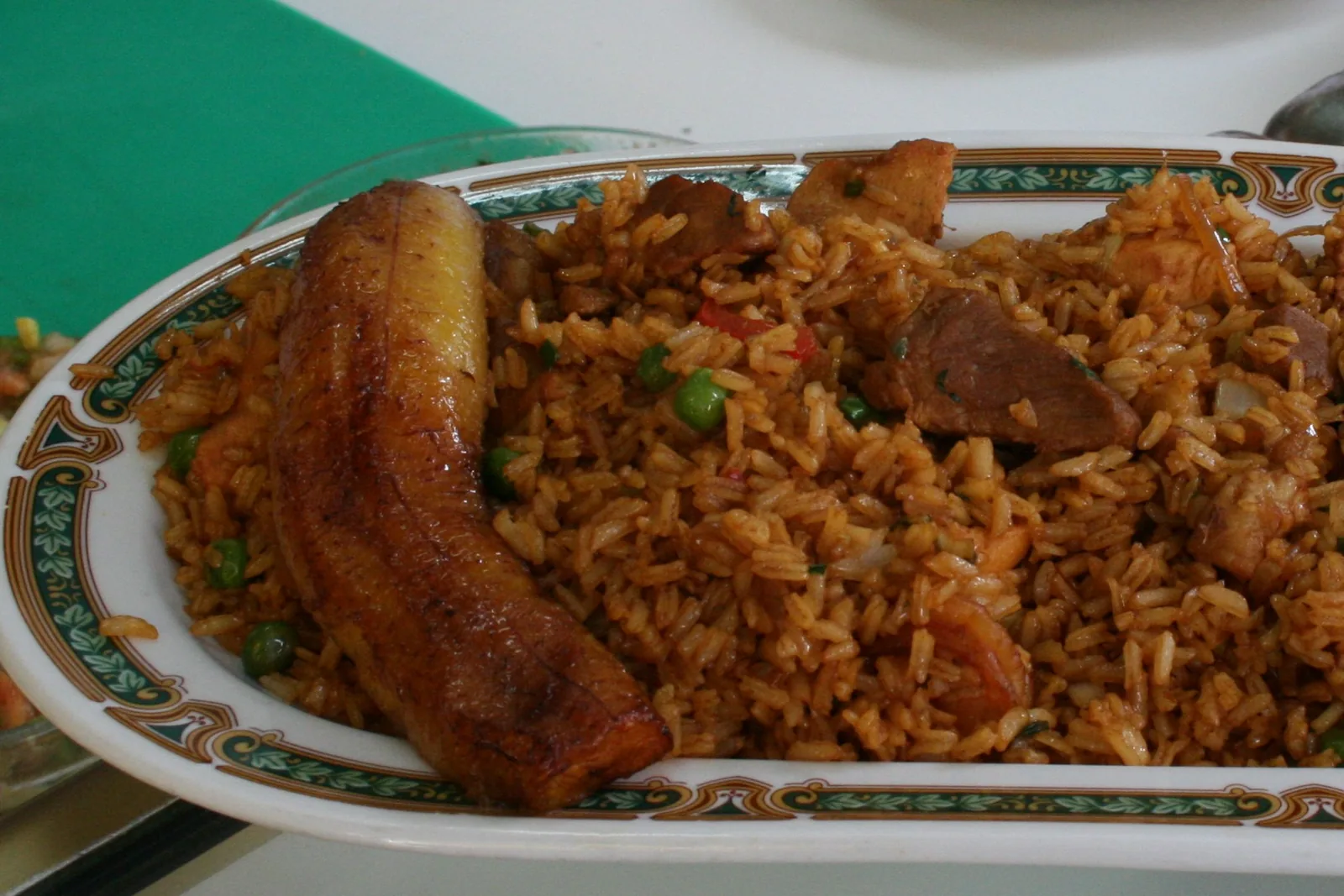
A platter of lechona with golden rice, roast pork pieces, green peas and a fried plantain Colombia flag Colombia 6h
Dinner •Tolima Heritage

Lechona

Lechona is Tolima's great festive roast: a deboned pig — here a pork shoulder with its skin — stuffed with rice and peas, sewn shut and roasted for hours until the meat is spoon-tender and the skin crackles. It is served chopped, a spoon of golden rice with every piece of pork, with arepas and fried plantain on the side. One serving is about 444 g.

Festive & Filling

Pork shoulder stuffed with rice and peas, roasted for hours until the meat is tender and the skin crackles.

Pairs Well With
White arepas, fried plantain and a cold beer
High Protein

The Dinner Gazette

Never wonder what’s for dinner again

One email a week with easy dinner ideas from around the world — ingredients, steps and nutrition, tested in our kitchen first.

Delivered every Thursday morning. Unsubscribe anytime.