
Curated recipes from 193 countries  •  New seasonal Mediterranean issue out now

Overview

Arepa Perico

Arepa con Perico, Arepa con Huevos Pericos, Venezuelan Egg Arepa

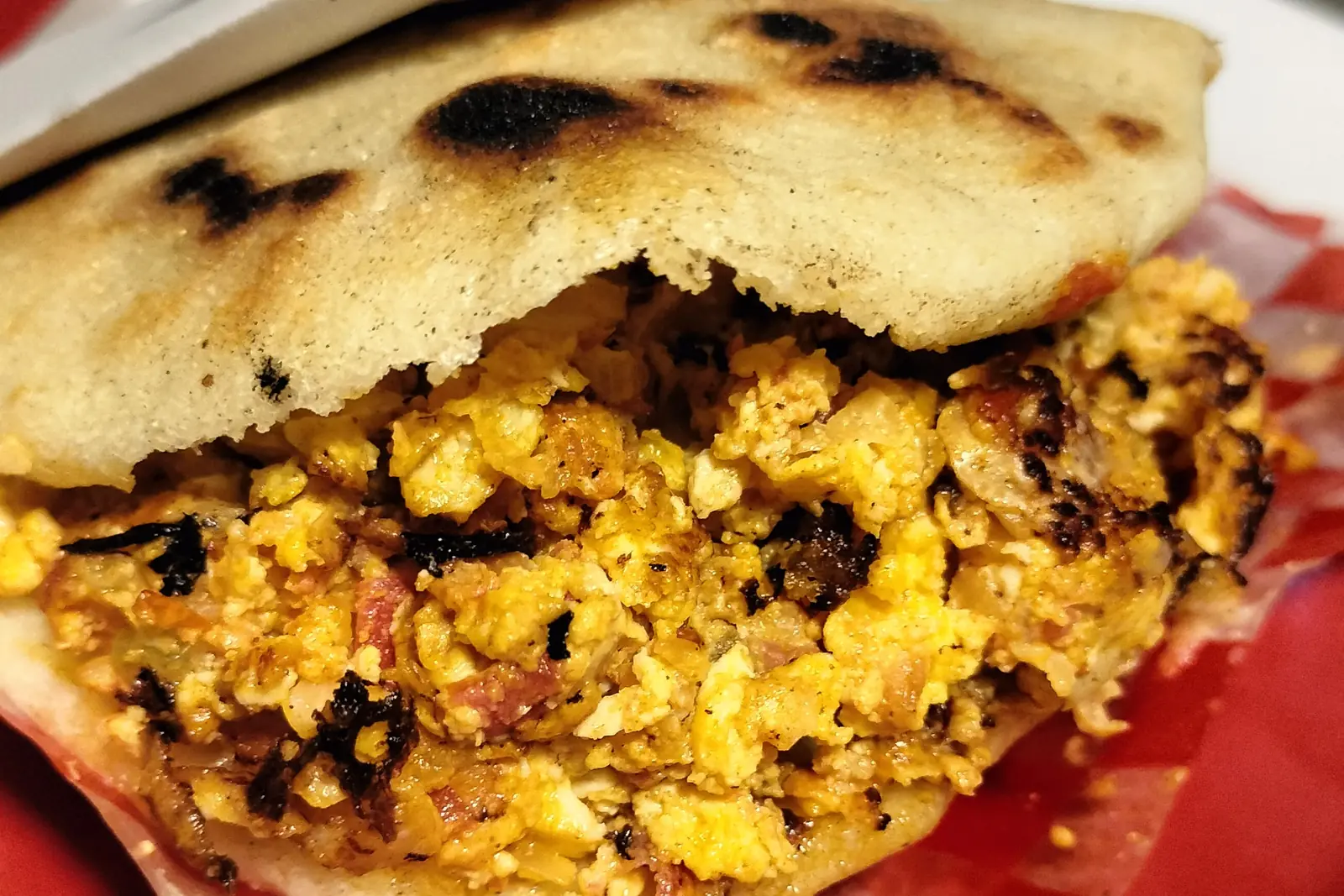
Arepa perico is Venezuela's classic breakfast arepa: a crisp grilled corn cake split open and stuffed with huevos pericos, soft scrambled eggs cooked with tomato, onion and sweet pepper. This arepa perico recipe makes 4 stuffed arepas, and one serving is about 360 g. The egg filling is the whole point — without it, this is just a plain arepa — and the tomato and onion keep the eggs juicy instead of dry.

Arepas are corn cakes that predate the Spanish arrival in Venezuela, and the perico filling — scrambled eggs with tomato, onion and sweet pepper — became one of the most loved ways to fill them, a breakfast served in homes and areperas across the country. The name perico, meaning parakeet, is often linked to the bright colours of the egg, tomato and onion mixed together in the pan. It is a named dish in its own right: a plain arepa has no filling at all, while an arepa perico is defined by its soft egg, tomato and onion filling.

Pairs well with: A cup of café con leche or a glass of fresh orange juice, with a slice of white cheese on the side if you like.

Provenance

Venezuela flag Venezuela

Venezuelan Heritage

Latin America & Caribbean

Time Dedication

55m

20m prep • 35m cook

Batch Yield

4 Servings

516 kcal per serving

1 serving ≈ 360 g

Technical Skill

Intermediate

Moderate (Shaped by Hand)

Meal Timing & Digestive Fit

Breakfast

Prime Morning Fit

Lunch

Inappropriate

Dinner

Inappropriate

Snack & Tea

Inappropriate

Occasions: Breakfast, Weekend breakfast, Family meal, Street food Cost: Low — about $1–2 per serving at home
A golden grilled Venezuelan arepa split open and stuffed with scrambled eggs, tomato and onion, served on red-checked paper

Venezuelan Heritage

Photo: Pequeño mar, CC BY-SA 4.0, via Wikimedia Commons

The Heritage Formulary

Measured Ingredients

Estimated cost: Low — about $1–2 per serving at home (USD)

A crisp masarepa arepa split and filled generously with soft, juicy perico, served warm and eaten by hand.

Execution Methodology & Culinary Technique

Step-by-Step Cooking Guide

Active 55m
P

Prep Stage: Dough & Perico Vegetables

20 Mins • Mixing & Chopping

Mix the masarepa, 3 g of salt and the melted butter, pour in the warm water, stir and knead for 2 minutes, then rest the dough for 5 minutes so the meal hydrates fully. Meanwhile dice the onion, tomatoes and sweet pepper, mince the garlic, beat the eggs with 2 g of salt and the black pepper, and chop the cilantro.

Maestro Tip: Rest the dough the full 5 minutes: masarepa that has not hydrated cracks at the edges when you shape it.

  1. 1

    Mix and Rest the Dough

    10 Mins Warm water, about 40°C (105°F)

    Mix the masarepa, 3 g of salt and the melted butter in a large bowl. Pour in the warm water and stir until the meal absorbs the liquid, then knead for 2 minutes until smooth. Rest the dough for 5 minutes.

    Add the water slowly: masarepa drinks it up fast, and it is easier to add more than to fix a wet dough.

    Done when: A soft, smooth ball that holds its shape without sticking to your hands.

  2. 2

    Shape and Griddle the Arepas

    20 Mins Griddle at 190°C (375°F)

    Divide the dough into 4 pieces and shape each into a disc about 12 cm wide and 1.5 cm thick. Brush the griddle with 10 g of the oil and griddle the arepas for 6 to 7 minutes per side until golden and crisp, then finish in the oven at 180°C (350°F) for 5 minutes if the centres still feel doughy.

    Press the edges a little thinner than the middle so the arepa cooks evenly and splits cleanly.

    Done when: Crisp golden crusts that sound hollow when tapped.

  3. 3

    Cook the Perico

    10 Mins Medium heat; eggs set at about 71°C (160°F)

    Heat the remaining 5 g of oil in a pan over medium heat and soften the onion, sweet pepper and garlic for 3 minutes. Add the tomato and cook for 2 minutes more, then pour in the beaten eggs and stir constantly for 2 to 3 minutes until just set and still glossy. Fold in the cilantro and take the pan off the heat.

    Pull the pan off the heat while the eggs still look a little wet; they finish cooking in their own heat and stay soft instead of turning rubbery.

    Done when: Soft, glossy curds of egg flecked with tomato and onion, fully set with no runny egg.

  4. 4

    Split, Stuff and Serve

    5 Mins Serve warm

    Split each warm arepa around the edge with a knife, open it like a pocket and fill generously with the hot perico. Serve at once while the arepa is still crisp.

    Fill the arepa just before serving so the crisp shell does not soften.

    Done when: A crisp arepa generously stuffed with hot, juicy perico.

Finishing Touches & Plating

Serve each stuffed arepa warm on its own plate with a cup of café con leche, and eat it by hand while the shell is still crisp and the eggs are still soft.

Nutritional Physiology & Benefits

Nutrition

Energy

516

kcal / serving

Protein

19g

Complete AA

Carbs

68g

Complex

Fats

18g

Healthy

Per serving (4 servings · 1 serving ≈ 360 g)
Energy516 kcal
Protein19 g
Carbohydrates68 g
Fat18 g
Fibre5.0 g
Sugar5.7 g
Sodium663 mg
Per 100g
Energy143 kcal
Protein5.4 g
Carbohydrates19 g
Fat5 g
Fibre1.4 g
Sugar1.6 g
Sodium184 mg

Nutrition values are estimated — calculated from USDA FoodData Central values for the listed ingredients.

Vitamins & minerals: Provides choline and vitamin B12 from the eggs, vitamin C from the tomato and sweet pepper, and vitamin A from the eggs and tomato.

Naturally Gluten-Free

Arepas are made from corn, not wheat, so the whole dish is naturally free of gluten.

Protein to Start the Day

Each stuffed arepa gives about 19 g of protein from the eggs, which makes one arepa a genuinely filling breakfast.

Vegetables in Every Bite

The tomato, onion and sweet pepper add vitamin C and fibre to the eggs, so the filling is more than just scrambled egg.

Food Pairings

What to Eat With

To optimize nutrient absorption and elevate the sensory depth, pair with these authentic accompaniments:

Drinks

Café con Leche

Hot milky coffee is the classic Venezuelan breakfast drink with arepas: its warmth and mild bitterness balance the soft, savoury eggs.

Fresh Orange Juice

A glass of fresh orange juice adds bright acidity and sweetness that cut through the richness of the eggs and butter.

Sides

White Cheese

A slice of salty white cheese beside the arepa adds a cool, salty contrast to the warm, soft perico.

Full Menus

Venezuelan Breakfast Spread

For a full Venezuelan breakfast, serve arepa perico beside black beans and a slice of fried plantain, so the plate has something creamy, something sweet and something savoury.

Complete menu

One stuffed arepa perico with a cup of café con leche and a slice of white cheese, followed by fresh mango.

Digestive Guardrails

What NOT to Combine

To prevent digestive distress, sluggishness, or palate clash, avoid pairing the dish with these elements:

Tortilla Masa Instead of Masarepa

Tortilla masa (maseca) is nixtamalised corn flour for tortillas and makes a gummy, wrong-textured arepa; only pre-cooked masarepa works. This is general food information, not medical advice.

Overcooking the Perico

Eggs that cook too long turn rubbery and dry, and the tomato gives up all its juice, leaving a watery filling; pull the pan off the heat while the eggs still look glossy. This is general food information, not medical advice.

General information only, not medical advice — consult a doctor for personal dietary decisions.

Who Should Eat It

Who Should Eat

  • General adultsOne stuffed arepa is a complete, filling breakfast for most adults, with protein and slow-release energy from the cornmeal.
  • ChildrenChildren usually love the soft egg filling; serve half an arepa for younger children and skip the black pepper.
  • ElderlySoft filling and a crisp but tender shell; cut the arepa in half to make it easier to hold and chew.
  • Pregnant womenThe eggs are cooked until fully set and the butter is pasteurised, but ask your clinician if you have any concerns about eggs.
  • Breastfeeding womenA filling, protein-rich breakfast that is quick to make; the eggs and cornmeal give steady energy for the morning.
  • AthletesAbout 19 g of protein per arepa makes it a strong pre-training breakfast, with slow-release energy from the cornmeal.
  • Weight gainAn energy-dense breakfast that is easy to eat: one stuffed arepa with a milky coffee adds a useful amount of calories.
  • Weight lossRich for one item, so half an arepa with fresh fruit is a better portion than a whole one with a sweet drink.

Health Conditions — Adjust or Avoid

Conditions

  • DiabetesCornmeal is starchy, so one arepa is a large portion of carbohydrate; half an arepa with fruit is a better choice. Ask your clinician about portions.
  • High blood pressureThe arepa, butter and salt add sodium, so keep the portion modest and skip extra salt. Ask your clinician about sodium limits.
  • Kidney diseaseEggs and cornmeal are high in protein and phosphorus, so it may not suit a low-protein diet. Ask your clinician.
  • GoutEggs are low in purines, so the perico itself is usually fine, but keep portions modest. Ask your clinician about your diet.
  • Stomach issuesThe griddled arepa and the raw onion can be hard on a sensitive stomach, so eat slowly and chew well. Ask your clinician if symptoms persist.
  • Cardiovascular diseaseEggs bring dietary cholesterol and the butter adds saturated fat, so enjoy it as part of a varied diet. Ask your clinician about saturated fat.
  • Fatty liverEnergy-dense for breakfast, so a half portion with fruit fits better than a whole arepa with a sweet drink. Ask your clinician about your diet.
  • Food allergiesContains egg and milk (butter); the arepa itself is gluten-free. Ask your clinician if you have allergies.
  • Special therapeutic dietsNaturally gluten-free, but not dairy-free or egg-free; a clinician or dietitian can advise on fitting it into a therapeutic diet.

If you have a medical condition, consult your doctor before changing your diet.

Storage & Use

Storage & Use

How to store
Cool completely and store the arepas and the perico in separate sealed containers; never store a stuffed arepa.
In the fridge
Cooked arepas keep 3 days in the fridge at 4°C (40°F) or below; the perico keeps 1 day.
In the freezer
Unfilled cooked arepas freeze up to 2 months, separated by baking paper; the perico does not freeze well.
How to reheat
Reheat the arepa on a dry griddle or in a hot oven until hot through, to 74°C (165°F); warm the perico gently in a pan and fill only after reheating.
Freezing recommended
Yes — unfilled arepas freeze best; the perico is always made fresh.
Signs it has spoiled
Sour smell, slimy surface, mould, or eggs that smell off.

More recipes to explore

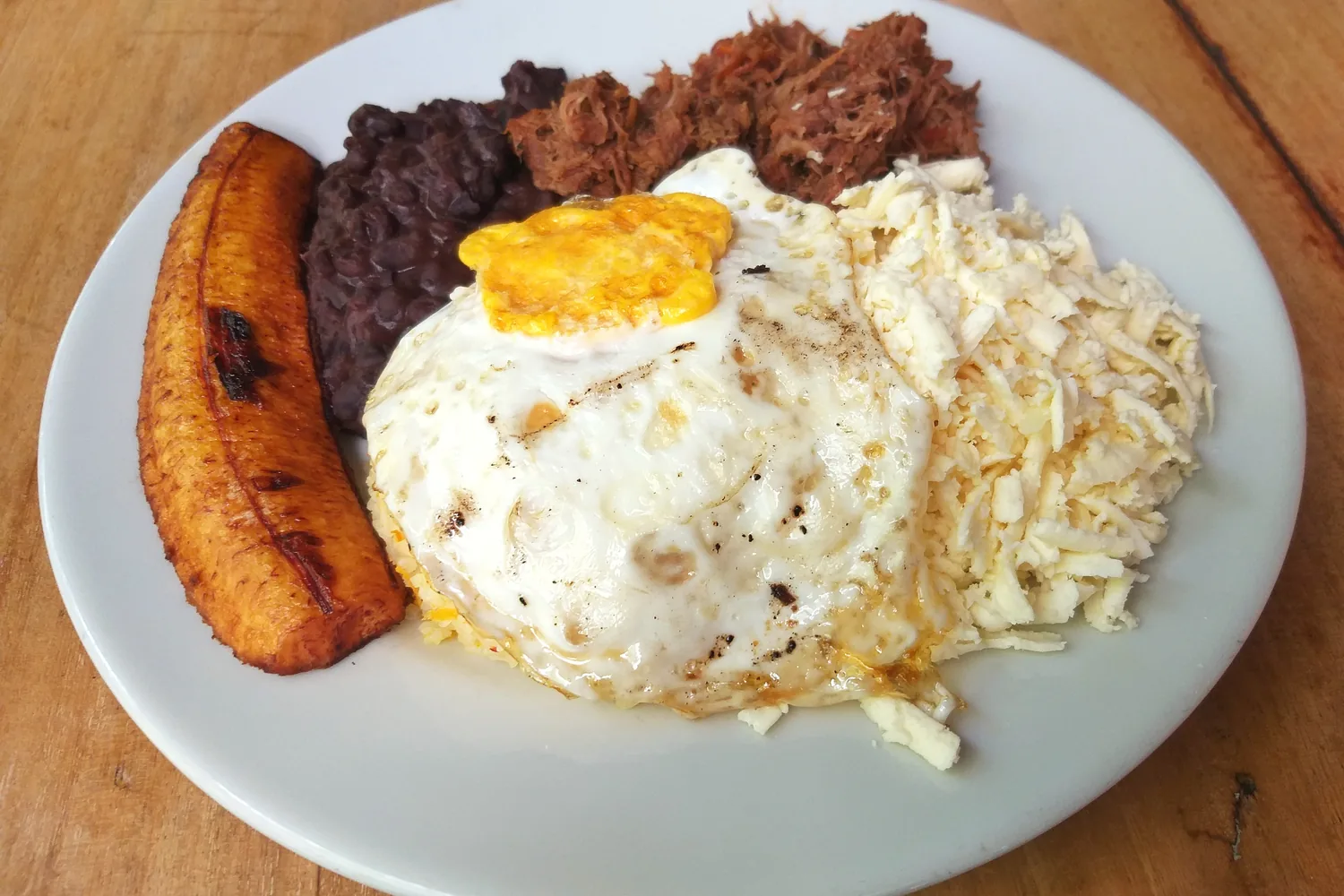
Pabellón Criollo plate with shredded beef, black beans, fried plantain, a fried egg and grated white cheese over white rice Venezuela flag Venezuela 3h
Lunch •Venezuelan National Dish

Pabellón Criollo

This pabellon criollo recipe is Venezuela's national plate: slow-braised shredded beef in a pepper and tomato sofrito, creamy black beans, fluffy white rice, sweet fried plantains and a fried egg, finished with grated white cheese. One serving is about 680 g.

Hearty & Satisfying

A complete plate of beef, beans, rice, plantain and egg that keeps you full for hours.

Pairs Well With
Serve with a cold papelón con limón or a light beer, and a simple avocado salad on the side.
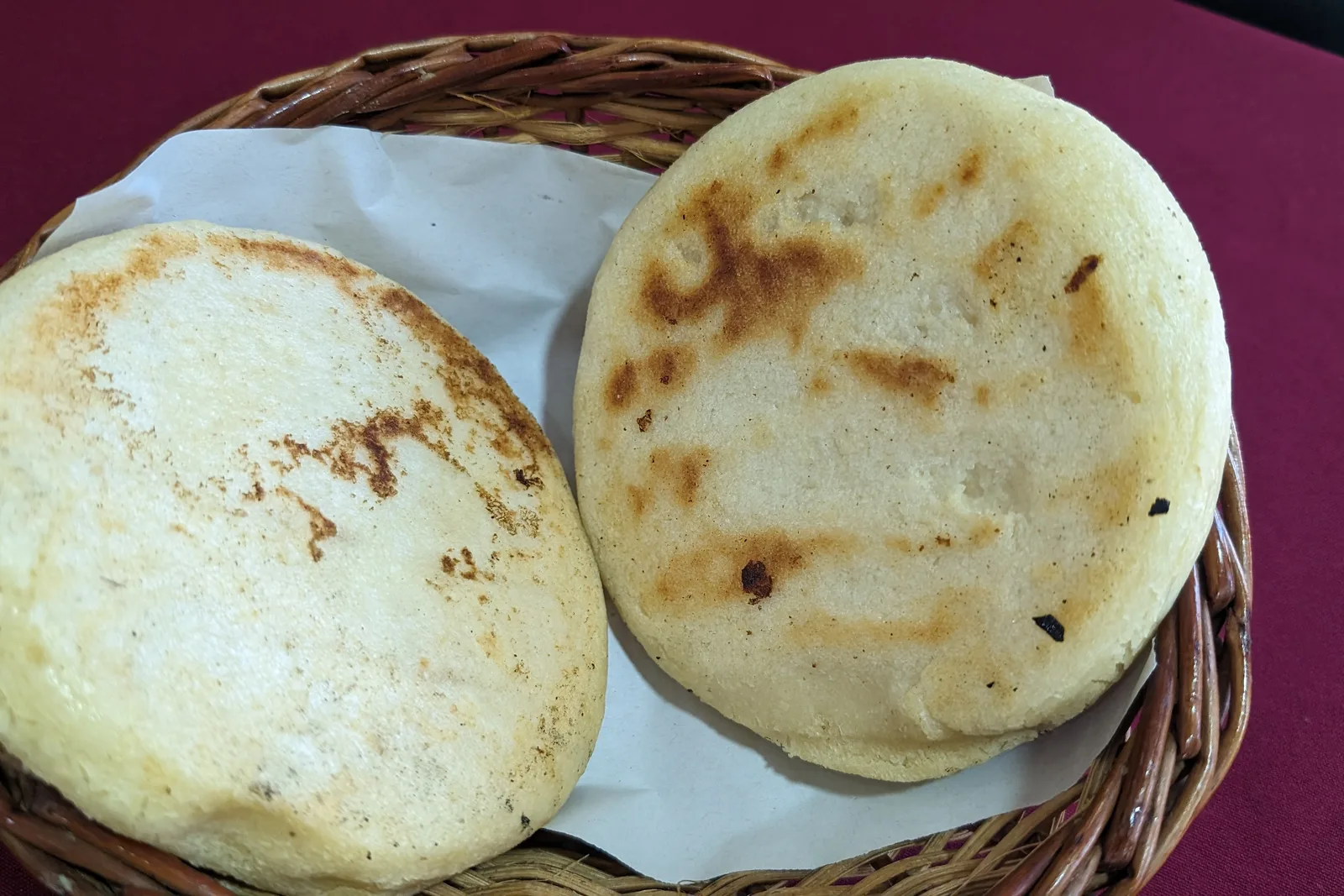
Two golden grilled Venezuelan arepas in a wicker basket lined with white paper Venezuela flag Venezuela 40m
Breakfast •Caracas Heritage

Venezuelan Arepas

This Venezuelan arepas recipe starts with just pre-cooked white cornmeal, warm water and salt, kneaded into a soft dough and shaped into thick cakes. They grill until crisp and golden outside and soft inside, finish in a hot oven so they puff, then get split open and stuffed with melted mozzarella, crumbled queso fresco, creamy avocado and tomato. Venezuelan arepas are the thick, stuffed kind: a whole breakfast you can hold in one hand. One serving is about 275 g, one stuffed arepa.

Comfort & Warmth

Thick grilled corn cakes made from white masarepa, split open like a pocket and stuffed with melting cheese, avocado and tomato.

Pairs Well With
Fresh orange juice or coffee, with a bowl of black beans or scrambled eggs on the side.
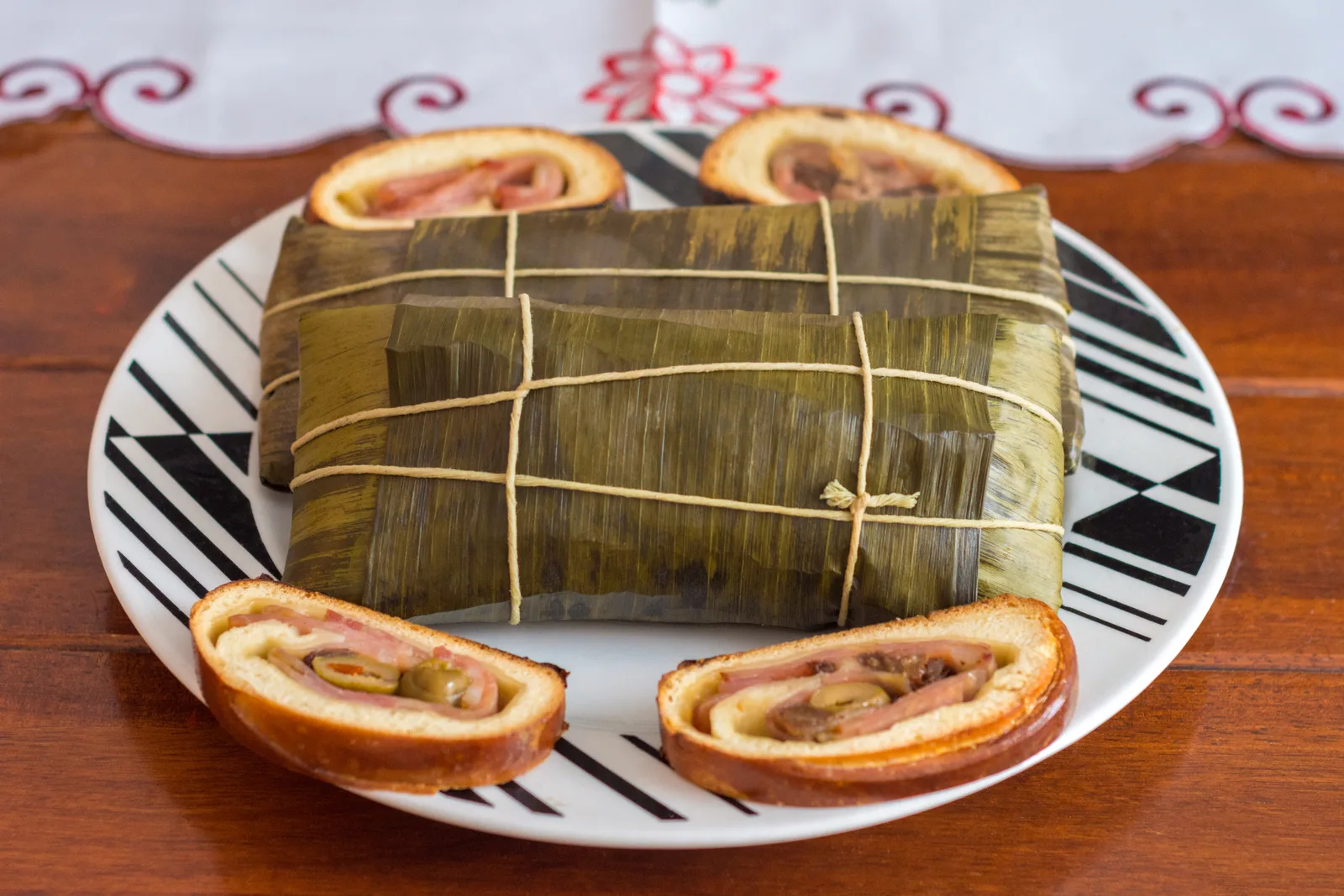
Two hallacas wrapped in banana leaves and tied with string, served on a plate with slices of pan de jamón Venezuela flag Venezuela 5h
Dinner •Venezuela's Christmas Dish

Hallacas

This hallacas recipe makes 12 golden parcels of annatto-coloured corn dough filled with a rich three-meat guiso, garnished with pepper, onion, olives, capers and raisins, then folded in banana leaves and boiled. One hallaca is about 300 g, a full festive dinner on its own. Hallacas are Venezuela's Christmas dish, made in big family batches and served with pan de jamón.

Festive & Filling

Golden annatto corn dough wrapped around a slow-cooked stew of beef, pork and chicken, folded in banana leaves — the parcel Venezuelan families gather to make every December.

Pairs Well With
Pan de jamón and ensalada de gallina, with a glass of ponche crema
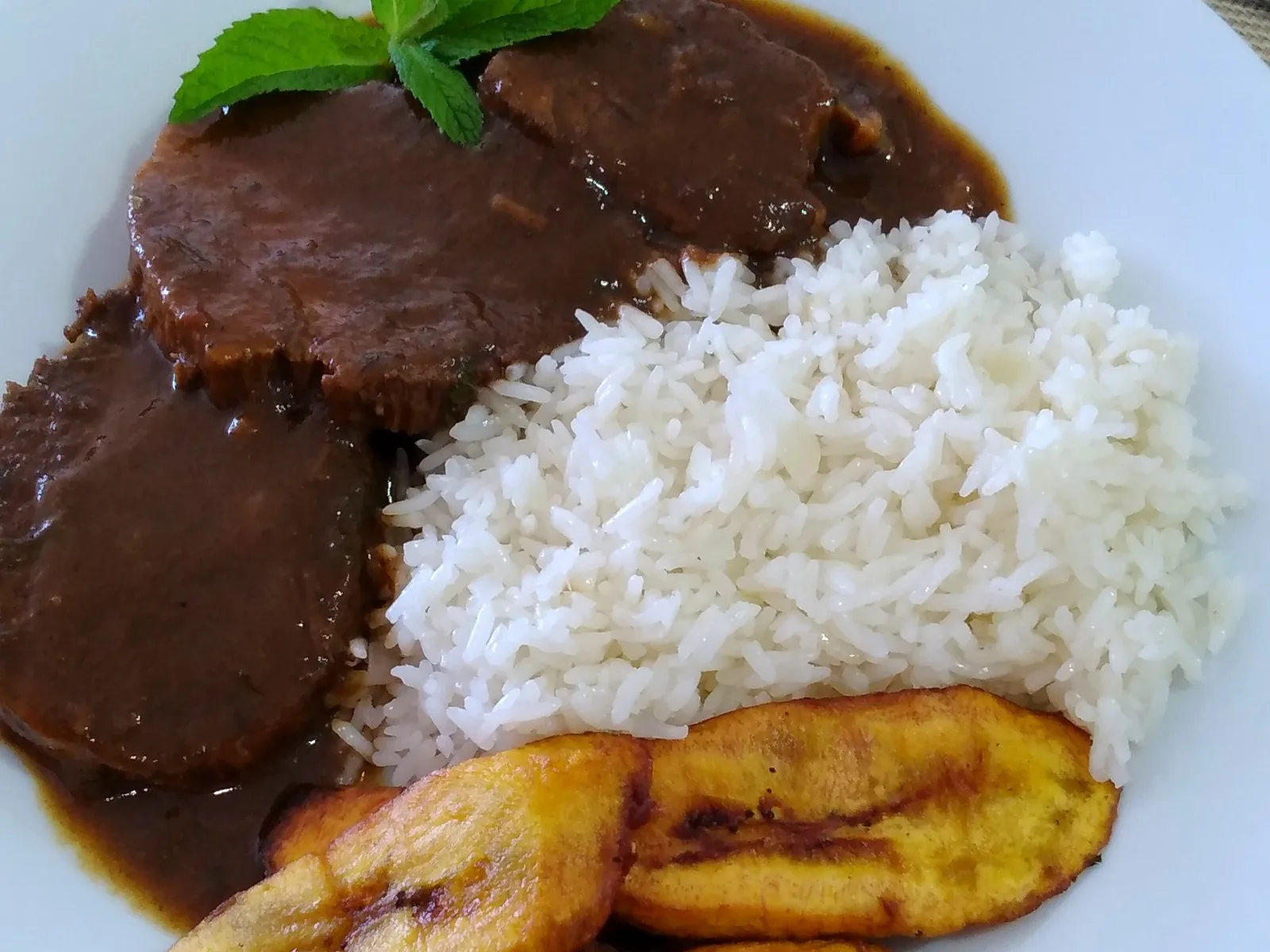
Slices of asado negro in a dark glossy sauce with white rice and golden fried plantains, garnished with mint Venezuela flag Venezuela 3h 30m
Dinner •Caracas Heritage

Asado Negro

Asado negro is Venezuela's dark, glossy beef roast: eye of round seared in caramelized panela, then braised low and slow in red wine, beef stock and soft vegetables until it slices like butter. The sauce is sweet, savoury and almost black, and it belongs over white rice with fried plantains. One serving is about 591 g.

Comfort & Warmth

Beef eye of round seared in caramelized panela, then braised in red wine and stock until tender.

Pairs Well With
White rice, fried plantains and a glass of red wine
High Protein

The Dinner Gazette

Never wonder what’s for dinner again

One email a week with easy dinner ideas from around the world — ingredients, steps and nutrition, tested in our kitchen first.

Delivered every Thursday morning. Unsubscribe anytime.