Curated recipes from 193 countries  •  New seasonal Mediterranean issue out now

Overview

Khorovats

Khorovatz, Armenian Barbecue

This Armenian khorovats recipe is Armenia's national barbecue: chunks of pork, lamb and beef marinated in onion, lemon and herbs, then grilled on long flat skewers called shampoor over a charcoal mangal until smoky outside and juicy inside. The meat is pulled off the skewers onto warm lavash with grilled peppers and tomatoes, and eaten with the hands. One serving is about 342 g.

Khorovats is Armenia's national barbecue, and its name simply means 'grilled'. The meat is cooked on long flat skewers called shampoor over a mangal, a long charcoal grill with no grate, so the skewers rest directly above the embers. The dish is a celebration food: families grill it at weekends and holidays, and since 2009 an annual khorovats festival has been held in Akhtala in northern Armenia. In Yerevan, Proshian Street is known to visitors as 'Barbecue Street' for its row of khorovats restaurants.

Pairs well with: Warm lavash, grilled vegetables & fresh herbs

Provenance

Armenia flag Armenia

Armenian Barbecue Heritage

Nordic & European

Time Dedication

4h 55m

270m prep • 25m cook

Batch Yield

6 Servings

804 kcal per serving

1 serving ≈ 342 g

Technical Skill

Intermediate

Intermediate (Charcoal Grill)

Meal Timing & Digestive Fit

Breakfast

Not Advised

Lunch

Hearty Midday Main

Dinner

Ideal Hearty Main

Snack & Tea

Inappropriate

High Protein Occasions: Weekend barbecue, family gatherings, outdoor celebrations Cost: Moderate — about $6–7 per serving at home
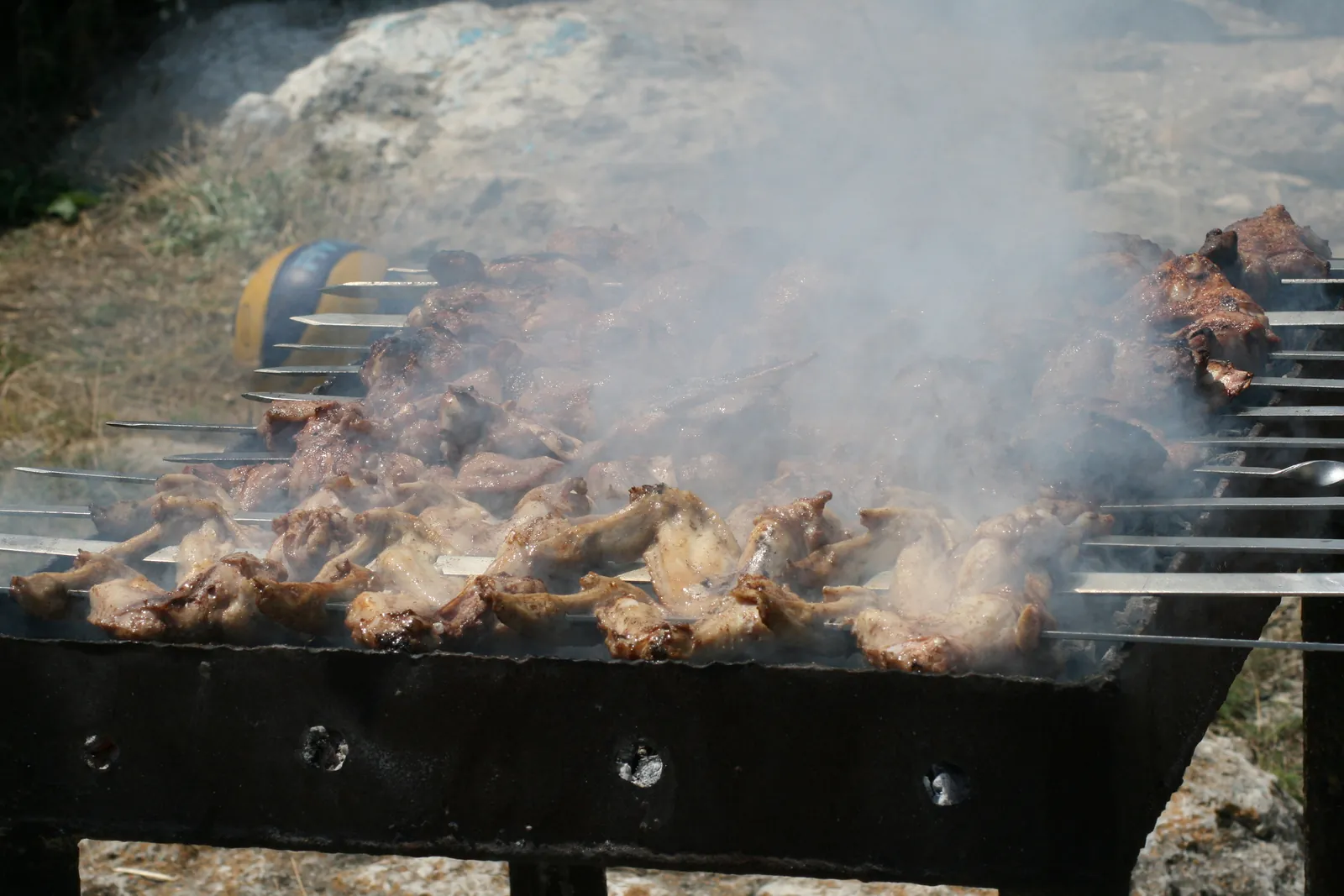
Skewers of marinated meat grilling over charcoal on a mangal, with smoke rising

Armenian Barbecue Heritage

Photo: 2colored, CC BY-SA 2.0, via Wikimedia Commons

The Heritage Formulary

Measured Ingredients

Estimated cost: Moderate — about $6–7 per serving at home (USD)

Good khorovats is smoky outside and juicy inside, the skewers turned often, and the meat rested on lavash so the bread soaks up the juices.

Execution Methodology & Culinary Technique

Step-by-Step Cooking Guide

Active 4h 55m
P

Prep Stage: Cut & Marinate the Meat

30 Mins Hands-On + 4 Hours Marinating

Cut the pork, lamb and beef into even 4 cm chunks and toss them in a large bowl with the grated onion, lemon juice, olive oil, black pepper, paprika and half the salt. Cover and leave in the fridge for 4 hours, or overnight — the onion and lemon tenderise the meat and build the flavour. Slice the remaining onion into rings and pick the herb leaves.

Maestro Tip: Keep the chunks the same size and keep the three meats in separate piles in the bowl, so each skewer holds one kind of meat and cooks evenly.

  1. 1

    Marinate the Meat

    4 Hours (Mostly Hands-Off) Fridge, 4°C (39°F)

    Mix the meat chunks with the grated onion, lemon juice, olive oil, pepper, paprika and half the salt. Cover the bowl and refrigerate for 4 hours, turning the meat once halfway through so every piece sits in the marinade.

    Four hours is the sweet spot — less and the flavour stays on the surface; overnight is fine too, but do not marinate more than 24 hours or the lemon starts to toughen the meat.

    Done when: Meat is evenly coated and smells of onion and lemon; the marinade has loosened, not pooled.

  2. 2

    Build the Charcoal Fire

    25 Mins Coals at ~230°C (450°F), no flames

    Light natural charcoal in the mangal or grill and let it burn down until the coals are covered in white ash and there are no flames — about 20–25 minutes. Spread the coals in an even layer; the skewers should sit about 12–15 cm (5–6 in) above them.

    Never grill over flames: the outside burns while the inside stays raw. Wait for white ash, then cook.

    Done when: Coals glow red under a coat of white ash, with steady heat and no leaping flames.

  3. 3

    Skewer the Meat

    10 Mins Room temperature

    Thread each meat onto its own flat metal skewers (shampoor), pushing the chunks close together so they touch — this keeps them juicy. Leave a little space at each end to hold the skewer. Skewer the whole peppers and tomatoes on separate skewers.

    Flat skewers stop the meat spinning when you turn them; round skewers let chunks roll and cook unevenly. One meat per skewer, because pork, lamb and beef finish at different times.

    Done when: Skewers are full, chunks touching, with no gaps where heat can dry the meat out.

  4. 4

    Grill the Vegetables

    10 Mins Hot coals, ~200°C (400°F)

    Lay the pepper and tomato skewers over the coals first and grill for about 10 minutes, turning once, until the skins blister and blacken in spots and the flesh softens. Slide them off, peel away the loosest charred skin, and chop the flesh roughly with a pinch of salt.

    Grill the vegetables first while the fire is at its hottest, then set them aside — they hold their heat well under a cover.

    Done when: Skins blistered and blackened in patches; peppers soft, tomatoes slumped and juicy.

  5. 5

    Grill the Meat

    15 Mins Hot coals, ~200–230°C (400–450°F)

    Lay the meat skewers close together over the coals and grill for 12–15 minutes, turning every 2–3 minutes so all sides brown evenly. The meat is done when the outside is deeply browned and charred at the edges and the centre reaches at least 63°C (145°F) for pork, lamb and beef — check the thickest chunk with a thermometer. Rest the skewers for 3 minutes before serving.

    Turn often — the Armenian rule is that the more you turn the skewers, the tastier the khorovats. Do not press the meat down; that squeezes the juices out.

    Done when: Deep brown crust, juices running clear, centre at least 63°C (145°F); rested 3 minutes so the juices settle.

  6. 6

    Serve on Lavash

    5 Mins Off the heat

    Spread the lavash on a large platter and slide the meat off the skewers straight onto it, so the bread soaks up the juices. Scatter over the grilled peppers and tomatoes, the raw onion rings, the fresh herbs and the remaining salt. Serve at once, and let everyone tear off lavash and wrap the meat in it with their hands.

    Warm the lavash for a minute over the cooling coals first — warm bread soaks up the meat juices far better than cold bread.

    Done when: Lavash is warm and stained with meat juices; the platter is piled high and steaming.

Finishing Touches & Plating

Eat the khorovats hot off the lavash, wrapped in the bread with grilled vegetables, raw onion and herbs. The lavash underneath is part of the dish — tear it up and eat it with the juices.
Nutritional Physiology & Benefits

Nutrition

Energy

804

kcal / serving

Protein

62g

Complete AA

Carbs

37g

Complex

Fats

45g

Healthy

Per serving (6 servings · 1 serving ≈ 342 g)
Energy804 kcal
Protein62 g
Carbohydrates37 g
Fat45 g
Fibre3.8 g
Sugar5.1 g
Sodium974 mg
Per 100g
Energy235 kcal
Protein18.1 g
Carbohydrates10.8 g
Fat13 g
Fibre1.1 g
Sugar1.5 g
Sodium285 mg

Nutrition values are estimated — calculated from USDA FoodData Central values for the listed ingredients.

Vitamins & minerals: Vitamin B12 and zinc (red meat), vitamin C (bell peppers and tomato), iron (beef and lamb), vitamin B6 (pork). Nutrition values are estimated.

High Protein, Three Ways

Pork, lamb and beef together give about 62 g of protein per serving, which supports muscle maintenance and keeps a barbecue meal filling for hours.

Grilled, Not Fried

The meat cooks over charcoal with no added frying fat, so the only fat in the dish is the fat already in the meat plus a little olive oil in the marinade.

Iron, Zinc and B12

Red meat is a natural source of iron, zinc and vitamin B12, and the peppers and tomato add vitamin C, which helps the body absorb the iron from the meal.

Food Pairings

What to Eat With

To optimize nutrient absorption and elevate the sensory depth, pair with these authentic accompaniments:

Sides

Warm Lavash

Lavash is not a side here, it is the plate: spread under the meat, it soaks up the juices and turns into the most flavourful part of the meal.

Vegetables

Grilled Peppers and Tomatoes

Peppers and tomatoes grilled on their own skewers turn sweet and smoky, and their acidity cuts through the richness of the fatty grilled meat.

Raw Onion Rings and Fresh Herbs

Sharp raw onion and handfuls of parsley, basil and cilantro are the classic Armenian finish — they add crunch and freshness against the char and smoke.

Drinks

Tan (Yoghurt Drink) or Cold Water

A cold, lightly salted yoghurt drink cools the palate between bites of smoky meat, and water keeps a long outdoor barbecue comfortable.

Complete menu

Serve the khorovats as the centrepiece from a large platter of lavash, with the grilled peppers and tomatoes, raw onion rings and fresh herbs alongside, and a cold yoghurt drink to finish.

Digestive Guardrails

What NOT to Combine

To prevent digestive distress, sluggishness, or palate clash, avoid pairing the dish with these elements:

Grilling Over Flames

Flames char the outside before the centre cooks, and dripping fat flaring up can leave bitter, burnt flavours on the meat. Wait for white-ash coals. This is general information, not medical advice.

Undercooked Pork

Pork must reach at least 63°C (145°F) in the thickest chunk, then rest 3 minutes. Pink, cool pork in the centre is not safe to eat. This is general information, not medical advice.

General information only, not medical advice — consult a doctor for personal dietary decisions.

Who Should Eat It

Who Should Eat

  • General adultsA generous, high-protein barbecue dinner — one mixed plate covers the main course.
  • ChildrenSuitable from age 5+; cut the meat small and skip the raw onion for young children.
  • ElderlyGood in a modest portion; the meat is easy to chew when rested, and the lavash is soft.
  • Pregnant womenGenerally suitable when the meat is cooked right through to 63°C (145°F) and served hot.
  • Breastfeeding womenGenerally suitable; the protein and iron are useful, and the grilled vegetables add variety.
  • AthletesAn excellent post-training meal — about 62 g of protein per serving with slow carbs from the lavash.
  • Weight gainA good choice — a full plate with extra lavash and all three meats.
  • Weight lossKeep the portion to one meat skewer, load up on grilled vegetables, and use one piece of lavash.

Health Conditions — Adjust or Avoid

Conditions

  • DiabetesLavash is the main carbohydrate here, so keep the bread to one sheet and fill the plate with grilled vegetables; ask your clinician about portions.
  • High blood pressureThe dish is salty from the marinade and the lavash; keep the added salt low and skip extra salty sides. Ask your clinician about your daily sodium limit.
  • Kidney diseaseRed meat and lavash are both high in potassium and phosphorus; keep the portion modest if your clinician has advised limits, and ask about portion size.
  • GoutRed meat and organ-free muscle meat are moderate in purines; eat in moderate portions and drink water with the meal. Ask your clinician if gout flares are frequent.
  • Stomach issuesUsually gentle, but the charred edges and raw onion can bother a sensitive stomach; eat the middle of the meat and skip the raw onion if needed.
  • Cardiovascular diseaseGrilled red meat is high in saturated fat; keep the portion modest, choose more lamb and beef than pork, and balance the plate with vegetables. Ask your clinician about how often this fits your diet.
  • Fatty liverKeep the portion modest and fill half the plate with grilled peppers, tomatoes and herbs. Ask your clinician about red-meat portions.
  • Food allergiesContains wheat (lavash) — do not serve to anyone with a wheat or gluten allergy without a gluten-free flatbread. No nuts, egg or dairy in the dish itself.
  • Special therapeutic dietsIf you follow a prescribed low-sodium or low-saturated-fat diet, use less salt, choose leaner cuts, and check with your clinician.

If you have a medical condition, consult your doctor before changing your diet.

Storage & Use

Storage & Use

How to store
Cool the leftover meat quickly and store in an airtight container, separate from the lavash.
In the fridge
Cooked khorovats 3–4 days; grilled vegetables 2 days; lavash 2 days in a sealed bag.
In the freezer
Cooked meat up to 2 months; lavash up to 1 month.
How to reheat
Reheat the meat in a hot oven or on the grill until steaming hot throughout, to 74°C (165°F); warm the lavash separately for 1 minute.
Freezing recommended
Yes for the meat, up to 2 months; the vegetables are best eaten fresh.
Signs it has spoiled
Sour or off smell, slimy surface, or grey discolouration.

More recipes to explore

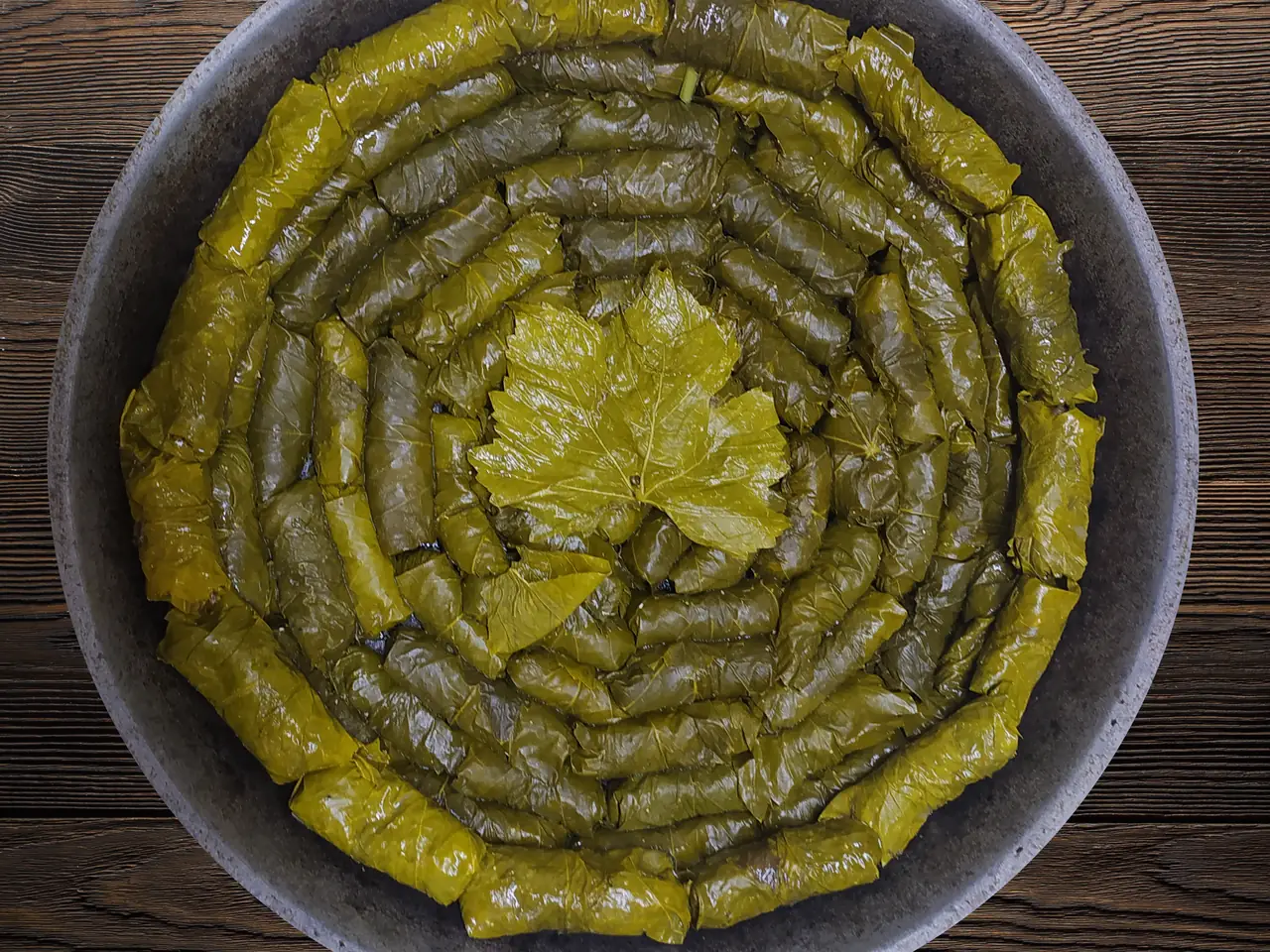
A pan of Armenian dolma, glossy grape-leaf rolls arranged in circles with a grape leaf on top Armenia flag Armenia 1h 45m
Dinner •Armenian Home-Cooking Heritage

Dolma

This Armenian dolma recipe is the classic grape-leaf dolma: brined grape leaves wrapped around a filling of ground beef, short-grain rice, onion and a generous handful of basil, mint, tarragon and parsley. The little rolls are packed tightly in a pot, weighted down, and steamed in their own juices until the leaves are tender and the rice inside is cooked through. They are served warm, with plain yoghurt — matsun — for spooning over the top. One serving is about 275 g.

Grape Leaves Stuffed with Beef & Rice

Brined grape leaves rolled around seasoned ground beef, rice and fresh herbs, steamed until tender and served warm with yoghurt.

Pairs Well With
Plain yoghurt (matsun), fresh herbs & lavash
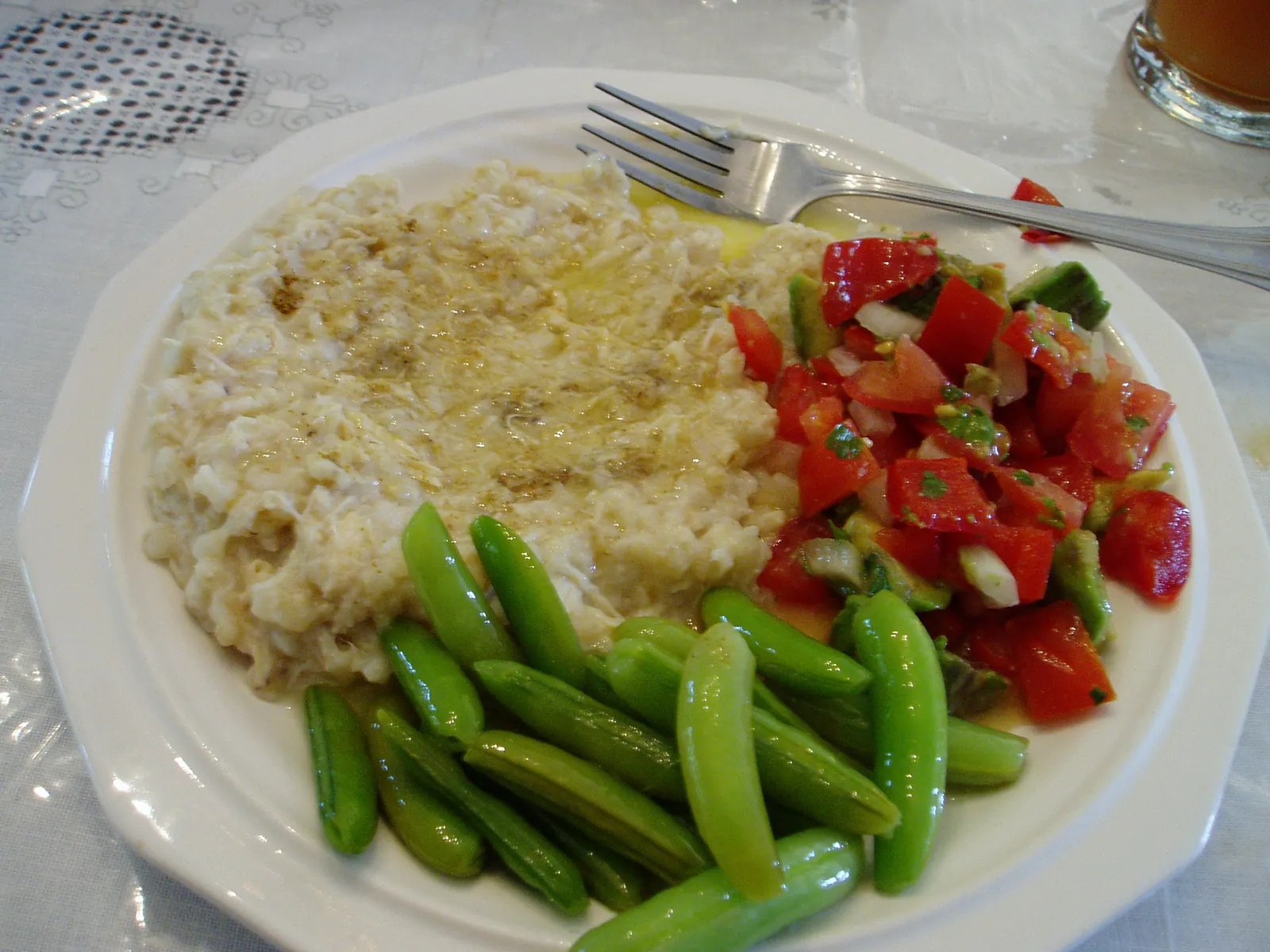
A plate of Armenian harissa, a creamy wheat and chicken porridge topped with melted butter, served with tomato salad and green beans Armenia flag Armenia 4h 20m
Dinner •Armenian Festive Heritage

Harissa

This Armenian harissa recipe is not the North African chilli paste of the same name — it is a thick, creamy porridge from the Armenian highlands. Hulled wheat berries (korkot) and a whole chicken are cooked together in one pot for hours, until the chicken falls off the bone and the wheat breaks down. The meat is shredded back into the pot and the whole thing is beaten until smooth, so the chicken is part of the porridge itself, not served on top of it. It is finished with a spoonful of browned butter melting into each bowl. One serving is about 350 g.

Slow-Cooked Wheat & Chicken Porridge

Hulled wheat berries and a whole chicken cooked together for hours, then beaten into a thick, creamy porridge and finished with browned butter.

Pairs Well With
Browned butter, pickled vegetables & fresh herbs
High Protein
Bœuf bourguignon — French beef braised in red wine France flag France 4h
Dinner •Burgundy Terroir

Bœuf Bourguignon

Beef braised gently in red wine until the connective tissue melts into a velvet, gelatin-rich sauce — the classic Burgundy Sunday dinner.

Cellular Repair

Beef braised in red wine until spoon-tender, with mushrooms and pearl onions.

Pairs Well With
Parsnip Purée & Steamed French Haricots Verts
High Protein
Vietnamese braised pork belly with golden eggs in caramel sauce Vietnam flag Vietnam 1h 45m
Dinner •One Pot

Vietnamese Braised Pork and Eggs

Pork belly slowly braised in coconut water and caramel until meltingly tender, with golden eggs that soak up the sweet-savoury sauce — the Vietnamese family dish that tastes better the next day.

Comfort & Sustained Energy

Slow-braised pork belly and eggs in coconut water and caramel.

Pairs Well With
Steamed rice & pickled mustard greens
High Protein

The Dinner Gazette

Never wonder what’s for dinner again

One email a week with easy dinner ideas from around the world — ingredients, steps and nutrition, tested in our kitchen first.

Delivered every Thursday morning. Unsubscribe anytime.