Curated recipes from 193 countries  •  New seasonal Mediterranean issue out now

Overview

Bakpia

Bakpia Pathok, Bakpia Kacang Hijau, Hopia

This bakpia recipe bakes Yogyakarta's famous mung bean pastry at home: two simple doughs folded into flaky layers around a soft, sweet filling of steamed mung beans, sugar and coconut milk. One serving is about 100 g (2 pieces) and carries 323 calories. Eat them warm from the oven, when the crust shatters and the filling is still soft.

Bakpia began as tou luk pia, a flaky pork-filled pastry from Fujian in south-east China, carried to Java by Chinese migrants who settled around Pathok in Yogyakarta in the early twentieth century. In a largely Muslim city the pork filling found few buyers, so bakers swapped it for sweetened mung bean paste — cheap, familiar from Javanese sweets, and easy to keep — and the new filling stuck. By the 1940s the pastry was a Yogyakarta institution, and today boxes of bakpia pathok are the souvenir every visitor carries home.

Pairs well with: Hot jasmine tea or black coffee, with no other sweet needed.

Provenance

Indonesia flag Indonesia

Yogyakarta Pathok Classic

East & South Asia

Time Dedication

1h 10m

45m prep • 25m cook

Batch Yield

10 Servings

323 kcal per serving

1 serving ≈ 100 g

Technical Skill

Intermediate

Intermediate (Flaky Pastry)

Meal Timing & Digestive Fit

Breakfast

Not Advised

Lunch

Inappropriate

Dinner

Inappropriate

Snack & Tea

Ideal Light Bite

Occasions: Afternoon tea, travel souvenirs, festive gift boxes, weekend baking Cost: Low — about $1–2 per serving at home
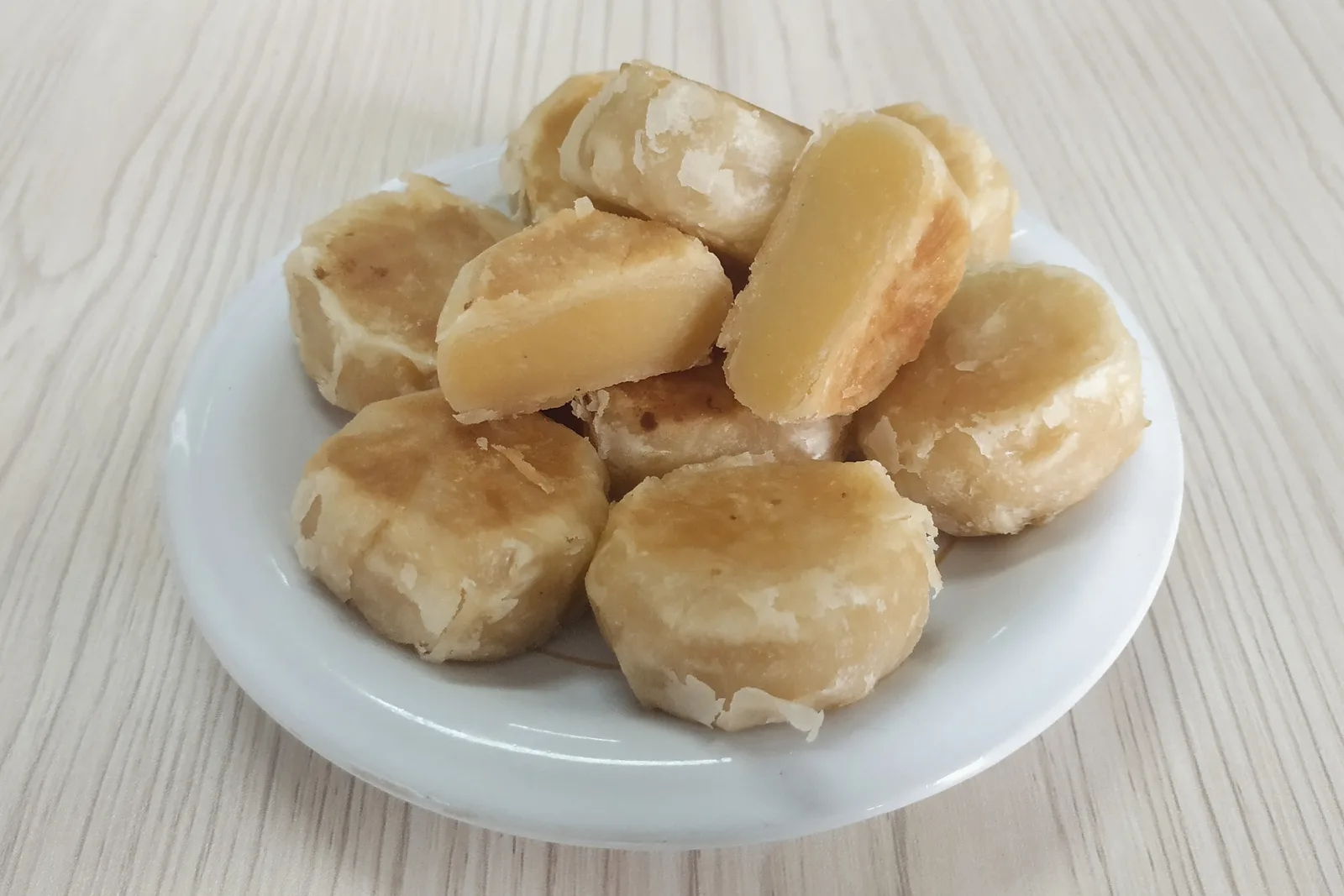
Golden bakpia pastries piled on a white plate, one cut open to show the pale yellow mung bean filling

Yogyakarta Pathok Classic

Photo: AlphaAdhito, CC0, via Wikimedia Commons

The Heritage Formulary

Measured Ingredients

Estimated cost: Low — about $1–2 per serving at home (USD)

This version keeps the traditional two-dough flaky crust and the classic mung bean, sugar and coconut milk filling, baked until both faces are lightly golden.

Execution Methodology & Culinary Technique

Step-by-Step Cooking Guide

Active 1h 10m
P

Prep Stage: Beans, Filling and Two Doughs

45 Mins • Beans, Filling and Two Doughs

Soak the split mung beans overnight, then drain and steam them for 20 minutes until they collapse at a touch. Mash the hot beans with the 100g sugar, coconut milk, vanilla and 1g salt, then cook the paste in a pan for 8 to 10 minutes until it is thick enough to roll into balls. While the filling cools, make the water dough from the 200g flour, 20g sugar, 1g salt, oil and warm water, and the oil dough from the 100g flour and softened butter; rest both doughs, covered, for 30 minutes.

Maestro Tip: The filling must be dry enough to hold a ball shape — if it slumps, cook it a few minutes longer. Wet filling bursts out of the pastry in the oven.

  1. 1

    Soak and steam the mung beans

    20 Mins + overnight soak Steamer over boiling water, 100°C (212°F)

    Drain the soaked mung beans and spread them in a steamer lined with cloth. Steam over boiling water for 20 minutes until the beans are completely soft and collapse when pressed between your fingers.

    Steaming, not boiling, keeps the beans dry — boiled beans make a wet filling that leaks.

    Done when: The beans crush to a smooth mash with no hard centres.

  2. 2

    Cook the sweet mung bean filling

    10 Mins Medium heat, about 175°C (350°F)

    Mash the hot beans until smooth, then tip them into a pan with the 100g sugar, coconut milk, vanilla and 1g salt. Cook over medium heat for 8 to 10 minutes, stirring constantly, until the paste is thick, leaves the sides of the pan, and holds its shape. Cool completely, then roll into 20 balls of about 25g each.

    Stir without stopping — the paste scorches easily once it thickens.

    Done when: A spoon dragged through the paste leaves a clean channel that closes slowly.

  3. 3

    Make the two doughs and rest them

    15 Mins + 30 Mins rest Room temperature, about 20°C (68°F)

    For the water dough, mix the 200g flour, 20g sugar and 1g salt, add the oil and warm water, and knead for 5 minutes into a smooth, soft dough. For the oil dough, rub the softened butter into the 100g flour until it forms a soft, pliable paste. Cover both doughs and rest for 30 minutes.

    The water dough should feel like soft bread dough and the oil dough like firm putty — if the oil dough is crumbly, knead in a teaspoon of water.

    Done when: Both doughs are smooth, relaxed and easy to roll.

  4. 4

    Fold the doughs into flaky layers

    10 Mins Room temperature, about 20°C (68°F)

    Divide the water dough into 20 pieces and the oil dough into 20 pieces. Flatten a water dough piece, wrap it around an oil dough piece and pinch closed. Roll the parcel into a long oval, roll it up like a Swiss roll, turn it 90 degrees, and roll it flat again into a round about 9 cm across. This double roll is what makes the flaky layers.

    Roll gently and evenly — pressing too hard in one spot squeezes the oil dough out of the side.

    Done when: Each round shows faint, even layers and no butter breaking through.

  5. 5

    Fill, shape and brush with egg

    10 Mins Room temperature, about 20°C (68°F)

    Place a ball of filling in the centre of each round, gather the edges up over the filling, pinch firmly closed, and turn seam-side down. Press each pastry gently with your palm into a flat round about 6 cm across and 1.5 cm thick. Brush the tops lightly with the beaten egg.

    Pinch the seam really well — any gap opens in the oven and the filling escapes.

    Done when: Neat flat rounds with sealed seams and a thin, even egg wash.

  6. 6

    Bake until golden on both faces

    25 Mins 180°C (350°F)

    Set the pastries seam-side down on a lined baking tray and bake at 180°C (350°F) for 12 minutes. Turn each one over and bake for 10 to 13 minutes more until both faces are pale gold with a few light brown spots. Cool on a rack for 10 minutes before eating.

    Bakpia should stay pale gold, not deep brown — the spots of colour are the sign, not a dark crust.

    Done when: Both faces are pale gold with light brown spots and the pastry feels light and crisp.

Finishing Touches & Plating

Let the bakpia cool for 10 minutes so the filling sets, then eat them the same day while the crust is at its flakiest.

Nutritional Physiology & Benefits

Nutrition

Energy

323

kcal / serving

Protein

9g

Complete AA

Carbs

48g

Complex

Fats

11g

Healthy

Per serving (10 servings · 1 serving ≈ 100 g)
Energy323 kcal
Protein9 g
Carbohydrates48 g
Fat11 g
Fibre4.2 g
Sugar13.7 g
Sodium90 mg
Per 100g
Energy323 kcal
Protein8.8 g
Carbohydrates47.9 g
Fat10.9 g
Fibre4.2 g
Sugar13.7 g
Sodium90 mg

Nutrition values are estimated — calculated from USDA FoodData Central values for the listed ingredients.

Vitamins & minerals: Folate and magnesium (mung beans), B vitamins (flour, egg), potassium (mung beans, coconut milk) and small amounts of iron and zinc (mung beans).

Mung Beans, Fibre and Folate

Each serving carries about 4.2 g of fibre and a good share of folate and magnesium from the mung beans — the filling is a real food, not just sugar.

Small Portions, Easy to Stop

Two small pastries make a satisfying snack at 323 calories, so the portion is built into the recipe rather than left to willpower.

Slow, Steady Energy

The beans and flour release energy gradually, which is why two bakpia with tea carry an afternoon better than a plain sugary biscuit.

Food Pairings

What to Eat With

To optimize nutrient absorption and elevate the sensory depth, pair with these authentic accompaniments:

Drinks

Hot Jasmine Tea

The classic Yogyakarta pairing: unsweetened jasmine tea cuts the richness of the butter pastry and lets the mung bean filling come forward.

Black Coffee

Strong black coffee stands up to the sweet filling and the buttery crust, and the bitter edge makes the second pastry taste as good as the first.

Sides

Fresh Tropical Fruit

Slices of mango or papaya add freshness and acidity that balance the pastry's sweetness without adding another baked sweet to the plate.

More Pairings

A Box to Share

Bakpia is a gift food in Yogyakarta — a box of twenty on the table turns a snack into something shared, which is how the pastry is meant to be eaten.

Complete menu

Serve two warm bakpia with hot jasmine tea as an afternoon snack, or pack a box of twenty as a gift after a Javanese meal of gado-gado and fried chicken.

Digestive Guardrails

What NOT to Combine

To prevent digestive distress, sluggishness, or palate clash, avoid pairing the dish with these elements:

Very Sweet Drinks With Bakpia

Sweetened tea, soda or condensed-milk coffee double the sugar load and make the pastry taste cloying; drink them unsweetened instead. This is general nutrition information, not medical advice.

Eating Them Straight From the Oven

The filling holds a lot of heat and can burn the mouth even when the crust feels only warm — wait the full 10 minutes. This is general food-safety information, not medical advice.

General information only, not medical advice — consult a doctor for personal dietary decisions.

Who Should Eat It

Who Should Eat

  • General adultsTwo pieces with unsweetened tea make a fine afternoon snack.
  • ChildrenA popular lunchbox sweet — one piece is plenty for small children because of the sugar.
  • ElderlySoft filling and a tender crust are easy to chew; watch the sugar if portions creep up.
  • Pregnant womenSafe as an occasional snack; the beans add folate, but keep portions modest.
  • Breastfeeding womenFine in normal portions; the mung beans add fibre and plant protein.
  • AthletesUseful quick energy after training — two pieces give fast carbohydrate with some protein.
  • Weight gainAn easy way to add calories: two or three pieces with a milky drink.
  • Weight lossOne piece, not two, and skip the sweetened drink — the sugar adds up fast. Ask a clinician about portion size if you are following a plan.

Health Conditions — Adjust or Avoid

Conditions

  • DiabetesAbout 48 g of carbohydrate and 14 g of sugar per serving, mostly from sugar and flour — take one piece, not two, and ask a clinician about portion size.
  • High blood pressureLow in sodium at about 90 mg per serving; the sugar, not the salt, is the thing to watch. Ask a clinician if you are managing blood pressure.
  • Kidney diseaseMung beans add potassium and plant protein, so large portions may not suit a restricted diet — ask a clinician before eating freely.
  • GoutMung beans are a legume with moderate purines; an occasional piece is usually fine, but ask a clinician if you have frequent flares.
  • Stomach issuesThe soft filling is gentle, but the butter-rich crust can feel heavy on a sensitive stomach — eat slowly and in small portions. Ask a clinician if symptoms persist.
  • Cardiovascular diseaseSaturated fat from the butter is about 6 g per serving and the sugar is high, so treat bakpia as an occasional sweet. Ask a clinician about how often it fits your diet.
  • Fatty liverThe sugar load is the main concern — one piece occasionally is better than two every day. Ask a clinician about sugary snacks in your plan.
  • Food allergiesContains wheat (gluten), milk (butter, coconut milk is tree-nut free but check the can) and egg wash. Not suitable for wheat, milk or egg allergy without changes — ask a clinician about safe substitutes.
  • Special therapeutic dietsNot gluten-free and not low-sugar as written; a gluten-free flour changes the flaky layers. Ask a clinician or dietitian before adapting it to a therapeutic diet.

If you have a medical condition, consult your doctor before changing your diet.

Storage & Use

Storage & Use

How to store
Cool completely, then store in a sealed container or box at room temperature.
In the fridge
3 days in the fridge at 4°C (39°F) or below; the crust softens when chilled.
In the freezer
Up to 1 month, well wrapped; thaw at room temperature for 1 hour.
How to reheat
Warm in an oven at 160°C (320°F) for 5 minutes until the centre is hot, about 74°C (165°F); microwaving makes the crust soggy.
Freezing recommended
Yes — the baked pastries freeze well for up to 1 month.
Signs it has spoiled
Sour or rancid smell, mould on the crust or filling, or a slimy filling — discard it.

More recipes to explore

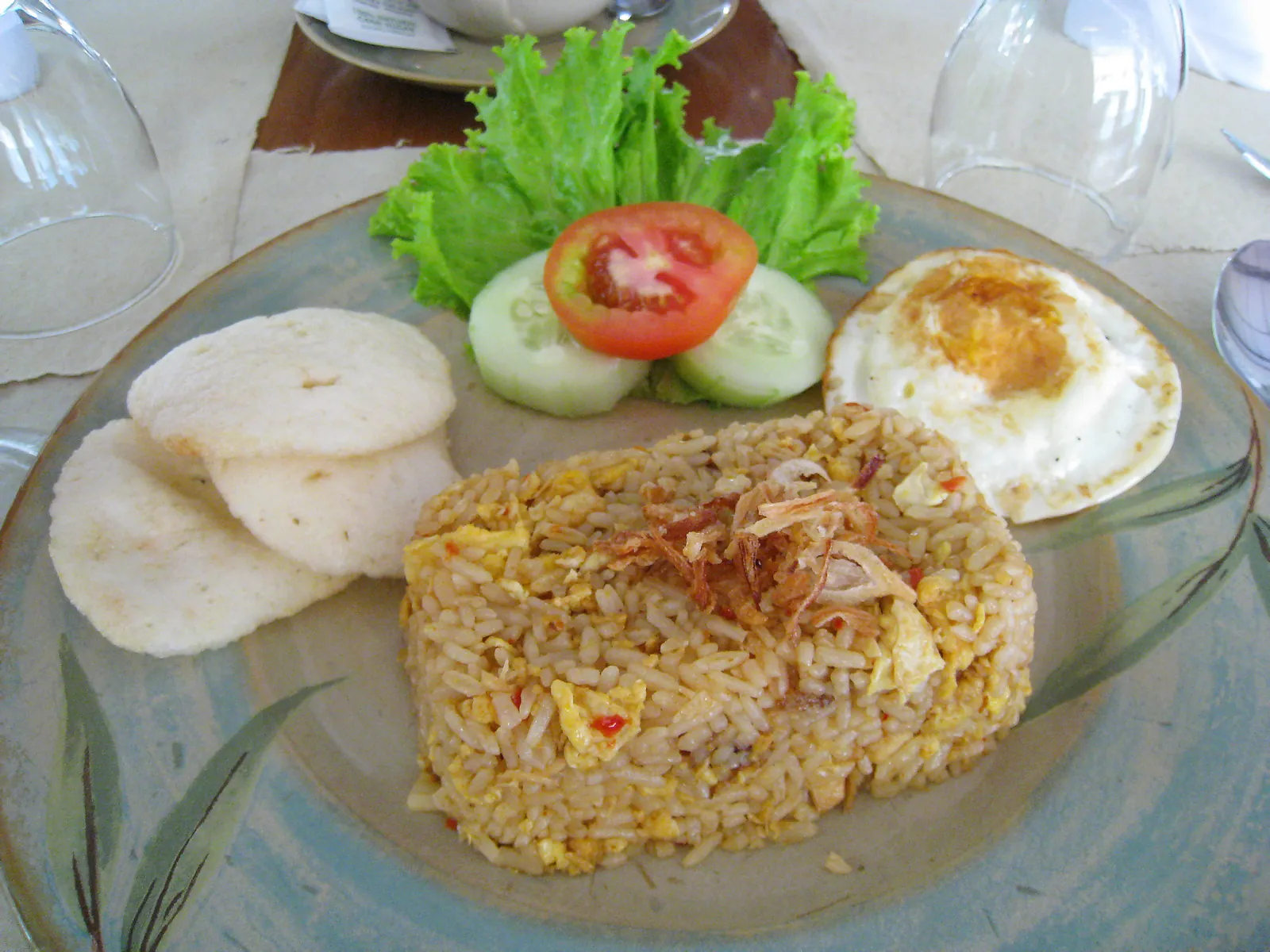
Indonesian nasi goreng — a mound of fried rice with egg and fried shallots, a fried egg, prawn crackers, cucumber, tomato and lettuce Indonesia flag Indonesia 35m
Dinner •Jakarta Street Classic

Indonesian Nasi Goreng

This Indonesian nasi goreng recipe turns a bowl of day-old rice into something far better than the sum of its parts: smoky, sweet-savoury grains coated in kecap manis, tossed with chicken, carrot and peas, and crowned with a fried egg and crunchy prawn crackers. It is the kind of dinner that comes together in one wok in about half an hour, and it tastes like a Jakarta street stall at its best. One serving is about 470 g.

Comfort & Satisfying

A one-wok dinner of sweet-savoury fried rice, chicken and a fried egg, served the Indonesian way with cucumber, tomato and prawn crackers.

Pairs Well With
A fried egg on top, cool cucumber and tomato, and a handful of prawn crackers, with iced tea to drink.
Quick Prep (<30m)
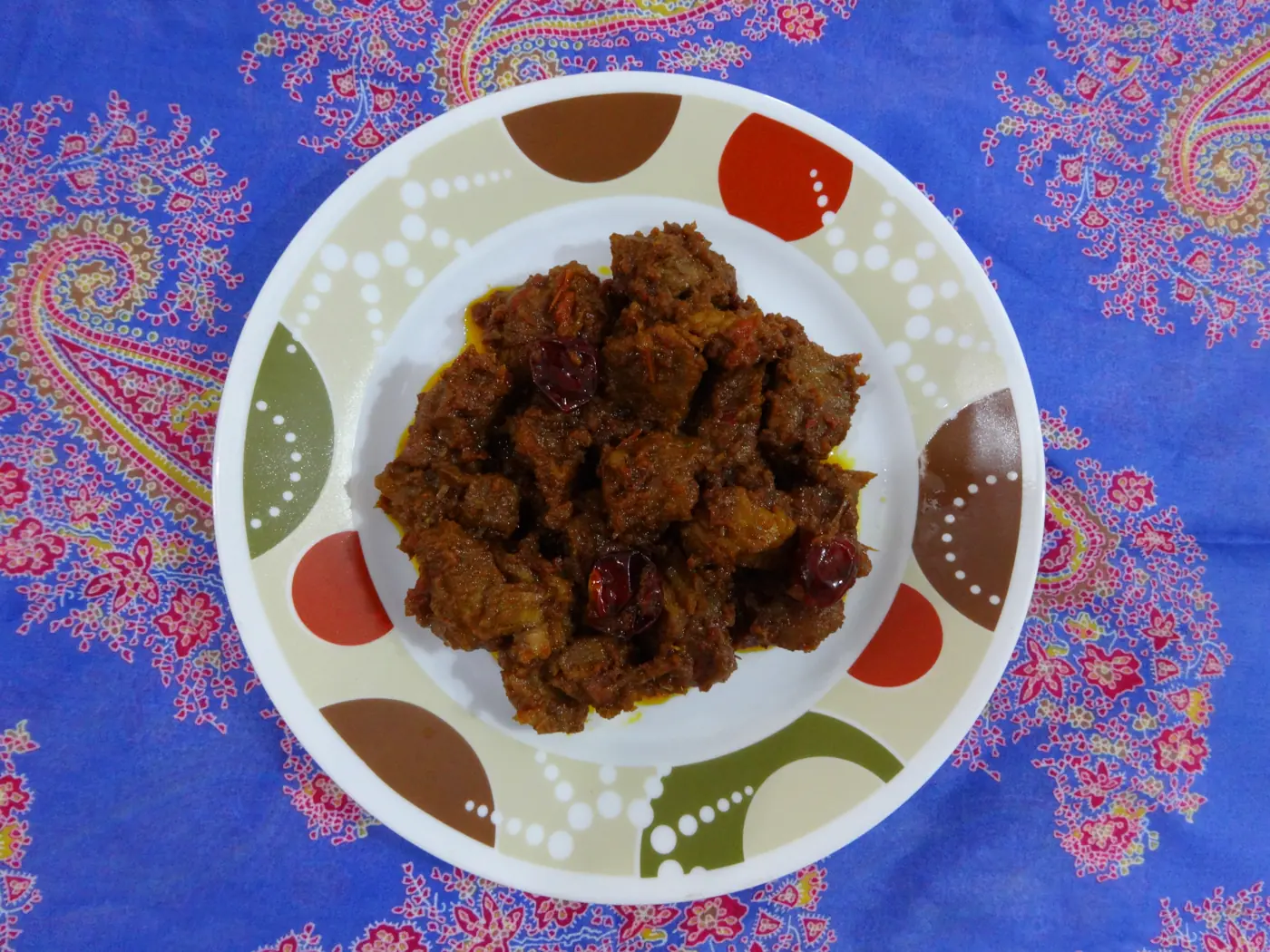
A plate of beef rendang — dark brown beef chunks coated in a dry, caramelised spice paste Indonesia flag Indonesia 4h
Dinner •West Sumatra Heritage

Beef Rendang

This beef rendang recipe slow-braises beef chuck in coconut milk with lemongrass, galangal, chillies and warm spices for about four hours, until the sauce has almost disappeared and the meat is coated in a dark, dry, caramelised spice paste. It is the Minangkabau dish from West Sumatra that sits at the heart of Padang cooking: deeply savoury, gently hot, and rich without being saucy. One serving is about 380 g.

Rich & Satisfying

Slow-braised beef in spiced coconut milk, reduced until the meat is coated in a dark, caramelised spice paste.

Pairs Well With
Steamed jasmine rice & pickled cucumber (acar timun)
High Protein
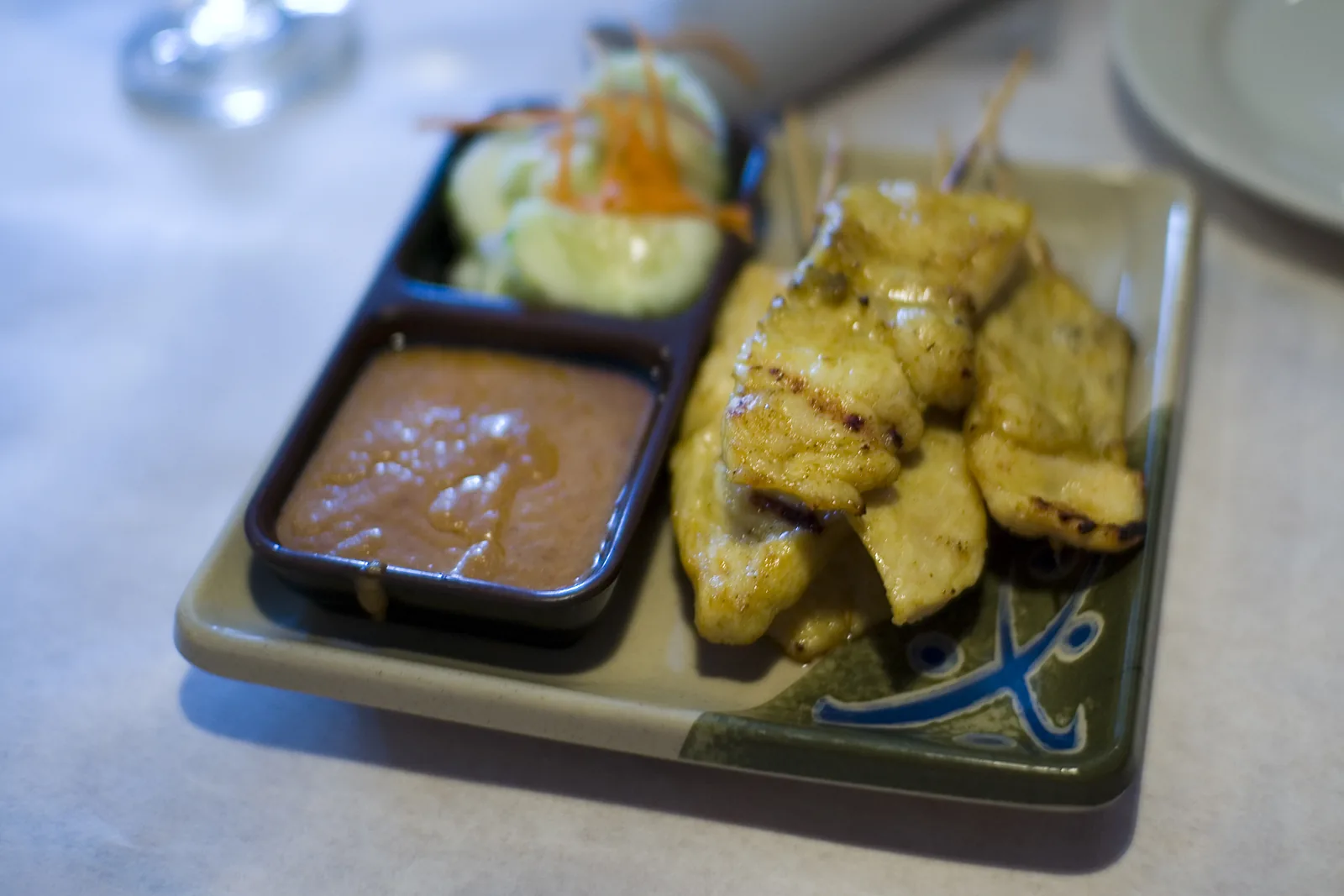
Grilled chicken satay skewers with peanut sauce and cucumber salad on a plate Indonesia flag Indonesia 45m
Dinner •Java Street Food

Chicken Satay

This chicken satay recipe turns chicken breast into golden, char-edged skewers marinated in turmeric, coconut milk, garlic and sweet soy sauce, then grilled and served with a warm, creamy peanut sauce. One serving is about 290 g: three skewers, a generous spoonful of peanut sauce and a cool cucumber-shallot salad. It is the Indonesian street-food classic — sate ayam — made for a weeknight grill.

High-Protein Grilling

Grilled chicken skewers in a turmeric-coconut marinade, served with a homemade peanut sauce — high in protein and cooked fast over high heat.

Pairs Well With
Lontong rice cakes and a cool cucumber-shallot salad balance the rich peanut sauce.
High Protein • Quick Prep (<30m)
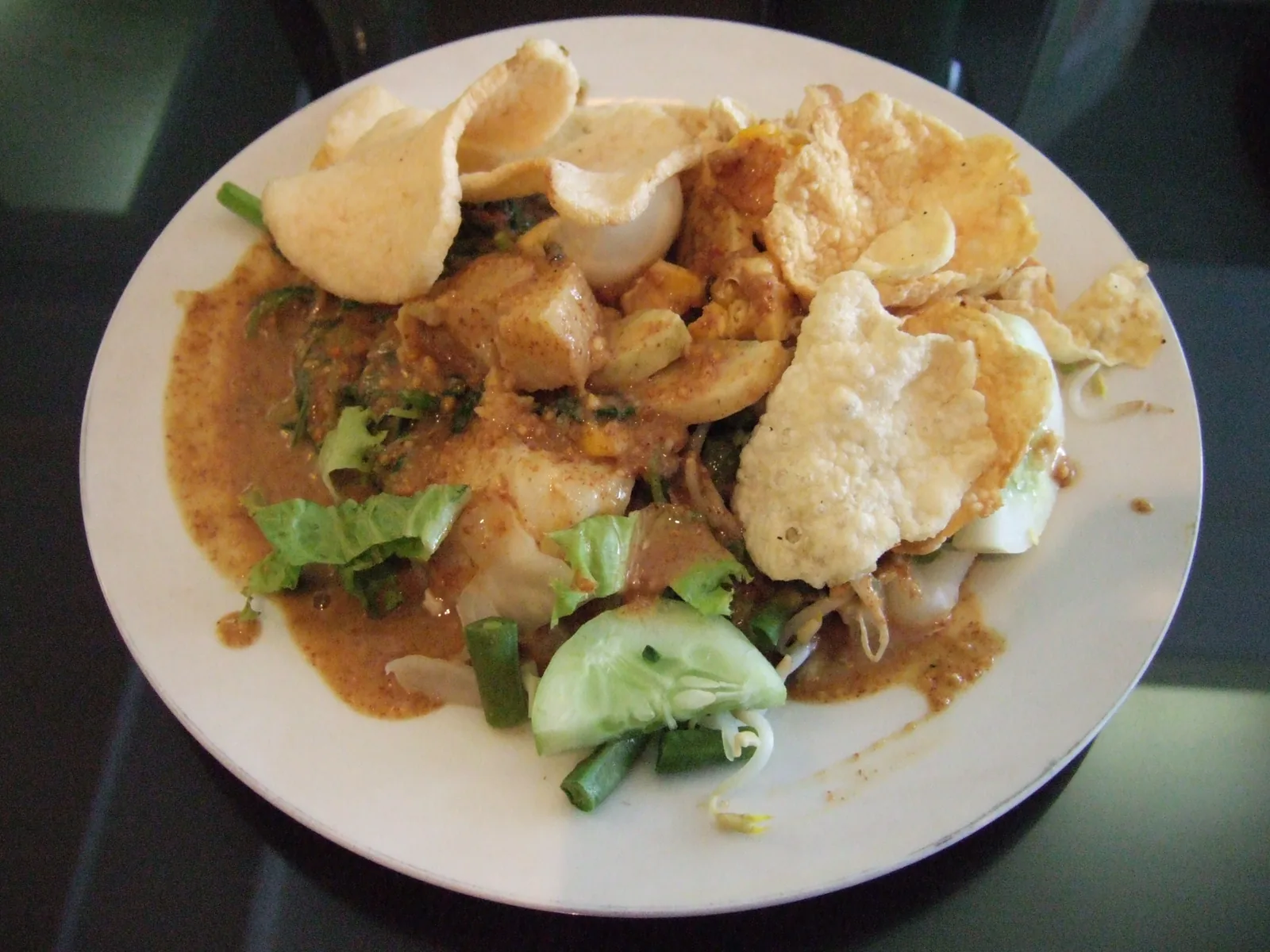
A plate of gado-gado: mixed vegetables, tofu and boiled egg coated in peanut sauce, topped with prawn crackers and cucumber slices. Indonesia flag Indonesia 45m
Lunch •Jakarta Street Food Classic

Gado-Gado

Gado-gado is Indonesia's best-loved salad: warm potatoes, green beans, cabbage, bean sprouts, cucumber and carrot, with fried tofu, boiled egg and crunchy prawn crackers, all coated in a thick, sweet-savoury peanut sauce. One serving is about 584 g.

Fresh & Filling

Warm vegetables, tofu and egg under a rich peanut sauce — a complete meat-free lunch.

Pairs Well With
Serve warm with prawn crackers on the side and a glass of iced tea.

The Dinner Gazette

Never wonder what’s for dinner again

One email a week with easy dinner ideas from around the world — ingredients, steps and nutrition, tested in our kitchen first.

Delivered every Thursday morning. Unsubscribe anytime.