Curated recipes from 193 countries  •  New seasonal Mediterranean issue out now

Overview

Basler Läckerli

Basel Leckerli, Basler Läggerli

This basler lackerli recipe makes Basel's famous spiced honey biscuits: a sticky dough of honey, sugar, almonds, hazelnuts and candied citrus peel, baked in a slab, cut into rectangles while still hot and brushed with a sugar glaze. They are firm and chewy, warmly spiced with cinnamon, cloves and nutmeg, and they keep for weeks in a tin — which is why Basel has baked them for centuries. One serving is two biscuits, about 92 g.

Basler Läckerli were first baked in Basel more than 700 years ago, when the city's spice merchants had honey, cinnamon, cloves and candied citrus from the trade routes — and, so the story goes, two Basel bakers travelled to Nuremberg to learn the secret of gingerbread. The biscuits became the city's signature sweet, sold year-round but above all at Christmas, and they are still listed in the Culinary Heritage of Switzerland. Their name says it plainly: lecker means delicious, and -li is the Basel diminutive — a little delicious thing.

Pairs well with: Hot coffee, black tea & mulled wine

Provenance

Switzerland flag Switzerland

Basel Christmas Classic

Nordic & European

Time Dedication

1h 50m

90m prep • 20m cook

Batch Yield

12 Servings

384 kcal per serving

1 serving ≈ 92 g

Technical Skill

Intermediate

Medium (Sticky Dough)

Meal Timing & Digestive Fit

Breakfast

Not Advised

Lunch

Inappropriate

Dinner

Inappropriate

Snack & Tea

Ideal Light Bite

Occasions: Christmas, Advent, coffee breaks, gifts, market days Cost: Low — about $1–2 per serving at home

A plate of glazed rectangular Basler Läckerli honey biscuits on a yellow tablecloth

Basel Christmas Classic

Photo: Velq1958, CC BY 3.0, via Wikimedia Commons

The Heritage Formulary

Measured Ingredients

Estimated cost: Low — about $1–2 per serving at home (USD)
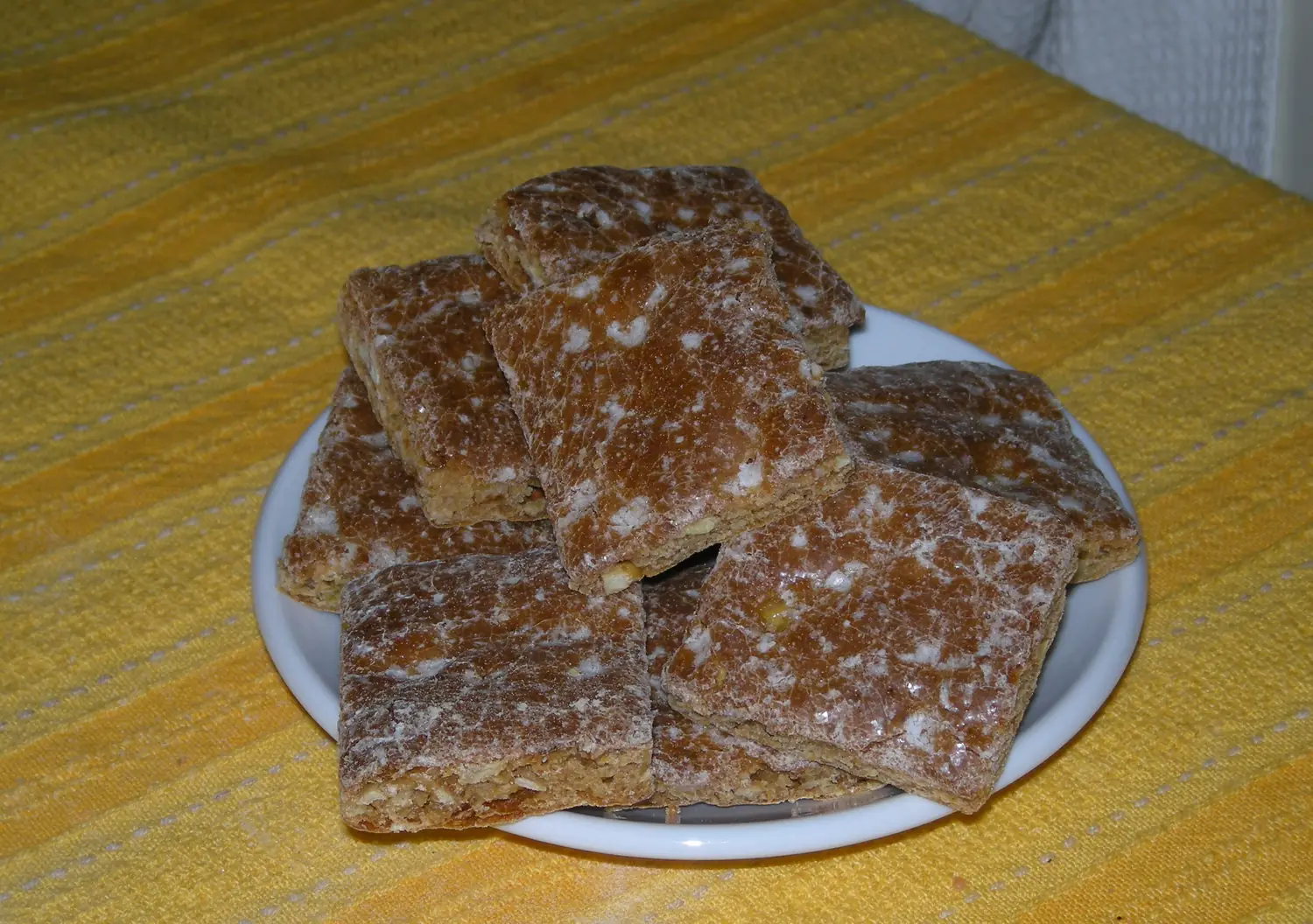
A home-style Basler Läckerli built on honey, almonds, hazelnuts and candied citrus, glazed while hot.

Execution Methodology & Culinary Technique

Step-by-Step Cooking Guide

Active 1h 50m
P

Prep Stage: Honey Syrup and Dough

1 Hour 30 Mins • Resting Included

Warm the honey and sugar together until the sugar dissolves. Stir in the kirsch, nuts, candied peel, zest and spices, then work in the sifted flour to make a stiff, sticky dough. Spread it on a lined baking tray about 6 mm thick and leave it to rest for 1 hour before baking.

Maestro Tip: Wet your hands or a spatula to spread the sticky dough — dry hands will not work.

  1. 1

    Warm the Honey and Sugar

    10 Mins Medium heat, about 120°C (250°F)

    Put the honey and sugar in a saucepan and warm over medium heat, stirring, until the sugar dissolves and the mixture is hot but not boiling. Take off the heat and stir in the kirsch.

    Do not boil the honey — it darkens and loses its floral flavour.

    Done when: The sugar has dissolved and the syrup is smooth and hot.

  2. 2

    Mix the Dough

    10 Mins Off the heat (syrup about 70°C / 158°F)

    Stir the ground almonds, chopped hazelnuts, candied peel, lemon zest, cinnamon, cloves, nutmeg and salt into the hot syrup. Tip in the sifted flour and baking powder and mix with a wooden spoon until a stiff, sticky dough forms.

    Work fast — the dough firms up as it cools and is hardest to mix cold.

    Done when: A stiff dough that holds together and pulls away from the sides of the bowl.

  3. 3

    Rest the Dough

    60 Mins Room temperature, about 20°C (68°F)

    Turn the dough onto a lined baking tray, press it out with wet hands to a slab about 6 mm thick, and leave it to rest for 1 hour.

    The rest lets the flour hydrate, so the biscuits bake evenly instead of cracking.

    Done when: The slab is even, about 6 mm thick, and slightly firmed.

  4. 4

    Bake the Slab

    15 Mins 180°C (350°F)

    Bake in a preheated oven at 180°C (350°F) for 12–15 minutes until the slab is set and lightly browned at the edges. It should still feel slightly soft in the middle — it firms as it cools.

    Do not overbake: hard, dry Läckerli come from an extra five minutes in the oven.

    Done when: The slab is set, lightly browned at the edges, and springs back gently when pressed.

  5. 5

    Glaze and Cut

    15 Mins Glaze hot, about 80°C (175°F); cut while warm

    While the slab is still hot, brush it with the glaze made by dissolving the sugar in the water over gentle heat. Cut at once into rectangles about 3.5 × 5 cm, then leave to cool completely on the tray.

    Cut while the slab is hot — once it cools, it is too hard to cut cleanly.

    Done when: Twenty-four neat glazed rectangles with a white, crackled glaze.

Finishing Touches & Plating

Leave the Basler Läckerli to cool completely, then store in a tin — they are at their best after a day or two, when the glaze has set and the spices have mellowed.

Nutritional Physiology & Benefits

Nutrition

Energy

384

kcal / serving

Protein

6g

Complete AA

Carbs

73g

Complex

Fats

9g

Healthy

Per serving (12 servings · 1 serving ≈ 92 g)
Energy384 kcal
Protein6 g
Carbohydrates73 g
Fat9 g
Fibre3.0 g
Sugar47.5 g
Sodium88 mg
Per 100g
Energy418 kcal
Protein6.5 g
Carbohydrates79.3 g
Fat9.4 g
Fibre3.2 g
Sugar51.9 g
Sodium96 mg

Nutrition values are estimated — calculated from USDA FoodData Central values for the listed ingredients.

Vitamins & minerals: Vitamin E (almonds, hazelnuts), magnesium (nuts), iron (flour, nuts), vitamin B2 (almonds).

Slow-Release Energy

About 72.9 g of carbohydrate per serving from honey, sugar and flour gives steady energy for a walk or a long afternoon.

Nuts in Every Bite

Almonds and hazelnuts add vitamin E, magnesium and healthy fats to a sweet biscuit.

Keeps for Weeks

The honey and sugar keep these biscuits fresh for weeks in a tin — no preservatives needed.

Food Pairings

What to Eat With

To optimize nutrient absorption and elevate the sensory depth, pair with these authentic accompaniments:

Drinks

Hot Black Coffee

Strong black coffee is the Basel way — its bitterness balances the honey sweetness.

Black Tea

A plain black tea lets the cinnamon and citrus in the biscuits shine.

Mulled Wine

At Christmas markets, Läckerli are eaten with mulled wine — the same warm spices in cup and biscuit.

Sides

Dark Chocolate

A square of dark chocolate alongside echoes the spiced, nutty flavour of the biscuits.

Complete menu

Basler Läckerli with hot black coffee, black tea or mulled wine and a square of dark chocolate.

Digestive Guardrails

What NOT to Combine

To prevent digestive distress, sluggishness, or palate clash, avoid pairing the dish with these elements:

Eating Many at Once

Two biscuits carry about 47.5 g of sugar; a handful is a lot of sugar in one sitting. This is general nutrition information, not medical advice.

Storing in a Damp Place

The sugar glaze draws in moisture and turns sticky in damp air — keep the tin sealed and dry. This is general food-storage information, not medical advice.

General information only, not medical advice — consult a doctor for personal dietary decisions.

Who Should Eat It

Who Should Eat

  • General adultsA sweet, spiced snack; two biscuits with coffee make a satisfying break.
  • ChildrenSweet and chewy; cut a biscuit in half for small children and watch for nuts.
  • ElderlyFirm and chewy — dunk in tea or coffee to soften if teeth are a concern.
  • Pregnant womenFine as an occasional sweet in a small portion; the kirsch mostly bakes off, but ask your clinician if unsure.
  • Breastfeeding womenA quick energy snack; keep portions moderate and the coffee light.
  • AthletesA handy pocket snack for long walks, with honey for quick energy.
  • Weight gainTwo biscuits with a milky drink add energy between meals.
  • Weight lossA sweet biscuit at about 384 kcal a serving; take one biscuit, not two, and skip sugary drinks.

Health Conditions — Adjust or Avoid

Conditions

  • DiabetesAbout 72.9 g of carbohydrate per serving, mostly sugar; keep to a small portion and ask your clinician.
  • High blood pressureVery low in sodium at about 88 mg per serving; the concern is sugar, not salt.
  • Kidney diseaseLow in protein; enjoy as an occasional snack rather than a meal, and ask your clinician.
  • GoutLow in purines; the sugar is the bigger concern if you are sensitive — ask your clinician.
  • Stomach issuesHoney, spices and nuts can be heavy on a sensitive stomach — eat a small portion and chew well.
  • Cardiovascular diseaseLow in saturated fat, but high in sugar; keep portions small.
  • Fatty liverHigh in sugar and honey; keep to one biscuit and ask your clinician.
  • Food allergiesContains wheat, tree nuts (almonds, hazelnuts) and a little alcohol (kirsch) — check labels if you have an allergy.
  • Special therapeutic dietsFollow your clinician's guidance on sugar and nuts; this is general information, not medical advice.

If you have a medical condition, consult your doctor before changing your diet.

Storage & Use

Storage & Use

How to store
Cool completely, then store in an airtight tin with layers of baking paper.
In the fridge
Not needed — keep in a tin at room temperature.
In the freezer
Up to 3 months in a sealed bag; thaw at room temperature.
How to reheat
Not needed; warm briefly at 150°C (300°F) for 3 minutes if you like them soft.
Freezing recommended
Yes — they freeze well for up to 3 months.
Signs it has spoiled
Sticky glaze, soft or damp biscuits, or a stale, rancid smell from the nuts.

More recipes to explore

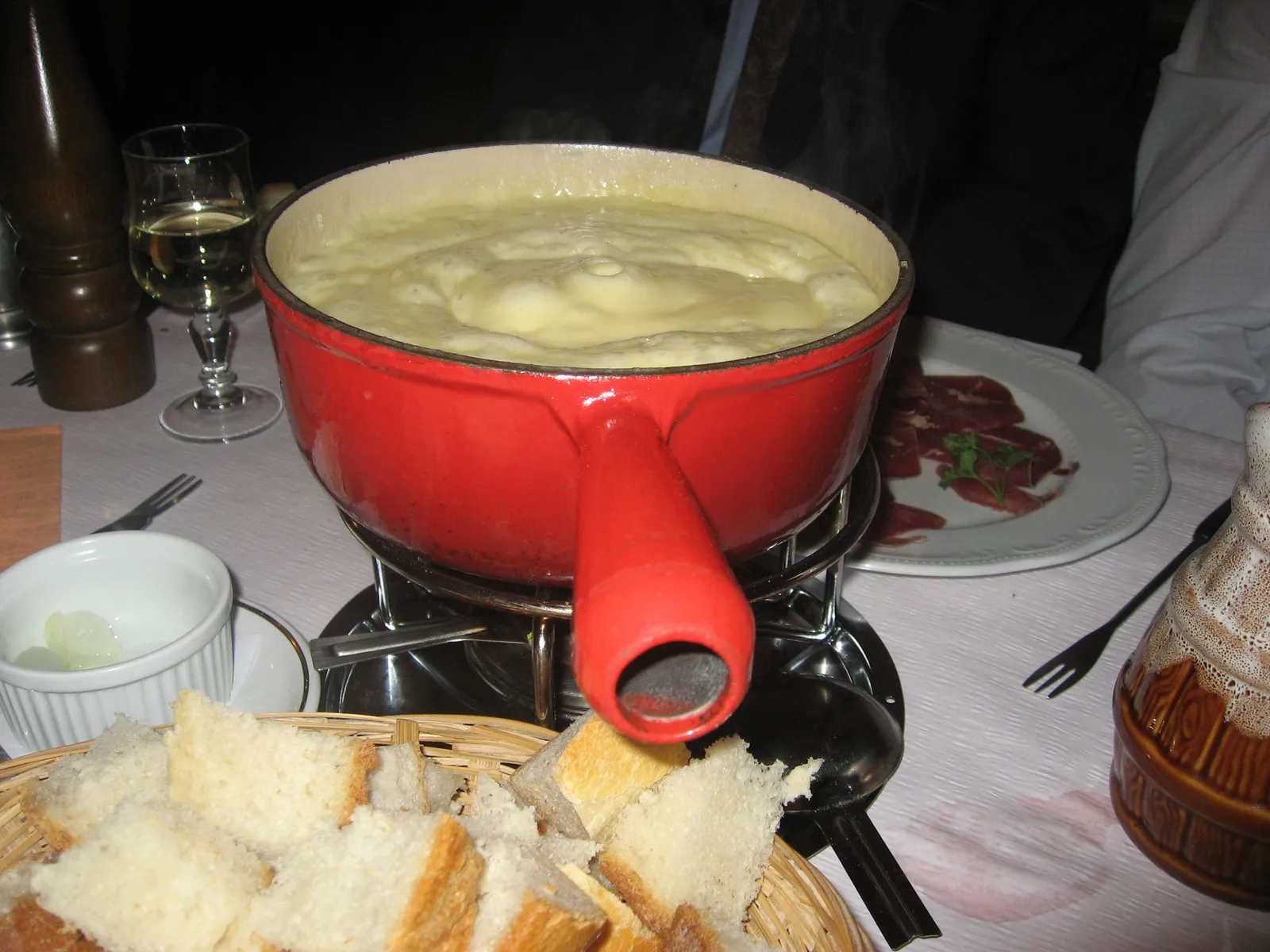
A red fondue pot of melted cheese with bread cubes and a glass of white wine Switzerland flag Switzerland 40m
Dinner •Swiss Alpine Classic

Swiss Cheese Fondue

Swiss cheese fondue is the Alps in a pot: Gruyere and Emmental melted slowly into dry white wine with garlic and a splash of kirsch, kept warm at the table while everyone dips cubes of bread into the bubbling cheese. One serving is about 310 g.

Comfort & Togetherness

Gruyere and Emmental melted in white wine, shared from one pot.

Pairs Well With
Cubes of crusty bread, boiled potatoes and cornichons on the side
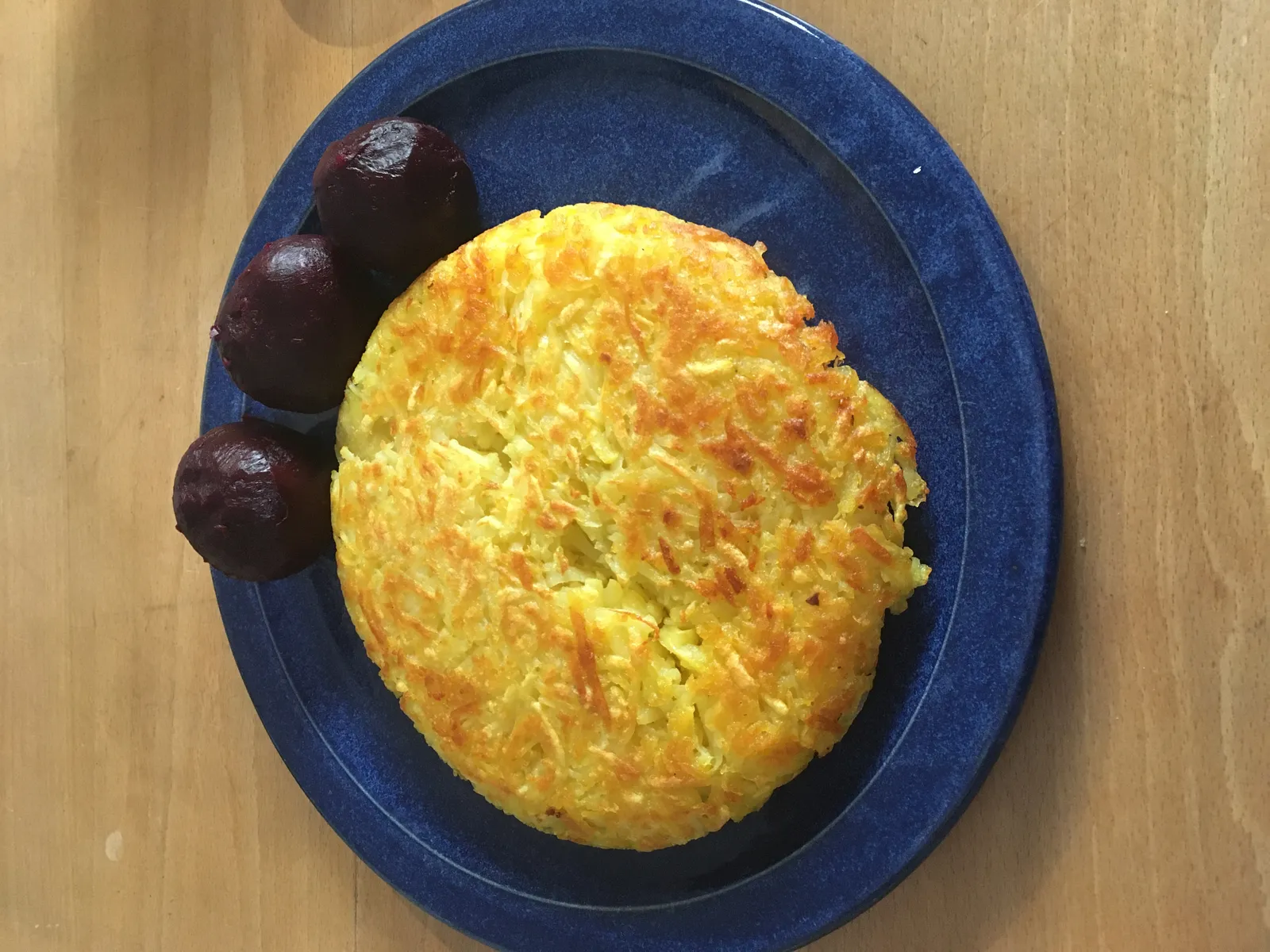
A large golden rosti potato cake on a blue plate Switzerland flag Switzerland 40m
Lunch •Bernese Farmhouse Classic

Rösti

Rösti is Switzerland's crisp potato cake: grated potato pressed into one large golden disc and fried in butter until the outside shatters and the inside stays soft, then topped with a fried egg. One serving is about 240 g.

Simple & Satisfying

One large crisp cake of grated potato, pan-fried in butter and topped with a fried egg.

Pairs Well With
A fried egg on top and a simple green salad with sharp vinaigrette
Quick Prep (<30m)
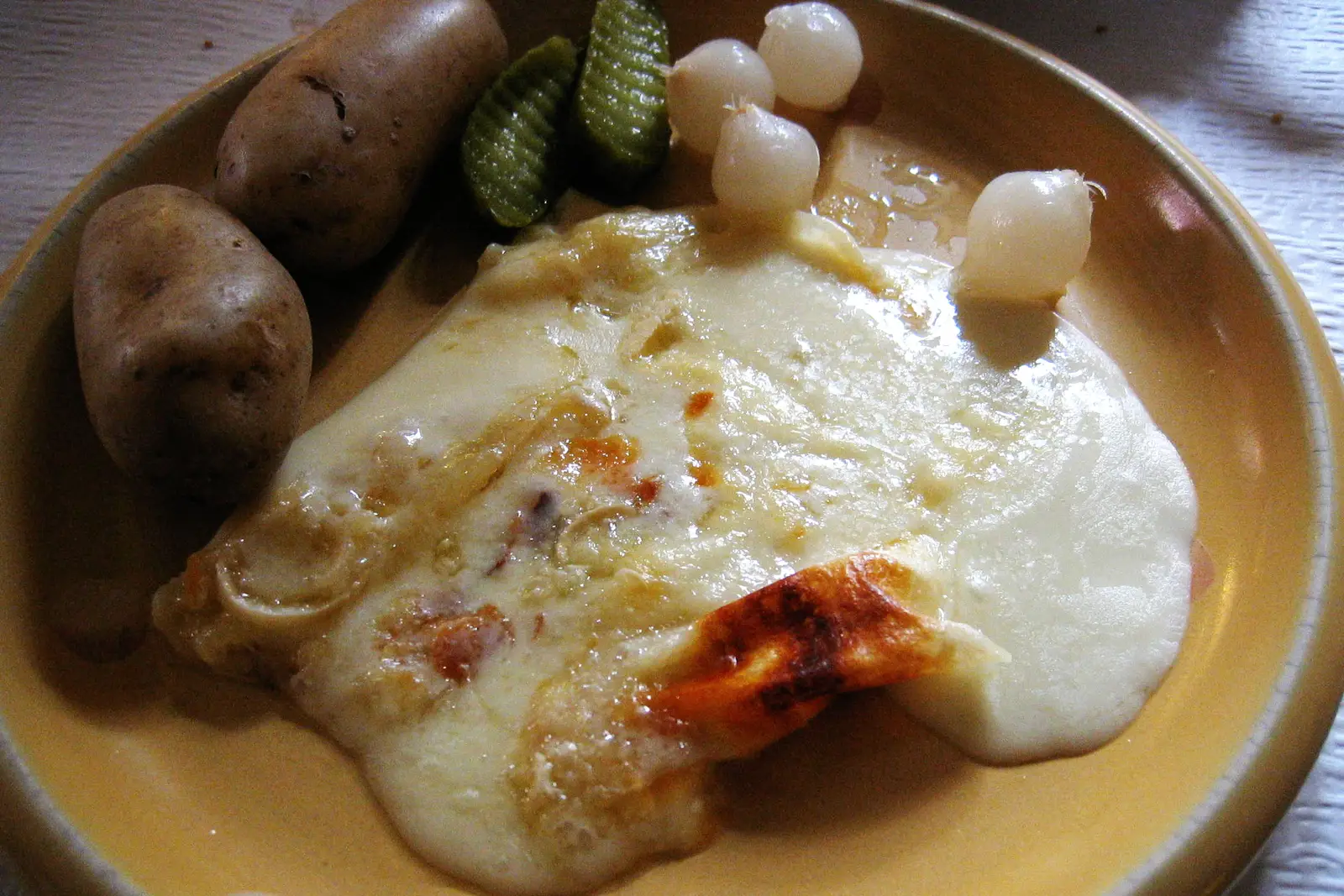
Melted raclette cheese scraped over a plate with boiled potatoes and pickles Switzerland flag Switzerland 40m
Dinner •Valais Alpine Classic

Raclette

Raclette is the Swiss Alps' other great melted-cheese meal: a half-wheel of raclette cheese is warmed until the cut face bubbles, then scraped in ribbons over boiled potatoes, with cornichons and pickled onions to cut the richness. One serving is about 365 g.

Comfort & Togetherness

Melted raclette cheese scraped over boiled potatoes with pickles.

Pairs Well With
Boiled potatoes, cornichons, pickled onions and a green salad
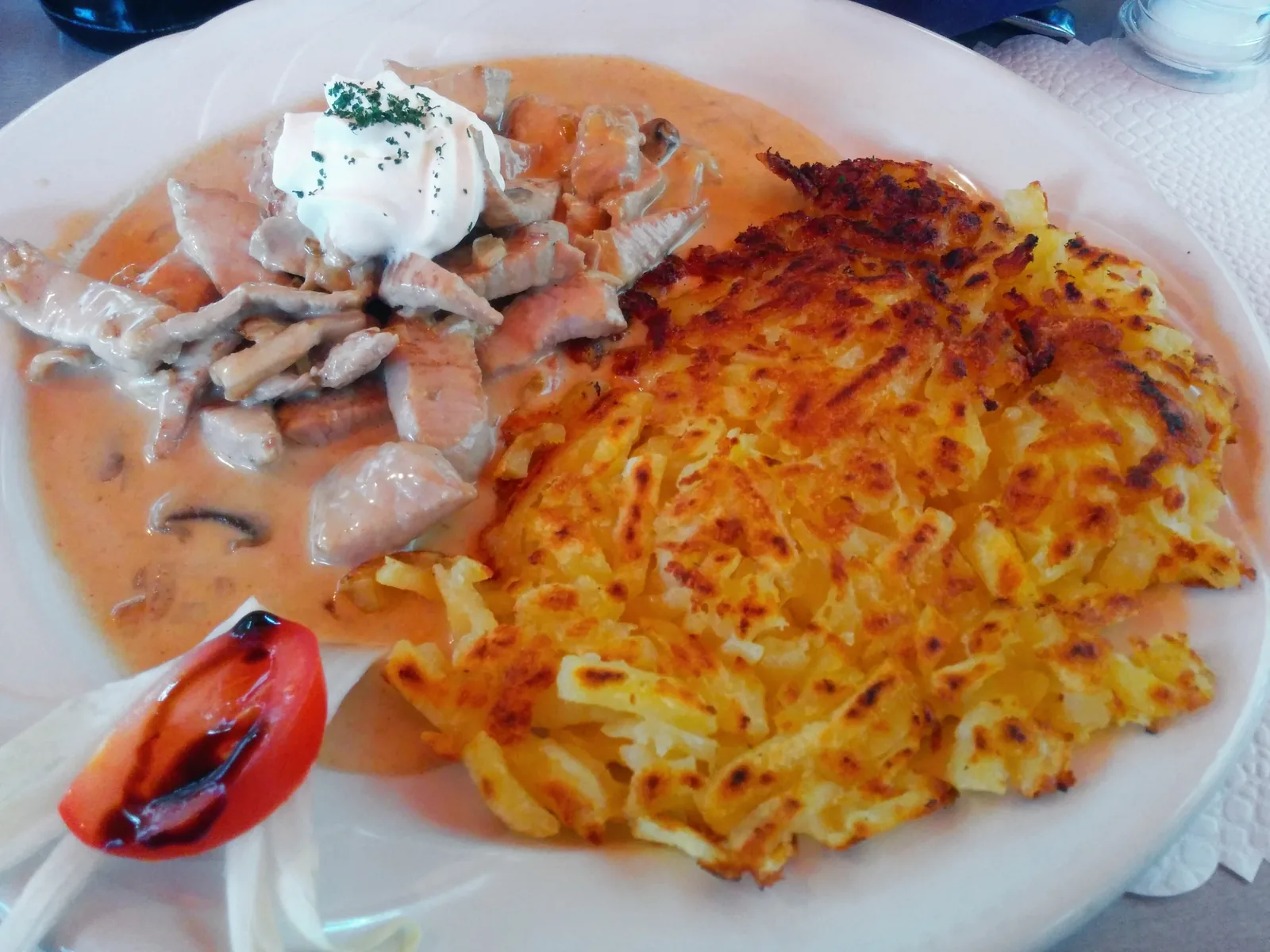
A plate of Zürcher Geschnetzeltes — veal strips in cream sauce with a dollop of cream — beside golden rösti. Switzerland flag Switzerland 40m
Dinner •Zurich Classic

Zürcher Geschnetzeltes

Zürcher Geschnetzeltes is Zurich's signature dish: thin strips of veal quickly seared, then finished in a white-wine and cream sauce with mushrooms and onion. One serving is about 335 g, before the rösti it is traditionally served with.

Rich & Comforting

Tender strips of veal in a white-wine cream sauce with mushrooms — Zurich's classic, with rösti.

Pairs Well With
Serve with golden rösti and a glass of dry Swiss white wine.
High Protein

The Dinner Gazette

Never wonder what’s for dinner again

One email a week with easy dinner ideas from around the world — ingredients, steps and nutrition, tested in our kitchen first.

Delivered every Thursday morning. Unsubscribe anytime.