-
1
Cut the Beef into Thick Strips
20 Mins
Cold, from the fridge
Take the chilled beef and trim away every scrap of fat and sinew — fat goes rancid during drying. Cut the meat into strips 2–3 cm wide and about 20 cm long, cutting along the grain so each strip is one long piece of whole muscle. This is what sets biltong apart from jerky, which is sliced thin across the grain, and from droëwors, which is minced meat stuffed into a casing.
Keep the strips a similar thickness so they all dry at the same speed — a thin strip will be rock-hard while a thick one is still wet inside.
Done when: Strips are even, 2–3 cm wide, with no fat or sinew left on them.
-
2
Rub in the Vinegar-Coriander Cure
10 Mins
Room temperature
Dip each strip briefly in the brown malt vinegar so it is wet all over, then rub it generously with the salt, cracked coriander, black pepper, brown sugar and chilli flakes. The vinegar is not a marinade for flavour alone — its acidity is part of the cure that keeps the meat safe while it air-dries, and the coriander is the flavour South Africans expect from biltong. Pack the strips tightly into a glass or ceramic dish, pour over any leftover vinegar, cover, and put in the fridge.
Use a glass or ceramic dish, not metal — the vinegar reacts with metal and can give the meat a sharp, metallic taste.
Done when: Every strip is wet with vinegar and coated on all sides with the spice cure.
-
3
Cure Overnight in the Fridge
12–24 Hours
4°C (39°F), in the fridge
Leave the covered dish in the fridge for 12 to 24 hours, turning the strips once halfway so the cure reaches every side. The salt draws moisture out of the meat and the vinegar works into the surface — this is the curing step that makes air-drying safe, so do not skip it or shorten it. When the time is up, lift the strips out and brush off the loose cure with your fingers; do not rinse them.
Twelve hours gives a mild cure and a softer finish; a full 24 hours gives the deeper, saltier flavour most South African biltong makers aim for.
Done when: Strips feel firmer and darker, with the cure worked into the surface.
-
4
Hang and Air-Dry for Four to Five Days
4–5 Days
20–25°C (68–77°F), with a fan — no heat
Hang the strips from hooks or a wire rack in a cool, dry, well-ventilated place with a fan blowing gently across them — a biltong box, a dry garage or a spare room works. The strips must not touch each other, and air must move over every side. Do not use heat or smoke: biltong is air-dried, not cooked and not smoked, which is the whole difference from jerky. After 4 days, press a strip: the outside should feel dry and firm while the middle still gives slightly and looks rosy when you nick it. Leave it a fifth day if you like it drier and harder.
A small fan is the single most important piece of equipment — still air lets the surface stay damp, and damp meat spoils. Keep the strips out of direct sun and away from flies with a mesh cover.
Done when: Outside is dry and firm; the middle is still slightly soft and rosy, not wet or slimy.
-
5
Slice Thin and Serve
15 Mins
Room temperature
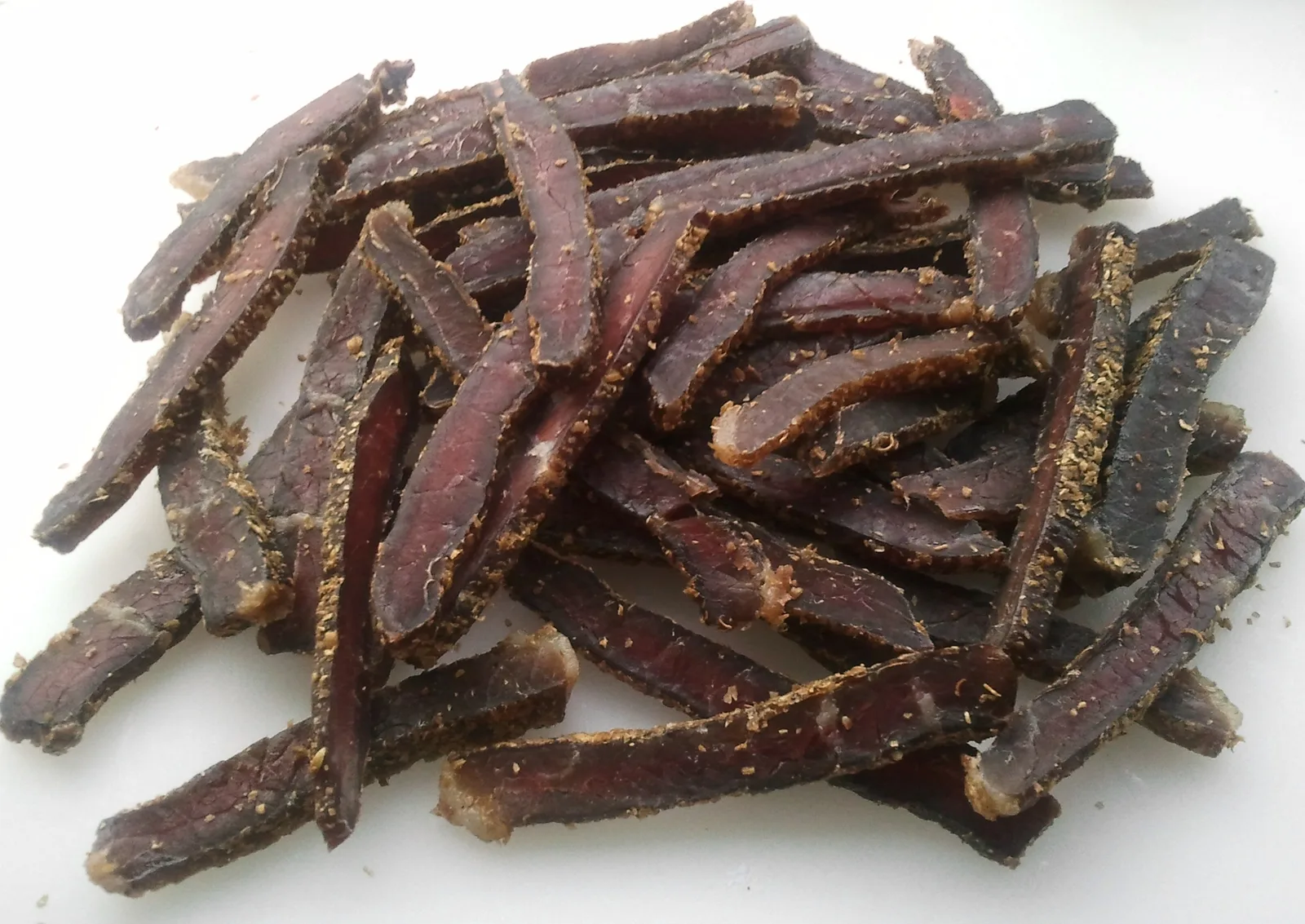
Take the dried strips down and slice them thinly across the grain with a sharp knife, about 2–3 mm thick, just before serving — biltong sliced across the grain is tender to chew, while slices cut along the grain are tough. Eat the slices as they are, or tear thicker pieces into strips by hand. Any biltong you do not slice yet keeps better whole, so slice only what you need.
A very sharp knife matters here: a blunt knife tears the dried meat and leaves ragged, uneven slices.
Done when: Thin, even slices with a dark, dry edge and a rosy, slightly soft centre.
auto_awesome Finishing Touches & Plating
Serve the sliced biltong piled on a board or plate, on its own as a snack or with cheese and crackers. It is at its best in the first few days after drying, when the slices are still slightly soft in the middle — that soft-centred, chewy bite is exactly what separates good biltong from over-dried jerky.

 South Africa
1h 5m