Curated recipes from 193 countries  •  New seasonal Mediterranean issue out now

Overview

Bircher Muesli

Bircher-Muesli, Swiss Overnight Oats

This bircher muesli recipe makes the Swiss breakfast the way Dr Bircher-Benner invented it: rolled oats soaked overnight in milk with lemon juice, stirred the next morning with yoghurt, grated apple and honey, and finished with almonds, hazelnuts, raisins and fresh berries. There is no cooking at all — the fridge does the work while you sleep. One serving is about 285 g.

Bircher muesli was invented around 1900 by Dr Maximilian Bircher-Benner, a Swiss physician who ran a sanatorium in Zurich. He served it to his patients as a light, raw-food breakfast: oats soaked in water, grated apple, condensed milk, lemon juice and nuts — a radical idea at a time when breakfast meant bread and coffee. The dish spread from his clinic across Switzerland and then the world, and the overnight soak is still the heart of it.

Pairs well with: A cup of coffee or herbal tea, with extra berries on the side.

Provenance

Switzerland flag Switzerland

Swiss Heritage

Nordic & European

Time Dedication

4h 15m

255m prep • 0m cook

Batch Yield

4 Servings

441 kcal per serving

1 serving ≈ 285 g

Technical Skill

Easy

Easy (No-Cook Overnight)

Meal Timing & Digestive Fit

Breakfast

Prime Morning Fit

Lunch

Inappropriate

Dinner

Inappropriate

Snack & Tea

Inappropriate

Occasions: Weekday breakfasts, weekend brunches, make-ahead breakfasts, summer breakfasts Cost: Low — about $1–2 per serving at home

Bircher muesli — a bowl of oats with yoghurt, raspberries, blackberries and strawberries on a wooden table

Swiss Heritage

Photo: David Stewart, CC BY 2.0, via Wikimedia Commons

The Heritage Formulary

Measured Ingredients

Estimated cost: Low — about $1–2 per serving at home (USD)
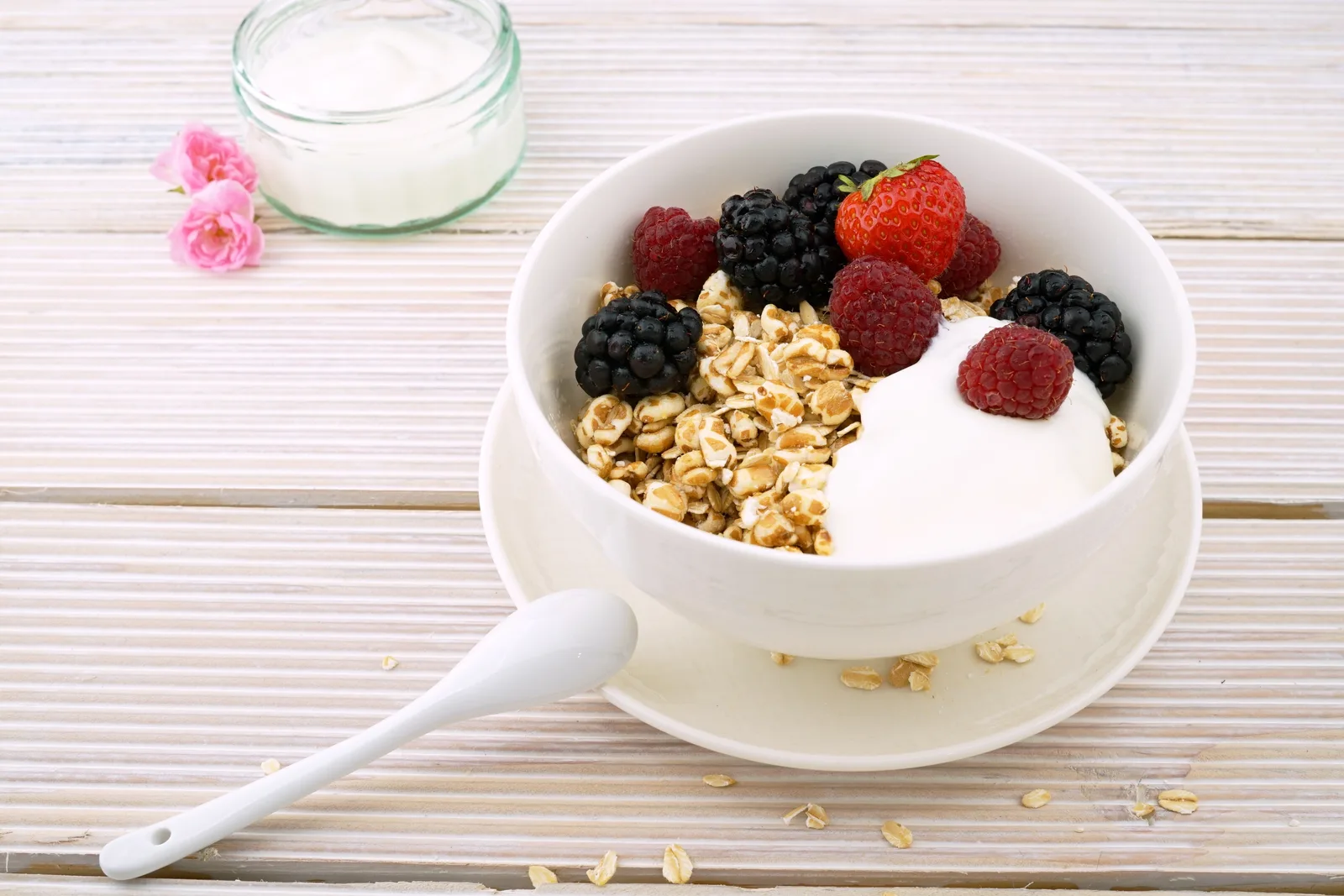
Made the original way: oats soaked overnight in milk with lemon juice, then stirred with yoghurt, grated apple and honey — no cooking at all.

Execution Methodology & Culinary Technique

Step-by-Step Cooking Guide

Active 4h 15m
P

Prep Stage: Mix, Soak Overnight & Chop

255 Mins • Mixing, Soaking & Chopping

Stir the rolled oats, milk and half the lemon juice together in a bowl, cover, and put it in the fridge for at least 4 hours or overnight. The next morning, grate the apples and toss them with the rest of the lemon juice, chop the almonds and hazelnuts, and wash the berries.

Maestro Tip: Give the oats the full 4 hours — a short soak leaves them chewy and dry in the middle, and no amount of yoghurt fixes that.

  1. 1

    Mix the Oats & Soak Overnight

    240 Mins Fridge, 4°C (40°F)

    Put the rolled oats in a bowl, pour over the milk and half the lemon juice, and stir once. Cover and put the bowl in the fridge for at least 4 hours, or overnight.

    Use old-fashioned rolled oats, not instant — instant oats dissolve into porridge overnight, while rolled oats stay soft but distinct.

    Done when: Oats that have swollen soft and creamy, with almost no loose milk left in the bowl.

  2. 2

    Grate the Apple & Prepare the Toppings

    10 Mins No heat

    The next morning, grate the apples and toss them with the rest of the lemon juice so they stay bright. Chop the almonds and hazelnuts, and wash the berries.

    Grate the apple at the last moment and toss it with lemon juice at once — grated apple browns within minutes.

    Done when: Bright, freshly grated apple and clean, dry berries.

  3. 3

    Stir in the Yoghurt, Apple & Honey

    5 Mins No heat

    Stir the yoghurt, grated apple, honey, raisins and cinnamon into the soaked oats until evenly mixed. Taste and add a little more lemon juice if the bowl needs sharpening.

    Stir the yoghurt in gently — vigorous beating breaks the oats down and turns the bowl gluey.

    Done when: A thick, creamy mixture with apple and raisins all the way through.

  4. 4

    Top with Nuts & Berries, Serve Cold

    5 Mins No heat

    Spoon the muesli into bowls, scatter the chopped almonds and hazelnuts over the top, and finish with the mixed berries. Serve cold, straight from the fridge.

    Keep the nuts and berries on top until serving — stirred in too early, the nuts go soft and the berries stain the whole bowl.

    Done when: A cold, creamy bowl with crunchy nuts and bright berries on top.

Finishing Touches & Plating

Eat it cold, straight from the fridge, with a spoonful of extra berries on top — the oats should be soft and creamy, the apple fresh, and the nuts still crunchy.

Nutritional Physiology & Benefits

Nutrition

Energy

441

kcal / serving

Protein

19g

Complete AA

Carbs

64g

Complex

Fats

14g

Healthy

Per serving (4 servings · 1 serving ≈ 285 g)
Energy441 kcal
Protein19 g
Carbohydrates64 g
Fat14 g
Fibre10.5 g
Sugar22.6 g
Sodium47 mg
Per 100g
Energy155 kcal
Protein6.8 g
Carbohydrates22.6 g
Fat4.9 g
Fibre3.7 g
Sugar7.9 g
Sodium16 mg

Nutrition values are estimated — calculated from USDA FoodData Central values for the listed ingredients.

Vitamins & minerals: Vitamin C (apple, berries, lemon), vitamin E and magnesium (almonds, hazelnuts), B vitamins and calcium (oats, milk, yoghurt). Nutrition is estimated.

Protein That Keeps You Full

One serving carries about 19.3 g of protein from the oats, yoghurt, milk and nuts, which is what makes this cold breakfast keep you full until lunch.

Fibre for the Morning

With 10.5 g of fibre per serving from the oats, apple, berries and nuts, this is one of the highest-fibre breakfasts on the site.

Vitamin C & Vitamin E

The apple, berries and lemon juice add vitamin C to the bowl, and the nuts bring vitamin E and magnesium — a breakfast that earns its reputation.

Food Pairings

What to Eat With

To optimize nutrient absorption and elevate the sensory depth, pair with these authentic accompaniments:

Drinks

Coffee

A cup of coffee is the classic Swiss breakfast drink with bircher muesli because its bitterness balances the sweet honey and fruit.

Orange Juice

A glass of orange juice adds brightness to a cold breakfast, though it also adds sugar — a small glass is enough.

Sides

Extra Berries

Extra fresh berries on the side add colour and vitamin C, and they let everyone sweeten their own bowl with fruit instead of honey.

Boiled Egg

A boiled egg beside the bowl adds protein for a bigger breakfast, and its mild flavour does not fight the sweet muesli.

Complete menu

Serve bircher muesli with a cup of coffee or herbal tea, then finish with a boiled egg if you want more protein.

Digestive Guardrails

What NOT to Combine

To prevent digestive distress, sluggishness, or palate clash, avoid pairing the dish with these elements:

Extra Honey and Dried Fruit on Top

A large bowl of muesli with extra honey and dried fruit can carry a lot of sugar in one sitting, so keep the honey and raisins to the amounts given and let the fresh berries do the sweetening. This is general food information, not medical advice.

A Heavy Fried Breakfast Beside It

The nuts and oats already make this breakfast filling, so adding a heavy fried breakfast or a large pastry to the same morning leaves little room for anything else. This is general food information, not medical advice.

General information only, not medical advice — consult a doctor for personal dietary decisions.

Who Should Eat It

Who Should Eat

  • General adultsA fresh, filling breakfast — about 19.3 g protein per serving, best eaten cold straight from the fridge.
  • ChildrenSweet, soft and easy to eat; chop the nuts finely or leave them out for younger children, and let them pick their own berries on top.
  • ElderlySoft and easy to chew, with no cooking needed — a gentle breakfast, though the nuts add crunch that some may prefer ground.
  • Pregnant womenFine as a breakfast when the milk and yoghurt are pasteurised and the fruit is washed well; keep the honey modest. Ask your clinician about portions.
  • Breastfeeding womenAn energy-rich, fibre-rich breakfast; the oats and nuts are filling, so one serving is usually enough.
  • AthletesGood fuel before or after morning training, with about 19.3 g protein and 64.4 g carbohydrate per serving — add extra yoghurt for more protein.
  • Weight gainEnergy-dense at about 441 kcal and easy to eat in a good amount, so it suits weight gain as a full breakfast.
  • Weight lossFilling for a breakfast at about 441 kcal, thanks to 10.5 g of fibre; use low-fat yoghurt and half the honey to lighten it.

Health Conditions — Adjust or Avoid

Conditions

  • DiabetesThe oats, raisins and honey are the main carbohydrates, so keep the portion as stated and use half the honey and raisins. Ask your clinician about portions.
  • High blood pressureOne serving carries only about 47 mg sodium, so this breakfast is naturally low in salt. Ask your clinician about portions.
  • Kidney diseasePortions should stay modest, and the potassium from the fruit and nuts matters for some kidney diets. Ask your clinician about portions.
  • GoutOats and nuts are the main purine sources here, so keep to one modest serving and drink water with the meal. Ask your clinician about portions.
  • Stomach issuesSoaked oats are usually gentle on the stomach, but raw apple and nuts can feel heavy for some people; eat slowly and chew well. Ask your clinician about portions.
  • Cardiovascular diseaseThe oats and nuts bring fibre and unsaturated fats, and the breakfast is low in sodium — a good balance for most heart-healthy eating patterns. Ask your clinician about portions.
  • Fatty liverThe dish is naturally low in fat, but the honey and raisins add sugar, so keep them to the amounts given. Ask your clinician about portions.
  • Food allergiesContains milk (milk, yoghurt), tree nuts (almonds, hazelnuts) and gluten (oats may contain traces of wheat unless certified gluten-free). People with milk, tree nut or gluten allergy should not eat it unless a safe substitute is used. Ask your clinician about safe alternatives.
  • Special therapeutic dietsNot suitable for a nut-free or low-potassium therapeutic diet as written; any lighter version changes the dish and should be discussed with a clinician.

If you have a medical condition, consult your doctor before changing your diet.

Storage & Use

Storage & Use

How to store
Store the soaked oat base in a covered container in the fridge; keep the nuts in a dry container and the berries separate so they stay fresh.
In the fridge
The soaked oat base keeps 2 days in the fridge at 4°C (40°F) or below in a covered container; add the nuts and berries just before serving.
In the freezer
Not recommended — the soaked oats turn watery and the fruit goes soft after freezing.
How to reheat
Do not reheat — bircher muesli is eaten cold.
Freezing recommended
No.
Signs it has spoiled
Sour smell from the yoghurt, slimy oats, or mould on the berries.

More recipes to explore

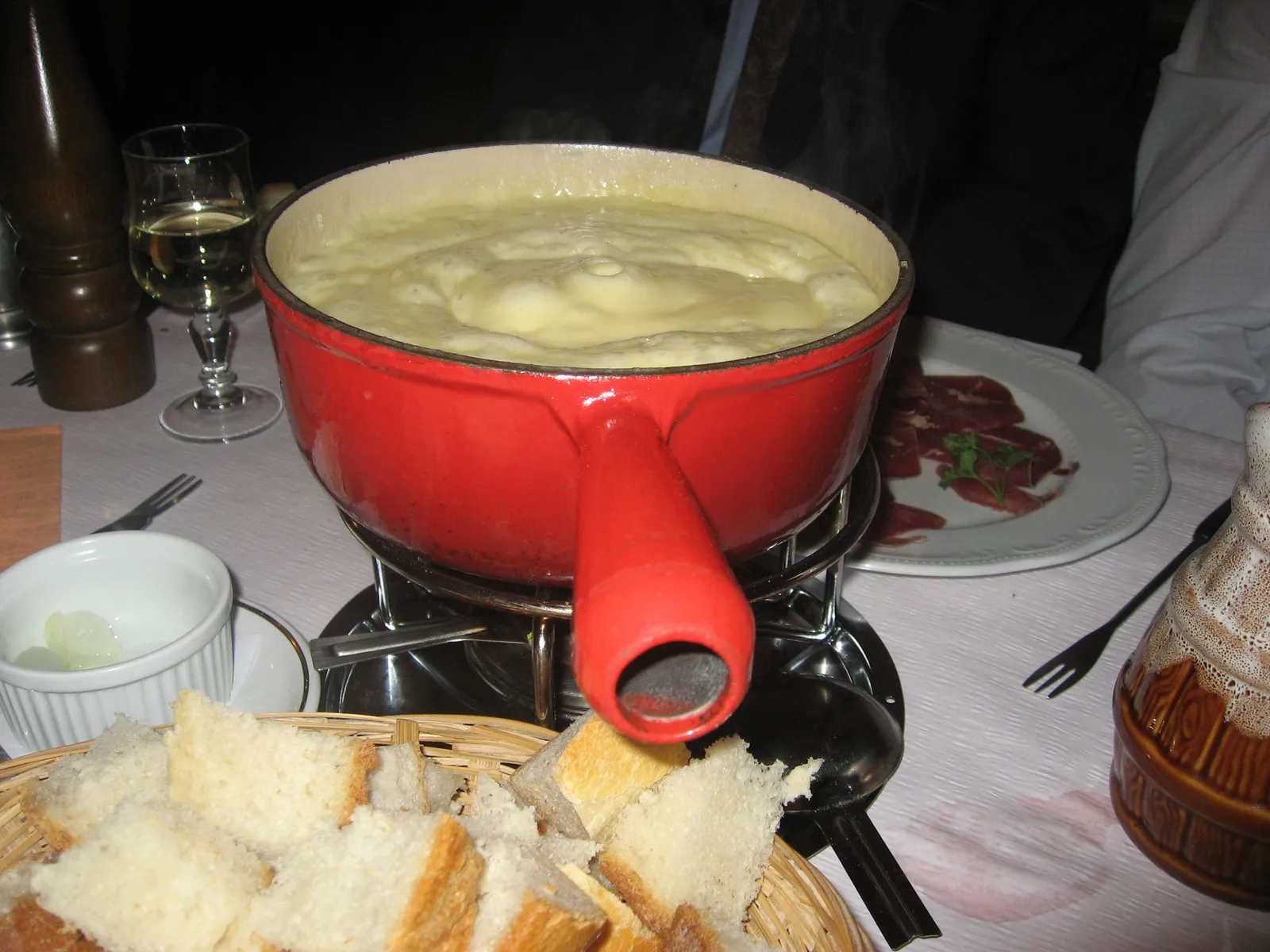
A red fondue pot of melted cheese with bread cubes and a glass of white wine Switzerland flag Switzerland 40m
Dinner •Swiss Alpine Classic

Swiss Cheese Fondue

Swiss cheese fondue is the Alps in a pot: Gruyere and Emmental melted slowly into dry white wine with garlic and a splash of kirsch, kept warm at the table while everyone dips cubes of bread into the bubbling cheese. One serving is about 310 g.

Comfort & Togetherness

Gruyere and Emmental melted in white wine, shared from one pot.

Pairs Well With
Cubes of crusty bread, boiled potatoes and cornichons on the side
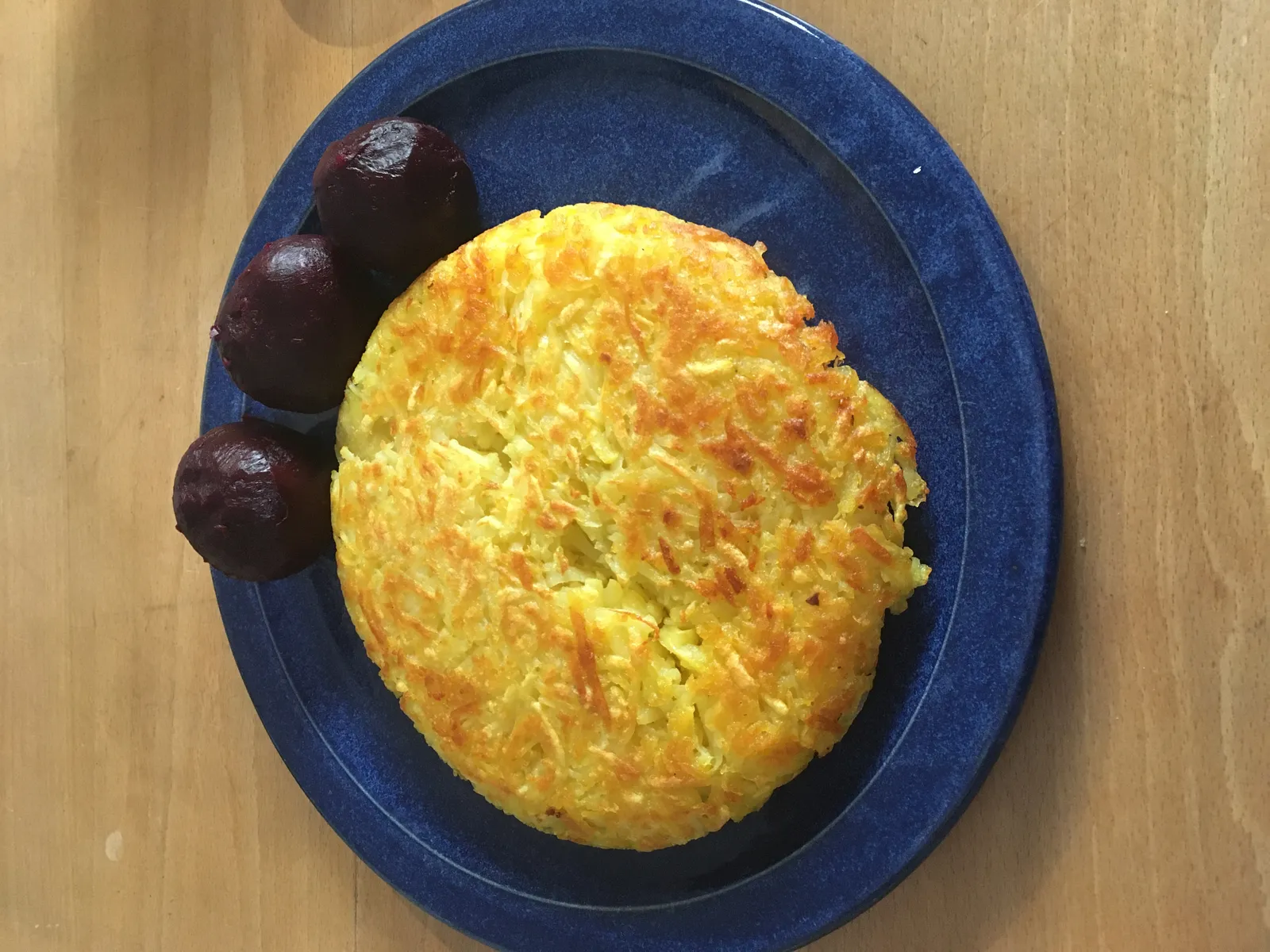
A large golden rosti potato cake on a blue plate Switzerland flag Switzerland 40m
Lunch •Bernese Farmhouse Classic

Rösti

Rösti is Switzerland's crisp potato cake: grated potato pressed into one large golden disc and fried in butter until the outside shatters and the inside stays soft, then topped with a fried egg. One serving is about 240 g.

Simple & Satisfying

One large crisp cake of grated potato, pan-fried in butter and topped with a fried egg.

Pairs Well With
A fried egg on top and a simple green salad with sharp vinaigrette
Quick Prep (<30m)
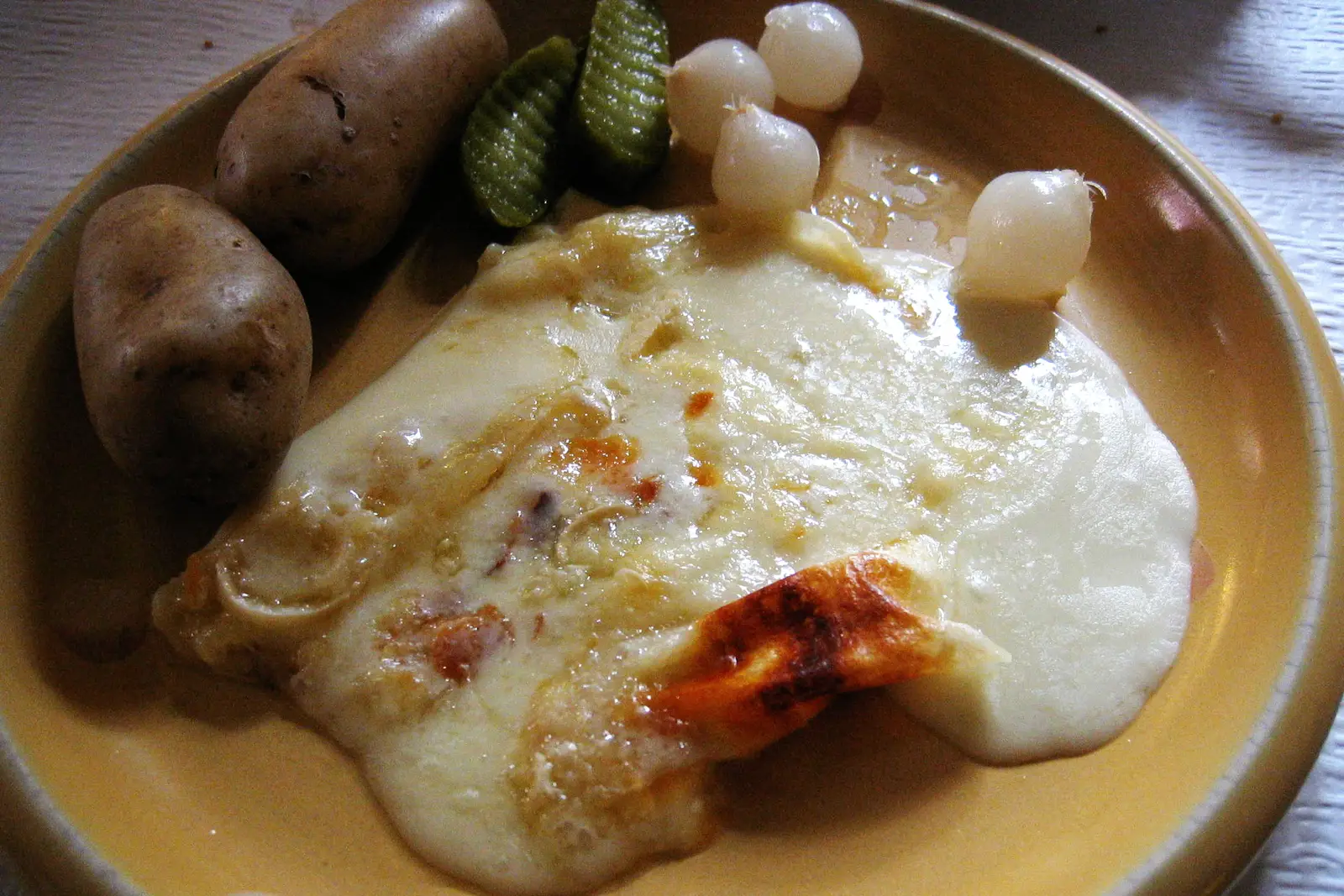
Melted raclette cheese scraped over a plate with boiled potatoes and pickles Switzerland flag Switzerland 40m
Dinner •Valais Alpine Classic

Raclette

Raclette is the Swiss Alps' other great melted-cheese meal: a half-wheel of raclette cheese is warmed until the cut face bubbles, then scraped in ribbons over boiled potatoes, with cornichons and pickled onions to cut the richness. One serving is about 365 g.

Comfort & Togetherness

Melted raclette cheese scraped over boiled potatoes with pickles.

Pairs Well With
Boiled potatoes, cornichons, pickled onions and a green salad
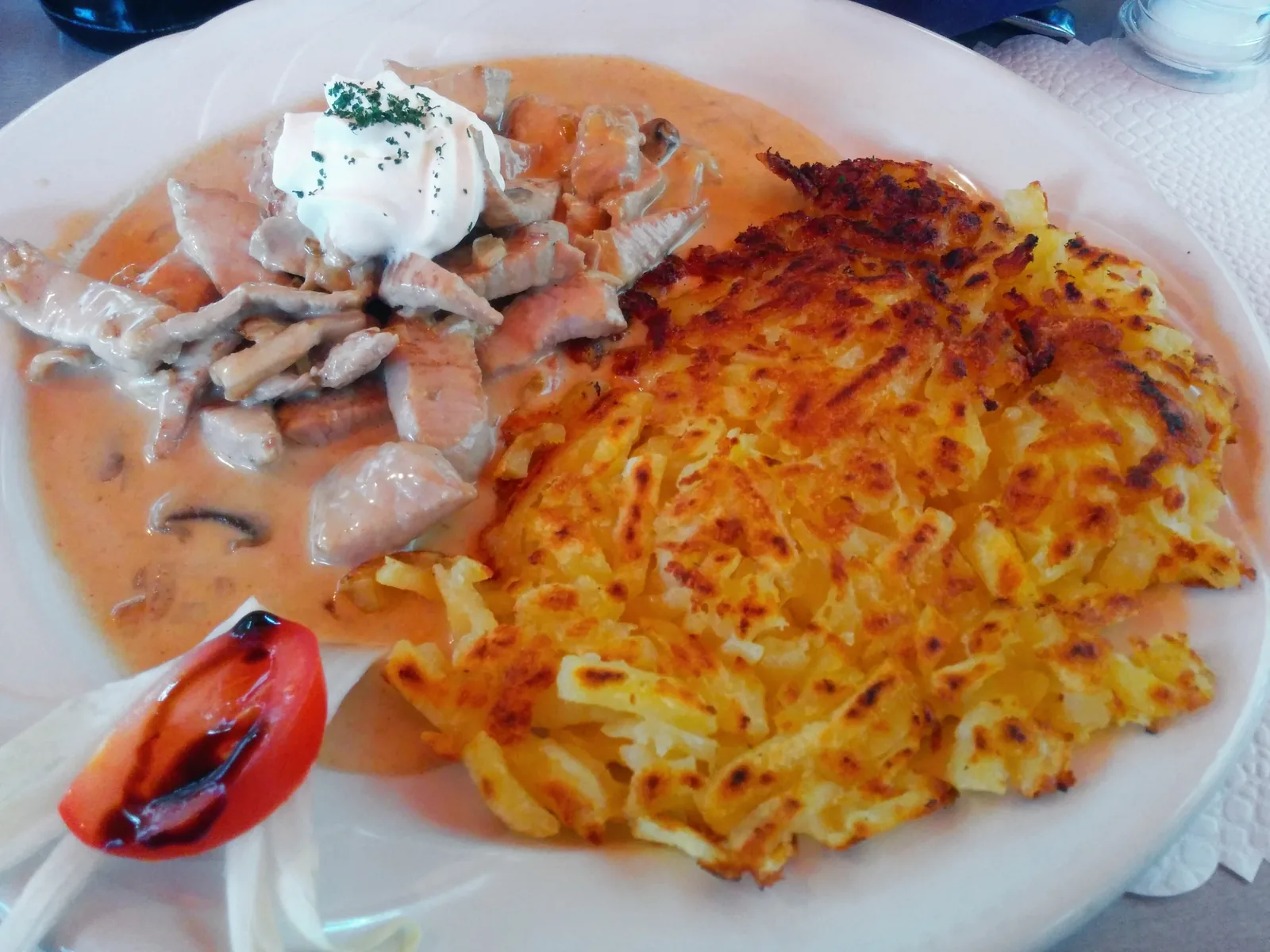
A plate of Zürcher Geschnetzeltes — veal strips in cream sauce with a dollop of cream — beside golden rösti. Switzerland flag Switzerland 40m
Dinner •Zurich Classic

Zürcher Geschnetzeltes

Zürcher Geschnetzeltes is Zurich's signature dish: thin strips of veal quickly seared, then finished in a white-wine and cream sauce with mushrooms and onion. One serving is about 335 g, before the rösti it is traditionally served with.

Rich & Comforting

Tender strips of veal in a white-wine cream sauce with mushrooms — Zurich's classic, with rösti.

Pairs Well With
Serve with golden rösti and a glass of dry Swiss white wine.
High Protein

The Dinner Gazette

Never wonder what’s for dinner again

One email a week with easy dinner ideas from around the world — ingredients, steps and nutrition, tested in our kitchen first.

Delivered every Thursday morning. Unsubscribe anytime.