
Curated recipes from 193 countries  •  New seasonal Mediterranean issue out now

Overview

Bogobe jwa Logala

Logala; Botswana Sorghum Milk Porridge

This bogobe jwa logala recipe stirs sorghum meal into hot milk and water, then cooks it gently for 35 minutes until it turns into a soft, creamy breakfast porridge. One serving is about 600 g.

Bogobe is the Setswana word for porridge, and it is the backbone of the Botswana table — stiff bogobe with meat and greens at lunch, soft bogobe for breakfast. Logala is the soft, milky version, made by whisking sorghum or maize meal into boiling milk and water and cooking it gently until creamy. In the classic account it uses two cups of milk, half a cup of water and a quarter cup of meal, cooked for about 35 minutes and served hot.

Pairs well with: A knob of butter, honey and fresh fruit

Provenance

Botswana flag Botswana

Botswana Morning Porridge

African Heritage

Time Dedication

40m

5m prep • 35m cook

Batch Yield

4 Servings

451 kcal per serving

1 serving ≈ 600 g

Technical Skill

Easy

Easy (One Pot)

Meal Timing & Digestive Fit

Breakfast

Prime Morning Fit

Lunch

Inappropriate

Dinner

Inappropriate

Snack & Tea

Inappropriate

Occasions: Breakfast, cold mornings, gentle recovery meals Cost: Low — about $1–2 per serving at home
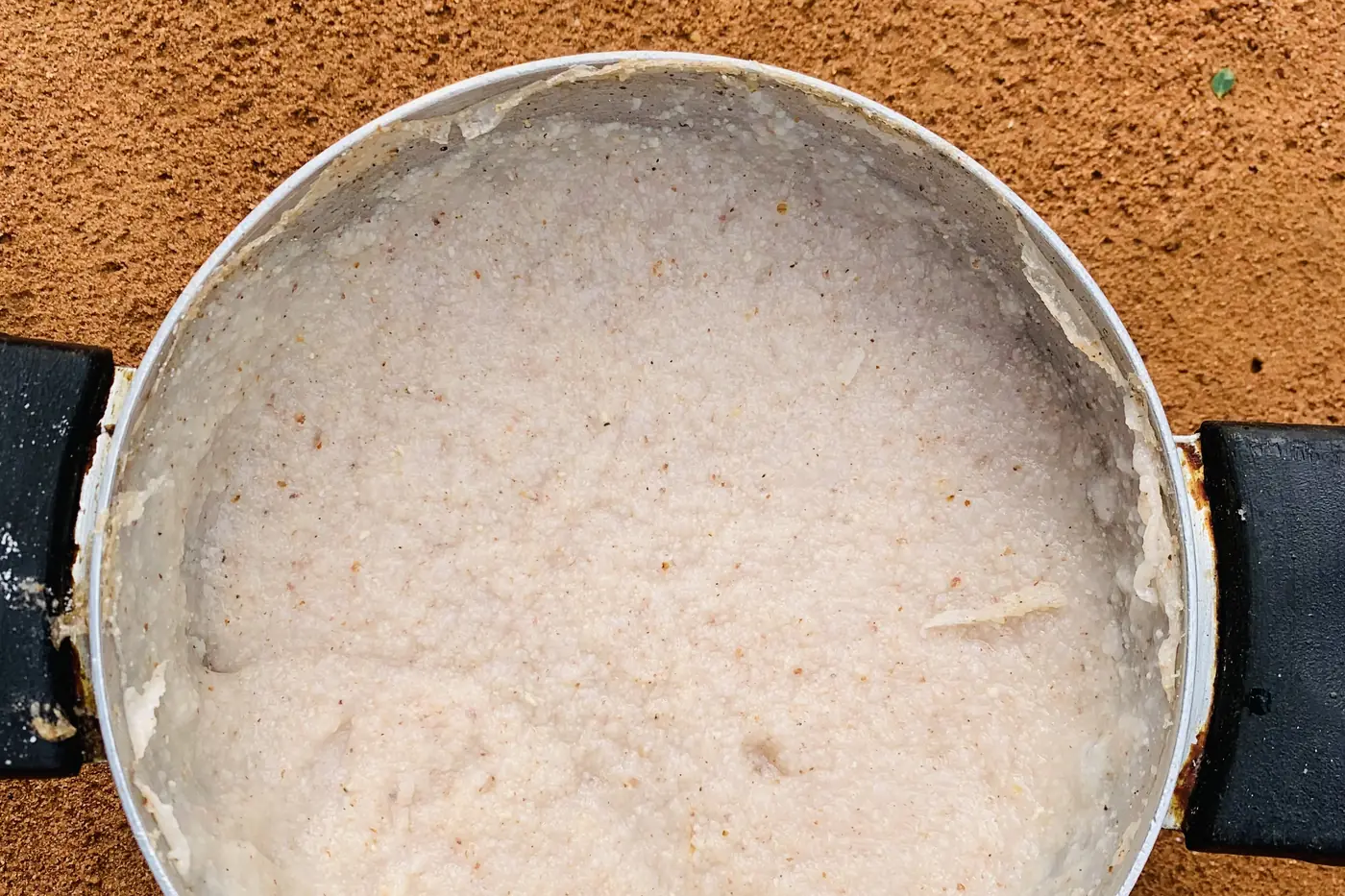
A pot of freshly cooked soft sorghum porridge (bogobe) in Botswana

Botswana Morning Porridge

Photo: OtengPortia, CC0, via Wikimedia Commons

The Heritage Formulary

Measured Ingredients

Estimated cost: Low — about $1–2 per serving at home (USD)

Good logala is soft enough to pour slowly from a spoon and perfectly smooth — no lumps, no scorch, no skin.

Execution Methodology & Culinary Technique

Step-by-Step Cooking Guide

Active 40m
P

Prep Stage: Make the Paste

5 Mins • Whisk Work

Measure the milk and water into a medium saucepan. In a small bowl, mix the sorghum meal with 1/2 cup of the water until it forms a smooth, lump-free paste, like thin pancake batter. This paste is the whole secret: meal stirred straight into hot milk clumps, but a paste melts in smoothly.

Maestro Tip: Whisk the paste until it runs off the spoon in a ribbon with no dry flecks — any lump now is a lump in the finished porridge.

  1. 1

    Bring the Milk to a Boil

    8 Mins Medium heat, just to a boil, 100°C (212°F)

    Set the saucepan of milk and water over medium heat with the salt, and bring it just to a gentle boil, stirring now and then so the milk does not catch on the bottom. Watch it closely — milk boils over fast.

    A wooden spoon laid across the top of the pan helps stop a boil-over.

    Done when: The milk is bubbling gently around the edges and steam is rising steadily.

  2. 2

    Whisk in the Paste

    3 Mins Boiling, 100°C (212°F), then low heat

    Give the paste one last stir, then pour it into the boiling milk in a slow, thin stream, whisking constantly with a wooden spoon or a traditional lehetho whisk. Keep whisking for 2–3 minutes as the porridge begins to thicken.

    Pour slowly and whisk without stopping — speed here is what keeps the porridge smooth.

    Done when: The mixture has thickened to a soft, creamy porridge with no lumps.

  3. 3

    Cook Gently Until Creamy

    25 Mins Low heat, gentle simmer, ~95°C (203°F)

    Reduce the heat to low, cover the pan with the lid slightly ajar, and cook for 25 minutes, stirring every few minutes and scraping the bottom so nothing sticks. The porridge will grow thicker, glossier and softer as the sorghum cooks through. Add a splash of hot milk if it gets too stiff.

    The porridge is done when a spoon dragged through it leaves a trail that closes slowly — too fast and it is still thin, too slow and it is too stiff.

    Done when: The porridge is smooth, creamy and soft enough to pour slowly from a spoon, with a mild, milky smell.

  4. 4

    Rest and Finish

    5 Mins Off the heat

    Take the pan off the heat and let the porridge rest, covered, for 5 minutes. Stir in the butter until it melts through, then ladle into warm bowls. Serve with honey or sugar on the table for anyone who wants it sweeter.

    Resting lets the last of the meal soften, so the porridge eats silkier than it looks straight off the stove.

    Done when: The butter has melted in and the porridge holds its shape softly in the bowl.

Finishing Touches & Plating

Serve hot in deep bowls with a melting knob of butter, and let each person sweeten their own bowl with honey or sugar.

Nutritional Physiology & Benefits

Nutrition

Energy

451

kcal / serving

Protein

19g

Complete AA

Carbs

52g

Complex

Fats

20g

Healthy

Per serving (4 servings · 1 serving ≈ 600 g)
Energy451 kcal
Protein19 g
Carbohydrates52 g
Fat20 g
Fibre2.7 g
Sugar24.5 g
Sodium716 mg
Per 100g
Energy75 kcal
Protein3.2 g
Carbohydrates8.6 g
Fat3.3 g
Fibre0.4 g
Sugar4.1 g
Sodium119 mg

Nutrition values are estimated — calculated from USDA FoodData Central values for the listed ingredients.

Vitamins & minerals: Calcium and vitamin D (milk), B vitamins and iron (sorghum), vitamin B12 (milk).

Gentle on the Stomach

A soft, slow-cooked porridge is one of the easiest breakfasts to digest — warm, mild and soothing first thing in the morning.

Slow, Steady Mornings

Sorghum is a whole grain with fibre, and the milk adds protein — together they release energy gradually instead of spiking and crashing.

Calcium and Iron

Milk brings calcium for bones, and sorghum brings iron and B vitamins — a useful pair for growing children and busy adults alike.

Food Pairings

What to Eat With

To optimize nutrient absorption and elevate the sensory depth, pair with these authentic accompaniments:

Sides

Fresh Fruit

Sliced banana, mango or berries add sweetness and vitamin C, which helps the body absorb the iron from the sorghum.

Fat Cakes (Magwinya)

A warm, soft fat cake beside the porridge is the classic Botswana breakfast pairing — the crisp outside contrasts with the creamy porridge.

Drinks

Rooibos Tea

A cup of hot rooibos with the porridge is the everyday Botswana morning — gentle, warming and caffeine-free.

Full Menus

With Morogo for Lunch

Porridge for breakfast and morogo with pap for lunch is the rhythm of an ordinary Botswana day — grain in the morning, greens at midday.

Complete menu

Serve bogobe jwa logala hot with butter and honey, fresh fruit on the side, and rooibos tea.

Digestive Guardrails

What NOT to Combine

To prevent digestive distress, sluggishness, or palate clash, avoid pairing the dish with these elements:

Too Much Added Sugar

The milk already brings natural sugars, so a heavy hand with sugar or honey turns a gentle breakfast into a very sweet one. Taste first, then sweeten lightly. This is general guidance, not medical advice.

High Heat and No Stirring

Sorghum porridge scorches easily on the bottom of the pan, and burnt porridge cannot be rescued — keep the heat low and stir every few minutes.

General information only, not medical advice — consult a doctor for personal dietary decisions.

Who Should Eat It

Who Should Eat

  • General adultsA warm, filling breakfast — whole grain, milk protein and gentle energy.
  • ChildrenExcellent for children — soft, mild and easy to eat; serve warm, not hot, and go easy on added sugar.
  • ElderlyExcellent — soft, easy to swallow and rich in calcium; keep the portion moderate if appetite is small.
  • Pregnant womenGenerally suitable; milk is pasteurised and the porridge is cooked through. Keep added sugar light.
  • Breastfeeding womenGenerally suitable; the calcium and protein support recovery — a good, gentle start to the day.
  • AthletesA solid pre-training breakfast: slow carbs with milk protein; add fruit for quick energy.
  • Weight gainA good choice — take a generous bowl with fruit and a fat cake on the side.
  • Weight lossA filling breakfast for moderate calories; keep the butter small and skip the honey.

Health Conditions — Adjust or Avoid

Conditions

  • DiabetesSorghum is a whole grain with slow carbs, but the milk adds lactose sugars — keep the bowl moderate and ask your clinician about portion size.
  • High blood pressureThe recipe is lightly salted as written — do not add extra salt, and it fits a low-sodium breakfast well.
  • Kidney diseaseMilk and sorghum are both moderate in potassium and phosphorus — keep portions moderate and ask your clinician.
  • GoutSorghum is low in purines — a good choice; keep the butter small.
  • Stomach issuesUsually very gentle, but hot milk can bother a sensitive stomach — let it cool a little and eat slowly.
  • Cardiovascular diseaseLow in fat as written, with whole-grain fibre — a heart-friendly breakfast.
  • Fatty liverA light, low-fat breakfast that fits well; keep the butter to the recipe amount.
  • Food allergiesContains milk (dairy, lactose). Naturally gluten-free — sorghum has no gluten — but check the meal is certified gluten-free if you have coeliac disease.
  • Special therapeutic dietsIf you follow a prescribed low-potassium or renal diet, keep the portion moderate and check with your clinician.

If you have a medical condition, consult your doctor before changing your diet.

Storage & Use

Storage & Use

How to store
Cool quickly and store in an airtight container; the porridge thickens as it cools.
In the fridge
2 days.
In the freezer
Up to 1 month, though the texture becomes grainy on thawing.
How to reheat
Warm gently with a splash of milk, stirring, until steaming hot, at least 74°C (165°F).
Freezing recommended
Not recommended — the texture suffers; cook fresh instead.
Signs it has spoiled
Sour smell, a skin that will not stir back in, or mould.

More recipes to explore

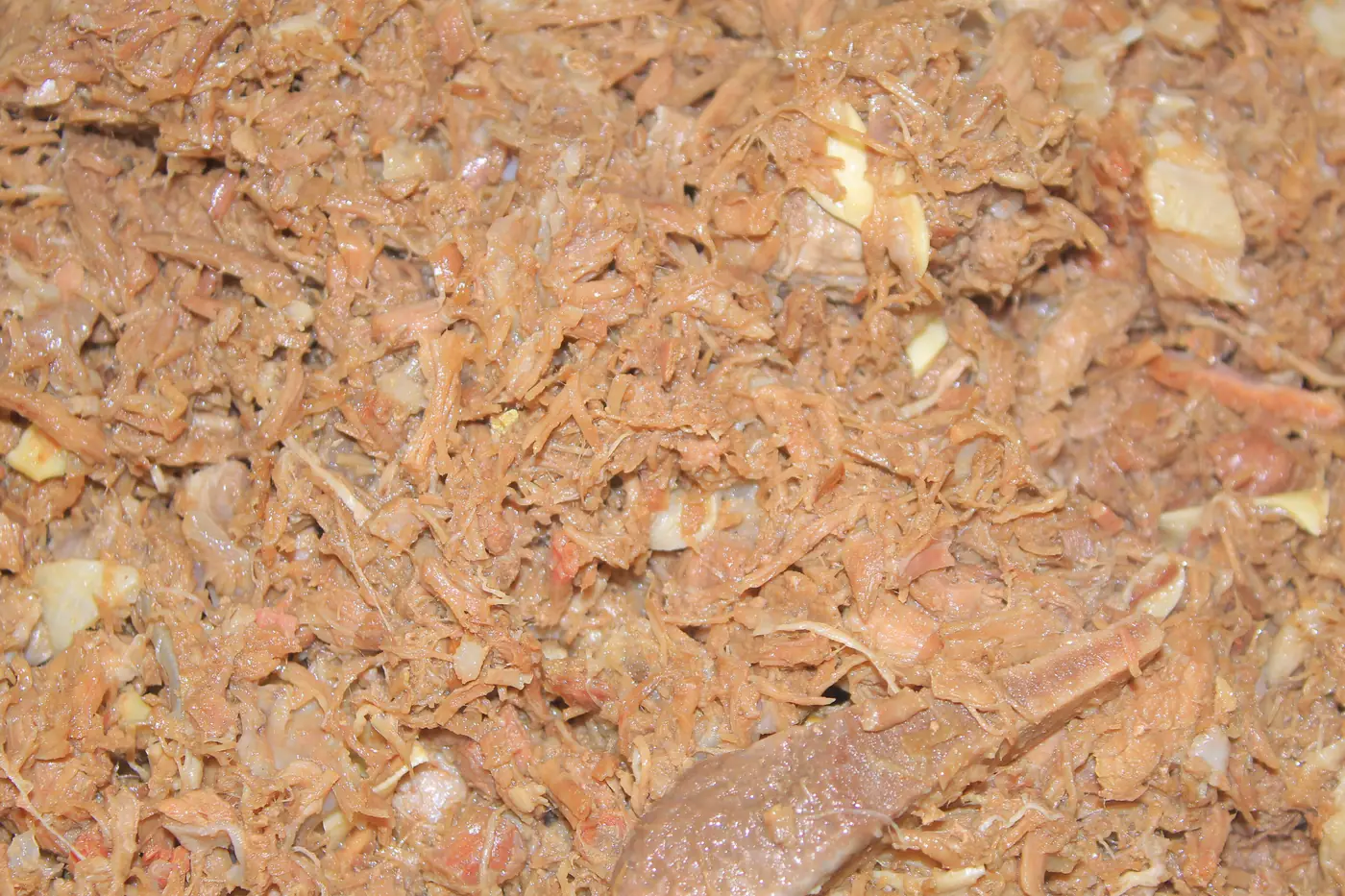
Close-up of seswaa, pounded shredded beef with a soft fibrous texture Botswana flag Botswana 4h 20m
Dinner •Botswana National Dish

Seswaa

This seswaa recipe simmers bone-in beef for hours in salted water with onion and bay, then pounds it into soft, juicy fibres the way Batswana cooks have done it for generations. One serving is about 263 g.

Celebration & Comfort

Slow-simmered bone-in beef, pounded by hand into soft, rich fibres.

Pairs Well With
Stiff pap, morogo greens and a tomato-onion relish
High Protein
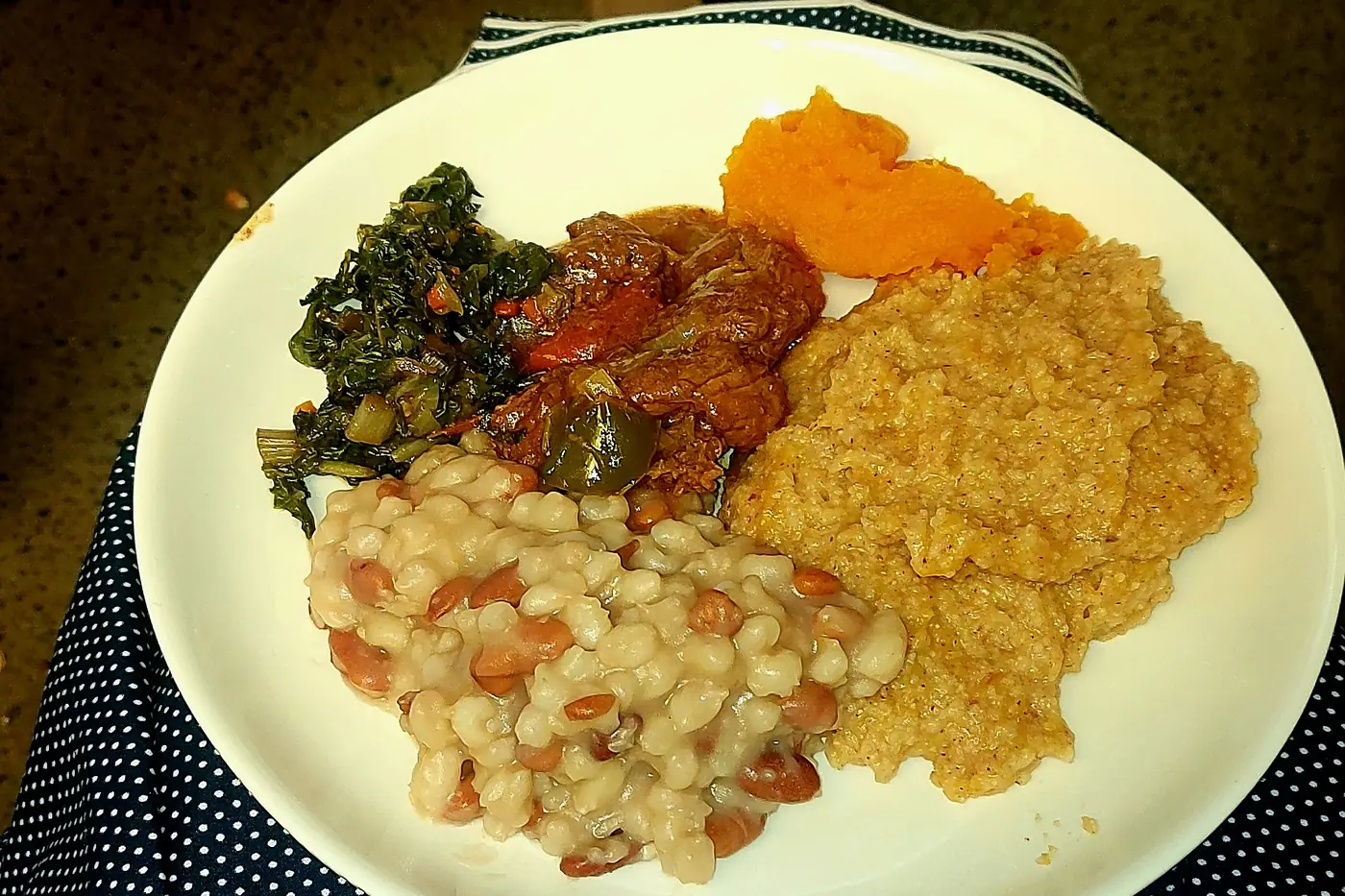
A Botswana plate with cooked morogo greens, beef, beans, pumpkin and bogobe Botswana flag Botswana 35m
Lunch •Botswana Everyday Greens

Morogo

This morogo recipe cooks wild spinach leaves — amaranth or cowpea leaves — with sweet onion, tomato and a little oil until they turn silky and deep green. One serving is about 210 g.

Everyday Nourishment

Wild leafy greens gently steamed with onion, tomato and garlic.

Pairs Well With
Stiff pap, seswaa and a squeeze of lemon
A bowl of Vietnamese phở bò with rare beef, rice noodles and fresh herbs Vietnam flag Vietnam 3h 30m
Breakfast •Hanoi Heritage

Phở Bò Tái Nạm

Slow-simmered star anise and cinnamon bone broth with hand-cut rice noodles, supplying clean restorative warmth and collagen. One serving is about 775 g.

Immunity & Warming

Slow-simmered bone broth with rice noodles, rare beef and fresh herbs.

Pairs Well With
Crispy quẩy, fresh lime & sawtooth coriander
Soups & Broths • High Protein
Golden butter croissants on a wooden board France flag France 20m
Breakfast •Parisian Boulangerie

Croissant au Beurre & Café

Laminated cultured butter pastry paired with washed Arabica, for a slow, pleasurable Parisian morning — best with a little protein alongside. One serving is about 390 g.

Sustained Focus

Flaky all-butter croissant with café au lait, Comté and green apple.

Pairs Well With
Comté cheese wedge & Green apple slices
Quick Prep (<30m)

The Dinner Gazette

Never wonder what’s for dinner again

One email a week with easy dinner ideas from around the world — ingredients, steps and nutrition, tested in our kitchen first.

Delivered every Thursday morning. Unsubscribe anytime.