Curated recipes from 193 countries  •  New seasonal Mediterranean issue out now

Overview

Bolo de Mel

Madeira Honey Cake, Bolo de Mel de Cana

This bolo de mel recipe bakes Madeira's famous honey cake: dark sugar-cane honey, warm spices, walnuts, almonds and raisins in a moist, dense crumb. One serving is about 95 g (one slice) and carries 381 calories.

Bolo de mel is Madeira's Christmas cake, born in the island's sugar-cane days when the dark, bitter-sweet honey made from cane juice — mel de cana — was plentiful and cheap. Bakers mixed it with flour, spices from the old trade routes, and the walnuts and almonds that grow on the island, then baked a dense cake that stays moist for months without refrigeration. Families still bake it in early December, wrap it in cloth, and cut it through the holidays; the flavour deepens the longer it rests.

Pairs well with: A strong cup of black coffee or Madeira wine, with a thin slice of sharp cheese on the side.

Provenance

Portugal flag Portugal

Madeira Honey Cake Classic

Mediterranean & Italy

Time Dedication

1h 20m

30m prep • 50m cook

Batch Yield

12 Servings

381 kcal per serving

1 serving ≈ 95 g

Technical Skill

Intermediate

Intermediate (Slow Bake)

Meal Timing & Digestive Fit

Breakfast

Not Advised

Lunch

Inappropriate

Dinner

Inappropriate

Snack & Tea

Ideal Light Bite

Occasions: Christmas, festive gatherings, afternoon coffee, edible gifts Cost: Medium — about $2–3 per serving at home
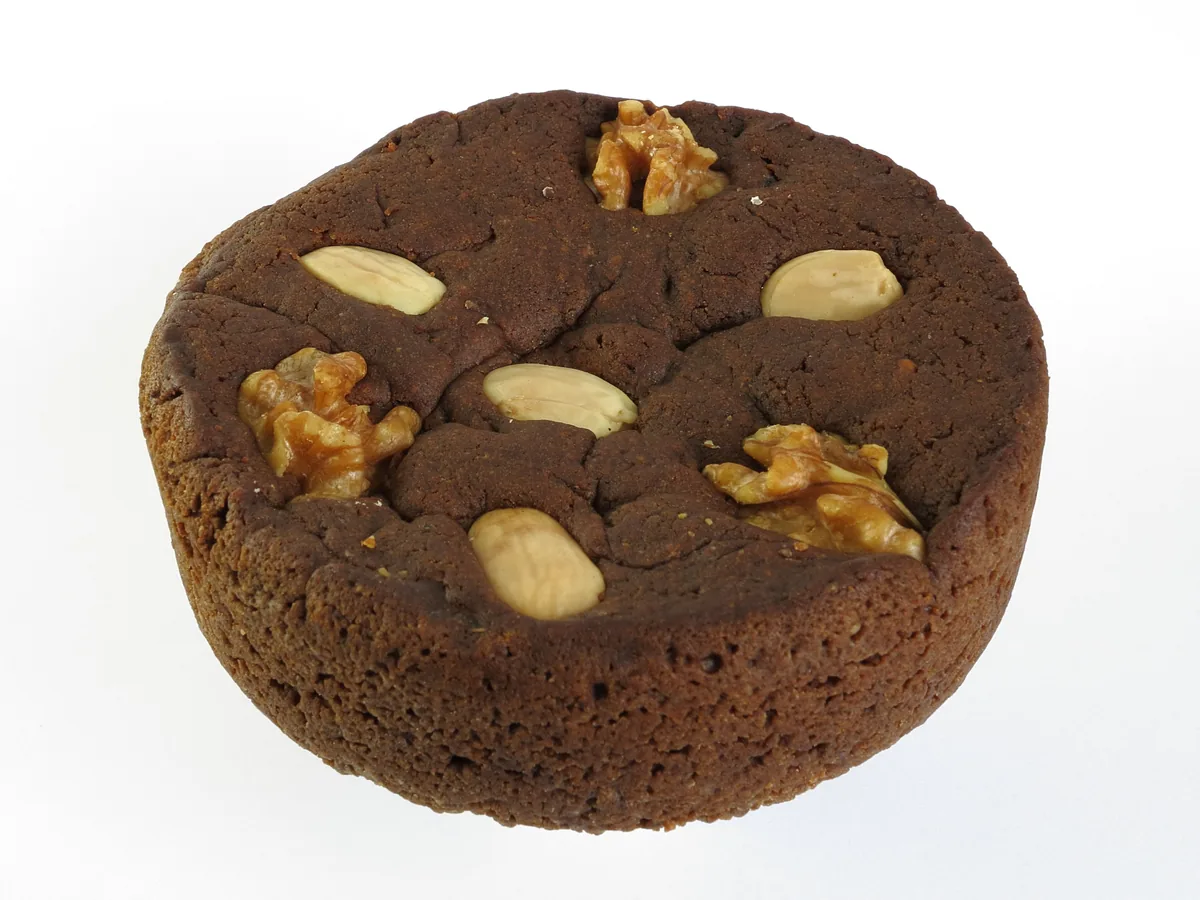
A whole dark bolo de mel honey cake topped with walnuts and almonds on a white background

Madeira Honey Cake Classic

Photo: TeWeBs, CC BY-SA 4.0, via Wikimedia Commons

The Heritage Formulary

Measured Ingredients

Estimated cost: Medium — about $2–3 per serving at home (USD)

A slow, low bake keeps the dense crumb moist, and the cake is rested before cutting so the slices hold cleanly.

Execution Methodology & Culinary Technique

Step-by-Step Cooking Guide

Active 1h 20m
P

Prep Stage: Warm the Honey, Mix the Spices

30 Mins • Soak 10 Mins

Warm the sugar-cane honey with the butter until it loosens and turns glossy, then let it cool for 10 minutes. While it cools, sift the flour with cinnamon, cloves, nutmeg, allspice and baking soda, soak the raisins, and chop the walnuts. Butter and line a 20 cm round tin so the dark cake releases cleanly.

Maestro Tip: Let the warmed honey cool until it is just warm to the touch — hot honey will scramble the eggs when they meet.

  1. 1

    Warm the honey and butter

    10 Mins Low heat, ~70°C (158°F)

    Put the sugar-cane honey and butter in a saucepan over low heat and stir until the butter has melted and the mixture is dark, glossy and runny. Take it off the heat and leave it for 10 minutes until it is warm, not hot.

    Keep the heat low — scorched honey turns bitter and the cake will taste burnt.

    Done when: A smooth, dark, glossy liquid that pours in a slow ribbon.

  2. 2

    Mix the dry ingredients

    5 Mins Room temperature, ~20°C (68°F)

    Sift the flour, cinnamon, cloves, nutmeg, allspice, baking soda and salt into a large bowl. Stir in the raisins (drained), the chopped walnuts and the diced candied peel so the fruit and nuts are coated in flour and will not sink.

    Coating the fruit in flour is the old trick that keeps raisins from sinking to the bottom of a dense cake.

    Done when: Fruit and nuts evenly coated in spiced flour, no clumps of baking soda.

  3. 3

    Beat the eggs and combine

    10 Mins Room temperature, ~20°C (68°F)

    Beat the eggs in a jug, then pour in the warm honey mixture and the orange juice and whisk until smooth. Pour the wet mixture into the flour and stir with a wooden spoon until just combined — a few streaks of flour are fine. Do not beat hard or the cake turns tough.

    Stop stirring as soon as the flour disappears; over-mixing is the fastest way to a hard honey cake.

    Done when: A thick, dark, sticky batter that falls from the spoon in slow ribbons.

  4. 4

    Fill the tin and decorate

    5 Mins Room temperature, ~20°C (68°F)

    Scrape the batter into the lined 20 cm tin and smooth the top. Press the reserved walnut halves and whole almonds into the surface in a loose ring — they are the traditional decoration and the way you recognise a bolo de mel at a glance.

    Press the nuts in gently so they sit half-buried; nuts left on the surface can fall off as the cake rises.

    Done when: Batter level in the tin, nuts pressed into the top in a visible pattern.

  5. 5

    Bake low and slow

    50 Mins 160°C (320°F)

    Bake in the centre of the oven at 160°C (320°F) for 50 minutes. The cake is done when a skewer pushed into the centre comes out clean or with just a few moist crumbs, and the top feels firm when pressed lightly. If the top darkens too fast, lay a sheet of foil loosely over it for the last 15 minutes.

    Low and slow is the point — a hot oven burns the honey on the outside before the middle is cooked.

    Done when: Skewer clean, top firm and springy, edges just pulling away from the tin.

  6. 6

    Cool, rest and cut

    30 Mins + Rest Room temperature, ~20°C (68°F)

    Leave the cake in the tin for 15 minutes, then turn it out onto a rack and cool completely. Wrap it tightly in cling film or a clean cloth and rest it for at least a day before cutting — the flavour deepens and the crumb firms up so the slices cut cleanly.

    Cutting it warm crumbles the cake; a day's rest is part of the recipe, not a suggestion.

    Done when: Cake cool, firm and dark; slices cut cleanly with a sharp knife, no crumbling.

Finishing Touches & Plating

Cut the rested cake into thin slices — it is rich, so a little goes a long way — and serve with coffee or Madeira wine. Wrap any leftovers tightly; the cake keeps improving for a week or two.

Nutritional Physiology & Benefits

Nutrition

Energy

381

kcal / serving

Protein

8g

Complete AA

Carbs

56g

Complex

Fats

15g

Healthy

Per serving (12 servings · 1 serving ≈ 95 g)
Energy381 kcal
Protein8 g
Carbohydrates56 g
Fat15 g
Fibre2.7 g
Sugar26.2 g
Sodium141 mg
Per 100g
Energy401 kcal
Protein7.9 g
Carbohydrates58.6 g
Fat16.1 g
Fibre2.8 g
Sugar27.6 g
Sodium148 mg

Nutrition values are estimated — calculated from USDA FoodData Central values for the listed ingredients.

Vitamins & minerals: Vitamin E and magnesium (almonds, walnuts), iron and potassium (molasses, raisins), B vitamins (flour, eggs), omega-3 fats (walnuts).

Keeps Without Fuss

The honey and spices keep this cake moist for weeks at room temperature, so a single bake feeds a household through the holidays.

Nuts and Dried Fruit

Walnuts and almonds bring healthy fats, vitamin E and magnesium, while raisins add iron and potassium to an otherwise sweet cake.

Slow, Steady Energy

A dense, rich slice with 56 g of carbohydrate gives lasting fuel — which is why islanders packed it for long days at sea and in the fields.

Food Pairings

What to Eat With

To optimize nutrient absorption and elevate the sensory depth, pair with these authentic accompaniments:

Drinks

Strong Black Coffee

Bitter, strong coffee balances the cake's deep honey sweetness and cleans the palate between rich bites.

Madeira Wine

The island's own fortified wine shares the cake's caramel and dried-fruit notes, so they taste like they were made for each other.

Sides

A Thin Slice of Sharp Cheese

A salty, sharp cheese such as aged Cheddar cuts through the sweetness and turns the cake into a proper dessert course.

More Pairings

Fresh Orange Segments

Bright, juicy orange lifts the heavy spices and gives a fresh contrast to the dark, dense crumb.

Complete menu

Serve a thin slice of bolo de mel with black coffee after lunch, or as part of a festive dessert table with fresh fruit and a glass of Madeira wine.

Digestive Guardrails

What NOT to Combine

To prevent digestive distress, sluggishness, or palate clash, avoid pairing the dish with these elements:

Very Sweet Drinks

One slice already carries about 26 g of sugar, so pairing it with sweetened tea, hot chocolate or a sugary soft drink stacks sugar on sugar. Plain coffee, tea or water suits it better. This is general food information, not medical advice.

Eating Large Portions Late at Night

A rich, 381-calorie slice with a lot of sugar is a heavy choice just before bed and can sit uncomfortably for some people. Keep evening portions thin. This is general food information, not medical advice.

General information only, not medical advice — consult a doctor for personal dietary decisions.

Who Should Eat It

Who Should Eat

  • General adultsA festive treat best enjoyed as a thin slice with coffee — rich, so a little goes a long way.
  • ChildrenChildren love the sweet, spiced flavour, but the sugar is high — one small slice is plenty, and watch for nut allergies.
  • ElderlySoft and easy to chew, and a small slice with tea is a pleasant afternoon treat; the sugar calls for a modest portion.
  • Pregnant womenFine in a small portion; the cake is fully baked, but keep the sugar in mind as part of the day's food.
  • Breastfeeding womenAn energy-rich snack that can help meet higher energy needs; one slice with coffee is a reasonable portion.
  • AthletesUseful as a quick energy food before a long session, with carbohydrate and a little protein from nuts and eggs.
  • Weight gainHelpful — energy-dense, easy to eat, and keeps for weeks, so it is always there when a snack is needed.
  • Weight lossBest as an occasional small slice rather than a daily habit: 381 calories and 26 g of sugar per slice add up fast.

Health Conditions — Adjust or Avoid

Conditions

  • DiabetesOne slice carries about 56 g of carbohydrate and 26 g of sugar, so it will raise blood sugar quickly — a small portion, or skipping it, is the safer choice; ask a clinician about a suitable portion for you.
  • High blood pressureSodium is low at about 141 mg per slice, so the cake itself is not a salt concern — the sugar is the thing to watch; ask a clinician if unsure.
  • Kidney diseaseNuts and dried fruit add potassium and phosphorus, which some kidney diets limit — ask a clinician before eating this regularly.
  • GoutNo organ meats or seafood, and the cake itself is not a gout trigger, but the sugar and alcohol often served with it can matter — ask a clinician about the whole meal.
  • Stomach issuesRich, dense and high in sugar, this cake can feel heavy for sensitive stomachs; a small slice with plain tea is gentler, and ask a clinician if symptoms persist.
  • Cardiovascular diseaseThe fats here are mostly from nuts and butter, but the sugar is high, so a thin slice on occasion fits better than a daily portion — ask a clinician for personal guidance.
  • Fatty liverHigh in sugar from honey and dried fruit, so frequent slices work against a fatty-liver diet — an occasional thin slice is the limit for most people; ask a clinician.
  • Food allergiesContains wheat (gluten), egg, walnuts and almonds. Not suitable for nut allergy or coeliac disease as written.
  • Special therapeutic dietsNot suitable for low-sugar, gluten-free or nut-free diets as written; a nut-free version changes the character of the cake — ask a clinician or dietitian before adapting it.

If you have a medical condition, consult your doctor before changing your diet.

Storage & Use

Storage & Use

How to store
Wrap tightly in cling film or a clean cloth, then keep in an airtight tin.
In the fridge
Not needed — keeps at cool room temperature for 3–4 weeks; refrigerating dries it out.
In the freezer
Up to 6 months, well wrapped; thaw overnight at room temperature.
How to reheat
No reheating needed. Serve at room temperature; a slice can be warmed for 10 seconds in the microwave if you like it soft.
Freezing recommended
Yes — it freezes beautifully and thaws with its flavour intact.
Signs it has spoiled
Mould on the surface, a sour or fermented smell, or a dry, hard crumb that no longer softens — discard it.

More recipes to explore

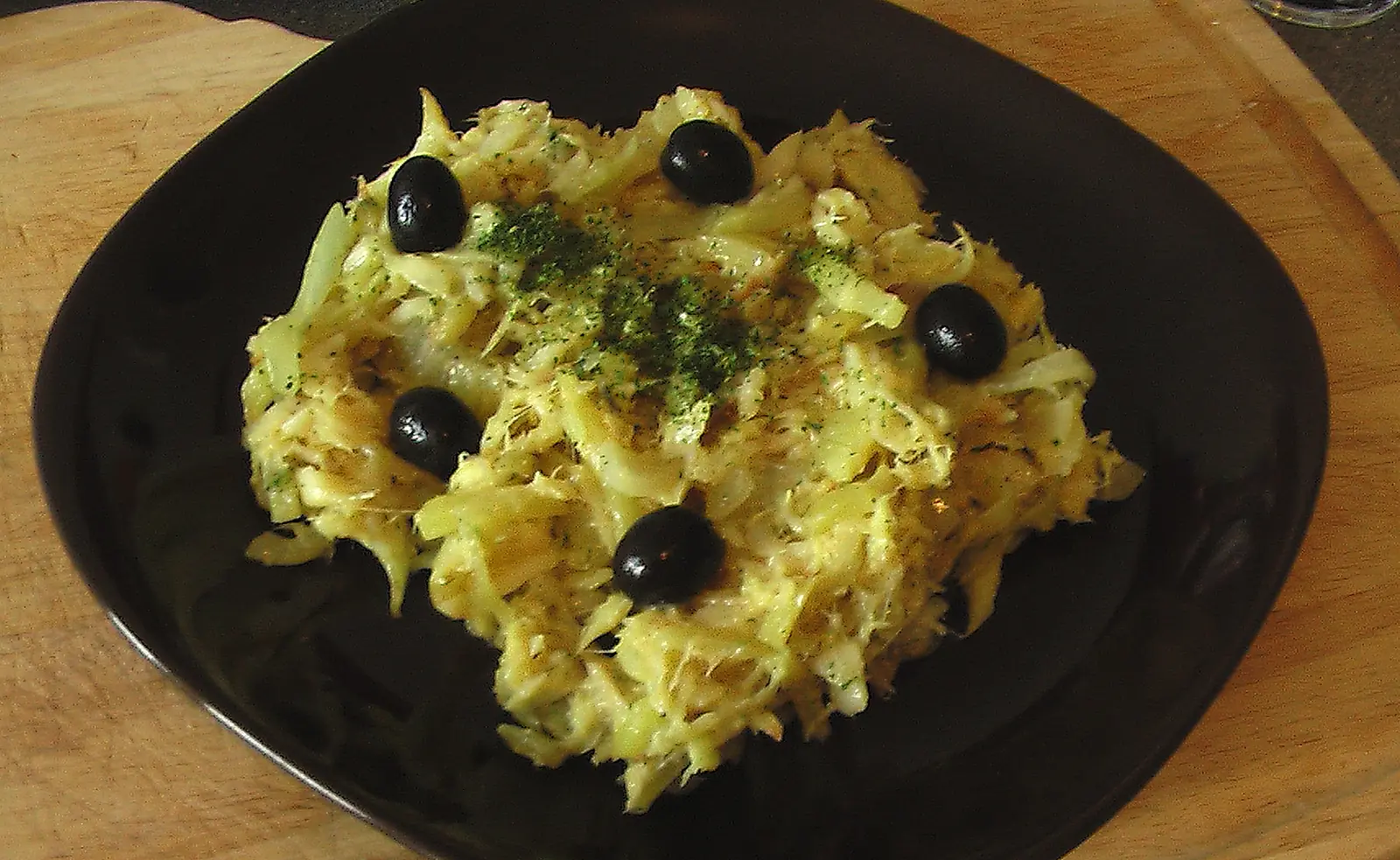
A plate of bacalhau à brás — shredded salt cod with egg and matchstick potatoes, black olives and parsley Portugal flag Portugal 50m
Dinner •Lisbon Tavern Classic

Bacalhau à Brás

Bacalhau à brás recipe: desalted shredded cod, golden matchstick potatoes and softly scrambled egg, finished with black olives and parsley. One serving is about 350 g.

Comfort & Protein

Shredded salt cod folded with egg and crisp matchstick potatoes — a filling, protein-rich Lisbon supper.

Pairs Well With
A simple green salad and a glass of vinho verde
High Protein
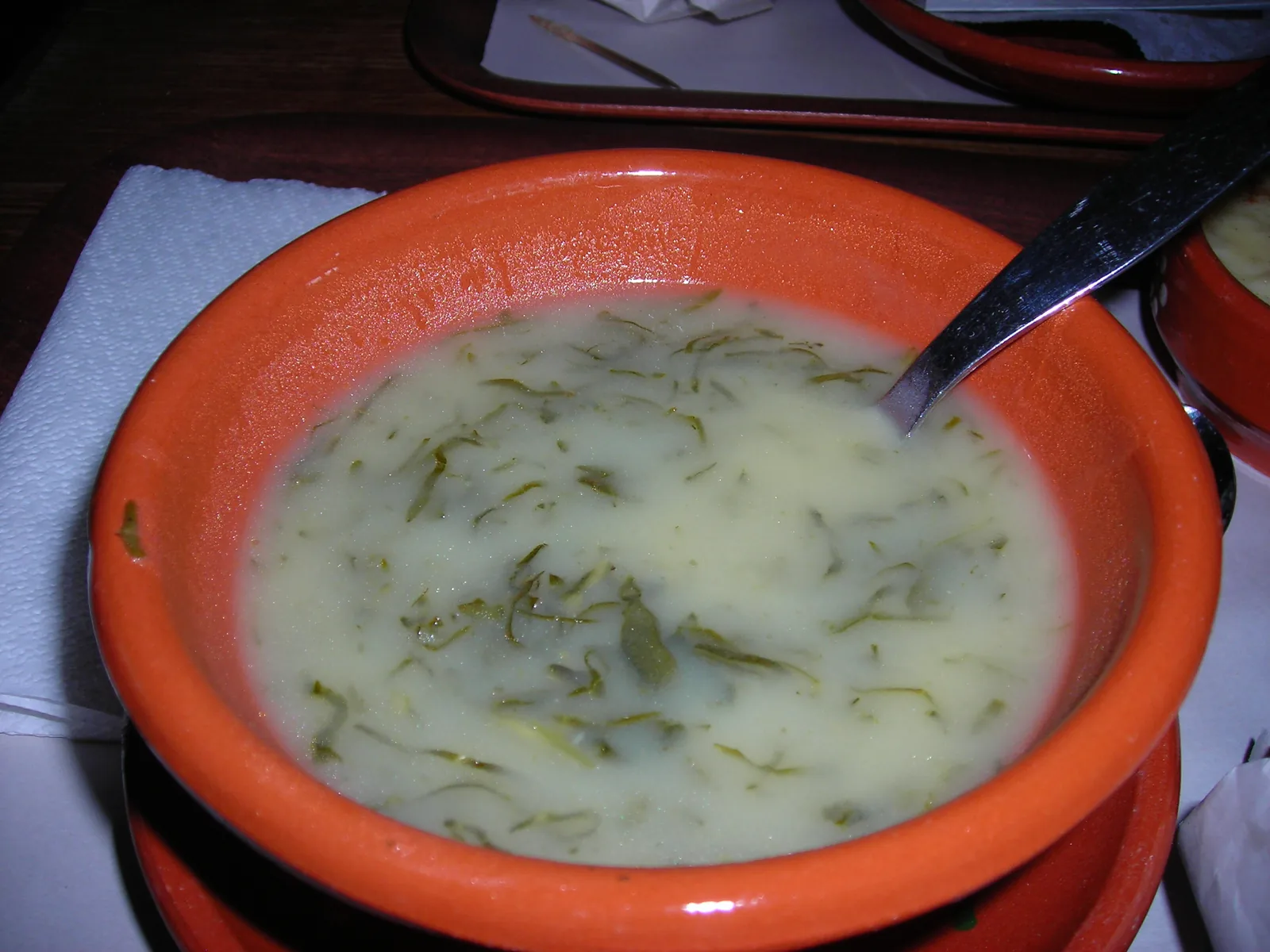
A terracotta bowl of caldo verde — pale potato soup with shredded green kale and a spoon Portugal flag Portugal 50m
Dinner •Minho National Soup

Caldo Verde

Caldo verde recipe: creamy potato soup blended smooth, with ribbons of kale and slices of chouriço, finished with a thread of olive oil. One serving is about 590 g.

Comfort & Warmth

Silky potato soup with finely shredded kale and smoky chouriço — Portugal's best-loved bowl.

Pairs Well With
Crusty broa bread and a glass of vinho verde
Soups & Broths
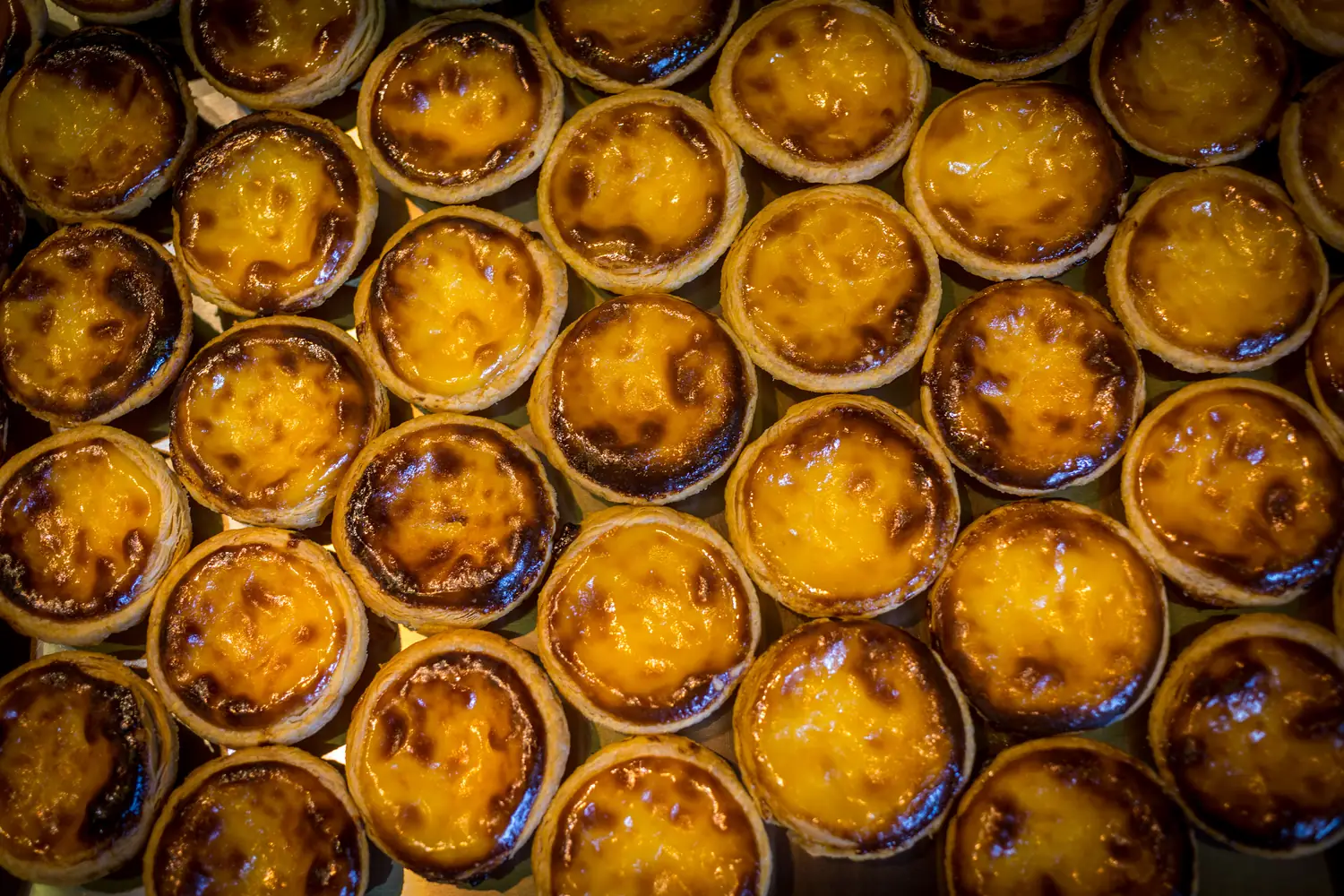
A tray of pastel de nata — golden custard tarts with blistered, caramelised tops in flaky pastry Portugal flag Portugal 50m
Snack & Tea •Belém Monastery Tart

Pastel de Nata

Pastel de nata recipe: shatteringly crisp puff pastry shells filled with warm, vanilla-cinnamon egg custard, baked until blistered on top. One serving is about 187 g (2 tarts).

Sweet Treat

Crisp, flaky pastry cups filled with cinnamon-scented egg custard, blistered in a very hot oven.

Pairs Well With
A small strong coffee (bica) and a dusting of cinnamon
Butterflied piri piri chicken grilling over charcoal, golden-red with chilli spice Portugal flag Portugal 55m
Dinner •Algarve Heritage

Frango Piri Piri

Frango piri piri is Portugal's most famous chicken: a whole bird butterflied flat, rubbed with a fiery paste of piri piri chillies, garlic, lemon and paprika, then grilled over charcoal until the skin turns crisp and red-gold. This piri piri chicken recipe is the Algarve way — an overnight marinade, a hot grill, and a warm butter baste at the end. One serving is about 210 g.

Spicy Char-Grill

A butterflied chicken marinated in piri piri chilli, garlic and lemon, grilled over charcoal until the skin is crisp and reddened.

Pairs Well With
Chips, tomato-onion salad and a cold beer.
High Protein

The Dinner Gazette

Never wonder what’s for dinner again

One email a week with easy dinner ideas from around the world — ingredients, steps and nutrition, tested in our kitchen first.

Delivered every Thursday morning. Unsubscribe anytime.