Curated recipes from 193 countries  •  New seasonal Mediterranean issue out now

Overview

Brätzeli

Bricelets, Swiss Wafer Rolls, Brätzeli Rolls

This bratzeli recipe makes the Swiss wafer rolls pressed in a patterned iron: a thin batter of flour, sugar, butter, egg and cream, flavoured with vanilla and lemon zest, cooked golden and rolled into crisp tubes while still hot. They are delicate, buttery and lightly citrusy, and they shatter when you bite them. One serving is about 71 g, three rolls.

Brätzeli are the thin patterned wafers of German-speaking Switzerland, where they are also called bricelets in the French-speaking cantons. They descend from the medieval oublie, the thin wafer cooked between two hot irons that was eaten across Europe for centuries; the name bricelet comes from the Alemannic word bretzeli. Each family once had its own iron, engraved with a pattern — stars, flowers, birds, or views of local monuments — so the wafers carried the family's mark. The batter is still the simple old one: flour, sugar, butter, eggs and cream, flavoured with vanilla and lemon zest, pressed thin in the iron and rolled into tubes while hot, before it sets crisp. Brätzeli are made all year, and in many Swiss homes they belong to Christmas and New Year baking.

Pairs well with: Coffee, hot chocolate, or vanilla ice cream

Provenance

Switzerland flag Switzerland

Swiss Heritage

Nordic & European

Time Dedication

1h

20m prep • 40m cook

Batch Yield

8 Servings

351 kcal per serving

1 serving ≈ 71 g

Technical Skill

Intermediate

Medium (Wafer Iron)

Meal Timing & Digestive Fit

Breakfast

Not Advised

Lunch

Inappropriate

Dinner

Inappropriate

Snack & Tea

Ideal Light Bite

Occasions: Christmas baking, New Year, coffee breaks, afternoon snacks, festive gatherings Cost: Low — about $0.50–1 per serving at home

Golden brätzeli wafer rolls with a pressed pattern, stacked on a white plate against a dark background

Swiss Heritage

Photo: Abaddon1337, CC BY-SA 3.0, via Wikimedia Commons

The Heritage Formulary

Measured Ingredients

Estimated cost: Low — about $0.50–1 per serving at home (USD)
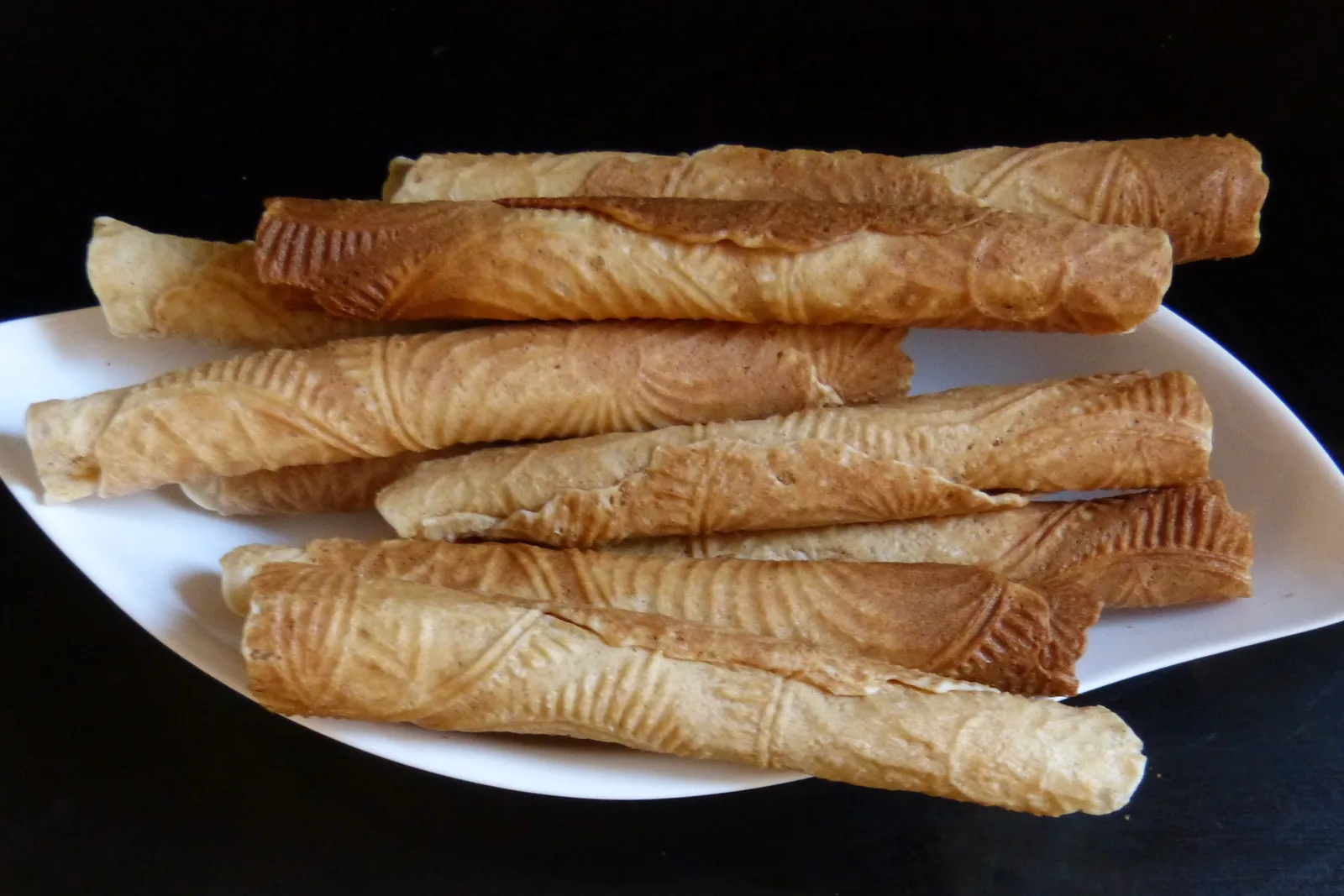
Good brätzeli are paper-thin, evenly golden with a clear pressed pattern, rolled tight, and crisp enough to shatter when bitten.

Execution Methodology & Culinary Technique

Step-by-Step Cooking Guide

Active 1h
P

Prep Stage: Melt, Sift & Whisk

20 Mins • Batter & Iron

Melt the 100 g butter gently and leave it to cool slightly. Sift the flour with the salt into a large bowl and stir in the caster sugar. Beat the eggs with the cream, milk, vanilla and lemon zest in a jug. Set a wooden spoon handle or a thin rolling pin beside the iron for rolling, and have a wire rack ready for cooling.

Maestro Tip: Have the rolling handle ready before the first wafer cooks: a wafer waits for no one and sets in seconds.

  1. 1

    Whisk the batter

    10 Mins Room temperature, about 20°C (68°F)

    Pour the egg and cream mixture into the flour and whisk until smooth, then whisk in the cooled melted butter a little at a time. The batter should pour in a slow ribbon, about as thick as single cream. If it is too thick, add milk a teaspoon at a time.

    Whisk out every lump now: lumps in the batter become pale spots in the wafer.

    Done when: Batter smooth, lump-free, pouring in a slow ribbon.

  2. 2

    Rest the batter

    15 Mins Room temperature, about 20°C (68°F)

    Cover the bowl and leave the batter to rest for 15 minutes. The flour hydrates, the bubbles settle, and the wafers cook more evenly.

    Do not skip the rest: unrested batter spits and cooks unevenly in the iron.

    Done when: Batter slightly thicker, with no bubbles on the surface.

  3. 3

    Heat the iron and cook the first wafer

    5 Mins Iron at medium heat, about 180°C (350°F)

    Heat the brätzeli iron (or a pizzelle iron) over medium heat until a drop of water sizzles and evaporates at once. Brush the plates very lightly with the extra butter. Spoon about 1 tablespoon of batter into the centre, close the iron and cook for 60 to 90 seconds until the wafer is golden with a crisp patterned surface.

    The first wafer is always a test: adjust the heat and the spoonful until it comes out evenly golden.

    Done when: Wafer golden, patterned on both sides, edges crisp.

  4. 4

    Roll the wafers while hot

    30 Mins Iron at medium heat, about 180°C (350°F)

    Lift each hot wafer out with a palette knife, lay it on the board, and at once roll it tightly around the wooden spoon handle. Hold it for 5 seconds, then slide it off onto the wire rack. Work through the batter, cooking and rolling one wafer at a time, about 24 rolls in all.

    Roll within seconds of lifting the wafer: once it cools it turns brittle and snaps instead of rolling.

    Done when: Rolls tight and even, holding their tube shape as they cool.

  5. 5

    Cool until crisp

    5 Mins Room temperature, about 20°C (68°F)

    Leave the rolls on the wire rack for 5 minutes until completely cool and crisp. Eat them the same day, or pack them into an airtight tin as soon as they are cool.

    Any steam left in the tin softens them, so pack only fully cooled rolls.

    Done when: Rolls crisp and light, shattering when bitten.

Finishing Touches & Plating

Serve the brätzeli with coffee, hot chocolate or a scoop of vanilla ice cream. They are at their crispest on the day they are made.

Nutritional Physiology & Benefits

Nutrition

Energy

351

kcal / serving

Protein

5g

Complete AA

Carbs

44g

Complex

Fats

17g

Healthy

Per serving (8 servings · 1 serving ≈ 71 g)
Energy351 kcal
Protein5 g
Carbohydrates44 g
Fat17 g
Fibre0.9 g
Sugar19.6 g
Sodium123 mg
Per 100g
Energy497 kcal
Protein7.6 g
Carbohydrates61.6 g
Fat24.6 g
Fibre1.3 g
Sugar27.8 g
Sodium174 mg

Nutrition values are estimated — calculated from USDA FoodData Central values for the listed ingredients.

Vitamins & minerals: Butter, cream and eggs provide vitamin A and choline; lemon zest adds small amounts of vitamin C and calcium. All nutrition values are estimated.

Light and Crisp

Each roll is thin and light, so three rolls are only about 351 kcal — a sweet bite that does not feel heavy.

Six Simple Ingredients

The batter is just flour, sugar, butter, egg, cream and lemon: no raising agents, no preservatives, nothing you cannot pronounce.

Fast to Make

The batter takes 10 minutes to whisk and the wafers cook in about a minute each, so a whole batch is done inside the hour.

Food Pairings

What to Eat With

To optimize nutrient absorption and elevate the sensory depth, pair with these authentic accompaniments:

Drinks

Black Coffee

A cup of black coffee is the classic partner: its bitterness balances the buttery sweetness and the crisp wafer is made for dipping.

Hot Chocolate

Hot chocolate and brätzeli are a Swiss winter pairing: the wafer softens slightly in the chocolate and the vanilla in both meets in the middle.

Sides

Vanilla Ice Cream

A scoop of vanilla ice cream turns the rolls into a dessert: the warm wafer against cold cream, with the lemon zest echoing the vanilla.

Fresh Berries

Fresh berries add sharpness and colour beside the rich, buttery rolls, and their juice keeps the plate from feeling too sweet.

Full Menus

Full Menu: Fondue, Then Brätzeli

Brätzeli with coffee and a bowl of berries makes a light end to a Swiss meal of fondue or raclette.

Complete menu

Brätzeli with black coffee and fresh berries after a Swiss meal of fondue or raclette — crisp, light and citrusy to finish.

Digestive Guardrails

What NOT to Combine

To prevent digestive distress, sluggishness, or palate clash, avoid pairing the dish with these elements:

Waiting Before Rolling

A wafer that has cooled for even a minute will snap instead of rolling, so roll each one the moment it leaves the iron. This is general food information, not medical advice.

An Iron That Is Too Hot

An iron that is too hot burns the sugar in the batter and the wafers turn bitter and dark; medium heat and a test wafer first are the fix. This is general food information, not medical advice.

Packing Warm Rolls

Packing warm rolls into a tin traps steam and they go soft within the hour. Cool them fully on a rack first. This is general food information, not medical advice.

General information only, not medical advice — consult a doctor for personal dietary decisions.

Who Should Eat It

Who Should Eat

  • General adultsA light, crisp sweet for most adults; three rolls are a modest snack.
  • ChildrenChildren love the crunchy tubes; they are easy to hold and not too sweet per roll.
  • ElderlyCrisp and easy to bite, but the rolls are sweet and buttery, so a small serving is enough.
  • Pregnant womenThe rolls are made with pasteurised cream and fully cooked egg, but they are sweet, so keep it to a small serving. Ask your clinician if unsure.
  • Breastfeeding womenA quick energy-rich snack for nursing mothers; three rolls are about 351 kcal. Ask your clinician if unsure.
  • AthletesAbout 351 kcal per serving of three rolls makes them a light energy snack before training, not a recovery food.
  • Weight gainA light snack at about 351 kcal a serving; the butter and sugar add up if you eat half the tin.
  • Weight lossA sweet snack at about 351 kcal a serving, so keep it to three rolls and save the tin for another day.

Health Conditions — Adjust or Avoid

Conditions

  • DiabetesThree rolls carry about 43.5 g of carbohydrate and 19.6 g of sugar; keep it to one serving. Ask your clinician about portions.
  • High blood pressureSodium is about 123 mg per serving, mostly from the butter and salt; a small serving keeps it low. Ask your clinician about portions.
  • Kidney diseaseButter and cream are the main concern here; keep the portion to three rolls and do not eat them every day. Ask your clinician.
  • GoutThe rolls are low in purines, but their sugar and fat mean a small portion is still the wise choice. Ask your clinician.
  • Stomach issuesButter, cream and lemon zest can irritate a sensitive stomach; eat a small serving and avoid them on an empty stomach. Ask your clinician if unsure.
  • Cardiovascular diseaseHigh in sugar and saturated fat from the butter and cream, so these are a sometimes snack rather than a regular one. Ask your clinician about portions.
  • Fatty liverA sweet, buttery snack; three rolls with berries instead of ice cream lightens it. Ask your clinician about portions.
  • Food allergiesContains gluten (wheat flour), milk (butter, cream, milk) and egg. Do not serve them to anyone with a gluten, milk or egg allergy.
  • Special therapeutic dietsNot gluten-free or dairy-free as written. A gluten-free flour blend works, but the rolls are more fragile. Ask your clinician about any therapeutic diet.

If you have a medical condition, consult your doctor before changing your diet.

Storage & Use

Storage & Use

How to store
Keep the cooled rolls in an airtight tin at room temperature, in a single layer if possible.
In the fridge
Not recommended — the fridge makes them soft. Keep at room temperature for up to 5 days.
In the freezer
Not recommended — freezing makes the thin wafers shatter and go stale.
How to reheat
Crisp softened rolls in a low oven at 150°C (300°F) for 3 minutes, then cool on a rack.
Freezing recommended
No — the rolls are too thin and fragile to freeze well.
Signs it has spoiled
Soft or chewy texture, a stale or rancid smell from the butter — throw them away.

More recipes to explore

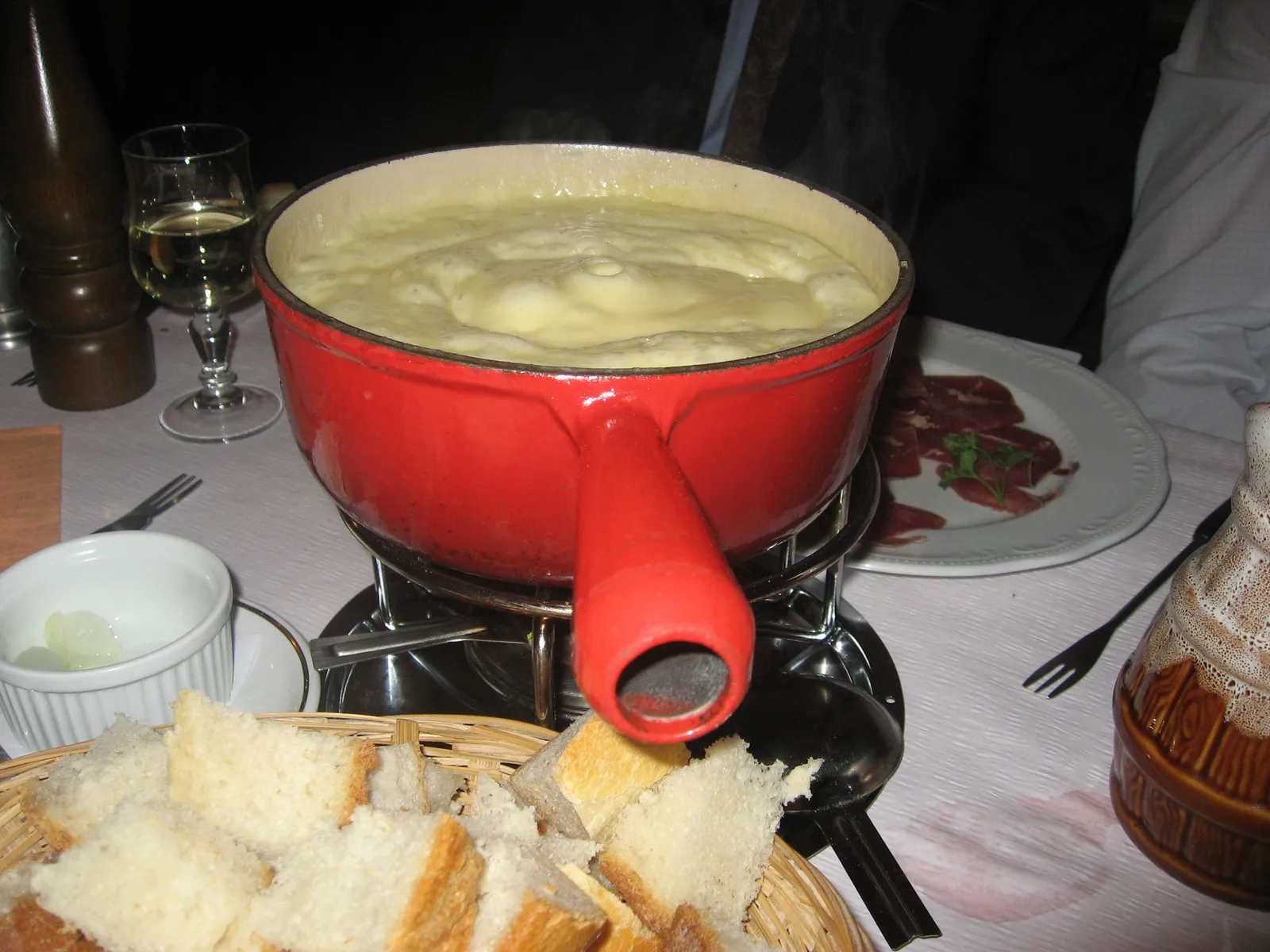
A red fondue pot of melted cheese with bread cubes and a glass of white wine Switzerland flag Switzerland 40m
Dinner •Swiss Alpine Classic

Swiss Cheese Fondue

Swiss cheese fondue is the Alps in a pot: Gruyere and Emmental melted slowly into dry white wine with garlic and a splash of kirsch, kept warm at the table while everyone dips cubes of bread into the bubbling cheese. One serving is about 310 g.

Comfort & Togetherness

Gruyere and Emmental melted in white wine, shared from one pot.

Pairs Well With
Cubes of crusty bread, boiled potatoes and cornichons on the side
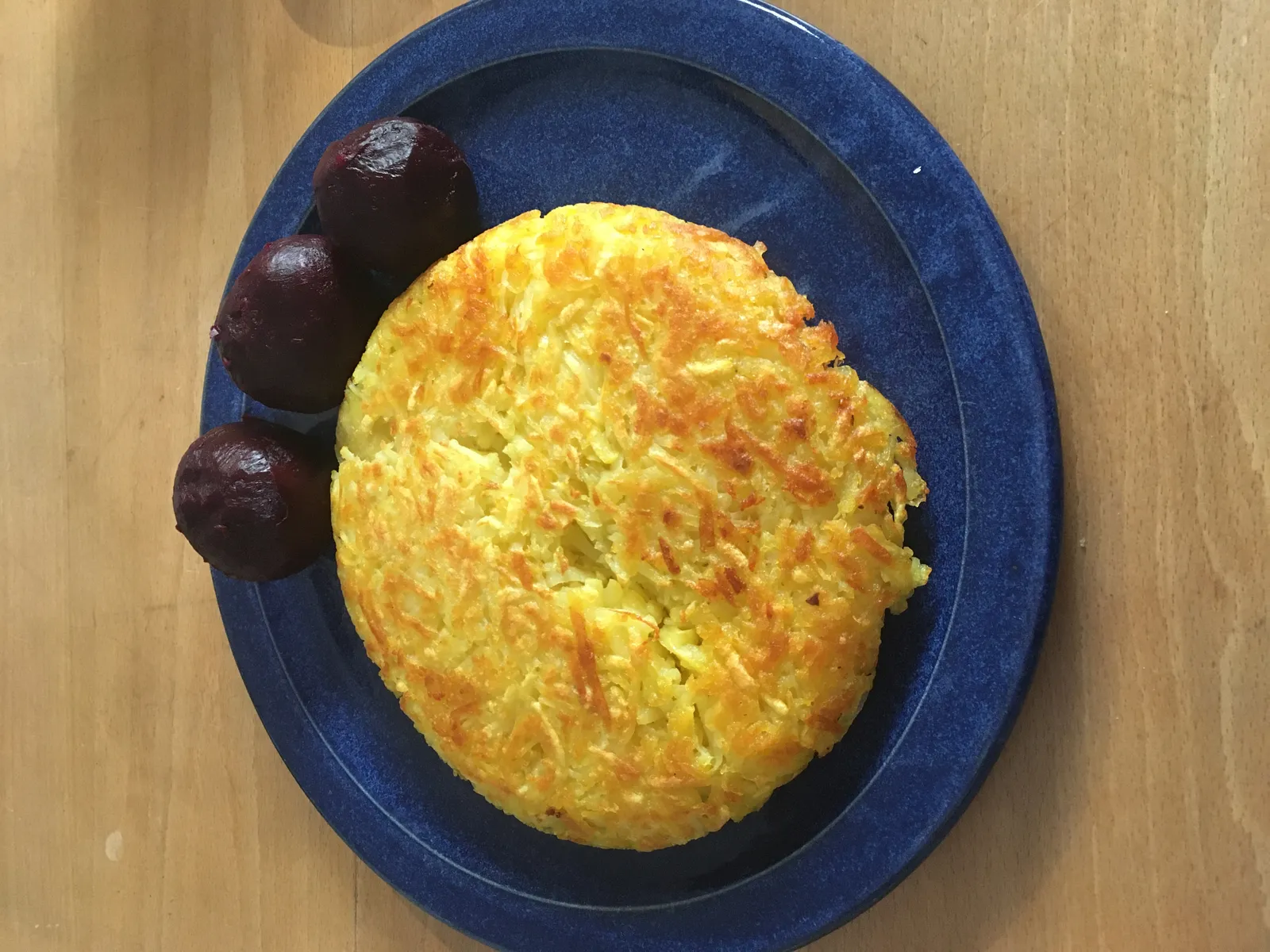
A large golden rosti potato cake on a blue plate Switzerland flag Switzerland 40m
Lunch •Bernese Farmhouse Classic

Rösti

Rösti is Switzerland's crisp potato cake: grated potato pressed into one large golden disc and fried in butter until the outside shatters and the inside stays soft, then topped with a fried egg. One serving is about 240 g.

Simple & Satisfying

One large crisp cake of grated potato, pan-fried in butter and topped with a fried egg.

Pairs Well With
A fried egg on top and a simple green salad with sharp vinaigrette
Quick Prep (<30m)
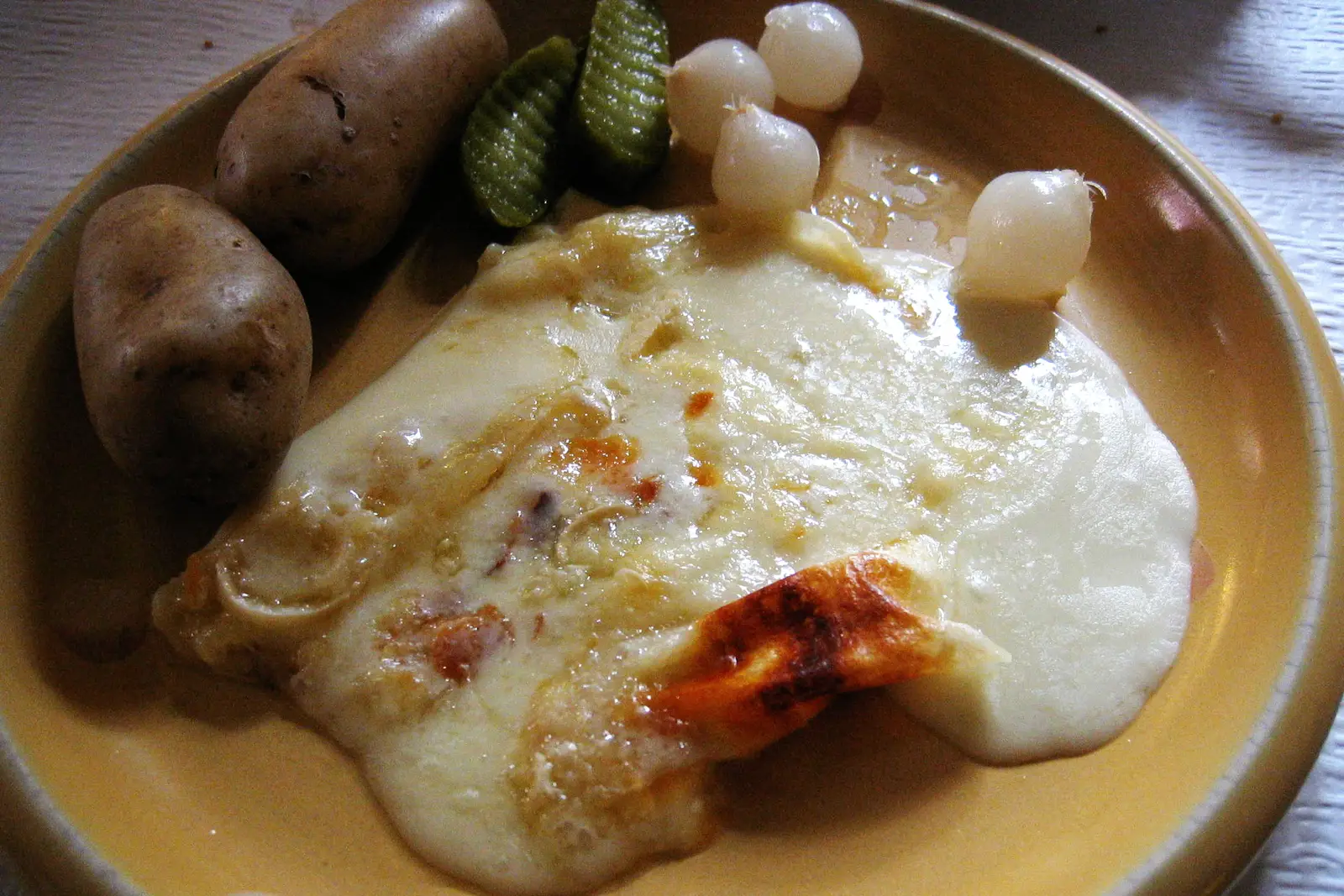
Melted raclette cheese scraped over a plate with boiled potatoes and pickles Switzerland flag Switzerland 40m
Dinner •Valais Alpine Classic

Raclette

Raclette is the Swiss Alps' other great melted-cheese meal: a half-wheel of raclette cheese is warmed until the cut face bubbles, then scraped in ribbons over boiled potatoes, with cornichons and pickled onions to cut the richness. One serving is about 365 g.

Comfort & Togetherness

Melted raclette cheese scraped over boiled potatoes with pickles.

Pairs Well With
Boiled potatoes, cornichons, pickled onions and a green salad
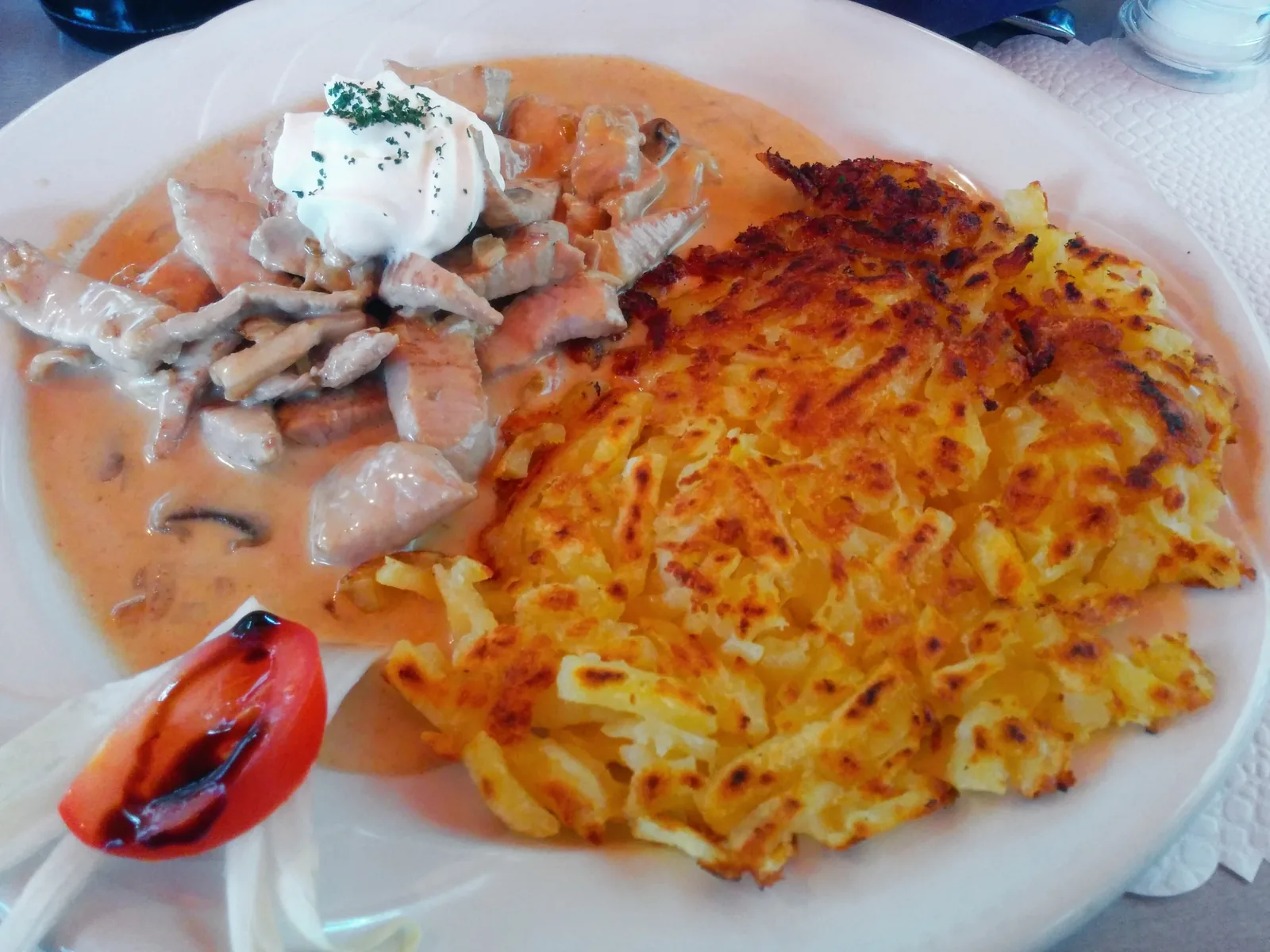
A plate of Zürcher Geschnetzeltes — veal strips in cream sauce with a dollop of cream — beside golden rösti. Switzerland flag Switzerland 40m
Dinner •Zurich Classic

Zürcher Geschnetzeltes

Zürcher Geschnetzeltes is Zurich's signature dish: thin strips of veal quickly seared, then finished in a white-wine and cream sauce with mushrooms and onion. One serving is about 335 g, before the rösti it is traditionally served with.

Rich & Comforting

Tender strips of veal in a white-wine cream sauce with mushrooms — Zurich's classic, with rösti.

Pairs Well With
Serve with golden rösti and a glass of dry Swiss white wine.
High Protein

The Dinner Gazette

Never wonder what’s for dinner again

One email a week with easy dinner ideas from around the world — ingredients, steps and nutrition, tested in our kitchen first.

Delivered every Thursday morning. Unsubscribe anytime.