
Curated recipes from 193 countries  •  New seasonal Mediterranean issue out now

Overview

Brazilian Esfiha

Esfirra aberta — open beef flatbread, a Sao Paulo street-food classic

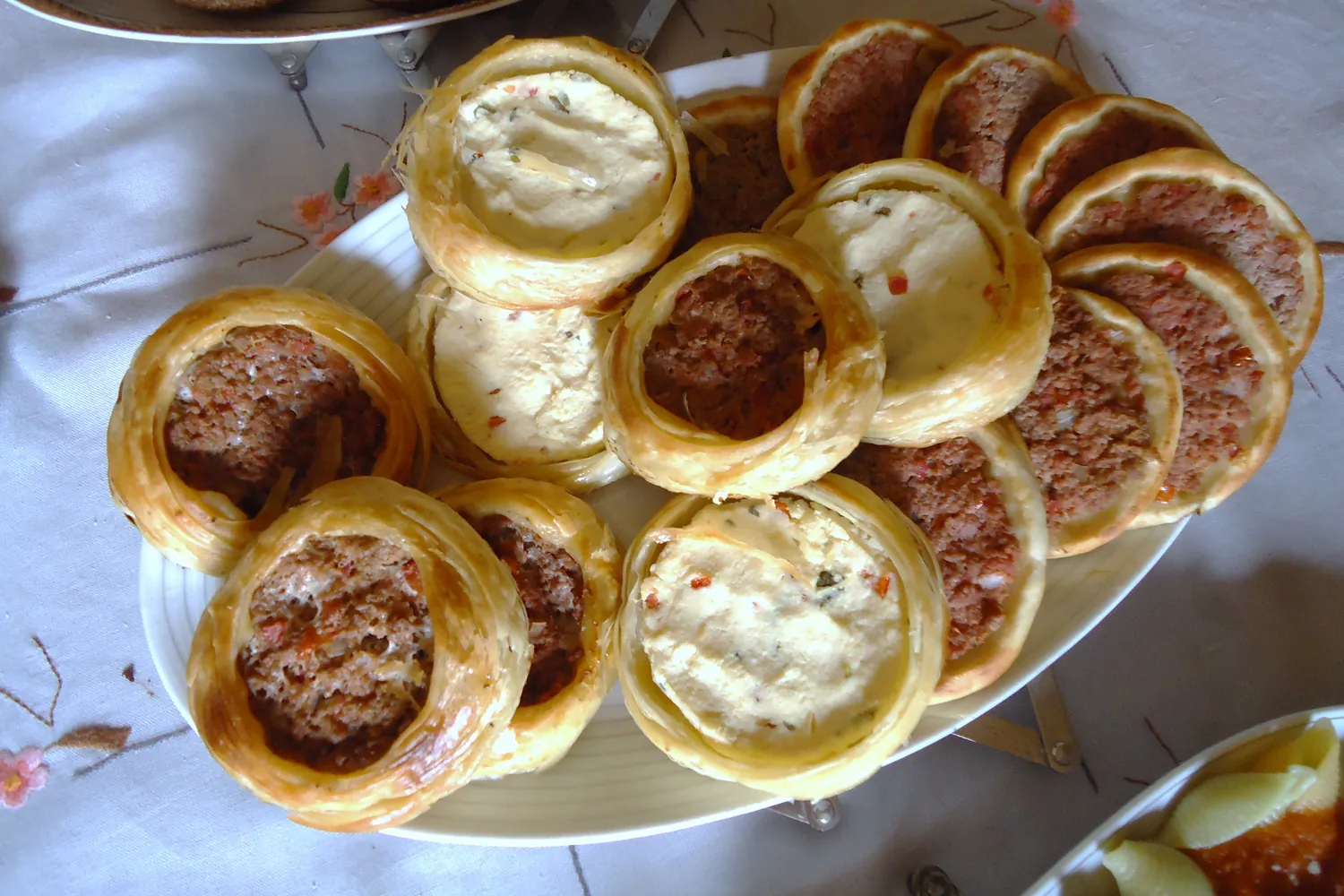
This Brazilian esfiha recipe makes the open esfihas of Sao Paulo bakeries: rounds of soft yeasted dough with pinched-up rims, topped with raw seasoned ground beef that cooks in the oven as the dough bakes golden. They are the city's favourite street snack — best eaten warm, with lime and hot sauce. One serving is about 185 g, two pieces.

Esfiha came to Brazil with Lebanese and Syrian immigrants in the late 19th and early 20th centuries, and Sao Paulo made it its own. Bakers there turned the closed sfiha into the open esfiha — a round of soft yeasted dough with the filling spread on top — and it became a fixture of bakeries and street stalls across the city. Beef is the classic filling, with cheese and curd close behind.

Pairs well with: Serve warm with lime wedges, hot sauce and a cold drink

Provenance

Brazil flag Brazil

Sao Paulo Street Classic

Latin America & Caribbean

Time Dedication

55m

30m prep • 25m cook

Batch Yield

6 Servings

444 kcal per serving

1 serving ≈ 185 g

Technical Skill

Intermediate

Easy (Yeasted Dough)

Meal Timing & Digestive Fit

Breakfast

Not Advised

Lunch

Inappropriate

Dinner

Inappropriate

Snack & Tea

Ideal Light Bite

Occasions: Street-food snacks, bakery lunches, parties, game nights Cost: Low — about $2–3 per serving at home
Tags: Beef Savory Baked
A platter of Brazilian esfiha — open yeasted flatbreads topped with seasoned beef and cheese, golden from the oven

Sao Paulo Street Classic

Photo: Mauro Cateb, CC BY-SA 3.0, via Wikimedia Commons

The Heritage Formulary

Measured Ingredients

Estimated cost: Low — about $2–3 per serving at home (USD)

Good esfiha has a soft, pale-gold dough with a crisp base, a juicy beef topping that reaches right to the pinched rim, and no soggy centre.

Execution Methodology & Culinary Technique

Step-by-Step Cooking Guide

Active 55m
P

Prep Stage: Make the Dough, Mix the Filling

30 Mins active + 1 hour rising • Bowl & Tray

Mix the dough from the flour (400 g), warm water (240 ml), yeast (7 g), sugar (10 g), salt (6 g) and oil (30 ml), knead for 8 minutes until smooth, and leave it covered for 1 hour until doubled. Meanwhile mix the filling: ground beef (350 g) with onion (100 g), tomato (80 g), garlic (8 g), parsley (10 g), lemon juice (15 ml), salt (3 g) and pepper (2 g). Keep the filling cold until shaping, and heat the oven to 220°C (425°F).

Maestro Tip: Keep the filling cold and the tomato deseeded — a wet filling soaks the dough and the esfiha will not crisp underneath.

  1. 1

    Make and rise the dough

    15 minutes + 1 hour rising Warm place about 25°C (77°F)

    Stir the flour (400 g), yeast (7 g), sugar (10 g) and salt (6 g) together in a large bowl. Add the warm water (240 ml) and the oil (30 ml), mix to a soft dough, then knead on a floured surface for 8 minutes until smooth and springy. Cover and leave in a warm place for 1 hour until doubled in size.

    The water should feel warm on your wrist, not hot — water over 45°C (113°F) kills the yeast.

    Done when: Dough smooth and springy, doubled in size after 1 hour.

  2. 2

    Mix the beef filling

    10 minutes Cold, about 4°C (40°F)

    Combine the ground beef (350 g) with the onion (100 g), tomato (80 g), garlic (8 g), parsley (10 g), lemon juice (15 ml), salt (3 g) and pepper (2 g). Mix lightly with your hands just until combined, then cover and chill until shaping.

    Mix lightly — overworking the beef makes the topping tough and dry.

    Done when: Filling evenly mixed, cold, holding together loosely.

  3. 3

    Shape the open esfiha

    15 minutes Room temperature 20°C (68°F)

    Divide the risen dough into 12 equal balls and roll each one into a round about 10 cm across. Pinch the edges up to form a rim, place the rounds on lined baking trays, and spoon the beef filling into the centre of each one, spreading it almost to the rim.

    Pinch the rim firmly — it is what keeps the filling on top instead of sliding off.

    Done when: Twelve rounds with raised rims, filling spread evenly to the edges.

  4. 4

    Bake until golden

    20 minutes Oven 220°C (425°F)

    Brush the dough rims with the remaining oil (10 ml) and bake for 18 to 20 minutes, until the dough is deep gold and the beef in the centre reads 71°C (160°F) on a thermometer.

    Do not open the oven in the first 10 minutes — the dough needs the full heat to puff and set.

    Done when: Dough deep gold, rims crisp, beef cooked through at 71°C (160°F).

  5. 5

    Rest and serve

    5 minutes Resting at room temperature 20°C (68°F)

    Leave the esfiha on the tray for 5 minutes so the filling settles, then serve warm with lime wedges and hot sauce on the side.

    Serve within the hour — the dough is at its best while still soft and warm.

    Done when: Esfiha warm, filling set, ready to eat.

Finishing Touches & Plating

Serve the esfiha warm from the oven, with lime wedges and a little hot sauce on the side — they are at their best in the first hour, while the dough is still soft and the edges crisp.

Nutritional Physiology & Benefits

Nutrition

Energy

444

kcal / serving

Protein

19g

Complete AA

Carbs

56g

Complex

Fats

16g

Healthy

Per serving (6 servings · 1 serving ≈ 185 g)
Energy444 kcal
Protein19 g
Carbohydrates56 g
Fat16 g
Fibre2.7 g
Sugar3.0 g
Sodium624 mg
Per 100g
Energy240 kcal
Protein10.1 g
Carbohydrates30.3 g
Fat8.4 g
Fibre1.5 g
Sugar1.6 g
Sodium338 mg

Nutrition values are estimated — calculated from USDA FoodData Central values for the listed ingredients.

Vitamins & minerals: Iron, zinc and vitamin B12 from the beef, plus vitamin C from the tomato and lemon. Nutrition values are estimated.

Protein in every piece

Each serving of two esfiha carries 18.7 g of protein from the beef, which is why they work as a real snack rather than just a nibble.

Baked, not fried

Unlike the fried pastel, esfiha are baked — the dough needs only a brush of oil, so the snack stays lighter.

Real ingredients, no shortcuts

Flour, beef, tomato, onion and herbs — a short, honest ingredient list with nothing processed.

Food Pairings

What to Eat With

To optimize nutrient absorption and elevate the sensory depth, pair with these authentic accompaniments:

Drinks

Cold beer or guarana

A cold beer or a glass of guarana is the classic bakery drink with esfiha — the cold, fizzing drink balances the warm, savoury dough.

Vegetables

Green salad with lime

A simple green salad with lime dressing adds crunch and acidity that cuts through the rich beef topping.

Sauces

Hot sauce

A few drops of hot sauce on top of the beef is how most Brazilians eat their esfiha — the heat lifts the mild, savoury filling.

Sides

Brazilian cheese bread

A few pieces of warm cheese bread alongside the esfiha turn a snack into a proper bakery lunch.

Complete menu

Serve Brazilian esfiha as a snack with a green salad, hot sauce and a cold guarana — or as part of a Brazilian bakery spread with cheese bread and fresh fruit.

Digestive Guardrails

What NOT to Combine

To prevent digestive distress, sluggishness, or palate clash, avoid pairing the dish with these elements:

Serving undercooked beef

The filling goes on raw, so the beef must reach 71°C (160°F) in the centre of the esfiha. Undercooked ground beef can carry harmful bacteria — check with a thermometer if unsure. This is general information, not medical advice.

Overfilling the rounds

Too much filling leaks over the rim, wets the dough and bakes soggy in the middle. Spread the beef thinly, almost to the rim but not over it. This is general information, not medical advice.

General information only, not medical advice — consult a doctor for personal dietary decisions.

Who Should Eat It

Who Should Eat

  • General adultsA filling snack at about 444 kcal a serving of two — enough for a light lunch with a salad.
  • ChildrenUsually enjoyed — the dough is soft and the beef is mild. Cut each esfiha in half for younger children and skip the hot sauce.
  • ElderlySoft and easy to chew when served warm; the beef is tender and the dough is gentle on the teeth.
  • Pregnant womenFine when the beef is fully cooked to 71°C (160°F) — make sure the centre of each esfiha is hot right through.
  • Breastfeeding womenA satisfying, protein-rich snack — beef and bread are a solid combination between meals.
  • AthletesWith 18.7 g of protein and 444 kcal per serving, two esfiha work well as a post-training snack; add a salad for vegetables.
  • Weight gainEasy to eat in quantity — the pieces are small and moreish, so a second serving adds energy without much effort.
  • Weight lossThe dough and beef add up quickly — stick to one serving of two, with a big salad, and skip the cheese bread.

Health Conditions — Adjust or Avoid

Conditions

  • DiabetesOne serving carries about 56.0 g of carbohydrate from the dough. One serving with a large salad is the sensible portion — ask your clinician about portion size.
  • High blood pressureSodium is about 624 mg per serving, mostly from the salt in the dough and filling. Ask your clinician about portion size.
  • Kidney diseaseHigh in protein, potassium and sodium from the beef and dough, so this snack is not ideal for a kidney diet. Ask your clinician before eating it regularly.
  • GoutGround beef is moderate to high in purines; a smaller portion with extra vegetables is the safer approach. Ask your clinician if you are managing gout.
  • Stomach issuesYeasted dough and rich beef can feel heavy on a sensitive stomach; eat slowly and skip the hot sauce. Ask your clinician if unsure.
  • Cardiovascular diseaseThe beef adds saturated fat — choosing lean beef and keeping to one serving helps. Ask your clinician about sodium limits.
  • Fatty liverA reasonable occasional snack if the beef is lean and the portion is kept to two pieces; the dough adds carbohydrate, so watch the total. Ask your clinician.
  • Food allergiesContains gluten (wheat flour) — the main allergen. Contains no dairy, egg, nuts or seafood as written.
  • Special therapeutic dietsNot suitable for gluten-free, vegetarian or vegan diets as written. For a lower-sodium version, cut the salt in the dough and filling by half — ask your clinician or dietitian.

If you have a medical condition, consult your doctor before changing your diet.

Storage & Use

Storage & Use

How to store
Cool completely, then store in a covered container in the fridge.
In the fridge
Up to 3 days at 4°C (40°F) in a covered container.
In the freezer
Up to 2 months in a sealed bag; thaw at room temperature.
How to reheat
Warm in a 180°C (350°F) oven for 8 to 10 minutes until hot right through at 74°C (165°F); the microwave makes the dough soggy.
Freezing recommended
Yes — up to 2 months; freeze baked, in a sealed bag.
Signs it has spoiled
Sour smell, slimy filling, or visible mould — discard if any appear.

More recipes to explore

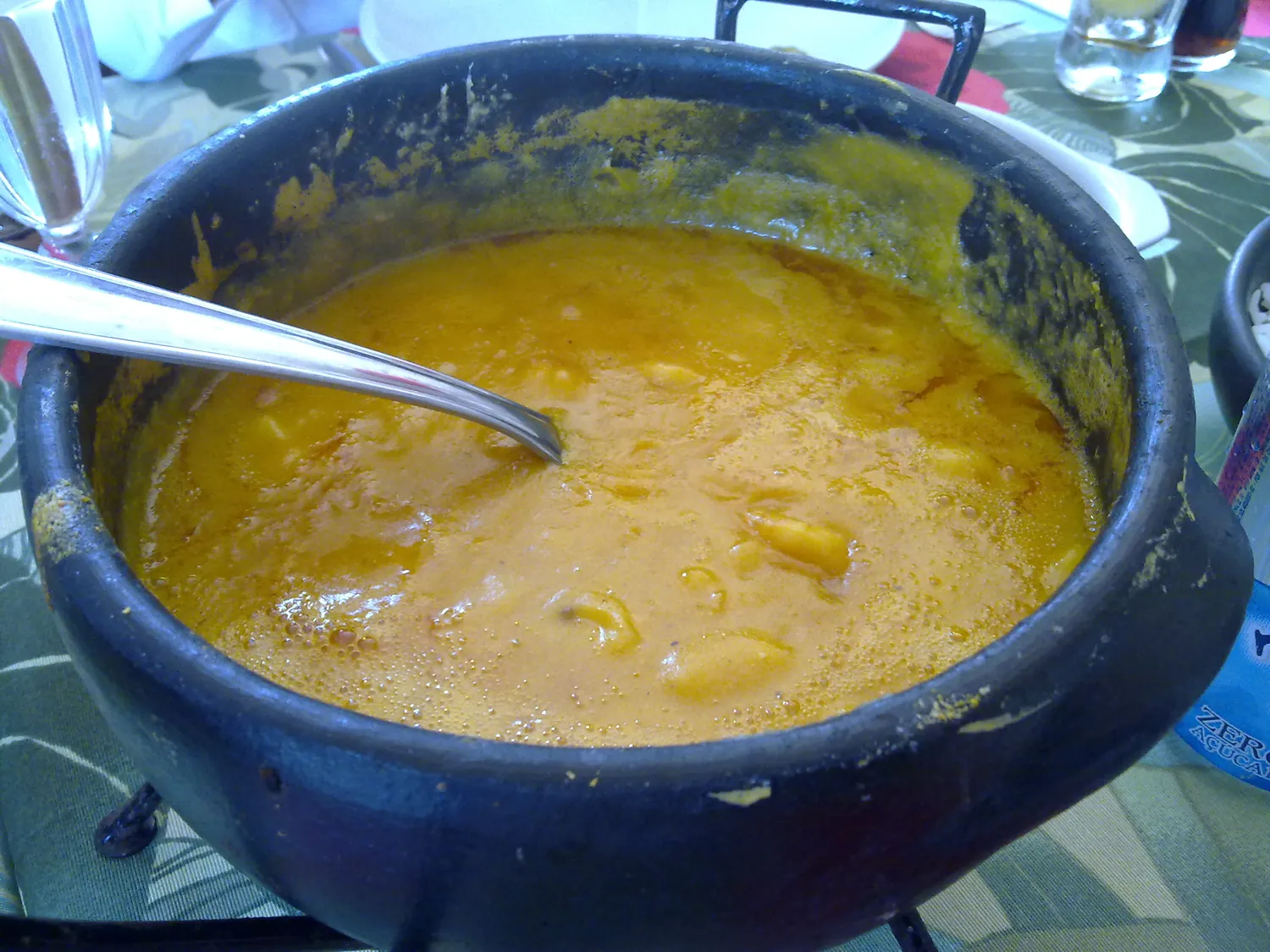
A black clay pot of golden-orange bobó de camarão, a thick cassava cream with shrimp, with a serving spoon Brazil flag Brazil 1h 5m
Dinner •Bahian Cassava Cream

Bobó de Camarão

This bobo de camarao recipe is Bahia's creamy shrimp dish: fresh shrimp folded into a thick purée of boiled cassava blended with coconut milk, coloured golden-orange with dendê oil and finished with lime and cilantro. Unlike a stew, the cassava is blended smooth, so the whole dish eats like a rich, spoonable cream. One serving is about 470 g.

Rich & Comforting

Shrimp folded into a thick, smooth cassava cream made with coconut milk and red palm oil, served hot with rice.

Pairs Well With
Steamed white rice, farofa and a crisp green salad
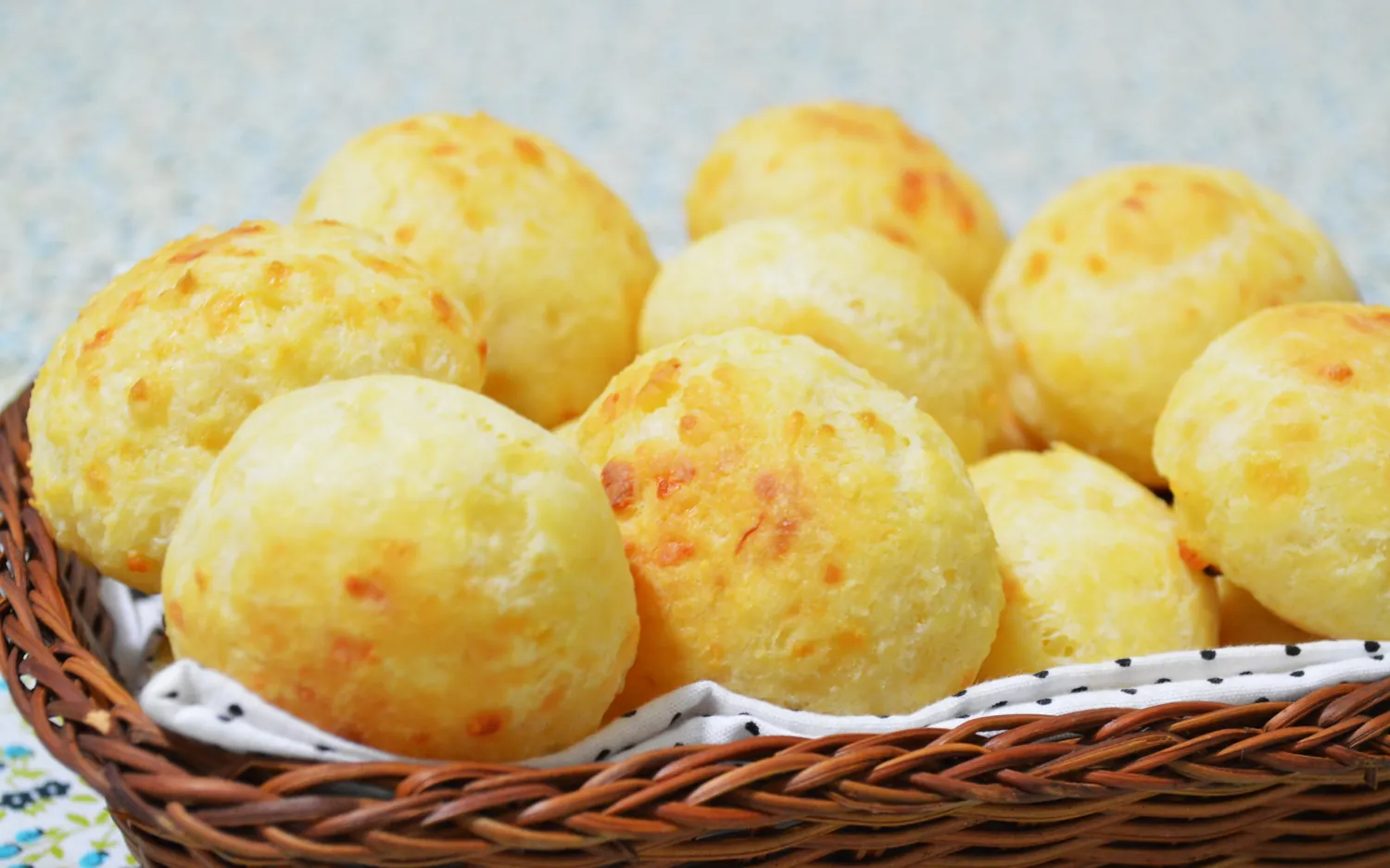
A basket of golden, round pão de queijo, Brazilian cheese bread rolls Brazil flag Brazil 45m
Snack & Tea •Minas Gerais Cheese Bread

Pão de Queijo

This pao de queijo recipe makes Brazil's famous cheese bread: small, golden rolls with a crisp shell and a soft, stretchy, chewy centre, made from tapioca starch, milk, oil, eggs and cheese. There is no wheat flour and no yeast — the rolls puff up on steam in a hot oven. One serving is 4 rolls, about 134 g.

Warm & Chewy Snack

Golden tapioca cheese rolls with a crisp shell and a soft, stretchy centre, baked in under half an hour.

Pairs Well With
Black coffee, fresh fruit, or a light soup
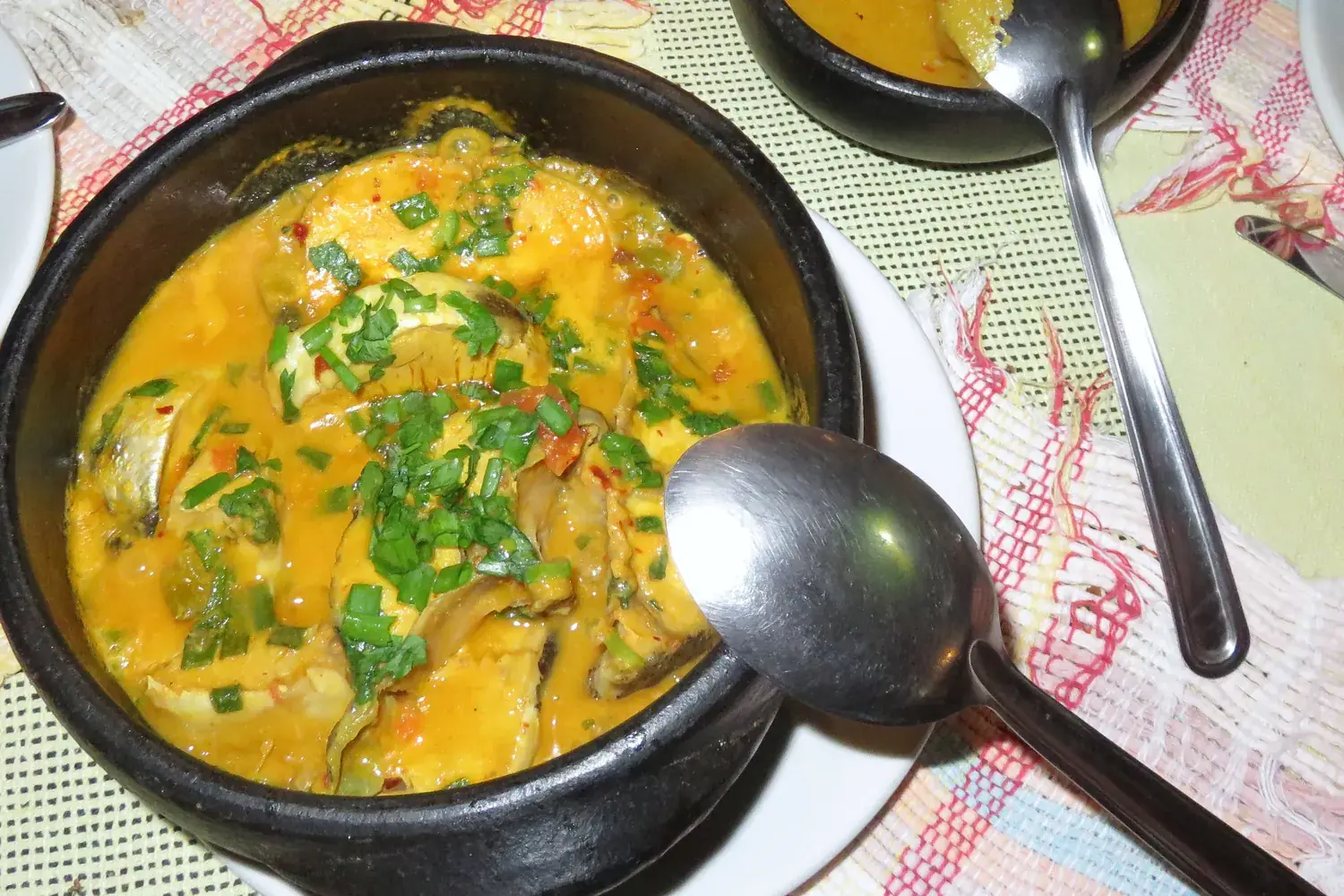
A black clay pot of moqueca baiana, fish chunks in a golden-orange coconut sauce with fresh herbs, beside rice and pirão Brazil flag Brazil 55m
Dinner •Bahian Fish Stew

Moqueca Baiana

This moqueca baiana recipe is Bahia's famous fish stew: thick fillets of white fish layered with onion, peppers and tomato, then simmered gently in coconut milk with dendê oil until the sauce turns golden-orange. The fish stays in whole, flaky pieces in a fragrant broth — a stew, not a purée. One serving is about 450 g.

Coastal & Aromatic

Firm white fish simmered in coconut milk and red palm oil with peppers and tomato, served hot in its clay pot.

Pairs Well With
Steamed white rice, pirão and farofa
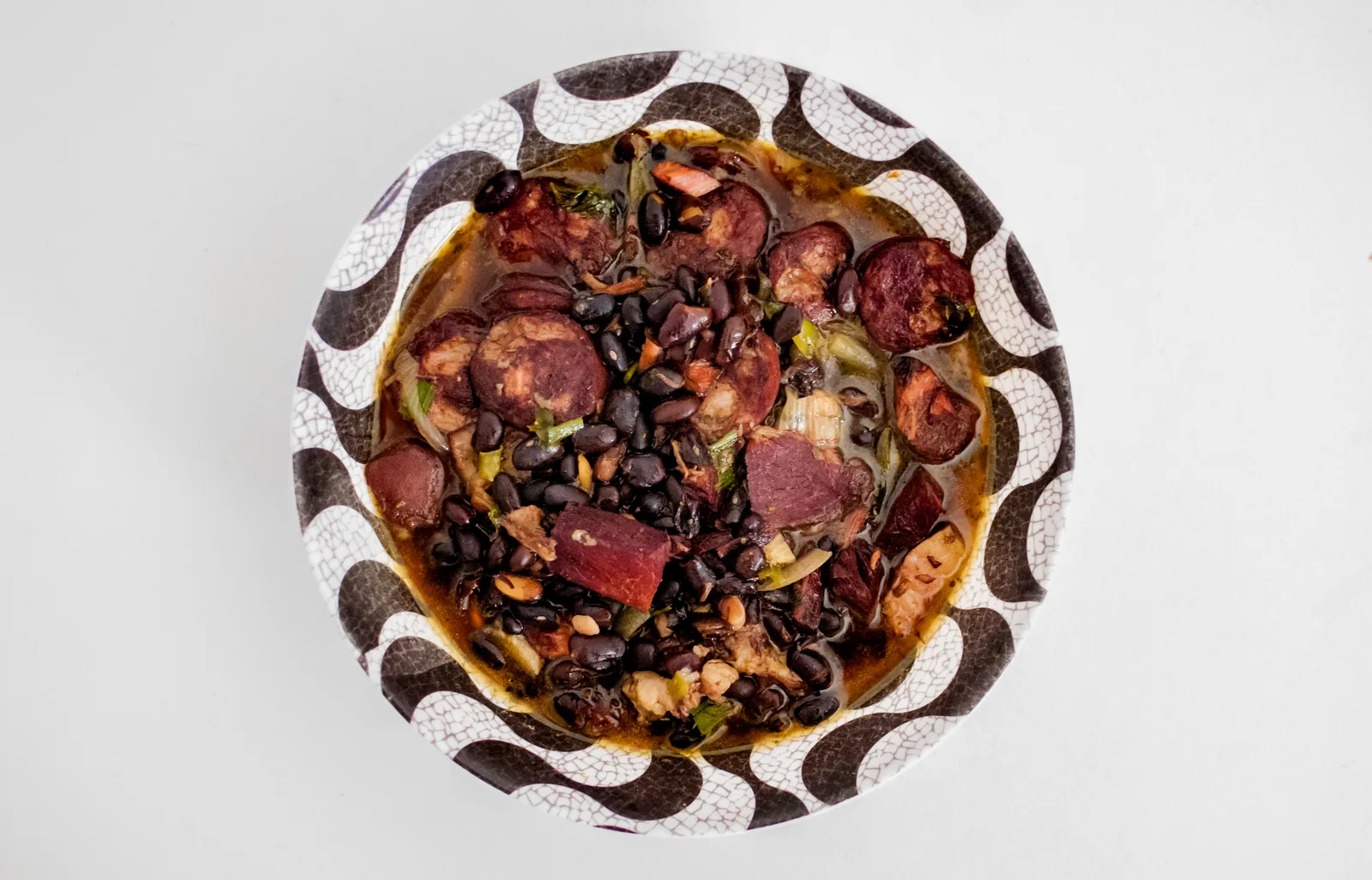
A bowl of Brazilian feijoada — black beans with rounds of sausage and pieces of pork Brazil flag Brazil 3h 30m
Dinner •Brazilian National Dish

Brazilian Feijoada

This Brazilian feijoada recipe is the real Saturday lunch: black beans simmered for hours with pork shoulder, smoky linguiça, bacon and beef until the broth turns thick and dark, then served with white rice, garlicky collard greens, orange slices and farofa. It is a slow, generous pot built for sharing. One serving is about 450 g.

Rich & Hearty

Brazil's national dish — black beans slow-cooked with pork, sausage and beef, served with rice, greens and orange.

Pairs Well With
Serve with white rice, sautéed collard greens, orange slices and farofa.

The Dinner Gazette

Never wonder what’s for dinner again

One email a week with easy dinner ideas from around the world — ingredients, steps and nutrition, tested in our kitchen first.

Delivered every Thursday morning. Unsubscribe anytime.