Curated recipes from 193 countries  •  New seasonal Mediterranean issue out now

Overview

Brazilian Pastel

Pastel de feira — Brazilian fried pastry pockets

This Brazilian pastel recipe shows how to roll a thin, crackly pastry, fill it with seasoned ground beef and melted mozzarella, and fry it until golden and blistered. It is the beloved street snack of Brazilian markets, sold hot from the feira wrapped in paper. One serving is about 241 g (two pastels).

Pastel came to Brazil with Japanese immigrants in the early 20th century, who adapted Chinese fried wontons into a larger, thin pastry pocket filled with Brazilian ingredients. It became the signature snack of São Paulo's street markets, the feiras, where pastel stalls still fry them to order and serve them with sugarcane juice.

Pairs well with: Serve with cold sugarcane juice, a squeeze of lime and a simple salad

Provenance

Brazil flag Brazil

Brazilian Market Snack

Latin America & Caribbean

Time Dedication

1h 5m

45m prep • 20m cook

Batch Yield

4 Servings

680 kcal per serving

1 serving ≈ 241 g

Technical Skill

Intermediate

Medium (Rolled Dough)

Meal Timing & Digestive Fit

Breakfast

Not Advised

Lunch

Inappropriate

Dinner

Inappropriate

Snack & Tea

Ideal Light Bite

Occasions: Street markets, football matches, casual snacks, parties, beach days Cost: Low — about $2–3 per serving at home
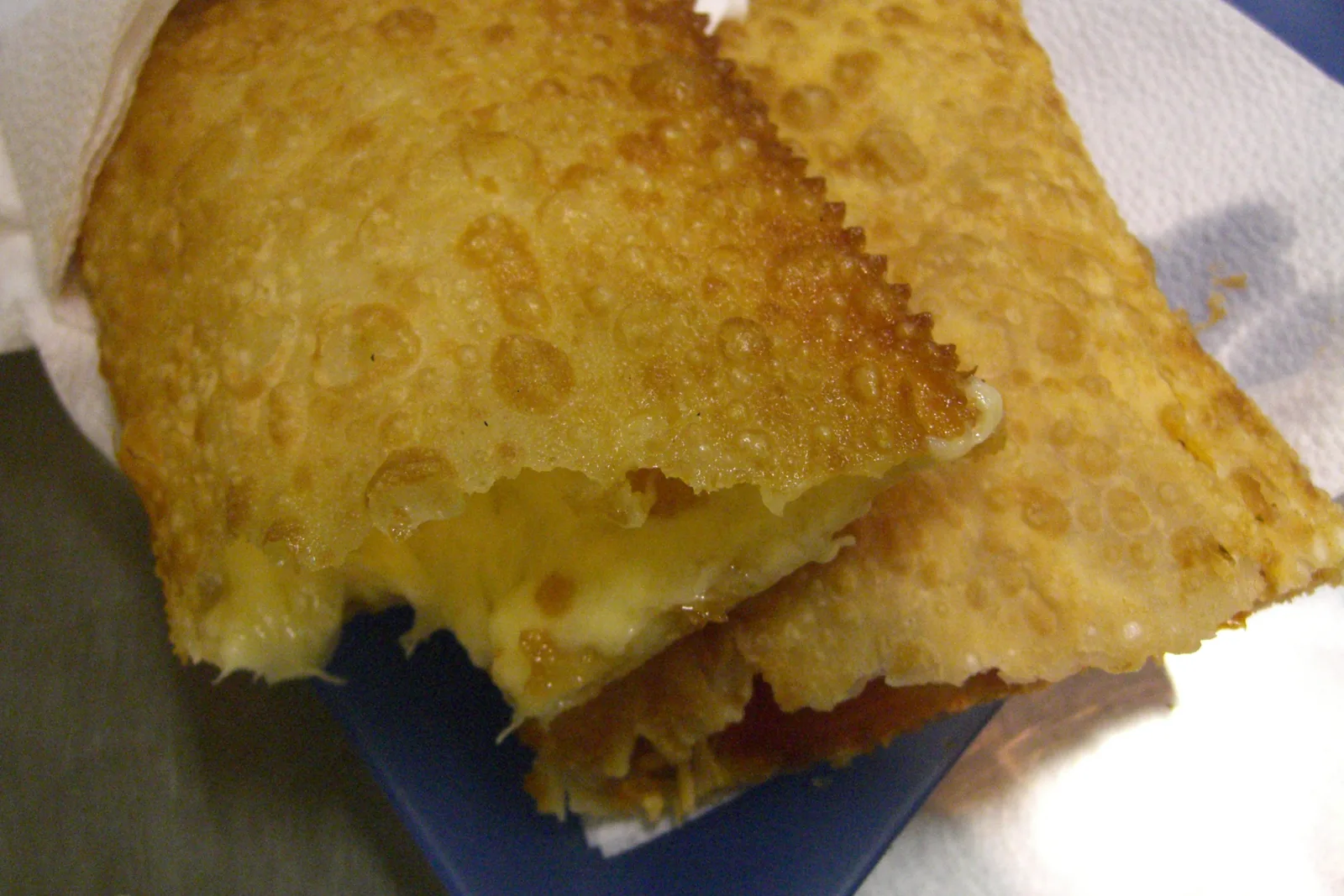
Two golden, blistered Brazilian pastels on paper, one bitten open showing melted cheese

Brazilian Market Snack

Photo: BuenosAiresPhotographer, CC BY-SA 2.0, via Wikimedia Commons

The Heritage Formulary

Measured Ingredients

Estimated cost: Low — about $2–3 per serving at home (USD)

Good pastel is thin, golden and blistered, shattering when you bite it, with a hot, juicy filling and no grease on the paper — never pale, thick or soggy.

Execution Methodology & Culinary Technique

Step-by-Step Cooking Guide

Active 1h 5m
P

Prep Stage: Dough Rests, Filling Cools

45 Mins incl. 30 Mins dough rest • Bowl, Pan & Rolling Pin

Make the dough first and leave it to rest for 30 minutes while you cook the filling: brown the beef with onion and garlic, stir in the tomato, olives and parsley, then let the filling cool completely and drain off any liquid. A wet filling is the one thing that bursts a pastel in the oil.

Maestro Tip: Let the filling cool fully before you fill the pastels — hot filling steams the thin pastry soft and it tears when you roll it.

  1. 1

    Make and rest the dough

    10 minutes + 30 minutes resting Room temperature 20°C (68°F)

    Mix the flour (300 g) and salt (5 g) in a bowl. Add the warm water (130 ml), vegetable oil (15 ml) and cachaça (15 ml) and knead for 8–10 minutes until the dough is smooth and firm. Cover and rest for 30 minutes.

    Knead until truly smooth — an under-kneaded dough tears when you roll it thin.

    Done when: Smooth, firm dough that springs back slowly when pressed.

  2. 2

    Cook the beef filling

    10 minutes + cooling High heat; ground beef cooked through to 71°C (160°F)

    Cook the ground beef (300 g) in a dry pan over high heat, breaking it up, for 5 minutes until browned. Add the onion (100 g) and garlic (10 g) and cook 3 minutes more, then stir in the tomato (80 g), olives (40 g) and parsley (10 g). Season lightly, then tip into a bowl and leave to cool completely, draining off any liquid.

    Drain the filling well — even a spoonful of liquid will burst a pastel in the hot oil.

    Done when: Beef browned and cooked through, filling dry, no liquid pooling in the bowl.

  3. 3

    Roll the pastry paper-thin

    15 minutes Room temperature 20°C (68°F)

    Divide the rested dough into 8 pieces. Roll each piece on a lightly floured surface into a rectangle about 20 x 12 cm, as thin as you can — about 1 mm, thin enough to see the worktop through it. Trim the edges straight with a knife.

    Roll from the centre outwards and turn the sheet often — the thinner the pastry, the crisper the pastel.

    Done when: Paper-thin rectangles, even thickness, no thick edges.

  4. 4

    Fill and seal the pastels

    10 minutes Room temperature 20°C (68°F)

    Spoon about 2 tablespoons of the cooled filling and a little grated mozzarella (150 g in total) onto one half of each rectangle, leaving a 1 cm border. Brush the border with water, fold the pastry over, press out the air, and seal the edges firmly with a fork. Cut the sealed edge straight with a knife or pastry wheel.

    Press the air out before sealing — trapped air puffs up and bursts the pastel in the oil.

    Done when: Neat rectangular pockets, edges firmly sealed, no air trapped inside.

  5. 5

    Fry until golden and blistered

    15 minutes Frying oil 180°C (350°F)

    Heat the frying oil (500 ml) in a deep pan to 180°C (350°F). Fry the pastels two at a time for 2–3 minutes, turning once, until deep golden and blistered all over. Lift out with a slotted spoon and drain on paper towels. Check the oil is back to 180°C (350°F) before the next batch.

    Do not crowd the pan — two at a time keeps the oil hot, and hot oil is what makes the pastry crisp instead of greasy.

    Done when: Deep golden, blistered all over, crisp to the touch, filling hot inside.

  6. 6

    Serve hot

    5 minutes Serve hot

    Serve the pastels at once, hot, with lime wedges and sugarcane juice or cold beer. Two pastels per person is a proper serving.

    Eat them within minutes of frying — pastel is at its best while the pastry is still crackling.

    Done when: Hot, crisp pastels, no grease pooling on the plate.

Finishing Touches & Plating

Serve the pastels hot, straight from the oil, on paper towels with a squeeze of lime and a cold sugarcane juice or beer. Eat them within minutes — the pastry is at its crispest while it is still hot.

Nutritional Physiology & Benefits

Nutrition

Energy

680

kcal / serving

Protein

32g

Complete AA

Carbs

63g

Complex

Fats

33g

Healthy

Per serving (4 servings · 1 serving ≈ 241 g)
Energy680 kcal
Protein32 g
Carbohydrates63 g
Fat33 g
Fibre3.1 g
Sugar2.1 g
Sodium600 mg
Per 100g
Energy282 kcal
Protein13.2 g
Carbohydrates26.1 g
Fat13.5 g
Fibre1.3 g
Sugar0.9 g
Sodium249 mg

Nutrition values are estimated — calculated from USDA FoodData Central values for the listed ingredients.

Vitamins & minerals: B vitamins and iron from the beef, calcium from the mozzarella, and vitamin C from the tomato and parsley. Nutrition values are estimated.

Protein and vegetables in one pocket

Beef, cheese, tomato and onion in one pocket — protein, calcium and vegetables in a snack you can eat with your hands.

Made from scratch, nothing hidden

The dough is just flour, water, oil and salt, and the filling is cooked from scratch — nothing in this pastel needs a preservative.

Serious energy for a snack

Each serving carries about 680 kcal with 31.8 g of protein, which is why two pastels are a proper snack rather than a nibble.

Food Pairings

What to Eat With

To optimize nutrient absorption and elevate the sensory depth, pair with these authentic accompaniments:

Drinks

Sugarcane juice (caldo de cana)

Sweet, ice-cold sugarcane juice is the classic market drink with pastel — its sweetness balances the salty, rich filling perfectly.

Ice-cold beer

An ice-cold beer is what most Brazilians actually drink with pastel at the market — cold, bitter and refreshing against hot pastry.

More Pairings

Lime wedges

A squeeze of lime over the hot pastry cuts through the frying oil and brightens the beef filling.

Vegetables

Simple green salad

A simple green salad with tomato and onion gives the rich, fried pastry something fresh and crunchy to sit beside.

Complete menu

Serve Brazilian pastel with a cold sugarcane juice and a simple green salad — the sweet juice and fresh salad balance the rich, salty pastry perfectly.

Digestive Guardrails

What NOT to Combine

To prevent digestive distress, sluggishness, or palate clash, avoid pairing the dish with these elements:

Filling with a wet filling

A wet filling bursts the pastry in the oil and makes a mess of the fryer — always let the beef filling cool and drain off any liquid before you fill the pastels. This is general information, not medical advice.

Frying in oil that is too cool

Frying in oil that is not hot enough makes the pastry soak up oil instead of crisping, so the pastels turn greasy and heavy. This is general information, not medical advice.

General information only, not medical advice — consult a doctor for personal dietary decisions.

Who Should Eat It

Who Should Eat

  • General adultsA satisfying street-food snack at about 680 kcal for two pastels — a full snack, best shared or paired with something light.
  • ChildrenUsually loved, but serve the pastels warm rather than piping hot and cut them in half; watch for the salty olives inside.
  • ElderlySoft inside and easy to chew once the crisp pastry is broken open; eat while warm and keep to one pastel.
  • Pregnant womenSafe when the beef is fully cooked and the pastels are eaten fresh and hot; the only watch point is the salt.
  • Breastfeeding womenFine as an occasional snack — filling and energy-dense; drink plenty of water with the salty filling.
  • AthletesEnergy-dense and rich in protein at 31.8 g per serving, so two pastels work well as a post-training snack.
  • Weight gainAn easy way to add energy: two pastels with a juice is a substantial, calorie-dense snack.
  • Weight lossBest kept as an occasional treat — one pastel, eaten slowly with a salad, rather than a full serving of two.

Health Conditions — Adjust or Avoid

Conditions

  • DiabetesOne serving carries about 62.9 g of carbohydrate from the pastry, so it will raise blood glucose. One pastel with a salad is the safer portion; ask your clinician.
  • High blood pressureSodium is about 600 mg per serving, mostly from the cheese and olives. Use fewer olives and low-sodium cheese if you can, and ask your clinician.
  • Kidney diseaseCheese and olives add a large sodium load, and beef adds phosphorus. Ask your clinician before eating it regularly.
  • GoutBeef is moderate in purines; a cheese-only pastel is a lower-purine alternative. Ask your clinician if you are managing gout.
  • Stomach issuesFried pastry is heavy on a sensitive stomach; eat one pastel slowly and avoid eating it on an empty stomach. Ask your clinician if unsure.
  • Cardiovascular diseaseHigh in saturated fat from frying and cheese, and fried food adds to the load. An occasional pastel is very different from a daily habit — ask your clinician about frequency.
  • Fatty liverHigh in fat from frying and cheese, which worsens fatty liver. Keep it rare and small, and ask your clinician.
  • Food allergiesContains gluten (wheat pastry) and milk (mozzarella). The olives are a further allergen for a few people — leave them out if anyone at the table is sensitive.
  • Special therapeutic dietsNot suitable for gluten-free, dairy-free, vegan or low-fat diets as written. Ask your clinician or dietitian for an alternative snack that fits your plan.

If you have a medical condition, consult your doctor before changing your diet.

Storage & Use

Storage & Use

How to store
Keep cooked pastels uncovered at room temperature for a few hours, or refrigerate in a covered container.
In the fridge
Cooked pastels keep up to 2 days at 4°C (40°F), though the pastry softens; the filling keeps 2 days in a covered container.
In the freezer
Uncooked, filled pastels freeze well for up to 1 month; fry from frozen, adding 1–2 minutes to the frying time.
How to reheat
Warm uncovered in a 200°C (400°F) oven for 5–7 minutes until crisp and hot through at 74°C (165°F); do not microwave.
Freezing recommended
Yes, uncooked — up to 1 month.
Signs it has spoiled
Sour smell from the filling, soggy pastry that will not crisp, or visible mould — discard if any appear.

More recipes to explore

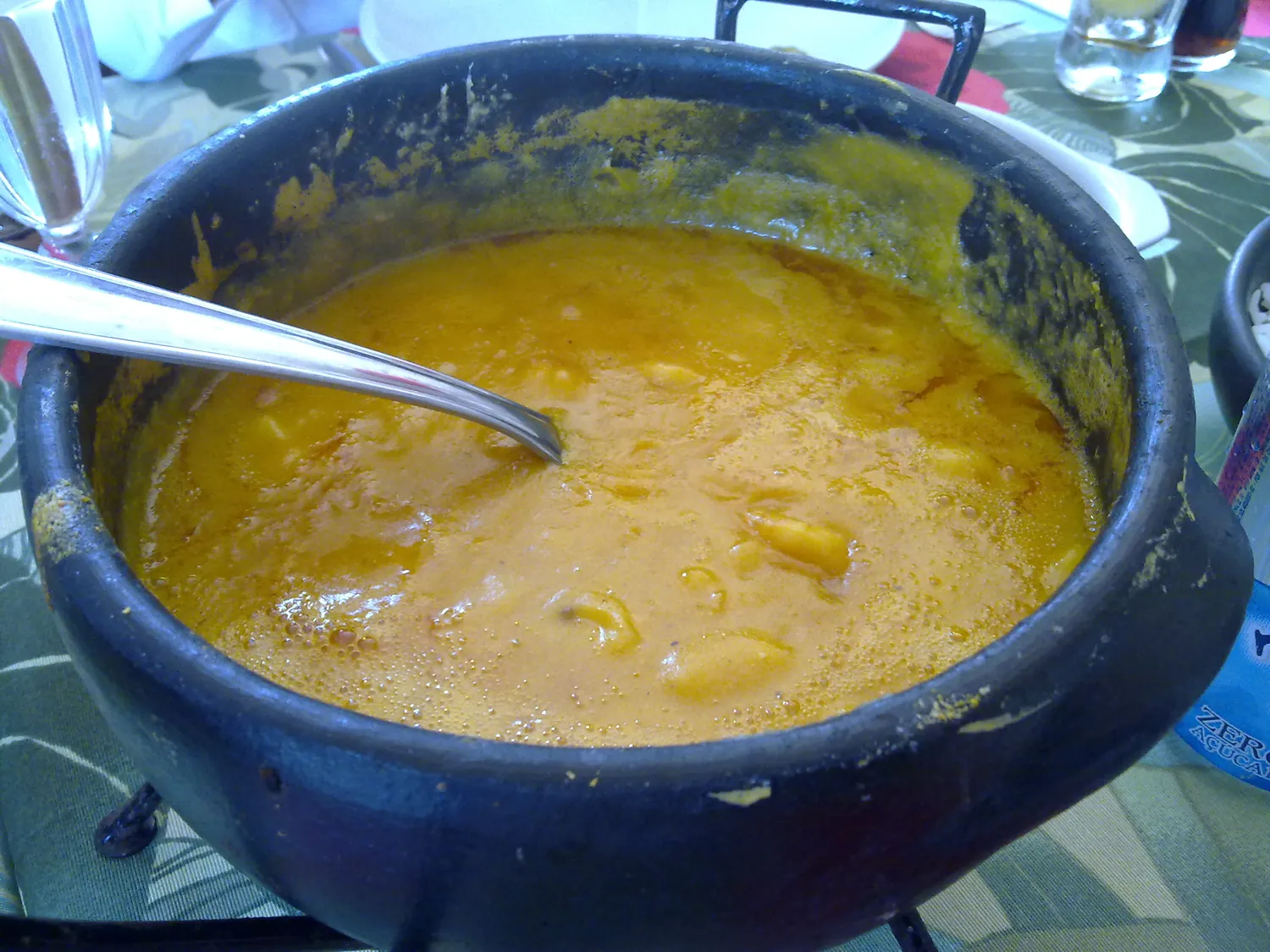
A black clay pot of golden-orange bobó de camarão, a thick cassava cream with shrimp, with a serving spoon Brazil flag Brazil 1h 5m
Dinner •Bahian Cassava Cream

Bobó de Camarão

This bobo de camarao recipe is Bahia's creamy shrimp dish: fresh shrimp folded into a thick purée of boiled cassava blended with coconut milk, coloured golden-orange with dendê oil and finished with lime and cilantro. Unlike a stew, the cassava is blended smooth, so the whole dish eats like a rich, spoonable cream. One serving is about 470 g.

Rich & Comforting

Shrimp folded into a thick, smooth cassava cream made with coconut milk and red palm oil, served hot with rice.

Pairs Well With
Steamed white rice, farofa and a crisp green salad
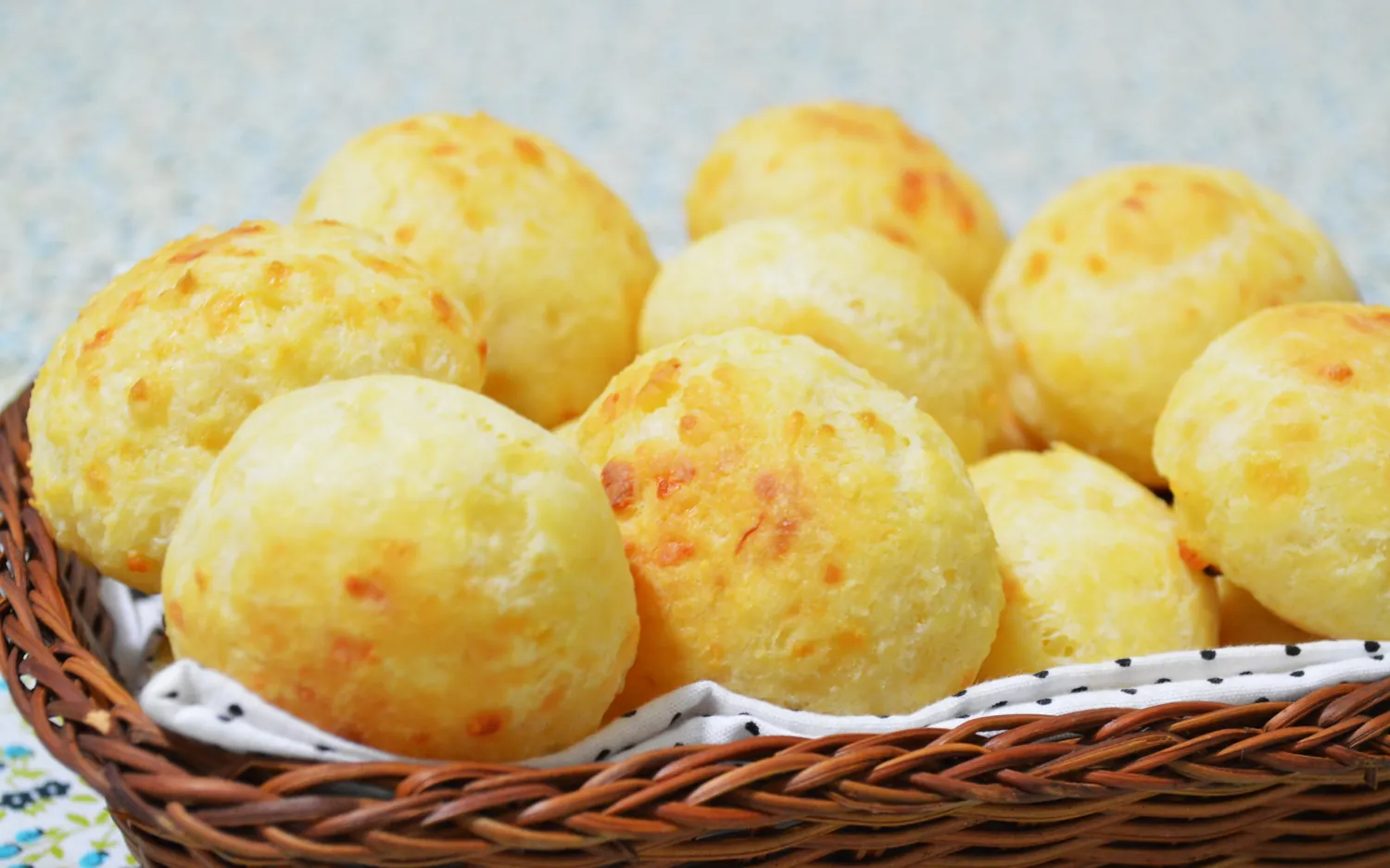
A basket of golden, round pão de queijo, Brazilian cheese bread rolls Brazil flag Brazil 45m
Snack & Tea •Minas Gerais Cheese Bread

Pão de Queijo

This pao de queijo recipe makes Brazil's famous cheese bread: small, golden rolls with a crisp shell and a soft, stretchy, chewy centre, made from tapioca starch, milk, oil, eggs and cheese. There is no wheat flour and no yeast — the rolls puff up on steam in a hot oven. One serving is 4 rolls, about 134 g.

Warm & Chewy Snack

Golden tapioca cheese rolls with a crisp shell and a soft, stretchy centre, baked in under half an hour.

Pairs Well With
Black coffee, fresh fruit, or a light soup
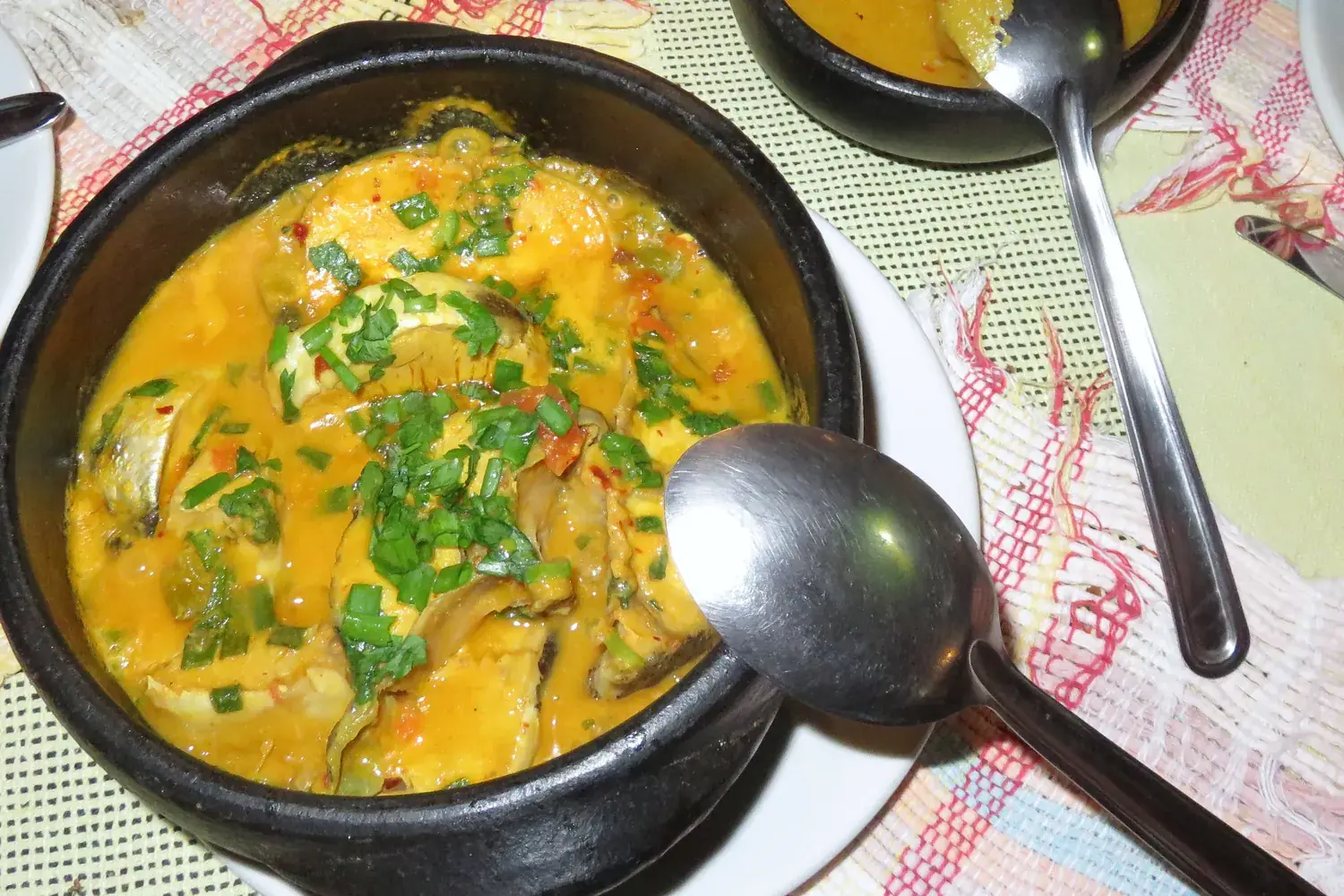
A black clay pot of moqueca baiana, fish chunks in a golden-orange coconut sauce with fresh herbs, beside rice and pirão Brazil flag Brazil 55m
Dinner •Bahian Fish Stew

Moqueca Baiana

This moqueca baiana recipe is Bahia's famous fish stew: thick fillets of white fish layered with onion, peppers and tomato, then simmered gently in coconut milk with dendê oil until the sauce turns golden-orange. The fish stays in whole, flaky pieces in a fragrant broth — a stew, not a purée. One serving is about 450 g.

Coastal & Aromatic

Firm white fish simmered in coconut milk and red palm oil with peppers and tomato, served hot in its clay pot.

Pairs Well With
Steamed white rice, pirão and farofa
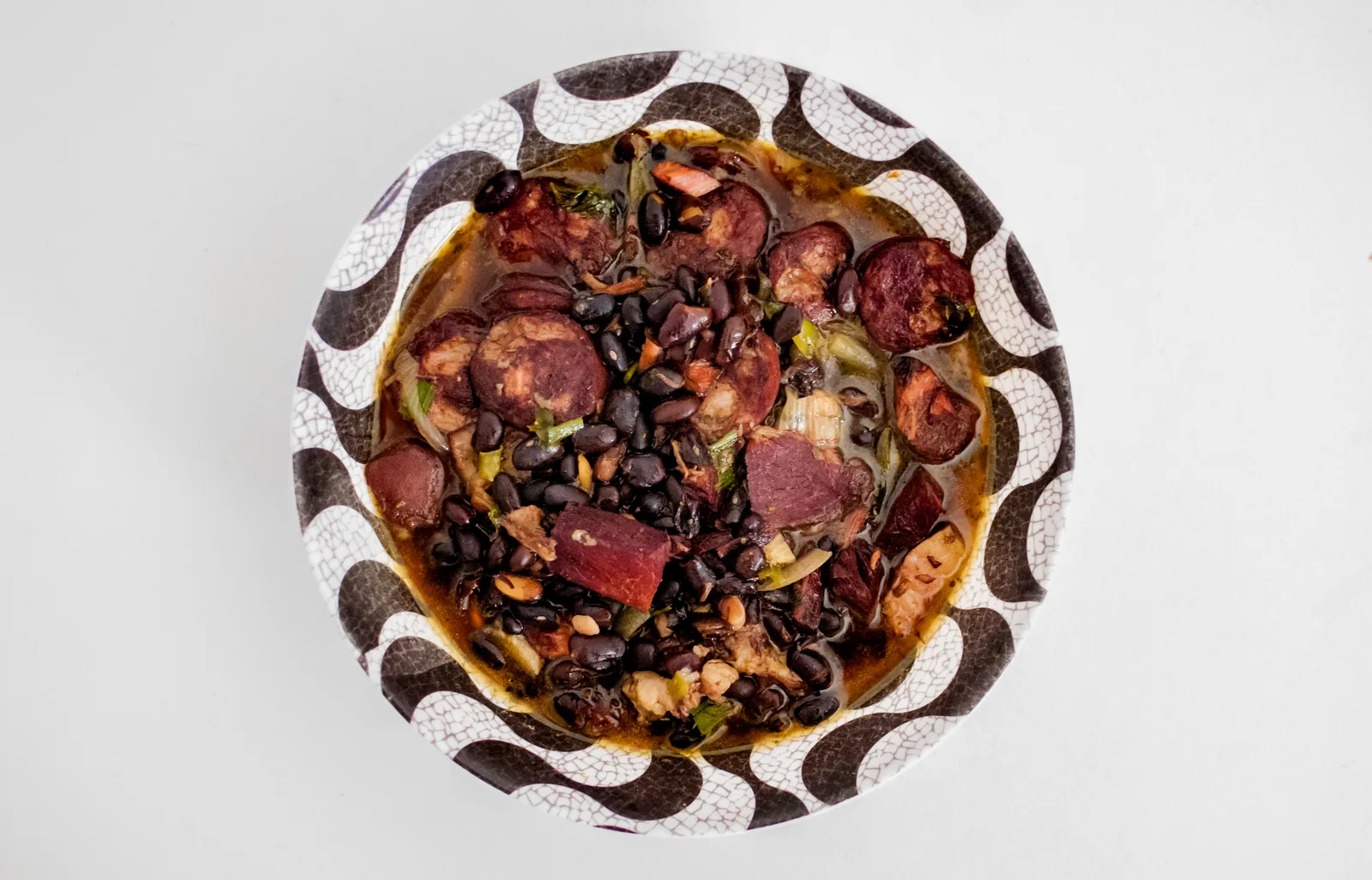
A bowl of Brazilian feijoada — black beans with rounds of sausage and pieces of pork Brazil flag Brazil 3h 30m
Dinner •Brazilian National Dish

Brazilian Feijoada

This Brazilian feijoada recipe is the real Saturday lunch: black beans simmered for hours with pork shoulder, smoky linguiça, bacon and beef until the broth turns thick and dark, then served with white rice, garlicky collard greens, orange slices and farofa. It is a slow, generous pot built for sharing. One serving is about 450 g.

Rich & Hearty

Brazil's national dish — black beans slow-cooked with pork, sausage and beef, served with rice, greens and orange.

Pairs Well With
Serve with white rice, sautéed collard greens, orange slices and farofa.

The Dinner Gazette

Never wonder what’s for dinner again

One email a week with easy dinner ideas from around the world — ingredients, steps and nutrition, tested in our kitchen first.

Delivered every Thursday morning. Unsubscribe anytime.