Curated recipes from 193 countries  •  New seasonal Mediterranean issue out now

Overview

Caruru

Caruru Baiano, Brazilian Okra and Shrimp Stew, Amalá

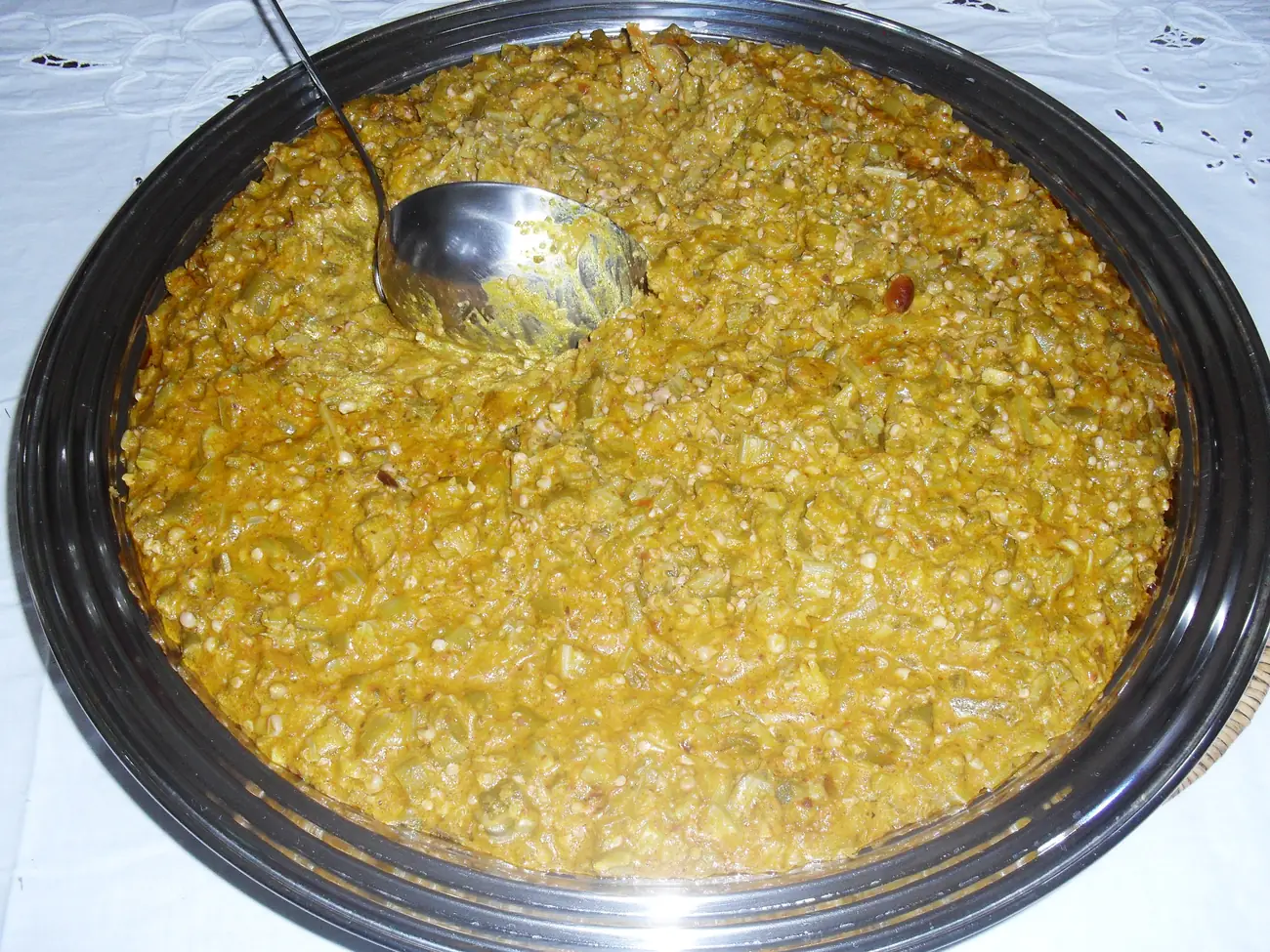
This caruru recipe is the Bahian classic: fresh okra cooked down with dried shrimp, ground peanuts and cashews, ginger and dendê — red palm oil — until it turns into a thick, golden stew. It is the Afro-Brazilian dish of Salvador, served with rice and vatapá, and tucked into acarajé on the street. One serving is about 310 g.

Caruru is one of the defining dishes of Bahia, in north-eastern Brazil, where African, Indigenous and Portuguese cooking met. Its roots reach back to West Africa — it descends from Nigerian okro soup — and it travelled with enslaved Africans to the sugar plantations, where okra, dried shrimp and palm oil became the Bahian version. In the Afro-Brazilian religion of Candomblé, caruru is ritual food: as amalá it is the offering to Xangô, the orixá of thunder, and it is eaten on 27 September for the feast of the twin saints Cosme and Damião. On the streets of Salvador it is tucked into acarajé, the black-eyed pea fritter fried in the same dendê oil.

Pairs well with: Steamed rice, vatapá & farofa

Provenance

Brazil flag Brazil

Bahian Afro-Brazilian Classic

Latin America & Caribbean

Time Dedication

55m

20m prep • 35m cook

Batch Yield

4 Servings

411 kcal per serving

1 serving ≈ 310 g

Technical Skill

Intermediate

Intermediate (Stew)

Meal Timing & Digestive Fit

Breakfast

Not Advised

Lunch

Hearty Midday Main

Dinner

Ideal Hearty Main

Snack & Tea

Inappropriate

Occasions: Family dinners, Afro-Brazilian festivals, the feast of Cosme e Damião, Salvador street-food nights Cost: Moderate — about $4–5 per serving at home
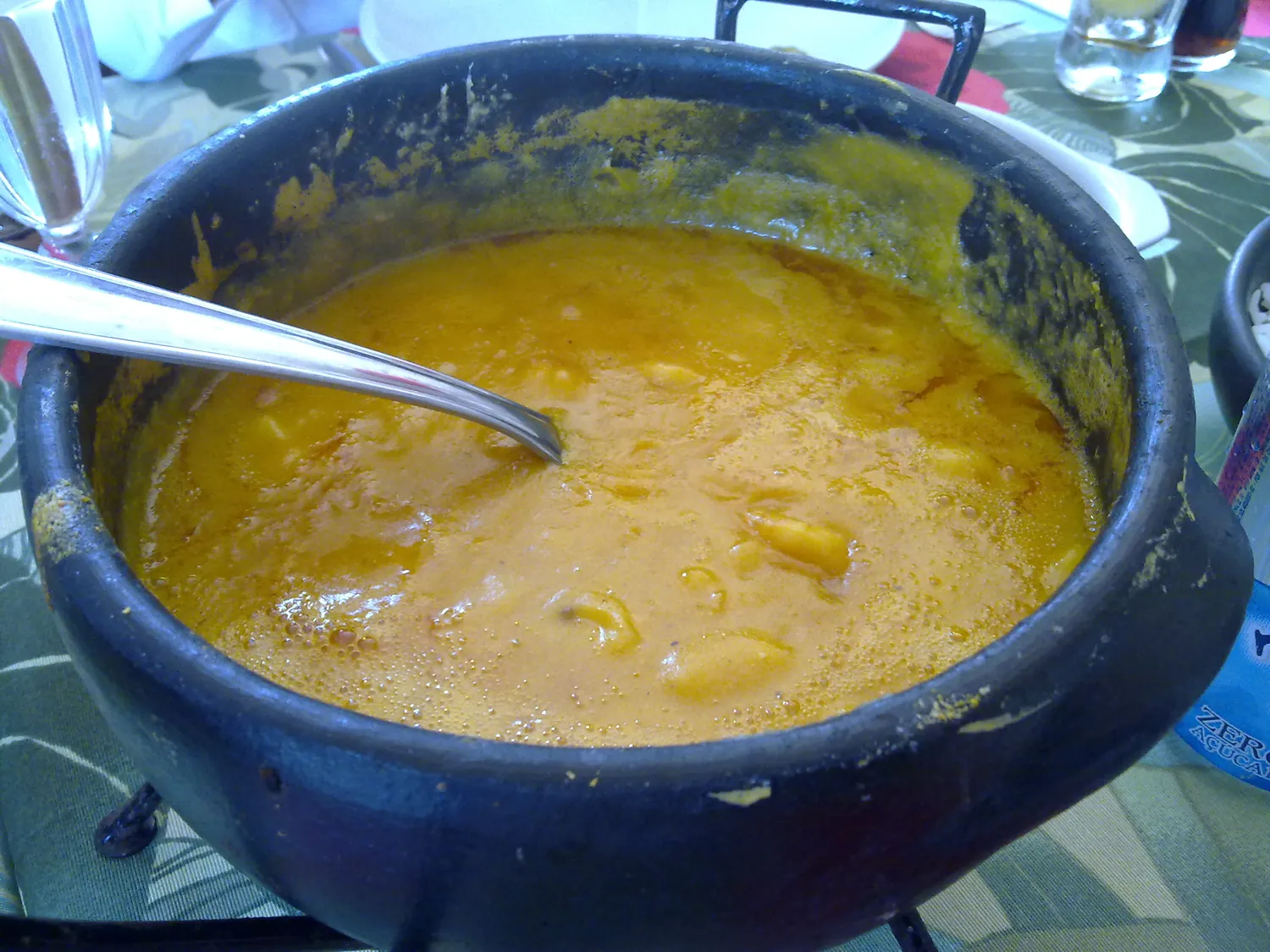
A large tray of thick golden caruru stew with a serving spoon

Bahian Afro-Brazilian Classic

Photo: Catarina Leite, CC BY-SA 2.0, via Wikimedia Commons

The Heritage Formulary

Measured Ingredients

Estimated cost: Moderate — about $4–5 per serving at home (USD)

A good caruru is judged by its thickness: it should mound on a spoon and hold its shape on the plate, never run like soup.

Execution Methodology & Culinary Technique

Step-by-Step Cooking Guide

Active 55m
P

Prep Stage: Slice the Okra, Grind the Nuts

20 Mins • Knife Work

Trim and slice the okra into thin rounds. Grind the dried shrimp to a coarse powder, then grind the toasted peanuts and cashews to a coarse meal — not a paste, and not butter; you want texture. Chop the onion, mince the garlic, grate the ginger, dice the tomato and chop the coriander. Measure the dendê oil, coconut milk, water and lime juice into small bowls so the cooking moves without pauses.

Maestro Tip: Grind the nuts coarse, never to a paste: the stew should have body and a little bite, not the smoothness of peanut butter.

  1. 1

    Grind the Nuts and Dried Shrimp

    5 Mins Medium heat, about 175°C (350°F)

    Toast the cashews in a dry pan for 2 to 3 minutes until golden, then grind them with the peanuts to a coarse meal. Grind the dried shrimp separately to a coarse powder. The two grinds are the body of the stew — coarse, not smooth — so pulse the processor and check often.

    Pulse, do not run the processor continuously: ten seconds too long turns the nuts into butter.

    Done when: The nuts form a coarse, sandy meal; the dried shrimp is a fragrant powder.

  2. 2

    Sauté the Aromatics in Dendê Oil

    5 Mins Medium heat, about 175°C (350°F)

    Warm the dendê oil in a heavy pot over medium heat — it will turn the oil a deep red-orange. Add the onion, garlic and ginger and cook for 3 minutes, stirring, until the onion softens and the kitchen smells warm and savoury. Add the tomato and cook for 2 minutes more until it collapses into the base.

    Dendê oil stains everything it touches, so use a dark tea towel and an old wooden spoon.

    Done when: The onion is soft and translucent, the tomato has melted into the oil, and the pot smells rich and warm.

  3. 3

    Add the Okra and Simmer Thick

    20 Mins Gentle simmer, about 95°C (200°F)

    Add the sliced okra and the ground dried shrimp to the pot and stir well so every round is coated in the red oil. Pour in the water and the ground nuts, add the pricked malagueta chilli, and bring the pot to a gentle simmer. Cook for 18 to 20 minutes, stirring every few minutes and scraping the bottom, until the okra has softened and the stew has thickened into a dense, spoon-coating mass. The okra's natural mucilage is what thickens it — that slippery texture is correct, not a mistake.

    Stir and scrape the bottom every few minutes: the ground nuts catch and burn faster than you expect.

    Done when: The stew is thick enough to mound on a spoon and the okra has lost its raw edge.

  4. 4

    Add the Shrimp and Coconut Milk

    8 Mins Gentle simmer, about 95°C (200°F)

    Stir in the coconut milk and lay the fresh shrimp on top of the stew. Cover and cook for 6 to 8 minutes, without stirring, until the shrimp are pink and opaque all the way through — about 63°C (145°F) inside. Stir once, gently, to fold the shrimp through the stew, and taste for salt: the dried shrimp usually salts the pot by itself.

    Do not stir while the shrimp cook: they break apart in a thick stew if you move them before they set.

    Done when: The shrimp are pink and opaque through, and the stew is glossy and thick.

  5. 5

    Finish with Lime and Coriander

    5 Mins Serve hot, about 70°C (160°F)

    Take the pot off the heat, fish out the malagueta chilli, and stir in the lime juice and chopped coriander. Let the stew rest for 5 minutes — it thickens further as it cools, and the lime needs a moment to lift the richness. Serve hot with steamed rice.

    If the stew goes stiff while it rests, loosen it with a splash of hot water — never with more oil.

    Done when: The stew is hot, thick and fragrant, with the lime brightening the first spoonful.

Finishing Touches & Plating

Serve hot with steamed white rice, a spoonful of vatapá and farofa on the side. The stew thickens as it sits, so if it goes stiff, loosen it with a splash of hot water — never with more oil.

Nutritional Physiology & Benefits

Nutrition

Energy

411

kcal / serving

Protein

27g

Complete AA

Carbs

23g

Complex

Fats

26g

Healthy

Per serving (4 servings · 1 serving ≈ 310 g)
Energy411 kcal
Protein27 g
Carbohydrates23 g
Fat26 g
Fibre7.1 g
Sugar6.0 g
Sodium468 mg
Per 100g
Energy132 kcal
Protein8.8 g
Carbohydrates7.3 g
Fat8.4 g
Fibre2.3 g
Sugar1.9 g
Sodium151 mg

Nutrition values are estimated — calculated from USDA FoodData Central values for the listed ingredients.

Vitamins & minerals: Vitamin C and folate from the okra, iron and zinc from the shrimp, vitamin E from the peanuts, selenium from the cashews. Nutrition is estimated.

Shrimp and Nut Protein

At 27.1 g of protein a serving, this caruru recipe gets it from fresh and dried shrimp, peanuts and cashews — a complete, filling plate with no meat at all.

Fibre That Fills You Up

At 7.1 g of fibre a serving, mostly from the okra and peanuts, the stew is genuinely filling — the okra's natural thickness is fibre doing its work.

Vitamins from the Okra and Shrimp

Okra brings vitamin C and folate, the shrimp brings iron and zinc, and the peanuts bring vitamin E — the stew earns its richness from real ingredients, not from cream.

Food Pairings

What to Eat With

To optimize nutrient absorption and elevate the sensory depth, pair with these authentic accompaniments:

Sides

Steamed White Rice

Plain white rice is the classic partner — it soaks up the thick stew and balances the richness of the nuts and dendê oil.

Farofa

Toasted manioc flour sprinkled over the stew adds dry crunch against the soft, thick caruru — the contrast is the whole point of farofa.

Sauces

Vatapá

Vatapá, the creamy bread-and-peanut sauce of Bahia, is caruru's twin — the two are served together at every Bahian table, and each makes the other taste more like itself.

Drinks

Fresh Lime Soda

A cold lime soda cuts through the richness of the nuts and palm oil and cools the malagueta heat between spoonfuls.

Complete menu

Serve the caruru hot with steamed white rice, vatapá and farofa, and a cold lime soda; an acarajé split open and filled with caruru is the street-food way to eat it.

Digestive Guardrails

What NOT to Combine

To prevent digestive distress, sluggishness, or palate clash, avoid pairing the dish with these elements:

Serving It to Someone with a Nut or Shellfish Allergy

Caruru contains peanuts, cashews and shrimp — all major allergens. If anyone at the table has a peanut, tree-nut or shellfish allergy, do not serve it and do not try to 'pick the nuts out': the ground nuts are mixed through the whole stew. This is general food-safety information, not medical advice.

Undercooked Shrimp

Raw or undercooked shrimp can carry bacteria that cooking destroys — cook the shrimp until pink and opaque all the way through, about 63°C (145°F), and do not eat the stew before it has simmered. This is general food-safety information, not medical advice.

Extra Salty Sides on the Same Plate

At about 468 mg of sodium a serving, the stew is already salty from the dried shrimp — very salty vatapá or salted dried meats on the same plate push the salt load up fast. This is general information, not medical advice.

General information only, not medical advice — consult a doctor for personal dietary decisions.

Who Should Eat It

Who Should Eat

  • General adultsA rich, satisfying dinner with rice — the peanut and cashew base makes it filling, so one bowl is enough.
  • ChildrenSuitable for older children who like spice; for younger ones, leave out the malagueta chilli and check carefully for nut allergy first.
  • ElderlySoft, easy to chew and rich in protein; keep the portion modest because of the salt from the dried shrimp.
  • Pregnant womenGenerally suitable; the shrimp must be cooked through until pink and opaque — keep the portion moderate because of the sodium, and ask your clinician if you are unsure.
  • Breastfeeding womenGenerally suitable; the shrimp and nuts give protein and healthy fats — watch the salt.
  • AthletesA strong post-training dinner with rice: 27.1 g of protein a serving and plenty of salt to replace sweat losses.
  • Weight gainA good choice — the peanut and cashew base is energy-dense, and a second helping of rice adds more.
  • Weight lossAt 411 kcal a serving, this fits a weight-loss plan — load up on the okra, go easy on the rice, and skip the farofa.

Health Conditions — Adjust or Avoid

Conditions

  • DiabetesAbout 22.7 g of carbohydrate a serving — the stew itself is modest, the rice on the side is the part to measure; ask your clinician.
  • High blood pressureAt about 468 mg of sodium a serving, this is moderately salty — use less dried shrimp, do not add extra salt, and ask your clinician if you are on a sodium limit.
  • Kidney diseaseThe dried shrimp adds sodium and the nuts add potassium — keep the portion modest and ask your clinician.
  • GoutShrimp is high in purines — eat occasionally and in a smaller portion; ask your clinician.
  • Stomach issuesThe chilli, ginger and rich nut base can be heavy on a sensitive stomach — use less malagueta and eat a modest portion; ask your clinician if you are unsure.
  • Cardiovascular diseaseThe stew is rich in fats from the nuts and palm oil — an occasional dish in a modest portion, with plenty of okra and rice; ask your clinician.
  • Fatty liverRich in fat from the nuts and dendê oil — keep it occasional and the portion modest; ask your clinician.
  • Food allergiesContains shellfish (shrimp), peanut, tree nuts (cashew) and coconut — do not serve to anyone with any of these allergies; ask your clinician if you are unsure.
  • Special therapeutic dietsIf you follow a prescribed low-sodium or low-purine diet, use less dried shrimp and a smaller portion, and check with your clinician.

If you have a medical condition, consult your doctor before changing your diet.

Storage & Use

Storage & Use

How to store
Cool quickly and store in an airtight container in the fridge.
In the fridge
2 days — the flavour deepens overnight.
In the freezer
1 month in an airtight container; the okra softens further on thawing.
How to reheat
Reheat gently on the stove, stirring, until hot through, about 74°C (165°F); add a splash of water if it has stiffened.
Freezing recommended
Yes — up to 1 month, though the okra softens further.
Signs it has spoiled
Sour or fishy smell beyond the normal dried-shrimp aroma, slimy surface, or mould.

More recipes to explore

A black clay pot of golden-orange bobó de camarão, a thick cassava cream with shrimp, with a serving spoon Brazil flag Brazil 1h 5m
Dinner •Bahian Cassava Cream

Bobó de Camarão

This bobo de camarao recipe is Bahia's creamy shrimp dish: fresh shrimp folded into a thick purée of boiled cassava blended with coconut milk, coloured golden-orange with dendê oil and finished with lime and cilantro. Unlike a stew, the cassava is blended smooth, so the whole dish eats like a rich, spoonable cream. One serving is about 470 g.

Rich & Comforting

Shrimp folded into a thick, smooth cassava cream made with coconut milk and red palm oil, served hot with rice.

Pairs Well With
Steamed white rice, farofa and a crisp green salad
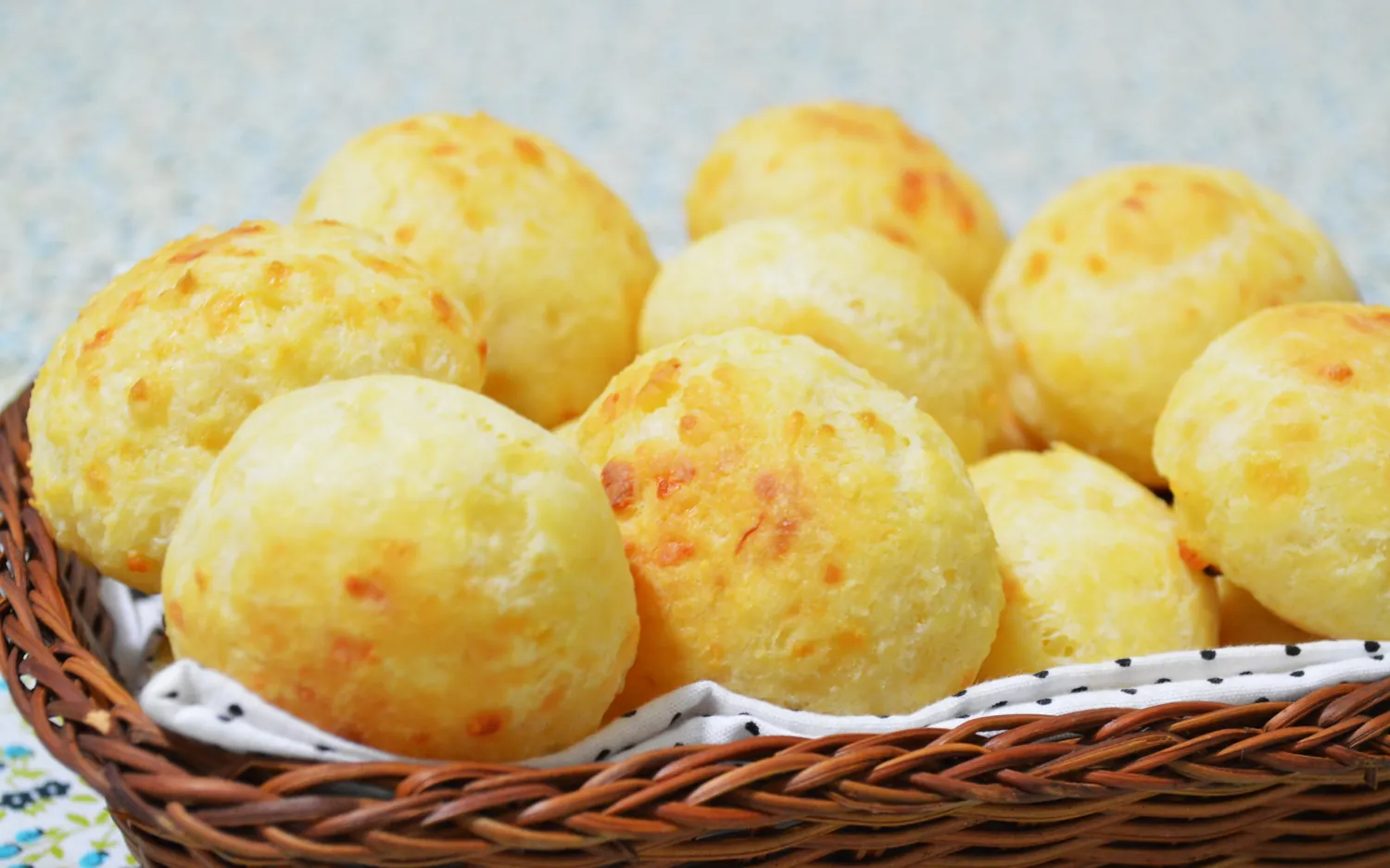
A basket of golden, round pão de queijo, Brazilian cheese bread rolls Brazil flag Brazil 45m
Snack & Tea •Minas Gerais Cheese Bread

Pão de Queijo

This pao de queijo recipe makes Brazil's famous cheese bread: small, golden rolls with a crisp shell and a soft, stretchy, chewy centre, made from tapioca starch, milk, oil, eggs and cheese. There is no wheat flour and no yeast — the rolls puff up on steam in a hot oven. One serving is 4 rolls, about 134 g.

Warm & Chewy Snack

Golden tapioca cheese rolls with a crisp shell and a soft, stretchy centre, baked in under half an hour.

Pairs Well With
Black coffee, fresh fruit, or a light soup
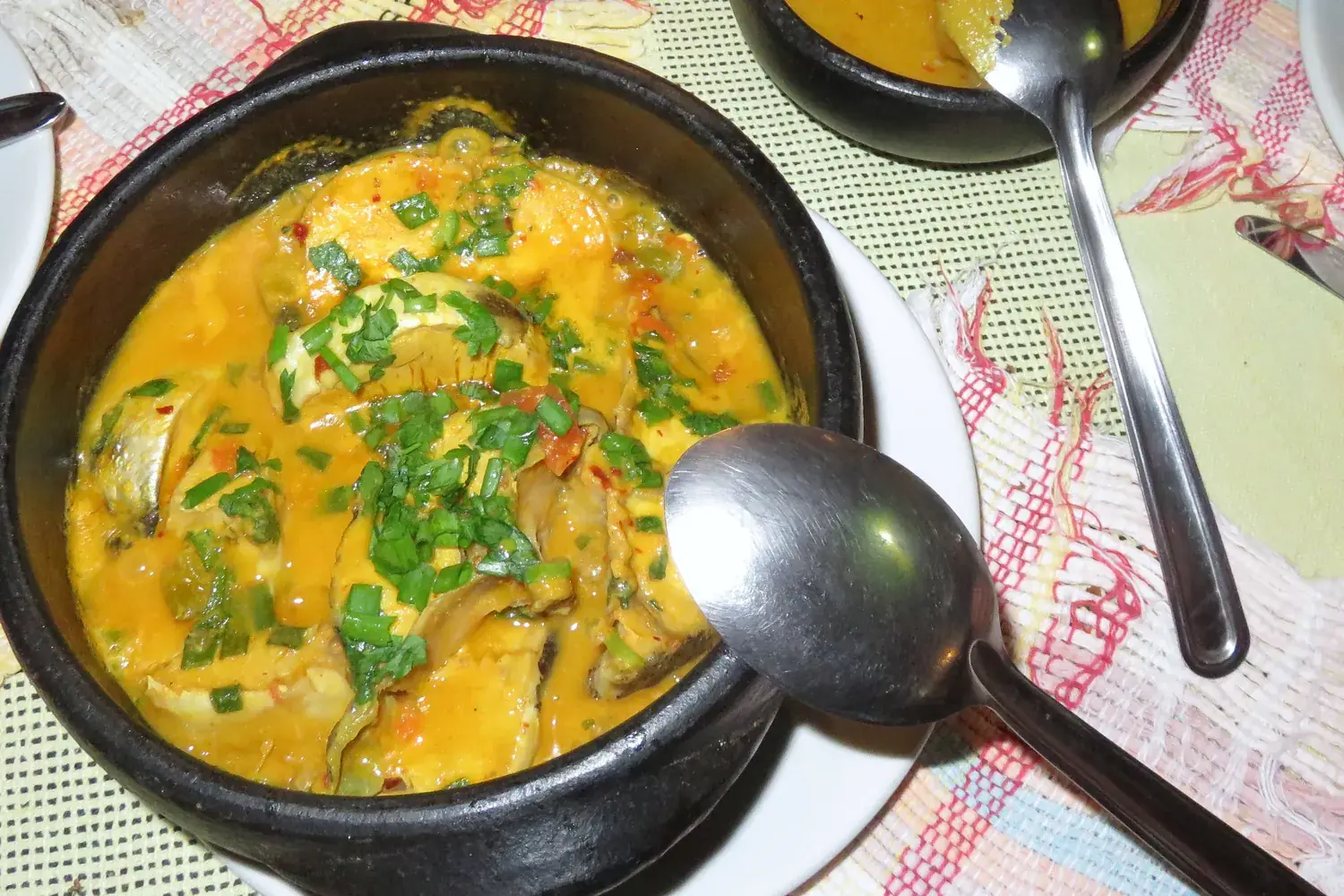
A black clay pot of moqueca baiana, fish chunks in a golden-orange coconut sauce with fresh herbs, beside rice and pirão Brazil flag Brazil 55m
Dinner •Bahian Fish Stew

Moqueca Baiana

This moqueca baiana recipe is Bahia's famous fish stew: thick fillets of white fish layered with onion, peppers and tomato, then simmered gently in coconut milk with dendê oil until the sauce turns golden-orange. The fish stays in whole, flaky pieces in a fragrant broth — a stew, not a purée. One serving is about 450 g.

Coastal & Aromatic

Firm white fish simmered in coconut milk and red palm oil with peppers and tomato, served hot in its clay pot.

Pairs Well With
Steamed white rice, pirão and farofa
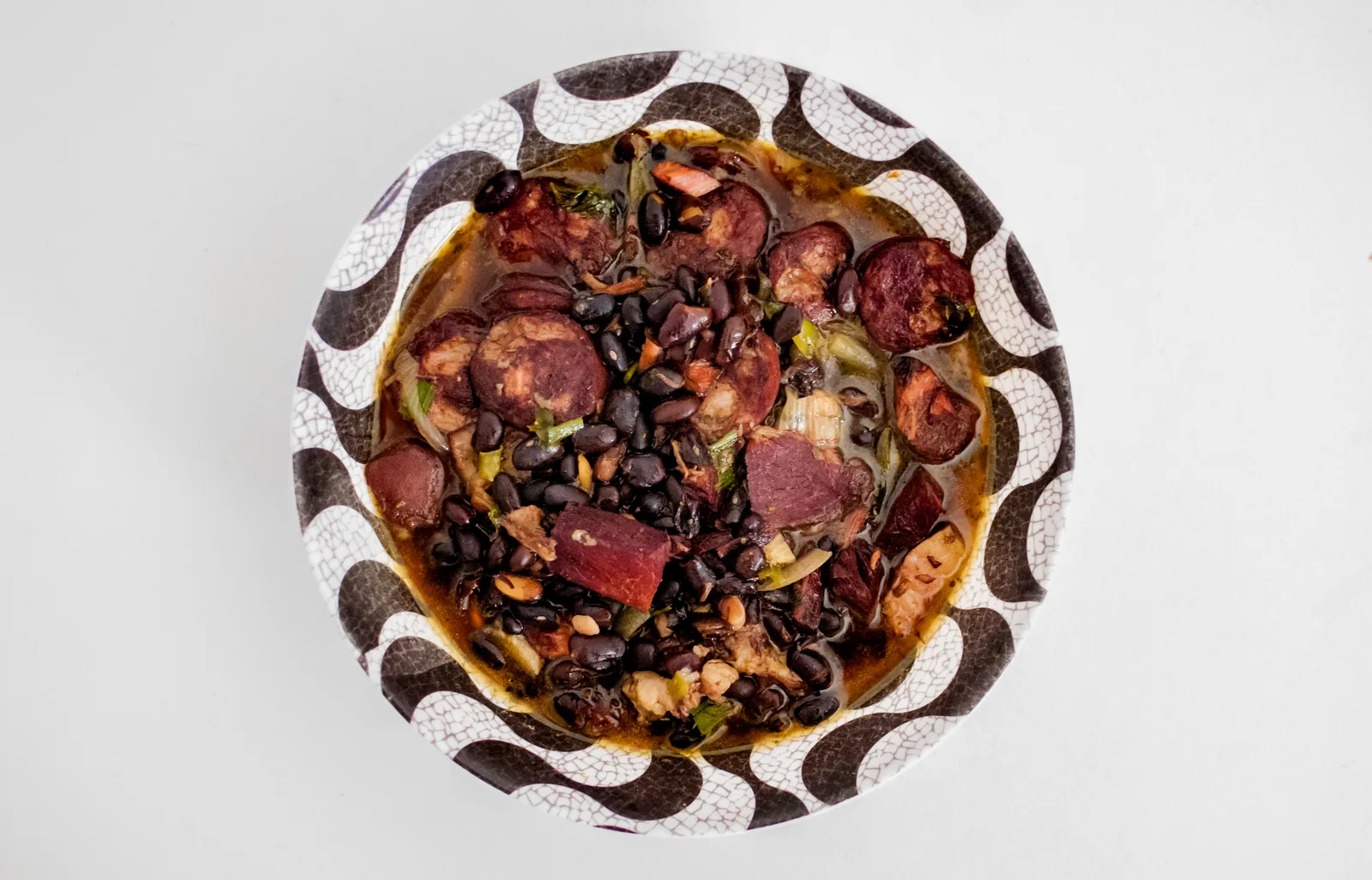
A bowl of Brazilian feijoada — black beans with rounds of sausage and pieces of pork Brazil flag Brazil 3h 30m
Dinner •Brazilian National Dish

Brazilian Feijoada

This Brazilian feijoada recipe is the real Saturday lunch: black beans simmered for hours with pork shoulder, smoky linguiça, bacon and beef until the broth turns thick and dark, then served with white rice, garlicky collard greens, orange slices and farofa. It is a slow, generous pot built for sharing. One serving is about 450 g.

Rich & Hearty

Brazil's national dish — black beans slow-cooked with pork, sausage and beef, served with rice, greens and orange.

Pairs Well With
Serve with white rice, sautéed collard greens, orange slices and farofa.

The Dinner Gazette

Never wonder what’s for dinner again

One email a week with easy dinner ideas from around the world — ingredients, steps and nutrition, tested in our kitchen first.

Delivered every Thursday morning. Unsubscribe anytime.