

Curated recipes from 193 countries  •  New seasonal Mediterranean issue out now

Overview

Cassoulet

Cassoulet, French bean and duck casserole

This cassoulet recipe soaks white beans overnight, then bakes them slowly in a deep earthenware pot with duck confit, pork sausage and pork belly, breaking the crust as it forms, until the beans are creamy and the top is deep golden. One serving is about 450 g. It is a dish that asks for an afternoon, not an hour — and it pays the time back in full.

Cassoulet takes its name from the cassole, the deep earthenware pot it is baked in, and it belongs to Languedoc in south-western France. Three towns — Castelnaudary, Toulouse and Carcassonne — each claim the true cassoulet, and each makes it a little differently: Castelnaudary with duck confit and pork, Toulouse with sausage, Carcassonne with lamb. What they agree on is the method: white beans, meat and a breadcrumb crust, baked long and slow, with the crust broken and re-formed as it cooks.

Pairs well with: A green salad, crusty bread and a glass of red wine from Languedoc

Provenance

France flag France

Languedoc Heritage

Nordic & European

Time Dedication

4h 30m

30m prep • 240m cook

Batch Yield

6 Servings

839 kcal per serving

1 serving ≈ 450 g

Technical Skill

Advanced

Advanced (Slow Bake)

Meal Timing & Digestive Fit

Breakfast

Not Advised

Lunch

Hearty Midday Main

Dinner

Ideal Hearty Main

Snack & Tea

Inappropriate

Occasions: Sunday lunch, winter dinner party, festive family gathering, cold-weather comfort food Cost: Medium — about $5–6 per serving at home
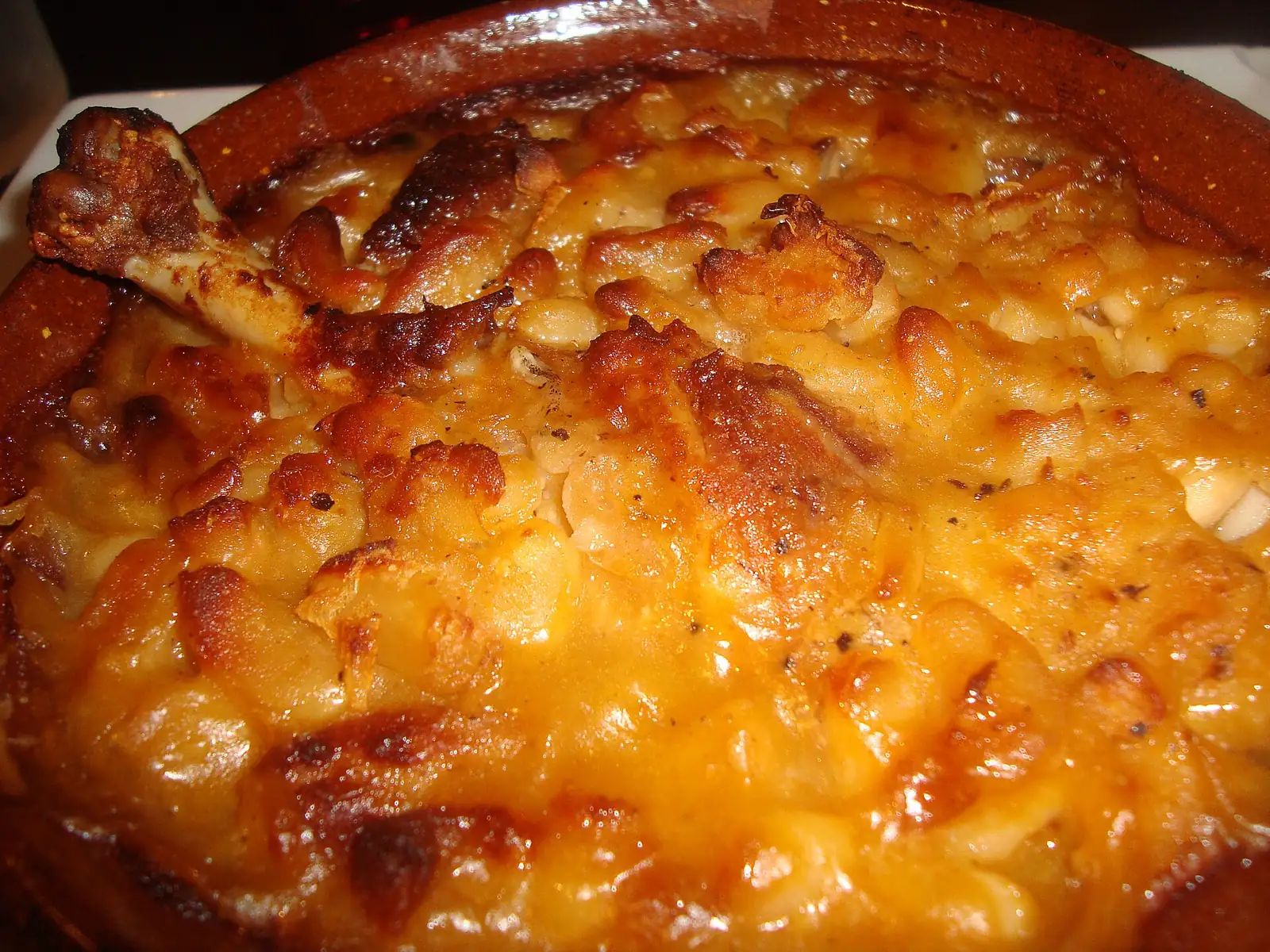
A cassoulet in an earthenware pot with a golden breadcrumb crust and a duck leg

Languedoc Heritage

Photo: Juan Emilio Prades Bel, CC BY-SA 4.0, via Wikimedia Commons

The Heritage Formulary

Measured Ingredients

Estimated cost: Medium — about $5–6 per serving at home (USD)

A proper cassoulet is baked long and slow, and the crust is broken and pushed back into the beans several times so it forms again, thicker and darker. Nutrition is estimated from USDA values.

Execution Methodology & Culinary Technique

Step-by-Step Cooking Guide

Active 4h 30m
P

Prep Stage: Soak the Beans and Pick the Duck

30 Mins • Soaking & Picking

The night before, pick over the dried beans, rinse them and soak in plenty of cold water. On the day, drain and rinse them. Warm the duck confit legs gently, pull the meat off the bones in large pieces and keep the skin aside to crisp. Cut the pork belly into cubes, slice the sausage into thick rounds, and dice the onion and carrot. The casserole goes together in layers, so have everything ready before the oven is hot.

Maestro Tip: Do not skip the overnight soak: soaked beans cook evenly and stay whole, while unsoaked beans can stay hard in the middle and burst at the edges.

  1. 1

    Simmer the beans

    60 Mins Gentle simmer, about 95°C (200°F)

    Put the drained beans in a large pot with plenty of fresh water and bring to a boil. Skim off any foam, then lower the heat and simmer gently for about 50 minutes until the beans are tender but still whole. Drain them, keeping 250 ml of the cooking liquid. Do not salt the water — salt now toughens the skins.

    Tender but whole is the target: beans that are already soft will collapse in the oven.

    Done when: Beans tender when pressed between finger and thumb, skins intact, not mushy.

  2. 2

    Brown the meats

    15 Mins Medium-high heat, about 190°C (375°F)

    Warm the duck fat in a wide pan. Brown the sausage rounds and the pork belly cubes for about 5 minutes until golden, then lift them out. Soften the onion and carrot in the same fat for 5 minutes, add the garlic and tomato paste, and cook 2 minutes more until the paste darkens. The pork and sausage must be cooked through — pork sausage must reach 71°C (160°F).

    Brown in batches: crowded meat steams grey instead of browning.

    Done when: Meats golden and cooked through, onion soft, tomato paste darkened.

  3. 3

    Layer the casserole

    10 Mins Oven preheating to 160°C (325°F)

    Heat the oven to 160°C (325°F). Layer half the beans in a deep earthenware casserole or ovenproof pot, then half the meats and the duck, then the rest of the beans and meats. Tuck the crisped duck skin among the layers. Pour over the stock and the reserved bean liquid until the beans are just covered, and season lightly with salt.

    Layers, not a stir: the beans stay whole and the meats distribute evenly.

    Done when: Beans and meats layered, liquid just covering, pot ready for the oven.

  4. 4

    Bake and break the crust

    150 Mins Oven 160°C (325°F)

    Scatter the breadcrumbs over the top and bake uncovered for about 2 1/2 hours. Every 30 minutes, push the crust down into the beans with the back of a spoon so it forms again — this is the classic cassoulet method, and it builds the thick, dark crust the dish is known for. Add a splash of stock if the top looks dry. The finished cassoulet should be bubbling at the edges with a deep golden crust.

    Breaking the crust is not optional: it is what makes a cassoulet a cassoulet, not just baked beans.

    Done when: Deep golden crust, beans creamy underneath, liquid bubbling at the edges.

  5. 5

    Rest and serve

    15 Mins Resting, cooling from about 160°C (325°F)

    Take the casserole out of the oven and let it rest for 15 minutes so the beans settle and the liquid thickens. Scatter the parsley over the top and serve straight from the pot at the table, spooning beans, meat and crust into each bowl.

    Resting is not optional — served straight from the oven, the beans are watery and the crust slides off.

    Done when: Crust holding its shape, beans creamy and settled, steam rising gently.

Finishing Touches & Plating

Serve the cassoulet straight from its pot, making sure every bowl gets beans, a piece of duck, a round of sausage and a shard of the dark golden crust. It is a dish for the middle of the table, not for plating in the kitchen.

Nutritional Physiology & Benefits

Nutrition

Energy

839

kcal / serving

Protein

40g

Complete AA

Carbs

56g

Complex

Fats

51g

Healthy

Per serving (6 servings · 1 serving ≈ 450 g)
Energy839 kcal
Protein40 g
Carbohydrates56 g
Fat51 g
Fibre11.8 g
Sugar3.4 g
Sodium858 mg
Per 100g
Energy186 kcal
Protein8.8 g
Carbohydrates12.4 g
Fat11.4 g
Fibre2.6 g
Sugar0.8 g
Sodium191 mg

Nutrition values are estimated — calculated from USDA FoodData Central values for the listed ingredients.

Vitamins & minerals: Iron and zinc (duck, pork, beans), B vitamins (pork, beans), vitamin A (carrot), folate (white beans). Nutrition is estimated.

Beans, Duck and Pork

About 839 kcal per serving with about 39.7 g of protein and 11.8 g of fibre from the white beans, duck and pork — a slow, filling meal that keeps hunger away for hours.

Iron and Folate from Beans

White beans supply iron and folate, and the carrot and tomato add vitamin A and vitamin C, which helps the body absorb the iron from the beans.

A Weekend Project Worth Doing

The oven does the work once the pot is layered — the long bake is mostly waiting, and the leftovers are even better the next day.

Food Pairings

What to Eat With

To optimize nutrient absorption and elevate the sensory depth, pair with these authentic accompaniments:

Vegetables

Green Salad

A sharp, vinegary green salad is the classic partner: its acidity cuts the richness of the duck fat and pork and resets the palate between spoonfuls.

Sides

Crusty Bread

Crusty bread is made for the bean liquor left in the bowl — it soaks up every last drop that the spoon leaves behind.

Drinks

Red Wine from Languedoc

A robust red from the same region as the dish matches the duck and pork and stands up to the deep, savoury crust.

Full Menus

Fruit Tart to Finish

For a full menu, end with a simple fruit tart: its clean sweetness follows the rich, salty casserole the way French meals do.

Complete menu

Start with a green salad, serve the cassoulet as the main with crusty bread, and finish with a simple fruit tart.

Digestive Guardrails

What NOT to Combine

To prevent digestive distress, sluggishness, or palate clash, avoid pairing the dish with these elements:

Do Not Add Extra Salt at the Table

One serving carries about 858 mg of sodium, mostly from the sausage and stock, so extra salt pushes one meal far past a reasonable amount. Taste first. This is general food information, not medical advice.

Go Easy on a Second Helping

At about 839 kcal a serving with duck, pork and beans, a second bowl makes a very heavy meal. Enjoy one bowl, with salad and bread alongside. This is general food information, not medical advice.

General information only, not medical advice — consult a doctor for personal dietary decisions.

Who Should Eat It

Who Should Eat

  • General adultsA hearty, slow meal — one bowl with salad and bread is a full dinner for most adults.
  • ChildrenBeans and sausage are usually popular with children; serve the duck meat without the crisp skin and keep the portion modest.
  • ElderlySoft beans and tender meat are easy to eat; serve a smaller bowl with extra salad and keep the crust light.
  • Pregnant womenFine as an occasional dinner if the pork and duck are cooked right through and the dish is served hot. Ask your clinician about cured and slow-cooked meats.
  • Breastfeeding womenA nourishing, energy-rich meal with protein and fibre; drink water alongside, as with any high-fibre meal.
  • AthletesAbout 39.7 g of protein and 55.6 g of carbs per serving make this good recovery food after a long training day.
  • Weight gainEnergy-dense at about 839 kcal a serving, with beans, duck and pork — an easy way to raise the calories.
  • Weight lossAbout 839 kcal a serving is a full dinner; one bowl with a big salad, and no second helping, keeps it in check. Ask your clinician about a plan that fits you.

Health Conditions — Adjust or Avoid

Conditions

  • DiabetesAbout 55.6 g of carbs per serving, mostly from the beans. Keep the bowl as stated and fill the rest of the plate with salad. Ask your clinician about portion size.
  • High blood pressureAbout 858 mg of sodium per serving, mostly from the sausage and stock. Use low-salt stock and do not add salt at the table. Ask your clinician about sodium limits.
  • Kidney diseaseBeans are high in potassium and phosphorus, so keep the portion as stated and do not eat large second helpings. Ask your clinician about your diet.
  • GoutDuck, pork and sausage carry purines, and beans are moderate in purines too; a single bowl with plenty of salad is the safer way to enjoy it. Ask your clinician about meat in your diet.
  • Stomach issuesBeans can cause gas, and the rich meats are heavy on a sensitive stomach; the overnight soak and thorough cooking help, and eating slowly is gentler. Ask your clinician if symptoms flare.
  • Cardiovascular diseaseThe duck fat, pork belly and sausage add saturated fat, so eat in moderation with a big salad. Ask your clinician about your diet.
  • Fatty liverRich in fat and energy, so one bowl with a light salad is enough; skip the second helping. Ask your clinician about your diet.
  • Food allergiesContains wheat (gluten, in the breadcrumbs) and pork and duck. The dish contains no milk, egg, nut or seafood as written. Check every label and ask your clinician about your allergies.
  • Special therapeutic dietsThis dish contains gluten and is high in fat and sodium. A lighter version changes the dish, so discuss any swap with your clinician or dietitian first.

If you have a medical condition, consult your doctor before changing your diet.

Storage & Use

Storage & Use

How to store
Cool quickly, within 2 hours, and store in a sealed container; keep the crust in the pot, it softens as it cools.
In the fridge
3 days, covered, at 4°C (40°F) or below.
In the freezer
Up to 3 months in portions; the beans firm up a little on thawing but reheat well.
How to reheat
Reheat covered in a moderate oven, 180°C (350°F), with a splash of stock, until steaming hot throughout, to 74°C (165°F); uncover for the last 10 minutes to crisp the top again.
Freezing recommended
Yes — in single portions, without the salad.
Signs it has spoiled
Sour smell, slimy beans, or any mould.

More recipes to explore

Golden butter croissants on a wooden board France flag France 20m
Breakfast •Parisian Boulangerie

Croissant au Beurre & Café

Laminated cultured butter pastry paired with washed Arabica, for a slow, pleasurable Parisian morning — best with a little protein alongside. One serving is about 390 g.

Sustained Focus

Flaky all-butter croissant with café au lait, Comté and green apple.

Pairs Well With
Comté cheese wedge & Green apple slices
Quick Prep (<30m)

Bœuf bourguignon — French beef braised in red wine France flag France 4h
Dinner •Burgundy Terroir

Bœuf Bourguignon

Beef braised gently in red wine until the connective tissue melts into a velvet, gelatin-rich sauce — the classic Burgundy Sunday dinner.

Cellular Repair

Beef braised in red wine until spoon-tender, with mushrooms and pearl onions.

Pairs Well With
Parsnip Purée & Steamed French Haricots Verts
High Protein
A mound of classic ratatouille with eggplant, zucchini, tomato and onion on a white plate France flag France 1h 15m
Dinner •Nice Provençal

Ratatouille

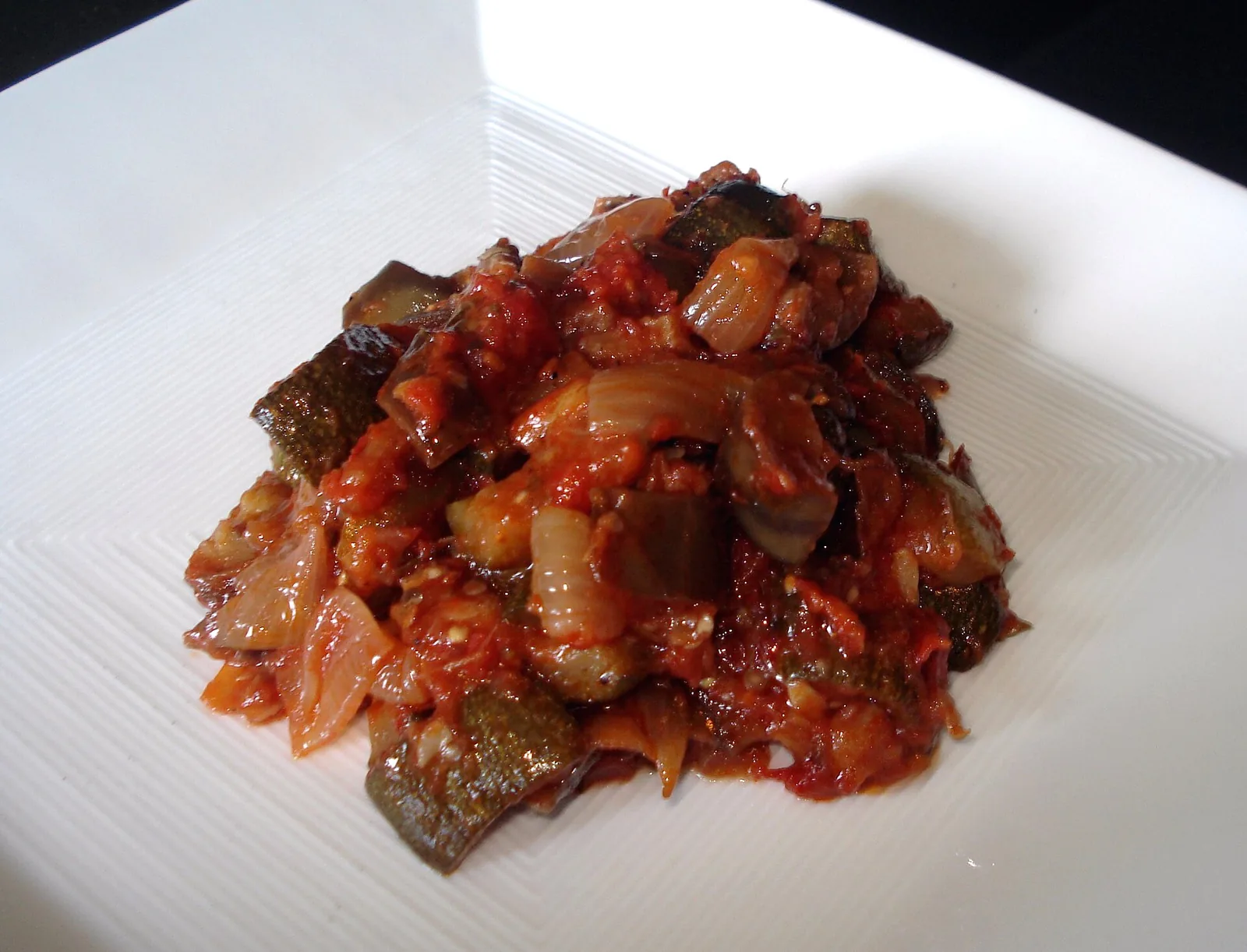
This ratatouille recipe cooks eggplant, zucchini, peppers and tomatoes separately first, so each vegetable keeps its own texture, then brings them together for a slow, fragrant simmer. One serving is about 400 g.

Light & Vegetable-Rich

Slow-simmered summer vegetables in olive oil — light, fragrant and full of fibre.

Pairs Well With
Crusty sourdough bread, grilled fish or a fried egg
A bowl of coq au vin with a braised chicken leg in dark red wine sauce with mushrooms and onions, greens on the side France flag France 1h 40m
Dinner •Burgundy Classic

Coq au Vin

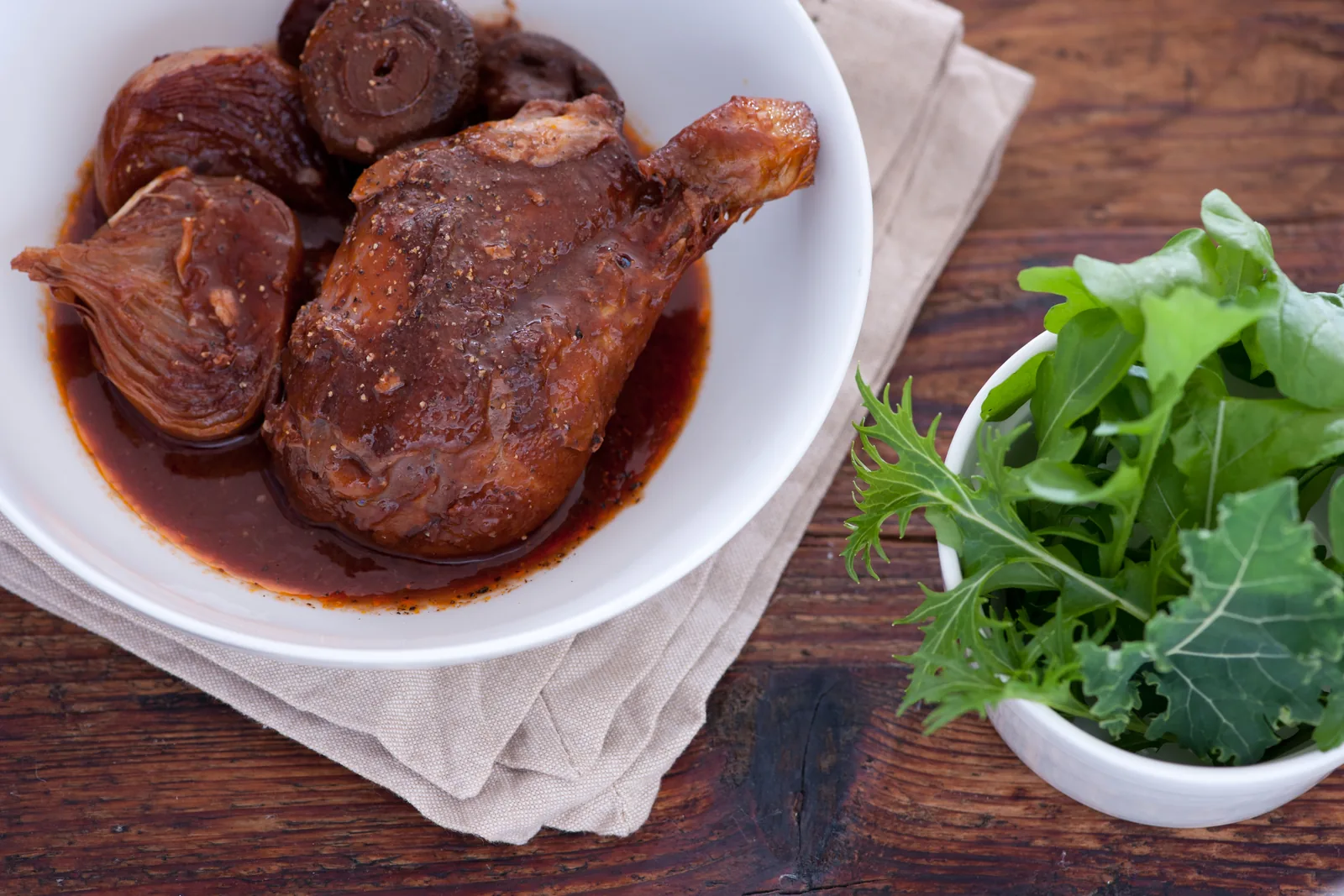
This coq au vin recipe is the Burgundy classic: chicken thighs browned with bacon, then braised in red wine with mushrooms, pearl onions and carrots until the meat is tender and the sauce is dark and glossy. One serving is about 375 g. It takes 1 hour 40 minutes, most of it hands-off while the pot simmers.

Comfort & Warmth

Chicken braised slowly in red wine with mushrooms, pearl onions and bacon until it falls off the bone.

Pairs Well With
Mashed potatoes, crusty bread & Burgundy wine

The Dinner Gazette

Never wonder what’s for dinner again

One email a week with easy dinner ideas from around the world — ingredients, steps and nutrition, tested in our kitchen first.

Delivered every Thursday morning. Unsubscribe anytime.