Curated recipes from 193 countries  •  New seasonal Mediterranean issue out now

Overview

Chingri Malai Curry

Chingri Macher Malaikari, Chingri Malaikari, Bengali Prawn Malai Curry

This chingri malai curry recipe sears large prawns in smoking mustard oil, then simmers them in a pale-gold coconut-milk gravy with onion, ginger, garam masala and a spoon of sugar. No dairy cream is used — the richness comes entirely from coconut milk. One serving is about 290 g.

Chingri malai curry, also called chingri macher malaikari, is the prawn dish Bengalis save for weddings, the Bijoya feast that closes Durga Puja, and the long Sunday lunch. It is traditionally made with golda chingri, the giant freshwater prawn, or bagda, the tiger prawn, seared briefly in smoking mustard oil and then simmered in coconut milk with garam masala. The name is often traced to 'Malay curry', a coconut-milk style that likely reached Bengal through maritime trade with the Malay peninsula — and there is no dairy cream in it at all, despite the word malai.

Pairs well with: Basanti pulao, steamed rice and beguni

Provenance

Bangladesh flag Bangladesh

Bengali Heritage

East & South Asia

Time Dedication

50m

20m prep • 30m cook

Batch Yield

4 Servings

461 kcal per serving

1 serving ≈ 290 g

Technical Skill

Intermediate

Medium (One-Pot Curry)

Meal Timing & Digestive Fit

Breakfast

Not Advised

Lunch

Hearty Midday Main

Dinner

Ideal Hearty Main

Snack & Tea

Inappropriate

High Protein Occasions: Weddings, Bijoya feasts, Sunday lunches, celebration dinners Cost: Medium — about $5–6 per serving at home
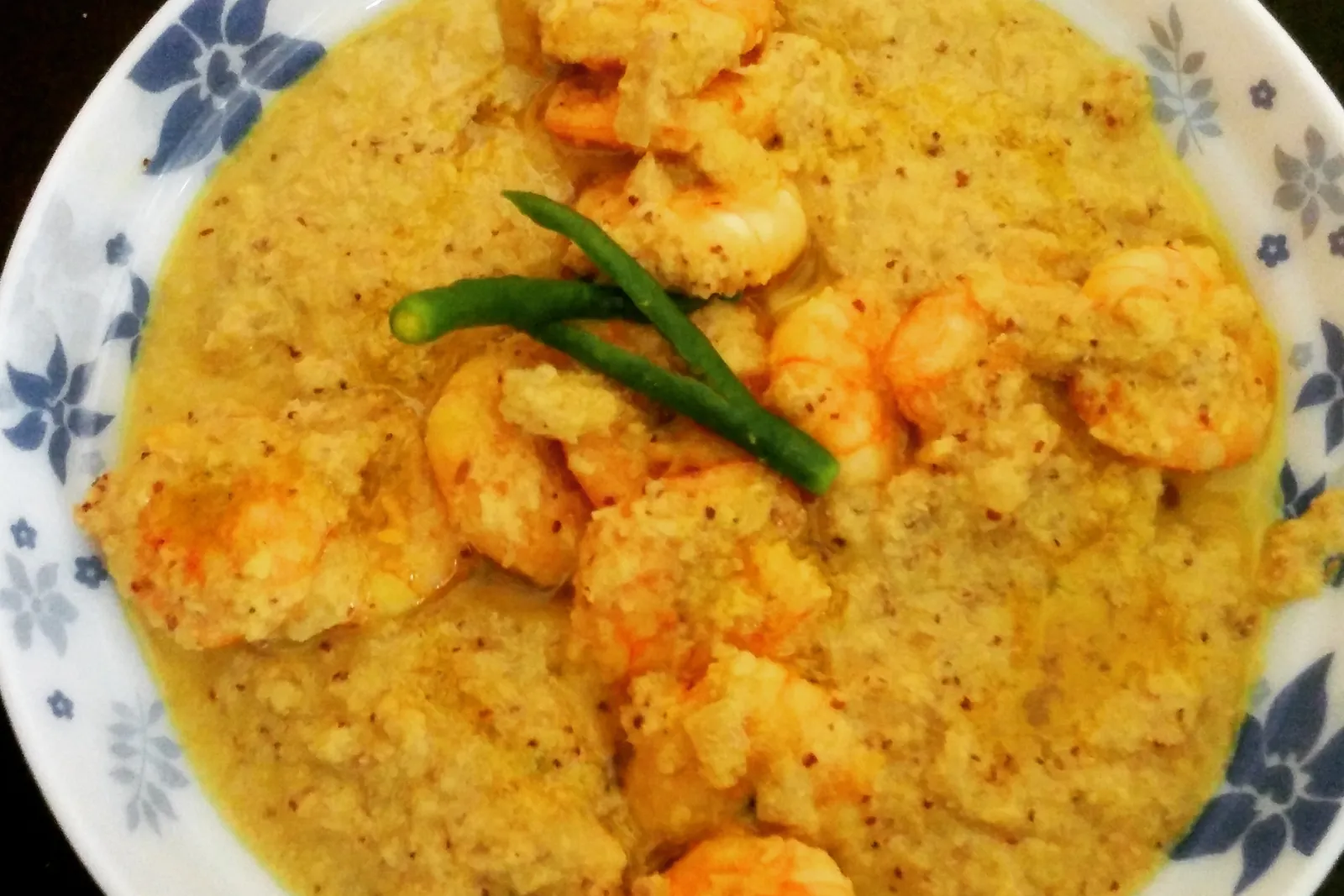
Chingri malai curry in a floral bowl — large prawns in a creamy golden coconut-milk sauce with whole green chillies

Bengali Heritage

Photo: Prads2189, CC BY-SA 4.0, via Wikimedia Commons

The Heritage Formulary

Measured Ingredients

Estimated cost: Medium — about $5–6 per serving at home (USD)

Made the Bengali way: prawns seared in smoking mustard oil, gravy built on coconut milk, finished with ghee and garam masala.

Execution Methodology & Culinary Technique

Step-by-Step Cooking Guide

Active 50m
P

Prep Stage: Peel the Prawns, Chop the Base

20 Mins • Peeling & Chopping

Peel and devein the prawns, leaving the tails on, and toss them with the turmeric and a pinch of salt. Chop the onion and tomato finely, grate the ginger, crush the garlic, slit the green chillies and measure out the coconut milk, mustard oil, spices and sugar so the cooking moves without pauses.

Maestro Tip: Keep the prawns cold until they hit the pan — warm prawns turn soft before they ever meet the heat.

  1. 1

    Season and Sear the Prawns

    10 Mins High heat, ~200°C (400°F)

    Heat the mustard oil in a wide pan until it just begins to smoke, then turn the heat down slightly. Slide in the prawns in a single layer and fry for 60–90 seconds a side, just until they blush pink and firm at the edges, then lift them out and set aside.

    Do not crowd the pan — prawns that touch each other steam instead of searing.

    Done when: Pink, just-firm prawns with golden edges.

  2. 2

    Build the Onion-Tomato Base

    15 Mins Medium heat, ~180°C (350°F)

    In the same oil, add the ghee and the bay leaf, then fry the onion for 6 minutes until soft and golden. Add the ginger, garlic, tomato, chilli powder and garam masala and cook for 5 minutes, splashing in a spoon of water if the paste sticks, until the oil separates at the edges and the base smells sweet and toasty.

    The base is ready when the oil glistens at the edges — that separation is the sign the spices are cooked.

    Done when: A thick, dark-gold paste with oil glistening at the edges.

  3. 3

    Pour in the Coconut Milk

    10 Mins Gentle simmer, ~95°C (203°F)

    Pour in the coconut milk and the sugar, stir, and simmer gently for 8 minutes until the gravy turns pale gold and silky. Keep the heat low — a hard boil will split the coconut milk.

    If the gravy looks thin, simmer 2 minutes longer; if it looks thick, add a spoon of hot water.

    Done when: A pale-gold, silky gravy that coats the back of a spoon.

  4. 4

    Cook the Prawns in the Gravy

    10 Mins Gentle simmer, ~95°C (203°F)

    Slide the seared prawns back into the gravy with the slit green chillies and simmer for 5 minutes, turning the prawns once, until they are opaque all the way through and curled into a loose C shape. Fish and shellfish are done at 63°C (145°F) inside; prawns cook fast, so watch them closely.

    A tight O shape means overcooked — pull the pan off the heat the moment the prawns curl into a C.

    Done when: Opaque, pink prawns curled into a loose C; the flesh reaches 63°C (145°F).

  5. 5

    Rest and Serve

    5 Mins Low heat, ~80°C (175°F)

    Remove the bay leaf, sprinkle over the coriander leaves, and rest for 5 minutes so the gravy settles. Serve hot in a bowl with the gravy spooned over the top.

    Five minutes of rest lets the coconut milk calm and the flavours come together.

    Done when: A glossy, pale-gold curry with plump prawns and green chillies on top.

Finishing Touches & Plating

Spoon into a wide bowl, ladle the pale-gold gravy over the prawns, and serve hot with rice — the gravy is made for spooning over it.

Nutritional Physiology & Benefits

Nutrition

Energy

461

kcal / serving

Protein

29g

Complete AA

Carbs

16g

Complex

Fats

34g

Healthy

Per serving (4 servings · 1 serving ≈ 290 g)
Energy461 kcal
Protein29 g
Carbohydrates16 g
Fat34 g
Fibre4.0 g
Sugar7.1 g
Sodium590 mg
Per 100g
Energy159 kcal
Protein9.9 g
Carbohydrates5.5 g
Fat11.8 g
Fibre1.4 g
Sugar2.5 g
Sodium204 mg

Nutrition values are estimated — calculated from USDA FoodData Central values for the listed ingredients.

Vitamins & minerals: Selenium and vitamin B12 (prawns), vitamin C (tomato, green chilli), vitamin A (tomato), potassium (coconut milk, tomato).

Lean Protein, Rich Sauce

About 28.8 g of protein per serving from the prawns, with the richness carried by coconut milk rather than heavy cream.

No Dairy Cream Needed

The silky body comes entirely from coconut milk, so the curry stays light on the stomach while tasting indulgent.

Mild Enough for Everyone

The heat is gentle — two whole green chillies for aroma, not fire — so the sweet prawns and coconut stay in charge.

Food Pairings

What to Eat With

To optimize nutrient absorption and elevate the sensory depth, pair with these authentic accompaniments:

Full Menus

Basanti Pulao

The classic partner: golden, lightly sweet pulao that soaks up the coconut gravy and turns the curry into a celebration meal.

Sides

Steamed Basmati Rice

Plain steamed rice is the everyday match — its mild flavour lets the mild, sweet gravy shine.

Vegetables

Beguni

Crisp battered eggplant fritters add crunch and a savoury edge against the soft prawns and silky sauce.

Drinks

Borhani

The spiced yoghurt drink traditionally served with rich Bengali meals cools the palate and aids the rich food.

Complete menu

Serve the curry with basanti pulao, beguni on the side and a glass of borhani.

Digestive Guardrails

What NOT to Combine

To prevent digestive distress, sluggishness, or palate clash, avoid pairing the dish with these elements:

Do Not Overcook the Prawns

Prawns go from tender to rubbery in under a minute of extra cooking, because their proteins tighten fast at high heat — pull them out the moment they curl into a C. This is general information, not medical advice.

Do Not Boil the Coconut Milk Hard

A rolling boil splits coconut milk into oil and grainy curds, ruining the silky gravy — keep it at a gentle simmer throughout. This is general information, not medical advice.

General information only, not medical advice — consult a doctor for personal dietary decisions.

Who Should Eat It

Who Should Eat

  • General adultsA rich but mild curry — one serving with rice is a satisfying dinner.
  • ChildrenMild and sweet, so children usually love it; remove the green chillies from their portion.
  • ElderlySoft prawns and a smooth sauce suit older diners; keep the portion moderate because the gravy is rich.
  • Pregnant womenPrawns are fully cooked and the dish is low in mercury, but it is rich — a moderate portion is best. Ask your clinician for personal advice.
  • Breastfeeding womenA good source of protein and iodine; keep the portion moderate because of the fat in the coconut milk. Ask your clinician for personal advice.
  • AthletesAbout 28.8 g of protein per serving makes it a strong post-training dinner — pair it with rice for carbohydrate.
  • Weight gainRich and filling at 461 kcal a serving, so it works well for weight gain when eaten with rice.
  • Weight lossThe gravy is rich at 34.3 g of fat per serving — take a smaller portion and load the plate with vegetables.

Health Conditions — Adjust or Avoid

Conditions

  • DiabetesOnly 16.1 g of carbohydrate per serving, but the rice it is eaten with is the real carbohydrate — watch the rice portion. Ask your clinician for personal advice.
  • High blood pressureSodium is 590 mg per serving — do not add extra salt or salty pickles alongside. Ask your clinician for personal advice.
  • Kidney diseaseHigh in protein and moderate in potassium — keep the portion small. Ask your clinician for personal advice.
  • GoutPrawns are moderate in purines — an occasional small portion is the safer choice. Ask your clinician for personal advice.
  • Stomach issuesMild, low in acid and gentle on the stomach, but the mustard oil can feel heavy — eat slowly. Ask your clinician for personal advice.
  • Cardiovascular diseaseHigh in saturated fat from coconut milk — an occasional treat, not an everyday curry. Ask your clinician for personal advice.
  • Fatty liverRich at 34.3 g of fat per serving — a half portion with extra vegetables is the lighter choice. Ask your clinician for personal advice.
  • Food allergiesContains prawns (shellfish) and may contain mustard oil traces — do not eat if you are allergic to shellfish. Ask your clinician for personal advice.
  • Special therapeutic dietsFits gluten-free and dairy-free diets; not suitable for low-fat or low-sodium therapeutic diets. Ask your clinician for personal advice.

If you have a medical condition, consult your doctor before changing your diet.

Storage & Use

Storage & Use

How to store
Cool quickly and store in a sealed container in the fridge.
In the fridge
Up to 2 days in the fridge.
In the freezer
1 month (the prawns soften and the sauce may split on thawing).
How to reheat
Warm gently on low heat until steaming hot, at least 74°C (165°F); do not boil.
Freezing recommended
No — best eaten fresh; freezing dulls the prawns and splits the coconut gravy.
Signs it has spoiled
Sour or ammonia smell, slimy prawns, or a separated, grainy sauce.

More recipes to explore

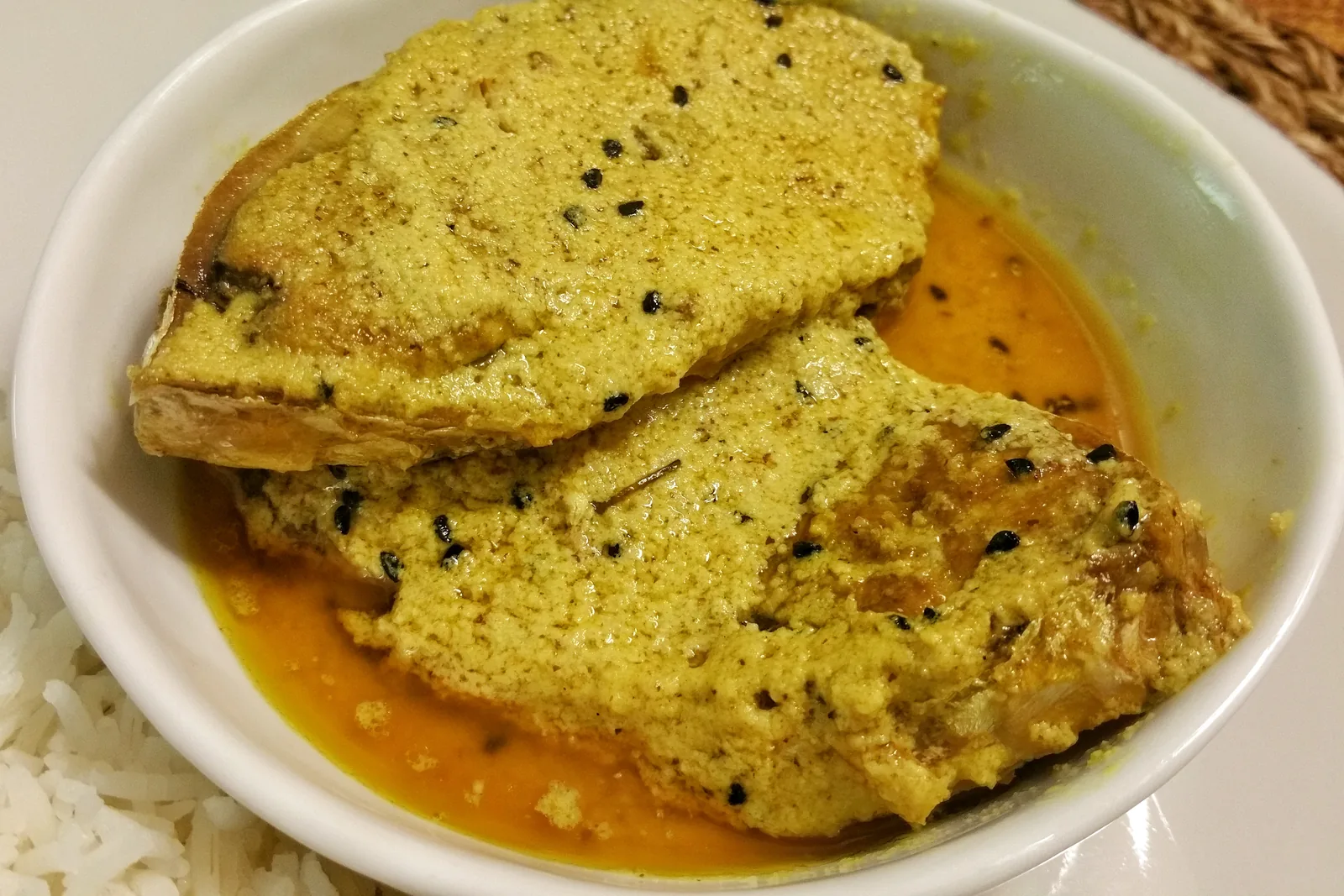
Shorshe ilish — hilsa fish steaks in a golden mustard sauce with green chillies, served in a bowl Bangladesh flag Bangladesh 45m
Dinner •Dhaka Heritage

Shorshe Ilish

This shorshe ilish recipe is the Bengali classic: steaks of hilsa, the national fish of Bangladesh, gently simmered in a pungent sauce of ground yellow and black mustard seeds, mustard oil, turmeric and slit green chillies. The mustard is sharp and warm rather than simply hot, and it balances the rich, oily fish perfectly. One serving is about 200 g, not counting rice.

National Fish, Bold Flavour

Hilsa, the national fish of Bangladesh, simmered in a sharp mustard-seed sauce with green chillies and mustard oil — the Bengali dish that defines a celebration meal.

Pairs Well With
Plain steamed rice & a squeeze of lime
High Protein
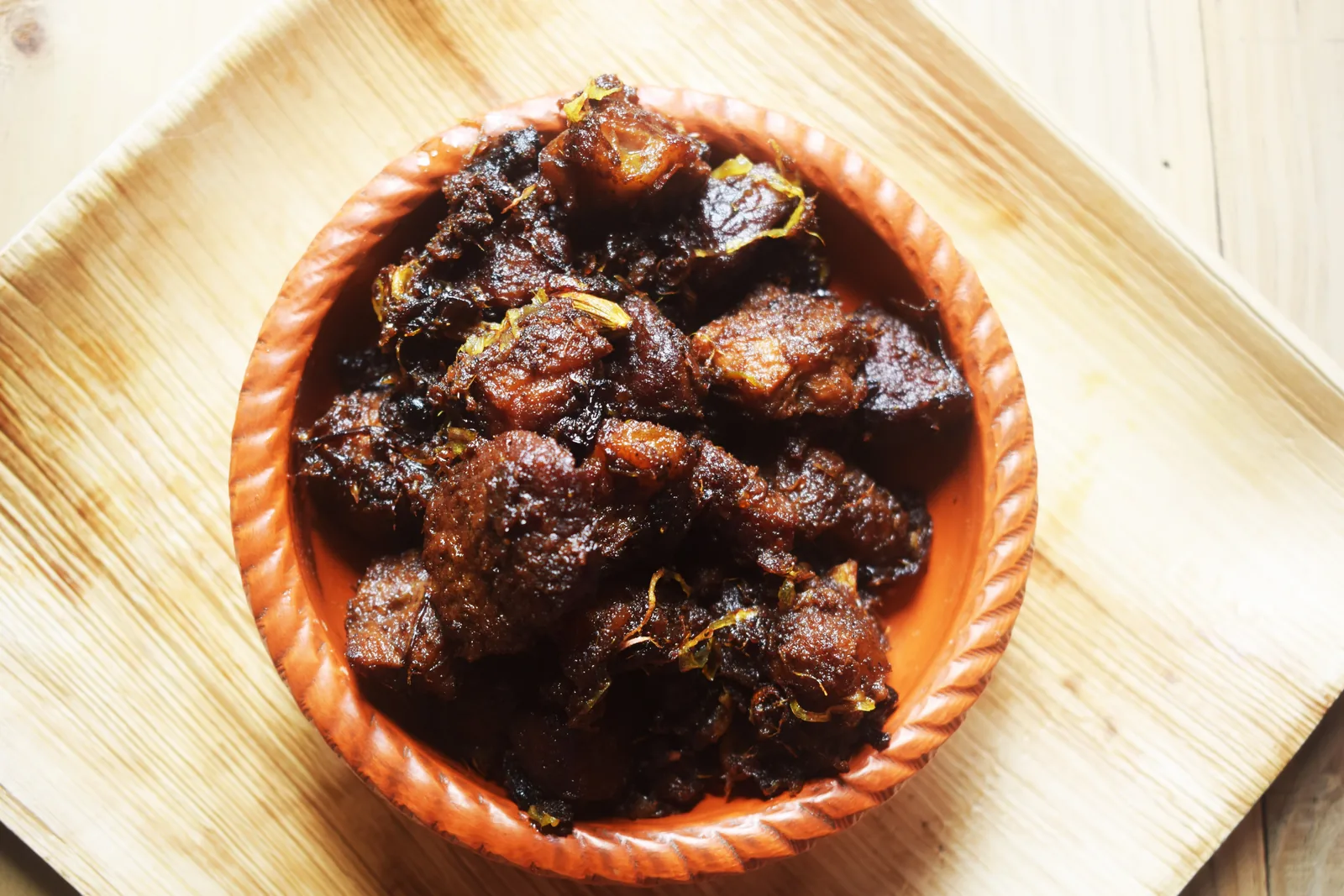
Bangladeshi beef bhuna — dark, dry beef chunks in a thick clinging spice sauce, served in a clay bowl Bangladesh flag Bangladesh 2h 25m
Dinner •Chittagong Heritage

Bangladeshi Beef Bhuna

This bangladeshi beef bhuna recipe is a slow-cooked dry curry from Bengal: beef chuck fried hard with onions, ginger, garlic and whole spices, then braised low and slow until the sauce has almost disappeared and the meat is dark, glossy and coated in a thick, clinging masala. It is not a wet curry — the sauce is the point, and there is barely any of it. One serving is about 260 g, not counting rice or bread.

Slow, Dark & Deeply Spiced

Beef chuck slow-fried with onions and Bangladeshi spices until the sauce is thick, dark and clinging — a dry bhuna, not a wet curry.

Pairs Well With
Plain rice or paratha & cucumber salad
High Protein
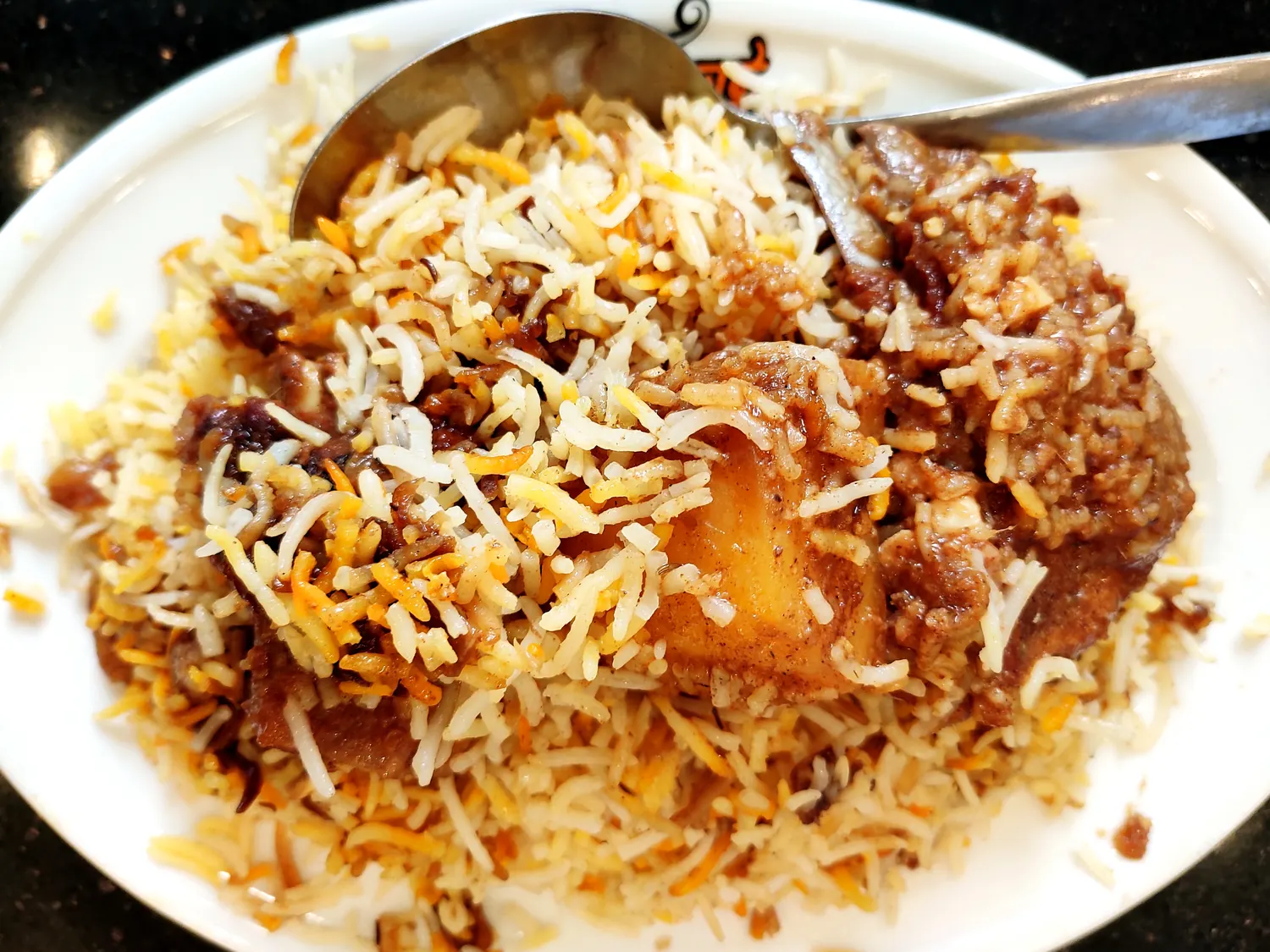
Kacchi biryani — fragrant layered rice with tender mutton, potatoes, boiled egg and salad, served on a plate Bangladesh flag Bangladesh 2h 30m
Dinner •Old Dhaka Heritage

Kacchi Biryani

This kacchi biryani recipe is Dhaka's own biryani, and the one that makes it different is right there in the name: kacchi means raw. Yoghurt-marinated raw mutton is layered with parboiled basmati rice and potatoes in a heavy pot, the lid is sealed with dough, and the whole thing slow-cooks on its own steam — dum — until the meat is spoon-tender and the rice is fragrant with saffron, rose and kewra. One serving is about 435 g.

Dhaka's Wedding Feast

Raw yoghurt-marinated mutton layered with parboiled rice and potatoes, sealed with dough and slow-cooked on its own steam — Dhaka's kacchi biryani.

Pairs Well With
Borhani & cucumber-onion salad
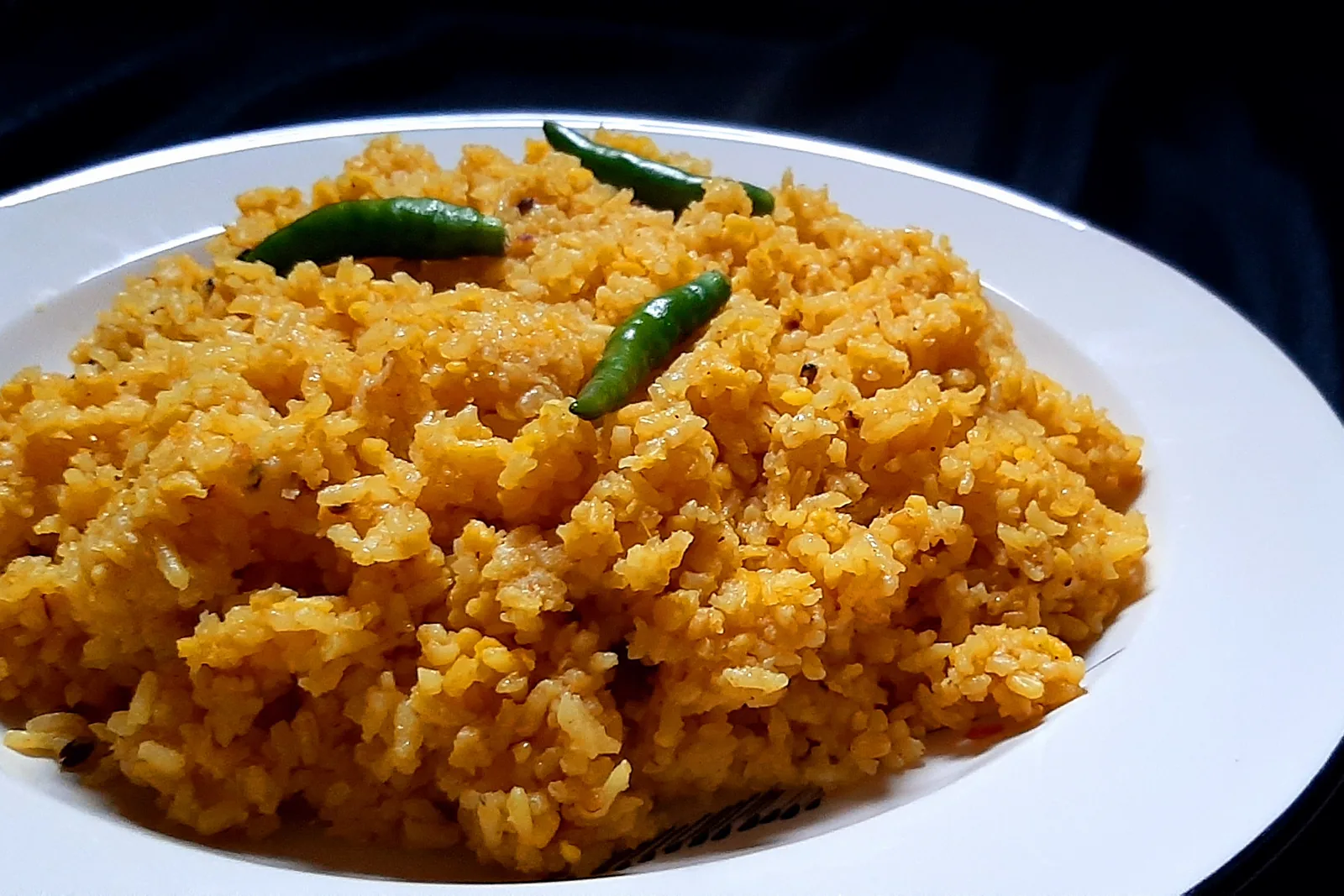
Golden bhuna khichuri, a mound of spiced rice and lentils with whole green chillies, on a white plate Bangladesh flag Bangladesh 1h
Lunch •Bangladeshi Heritage

Bhuna Khichuri

This bhuna khichuri recipe makes Bangladesh's beloved rainy-day comfort food: rice and moong dal first fried in ghee with bay, cardamom and cinnamon — the bhuna step that gives the dish its name — then simmered with potato, cauliflower, carrot and peas until soft, golden and fragrant. It is a one-pot lunch, rich and gently spiced. One serving is about 480 g.

Comfort & Warmth

Rice and moong dal fried with ghee and whole spices, then simmered with potato, cauliflower and peas until soft and golden.

Pairs Well With
Fried eggplant, a fried egg, or a simple cucumber salad, with green chilli and lemon on the side.

The Dinner Gazette

Never wonder what’s for dinner again

One email a week with easy dinner ideas from around the world — ingredients, steps and nutrition, tested in our kitchen first.

Delivered every Thursday morning. Unsubscribe anytime.