
Curated recipes from 193 countries  •  New seasonal Mediterranean issue out now

Overview

Chocolate Santafereño

Chocolate Caliente con Queso, Bogota Hot Chocolate, Chocolate Completo

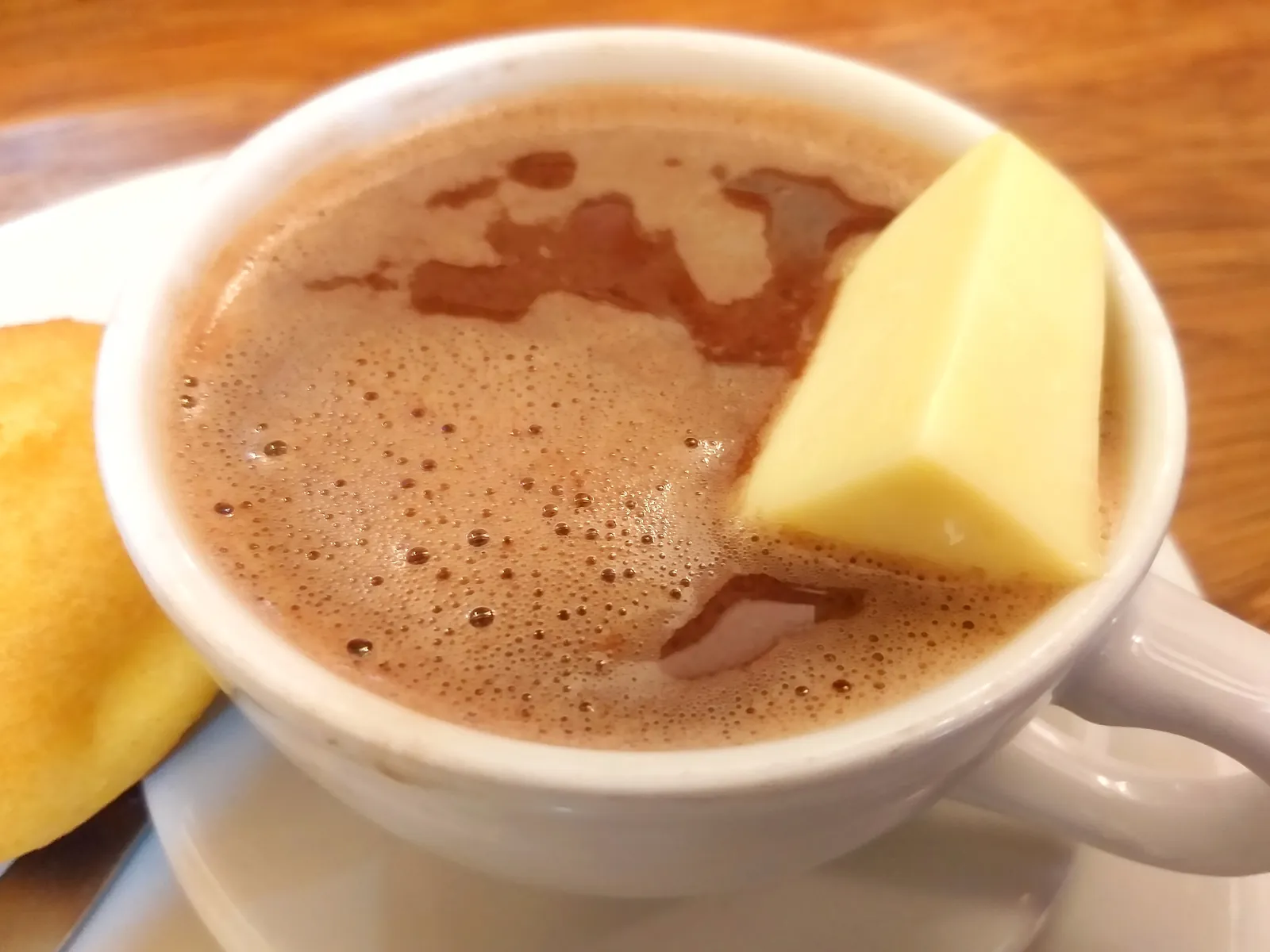
This chocolate santafereo recipe whisks dark chocolate into hot milk with panela and cinnamon, then drops in cubes of queso campesino to soften in the mug - the Bogotá breakfast that surprises every first-timer and converts them by the second sip. Serve it at once, with bread for dipping. One serving is about 325 g.

Chocolate santafereño is named for Santa Fe de Bogotá, the city's old name, and it is the capital's signature breakfast drink: hot chocolate with cubes of fresh cheese dropped in to soften. The older Bogotá way makes it with water rather than milk, whisked to a froth with a wooden molinillo in a chocolatera pot. Bogotá's oldest restaurant, La Puerta Falsa in La Candelaria, has been serving it with bread and cheese since 1816.

Pairs well with: Almojábana or a bread roll, with a tamal on the side for a full Bogotá breakfast

Provenance

Colombia flag Colombia

Bogotá Heritage

Latin America & Caribbean

Time Dedication

15m

5m prep • 10m cook

Batch Yield

2 Servings

466 kcal per serving

1 serving ≈ 325 g

Technical Skill

Easy

Easy (One Pot)

Meal Timing & Digestive Fit

Breakfast

Prime Morning Fit

Lunch

Inappropriate

Dinner

Inappropriate

Snack & Tea

Inappropriate

Occasions: Cold Andean mornings, Bogota breakfast, weekend brunch, Christmas novena Cost: Low - about $1-2 per serving at home
A white cup of frothy hot chocolate with a large wedge of pale cheese melting into it, with a bread roll at the edge, on a wooden table

Bogotá Heritage

Photo: Caldobasico, CC BY-SA 4.0, via Wikimedia Commons

The Heritage Formulary

Measured Ingredients

Estimated cost: Low - about $1-2 per serving at home (USD)

A true chocolate santafereño is whisked until frothy, sweetened with panela, and served the moment the cheese cubes start to soften - never boiled hard, which splits the milk.

Execution Methodology & Culinary Technique

Step-by-Step Cooking Guide

Active 15m
P

Prep Stage: Cheese, Chocolate and Panela

5 Mins • Chopping & Grating

Cut the cheese into 8 cubes about 2 cm across. Chop the dark chocolate small and grate the panela. Measure the milk, cinnamon and salt, and set two mugs on the counter.

Maestro Tip: Cut the cheese first and keep it cold until the last minute - cold cubes hold their shape in the hot chocolate instead of dissolving at once.

  1. 1

    Cube the cheese and grate the panela

    5 Mins Room temperature (20°C / 68°F)

    Cut the queso campesino into 8 cubes about 2 cm across and set them aside. Grate the panela and chop the chocolate small so both melt quickly.

    Keep the cheese cubes chunky - cubes smaller than 2 cm melt away before you can fish them out.

    Done when: Eight firm cheese cubes, a small pile of grated panela and a bowl of chopped chocolate, ready to go.

  2. 2

    Melt the chocolate into the milk

    5 Mins 80–85°C (175–185°F)

    Pour the milk into a saucepan over medium heat and add the chopped chocolate. Warm gently, stirring, until the chocolate has melted and the milk is steaming and just below a boil.

    Never let the milk boil hard - boiling splits the milk and scorches the chocolate on the bottom of the pan.

    Done when: The milk is steaming, the chocolate is fully melted, and the surface is smooth and dark.

  3. 3

    Sweeten and whisk until frothy

    3 Mins 80–85°C (175–185°F)

    Stir in the panela, cinnamon and salt, then whisk hard - with a molinillo between your palms if you have one, or a balloon whisk - until a thick froth rises on top.

    Whisk in short, fast bursts and lift the whisk to let air in; a good froth is the sign of a proper santafereño.

    Done when: A thick, even froth covers the surface and the drink tastes sweet, with the cinnamon just behind the chocolate.

  4. 4

    Drop in the cheese

    1 Min 80–85°C (175–185°F)

    Take the pan off the heat and drop 4 cheese cubes into each mug as you pour, or pour first and add the cubes. Stir once, gently, and leave the cubes to soften in the hot chocolate.

    One gentle stir is enough - stirring hard breaks the cubes into strings before anyone gets to eat them.

    Done when: The cheese cubes have softened at the edges but still hold their shape in the mug.

  5. 5

    Serve immediately

    1 Min Serve hot, about 70°C (158°F)

    Carry the mugs to the table at once with bread for dipping, and tell everyone to fish the cheese out with a spoon while it is still soft.

    Do not let it sit - the cheese goes from soft to stringy in a few minutes, and the froth falls flat.

    Done when: The mug is too hot to hold comfortably, the froth is still standing, and the cheese is soft inside.

Finishing Touches & Plating

Serve at once, froth still standing and cheese soft in the mug, with an almojábana or a bread roll for dipping - chocolate santafereño waits for no one.

Nutritional Physiology & Benefits

Nutrition

Energy

466

kcal / serving

Protein

17g

Complete AA

Carbs

35g

Complex

Fats

28g

Healthy

Per serving (2 servings · 1 serving ≈ 325 g)
Energy466 kcal
Protein17 g
Carbohydrates35 g
Fat28 g
Fibre3.0 g
Sugar29.3 g
Sodium633 mg
Per 100g
Energy143 kcal
Protein5.4 g
Carbohydrates10.8 g
Fat8.7 g
Fibre0.9 g
Sugar9 g
Sodium195 mg

Nutrition values are estimated — calculated from USDA FoodData Central values for the listed ingredients.

Vitamins & minerals: Calcium and vitamin B12 from the milk and cheese, iron and magnesium from the dark chocolate, and a little cinnamon. Nutrition is estimated.

Calcium From Milk and Cheese

Milk and fresh cheese together supply calcium and protein, which support bones and help the breakfast keep you full until lunch.

Iron and Magnesium From Dark Chocolate

Dark chocolate is a real source of iron and magnesium, two minerals the body uses every day, in a breakfast that feels like a treat.

Slow Morning Energy

Milk, chocolate and cheese together give carbohydrate, fat and about 17 g of protein per mug, so the energy lasts longer than a sweet drink alone.

Food Pairings

What to Eat With

To optimize nutrient absorption and elevate the sensory depth, pair with these authentic accompaniments:

Sides

Almojábana

The warm cheese bread is the classic partner - tear it open and dip it in the chocolate, where it soaks up the froth and the melted cheese.

Arepa with Butter

A griddled corn arepa with butter gives the breakfast something plain and salty to set against the sweet chocolate.

Fresh Fruit

Sliced mango or papaya adds water and acidity, which refresh the palate between sips of a very rich drink.

Full Menus

Chocolate Completo with a Tamal

For the full Bogotá breakfast, serve the chocolate with a tamal tolimense - the rich, savoury tamal and the sweet chocolate are the city's most famous morning pair.

Complete menu

Serve chocolate santafereño with an almojábana and a tamal tolimense for a full Bogotá breakfast, then a light lunch of ajiaco.

Digestive Guardrails

What NOT to Combine

To prevent digestive distress, sluggishness, or palate clash, avoid pairing the dish with these elements:

Do Not Boil the Milk Hard

A rolling boil splits the milk proteins and scorches the chocolate, leaving a grainy drink with a burnt taste. Keep it just below a simmer. This is general information, not medical advice.

Do Not Use a Hard Aged Cheese

Aged cheese will not melt in hot chocolate - it stays rubbery and squeaks. Only a soft fresh cheese like queso campesino softens into the drink the way it should.

Do Not Follow It With a Second Very Sweet Pastry

One mug already carries about 29 g of sugar, so a sugary bun on top piles sweetness on sweetness. Keep the bread plain and buttered instead. This is general information, not medical advice.

General information only, not medical advice — consult a doctor for personal dietary decisions.

Who Should Eat It

Who Should Eat

  • General adultsOne mug is a warm, filling breakfast; the cheese makes it surprisingly satisfying, so a bread roll alongside is usually plenty.
  • ChildrenChildren love fishing the soft cheese out of the chocolate; let the mug cool a minute first so the drink is warm, not scalding.
  • ElderlySoft, warm and easy to swallow, with calcium from the milk and cheese; keep the panela modest if blood sugar is a concern.
  • Pregnant womenMade with pasteurised milk and cheese, it is fine in a normal serving; the caffeine from dark chocolate is low but worth counting toward the day's total.
  • Breastfeeding womenA warming, calcium-rich breakfast; the small amount of chocolate caffeine is usually fine, but keep an eye on the baby's sleep if you drink it late in the day.
  • AthletesA good recovery breakfast after a morning session - carbohydrate from the milk and panela plus about 17 g of protein from the milk and cheese.
  • Weight gainAn easy energy-dense breakfast at about 466 kcal a mug, and a bread roll on the side adds more.
  • Weight lossEnjoy it as a full breakfast rather than a drink on top of one, and cut the panela in half - the chocolate and cheese carry the flavour on their own.

Health Conditions — Adjust or Avoid

Conditions

  • DiabetesOne mug carries about 35 g of carbohydrate and 29 g of sugar, so it can raise blood sugar; ask your clinician whether it fits your plan, and halving the panela is the easiest cut.
  • High blood pressureThe cheese and the pinch of salt add about 636 mg of sodium per mug; keep the salt out and the cheese modest, and ask your clinician if you are on a low-sodium plan.
  • Kidney diseaseMilk and cheese are high in potassium and phosphorus, so this is a rich drink for restricted diets; ask your clinician before making it a regular breakfast.
  • GoutMilk and cheese are low in purines and dairy may even help; the sugar is the bigger concern, so ask your clinician about portion size.
  • Stomach issuesWarm milk and chocolate can trigger reflux or discomfort in some people; if it bothers you, try the traditional water-based version and ask your clinician.
  • Cardiovascular diseaseSaturated fat from whole milk and cheese is about 28 g of fat per mug; using low-fat milk trims it, and ask your clinician about how often it fits.
  • Fatty liverThe added sugar from panela is the main concern; halve the panela or skip it and let the chocolate carry the flavour, and ask your clinician.
  • Food allergiesContains milk (milk and cheese). Dark chocolate may be made in facilities that handle nuts; check the label if you have a nut allergy and ask your clinician.
  • Special therapeutic dietsNot suitable for dairy-free diets as written; oat milk and a dairy-free soft cheese can work, but ask your clinician or dietitian first.

If you have a medical condition, consult your doctor before changing your diet.

Storage & Use

Storage & Use

How to store
Best drunk fresh; if you must keep it, cool quickly and store the chocolate without the cheese.
In the fridge
Up to 2 days in the fridge in a sealed jug, cheese removed.
In the freezer
Do not freeze - the milk splits and the texture turns grainy when thawed.
How to reheat
Reheat gently over low heat to 74°C (165°F), whisking to bring the froth back; add fresh cheese cubes after reheating, never before.
Freezing recommended
No - the milk splits on thawing.
Signs it has spoiled
A sour smell, a skin that will not whisk away, or curdling when heated - throw it away.

More recipes to explore

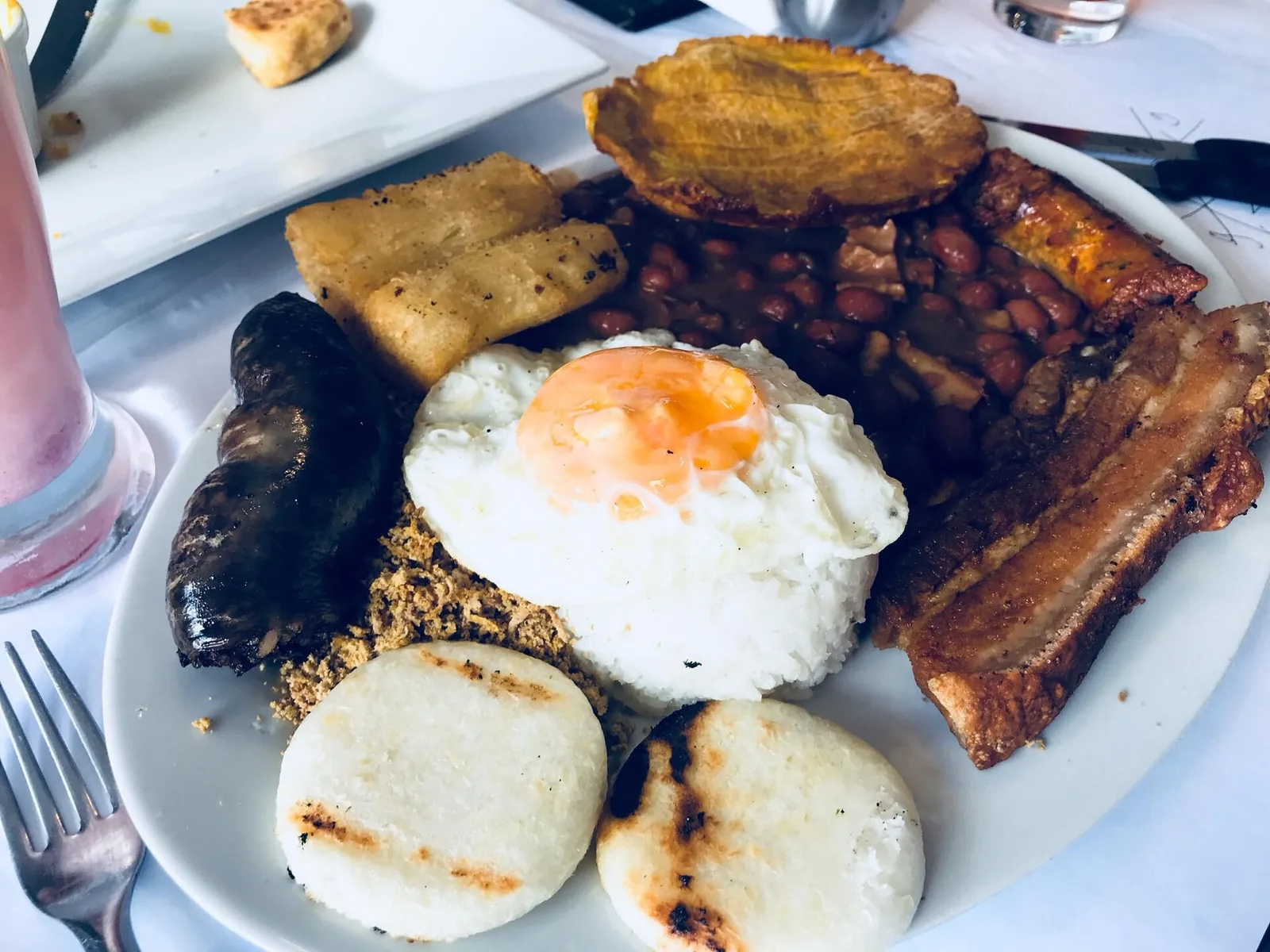
Bandeja paisa on a white plate with red beans, white rice, a fried egg, chicharrón, morcilla, chorizo, fried plantain and two small arepas Colombia flag Colombia 2h
Lunch •Antioquia Heritage

Bandeja Paisa

This bandeja paisa recipe builds the famous platter from Antioquia: red beans simmered with pork, white rice, crisp chicharrón, seasoned ground beef, chorizo and morcilla, a fried egg, sweet fried plantain, avocado, hogao sauce and a small grilled arepa. Every part is cooked separately, then piled onto one wide plate so each bite can mix a little of everything. One serving is about 894 g.

Hearty & Filling

A generous Antioquia platter of beans, rice, meats, egg, plantain and avocado, built to fuel a long working day.

Pairs Well With
A cold glass of panela lemonade or a light lager, with a small green salad on the side.
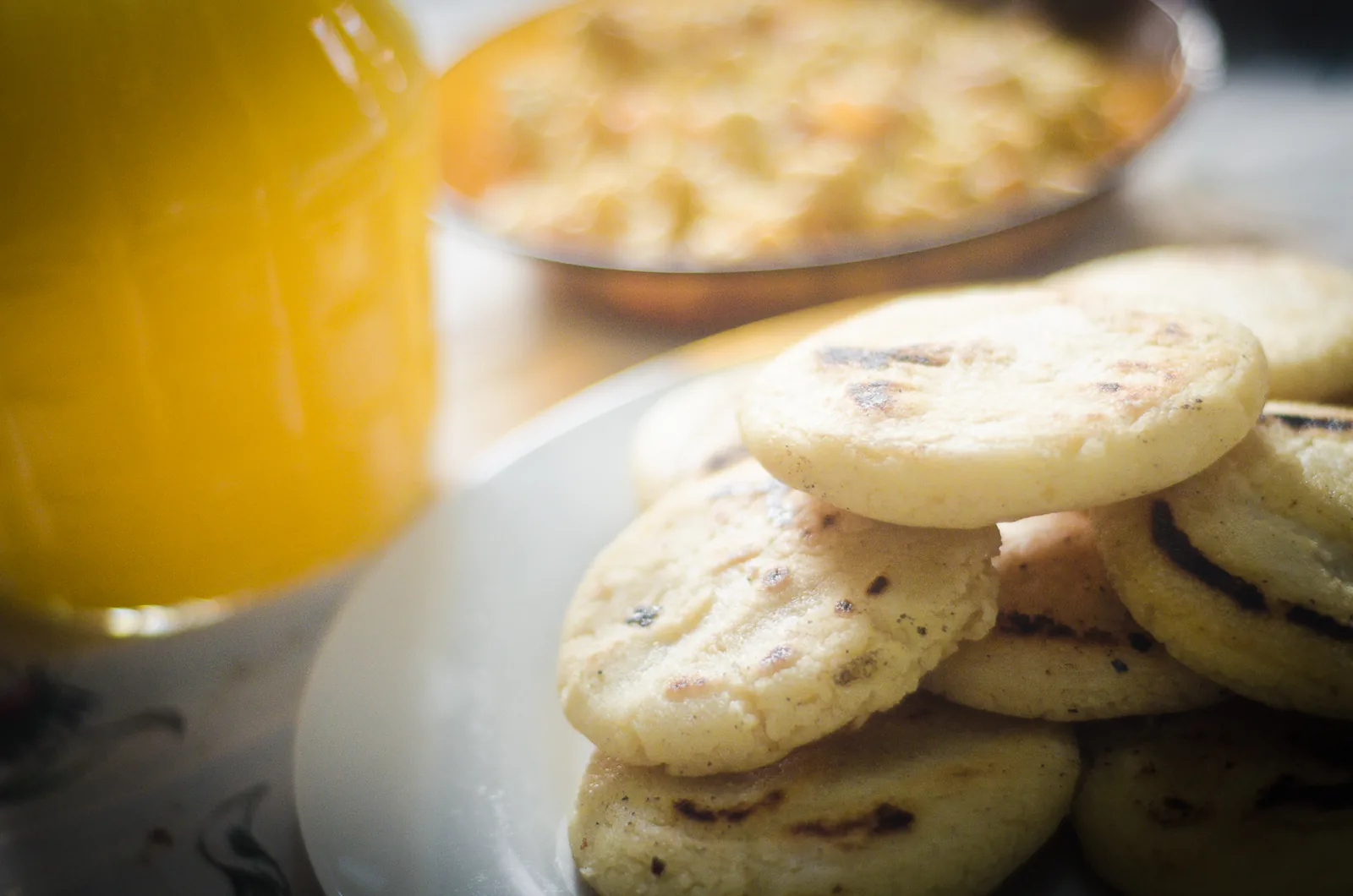
A stack of golden grilled Colombian arepas on a white plate, with a glass of orange juice beside them Colombia flag Colombia 35m
Breakfast •Andean Heritage

Colombian Arepas

This Colombian arepas recipe turns pre-cooked white cornmeal, warm water, butter and cheese into round corn cakes that are grilled until crisp outside and soft inside. The cheese is kneaded right into the dough, so every bite is savoury and gently melty. Colombian arepas are thinner and plainer than the stuffed Venezuelan kind: they are a breakfast bread, split open and filled at the table. One serving is about 220 g, two arepas.

Comfort & Warmth

Golden grilled corn cakes made from white masarepa, with melting cheese kneaded into the dough.

Pairs Well With
Hot chocolate or coffee, with butter and a slice of fresh cheese on the side.
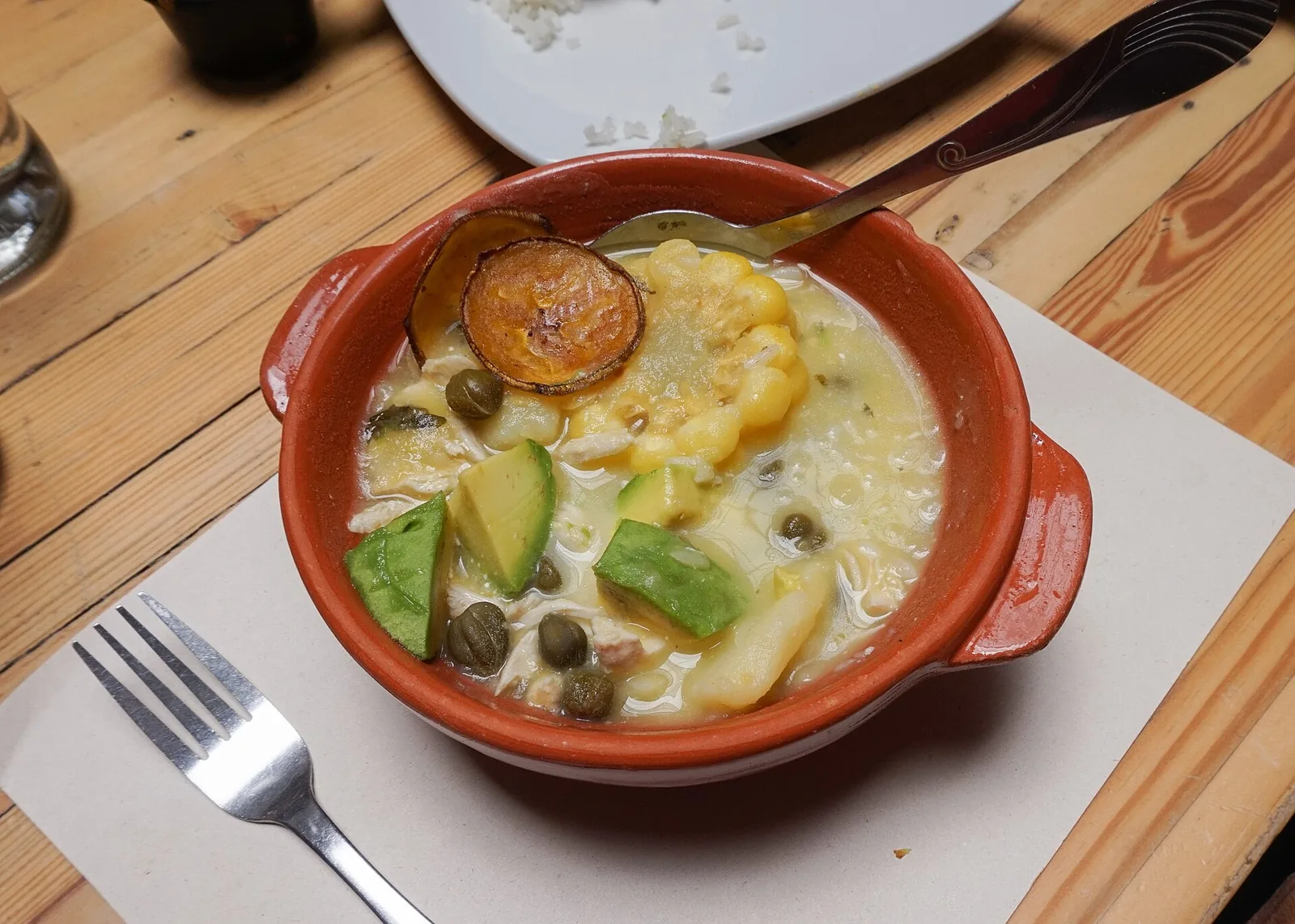
A bowl of ajiaco in a clay bowl, thick golden soup with corn, avocado, capers and shredded chicken Colombia flag Colombia 1h 30m
Lunch •Bogotá Heritage

Ajiaco

This ajiaco recipe is Bogotá's signature soup: chicken simmered with corn on the cob and three kinds of potato — pastusa, sabanera and criolla — until the criolla melts and thickens the broth golden. The herb guascas gives it its unmistakable earthy flavour, and every bowl is finished at the table with heavy cream, briny capers and sliced avocado. One serving is about 750 g, soup and toppings together.

Comfort & Warmth

Bogotá's thick chicken and potato soup, flavoured with guascas and served with cream, capers and avocado.

Pairs Well With
White rice and a small side salad, with the cream, capers and avocado passed around the table.
Soups & Broths
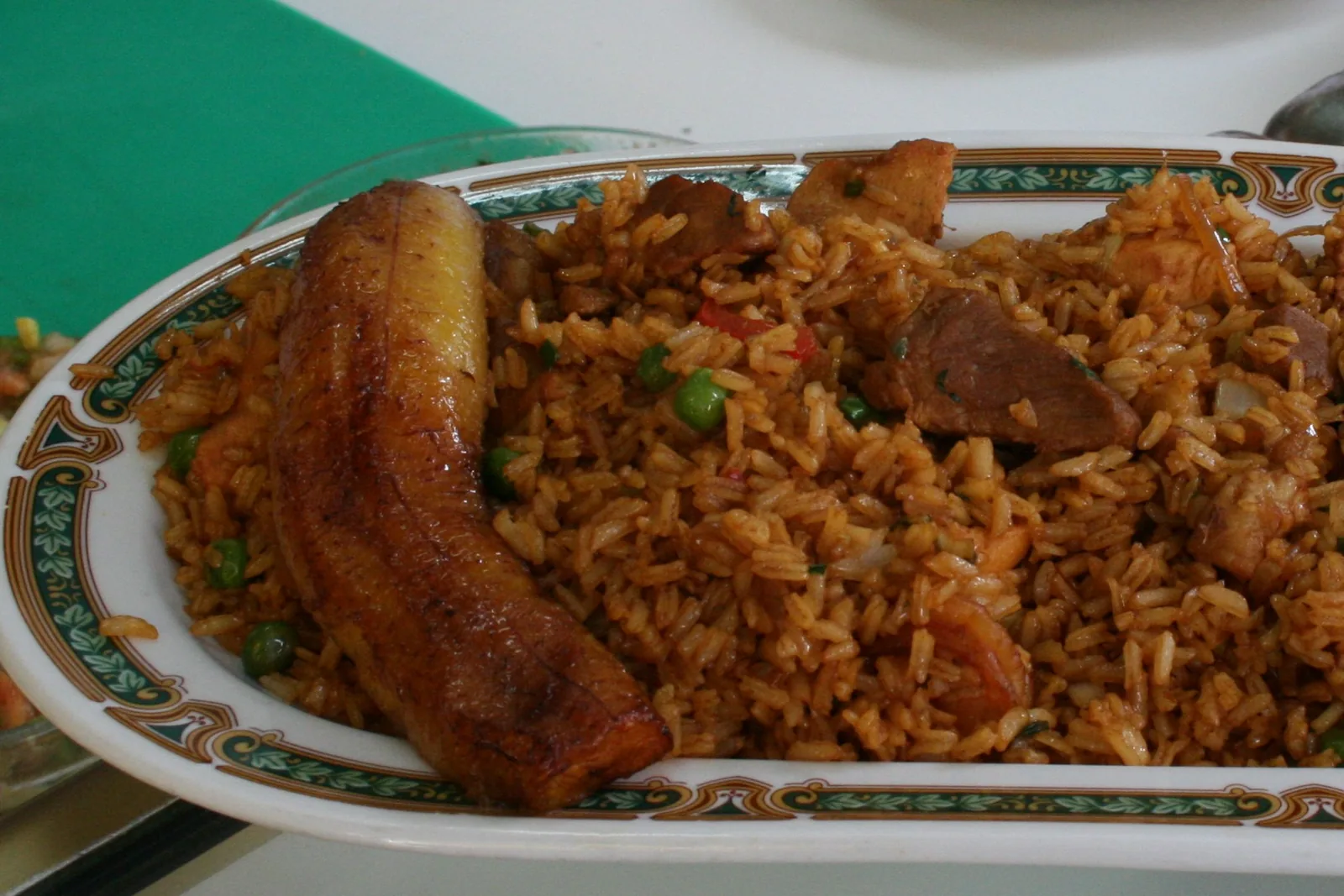
A platter of lechona with golden rice, roast pork pieces, green peas and a fried plantain Colombia flag Colombia 6h
Dinner •Tolima Heritage

Lechona

Lechona is Tolima's great festive roast: a deboned pig — here a pork shoulder with its skin — stuffed with rice and peas, sewn shut and roasted for hours until the meat is spoon-tender and the skin crackles. It is served chopped, a spoon of golden rice with every piece of pork, with arepas and fried plantain on the side. One serving is about 444 g.

Festive & Filling

Pork shoulder stuffed with rice and peas, roasted for hours until the meat is tender and the skin crackles.

Pairs Well With
White arepas, fried plantain and a cold beer
High Protein

The Dinner Gazette

Never wonder what’s for dinner again

One email a week with easy dinner ideas from around the world — ingredients, steps and nutrition, tested in our kitchen first.

Delivered every Thursday morning. Unsubscribe anytime.