
Curated recipes from 193 countries  •  New seasonal Mediterranean issue out now

Overview

Congolese Makayabu

Makayabu — Congolese Salted Cod with Vegetables

Congolese makayabu is salted cod — the Lingala name for dried, salted fish — soaked overnight, fried until golden, then cooked with cabbage, courgette, peppers, onion and tomato. This makayabu recipe is a fixture of Congolese home cooking: the fish keeps without refrigeration, and the vegetables turn it into a full, satisfying dinner. One serving is about 440 g.

Makayabu is the Lingala word for dried, salted fish — most often cod — and it is one of the Congo's great pantry foods. Salt cod travels and keeps without refrigeration, so it became a staple across both Congos and Gabon, and wherever Central African communities settled. The technique never changes: soak the fish overnight to draw out the salt, fry it golden, then cook it with whatever vegetables the market has — here cabbage, courgette and peppers, the combination most Congolese households reach for.

Pairs well with: Boiled cassava or steamed rice, with fried plantains on the side

Provenance

Republic of the Congo flag Republic of the Congo

Congo River Classic

African Heritage

Time Dedication

55m

20m prep • 35m cook

Batch Yield

4 Servings

351 kcal per serving

1 serving ≈ 440 g

Technical Skill

Intermediate

Intermediate (Salted Fish)

Meal Timing & Digestive Fit

Breakfast

Not Advised

Lunch

Hearty Midday Main

Dinner

Ideal Hearty Main

Snack & Tea

Inappropriate

High Protein Occasions: Family dinners, weekend cooking, meals with boiled cassava or rice Cost: Low — about $3–4 per serving at home
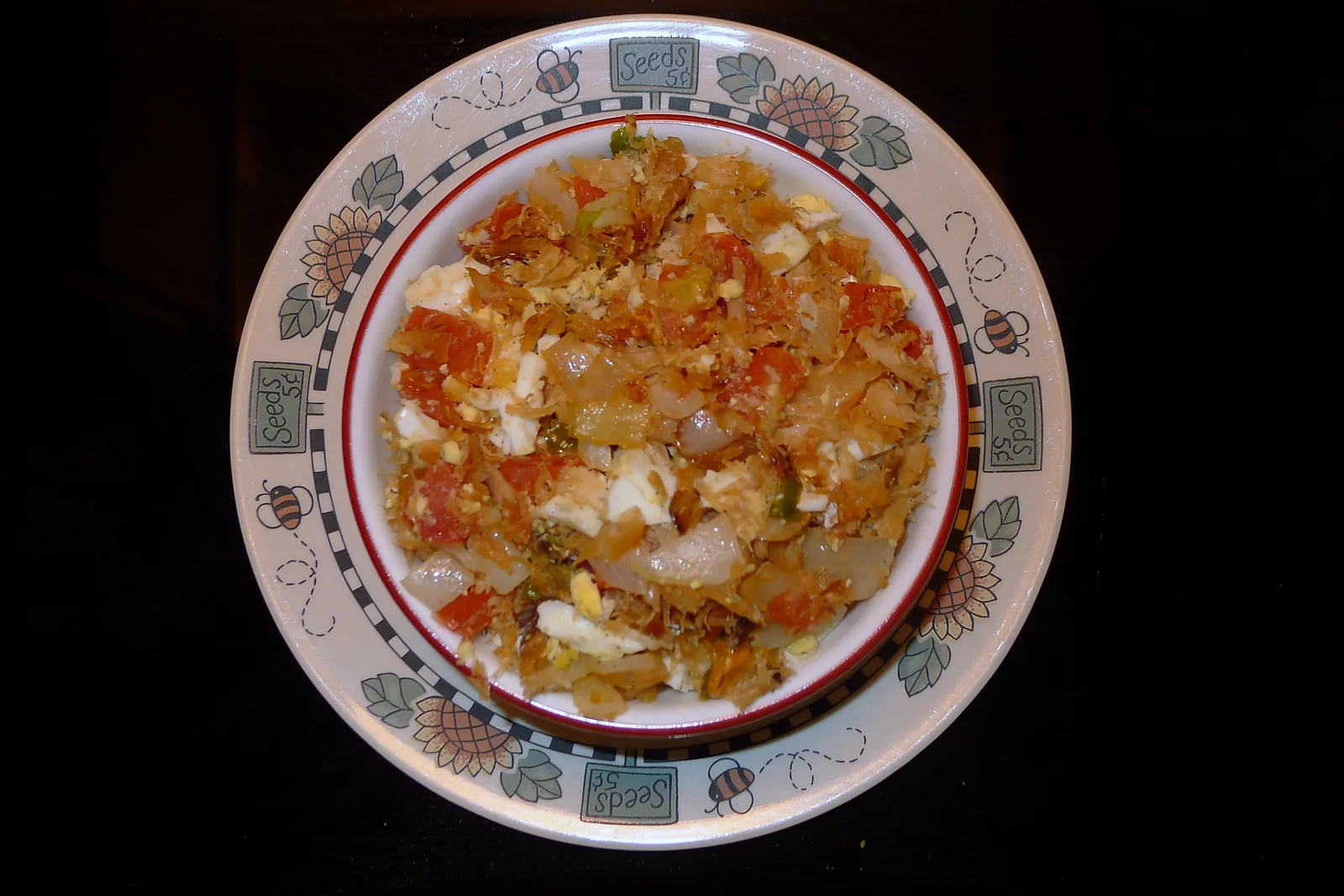
Flaked salted cod with tomato, onion and peppers served in a bowl

Congo River Classic

Photo: Kalamazadkhan, CC BY-SA 4.0, via Wikimedia Commons

The Heritage Formulary

Measured Ingredients

Estimated cost: Low — about $3–4 per serving at home (USD)

Good makayabu is pleasantly salty, never painfully so — the soak is everything, and the fish should be golden, not grey.

Execution Methodology & Culinary Technique

Step-by-Step Cooking Guide

Active 55m
P

Prep Stage: Soak the Cod & Cut the Vegetables

20 Mins Active • Plus Overnight Soaking

The night before, put the salted cod in a large bowl of cold water and leave it to soak, changing the water 2 or 3 times — this is the whole technique, and skipping it leaves the fish inedibly salty. On the day, drain the cod, pat it dry and cut it into chunks. Dice the onion and peppers, slice the cabbage and courgette, chop the tomatoes and mince the garlic.

Maestro Tip: Taste a tiny flake of the soaked cod before cooking: it should taste pleasantly salty, like the sea, not painfully salty. If it still stings, soak it for another hour in fresh water.

  1. 1

    Fry the Cod

    10 Mins • Frying Medium-high heat, about 180°C (350°F); fish to at least 63°C (145°F) inside

    Heat 2 tablespoons of the oil in a large, deep pan over medium-high heat. Fry the cod chunks in a single layer for 8–10 minutes, turning once, until golden at the edges and flaking easily. The fish must reach at least 63°C (145°F) inside. Lift the fish out onto a plate and keep the oil in the pan.

    Pat the cod really dry before frying — wet fish spits oil and never browns.

    Done when: Golden at the edges, flakes easily with a fork, centre at least 63°C (145°F).

  2. 2

    Sauté the Vegetables

    12 Mins • Sautéing Medium heat, about 160–170°C (320–350°F)

    Add the remaining oil to the same pan. Cook the onion and garlic for 2 minutes until soft, then add the courgette and cook for 2 minutes. Add the cabbage and the crumbled stock cube, stir for a minute, then cover and cook for 4 minutes until the cabbage softens. Add the peppers and tomatoes and cook for 4 more minutes.

    Cook the vegetables in this order — courgette first, cabbage second, peppers last — so nothing turns to mush.

    Done when: Cabbage softened, courgette tender but holding its shape, tomatoes collapsed into the pan.

  3. 3

    Bring It Together

    8 Mins • Simmering Low heat, about 90–95°C (195–200°F)

    Lay the fried cod on top of the vegetables, add the whole scotch bonnet and the bay leaves, and pour in 100 ml (about 1/2 cup) of hot water. Cover and simmer gently for 5 minutes so the flavours marry, then uncover and simmer for 3 more minutes until the sauce thickens slightly. Taste before adding any salt — the fish usually needs none.

    Keep the scotch bonnet whole and fish it out at the end: it perfumes the dish without making it fiercely hot.

    Done when: Fish heated through, vegetables glossy, a little sauce in the bottom of the pan.

  4. 4

    Rest and Serve

    5 Mins • Resting Off the heat

    Remove the bay leaves and the scotch bonnet. Rest the makayabu for 5 minutes, then serve hot in bowls with boiled cassava or steamed rice, and fried plantains if you like.

    A short rest lets the fish drink up the vegetable juices — serve it too soon and the sauce stays in the pan.

    Done when: Hot, rested, fish flaked and coated in the vegetables.

Finishing Touches & Plating

Serve the makayabu hot with boiled cassava or steamed rice, so the starchy side can soak up the salty, savoury juices. A wedge of lime on the side is welcome, but no extra salt.

Nutritional Physiology & Benefits

Nutrition

Energy

351

kcal / serving

Protein

44g

Complete AA

Carbs

16g

Complex

Fats

13g

Healthy

Per serving (4 servings · 1 serving ≈ 440 g)
Energy351 kcal
Protein44 g
Carbohydrates16 g
Fat13 g
Fibre4.9 g
Sugar8.9 g
Sodium2762 mg
Per 100g
Energy80 kcal
Protein10 g
Carbohydrates3.5 g
Fat2.9 g
Fibre1.1 g
Sugar2 g
Sodium628 mg

Nutrition values are estimated — calculated from USDA FoodData Central values for the listed ingredients.

Vitamins & minerals: Vitamin B12 and selenium (cod), vitamin C (peppers and tomato), vitamin K and folate (cabbage), potassium (courgette). Nutrition values are estimated.

Lean Protein

About 44 g of protein per serving from the cod, with very little fat of its own — a filling, high-protein dinner.

B12 & Selenium

Cod is a good source of vitamin B12 and selenium, nutrients that support energy and normal immune function.

A Full Plate of Vegetables

Cabbage, courgette, peppers and tomato bring fibre, vitamin C and potassium, so the dish is a complete meal, not just fish.

Food Pairings

What to Eat With

To optimize nutrient absorption and elevate the sensory depth, pair with these authentic accompaniments:

Sides

Boiled Cassava

Soft boiled cassava is the traditional partner — its mild starch soaks up the salty juices and balances the bold fish.

Steamed Rice

Plain steamed rice does the same job as cassava and lets the cod and vegetables stay the star of the plate.

Fried Plantains

Sweet fried plantains against salty cod is the classic Congolese contrast — sweet, salty and smoky in one bite.

Vegetables

Sliced Cucumber & Onion

A cool, raw cucumber and onion salad cuts through the saltiness and refreshes the palate between spoonfuls.

Drinks

Water or Light Lager

Salted fish makes you thirsty — plain water or a light, cold lager is the honest pairing here.

Complete menu

Start with makayabu hot from the pan, with boiled cassava and fried plantains on the side, and a cool cucumber salad to finish.

Digestive Guardrails

What NOT to Combine

To prevent digestive distress, sluggishness, or palate clash, avoid pairing the dish with these elements:

Skipping the Soak

Salted cod that has not been soaked is far too salty to eat and can leave you very thirsty and unwell. Soak overnight and change the water 2–3 times. This is general food-safety information, not medical advice.

Adding Salt Before Tasting

Even after soaking, the fish keeps a lot of salt. Always taste the finished dish before adding any salt or stock cube — most of the time it needs none. This is general information, not medical advice.

General information only, not medical advice — consult a doctor for personal dietary decisions.

Who Should Eat It

Who Should Eat

  • General adultsA hearty, high-protein dinner; balance the saltiness with plenty of vegetables and a starchy side.
  • ChildrenSuitable from age 3+ if the cod is well soaked and desalted; pick out any bones, and leave the scotch bonnet out.
  • ElderlySuitable in a modest portion; make sure the cod is well soaked, and chew the fish carefully for small bones.
  • Pregnant womenGenerally suitable when the cod is cooked through to at least 63°C (145°F); keep the portion modest because of the salt.
  • Breastfeeding womenGenerally suitable; the protein and B12 are useful — keep portions moderate and drink water with it.
  • AthletesGood post-training: about 44 g protein per serving, with vegetables and a starchy side for recovery.
  • Weight gainA good choice — protein-rich and filling; add cassava or rice for extra energy.
  • Weight lossA good choice in a modest portion; load the plate with the vegetables and keep the starchy side small.

Health Conditions — Adjust or Avoid

Conditions

  • DiabetesThe vegetables are low in carbohydrate; watch the cassava or rice portion and ask your clinician.
  • High blood pressureThis dish is very high in sodium even after soaking — eat it rarely and in a small portion, and ask your clinician first.
  • Kidney diseaseSalted cod is very high in sodium and potassium; this dish is usually not suitable — ask your clinician.
  • GoutCod is moderately high in purines; eat makayabu occasionally and in smaller portions — ask your clinician.
  • Stomach issuesSalted fish and chilli can irritate a sensitive stomach; eat slowly and skip the scotch bonnet if needed.
  • Cardiovascular diseaseThe high sodium is the main concern; keep portions small and infrequent — ask your clinician.
  • Fatty liverThe fish itself is lean; keep the portion modest and load the plate with vegetables rather than fried sides.
  • Food allergiesContains fish (cod). People with a fish allergy must avoid this dish entirely — check with your clinician.
  • Special therapeutic dietsIf you follow a prescribed low-sodium diet, this dish is usually not suitable — check with your clinician.

If you have a medical condition, consult your doctor before changing your diet.

Storage & Use

Storage & Use

How to store
Cool quickly and store in an airtight container, fish and vegetables together.
In the fridge
Cooked makayabu 2 days.
In the freezer
Up to 1 month; the vegetables soften on thawing.
How to reheat
Reheat gently in a pan with a splash of water until steaming hot, to 74°C (165°F).
Freezing recommended
Only if needed, up to 1 month; best eaten fresh.
Signs it has spoiled
Sour or ammonia-like smell, slimy fish, or mould on the vegetables.

More recipes to explore

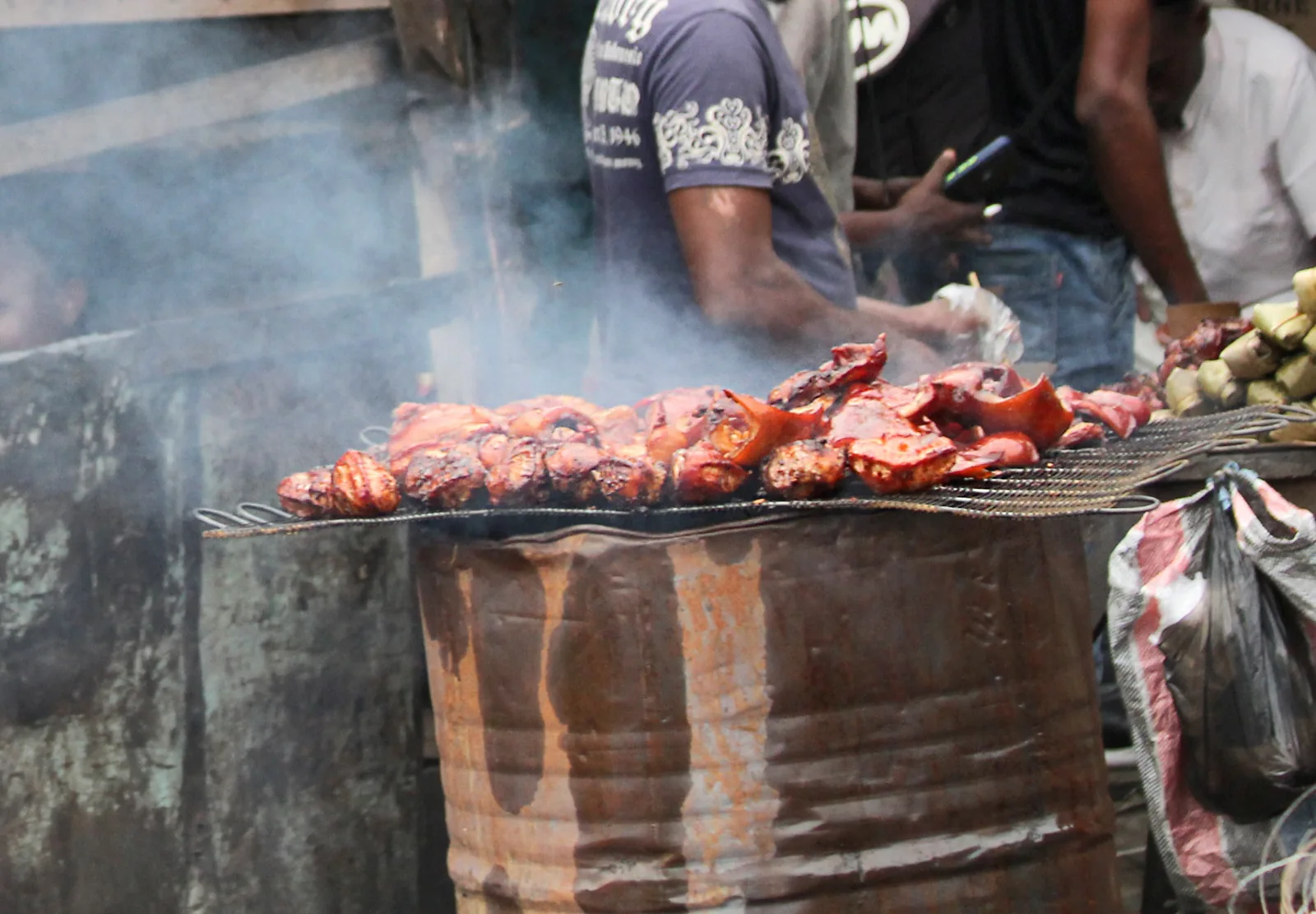
Pieces of grilled goat meat smoking on a charcoal barrel grill at a Brazzaville street stall Republic of the Congo flag Republic of the Congo 1h 45m
Dinner •Brazzaville Street Food

Congolese Ntaba

Congolese ntaba is grilled goat, marinated with garlic, ginger, onion and scotch bonnet, then cooked over charcoal the way Brazzaville street vendors do it — smoky outside, juicy inside. This ntaba recipe is the food of the nganda, the open-air taverns where grilled meat is eaten standing up with friends. One serving is about 195 g.

High-Protein Charcoal Grill

Bone-in goat pieces marinated with garlic, ginger and chilli, then grilled over charcoal until smoky and charred at the edges.

Pairs Well With
Sliced kwanga or fried plantains, raw onion and a hot chilli sauce
High Protein
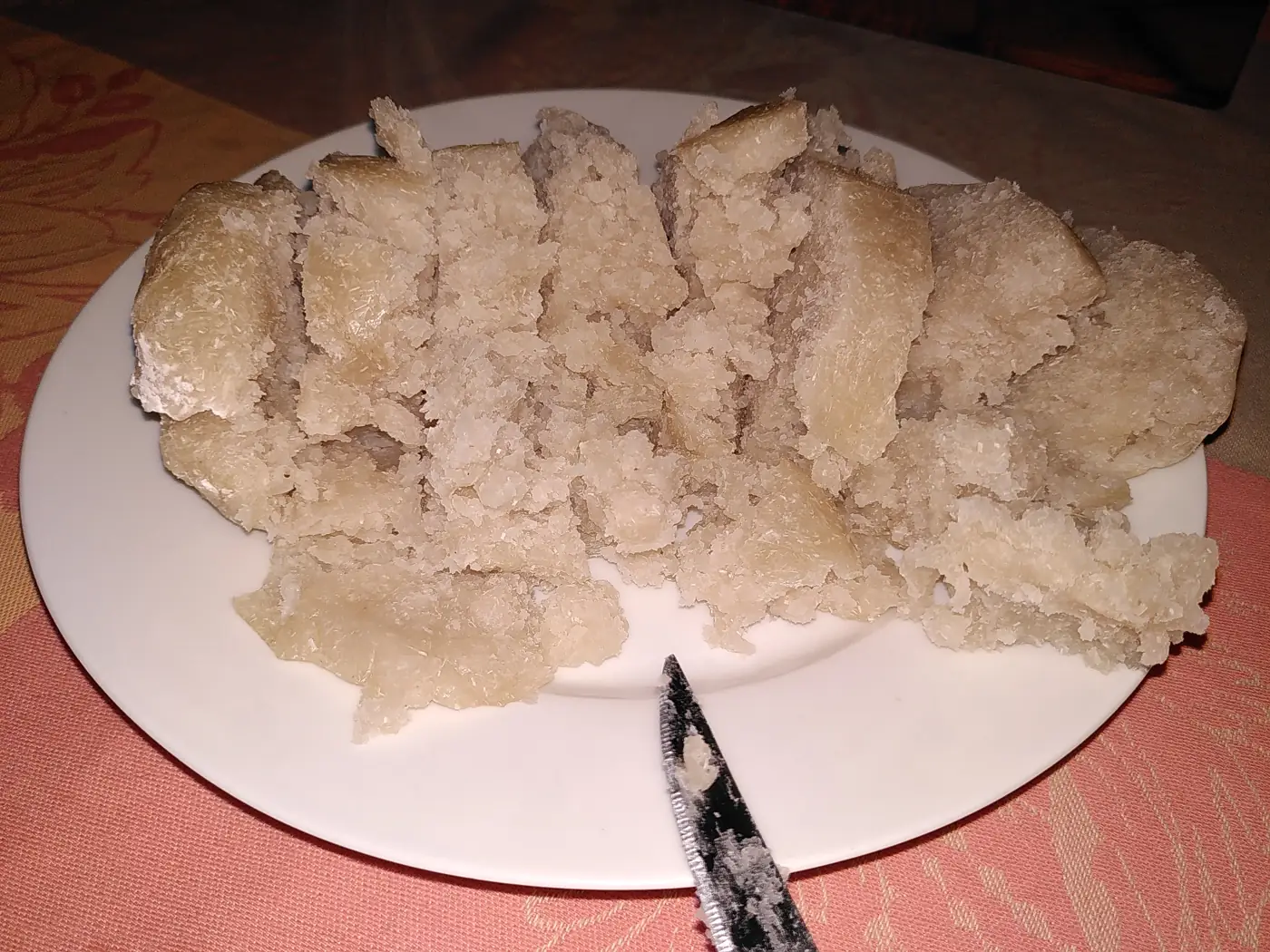
Sliced pale fermented cassava loaf served on a white plate with a knife Republic of the Congo flag Republic of the Congo 2h 45m
Lunch •Congo Basin Staple

Congolese Kwanga

Congolese kwanga, also called chikwangue, is a fermented cassava loaf — the Congo Basin's daily bread. Fresh cassava is soaked for days until it ferments and softens, pounded to a smooth dough, wrapped in banana leaves and steamed into a firm, sliceable loaf with a gentle sour tang. This kwanga recipe is a slow, mostly hands-off process, and the loaf it makes is the base under almost every Congolese stew. One serving is about 270 g.

Fermented Cassava Staple

Fresh cassava soaked for days to ferment, pounded to a smooth dough, wrapped in leaves and steamed into a firm loaf.

Pairs Well With
Any Congolese stew — ntaba, makayabu, or a leafy green sauce
Fermented / Gut Health
Bœuf bourguignon — French beef braised in red wine France flag France 4h
Dinner •Burgundy Terroir

Bœuf Bourguignon

Beef braised gently in red wine until the connective tissue melts into a velvet, gelatin-rich sauce — the classic Burgundy Sunday dinner.

Cellular Repair

Beef braised in red wine until spoon-tender, with mushrooms and pearl onions.

Pairs Well With
Parsnip Purée & Steamed French Haricots Verts
High Protein
Vietnamese braised pork belly with golden eggs in caramel sauce Vietnam flag Vietnam 1h 45m
Dinner •One Pot

Vietnamese Braised Pork and Eggs

Pork belly slowly braised in coconut water and caramel until meltingly tender, with golden eggs that soak up the sweet-savoury sauce — the Vietnamese family dish that tastes better the next day.

Comfort & Sustained Energy

Slow-braised pork belly and eggs in coconut water and caramel.

Pairs Well With
Steamed rice & pickled mustard greens
High Protein

The Dinner Gazette

Never wonder what’s for dinner again

One email a week with easy dinner ideas from around the world — ingredients, steps and nutrition, tested in our kitchen first.

Delivered every Thursday morning. Unsubscribe anytime.



