
Curated recipes from 193 countries  •  New seasonal Mediterranean issue out now

Overview

Congolese Ntaba

Ntaba — Brazzaville Grilled Goat

Congolese ntaba is grilled goat, marinated with garlic, ginger, onion and scotch bonnet, then cooked over charcoal the way Brazzaville street vendors do it — smoky outside, juicy inside. This ntaba recipe is the food of the nganda, the open-air taverns where grilled meat is eaten standing up with friends. One serving is about 195 g.

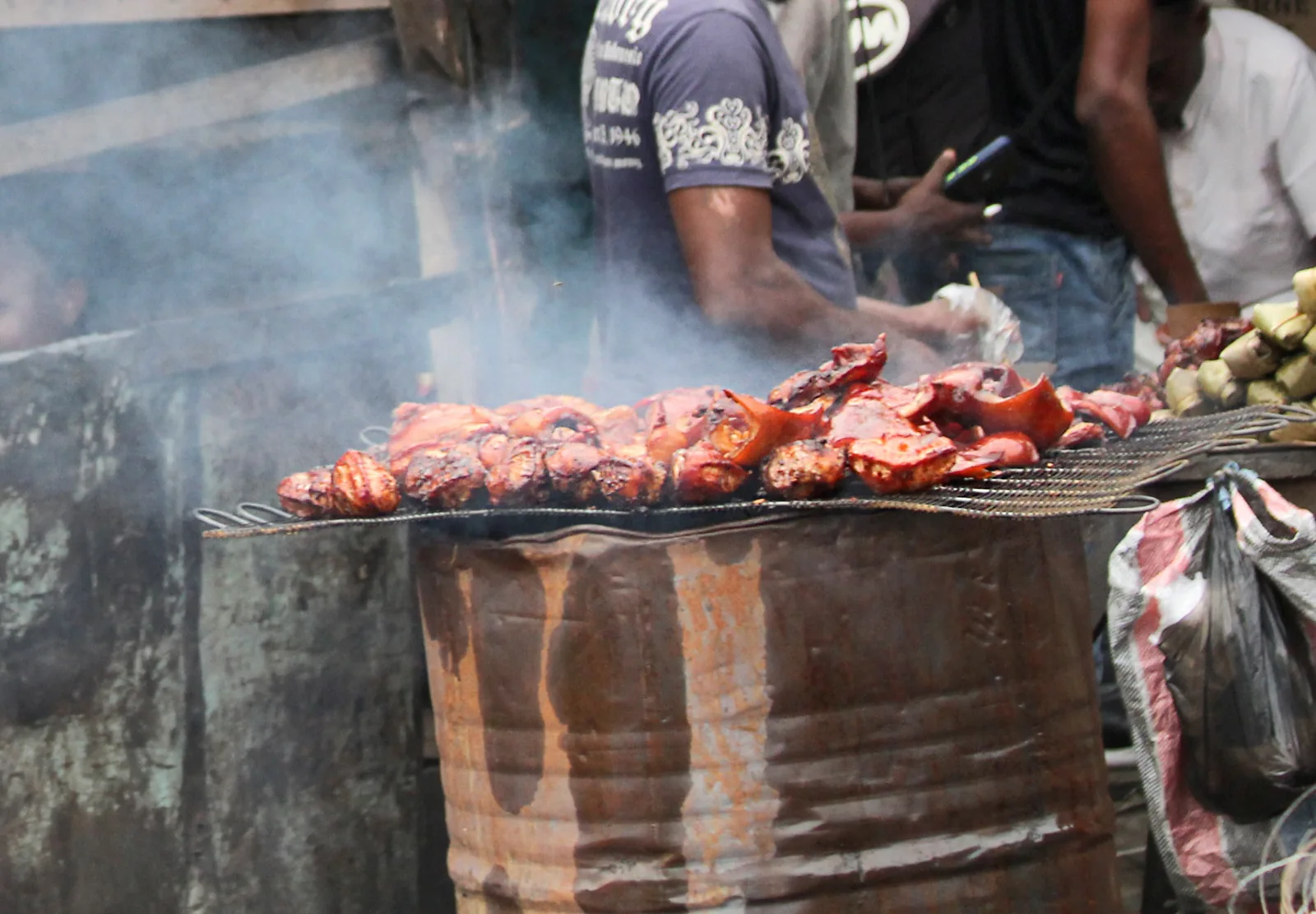
Ntaba is the grilled meat of Brazzaville's nganda — the open-air taverns where charcoal grills appear at dusk and goat, the most prized grill meat in the Congo, is cooked to order and eaten standing up with friends. Ntaba is the Lingala word for goat, and the dish is the Brazzaville answer to the skewered brochettes found across the region: here the meat is grilled in large pieces, straight on the grate, so the edges char and the inside stays juicy.

Pairs well with: Sliced kwanga or fried plantains, raw onion and a hot chilli sauce

Provenance

Republic of the Congo flag Republic of the Congo

Brazzaville Street Food

African Heritage

Time Dedication

1h 45m

80m prep • 25m cook

Batch Yield

4 Servings

383 kcal per serving

1 serving ≈ 195 g

Technical Skill

Intermediate

Intermediate (Charcoal Grill)

Meal Timing & Digestive Fit

Breakfast

Not Advised

Lunch

Hearty Midday Main

Dinner

Ideal Hearty Main

Snack & Tea

Inappropriate

High Protein Occasions: Evening grills, street-food nights, barbecues, celebrations with friends Cost: Medium — about $4–5 per serving at home
Pieces of grilled goat meat smoking on a charcoal barrel grill at a Brazzaville street stall

Brazzaville Street Food

Photo: OussamaHamama, CC BY-SA 4.0, via Wikimedia Commons

The Heritage Formulary

Measured Ingredients

Estimated cost: Medium — about $4–5 per serving at home (USD)

Good ntaba is smoky and charred at the edges, juicy inside, and seasoned all the way through — never dry, never raw in the middle.

Execution Methodology & Culinary Technique

Step-by-Step Cooking Guide

Active 1h 45m
P

Prep Stage: Marinade

80 Mins • Includes 60 Min Marinating

Mix the grated onion, garlic, ginger, minced scotch bonnet, lemon juice, oil, paprika, crumbled stock cube, black pepper and salt into a thick paste. Rub it all over the goat pieces, working it into every cut and crevice, then cover and leave to marinate for at least 60 minutes — overnight in the fridge is even better. Bring the meat back to room temperature for 20 minutes before grilling.

Maestro Tip: Goat is lean, so the marinating time matters: an hour minimum, overnight if you can. The lemon and salt tenderise the meat while the spices sink in.

  1. 1

    Light the Charcoal

    15 Mins • Charcoal Medium-high heat, about 200–230°C (400–450°F)

    Light a charcoal grill and let the coals burn until they are glowing and coated with grey ash, about 15 minutes. Set the grate about 15 cm (6 inches) above the coals. If you have no charcoal grill, use a grill pan on the hob or the oven broiler set to 230°C (450°F).

    The coals are ready when you can hold your hand 15 cm above the grate for only 3–4 seconds.

    Done when: Coals are grey-ash coated and glowing; the grate is hot.

  2. 2

    Oil the Grate and Lay Out the Goat

    5 Mins • Hands-On Medium-high heat, about 200–230°C (400–450°F)

    Oil the hot grate lightly with a folded paper towel dipped in oil, held with long tongs. Lay the marinated goat pieces on the grate in a single layer with a little space between them — do not crowd the grill, or the meat steams instead of charring.

    Shake off the loose marinade before the meat hits the grate; thick clumps of paste burn before the meat cooks.

    Done when: Pieces are in one layer, not touching, over glowing coals.

  3. 3

    Grill the Ntaba

    20 Mins • Turning Often Medium-high heat, about 200–230°C (400–450°F); goat to at least 63°C (145°F) inside

    Grill the goat for 18–22 minutes, turning every 4–5 minutes so each side takes the heat. The pieces should be browned and lightly charred at the edges, with the marinade caramelised onto the surface. Check the thickest piece with a thermometer: it must reach at least 63°C (145°F) in the centre. Move any piece that flares up to a cooler spot on the grate.

    Do not press the meat down — pressing squeezes the juices out. Let the heat and the turning do the work.

    Done when: Browned and charred at the edges, juices running clear, centre at least 63°C (145°F).

  4. 4

    Rest and Serve

    5 Mins • Resting Off the heat

    Move the ntaba to a warm plate and rest for 5 minutes so the juices settle back into the meat. Serve hot, piled on a plate with the sliced raw onion on top and a hot chilli sauce on the side, with kwanga or fried plantains to scoop up the juices.

    Cut one piece open before serving the rest — if the centre is cooked through and juicy, the batch is right.

    Done when: Hot, rested and juicy; the cut piece shows a cooked-through centre.

Finishing Touches & Plating

Serve the ntaba hot off the charcoal, with sliced kwanga or fried plantains and raw onion rings. Eat it with your hands, the Brazzaville way — that is how the nganda serve it.

Nutritional Physiology & Benefits

Nutrition

Energy

383

kcal / serving

Protein

55g

Complete AA

Carbs

8g

Complex

Fats

13g

Healthy

Per serving (4 servings · 1 serving ≈ 195 g)
Energy383 kcal
Protein55 g
Carbohydrates8 g
Fat13 g
Fibre1.4 g
Sugar2.1 g
Sodium1130 mg
Per 100g
Energy196 kcal
Protein28.3 g
Carbohydrates4.1 g
Fat6.8 g
Fibre0.7 g
Sugar1.1 g
Sodium579 mg

Nutrition values are estimated — calculated from USDA FoodData Central values for the listed ingredients.

Vitamins & minerals: Vitamin B12 and iron (goat meat), vitamin C (lemon and chilli), zinc and niacin (goat meat). Nutrition values are estimated.

Serious Protein

About 55 g of protein per serving makes ntaba a strong choice after training or a long, physical day.

Iron & B12

Goat meat is a rich source of iron and vitamin B12, nutrients that support red blood cells and energy.

Leaner Than Beef

Goat is naturally leaner than most beef cuts, so this grilled meat carries less fat per serving than a comparable beef grill.

Food Pairings

What to Eat With

To optimize nutrient absorption and elevate the sensory depth, pair with these authentic accompaniments:

Sides

Kwanga (Fermented Cassava Loaf)

Slices of kwanga are the classic Brazzaville base under grilled meat — their mild sourness cuts the richness and they mop up the meat juices.

Fried Plantains

Sweet, crisp plantains balance the smoky, spicy goat and give the plate a soft, starchy contrast.

Vegetables

Raw Onion Rings

Sharp raw onion is served on top of ntaba at every nganda — its bite refreshes the palate between rich, charred mouthfuls.

Sauces

Hot Chilli Sauce

A spoon of fiery chilli sauce lets each person set their own heat level, and its acidity lifts the smoky goat.

Drinks

Cold Beer or Sparkling Water

A cold, fizzy drink with charcoal-grilled meat is the evening nganda pairing — the bubbles clean the palate after each smoky bite.

Complete menu

Start with ntaba hot off the charcoal, with sliced kwanga and fried plantains on the side, raw onion on top and a cold drink to finish.

Digestive Guardrails

What NOT to Combine

To prevent digestive distress, sluggishness, or palate clash, avoid pairing the dish with these elements:

Eating Undercooked Goat

Goat must reach at least 63°C (145°F) in the centre, then rest 3 minutes. Undercooked meat can carry harmful bacteria. Use a thermometer rather than guessing. This is general food-safety information, not medical advice.

Charred-to-Black Meat Every Day

Heavily charred meat eaten very often is not ideal for long-term health. Keep the char light, trim blackened edges, and save ntaba for occasions rather than every night. This is general information, not medical advice.

General information only, not medical advice — consult a doctor for personal dietary decisions.

Who Should Eat It

Who Should Eat

  • General adultsA satisfying high-protein dinner; balance the plate with kwanga or plantain and onion, not just meat.
  • ChildrenSuitable from age 3+; cut the goat small, cook it well done, and leave the scotch bonnet out of their portion.
  • ElderlySuitable if the goat is tender and cut small; choose pieces without too much gristle and chew well.
  • Pregnant womenGenerally suitable when the goat is cooked through to at least 63°C (145°F) and rested; avoid rare centres.
  • Breastfeeding womenGenerally suitable; the iron, zinc and B12 support recovery — keep portions moderate.
  • AthletesExcellent post-training: about 55 g protein per serving with a starchy side for energy.
  • Weight gainA good choice — protein-rich and filling; add plantain or kwanga for extra energy.
  • Weight lossA good choice in a modest portion with plenty of onion and salad; trim visible fat and keep the sides light.

Health Conditions — Adjust or Avoid

Conditions

  • DiabetesThe meat itself is very low in carbohydrate; watch the plantain or kwanga portion and ask your clinician.
  • High blood pressureThe stock cube and salt push sodium high; use half a cube and skip extra salt at the table, and ask your clinician.
  • Kidney diseaseGoat meat is high in potassium and phosphorus; keep portions modest and ask your clinician.
  • GoutGoat meat is high in purines; eat ntaba occasionally and in smaller portions — ask your clinician.
  • Stomach issuesGrilled meat and chilli can be heavy; eat slowly, chew well, and skip extra chilli if your stomach is sensitive.
  • Cardiovascular diseaseGoat is leaner than beef but still a red meat; trim fat and keep portions moderate — ask your clinician.
  • Fatty liverKeep the portion modest, trim the fat, and load the plate with onion and salad rather than fried sides.
  • Food allergiesContains no common allergen in the meat itself, but stock cubes may contain celery or soy — check the cube label. People with a meat allergy must avoid this dish — check with your clinician.
  • Special therapeutic dietsIf you follow a prescribed low-sodium or low-purine diet, use no stock cube and a smaller portion, and check with your clinician.

If you have a medical condition, consult your doctor before changing your diet.

Storage & Use

Storage & Use

How to store
Cool quickly and store the cooked goat in an airtight container.
In the fridge
Cooked goat 3 days.
In the freezer
Up to 2 months.
How to reheat
Reheat in a hot oven or pan until steaming hot, to 74°C (165°F); do not leave it lukewarm.
Freezing recommended
Yes for the cooked goat, up to 2 months; the char softens a little on thawing.
Signs it has spoiled
Sour or off smell, slimy surface, or grey discolouration.

More recipes to explore

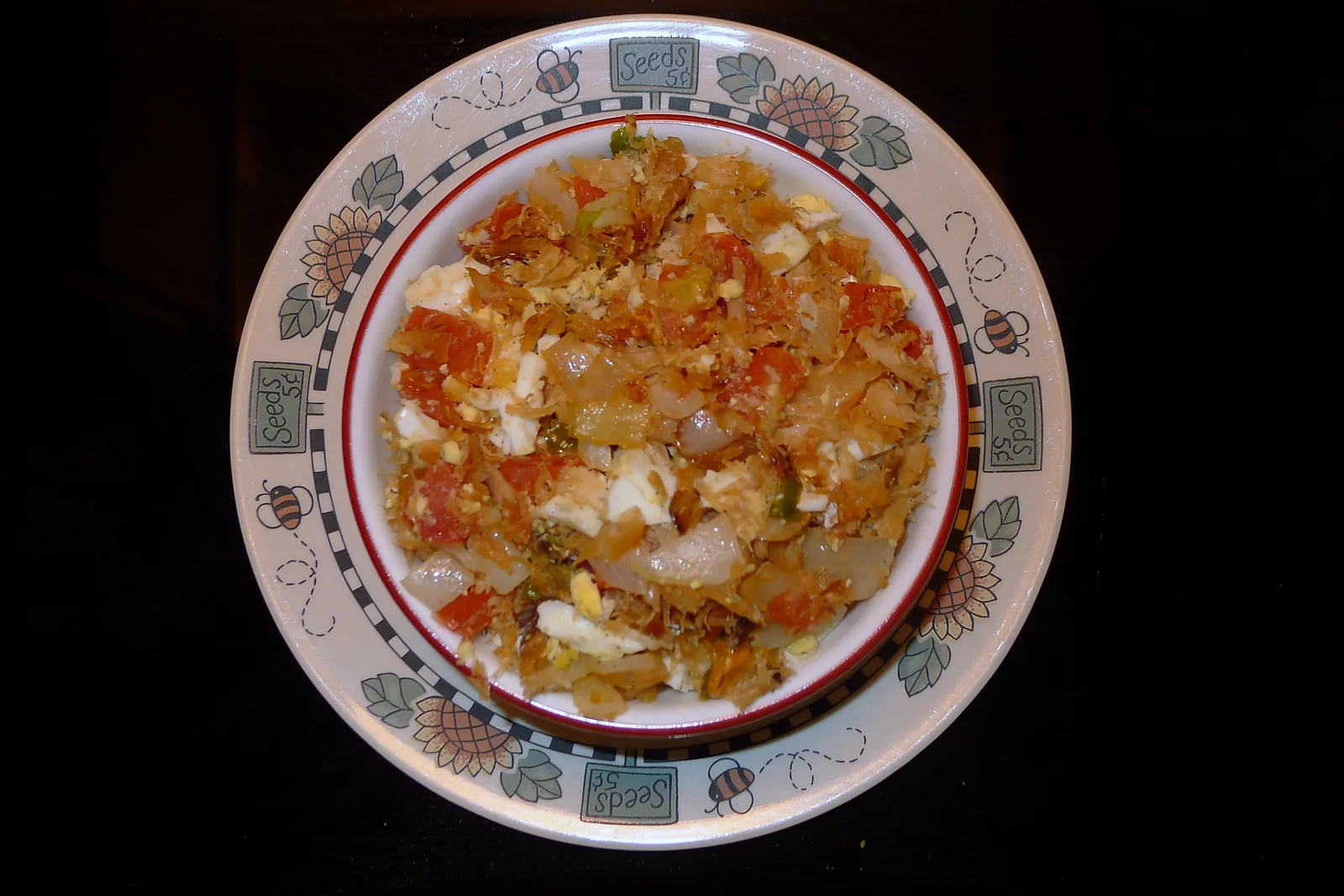
Flaked salted cod with tomato, onion and peppers served in a bowl Republic of the Congo flag Republic of the Congo 55m
Dinner •Congo River Classic

Congolese Makayabu

Congolese makayabu is salted cod — the Lingala name for dried, salted fish — soaked overnight, fried until golden, then cooked with cabbage, courgette, peppers, onion and tomato. This makayabu recipe is a fixture of Congolese home cooking: the fish keeps without refrigeration, and the vegetables turn it into a full, satisfying dinner. One serving is about 440 g.

High-Protein Salted Fish

Salted cod soaked overnight, fried golden, then folded through cabbage, courgette, peppers and tomato.

Pairs Well With
Boiled cassava or steamed rice, with fried plantains on the side
High Protein
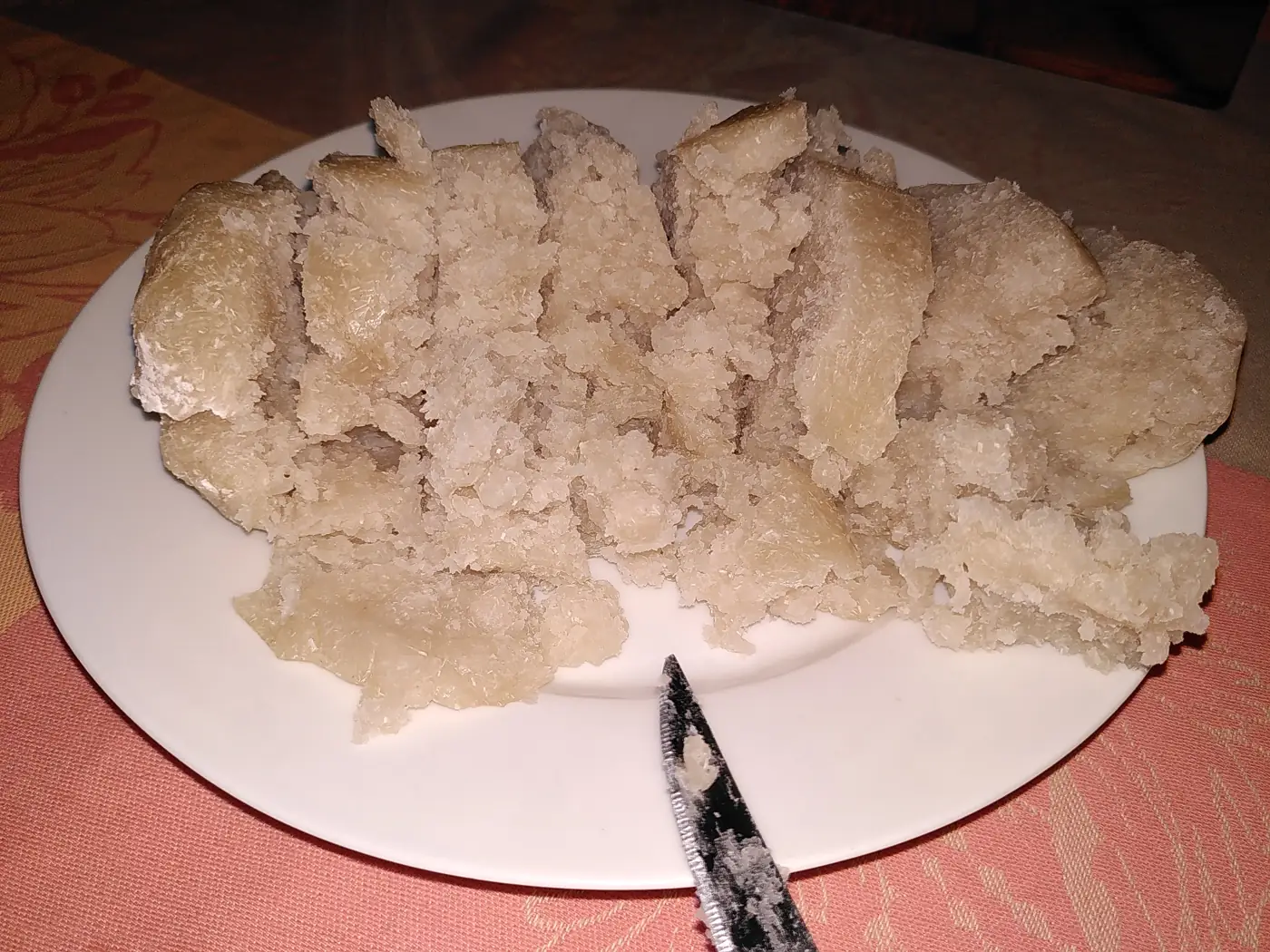
Sliced pale fermented cassava loaf served on a white plate with a knife Republic of the Congo flag Republic of the Congo 2h 45m
Lunch •Congo Basin Staple

Congolese Kwanga

Congolese kwanga, also called chikwangue, is a fermented cassava loaf — the Congo Basin's daily bread. Fresh cassava is soaked for days until it ferments and softens, pounded to a smooth dough, wrapped in banana leaves and steamed into a firm, sliceable loaf with a gentle sour tang. This kwanga recipe is a slow, mostly hands-off process, and the loaf it makes is the base under almost every Congolese stew. One serving is about 270 g.

Fermented Cassava Staple

Fresh cassava soaked for days to ferment, pounded to a smooth dough, wrapped in leaves and steamed into a firm loaf.

Pairs Well With
Any Congolese stew — ntaba, makayabu, or a leafy green sauce
Fermented / Gut Health
Bœuf bourguignon — French beef braised in red wine France flag France 4h
Dinner •Burgundy Terroir

Bœuf Bourguignon

Beef braised gently in red wine until the connective tissue melts into a velvet, gelatin-rich sauce — the classic Burgundy Sunday dinner.

Cellular Repair

Beef braised in red wine until spoon-tender, with mushrooms and pearl onions.

Pairs Well With
Parsnip Purée & Steamed French Haricots Verts
High Protein
Vietnamese braised pork belly with golden eggs in caramel sauce Vietnam flag Vietnam 1h 45m
Dinner •One Pot

Vietnamese Braised Pork and Eggs

Pork belly slowly braised in coconut water and caramel until meltingly tender, with golden eggs that soak up the sweet-savoury sauce — the Vietnamese family dish that tastes better the next day.

Comfort & Sustained Energy

Slow-braised pork belly and eggs in coconut water and caramel.

Pairs Well With
Steamed rice & pickled mustard greens
High Protein

The Dinner Gazette

Never wonder what’s for dinner again

One email a week with easy dinner ideas from around the world — ingredients, steps and nutrition, tested in our kitchen first.

Delivered every Thursday morning. Unsubscribe anytime.



