-
1
Simmer the Coconut Filling
12 Mins • Simmer
Medium heat, ~95°C / 200°F
Put the palm sugar, 60 ml water, knotted pandan leaf and 1 g salt in a saucepan over medium heat and stir until the sugar melts into a dark syrup. Add the grated coconut and cook, stirring constantly, for about 8 minutes until the coconut is glossy, sticky and dark golden-brown, with almost no liquid left in the pan. Remove the pandan leaf and set the filling aside to cool.
Keep stirring — palm sugar syrup scorches fast once the water cooks off, and burnt filling tastes bitter.
Done when: The filling clumps together when pressed and no syrup pools at the bottom of the pan.
-
2
Mix and Rest the Batter
10 Mins • Mix & Rest
Room temperature, ~20°C / 68°F
Whisk the all-purpose flour and rice flour in a large bowl, then whisk in the coconut milk, pandan juice, egg, sugar and 1 g salt until completely smooth. Pour the batter through a fine sieve into a jug, then rest it for 15 minutes so the flours hydrate and the crepes cook evenly.
The batter should pour in a thin ribbon, like single cream — if it is thick, whisk in water a tablespoon at a time.
Done when: Smooth, lump-free and a clear, even green.
-
3
Cook the First Crepe
3 Mins • Pan-Fry
Medium heat, ~175°C / 350°F
Heat a 20 cm non-stick frying pan over medium heat and brush it very lightly with oil. Pour in about 60 ml of batter and tilt the pan at once so it spreads into a thin, even round. Cook for about 2 minutes, without flipping, until the surface looks dry and the edges lift away from the pan. Slide the crepe out onto a plate, green side up.
Do not brown the crepe — dadar gulung is cooked on one side only, so the green stays bright and the roll stays soft.
Done when: The top is dry and set, the edges curl up slightly, and the underside is pale gold at most.
-
4
Cook the Remaining Crepes
20 Mins • Pan-Fry
Medium heat, ~175°C / 350°F
Brush the pan lightly with oil again, stir the batter, and cook the remaining crepes the same way, stacking them on a plate as you go. You should get 12 thin crepes. If a crepe tears, it is still usable — the torn side goes inside the roll.
Stir the batter before every crepe: rice flour sinks fast, and the last crepes come out thick if you skip it.
Done when: Twelve soft, evenly green crepes, each thin enough to see light through.
-
5
Fill and Roll
10 Mins • Fill & Roll
Warm filling, ~40°C / 105°F
Lay a crepe green side down and spoon about 2 tablespoons of the cooled coconut filling across the lower third. Fold the bottom edge over the filling, fold in both sides, then roll it up snugly into a neat parcel, like a small burrito. Repeat with the remaining crepes and filling.
Roll while the crepes are still slightly warm — cold crepes crack at the fold instead of bending.
Done when: Tight rolls with the filling sealed inside and no coconut poking out of the ends.
-
6
Rest and Serve
5 Mins • Rest
Room temperature, ~20°C / 68°F
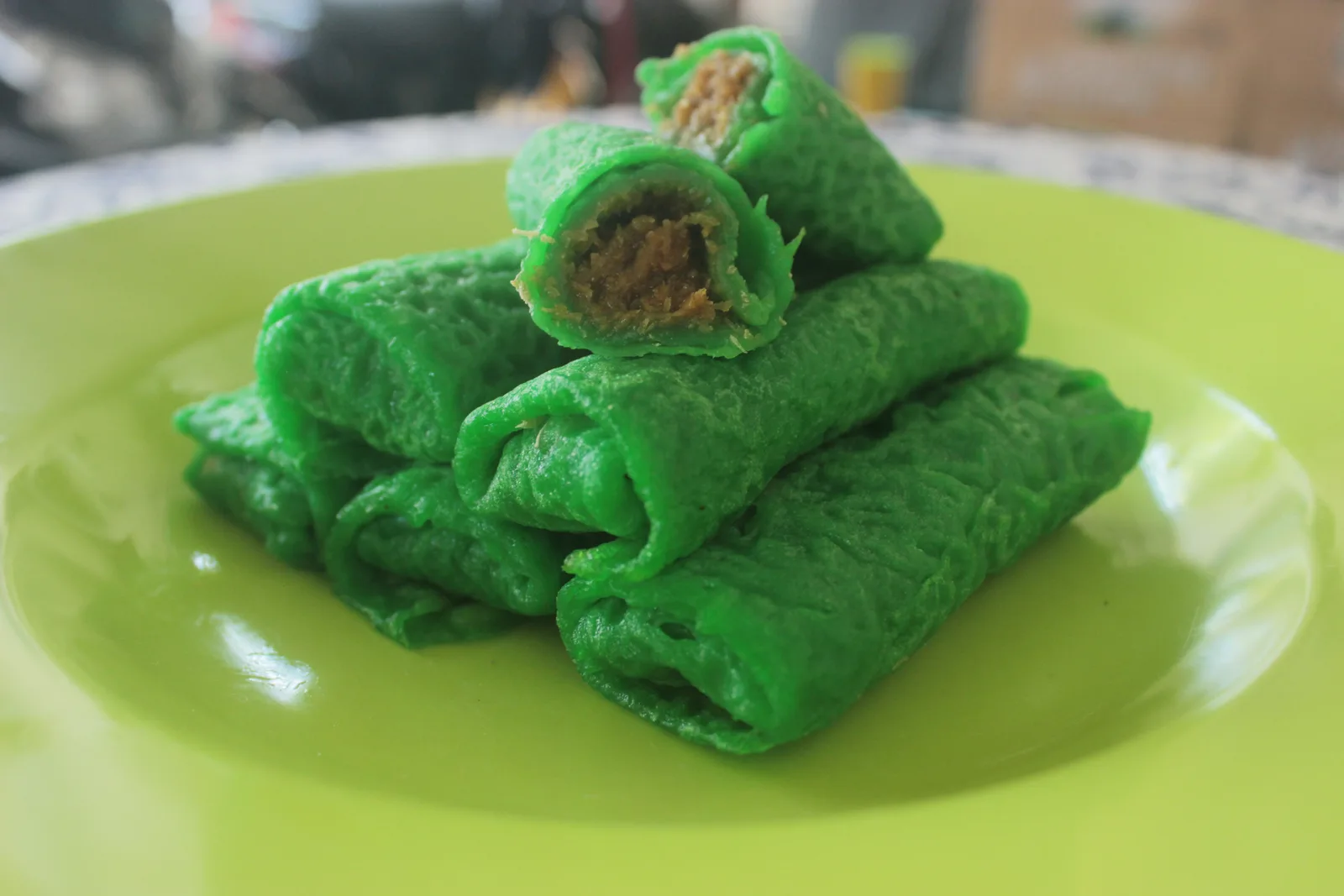
Let the rolls rest seam-side down for 5 minutes so they hold their shape, then arrange them on a plate. Serve at room temperature, whole or cut in half on the diagonal to show the dark coconut filling against the green crepe.
A diagonal cut is the classic market-stall presentation — it shows off the filling and makes the rolls easy to pick up.
Done when: Rolls that hold their shape when lifted and cut cleanly without unravelling.
auto_awesome Finishing Touches & Plating
Serve the rolls at room temperature, two per person, with hot unsweetened tea — the green crepe should be soft and fragrant, the coconut filling dark, sticky and caramel-sweet.

 Indonesia
35m