Curated recipes from 193 countries  •  New seasonal Mediterranean issue out now

Overview

Diples

Thiples, Greek Honey Spirals, Xerotigana

This diples recipe makes the Peloponnese festive favourite: thin sheets of egg dough rolled out until almost transparent, folded and fried in hot oil until they puff into crisp golden ribbons, then dipped in warm honey syrup and sprinkled with walnuts and cinnamon. They are not loukoumades — those are round dough balls, while diples are flat strips folded in the oil — and they are not churros either, because the dough is an egg pastry, not a choux, and the finish is honey, not plain sugar. One serving is about 115 g.

Diples, also called thiples, are a festive pastry of the Peloponnese in southern Greece, made for weddings, baptisms and New Year celebrations. The dough is rolled into long thin strips, fried and folded in hot oil, then dipped in sugar or honey syrup — the syrup dip is what separates diples from angel wings, the similar pastry that is served dry. In the Mani region the pastries are flavoured with orange and cinnamon, while on the island of Ikaria the same honeyed strips are called xerotigana and are a classic Christmas sweet.

Pairs well with: Serve diples at room temperature with Greek coffee and a small glass of sweet wine.

Provenance

Greece flag Greece

Peloponnese Heritage

Mediterranean & Italy

Time Dedication

1h

30m prep • 30m cook

Batch Yield

6 Servings

451 kcal per serving

1 serving ≈ 115 g

Technical Skill

Intermediate

Medium (Thin Dough)

Meal Timing & Digestive Fit

Breakfast

Not Advised

Lunch

Inappropriate

Dinner

Inappropriate

Snack & Tea

Ideal Light Bite

Occasions: Weddings, baptisms, New Year, Christmas, festive gatherings Cost: Low — about $1–2 per serving at home

A tray of golden diples, folded fried pastry strips dusted with cinnamon, in paper cases

Peloponnese Heritage

Photo: Richard Arthur Norton, CC BY 3.0, via Wikimedia Commons

The Heritage Formulary

Measured Ingredients

Estimated cost: Low — about $1–2 per serving at home (USD)
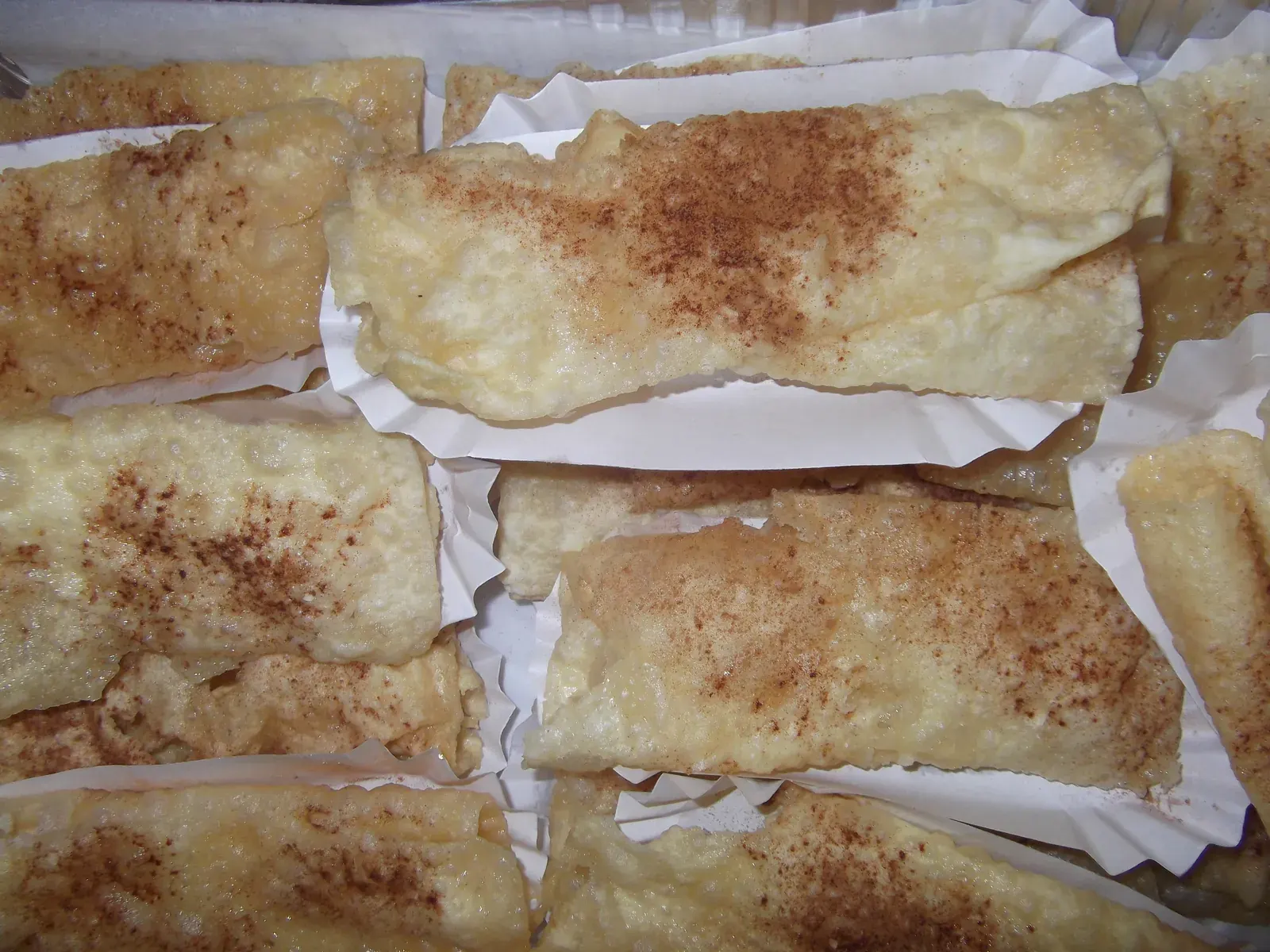
Paper-thin dough, a quick fry to pale gold, and a brief dip in warm honey syrup are the marks of proper diples.

Execution Methodology & Culinary Technique

Step-by-Step Cooking Guide

Active 1h
P

Prep Stage: Knead & Rest the Dough

30 Mins • Kneading & Resting

Whisk the eggs, milk, melted butter, brandy, sugar, orange zest, a teaspoon of the lemon juice and salt. Stir in the flour a little at a time until a firm, smooth dough forms, then knead for 5 minutes. Cover and rest for 30 minutes so the dough relaxes and rolls thin without springing back. Meanwhile, toast and chop the walnuts.

Maestro Tip: The rest is not optional — rested dough rolls to paper-thin sheets, and thin sheets are what make diples shatter instead of chew.

  1. 1

    Roll the Dough Paper-Thin

    15 Mins Room temperature, ~20°C (68°F)

    Divide the dough into 4 pieces. On a lightly floured surface, roll each piece out as thin as you can — you should almost see the worktop through it — then cut into strips about 6 cm wide and 25 cm long.

    A pasta machine on its thinnest setting does this job beautifully; by hand, roll from the centre out and turn the sheet often.

    Done when: Sheets so thin they are almost transparent, cut into even strips.

  2. 2

    Make the Honey Syrup

    10 Mins Simmering, ~95°C (200°F)

    While the dough rests, put the honey, sugar, 60 ml water and the remaining lemon juice in a small pan. Simmer gently for 5 minutes until the sugar dissolves and the syrup is slightly thick, then keep it warm — not hot — beside the frying pan.

    Warm syrup soaks in without making the pastry soggy; boiling-hot syrup turns diples limp.

    Done when: A syrup that coats a spoon thinly and smells of honey and lemon.

  3. 3

    Fold & Fry the Strips

    15 Mins Oil at 175°C (350°F)

    Heat the oil to 175°C (350°F). Take one strip, fold the top edge over with tongs, and lower it into the oil, rolling it gently as it fries so it folds into a loose spiral or envelope. Fry for 30-60 seconds per piece until very light gold, then lift out and drain on a rack.

    Diples colour fast — light gold is done; brown means the honey will taste bitter.

    Done when: Pale-gold, puffed, crisp folds that hold their shape.

  4. 4

    Dip, Dust & Serve

    10 Mins Warm syrup, ~60°C (140°F)

    Dip each fried diple briefly in the warm honey syrup, turning once, then set on a platter. Drizzle with a little more syrup, sprinkle with the chopped walnuts and cinnamon, and serve at room temperature.

    A quick dip coats; a long soak drowns. Work in small batches so the first pieces do not sit in syrup.

    Done when: Glossy, honey-coated folds with walnut and cinnamon clinging to the surface.

Finishing Touches & Plating

This diples recipe finishes best when the diples are piled loosely on a platter so air can reach them, drizzled with the last of the syrup, and dusted with cinnamon just before serving.

Nutritional Physiology & Benefits

Nutrition

Energy

451

kcal / serving

Protein

8g

Complete AA

Carbs

68g

Complex

Fats

16g

Healthy

Per serving (6 servings · 1 serving ≈ 115 g)
Energy451 kcal
Protein8 g
Carbohydrates68 g
Fat16 g
Fibre2.1 g
Sugar29.1 g
Sodium160 mg
Per 100g
Energy393 kcal
Protein7.3 g
Carbohydrates59.4 g
Fat14.1 g
Fibre1.8 g
Sugar25.3 g
Sodium139 mg

Nutrition values are estimated — calculated from USDA FoodData Central values for the listed ingredients.

Vitamins & minerals: Eggs supply vitamin B12 and vitamin D, walnuts add vitamin E and magnesium, and honey brings small amounts of B vitamins.

Walnuts & Cinnamon

The walnut topping adds vitamin E, magnesium and healthy unsaturated fats, and cinnamon gives warmth without extra sugar.

Quick Energy

Honey and pastry give fast, satisfying energy — which is why diples are a celebration sweet, best enjoyed in a modest portion.

Egg-Rich Dough

The egg dough supplies protein and vitamin B12, so these crisp pastries carry a little more nutrition than plain fried dough.

Food Pairings

What to Eat With

To optimize nutrient absorption and elevate the sensory depth, pair with these authentic accompaniments:

Drinks

Greek Coffee

Strong, unsweetened Greek coffee is the classic partner — its bitterness balances the honey sweetness perfectly.

Sweet Wine

A small glass of sweet dessert wine matches the honey without adding more sweetness to the plate.

Sides

Fresh Fruit

Sliced orange or figs add freshness and acidity that cut through the syrup.

Toasted Sesame Seeds

A scatter of toasted sesame over the top adds crunch and a nutty note that suits the honey.

Complete menu

This diples recipe with Greek coffee, fresh figs and a small glass of sweet wine makes a complete Greek festive dessert.

Digestive Guardrails

What NOT to Combine

To prevent digestive distress, sluggishness, or palate clash, avoid pairing the dish with these elements:

Soaking in Hot Syrup

Hot syrup or a long soak makes the crisp folds go soft, so dip briefly in warm syrup only. This is general food information, not medical advice.

Storing in a Sealed Box While Warm

Warm diples sealed in a box steam themselves soft, so cool them fully on a rack first. This is general food information, not medical advice.

General information only, not medical advice — consult a doctor for personal dietary decisions.

Who Should Eat It

Who Should Eat

  • General adultsA sweet festive treat — about 451 kcal per serving, best enjoyed in the stated portion with coffee.
  • ChildrenChildren love the sweet crunch, but the pieces are fragile and sugary — serve two or three pieces, not a whole plate.
  • ElderlyCrisp and easy to eat in small pieces; a modest portion with coffee is the comfortable choice.
  • Pregnant womenFine as an occasional sweet when the pastry is cooked through; keep the portion modest. Ask your clinician about portions.
  • Breastfeeding womenAn energy-rich festive sweet; one serving is plenty because the dish is filling.
  • AthletesQuick carbohydrate energy after training, with a little protein from the egg dough — pair with fruit rather than a second helping.
  • Weight gainEnergy-dense and easy to eat, so it suits weight gain when served with fruit and coffee.
  • Weight lossSweet and fried at about 451 kcal a serving, so keep to two or three pieces and skip extra syrup.

Health Conditions — Adjust or Avoid

Conditions

  • DiabetesThe honey syrup is high in sugar, so keep to two or three pieces and skip extra syrup. Ask your clinician about portions.
  • High blood pressureOne serving carries only about 160 mg sodium, so salt is not the concern here — the sugar is. Ask your clinician about portions.
  • Kidney diseasePortions should stay modest, and the sugar content matters for some kidney diets. Ask your clinician about portions.
  • GoutThe dish is low in purines, but keep to a modest portion because it is very sweet. Ask your clinician about portions.
  • Stomach issuesFried, sweet pastry can be heavy on a sensitive stomach; eat slowly and take a smaller portion. Ask your clinician about portions.
  • Cardiovascular diseaseThe dish is fried and sugary, so one modest serving with fruit is a better balance than a second helping. Ask your clinician about portions.
  • Fatty liverThe dish is energy-dense and sugary, so keep portions modest and avoid eating it late at night. Ask your clinician about portions.
  • Food allergiesContains wheat, egg, milk and walnut. People with wheat, egg, milk or tree-nut allergy should not eat it unless a safe substitute is used. Ask your clinician about safe alternatives.
  • Special therapeutic dietsNot suitable for a low-sugar therapeutic diet as written; a lighter version would need far less syrup. Ask your clinician about safe alternatives.

If you have a medical condition, consult your doctor before changing your diet.

Storage & Use

Storage & Use

How to store
Cool fully on a rack, then store in a single layer in a tin lined with paper; do not stack warm pieces.
In the fridge
Best kept at room temperature for 2 days; the fridge makes them go soft.
In the freezer
Freeze un-syruped fried pieces up to 1 month; dip in syrup after thawing.
How to reheat
Crisp in a hot oven at 180°C (350°F) for 3-4 minutes until warm and crisp again.
Freezing recommended
Yes — before the syrup goes on.
Signs it has spoiled
Soft, damp pastry, sour smell, or mould on stored pieces.

More recipes to explore

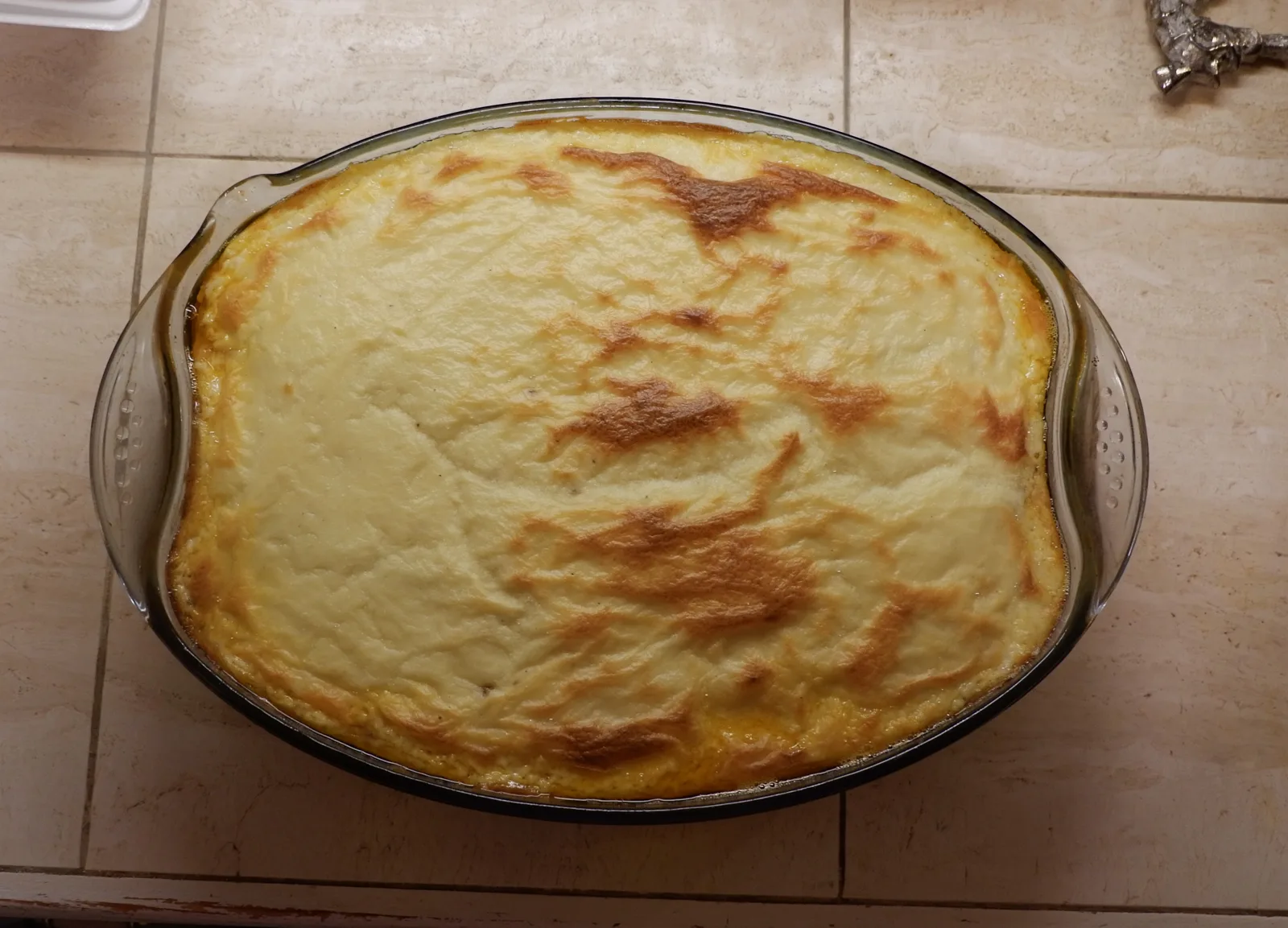
A whole Greek moussaka in a glass baking dish, its bechamel top baked golden brown with darker patches Greece flag Greece 2h
Dinner •Greek Classic

Greek Moussaka

Greek moussaka is a layered bake of fried aubergine and potato, a cinnamon-spiced beef sauce, and a thick bechamel that turns deep gold in the oven. It is the dish most Greek tavernas are judged by, and it is made for sharing at a slow family dinner. One serving is about 412 g.

Comfort & Warmth

A hearty layered bake built around aubergine, potatoes and a spiced meat sauce under a creamy bechamel topping.

Pairs Well With
Serve with a crisp Greek salad, warm bread and a glass of red wine.
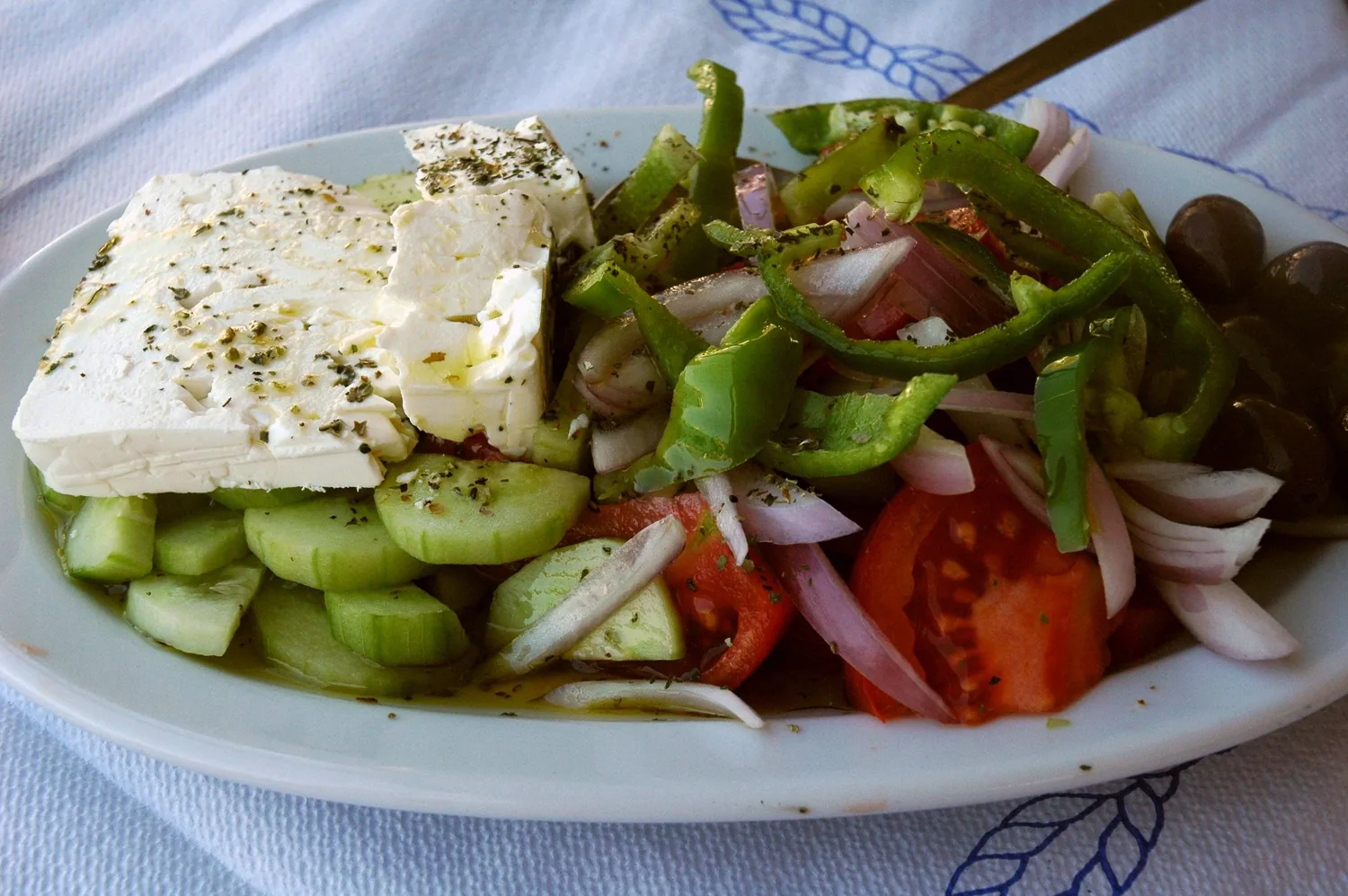
Greek salad (horiatiki) with a slab of feta sprinkled with oregano, Kalamata olives, tomato wedges, cucumber and red onion on a white plate Greece flag Greece 20m
Lunch •Aegean Table Classic

Greek Salad

This Greek salad recipe is the real horiatiki: chunky ripe tomatoes, peeled cucumber, red onion and green pepper, with Kalamata olives and a whole slab of feta on top, dressed with extra-virgin olive oil and dried Greek oregano. There is no lettuce and no heavy dressing — just summer vegetables at their best, ready in twenty minutes. One serving is about 411 g.

Fresh Summer Lunch

Crisp garden vegetables, salty feta and Kalamata olives under good olive oil — a bright, satisfying lunch with no cooking at all.

Pairs Well With
Crusty bread & grilled fish
Quick Prep (<30m)
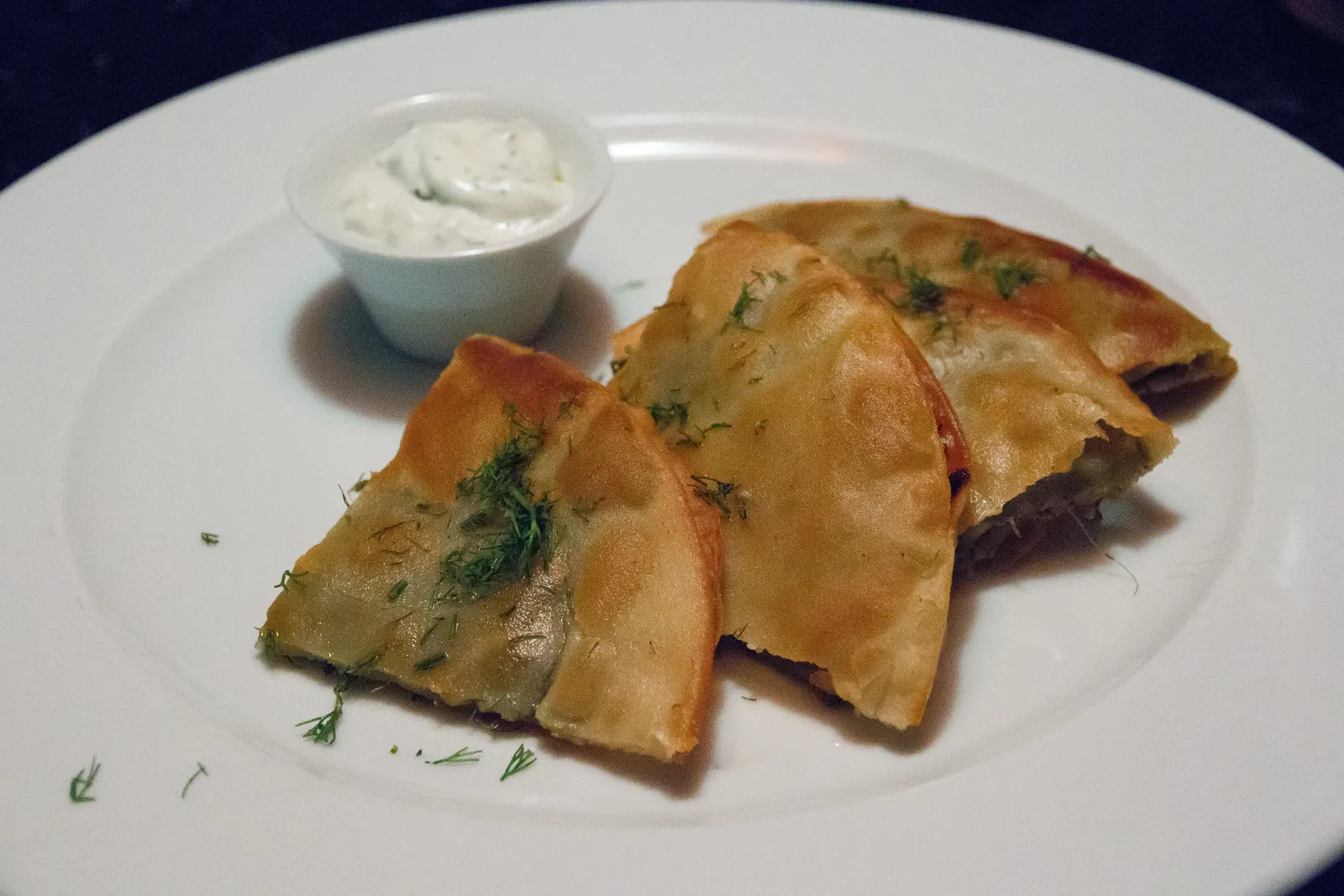
Golden spanakopita triangles sprinkled with fresh dill, served on a white plate with a small bowl of tzatziki Greece flag Greece 1h 20m
Lunch •Greek Bakery Classic

Spanakopita

This spanakopita recipe is the Greek spinach pie found in every bakery in Greece: paper-thin filo brushed with olive oil, layered over a filling of wilted spinach, salty feta, ricotta, leeks and a generous handful of fresh dill, then baked until the top shatters and the inside stays soft and savoury. It is the pie Greeks eat for lunch, take on picnics and set out on a mezze table. One serving is about 220 g.

Crisp Filo, Spinach & Feta

Layers of olive-oil-brushed filo wrapped around a spinach, feta, dill and leek filling, baked until golden and crisp.

Pairs Well With
Greek salad, tzatziki & lemon wedges
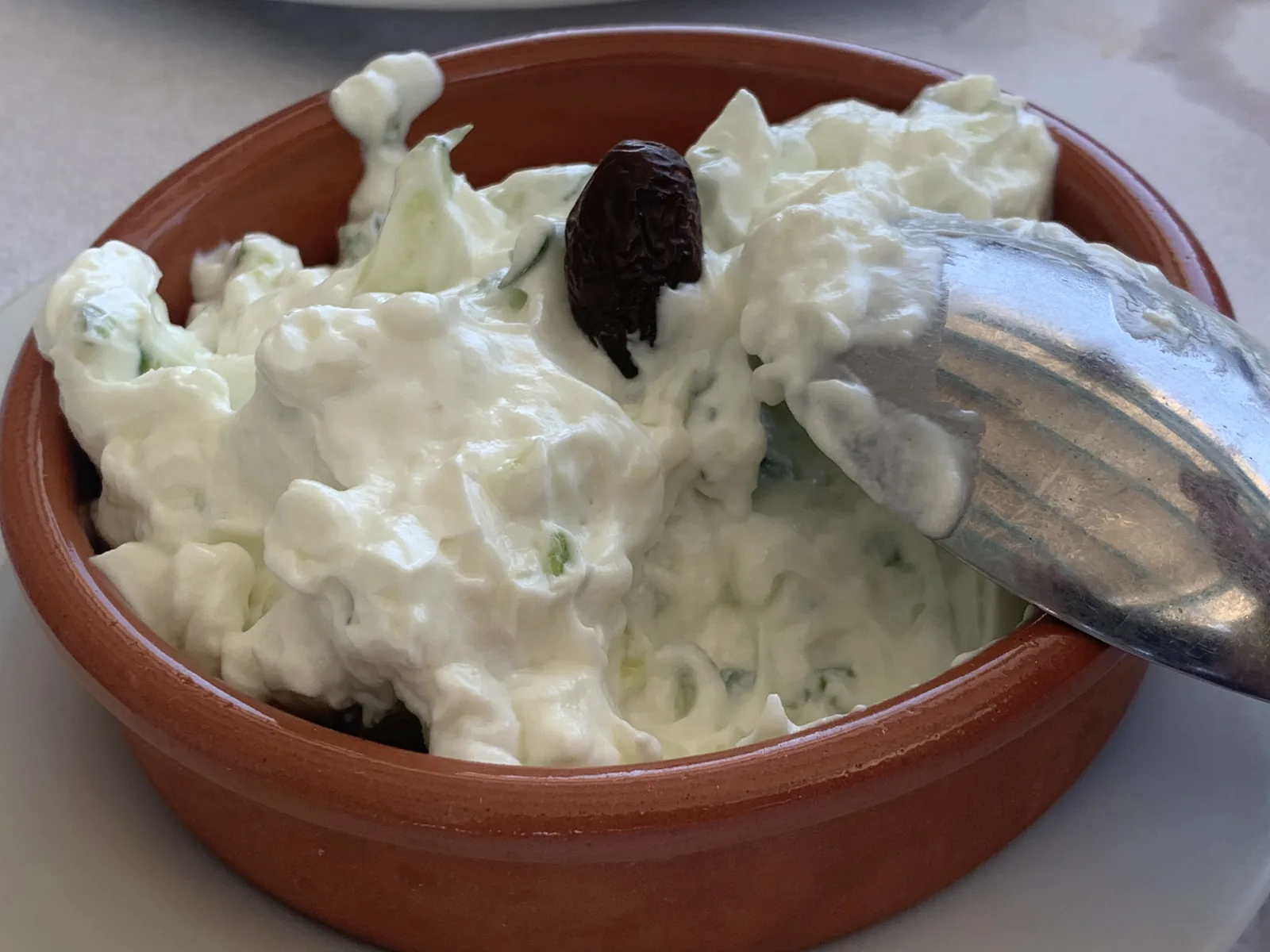
A terracotta bowl of thick white tzatziki with cucumber and a black olive, with a spoon Greece flag Greece 25m
Snack & Tea •Greek Meze Classic

Tzatziki

This tzatziki recipe is the real Greek version: thick strained yogurt, cucumber grated and squeezed bone dry, raw garlic, a thread of olive oil and a handful of dill. No cooking at all — just grating, squeezing and stirring — and the result is cool, creamy and sharp enough to cut through grilled meat. One serving is about 120 g.

Cool & Creamy

Thick Greek yogurt folded with grated cucumber, garlic and dill — the cool white dip at the heart of every Greek meze.

Pairs Well With
Spoon over grilled meat, or serve as a dip with warm pitta and raw vegetables.

The Dinner Gazette

Never wonder what’s for dinner again

One email a week with easy dinner ideas from around the world — ingredients, steps and nutrition, tested in our kitchen first.

Delivered every Thursday morning. Unsubscribe anytime.