
Curated recipes from 193 countries  •  New seasonal Mediterranean issue out now

Overview

Dulce de Coco Hondureno

Honduran Coconut Candy, Dulce de Coco con Leche de Coco

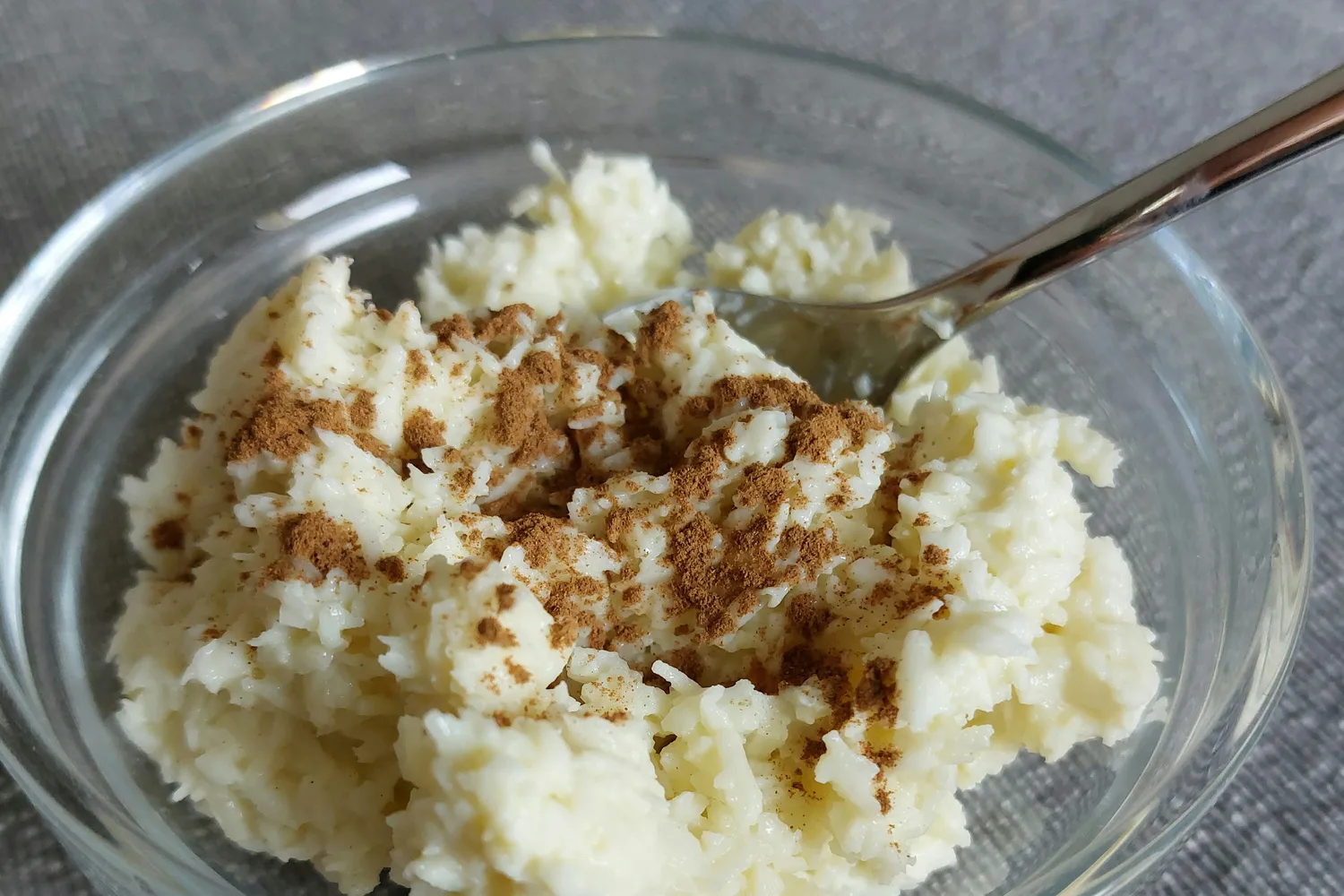
This dulce de coco hondureno recipe simmers grated coconut in coconut milk and sweetened condensed milk until thick, soft and spoonable, with cinnamon and vanilla. It is a soft candy, never baked — spoon it warm into a bowl and dust it with cinnamon. One serving is about 100 g.

Dulce de coco is the coconut sweet of the Latin American Caribbean coast, where the coconut palm is the pantry: grated coconut simmered in milk and sugar until it turns into a soft candy. On the Honduran Caribbean coast, where Garifuna and Afro-Honduran cooks built the region's food around coconut, the sweet is cooked in coconut milk itself rather than dairy milk. It is the sweet sold in markets and made at home for coffee time, spooned warm from the pot.

Pairs well with: Black coffee or a glass of cold milk

Provenance

Honduras flag Honduras

Honduran Heritage

Latin America & Caribbean

Time Dedication

55m

10m prep • 45m cook

Batch Yield

8 Servings

465 kcal per serving

1 serving ≈ 100 g

Technical Skill

Easy

Easy (One Pot)

Meal Timing & Digestive Fit

Breakfast

Not Advised

Lunch

Inappropriate

Dinner

Inappropriate

Snack & Tea

Ideal Light Bite

Occasions: Coffee time, Christmas sweets, market snacks, family gatherings Cost: Low — about $0.60–0.80 per serving at home
Soft white coconut candy dusted with cinnamon in a glass bowl with a spoon

Honduran Heritage

Photo: Mysticgabian, CC0, via Wikimedia Commons

The Heritage Formulary

Measured Ingredients

Estimated cost: Low — about $0.60–0.80 per serving at home (USD)

A true dulce de coco is soft and spoonable, never baked — thick enough to hold a spoon trail, with the coconut still tender.

Execution Methodology & Culinary Technique

Step-by-Step Cooking Guide

Active 55m
P

Measure and Combine

10 Mins • One Pot

Shake the 400 ml canned coconut milk and pour it into a heavy pot with the 300 g shredded coconut, 150 g sweetened condensed milk, 80 g sugar, 1 g salt and the cinnamon stick. Stir once to combine and set the pot over medium-low heat.

Maestro Tip: A heavy pot is the difference between a candy that cooks evenly and one that scorches on the bottom — thin pots burn coconut milk fast.

  1. 1

    Combine Coconut and Milks

    5 Mins Room temperature, about 22°C (72°F)

    Shake the 400 ml canned coconut milk and pour it into a heavy-bottomed pot. Add the 300 g shredded coconut, 150 g sweetened condensed milk, 80 g sugar, 1 g salt and the cinnamon stick. Stir once with a wooden spoon until everything is combined.

    Scrape the thick cream off the top of the can too — that is the richest part of the coconut milk.

    Done when: A milky pot with the coconut evenly spread through it.

  2. 2

    Simmer Low and Stir

    35 Mins Simmer, about 90°C (195°F)

    Set the pot over medium-low heat and bring it to a gentle simmer, about 90°C (195°F), stirring every few minutes with a wooden spoon so the coconut does not stick. The milk will bubble lazily and slowly thicken as the coconut drinks it in.

    Keep the heat low — a hard boil splits the coconut milk and leaves an oily slick on top.

    Done when: A thick, bubbling mixture that coats the spoon and leaves a trail when stirred.

  3. 3

    Cook Until Thick and Spoonable

    10 Mins Simmer, about 90°C (195°F)

    Keep cooking and stirring for another 10 minutes, until the mixture is thick enough that a spoon dragged across the bottom of the pot leaves a clear path for a second or two. Take the pot off the heat, fish out the cinnamon stick and stir in the 5 ml vanilla.

    The path test never lies: if the mixture floods back at once, it needs another 5 minutes.

    Done when: A thick, glossy candy that holds a spoon trail and drops heavily off the spoon.

  4. 4

    Rest, Dust and Serve

    5 Mins Room temperature, about 22°C (72°F)

    Rest the candy for 5 minutes, then spoon it warm into small bowls — about 100 g a serving — and dust each with the 2 g ground cinnamon. Eat it warm with a spoon, or let it cool and firm up into soft mounds.

    Warm it is soft and spoonable; chilled it sets firm enough to slice. Both are the same candy.

    Done when: Warm bowls of soft coconut candy, cinnamon-dusted and ready to eat.

Finishing Touches & Plating

Serve the candy warm in small bowls with black coffee, or chill it and cut it into squares. A spoonful over vanilla ice cream turns it into a quick dessert — the warm candy melts the ice cream just enough.

Nutritional Physiology & Benefits

Nutrition

Energy

465

kcal / serving

Protein

5g

Complete AA

Carbs

32g

Complex

Fats

38g

Healthy

Per serving (8 servings · 1 serving ≈ 100 g)
Energy465 kcal
Protein5 g
Carbohydrates32 g
Fat38 g
Fibre7.5 g
Sugar24.7 g
Sodium94 mg
Per 100g
Energy465 kcal
Protein5.2 g
Carbohydrates32.4 g
Fat37.7 g
Fibre7.5 g
Sugar24.7 g
Sodium94 mg

Nutrition values are estimated — calculated from USDA FoodData Central values for the listed ingredients.

Vitamins & minerals: Coconut brings manganese and copper, with calcium from the sweetened condensed milk. Nutrition is estimated.

Coconut, Manganese and Fibre

One serving gives about 7.5 g of fibre and a good share of the day's manganese from the coconut — this dulce de coco hondureno recipe is a sweet with something real in it.

Quick Energy, Small Portion

One serving gives about 465 kcal with 32.4 g of carbohydrate, so a small bowl works as a fast energy top-up after a long morning.

No Baking, No Fuss

One pot, four main ingredients and no oven — the candy cooks while you stir, and there is nothing to burn in a hot oven.

Food Pairings

What to Eat With

To optimize nutrient absorption and elevate the sensory depth, pair with these authentic accompaniments:

Drinks

Black Coffee

Black coffee's bitterness is the classic partner for this candy — the sweet coconut and the bitter coffee balance each other, and in Honduras the two are a coffee-time pair.

Sides

Cold Milk

A glass of cold milk cools the warm candy and its mild flavour lets the coconut shine — the simplest partner for children.

Vanilla Ice Cream

A warm spoonful over vanilla ice cream melts the edges of the scoop, and the cold cream cuts the candy's richness so a second spoonful feels lighter.

Full Menus

Pan de Yema

A warm roll of pan de yema next to a bowl of dulce de coco is a Honduran coffee-time plate — the soft bread scoops up the soft candy.

Complete menu

Serve a warm bowl with black coffee and a roll of pan de yema, or make it a dessert with a scoop of vanilla ice cream on the side.

Digestive Guardrails

What NOT to Combine

To prevent digestive distress, sluggishness, or palate clash, avoid pairing the dish with these elements:

Boiling the Coconut Milk Hard

A hard boil splits coconut milk into oil and solids, leaving a greasy candy. Keep it at a gentle simmer and stir often. This is general cooking information, not medical advice.

Eating It Straight From a Hot Pot

The candy holds heat like lava — a spoonful straight from the pot can scald the mouth. Rest it 5 minutes and serve it warm, not boiling. This is general food-safety information, not medical advice.

General information only, not medical advice — consult a doctor for personal dietary decisions.

Who Should Eat It

Who Should Eat

  • General adultsA rich little sweet — best as one small bowl after a meal, not as an all-day snack.
  • ChildrenChildren love it, but it is very sweet — one small serving is a sensible portion.
  • ElderlySoft and easy to eat, no chewing needed — a good choice in a small portion with coffee.
  • Pregnant womenGenerally suitable; the milk is cooked through, but the sugar is high, so keep the portion small — ask your clinician.
  • Breastfeeding womenGenerally suitable; the energy is useful, but watch the sugar if you eat it often.
  • AthletesAbout 32.4 g of carbohydrate a serving makes it a quick energy top-up after training — eat it within an hour after exercise.
  • Weight gainA good choice — the candy is energy-dense and easy to eat, and a serving with coffee adds calories without much volume.
  • Weight lossAt 465 kcal a serving with 24.7 g of sugar, this is a treat: take half a serving and share the rest.

Health Conditions — Adjust or Avoid

Conditions

  • DiabetesAbout 32.4 g of carbohydrate and 24.7 g of sugar a serving — take half a serving at most and pair it with something unsweetened; ask your clinician.
  • High blood pressureAbout 94 mg of sodium a serving is low, but the sugar is the bigger issue — keep the portion small; ask your clinician.
  • Kidney diseaseCoconut is high in potassium, which some kidney diets limit — check your potassium allowance first; ask your clinician.
  • GoutNo purine-rich ingredients, so it is generally fine in small portions; the sugar is the main thing to watch; ask your clinician.
  • Stomach issuesSoft and easy to digest when fresh, but the coconut fibre can bother a sensitive stomach — try a small spoonful first; ask your clinician.
  • Cardiovascular diseaseAbout 37.7 g of fat a serving, mostly saturated fat from coconut, so keep it occasional and small; ask your clinician.
  • Fatty liverThe 24.7 g of sugar a serving is high for a fatty-liver diet — keep it occasional and small; ask your clinician.
  • Food allergiesContains coconut (a tree nut for labelling in some countries) and milk (sweetened condensed milk). Gluten-free. Check every label.
  • Special therapeutic dietsNot suitable for low-sugar, low-fat or low-potassium therapeutic diets without a full recipe change — ask your clinician or dietitian.

If you have a medical condition, consult your doctor before changing your diet.

Storage & Use

Storage & Use

How to store
Cool completely, then store in an airtight container. Keeps 3 to 4 days at room temperature.
In the fridge
Up to 1 week in the fridge; bring to room temperature or warm gently before eating.
In the freezer
Up to 1 month, in small portions — thaw in the fridge overnight.
How to reheat
Warm gently in a pot over low heat with a splash of coconut milk, stirring, until heated through to at least 74°C (165°F).
Freezing recommended
Yes, in small portions, for up to 1 month.
Signs it has spoiled
A sour or fermented smell, mould spots, or a slimy surface.

More recipes to explore

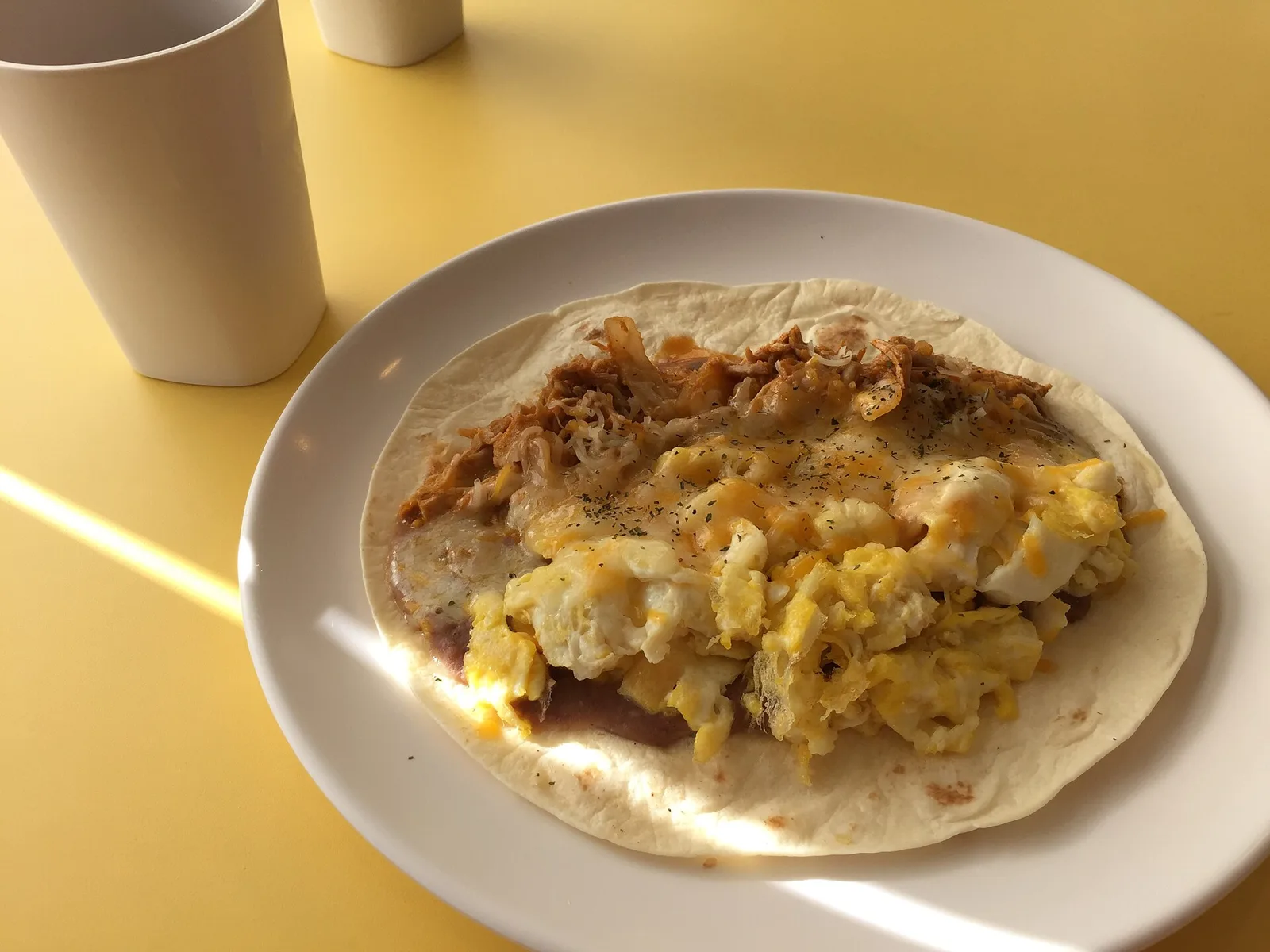
An open baleada on a white plate: a flour tortilla topped with refried beans, scrambled egg and melted cheese Honduras flag Honduras 45m
Breakfast •La Ceiba Heritage

Baleadas

This baleadas recipe makes Honduras's favourite breakfast the way it is sold from street stalls and home kitchens along the north coast: thick, soft flour tortillas, cooked on a dry griddle until golden and speckled, then spread with warm mashed red beans, piled with soft scrambled egg and crumbled salty cheese, and finished with a spoonful of crema. Each baleada is folded in half and eaten hot, by hand, while the cheese is still melting into the beans. One serving is one baleada, about 335 g.

Hearty & Filling

Honduras's best-known breakfast: a thick, soft flour tortilla folded around mashed red beans, scrambled egg and crumbled salty cheese.

Pairs Well With
Sliced avocado and a hot sauce on the side, with a cup of sweet Honduran coffee or a glass of fresh orange juice.
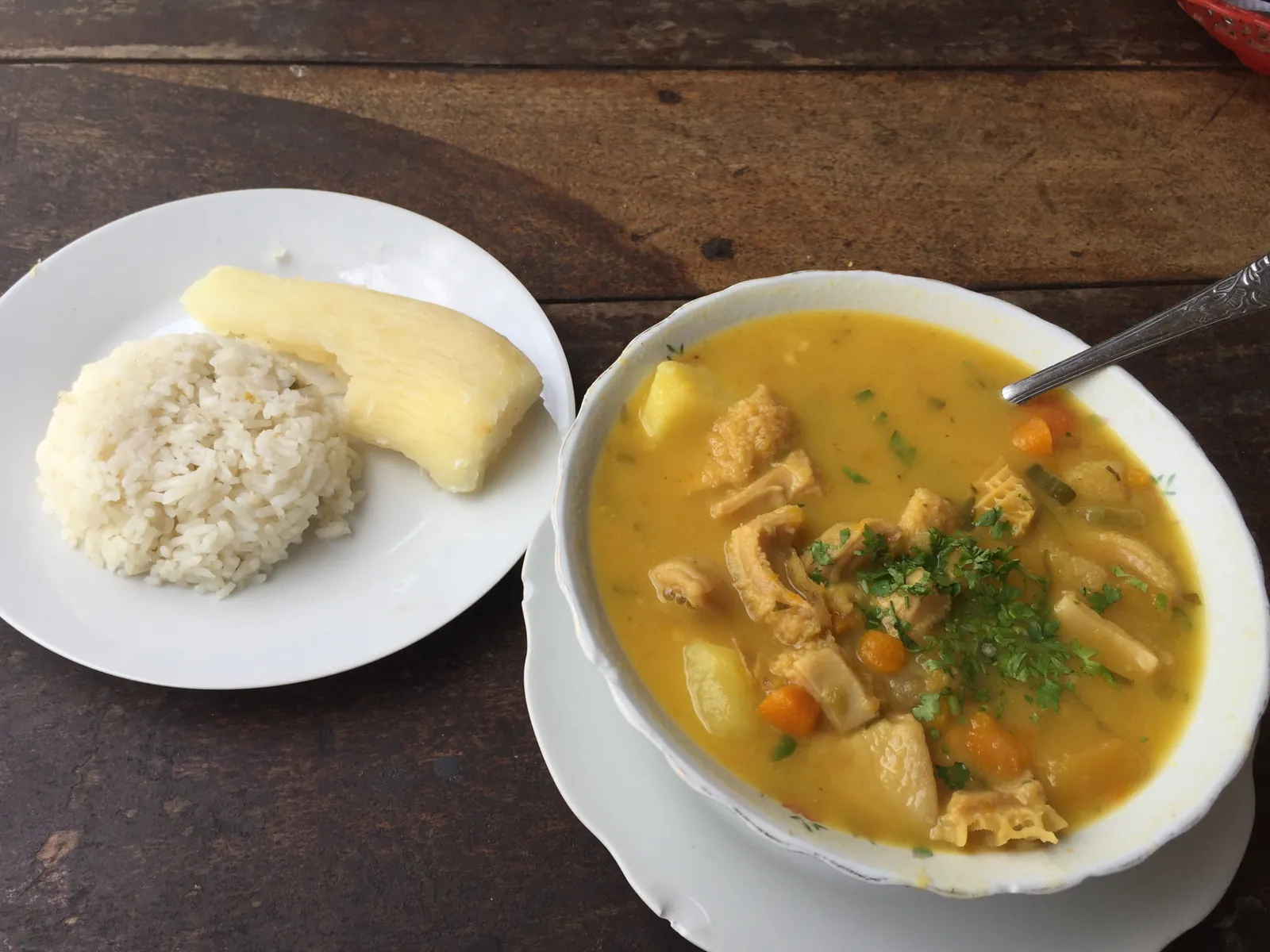
A bowl of sopa de mondongo with strips of tripe, carrots and potatoes, garnished with cilantro, served with white rice and boiled yuca on the side Honduras flag Honduras 3h 45m
Lunch •Honduran Heritage

Honduran Sopa de Mondongo

This honduran sopa de mondongo recipe is Honduras's slow-cooked tripe soup: beef tripe simmered for hours until tender, then loaded with yuca, green plantain, corn, carrots and potatoes in a tomato, cumin and cilantro broth. It is a weekend lunch in Honduran homes, served steaming hot with lime wedges, white rice and warm tortillas for squeezing and scooping. One serving is about 600 g, soup and vegetables together.

Comfort & Warmth

Slow-simmered beef tripe with yuca, plantain and corn in a tomato, cumin and cilantro broth.

Pairs Well With
White rice and warm corn tortillas, with lime wedges and chopped cilantro on the side.
Soups & Broths
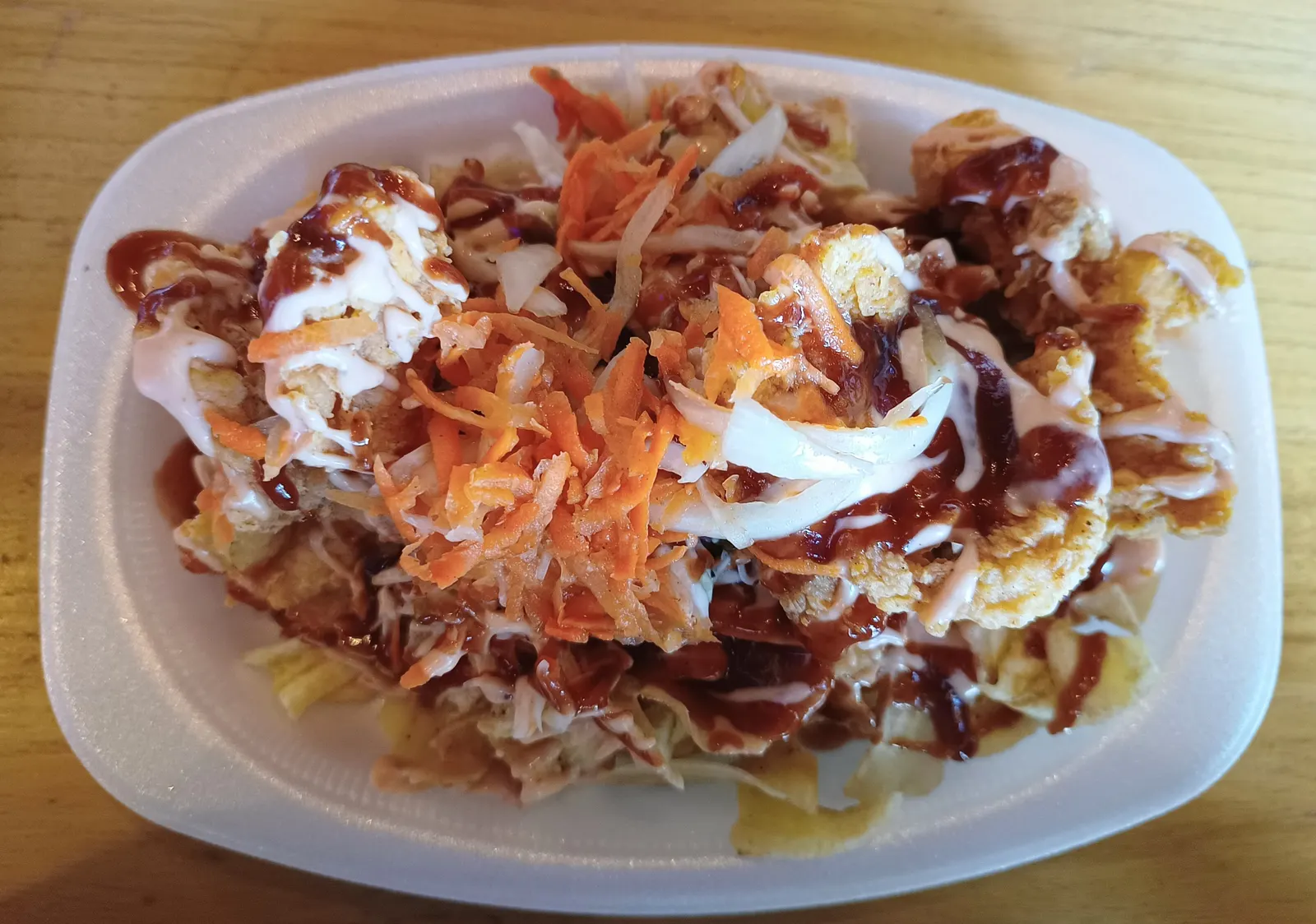
Pollo chuco on a plate: crispy fried chicken over fried plantain tajadas with shredded cabbage, carrot, pickled onion and sauces Honduras flag Honduras 1h 5m
Dinner •San Pedro Sula Heritage

Pollo Chuco

Pollo chuco is the beloved street-food plate of San Pedro Sula, Honduras: flour-dredged chicken fried until crisp and golden, piled over crunchy fried green-plantain slices called tajadas, then finished with lime-dressed cabbage, pickled red onion, fresh chimol salsa and a drizzle of tomato and pink sauces. Every bite mixes crunch, tang, heat and creaminess. One serving is about 480 g.

Hearty Street-Food Comfort

A filling plate of fried chicken, crisp plantains and fresh toppings that works as a satisfying dinner.

Pairs Well With
Serve with an ice-cold agua fresca or a light lager, and lime wedges on the side.
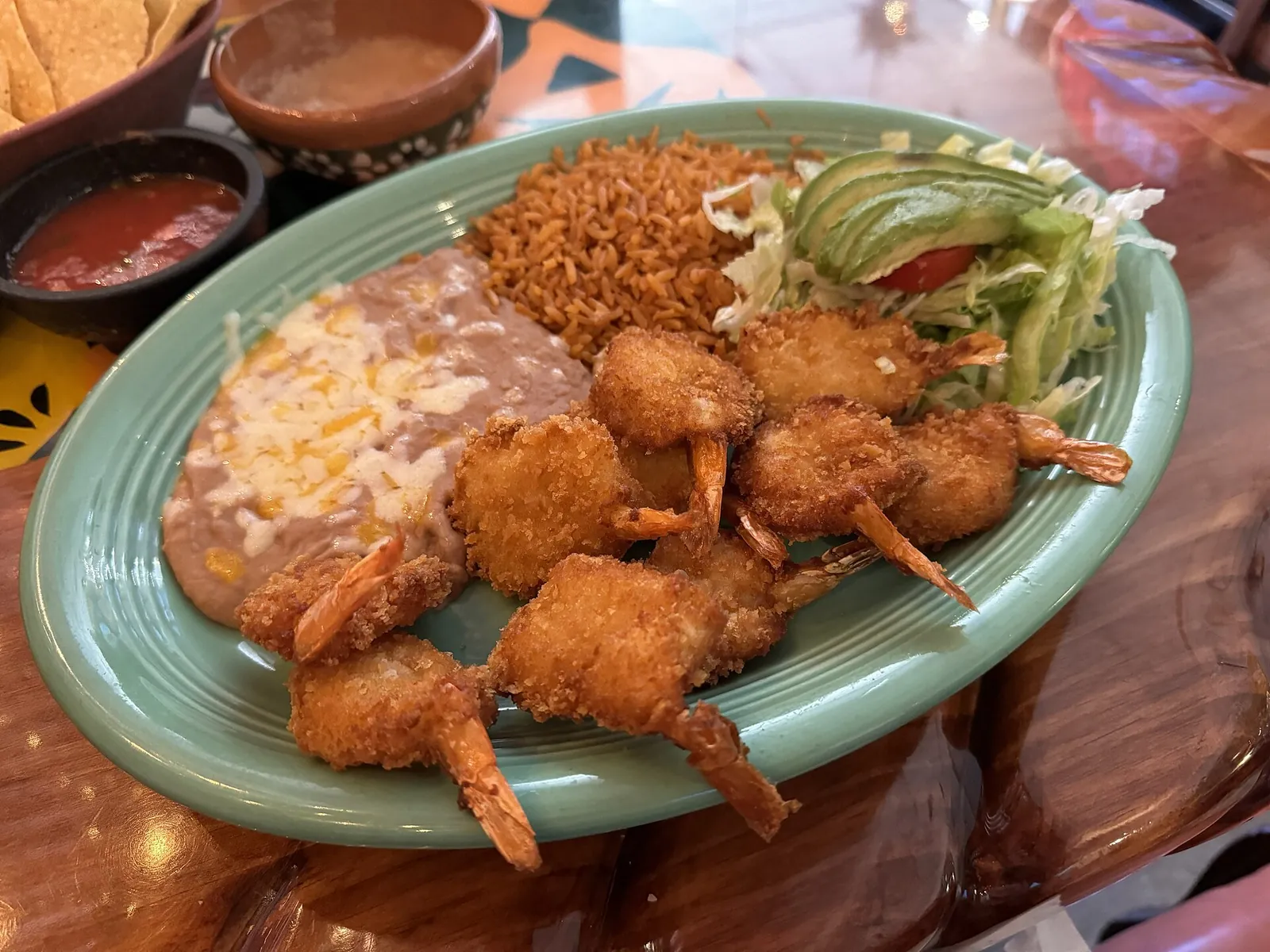
A plate of golden breaded shrimp with refried beans, red rice and avocado salad Honduras flag Honduras 40m
Dinner •Honduran Coastal Favourite

Camarones Empanizados Hondureños

This camarones empanizados recipe starts with large shrimp tossed in lime, garlic and paprika, then runs each one through flour, beaten egg and panko breadcrumbs before a quick fry in hot oil. The crumb turns deep golden and shatteringly crisp while the shrimp inside stays sweet and juicy. It is the coastal favourite of Honduras, served with rice, beans and avocado. One serving is about 185 g.

Coastal Comfort

Large shrimp dredged in flour, dipped in beaten egg and rolled in panko, fried golden and crisp — the Honduran coast's favourite way to eat shrimp.

Pairs Well With
Red rice, refried beans & avocado

The Dinner Gazette

Never wonder what’s for dinner again

One email a week with easy dinner ideas from around the world — ingredients, steps and nutrition, tested in our kitchen first.

Delivered every Thursday morning. Unsubscribe anytime.