-
1
Cut the Vegetables
25 Mins
No heat — room temperature, about 20°C (68°F)
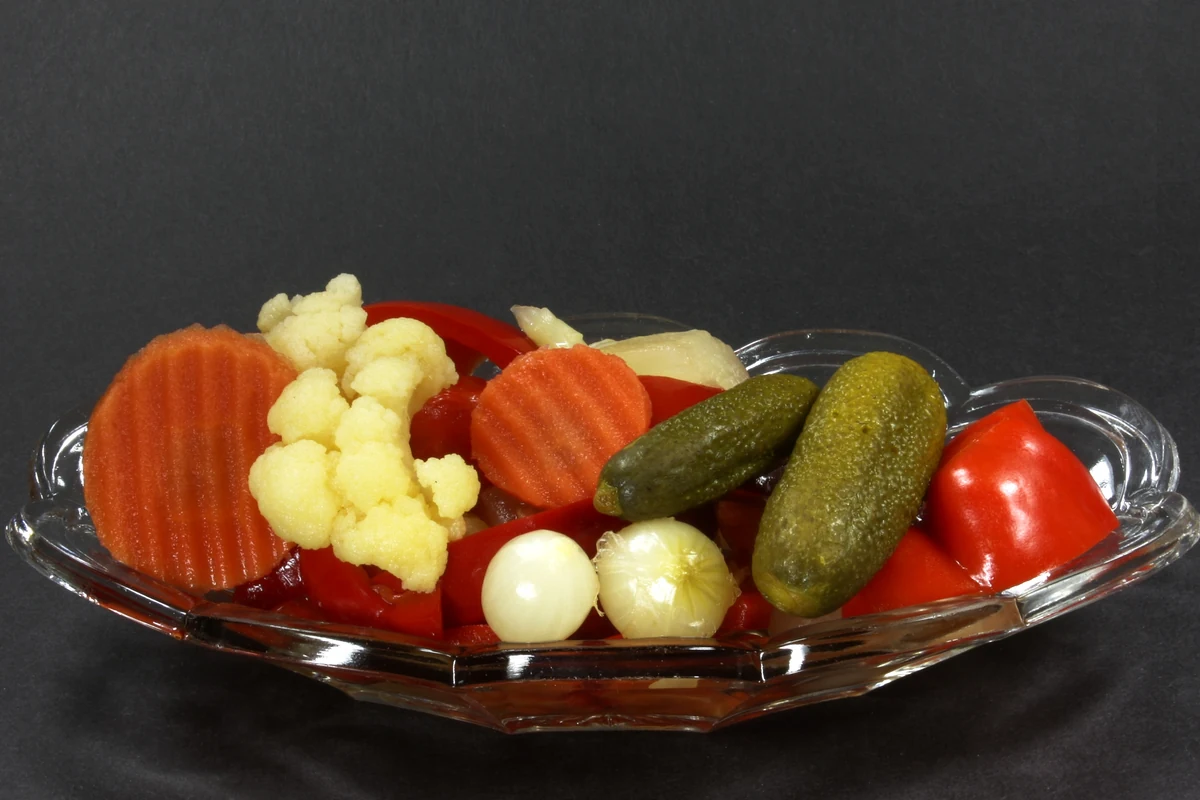
Break the 400 g of cauliflower into bite-size florets. Peel the 300 g of carrots and the 200 g of turnips and cut them into sticks about 5 cm long and 1 cm thick. Cut the 300 g of cucumber into rounds about 1 cm thick, trim the 150 g of green beans into 5 cm lengths, and cut the 150 g of red pepper into strips. Cut the 100 g of celery into short lengths and keep the 20 g of celery leaves aside.
Leave the cucumber skin on — it keeps the rounds crisp in the brine, while peeled cucumber goes soft.
Done when: A large bowl of even, bite-size vegetables, all rinsed and ready to pack.
-
2
Sterilise the Jars
10 Mins
Boiling water, 100°C (212°F)
Wash two large glass jars and their lids in hot soapy water, rinse well, then stand them in a pot of boiling water for 10 minutes, or run them through a hot dishwasher cycle. Lift them out with tongs and leave them upside down on a clean tea towel to dry — do not dry them with a cloth.
Sterile jars are what keep torshi safe for months — a jar that only looks clean can still carry mould spores.
Done when: Hot, clean jars, dry and free of water spots, with no smell of soap.
-
3
Make the Brine
10 Mins
Boiling, 100°C (212°F), then cooling
Put the 600 ml of water, the 400 ml of white vinegar, the 45 g of coarse salt and the 10 g of sugar in a large saucepan. Bring to a rolling boil over medium-high heat, stirring until the salt and sugar dissolve completely, then take the pan off the heat and let the brine cool for 10 minutes.
Boiling the brine kills stray yeasts and helps the vegetables stay crisp — never pour raw, unboiled brine over the vegetables.
Done when: Clear brine with no undissolved salt or sugar, steaming but no longer boiling.
-
4
Pack the Jars
10 Mins
No heat — room temperature, about 20°C (68°F)
Layer the vegetables into the sterilised jars, mixing the colours as you go so every jar gets cauliflower, carrot, cucumber, turnip, beans, pepper and celery. Tuck the 30 g of halved garlic, the 5 g of nigella seeds, the 3 g of chilli flakes, the 2 bay leaves and the celery leaves in between the layers. Pack firmly but do not crush anything.
Pack the jars tight — vegetables that float above the brine are the ones that go mouldy first.
Done when: Jars filled to about 2 cm below the rim, with a colourful mix in every jar.
-
5
Pour the Brine and Seal
5 Mins
Warm brine, about 60°C (140°F)
Pour the warm brine over the vegetables until they are completely covered, leaving about 2 cm of space at the top. Press the vegetables down with a clean spoon so no piece pokes above the liquid, then screw the lids on tightly. Wipe the jars clean and label them with the date.
If a piece keeps floating up, tuck a celery stalk across the top of the jar to hold everything down — it is the traditional Egyptian trick.
Done when: Every vegetable submerged under clear brine, with no air pockets and no pieces above the liquid.
-
6
Wait a Week
7 Days Pickling
Cool storage, about 18°C (64°F)
Set the jars in a cool, dark place for 7 days. Taste a piece on day 7: it should be tangy, salty and still crisp. Once you are happy, move the jars to the fridge, where they keep for months. Always use a clean fork to take pieces out, and push the rest back under the brine.
Do not open the jars before day 5 — early opening lets in air and slows the pickling, and the vegetables taste raw and salty instead of tangy.
Done when: Pickles that are tangy and salty, still crisp, with a clear brine and no mould.
auto_awesome Finishing Touches & Plating
Serve the torshi cold from the jar, drained, in a small bowl beside ful medames, koshari or grilled meat. Use a clean fork to lift pieces out, and always push the remaining vegetables back under the brine before closing the jar.

 Egypt
1h 15m