Curated recipes from 193 countries  •  New seasonal Mediterranean issue out now

Overview

Egyptian Umm Ali

Umm Ali, Om Ali, Mother of Ali, Egyptian Bread Pudding

This egyptian umm ali recipe bakes torn puff pastry in warm milk and cream with sugar, then finishes it with almonds, pistachios, walnuts, raisins and coconut until the top is golden and bubbling. It is served warm, by the spoonful, straight from the dish. One serving is about 237 g.

Umm Ali, whose name means Mother of Ali, is Egypt's best-known dessert, and its story is told as a piece of history: after the death of the sultan Izz al-Din Aybak in 1257, his widow Shajar al-Durr is said to have ordered the dessert made to celebrate, and it was named for the mother of Aybak's son Ali. Historians treat the tale as legend rather than fact, but the dessert itself is old and certain: torn pastry soaked in sweetened milk, baked with nuts and fruit, and served warm. It is the dessert of Ramadan nights and family gatherings across Egypt, and every household has its own mix of nuts.

Pairs well with: Mint tea, Arabic coffee and fresh fruit.

Provenance

Egypt flag Egypt

Egyptian Classic Dessert

Middle Eastern

Time Dedication

1h 3m

20m prep • 43m cook

Batch Yield

6 Servings

671 kcal per serving

1 serving ≈ 237 g

Technical Skill

Easy

Easy (Baked Pudding)

Meal Timing & Digestive Fit

Breakfast

Not Advised

Lunch

Inappropriate

Dinner

Inappropriate

Snack & Tea

Ideal Light Bite

Occasions: Ramadan nights, family gatherings, celebration desserts Cost: Low — about $2–3 per serving at home

Golden baked Umm Ali bread pudding topped with almonds, pistachios and walnuts in a black baking dish

Egyptian Classic Dessert

Photo: Miansari66, CC0, via Wikimedia Commons

The Heritage Formulary

Measured Ingredients

Estimated cost: Low — about $2–3 per serving at home (USD)
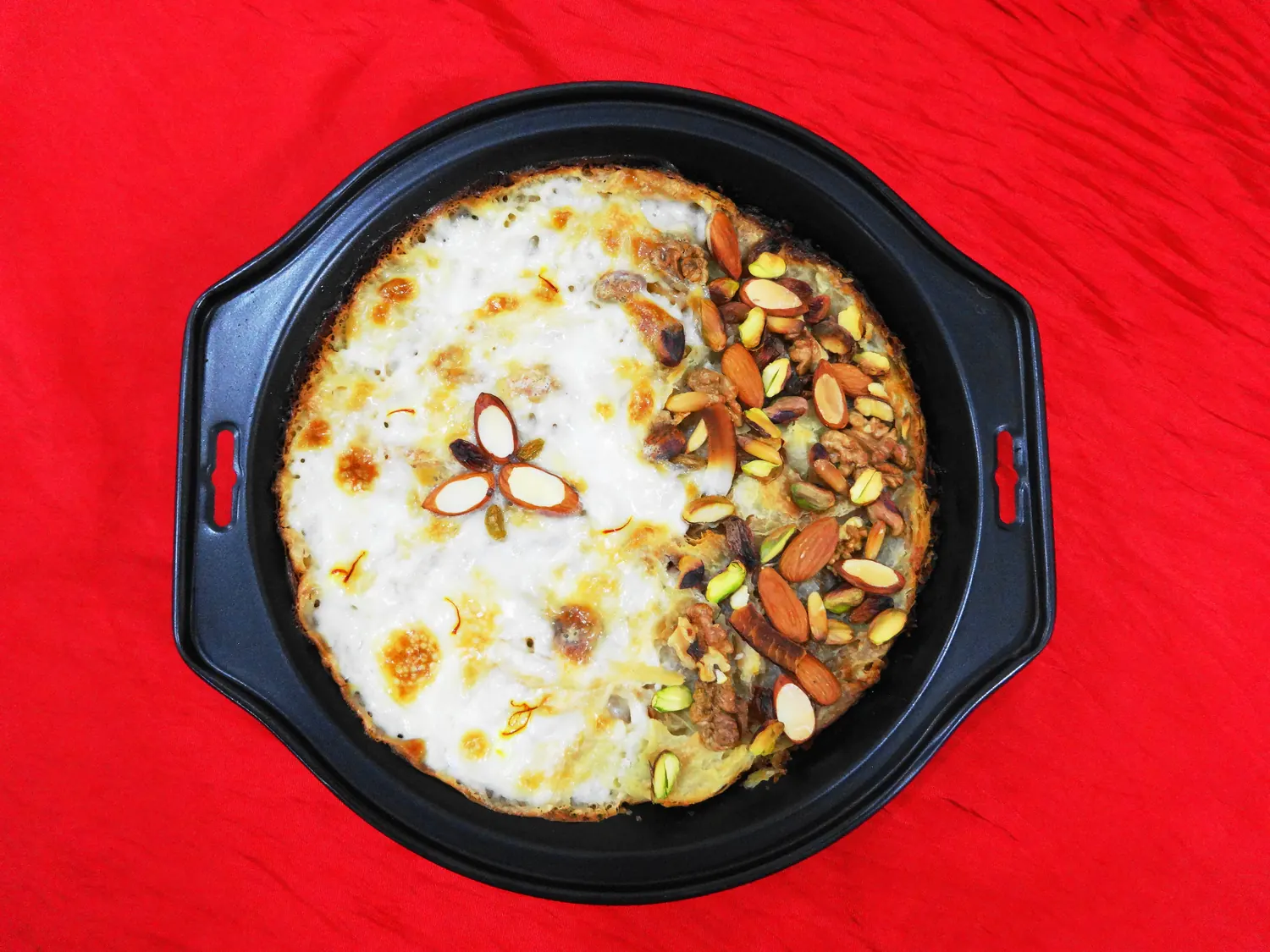
Crisp puff pastry soaked in warm sweetened milk and cream, baked with nuts, raisins and coconut.

Execution Methodology & Culinary Technique

Step-by-Step Cooking Guide

Active 1h 3m
P

Prep Stage: Bake the Pastry and Chop the Nuts (20 Mins)

20 Mins

Bake the puff pastry sheets at 200°C (400°F) for about 12 minutes until puffed and golden, then leave them to cool and tear into rough pieces. While they bake, chop the almonds, pistachios, walnuts and hazelnuts, rinse the raisins and measure out the milk, cream, sugar and coconut. Butter a baking dish about 25 cm across.

Maestro Tip: Let the pastry cool before tearing it, or it will squash flat in your hands.

  1. 1

    Warm the milk and cream

    8 Mins Medium heat, ~80°C (175°F)

    Put the milk, 100ml of the cream and the sugar in a saucepan with the vanilla. Warm over medium heat, stirring until the sugar dissolves, until it is steaming and almost simmering. Do not let it boil.

    Take it off the heat as soon as steam rises: boiling scorches the milk.

    Done when: Milk steaming, sugar dissolved, not boiling.

  2. 2

    Layer the pastry and nuts

    5 Mins No heat, ~20°C (68°F)

    Spread half the torn pastry in the buttered dish. Scatter over half the nuts, raisins and coconut, then add the rest of the pastry and the remaining nuts, raisins and coconut on top.

    Keep the biggest nut pieces for the top, where they toast in the oven.

    Done when: Dish layered, nuts and fruit spread through the pastry.

  3. 3

    Soak with the warm milk

    5 Mins Warm milk, ~80°C (175°F)

    Pour the warm milk slowly and evenly over the pastry, pressing the pieces down gently so they all get wet. Leave it to soak for 5 minutes while the oven heats.

    Pour slowly: flooding the dish in one go pushes the nuts to the edges.

    Done when: Pastry soaked through, milk settling into the layers.

  4. 4

    Bake until golden and bubbling

    20 Mins Oven 190°C (375°F)

    Pour the remaining 100ml of cream over the top and dust lightly with cinnamon. Bake at 190°C (375°F) for about 20 minutes, until the top is golden brown, the edges are bubbling and the centre is hot all the way through, at least 74°C (165°F) if you check with a thermometer.

    If the top browns too fast, cover it loosely with foil for the last 5 minutes.

    Done when: Top golden and bubbling, centre steaming hot.

  5. 5

    Rest and serve warm

    5 Mins Resting, ~60°C (140°F)

    Leave the dish to rest for 5 minutes so the milk settles, then serve warm in bowls, spooning up the soft pastry, nuts and creamy milk together.

    Five minutes of resting is the difference between soupy and spoonable.

    Done when: Pudding settled, warm through, golden on top.

Finishing Touches & Plating

Serve warm, straight from the dish, with the golden top spooned over each portion. A little extra cold cream poured over at the table is the classic touch.

Nutritional Physiology & Benefits

Nutrition

Energy

671

kcal / serving

Protein

12g

Complete AA

Carbs

50g

Complex

Fats

49g

Healthy

Per serving (6 servings · 1 serving ≈ 237 g)
Energy671 kcal
Protein12 g
Carbohydrates50 g
Fat49 g
Fibre3.9 g
Sugar26.6 g
Sodium232 mg
Per 100g
Energy283 kcal
Protein5.2 g
Carbohydrates21.1 g
Fat20.7 g
Fibre1.6 g
Sugar11.2 g
Sodium98 mg

Nutrition values are estimated — calculated from USDA FoodData Central values for the listed ingredients.

Vitamins & minerals: Milk and cream supply calcium and B vitamins; the nuts add vitamin E, magnesium and B vitamins, and the raisins add iron.

Calcium from Milk and Cream

One serving carries about 12.3 g protein and a good share of calcium from the milk and cream.

Nuts and Fruit, Not Just Sugar

Almonds, pistachios, walnuts and raisins bring fibre, vitamin E and iron alongside the sweetness.

Warm and Comforting

Served warm from the oven, it is the dessert Egypt reaches for at family gatherings and in Ramadan.

Food Pairings

What to Eat With

To optimize nutrient absorption and elevate the sensory depth, pair with these authentic accompaniments:

Drinks

Mint Tea

Sweet mint tea is the classic partner: its freshness balances the rich, milky pudding.

Arabic Coffee

Small cups of strong Arabic coffee cut through the cream and make the dessert feel lighter.

Sides

Fresh Fruit

Sliced oranges or strawberries on the side add a fresh, sharp note against the warm pudding.

Full Menus

A Spoonful of Cold Cream

Cold cream poured over the hot pudding at the table is the traditional finish, and the hot-cold contrast is half the pleasure.

Complete menu

Umm Ali served warm with mint tea and fresh fruit, with a spoonful of cold cream over the top.

Digestive Guardrails

What NOT to Combine

To prevent digestive distress, sluggishness, or palate clash, avoid pairing the dish with these elements:

Boiling the Milk

Boiled milk scorches and can split the cream, leaving a grainy pudding. Warm it until steaming and take it off the heat. This is general cooking information, not medical advice.

Serving It Lukewarm

Umm Ali is meant to be served warm: left to cool, the pastry turns soggy and the milk sets. Serve within 15 minutes of baking. This is general cooking information, not medical advice.

General information only, not medical advice — consult a doctor for personal dietary decisions.

Who Should Eat It

Who Should Eat

  • General adultsRich and sweet at about 671 kcal per serving — a dessert for most adults, best in one portion.
  • ChildrenChildren usually love it, but the nuts are a choking risk for small children; serve under-fives a nut-free spoonful.
  • ElderlySoft and easy to eat, but sweet and rich, so keep the portion small.
  • Pregnant womenThe milk and eggs are fully heated, but the dish is sweet and rich; keep to a small portion. Ask your clinician about portions.
  • Breastfeeding womenEnergy-dense and comforting; one serving with tea is a full dessert.
  • AthletesAbout 12.3 g protein per serving with quick energy from the milk and sugar — a dessert, not a recovery meal.
  • Weight gainEnergy-dense at about 671 kcal per serving, so it suits weight gain.
  • Weight lossAbout 671 kcal per serving and high in sugar; keep to one small serving and skip the extra cream.

Health Conditions — Adjust or Avoid

Conditions

  • DiabetesAbout 50.1 g carbohydrate and 26.6 g sugar per serving; keep the portion small. Ask your clinician about portions.
  • High blood pressureOnly about 232 mg sodium per serving, which is low for a dessert; the sugar matters more than the salt. Ask your clinician about portions.
  • Kidney diseaseModerate in protein and low in sodium, but the sugar and dairy matter for some kidney diets. Ask your clinician about portions.
  • GoutDairy and nuts are not the usual gout triggers, but the sugar and richness mean a small portion is wise. Ask your clinician about portions.
  • Stomach issuesRich, milky and sweet, which can sit heavily; eat a small portion slowly. Ask your clinician about portions.
  • Cardiovascular diseaseHigh in saturated fat at about 49.0 g total fat per serving; keep it an occasional dessert. Ask your clinician about portions.
  • Fatty liverEnergy-dense at about 671 kcal per serving with 26.6 g sugar; keep the portion as stated. Ask your clinician about portions.
  • Food allergiesContains gluten (pastry), milk, egg (in the pastry) and tree nuts. People with a wheat, milk or tree-nut allergy should not eat it as written. Ask your clinician about safe alternatives.
  • Special therapeutic dietsNot suitable for a gluten-free, dairy-free or nut-free diet as written; fits no low-sugar diet. Any therapeutic diet should be discussed with a clinician.

If you have a medical condition, consult your doctor before changing your diet.

Storage & Use

Storage & Use

How to store
Cool quickly and store covered in the fridge.
In the fridge
Keeps 2 days in the fridge at 4°C (40°F) or below.
In the freezer
Up to 1 month; freeze in portions.
How to reheat
Reheat in the oven at 180°C (350°F) until steaming hot, to 74°C (165°F); add a splash of milk first so it does not dry out.
Freezing recommended
Only if needed — best eaten fresh and warm.
Signs it has spoiled
Sour smell, slimy surface, or mould.

More recipes to explore

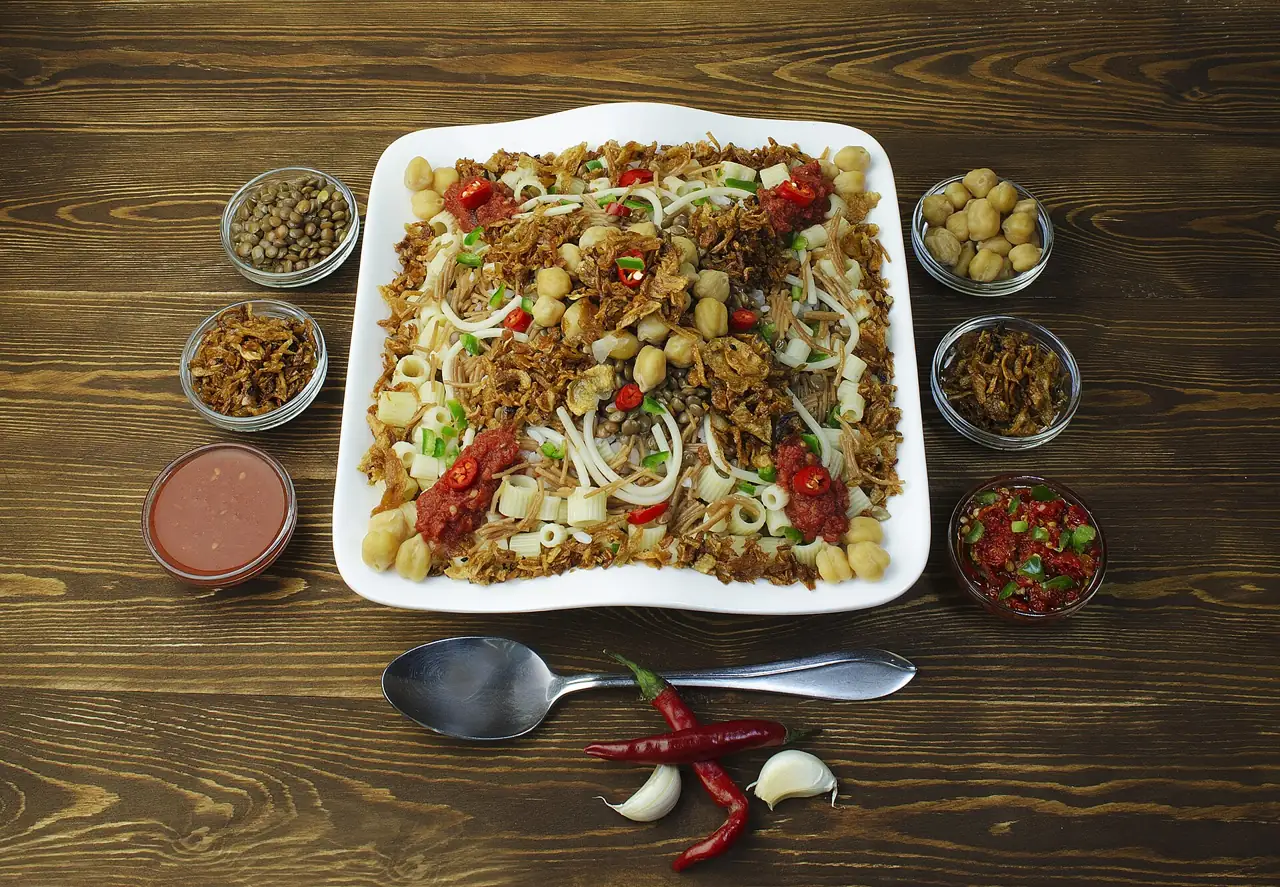
A platter of Egyptian koshari with rice, lentils, macaroni, chickpeas, crispy fried onions and tomato sauce Egypt flag Egypt 1h 15m
Dinner •Cairo Street Food

Egyptian Koshari

This egyptian koshari recipe builds Egypt's national dish at home: brown lentils and short-grain rice cooked with toasted vermicelli, layered with macaroni and chickpeas, then topped with a spiced tomato sauce, garlic vinegar and a heap of crispy fried onions. One serving is about 600 g.

Comfort & Warmth

Layers of lentils, rice and pasta with a spiced tomato sauce and crispy onions.

Pairs Well With
Garlic vinegar (daqqa), hot sauce and pickled vegetables
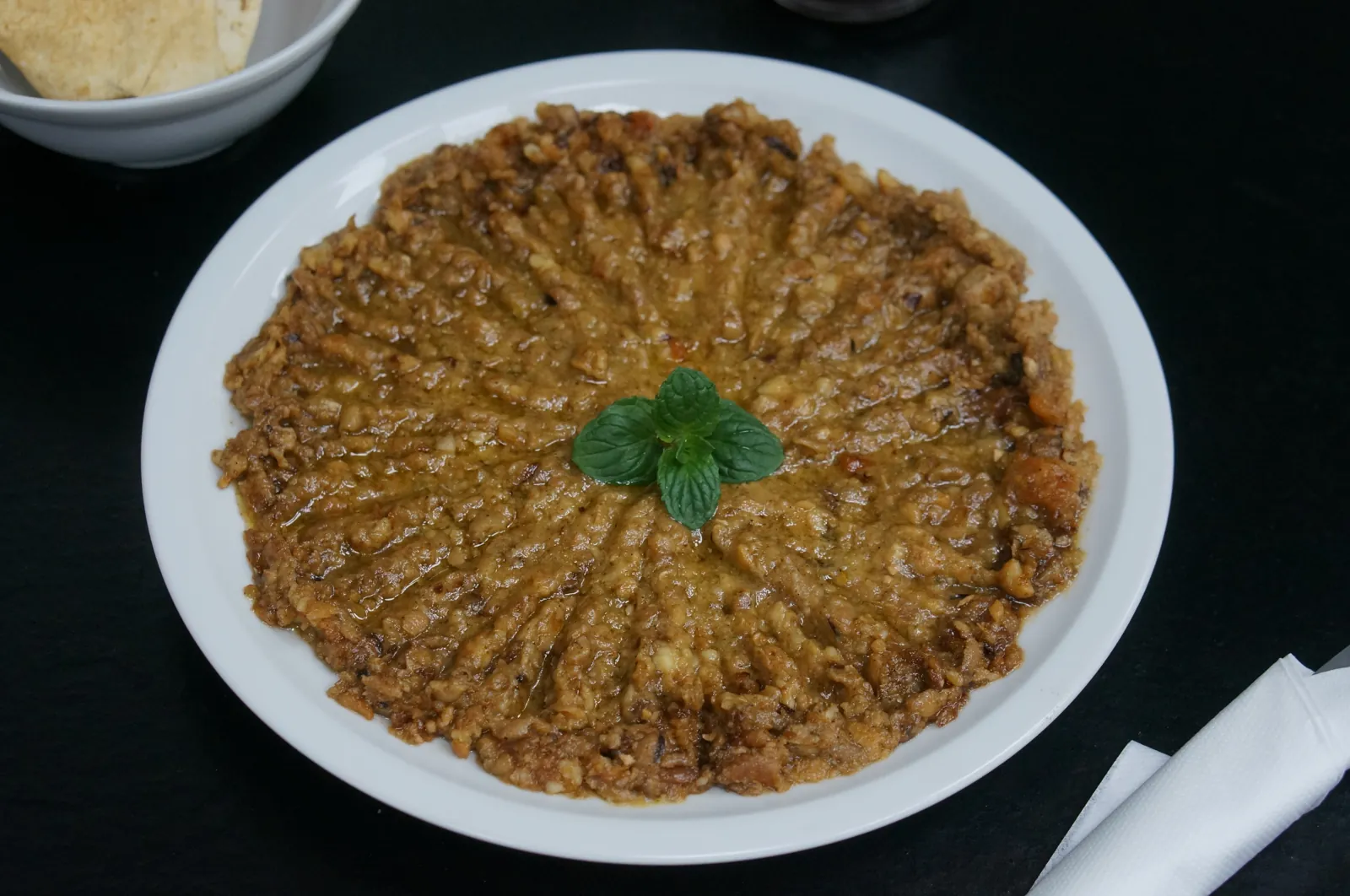
A white plate of mashed ful medames glistening with olive oil, garnished with fresh mint, with flatbread in a bowl beside it Egypt flag Egypt 1h 45m
Breakfast •Cairo Breakfast

Ful Medames

Ful medames is Egypt's beloved breakfast of fava beans simmered until soft, then lightly mashed and dressed with olive oil, lemon juice, garlic and cumin. It is creamy, tangy and deeply savoury, scooped up with warm flatbread. One serving is about 283 g.

Plant Protein & Energy

Slow-cooked fava beans with olive oil give steady energy and 15.9 g of protein per serving, with no meat at all.

Pairs Well With
Warm baladi bread, pickled vegetables and a boiled egg
High Protein
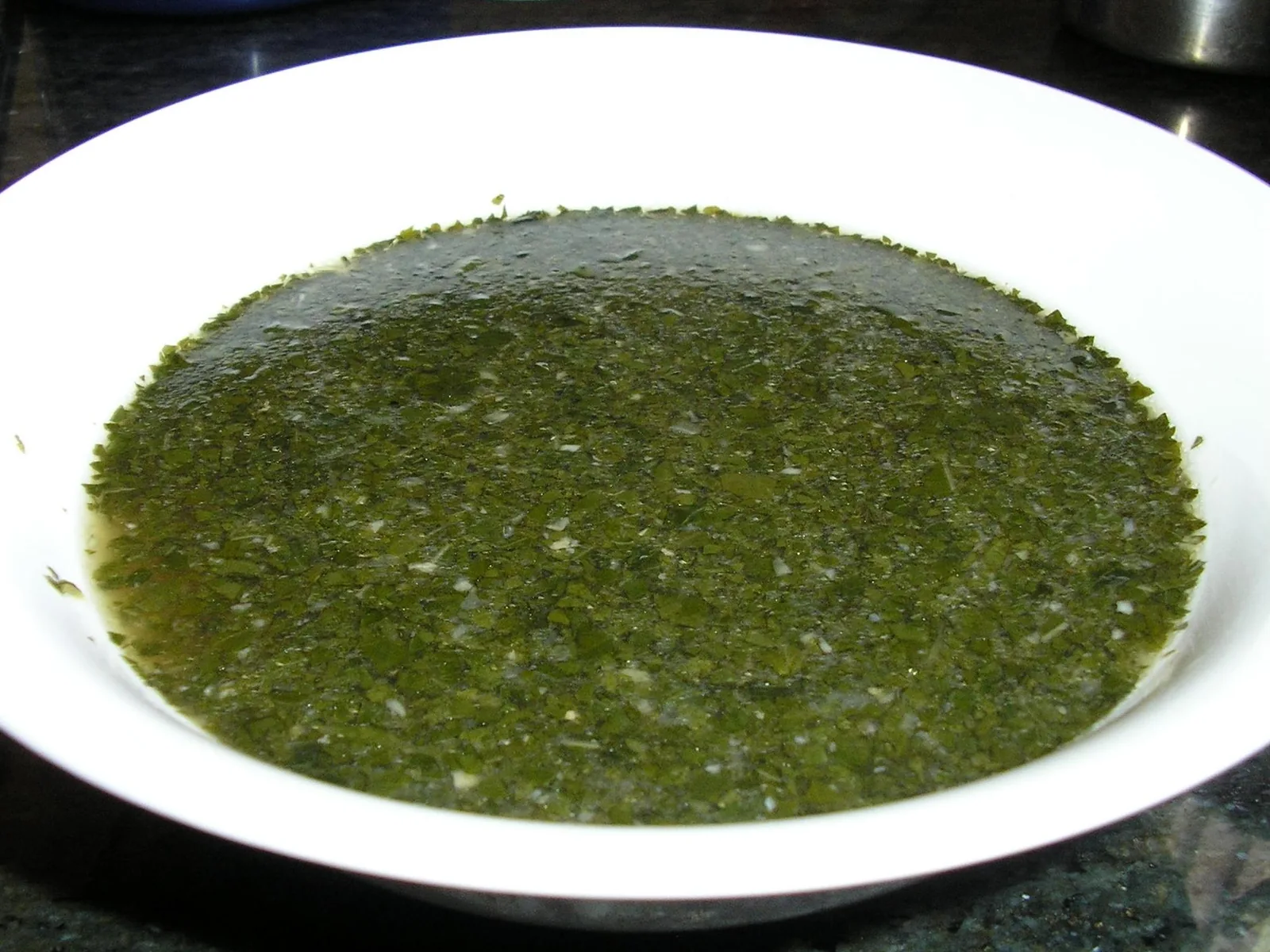
A white bowl of bright green molokhia soup made from finely chopped jute leaves Egypt flag Egypt 1h 15m
Dinner •Egyptian Family Table

Molokhia

This molokhia recipe turns finely chopped jute leaves into Egypt's beloved green soup: simmered briefly in a rich chicken broth, then finished with ta'leya — garlic and ground coriander fried in ghee until it sizzles. Ladled over white rice with a squeeze of lemon, it is slippery, garlicky and deeply comforting. One serving is about 550 g.

Comfort & Warmth

A bright green jute-leaf soup simmered in chicken broth and finished with a sizzling garlic and coriander ta'leya.

Pairs Well With
White rice, lemon wedges and browned chicken pieces
Soups & Broths
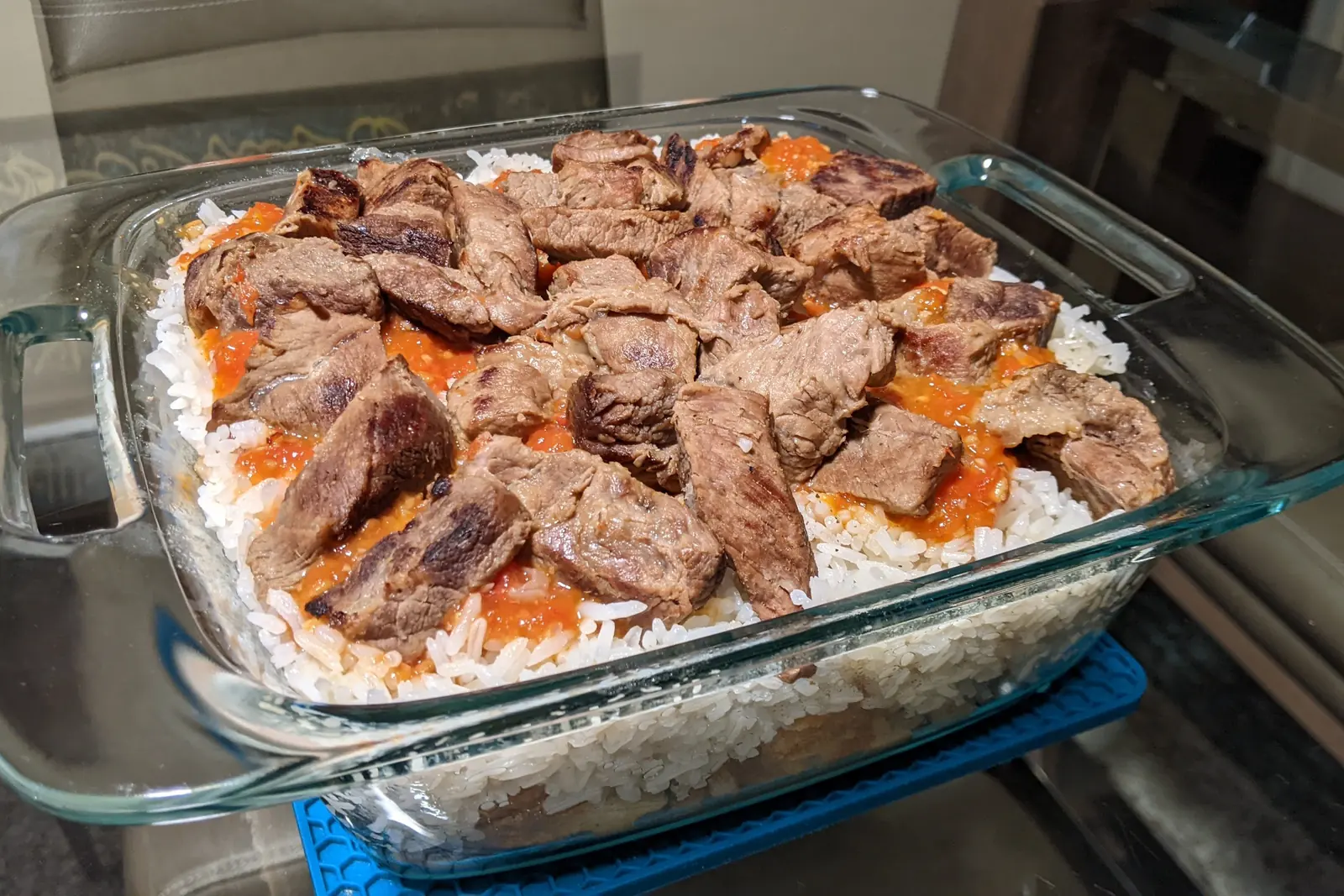
Egyptian fattah in a glass dish: white rice topped with tomato sauce and chunks of beef Egypt flag Egypt 2h 20m
Dinner •Cairo Heritage

Egyptian Fattah

Egyptian fattah is the dish Egypt celebrates with: crisp toasted bread soaked in beef broth, a deep layer of fluffy rice, tender chunks of beef, and a garlicky tomato-vinegar sauce spooned over the top. This egyptian fattah recipe is the Eid al-Adha classic — built in layers in one big dish, and carried to the table for everyone to share. One serving is about 330 g.

Feast & Celebration

Crisp bread, fluffy rice, tender beef and garlicky tomato sauce layered in one generous sharing dish.

Pairs Well With
Green salad, pickles and mint tea.
High Protein

The Dinner Gazette

Never wonder what’s for dinner again

One email a week with easy dinner ideas from around the world — ingredients, steps and nutrition, tested in our kitchen first.

Delivered every Thursday morning. Unsubscribe anytime.