Curated recipes from 193 countries  •  New seasonal Mediterranean issue out now

Overview

Feijao Tropeiro

Feijão Tropeiro, Tropeiro Beans, Muleteer Beans

This feijao tropeiro recipe is the Minas Gerais classic: tender carioca beans folded in a hot pan with crisp bacon, calabresa sausage and scrambled egg, then bound with toasted cassava flour and fresh collard greens until the whole pan turns dry, crumbly and smoky. It is the food the tropeiros — the mule drivers of colonial Brazil — carried on their long journeys, and it is still the dish of the Mineirão stadium on match days. One serving is about 325 g.

Feijão tropeiro takes its name from the tropeiros, the mule drivers and traders who carried goods across the interior of colonial Brazil from the 17th century onwards, covering journeys of thousands of kilometres. On the trail they ate what travelled well: dried beans, salted pork, cassava flour and eggs, cooked together in a single pan over an open fire — a dry dish that would not spoil, unlike a soupy stew. The dish became the food of Minas Gerais and São Paulo, and in Belo Horizonte it is so loved that the Mineirão stadium sells it on match days, where it has become part of football culture in the city.

Pairs well with: Serve with white rice, shredded collard greens and a slice of orange, with a cold beer or sugar-cane juice on the side.

Provenance

Brazil flag Brazil

Minas Gerais Tropeiro Cooking

Latin America & Caribbean

Time Dedication

45m

15m prep • 30m cook

Batch Yield

4 Servings

681 kcal per serving

1 serving ≈ 325 g

Technical Skill

Intermediate

Medium (One Pan)

Meal Timing & Digestive Fit

Breakfast

Not Advised

Lunch

Hearty Midday Main

Dinner

Ideal Hearty Main

Snack & Tea

Inappropriate

Occasions: Match days, family lunches, barbecues, Brazilian nights, hearty dinners Cost: Moderate — about $3–4 per serving at home
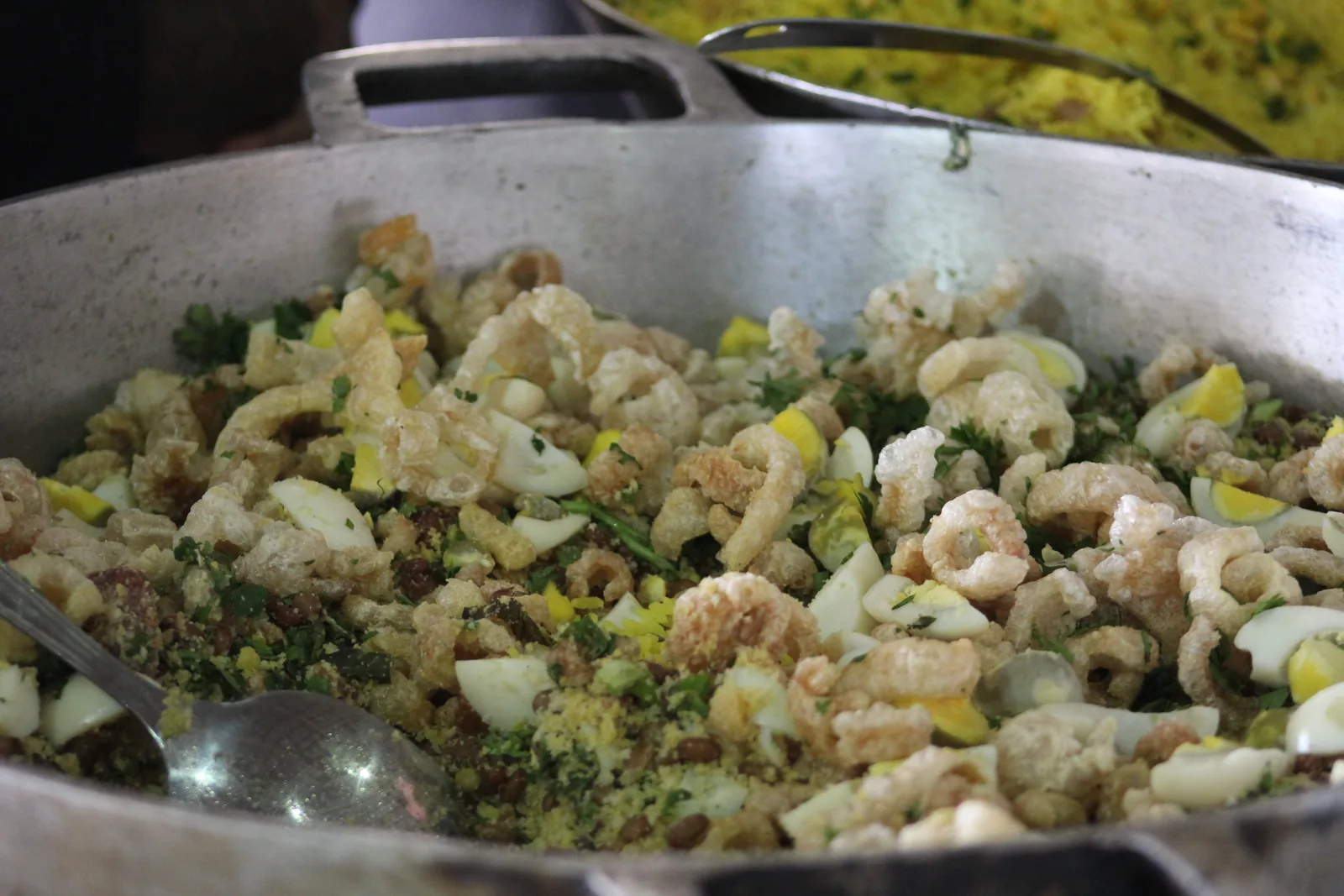
Feijão tropeiro in a pan — beans with cassava flour, chopped egg, pork cracklings and parsley

Minas Gerais Tropeiro Cooking

Photo: Márcia Cristina Machado, CC BY-SA 4.0, via Wikimedia Commons

The Heritage Formulary

Measured Ingredients

Estimated cost: Moderate — about $3–4 per serving at home (USD)

Good feijão tropeiro is dry, crumbly and smoky, with whole beans and visible pieces of egg — never wet, pasty or swimming in sauce.

Execution Methodology & Culinary Technique

Step-by-Step Cooking Guide

Active 45m
P

Prep Stage: Beans, Pork, Egg

15 Mins active + bean cooking • Pot, Pan & Board

If you are cooking dried beans, start them first: 300 g of dry carioca beans, soaked overnight, simmered in fresh water for about 60 minutes until tender but not mushy, then drained well. While they cook, cube the bacon and sausage, beat the eggs, slice the collard greens and chop the onion and garlic. The pan work itself takes only 30 minutes.

Maestro Tip: Drain the beans very well — wet beans are the enemy of the dry, crumbly tropeiro texture.

  1. 1

    Crisp the bacon

    5 minutes Medium-high heat 180°C (350°F)

    Heat a large, wide pan over medium-high heat, about 180°C (350°F). Add the bacon cubes (120 g) and fry for 5 minutes, stirring, until crisp and the fat has rendered. Lift out the bacon with a slotted spoon and set aside, leaving the fat in the pan.

    If the bacon is lean and renders little fat, add the olive oil (15 ml) before the sausage goes in.

    Done when: Bacon crisp and golden, fat rendered in the pan.

  2. 2

    Fry the sausage, onion and garlic

    8 minutes Medium-high heat 180°C (350°F)

    Add the calabresa cubes (150 g) to the same fat and fry for 5 minutes until browned at the edges and cooked through to 71°C (160°F). Add the onion (100 g) and garlic (12 g) and cook for 3 minutes more until soft and sweet-smelling.

    Scrape the browned bits off the bottom of the pan as the onion cooks — that is where the smoky flavour lives.

    Done when: Sausage browned and cooked through to 71°C (160°F), onion soft.

  3. 3

    Scramble the egg

    2 minutes Medium heat 160°C (320°F)

    Push everything to one side of the pan, pour the beaten eggs (100 g) into the empty side and scramble gently for 2 minutes until just set in soft curds. Do not overcook them — they finish cooking with the beans.

    Take the egg off the heat while it still looks slightly wet — it keeps cooking in the hot pan.

    Done when: Egg in soft, just-set curds, still glossy.

  4. 4

    Fold in the beans

    5 minutes Medium heat 160°C (320°F)

    Add the drained beans (600 g) and the reserved bacon to the pan and fold everything together. Cook for 5 minutes, stirring now and then, until the beans are hot right through and the pan is almost dry — you should hear a light sizzle, not a simmer.

    If the pan is still wet, keep cooking for a few more minutes before the flour goes in — wet beans make a paste.

    Done when: Beans hot through, pan almost dry, light sizzle.

  5. 5

    Stir in the flour and greens

    5 minutes Medium heat 160°C (320°F)

    Sprinkle the cassava flour (120 g) over the pan a handful at a time, folding it in as you go, then add the sliced collard greens (100 g). Cook for 5 minutes more, stirring, until the flour has toasted, the greens have wilted and the whole pan is dry, crumbly and smoky. Season with salt (3 g) only if needed and the black pepper (1 g).

    Add the flour slowly — dumping it all at once makes clumps that never break up.

    Done when: Flour toasted and crumbly, greens wilted, pan dry, no wet spots.

  6. 6

    Finish and serve

    5 minutes Room temperature, about 20°C (68°F)

    Take the pan off the heat, fold in the parsley (10 g) and serve at once with white rice, extra collard greens and a slice of orange on the side.

    Serve straight from the pan — tropeiro beans cool fast and lose their crumbly texture as they sit.

    Done when: Parsley folded in, dish hot, dry and crumbly.

Finishing Touches & Plating

Taste and adjust before serving: a little more salt only if the bacon was lean, a crack of black pepper, and a last handful of parsley. Serve at once, while the flour is still dry and crumbly — tropeiro beans that sit too long go soft and heavy.

Nutritional Physiology & Benefits

Nutrition

Energy

681

kcal / serving

Protein

34g

Complete AA

Carbs

71g

Complex

Fats

30g

Healthy

Per serving (4 servings · 1 serving ≈ 325 g)
Energy681 kcal
Protein34 g
Carbohydrates71 g
Fat30 g
Fibre16.6 g
Sugar2.2 g
Sodium1191 mg
Per 100g
Energy210 kcal
Protein10.5 g
Carbohydrates21.7 g
Fat9.1 g
Fibre5.1 g
Sugar0.7 g
Sodium366 mg

Nutrition values are estimated — calculated from USDA FoodData Central values for the listed ingredients.

Vitamins & minerals: Iron and folate from the beans and egg, vitamin K from the collard greens, and potassium from the beans. Nutrition values are estimated.

Fibre from the beans

Beans bring about 16.6 g of fibre per serving, along with plant protein and folate, which is why the dish keeps you full for hours.

Very high in protein

Each serving carries about 34.2 g of protein from the beans, bacon, sausage and egg — a strong amount for a one-pan dinner.

Iron, folate and vitamin K

The beans, egg and collard greens together supply iron, folate, potassium and vitamin K as part of a varied diet.

Food Pairings

What to Eat With

To optimize nutrient absorption and elevate the sensory depth, pair with these authentic accompaniments:

Sides

White rice

White rice is the classic partner — plain and mild, it lets the smoky, salty beans do the talking and stretches the pan to feed more people.

Orange slices

A slice of orange is the traditional Minas Gerais finish — its sharp juice cleanses the palate after the rich, salty beans.

Vegetables

Shredded collard greens

Extra shredded collard greens, quickly wilted with garlic, add a bitter green note that cuts the richness of the pork and egg.

Drinks

Cold beer or sugar-cane juice

A cold beer or sugar-cane juice is the stadium pairing for tropeiro beans, cold and sweet against the smoky pan.

Complete menu

Serve feijão tropeiro with white rice, shredded collard greens and a slice of orange, and a cold beer or sugar-cane juice on the side — the classic Mineirão plate.

Digestive Guardrails

What NOT to Combine

To prevent digestive distress, sluggishness, or palate clash, avoid pairing the dish with these elements:

Adding the flour while the pan is still wet

Adding the cassava flour to a wet pan makes a sticky paste instead of the dry, crumbly texture that defines tropeiro beans. Wait until the beans are almost dry in the pan before stirring the flour in. This is general information, not medical advice.

Serving without warning about egg and pork

This dish contains egg and pork (bacon and sausage), both common concerns — egg is a major allergen. Tell anyone with an egg allergy before serving. This is general information, not medical advice.

General information only, not medical advice — consult a doctor for personal dietary decisions.

Who Should Eat It

Who Should Eat

  • General adultsA rich, filling plate as written; one serving of about 325 g is a full meal, best with rice and collard greens on the side.
  • ChildrenChildren usually love the beans and egg, but the sausage can be salty and spicy — give them a portion with less sausage and no extra pepper.
  • ElderlySoft beans and egg are easy to chew, but the dish is salty and rich — serve a smaller portion with extra collard greens.
  • Pregnant womenFine when the bacon, sausage and egg are cooked through and served hot; make sure the sausage reaches 71°C (160°F) and the egg is fully set. Ask your clinician if unsure.
  • Breastfeeding womenFine in a normal portion; the beans and egg give good protein and iron, though very salty food can make you thirstier than usual.
  • AthletesA strong recovery plate — about 34.2 g of protein and 70.5 g of carbohydrate per serving, with plenty of fibre from the beans.
  • Weight gainAt 681 kcal a serving with beans, pork and egg, this is a solid meal for gaining weight.
  • Weight lossA heavy, energy-dense plate as written, so take a smaller portion with extra collard greens and less bacon and sausage.

Health Conditions — Adjust or Avoid

Conditions

  • DiabetesOne serving carries about 70.5 g of carbohydrate, mostly from the beans and cassava flour, but the 16.6 g of fibre slows digestion. Take a smaller portion with extra greens and ask your clinician about portion size.
  • High blood pressureAt about 1,191 mg of sodium per serving, mostly from the bacon and sausage, this is a very salty dish. Use less bacon and sausage and no extra salt. Ask your clinician.
  • Kidney diseaseHigh in protein, potassium and sodium, so it may not fit a restricted diet. Ask your clinician or dietitian before eating it.
  • GoutBeans and pork are moderately high in purines, so this dish may matter for some people with gout. Keep portions small and ask your clinician if you have gout.
  • Stomach issuesBeans and cassava flour can cause gas and bloating for some people, and the fried pork is heavy. If that is you, take a smaller portion with extra greens. Ask your clinician if symptoms persist.
  • Cardiovascular diseaseRich in saturated fat from the bacon and sausage as written, so this is an occasional treat rather than a regular meal. Ask your clinician about how often it fits your diet.
  • Fatty liverEnergy-dense and rich in saturated fat, so keep the portion small, load up the collard greens and skip second helpings. Ask your clinician for personalised advice.
  • Food allergiesContains egg. It is free of gluten, dairy, nuts, soy and fish as written. Ask your clinician if you have a food allergy.
  • Special therapeutic dietsNot suitable for egg-allergy or pork-free diets; a vegetarian version can be made with mushrooms and smoked paprika instead of the pork, but it will not taste the same. Ask your clinician or dietitian before adapting it.

If you have a medical condition, consult your doctor before changing your diet.

Storage & Use

Storage & Use

How to store
Store in a sealed container once completely cool; keep the rice separate.
In the fridge
Keeps 3 days in the fridge at 4°C (40°F) or below in a sealed container.
In the freezer
Freezes well for up to 3 months in a sealed container; thaw overnight in the fridge.
How to reheat
Reheat in a covered pan over medium heat with a splash of water until steaming hot, to 74°C (165°F); stir often so the flour does not catch.
Freezing recommended
Yes, up to 3 months.
Signs it has spoiled
Sour smell, slimy texture, or visible mould — discard if any appear.

More recipes to explore

A black clay pot of golden-orange bobó de camarão, a thick cassava cream with shrimp, with a serving spoon Brazil flag Brazil 1h 5m
Dinner •Bahian Cassava Cream

Bobó de Camarão

This bobo de camarao recipe is Bahia's creamy shrimp dish: fresh shrimp folded into a thick purée of boiled cassava blended with coconut milk, coloured golden-orange with dendê oil and finished with lime and cilantro. Unlike a stew, the cassava is blended smooth, so the whole dish eats like a rich, spoonable cream. One serving is about 470 g.

Rich & Comforting

Shrimp folded into a thick, smooth cassava cream made with coconut milk and red palm oil, served hot with rice.

Pairs Well With
Steamed white rice, farofa and a crisp green salad
A basket of golden, round pão de queijo, Brazilian cheese bread rolls Brazil flag Brazil 45m
Snack & Tea •Minas Gerais Cheese Bread

Pão de Queijo

This pao de queijo recipe makes Brazil's famous cheese bread: small, golden rolls with a crisp shell and a soft, stretchy, chewy centre, made from tapioca starch, milk, oil, eggs and cheese. There is no wheat flour and no yeast — the rolls puff up on steam in a hot oven. One serving is 4 rolls, about 134 g.

Warm & Chewy Snack

Golden tapioca cheese rolls with a crisp shell and a soft, stretchy centre, baked in under half an hour.

Pairs Well With
Black coffee, fresh fruit, or a light soup
A black clay pot of moqueca baiana, fish chunks in a golden-orange coconut sauce with fresh herbs, beside rice and pirão Brazil flag Brazil 55m
Dinner •Bahian Fish Stew

Moqueca Baiana

This moqueca baiana recipe is Bahia's famous fish stew: thick fillets of white fish layered with onion, peppers and tomato, then simmered gently in coconut milk with dendê oil until the sauce turns golden-orange. The fish stays in whole, flaky pieces in a fragrant broth — a stew, not a purée. One serving is about 450 g.

Coastal & Aromatic

Firm white fish simmered in coconut milk and red palm oil with peppers and tomato, served hot in its clay pot.

Pairs Well With
Steamed white rice, pirão and farofa
A bowl of Brazilian feijoada — black beans with rounds of sausage and pieces of pork Brazil flag Brazil 3h 30m
Dinner •Brazilian National Dish

Brazilian Feijoada

This Brazilian feijoada recipe is the real Saturday lunch: black beans simmered for hours with pork shoulder, smoky linguiça, bacon and beef until the broth turns thick and dark, then served with white rice, garlicky collard greens, orange slices and farofa. It is a slow, generous pot built for sharing. One serving is about 450 g.

Rich & Hearty

Brazil's national dish — black beans slow-cooked with pork, sausage and beef, served with rice, greens and orange.

Pairs Well With
Serve with white rice, sautéed collard greens, orange slices and farofa.

The Dinner Gazette

Never wonder what’s for dinner again

One email a week with easy dinner ideas from around the world — ingredients, steps and nutrition, tested in our kitchen first.

Delivered every Thursday morning. Unsubscribe anytime.