Curated recipes from 193 countries  •  New seasonal Mediterranean issue out now

Overview

Fekkas

Fekkas, Faqas, Moroccan Almond Biscotti, Fekkas Msseoues

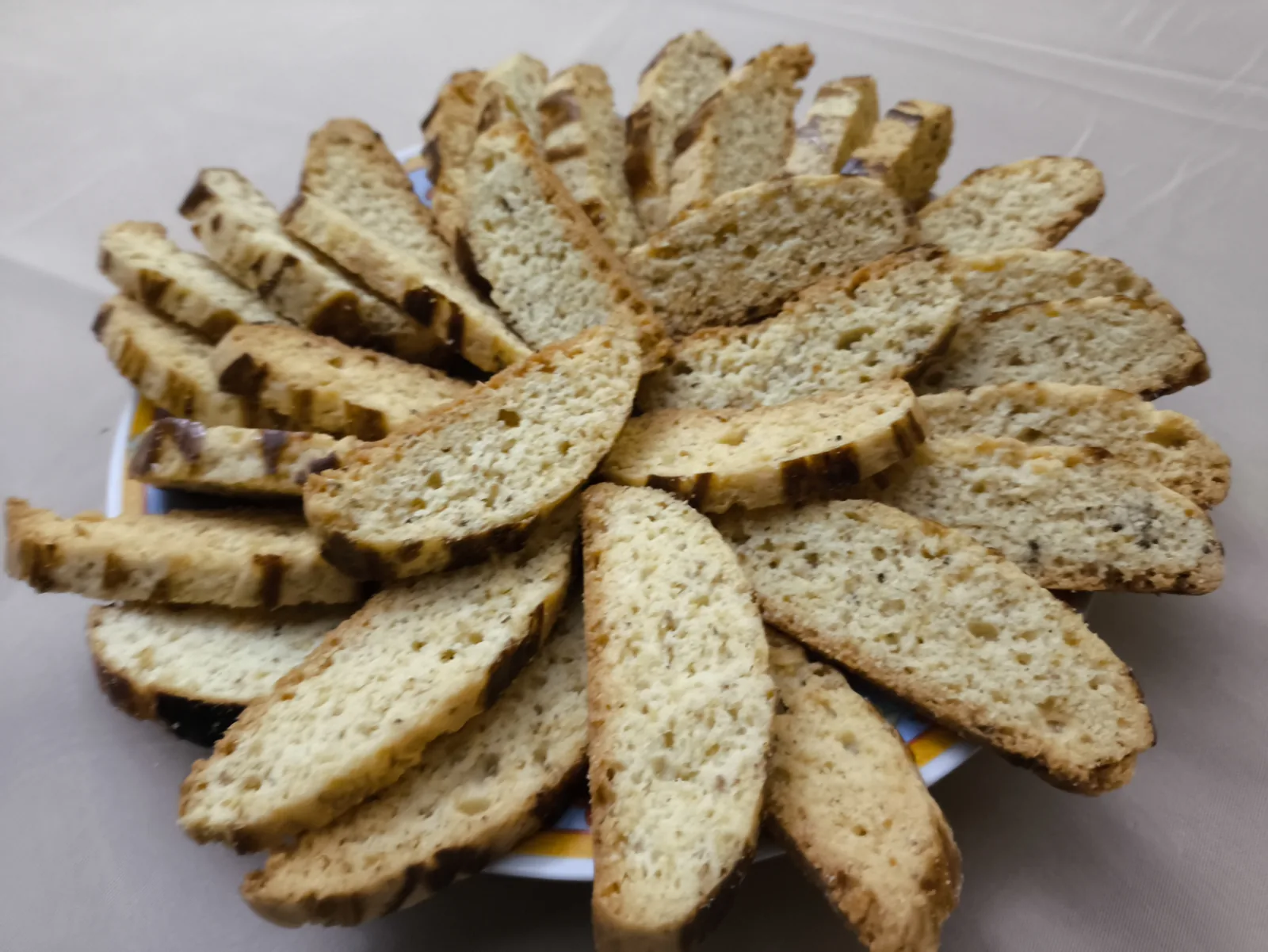
This fekkas recipe bakes a soft almond, sesame and raisin dough into logs, slices them thin and bakes them a second time until dry, golden and crisp all the way through. Fekkas are Morocco's coffee-time biscuit: fragrant with anise and orange blossom, studded with whole almonds, and built to keep for weeks in a tin. One serving is about 70 g.

Fekkas are Morocco's twice-baked tea biscuit, made by baking a flavoured dough into logs, slicing it thin and baking the slices again until they are dry and crisp. The classic version, fekkas msseoues, is studded with whole almonds and raisins and scented with anise seed, sesame and orange blossom water, and it is the biscuit set out with a glass of hot mint tea, atay, for guests. Like Italian cantucci, fekkas keep for weeks in a tin, but their flavour is unmistakably Moroccan: warm anise, toasted sesame and orange blossom rather than plain almond.

Pairs well with: Hot Moroccan mint tea, or a small cup of strong coffee.

Provenance

Morocco flag Morocco

Moroccan Tea-Time Classic

Middle Eastern

Time Dedication

1h 20m

25m prep • 55m cook

Batch Yield

10 Servings

314 kcal per serving

1 serving ≈ 70 g

Technical Skill

Intermediate

Medium (Twice-Baked)

Meal Timing & Digestive Fit

Breakfast

Not Advised

Lunch

Inappropriate

Dinner

Inappropriate

Snack & Tea

Ideal Light Bite

Occasions: Afternoon tea, Coffee break, Ramadan, Holiday cookie platter Cost: Low — about $1 per serving at home
A plate of golden twice-baked fekkas slices arranged in a fan, showing their crisp crumb

Moroccan Tea-Time Classic

Photo: Fatima Zahra, CC0, via Wikimedia Commons

The Heritage Formulary

Measured Ingredients

Estimated cost: Low — about $1 per serving at home (USD)

Logs are baked until just firm, cooled before slicing, and baked a second time at a lower heat until dry and crisp.

Execution Methodology & Culinary Technique

Step-by-Step Cooking Guide

Active 1h 20m
P

Prep Stage: Almonds Soaked, Seeds Toasted, Dough Ready

25 Mins • Hands On

Soak the whole almonds in the orange blossom water for 20 minutes, then drain and pat dry. Toast the anise and sesame seeds lightly in a dry pan until fragrant, then cool. Sift the flour with the baking powder and salt, whisk the eggs with the sugar and oil, and have the raisins and zest ready — the dough comes together fast once you start.

Maestro Tip: Do not skip soaking the almonds: soaked almonds slice cleanly instead of shattering and dragging crumbs through the logs.

  1. 1

    Mix the Dough

    10 Mins • Hands On Room temperature, about 20°C (68°F)

    Whisk the 2 beaten eggs with the 120 g sugar, 60 ml oil and the remaining orange blossom water until the sugar starts to dissolve. Stir in the sifted flour, baking powder and salt, then fold in the soaked almonds, toasted anise and sesame seeds, raisins and orange zest. Mix just until a soft, slightly sticky dough forms.

    If the dough is too sticky to handle, dust your hands with flour rather than adding more flour to the bowl — extra flour makes a hard biscuit.

    Done when: A soft dough that holds together when pressed, with almonds and raisins evenly spread through it.

  2. 2

    Shape the Logs and First Bake

    25 Mins • Baking 180°C (350°F)

    Heat the oven to 180°C (350°F) and line a baking tray with parchment. Divide the dough into 3 pieces and roll each into a log about 25 cm long and 4 cm wide. Flatten each log slightly, brush the tops with a little beaten egg if you like, and bake for 25 minutes until firm to the touch and pale golden — the logs should be set but not fully browned.

    Keep the logs well spaced: they spread a little as they bake and need room to rise evenly.

    Done when: Logs are firm, risen and lightly golden, with a light crust but a soft centre.

  3. 3

    Cool and Slice Thin

    15 Mins • Resting Room temperature, about 20°C (68°F)

    Lift the logs onto a wire rack and leave for 15 minutes until you can handle them comfortably. Using a serrated knife, cut each log on a slight diagonal into slices about 1 cm thick. Work gently — a warm log slices cleanly, a hot one crumbles.

    Saw gently with the serrated knife and let the blade do the work; pressing down crushes the log.

    Done when: About 30 neat slices, each showing whole almonds in cross-section.

  4. 4

    Second Bake Until Crisp

    20 Mins • Baking 150°C (300°F)

    Lower the oven to 150°C (300°F). Lay the slices flat on the lined trays, cut side up, and bake for 10 minutes, then turn each slice over and bake 8 to 10 minutes more until dry, crisp and evenly golden. The slices should feel light and hard when tapped, not soft in the middle.

    The second, lower bake is what makes fekkas crisp all the way through — do not skip it or rush it at a higher heat, or the outsides brown while the middles stay cakey.

    Done when: Slices are golden, dry and crisp through, with no soft centre.

  5. 5

    Cool Completely and Store

    20 Mins • Cooling Room temperature, about 20°C (68°F)

    Move the slices to a wire rack and cool completely — they crisp further as they cool. Store in an airtight tin at room temperature for up to 3 weeks. Serve with hot Moroccan mint tea or coffee for dunking.

    Any slice that softens in storage can be crisped again with 5 minutes in a 150°C (300°F) oven.

    Done when: Biscuits are fully crisp, snap cleanly, and keep their crunch in the tin.

Finishing Touches & Plating

Cool the slices completely on a wire rack — they crisp further as they cool — then store in an airtight tin. Serve at room temperature with hot mint tea for dunking.

Nutritional Physiology & Benefits

Nutrition

Energy

314

kcal / serving

Protein

7g

Complete AA

Carbs

43g

Complex

Fats

13g

Healthy

Per serving (10 servings · 1 serving ≈ 70 g)
Energy314 kcal
Protein7 g
Carbohydrates43 g
Fat13 g
Fibre2.8 g
Sugar16.1 g
Sodium178 mg
Per 100g
Energy449 kcal
Protein10.4 g
Carbohydrates61.6 g
Fat19.1 g
Fibre3.9 g
Sugar23 g
Sodium255 mg

Nutrition values are estimated — calculated from USDA FoodData Central values for the listed ingredients.

Vitamins & minerals: Estimated nutrition: a source of vitamin E and magnesium from the almonds and sesame, with small amounts of iron and calcium from the seeds and flour.

Slow-Release Energy

The mix of flour, almonds and seeds gives steady energy for an afternoon break, and three biscuits make a satisfying snack without a heavy meal.

Almonds and Sesame

Almonds and sesame bring vitamin E, magnesium and healthy unsaturated fats to an otherwise plain biscuit, as part of a varied diet.

Keeps for Weeks

Baked twice until fully dry, fekkas stay crisp in a tin for up to 3 weeks, so one batch covers many tea breaks with no waste.

Food Pairings

What to Eat With

To optimize nutrient absorption and elevate the sensory depth, pair with these authentic accompaniments:

Drinks

Moroccan Mint Tea

Hot, sweet mint tea is the classic partner — the crisp biscuit softens just enough on dunking and the mint cools the warm anise flavour.

Strong Coffee

A small cup of strong coffee stands up to the biscuit's sweetness and the anise and orange blossom come through clearly against the bitter coffee.

Sides

Fresh Fruit

A few orange segments or figs add juicy freshness next to the dry, crunchy biscuit and turn a snack into a light afternoon spread.

Full Menus

Holiday Cookie Platter

Fekkas sit happily beside other Moroccan sweets on a festive platter — their crunch and anise note contrast with softer, honeyed pastries.

Complete menu

Fekkas with a pot of Moroccan mint tea and a small bowl of fresh fruit makes a light afternoon spread for guests.

Digestive Guardrails

What NOT to Combine

To prevent digestive distress, sluggishness, or palate clash, avoid pairing the dish with these elements:

Very Sugary Drinks

Fekkas are already sweet, so pairing them with heavily sweetened drinks can make a snack very high in sugar. Plain mint tea or unsweetened coffee keeps the balance. This is general nutrition information, not medical advice.

Nut and Sesame Allergy

This biscuit is built on almonds and sesame, both common allergens — do not serve it to anyone with a tree-nut or sesame allergy, and keep it away from shared tins. This is general food-safety information, not medical advice.

General information only, not medical advice — consult a doctor for personal dietary decisions.

Who Should Eat It

Who Should Eat

  • General adultsA light snack for most adults — three biscuits with tea is a modest, satisfying break.
  • ChildrenSuitable for children over 3 who can manage a hard biscuit; break into pieces for younger children and watch for nut allergy. The anise flavour is mild.
  • ElderlyCrisp and easy to store, but hard — older adults with dental problems may prefer to dunk them in tea to soften them first.
  • Pregnant womenFine in pregnancy as an occasional sweet snack; the anise is a culinary amount, not a medicinal dose. Keep portions modest because of the sugar.
  • Breastfeeding womenA handy energy snack while breastfeeding, but keep portions modest — each serving carries about 16 g of sugar.
  • AthletesUseful quick energy around training, with some protein from the almonds; not a recovery meal on its own, so pair with something protein-rich.
  • Weight gainEnergy-dense for its weight, so it fits a weight-gain goal as a between-meals snack with tea.
  • Weight lossSweet and calorie-dense, so keep to one serving and skip a second helping; the sugar is the main thing to watch.

Health Conditions — Adjust or Avoid

Conditions

  • DiabetesAbout 43 g of carbohydrate and 16 g of sugar per serving, so people with diabetes should count it as a sweet snack and keep to one serving. Ask your clinician about your own targets.
  • High blood pressureSodium is low at about 179 mg per serving, so this biscuit is not a salt concern for most people with high blood pressure.
  • Kidney diseaseLow in protein per serving and modest in sodium, so it is generally compatible with kidney-friendly eating in small portions; ask your clinician for personal advice.
  • GoutLow in purines, so it is not a gout concern in itself; the sugar is the only thing to watch.
  • Stomach issuesDry and crunchy, so it can be hard on a sensitive stomach if eaten quickly; dunk in tea and eat slowly. Ask your clinician if symptoms persist.
  • Cardiovascular diseaseContains unsaturated fats from almonds and sesame, which are the healthier kind of fat, but the biscuit is still sweet — enjoy in moderation as part of a balanced diet.
  • Fatty liverSweet and calorie-dense at about 314 kcal per serving, so people with fatty liver should treat it as an occasional snack, not a daily habit. Ask your clinician for personal advice.
  • Food allergiesContains wheat, egg, tree nuts (almonds) and sesame. Do not eat if any of these is an allergy for you, and check the orange blossom water label too.
  • Special therapeutic dietsA sweet, higher-carbohydrate snack; it does not fit low-sugar, low-carbohydrate or nut-free therapeutic diets. Ask your clinician or dietitian before using it in a therapeutic diet.

If you have a medical condition, consult your doctor before changing your diet.

Storage & Use

Storage & Use

How to store
Cool completely, then store in an airtight tin at room temperature.
In the fridge
No need to refrigerate; keep in a dry tin for up to 3 weeks.
In the freezer
Up to 3 months in a sealed bag; thaw at room temperature and re-crisp in a 150°C (300°F) oven for 5 minutes.
How to reheat
Re-crisp in a 150°C (300°F) oven for 5 minutes if they soften.
Freezing recommended
Yes — the baked slices freeze well.
Signs it has spoiled
Soft, stale texture that does not re-crisp, rancid smell from the nuts, or any mould — discard if any of these appear.

More recipes to explore

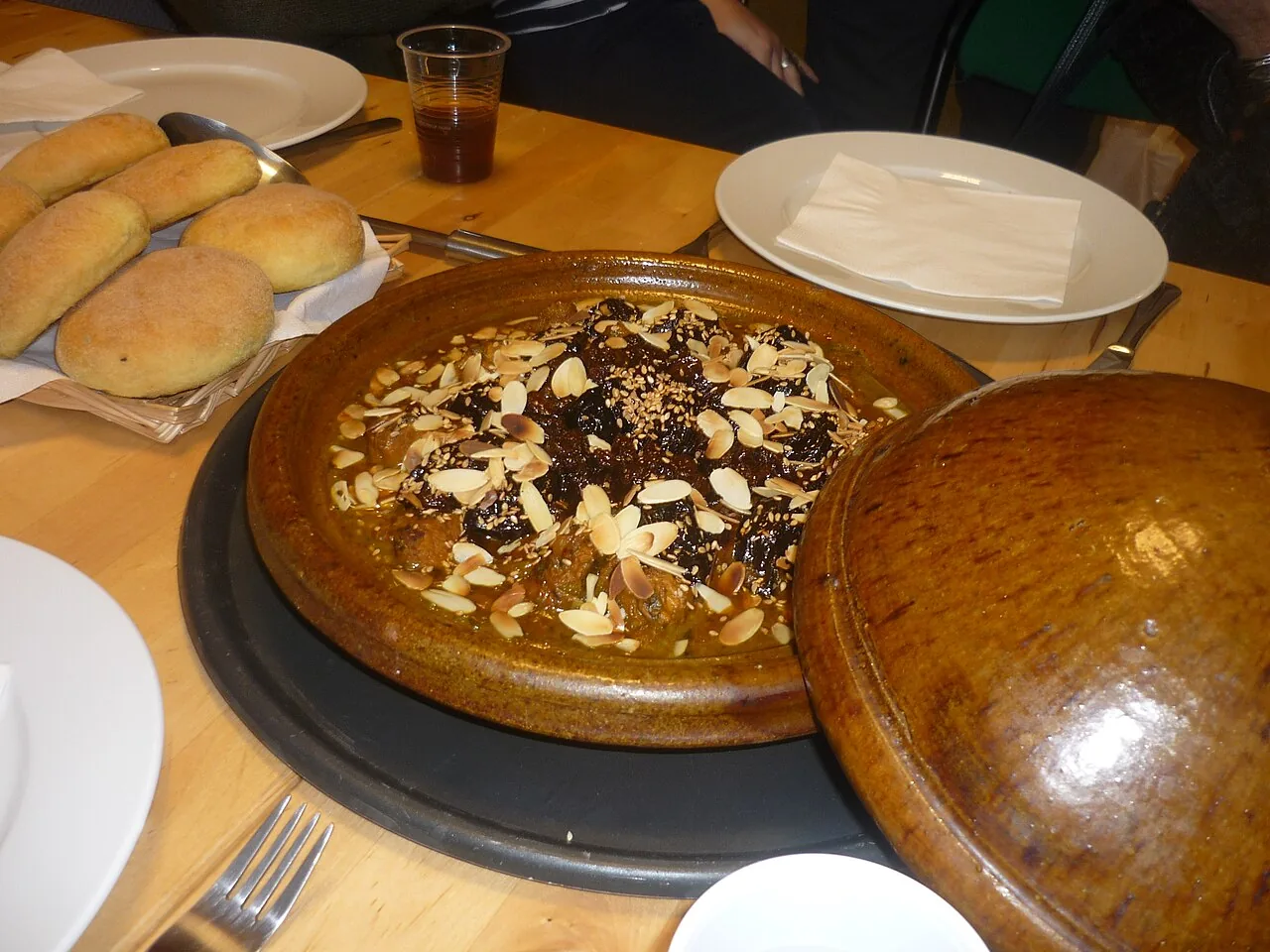
Moroccan lamb and prune tagine with almonds and sesame Morocco flag Morocco 2h 35m
Lunch •Atlas Mountains

Lamb & Prune Tagine

Clay vessel braised lamb shoulder infused with Ras el Hanout, saffron stamens, and natural sun-dried fruit pectins.

Immunity & Warming

Slow-braised lamb with prunes, almonds and couscous.

Pairs Well With
Spiced Couscous & Preserved Lemon Salad
High Protein
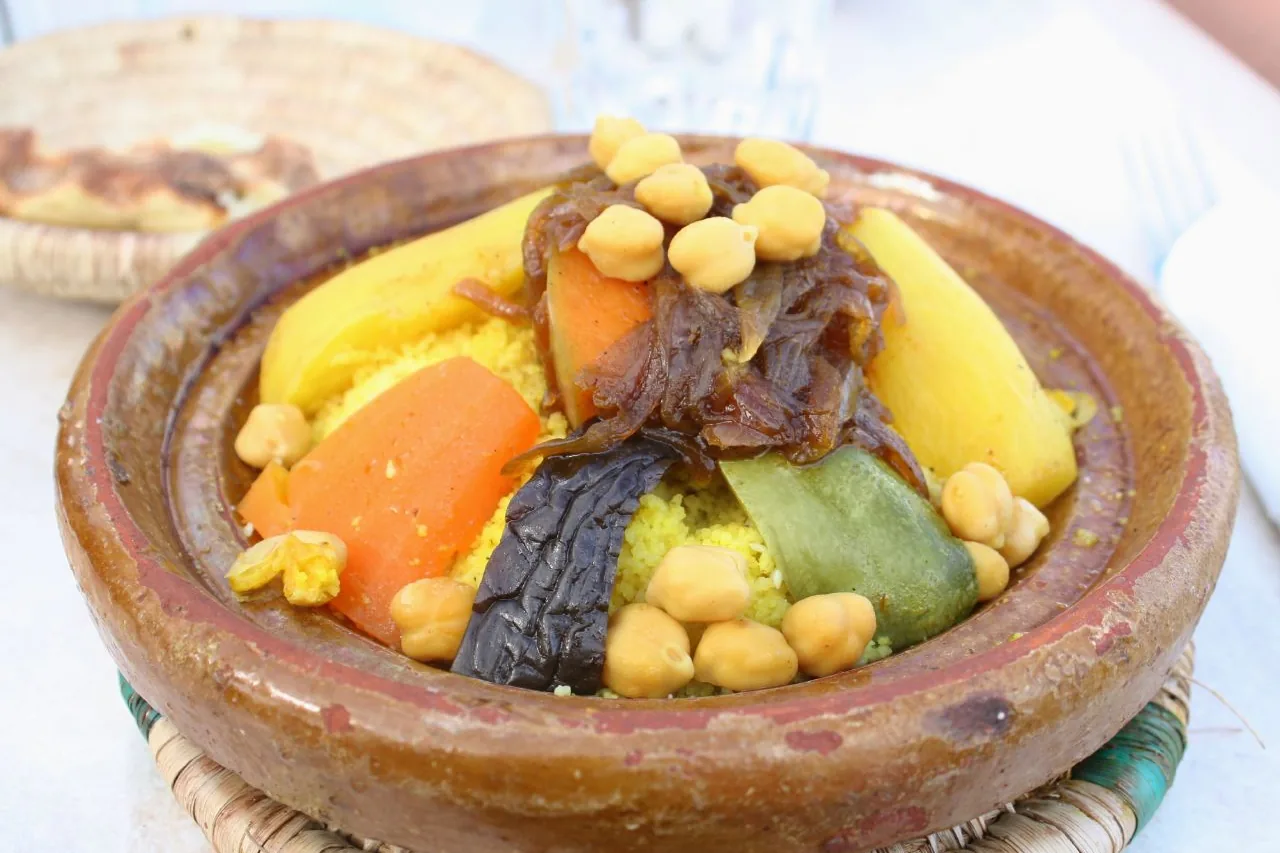
A clay bowl of Moroccan couscous with vegetables, chickpeas, carrot and pumpkin Morocco flag Morocco 1h 15m
Dinner •Maghreb Friday Table

Moroccan Couscous with Vegetables

This moroccan couscous recipe steams fine semolina until fluffy, then ladles over a slow-cooked stew of seven vegetables, chickpeas and warm spices. One serving is about 475 g.

Comfort & Warmth

Fluffy steamed semolina with a slow vegetable stew and chickpeas.

Pairs Well With
Harissa, mint tea and crusty bread
Quick Prep (<30m)
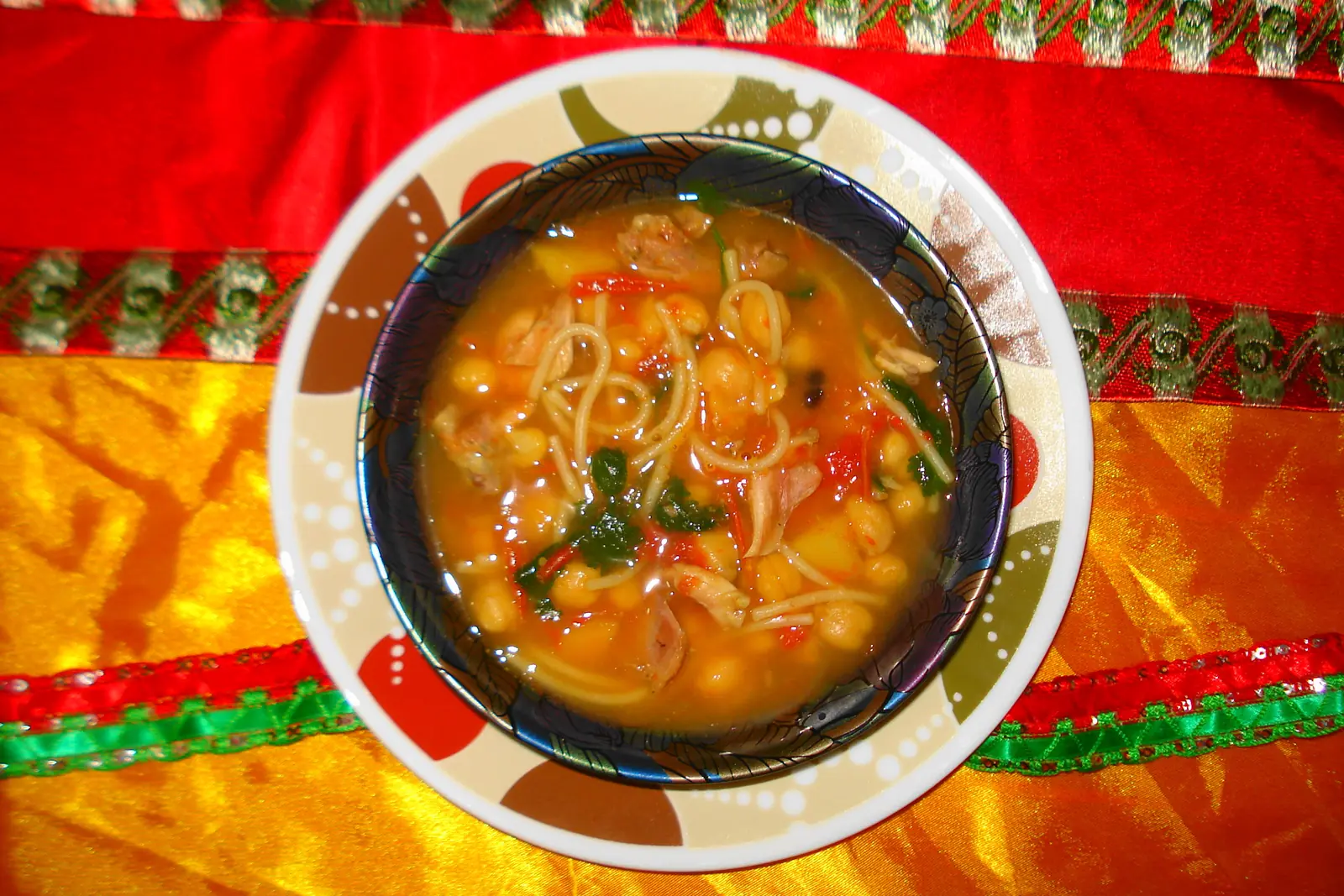
A bowl of Moroccan harira soup with chickpeas, noodles and fresh herbs Morocco flag Morocco 1h 15m
Lunch •Ramadan Iftar Table

Harira Soup

This harira soup recipe simmers lentils, chickpeas, tomatoes and lamb with ginger, cinnamon and fresh herbs, then thickens it the traditional way with a flour slurry. One serving is about 450 g.

Comfort & Warmth

A thick, warming tomato and lentil soup, the soup Moroccans break their fast with.

Pairs Well With
Dates, chebakia and mint tea
Soups & Broths • High Protein
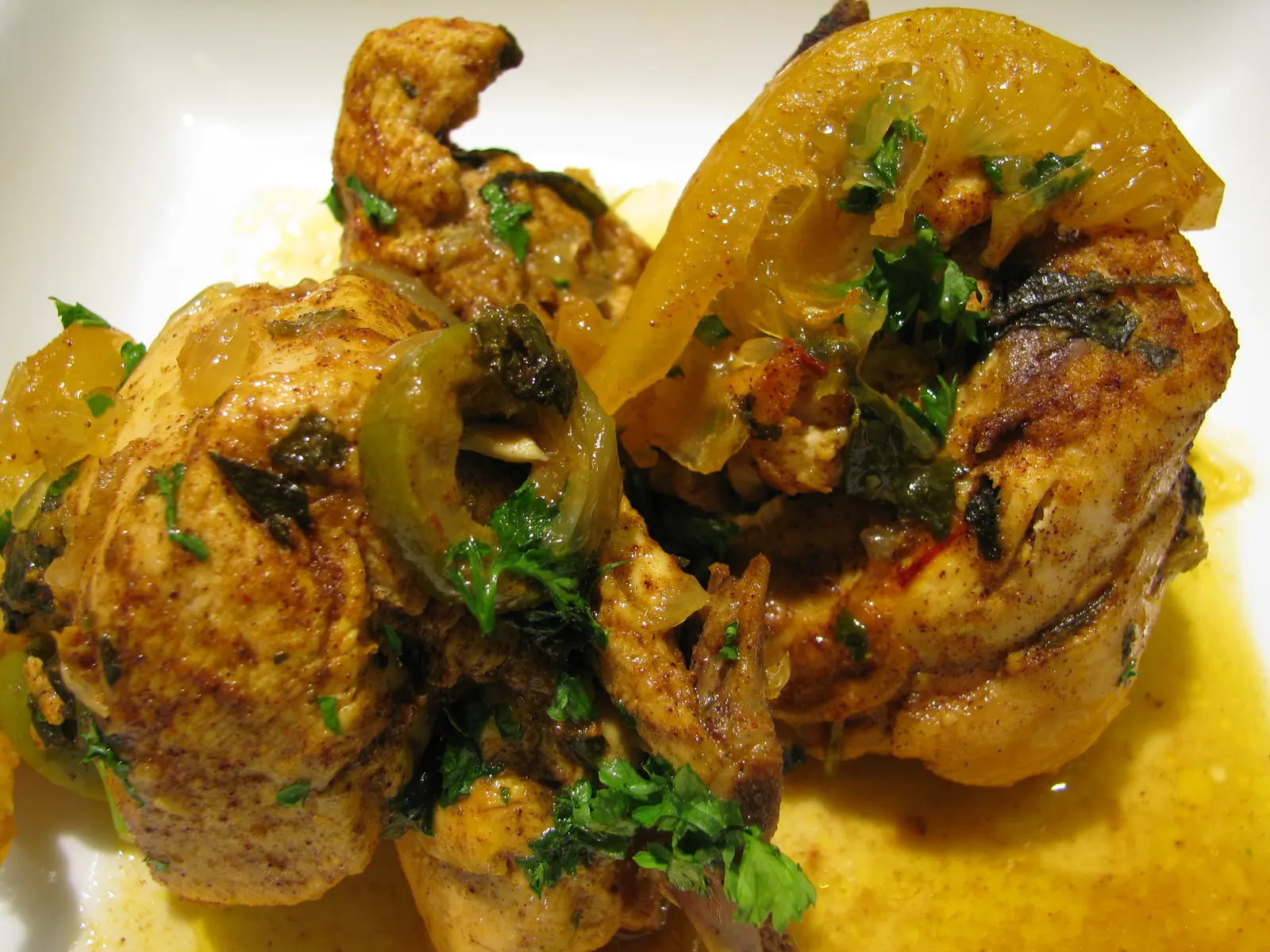
Moroccan chicken tagine with preserved lemon slices, green olives and fresh parsley Morocco flag Morocco 1h 15m
Dinner •Moroccan Heritage

Moroccan Chicken Tagine

Moroccan chicken tagine is the dish Morocco is best known for: chicken braised slowly with onions, ginger and saffron, then finished with salty preserved lemon and green olives. This moroccan chicken tagine recipe uses a heavy pot instead of a clay tagine, so anyone can make it — the conical lid's job is done by a tight-fitting lid and a gentle flame. One serving is about 315 g.

Slow-Cooked Comfort

Chicken braised slowly with ginger, saffron, preserved lemon and green olives until the meat falls from the bone.

Pairs Well With
Couscous, khobz bread and mint tea.
High Protein

The Dinner Gazette

Never wonder what’s for dinner again

One email a week with easy dinner ideas from around the world — ingredients, steps and nutrition, tested in our kitchen first.

Delivered every Thursday morning. Unsubscribe anytime.