
Curated recipes from 193 countries  •  New seasonal Mediterranean issue out now

Overview

Fesenjan

Fesenjoon, Khoresht-e Fesenjan

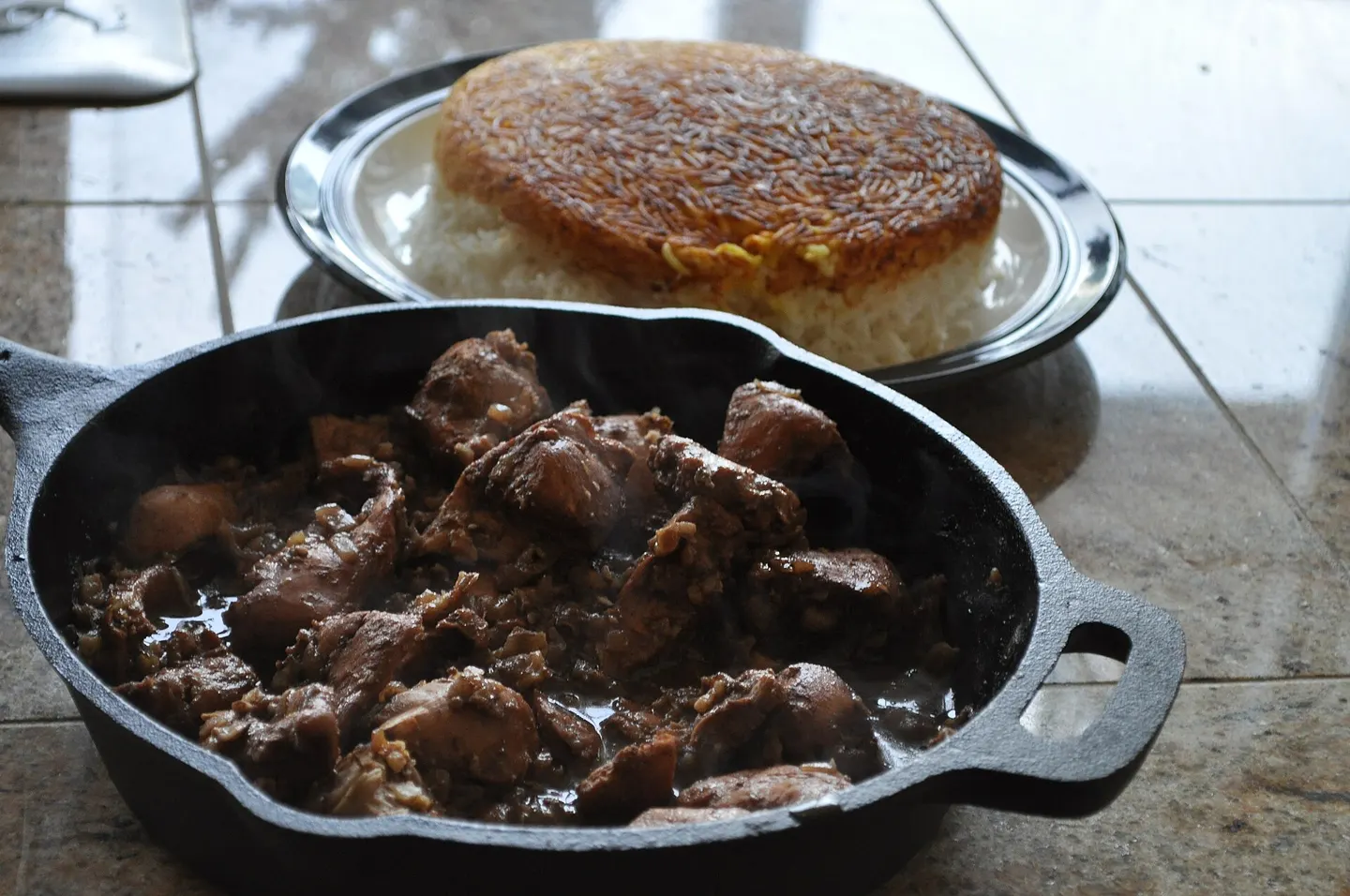
This fesenjan recipe is the Persian celebration stew from the Caspian provinces of Gilan and Mazandaran: ground walnuts toasted and simmered for hours with pomegranate molasses until the sauce turns a deep mahogany brown, glossy with the walnuts' own oil. Chicken thighs cook in that sweet-sour sauce until they fall apart at a touch, and the dish is finished with pomegranate seeds. It is served over saffron rice with a crisp tahdig crust. One serving is about 292 g.

Fesenjan comes from Gilan and Mazandaran, the walnut- and pomegranate-growing provinces along the Caspian Sea, and the earliest Persian dictionary to mention it calls it a dish of Gilan. It is an old celebration dish — the walnuts and pomegranate once made it a rich man's dish, served at weddings, at Yalda night and on the Nowruz table — and it is still the stew Iranians cook when the occasion matters. Duck is the older Gilan version; chicken is the common one today.

Pairs well with: Saffron rice with tahdig, Shirazi salad & fresh herbs

Provenance

Iran flag Iran

Gilan Celebration Dish

Middle Eastern

Time Dedication

2h 25m

25m prep • 120m cook

Batch Yield

6 Servings

659 kcal per serving

1 serving ≈ 292 g

Technical Skill

Intermediate

Medium (Slow Simmer)

Meal Timing & Digestive Fit

Breakfast

Not Advised

Lunch

Hearty Midday Main

Dinner

Ideal Hearty Main

Snack & Tea

Inappropriate

High Protein Occasions: Festive dinner, Yalda night, Nowruz table, wedding table, family celebration Cost: Moderate — about $5–6 per serving at home
A skillet of fesenjan, dark walnut and pomegranate chicken stew, with a golden tahdig rice dome behind it

Gilan Celebration Dish

Photo: stringparts, CC BY 2.0, via Wikimedia Commons

The Heritage Formulary

Measured Ingredients

Estimated cost: Moderate — about $5–6 per serving at home (USD)

Good fesenjan is dark mahogany, glossy with walnut oil, and balanced — sour first, then sweet, never one without the other.

Execution Methodology & Culinary Technique

Step-by-Step Cooking Guide

Active 2h 25m
P

Prep Stage: Toast & Grind the Walnuts

25 Mins • Hands-On

Toast the walnuts in a dry pan over medium heat for 4–5 minutes, shaking often, until they smell warm and nutty — do not let them brown. Cool completely, then grind in batches to a fine meal, almost like flour. Grate the onion, cut the chicken into large pieces, and measure out the pomegranate molasses.

Maestro Tip: Grind the walnuts in short pulses and stop while they still look dry: over-grinding turns them into walnut butter, which makes a greasy sauce.

  1. 1

    Toast & Grind the Walnuts

    10 Mins Medium heat, ~175°C (350°F)

    Toast the walnuts in a dry pan for 4–5 minutes, shaking the pan, until fragrant. Cool, then grind to a fine meal in short pulses. Set aside.

    Cool the walnuts fully before grinding — warm nuts release oil in the grinder and turn to paste.

    Done when: Walnuts smell warm and nutty and grind to a fine, dry meal.

  2. 2

    Soften the Onion

    8 Mins Medium heat, ~175°C (350°F)

    Heat the oil in a heavy pot and cook the grated onion with the turmeric and cinnamon for 6–8 minutes, until soft, pale gold and sweet-smelling.

    Grated onion melts into the sauce instead of leaving chunks — worth the extra minute at the grater.

    Done when: Onion is soft and golden, with no raw bite left.

  3. 3

    Build the Walnut Sauce

    20 Mins Gentle simmer, ~95°C (203°F)

    Stir the ground walnuts into the onion, then pour in 400 ml (1 2/3 cups) of cold water and the pomegranate molasses. Bring to a gentle simmer and cook, stirring often, for 15–20 minutes. The sauce will darken and thicken; a thin sheen of walnut oil should start to appear on the surface.

    Keep the heat low and stir often — walnut sauce catches on the bottom of the pot easily.

    Done when: Sauce is thick, dark brown, and glossy with a faint oil sheen.

  4. 4

    Braise the Chicken

    1 Hour 30 Mins Very low simmer, ~90°C (194°F)

    Add the chicken pieces and the remaining 200 ml (about 3/4 cup) of water. Cover and simmer on the lowest heat for 1 1/2 hours, stirring every 20 minutes and adding a splash of ice-cold water whenever the sauce looks too thick — the cold shock helps the walnut oil rise to the surface. The chicken must reach at least 74°C (165°F) in the thickest part.

    Patience is the ingredient here: a rushed fesenjan stays pale and thin, while a slow one turns dark and velvety.

    Done when: Chicken is fall-apart tender and the sauce is dark mahogany and glossy.

  5. 5

    Balance Sweet & Sour

    10 Mins Low heat, ~90°C (194°F)

    Taste the sauce. It should be sweet and sour in equal measure, neither sharp nor cloying. Stir in the sugar a teaspoon at a time if it is too sour, or a spoonful more molasses if it is too sweet. Season with salt and simmer 5 minutes more.

    Adjust in small steps — a little molasses or sugar goes a long way in a reduced sauce.

    Done when: Sauce tastes balanced: first sour, then sweet, with a deep walnut richness underneath.

Finishing Touches & Plating

Spoon the fesenjan into a serving dish, scatter pomegranate seeds over the top, and serve at once with saffron rice. The sauce should coat the chicken thickly and shine — if it looks dull, it needed a longer simmer.

Nutritional Physiology & Benefits

Nutrition

Energy

659

kcal / serving

Protein

35g

Complete AA

Carbs

26g

Complex

Fats

49g

Healthy

Per serving (6 servings · 1 serving ≈ 292 g)
Energy659 kcal
Protein35 g
Carbohydrates26 g
Fat49 g
Fibre4.3 g
Sugar17.3 g
Sodium379 mg
Per 100g
Energy226 kcal
Protein11.9 g
Carbohydrates8.7 g
Fat16.7 g
Fibre1.5 g
Sugar5.9 g
Sodium130 mg

Nutrition values are estimated — calculated from USDA FoodData Central values for the listed ingredients.

Vitamins & minerals: Vitamin E and magnesium (walnuts), vitamin B6 and niacin (chicken), vitamin C and potassium (pomegranate). Nutrition values are estimated.

Walnuts, the Heart of the Dish

Walnuts supply most of the dish's energy and about 4.3 g of fibre per serving, along with vitamin E and magnesium.

Lean Protein from Chicken

Chicken thighs provide about 34.8 g of protein per serving, with B vitamins that support normal energy metabolism.

Pomegranate, Not Sugar Sauce

The sweet-sour flavour comes from pomegranate molasses and a little sugar, not from a sweetened sauce — the fruit gives the dish its colour and tang.

Food Pairings

What to Eat With

To optimize nutrient absorption and elevate the sensory depth, pair with these authentic accompaniments:

Sides

Saffron Rice with Tahdig

Crisp-bottomed saffron rice is the classic partner: the plain, fluffy grains and the crunchy tahdig crust balance the sauce's richness.

Vegetables

Shirazi Salad

Cool cucumber, tomato and onion with lemon juice cuts through the walnut richness and refreshes the palate between bites.

Fresh Herbs (Sabzi Khordan)

A plate of fresh herbs and radishes adds a clean, green crunch that contrasts with the dark, velvety stew.

Drinks

Doogh (Yoghurt Drink)

A cold yoghurt drink is the traditional accompaniment — its tang matches the pomegranate and cools the richness of the walnuts.

Complete menu

Serve the fesenjan over saffron rice with tahdig, with Shirazi salad and fresh herbs on the table, and a cold glass of doogh to drink.

Digestive Guardrails

What NOT to Combine

To prevent digestive distress, sluggishness, or palate clash, avoid pairing the dish with these elements:

Rushing the Simmer

Fesenjan needs its full slow simmer for the walnut oil to rise and the sauce to darken. A short cook leaves a pale, gritty sauce. This is general information, not medical advice.

Undercooked Chicken

Chicken must reach at least 74°C (165°F) in the thickest part. Check with a thermometer before serving. This is general information, not medical advice.

General information only, not medical advice — consult a doctor for personal dietary decisions.

Who Should Eat It

Who Should Eat

  • General adultsA rich celebration dish — best as the centrepiece of a festive dinner.
  • ChildrenSuitable from age 5+; the sauce is soft and sweet-sour, so serve the chicken cut small.
  • ElderlyGood in a modest portion — the chicken is very tender and easy to chew.
  • Pregnant womenGenerally suitable when the chicken is cooked right through to 74°C (165°F) and the dish is served hot.
  • Breastfeeding womenGenerally suitable; the chicken and walnuts supply protein and healthy fats.
  • AthletesA strong protein portion for training days; add extra rice for carbohydrate.
  • Weight gainA good choice — a full plate with saffron rice and a second helping of sauce.
  • Weight lossKeep the portion to one piece of chicken with a modest amount of sauce, and load the plate with salad — the walnut sauce is energy-dense.

Health Conditions — Adjust or Avoid

Conditions

  • DiabetesThe sauce carries natural sugars from pomegranate molasses, so keep the portion modest and skip extra sugar. Ask your clinician about portions.
  • High blood pressureThe stew itself is not very salty, but watch the salt in the rice and sides. Ask your clinician about your daily sodium limit.
  • Kidney diseaseWalnuts and pomegranate are high in potassium; keep the portion modest if your clinician has advised a low-potassium diet, and ask about portion size.
  • GoutChicken is low in purines, but walnuts are moderate; eat in moderate portions. Ask your clinician if gout flares are frequent.
  • Stomach issuesUsually gentle, but the sour pomegranate can bother a sensitive stomach; eat with rice and keep the portion modest if needed.
  • Cardiovascular diseaseThe sauce is rich in fat from walnuts, so keep the portion modest and balance the plate with salad. Ask your clinician about how often rich dishes fit your diet.
  • Fatty liverKeep the portion modest — the walnut sauce is energy-dense — and fill the plate with salad. Ask your clinician about portion size.
  • Food allergiesContains tree nuts (walnuts) — do not serve to anyone with a tree-nut allergy. Contains no gluten, egg or dairy as written.
  • Special therapeutic dietsIf you follow a prescribed low-sodium diet, use half the salt and check with your clinician.

If you have a medical condition, consult your doctor before changing your diet.

Storage & Use

Storage & Use

How to store
Cool quickly and store in an airtight container.
In the fridge
Cooked stew 3–4 days.
In the freezer
Up to 2 months; the sauce thickens on thawing, loosen with a splash of water.
How to reheat
Reheat gently in a covered pan until steaming hot throughout, to 74°C (165°F).
Freezing recommended
Yes, up to 2 months.
Signs it has spoiled
Sour or rancid smell, especially from the walnuts, slimy surface, or mould.

More recipes to explore

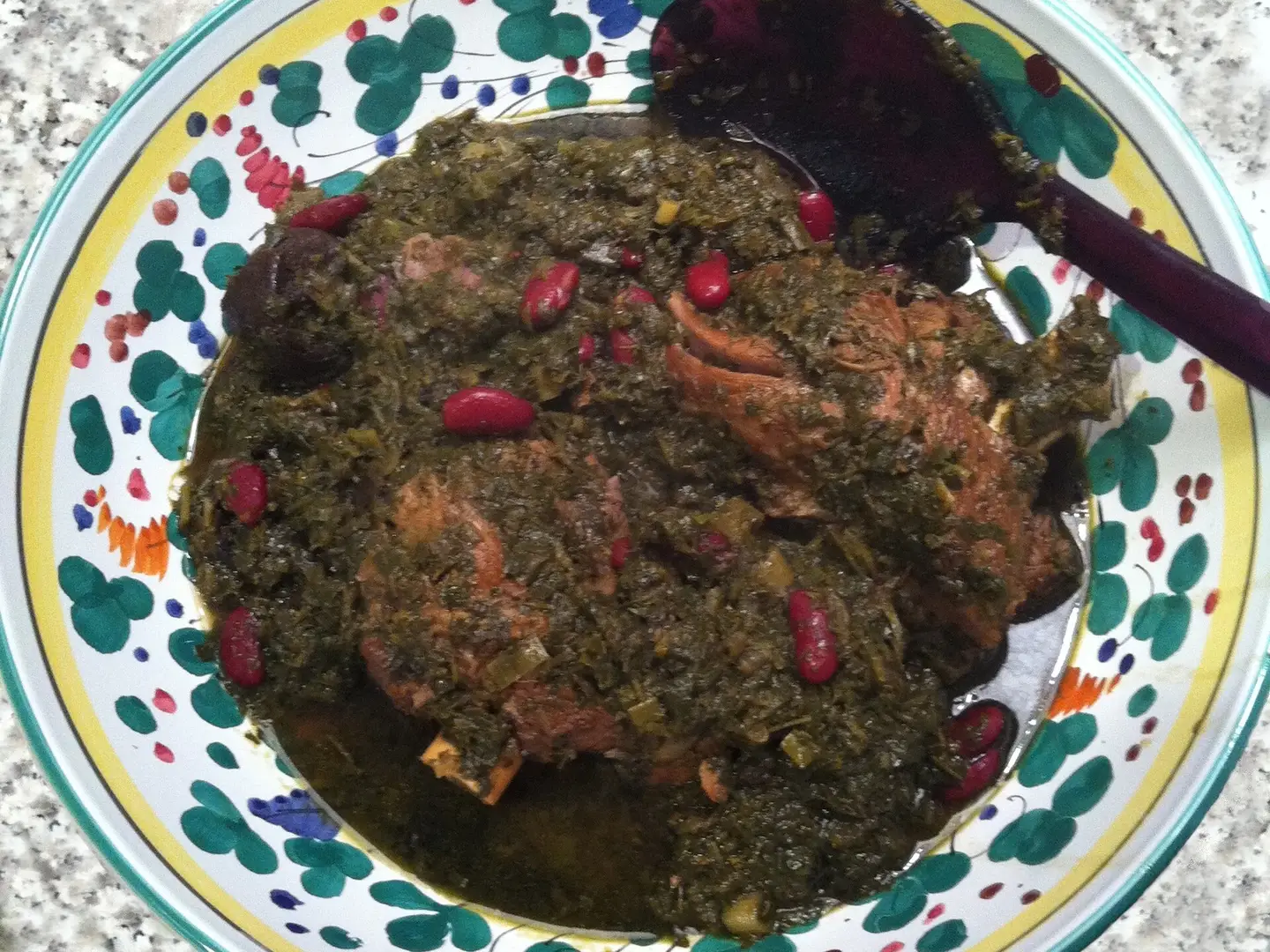
A bowl of ghormeh sabzi, the dark green Persian herb stew with red kidney beans and beef, served with a spoon Iran flag Iran 3h
Dinner •Iranian National Dish

Ghormeh Sabzi

This ghormeh sabzi recipe is Iran's famous herb stew: a mountain of parsley, spinach, cilantro, fenugreek and spring onions, chopped fine and fried in oil until dark and intensely fragrant, then simmered with beef stew meat, red kidney beans and pierced dried limes. The long, slow braise turns the herbs almost black-green and the meat spoon-tender, with a sour note from the limes that no other stew has. It is ladled over fluffy saffron rice, never mixed in. One serving is about 325 g.

Slow-Cooked Herb Stew with Beef & Kidney Beans

Chopped herbs fried dark and fragrant, braised with beef, kidney beans and dried lime until the stew turns deep green and tangy.

Pairs Well With
Saffron rice (chelow), Shirazi salad & fresh herbs
High Protein
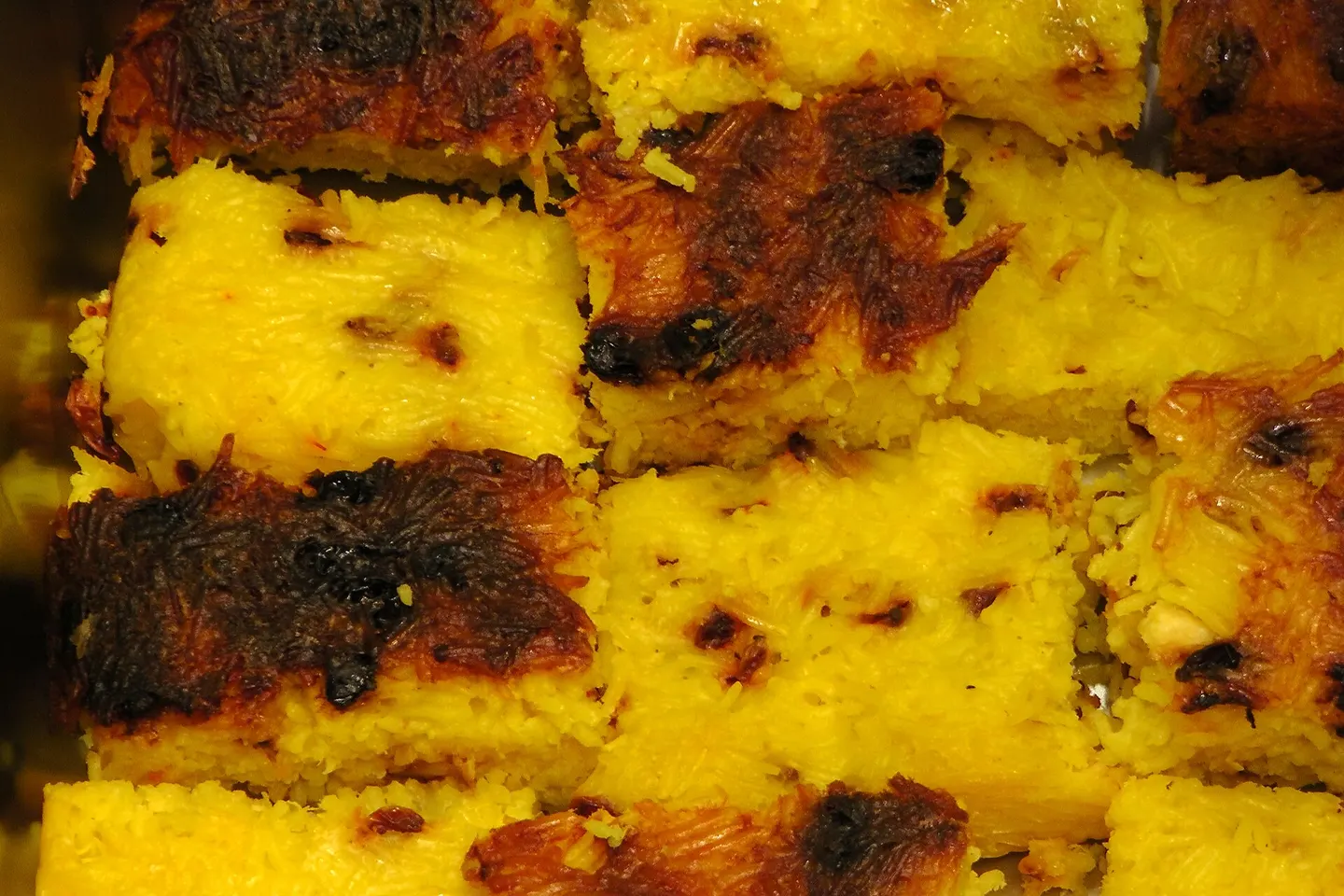
Golden tahchin, the Persian saffron rice cake, cut into squares with a crisp browned crust Iran flag Iran 1h 55m
Dinner •Persian Festive Rice Cake

Tahchin

This tahchin recipe is the Persian saffron rice cake: par-cooked basmati rice folded through a saffron, yoghurt and egg-yolk mixture, then layered in a buttered dish over shredded chicken and baked until it holds together as a cake. The drama comes at the end, when the dish is turned out to reveal the tahdig — the golden, crisp crust that formed on the bottom. It is cut into wedges and finished with tart barberries and pistachios. One serving is about 325 g.

Saffron Rice Cake Layered with Chicken & Yoghurt

Par-cooked rice bound with saffron, yoghurt and egg yolk, layered over chicken and baked until the bottom turns into a golden, crisp tahdig.

Pairs Well With
Shirazi salad, fresh herbs & doogh
Bœuf bourguignon — French beef braised in red wine France flag France 4h
Dinner •Burgundy Terroir

Bœuf Bourguignon

Beef braised gently in red wine until the connective tissue melts into a velvet, gelatin-rich sauce — the classic Burgundy Sunday dinner.

Cellular Repair

Beef braised in red wine until spoon-tender, with mushrooms and pearl onions.

Pairs Well With
Parsnip Purée & Steamed French Haricots Verts
High Protein
Vietnamese braised pork belly with golden eggs in caramel sauce Vietnam flag Vietnam 1h 45m
Dinner •One Pot

Vietnamese Braised Pork and Eggs

Pork belly slowly braised in coconut water and caramel until meltingly tender, with golden eggs that soak up the sweet-savoury sauce — the Vietnamese family dish that tastes better the next day.

Comfort & Sustained Energy

Slow-braised pork belly and eggs in coconut water and caramel.

Pairs Well With
Steamed rice & pickled mustard greens
High Protein

The Dinner Gazette

Never wonder what’s for dinner again

One email a week with easy dinner ideas from around the world — ingredients, steps and nutrition, tested in our kitchen first.

Delivered every Thursday morning. Unsubscribe anytime.



