Curated recipes from 193 countries  •  New seasonal Mediterranean issue out now

Overview

Ga Kenkey

Ga Kenkey, Komi, Dokono

This ga kenkey recipe ferments white corn dough for two to three days, partially cooks it, then wraps it in dried corn husks and steams it for two hours — never kneaded in a pot like banku. The result is firm, sour and sliceable, peeled open at the table and eaten with fried tilapia and shito. One serving is about 390 g.

Ga kenkey is the food of the Ga people of Accra in southern Ghana, who call it komi; the Fante people of the central coast call the same dish dokono. Dried corn was soaked, milled into a wet dough and left to ferment for days, then partially cooked, wrapped in dried corn husks and steamed for hours — a method that keeps the dough firm and sliceable, unlike banku, which is kneaded soft in the pot. The dish travelled with traders and migrants to Côte d'Ivoire, Togo and Benin, and across the Atlantic to Jamaica, where it is still called dokono, and Guyana, where it is known as konkee. It is eaten by hand with fried fish and shito, and sold in chop bars and markets across Ghana.

Pairs well with: Fried tilapia & shito

Provenance

Ghana flag Ghana

Ga Home Table

African Heritage

Time Dedication

3h 20m

30m prep • 170m cook

Batch Yield

4 Servings

783 kcal per serving

1 serving ≈ 390 g

Technical Skill

Advanced

Advanced (Fermented & Husk-Steamed)

Meal Timing & Digestive Fit

Breakfast

Not Advised

Lunch

Prime Metabolic Fit

Dinner

Ideal Hearty Main

Snack & Tea

Inappropriate

Fermented / Gut Health Occasions: Family lunch, weekend cooking, chop-bar favourite Cost: Low — about $2–3 per serving at home
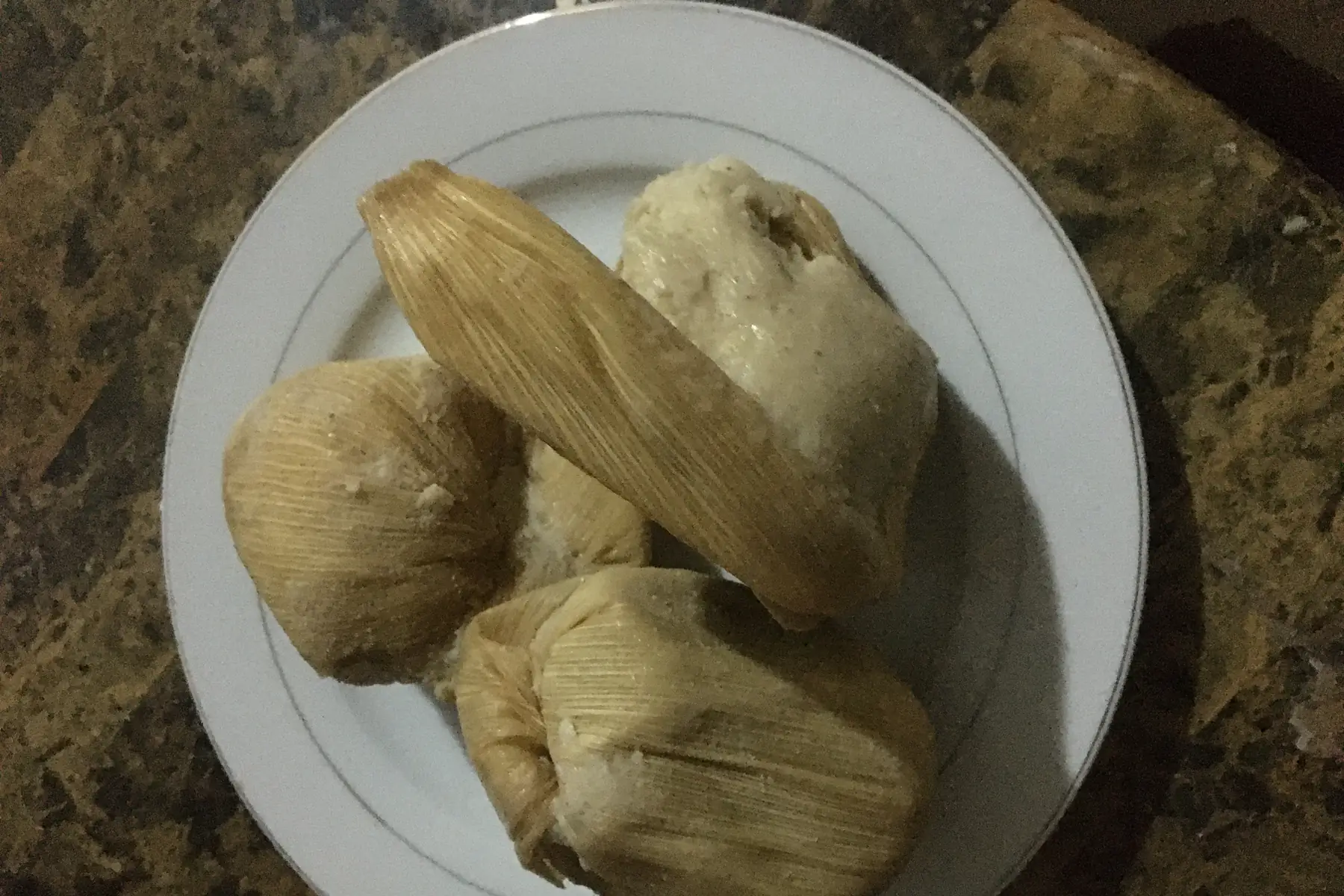
Ga kenkey balls wrapped in dried corn husks on a white plate, one unwrapped showing the pale fermented corn dough

Ga Home Table

Photo: Darkemperror, CC BY-SA 4.0, via Wikimedia Commons

The Heritage Formulary

Measured Ingredients

Estimated cost: Low — about $2–3 per serving at home (USD)

Good ga kenkey is firm enough to slice, evenly sour, and holds its shape when the husk is peeled away — never soft like porridge or crumbly.

Execution Methodology & Culinary Technique

Step-by-Step Cooking Guide

Active 3h 20m
P

Prep Stage: Mix and Ferment the Dough

20 Mins • Mixing + 2–3 Days Fermenting

Two to three days before you plan to cook, whisk the white cornmeal and salt together in a large clean bowl, then add the warm water a little at a time, stirring until you have a smooth, thick paste like stiff pancake batter. Cover loosely with a clean cloth and leave in a warm corner of the kitchen. Stir once a day. The dough is ready when it smells clearly sour and shows a few small bubbles — in a cold kitchen this can take up to five days, so judge by smell, not the clock. This long ferment is what makes Ga kenkey sourer and firmer than pot-cooked banku.

Maestro Tip: A loose cloth cover, not an airtight lid, lets the ferment breathe; an airtight seal can trap gas and give off flavours.

  1. 1

    Partially Cook the Dough (Aflata)

    15 Mins Medium heat, ~160°C (320°F)

    Tip about half of the fermented dough into a heavy pot with 200 ml (about 3/4 cup) of water and cook over medium heat, stirring constantly with a sturdy wooden spoon. Within a few minutes it thickens into a stiff, sticky mass — this is the aflata, the partially cooked half. Take the pot off the heat as soon as the dough holds together and pulls away from the sides; it should be cooked but still soft, not fully set.

    Only half the dough is cooked here — the raw half mixed in next is what gives kenkey its firm, sliceable set after steaming.

    Done when: The cooked half is thick, sticky and pulls away from the sides of the pot.

  2. 2

    Mix and Mould the Balls

    20 Mins Warm, ~50°C (122°F)

    Tip the hot aflata into the bowl with the remaining raw fermented dough and knead the two together with wet hands until completely smooth and even — about 5 minutes of firm kneading. Divide into 4 equal portions, about 275 g each, and roll each into a firm, smooth ball about the size of a large orange. The dough should feel dense and hold its shape, much firmer than soft banku dough.

    Wet hands stop the sticky dough from clinging to your palms; if the mix feels crumbly, knead in a spoonful of warm water.

    Done when: Four firm, smooth balls that hold their shape when set down.

  3. 3

    Wrap in Corn Husks and Steam

    2 Hours Boiling water, 100°C (212°F)

    Lay 2 to 3 softened husks overlapping on the work surface, set a dough ball in the centre, fold the husks up around it and tie the parcel closed with a strip of husk or kitchen string. Repeat for all four balls. Set them in a large pot, pour in boiling water to come halfway up the parcels, cover tightly and steam over a steady boil for 2 hours, topping up with boiling water if the level drops. This long husk-steaming — not pot-kneading — is what defines Ga kenkey: the husks hold the balls firm and add a faint corn-leaf aroma.

    Keep the lid on and the water at a steady boil; lifting the lid often drops the temperature and the centre can stay underdone.

    Done when: The parcels feel very firm when pressed, and an unwrapped ball slices cleanly without sticking to the knife.

  4. 4

    Fry the Fish

    10 Mins Oil 180°C (350°F); fish to 63°C (145°F)

    While the kenkey steams, heat the sunflower oil in a wide frying pan until it shimmers. Fry the tilapia fillets for about 4 to 5 minutes per side until the flesh is golden, crisp at the edges and flakes easily, reaching 63°C (145°F) at the thickest part. Drain briefly on paper towel and keep warm.

    Do not crowd the pan — fry two fillets at a time so the oil stays hot and the fish crisps instead of steaming.

    Done when: Golden and crisp outside, opaque white flesh that flakes with a fork.

  5. 5

    Peel Open and Serve

    5 Mins Hot, ~70°C (158°F)

    Lift the husk parcels out of the pot and let them rest for 5 minutes. Peel the husks away at the table and slice each firm kenkey ball into thick rounds with a wet knife. Serve one ball per person with a fried tilapia fillet and a spoonful of shito on the side, plus sliced onion and tomato if you like. Eat with your hands: tear or cut a piece of kenkey, pick up fish and a little shito with it.

    A wet knife slices the firm kenkey cleanly; a dry knife drags and tears the surface.

    Done when: Sliced rounds hold their shape, pale and dense inside, with a clear sour aroma.

Finishing Touches & Plating

Serve the kenkey hot, straight from its husk, with the fried fish and shito alongside so each person peels, slices and seasons their own ball. A bowl of sliced onion and tomato on the table adds a fresh crunch against the sour, dense dough.

Nutritional Physiology & Benefits

Nutrition

Energy

783

kcal / serving

Protein

34g

Complete AA

Carbs

116g

Complex

Fats

22g

Healthy

Per serving (4 servings · 1 serving ≈ 390 g)
Energy783 kcal
Protein34 g
Carbohydrates116 g
Fat22 g
Fibre11.0 g
Sugar1.1 g
Sodium962 mg
Per 100g
Energy201 kcal
Protein8.8 g
Carbohydrates29.7 g
Fat5.7 g
Fibre2.8 g
Sugar0.3 g
Sodium247 mg

Nutrition values are estimated — calculated from USDA FoodData Central values for the listed ingredients.

Vitamins & minerals: B vitamins, magnesium and iron from the white cornmeal, plus protein, selenium and vitamin B12 from the fried tilapia.

Naturally Fermented

The two-to-three-day ferment gives Ga kenkey its distinctive sour tang and is the traditional way the dough is prepared.

Protein from the Fish

One serving carries about 34 g of protein, most of it from the fried tilapia served alongside the kenkey.

Naturally Gluten-Free

Made only from white cornmeal, Ga kenkey contains no wheat or gluten, so it suits a gluten-free table.

Food Pairings

What to Eat With

To optimize nutrient absorption and elevate the sensory depth, pair with these authentic accompaniments:

Sides

Fried Tilapia

Crisp, salty fried fish is the classic partner — its crunch and savoury flesh contrast with the dense, sour kenkey, and the fish is the meal's main protein.

Sauces

Shito (Black Chilli Sauce)

A spoonful of smoky, spicy shito is essential: its heat, oil and dried-fish depth cut through the plain sour dough and season every bite.

Vegetables

Sliced Onion and Tomato

Raw sliced onion and tomato add fresh crunch and acidity, lifting the heavy steamed dough and cooling the heat of the shito.

Drinks

Sobolo (Hibiscus Drink)

A cold, tart hibiscus drink refreshes the palate between bites of the warm, dense kenkey and spicy shito.

Complete menu

Start with one husk-wrapped ball of hot ga kenkey, a fried tilapia fillet with shito and sliced onion and tomato, and finish with a cold sobolo hibiscus drink.

Digestive Guardrails

What NOT to Combine

To prevent digestive distress, sluggishness, or palate clash, avoid pairing the dish with these elements:

A Second Heavy Starch

Ga kenkey is already very filling, so serving it with banku, rice or yam in the same meal doubles the starch and leaves most people uncomfortably full. Pick one starch and let the fish and shito do the rest. This is general guidance, not medical advice.

Sugary Soft Drinks

A large sugary drink with a dense carbohydrate meal adds a fast rush of sugar on top of an already energy-rich plate. Water or an unsweetened drink suits the meal better. This is general guidance, not medical advice.

General information only, not medical advice — consult a doctor for personal dietary decisions.

Who Should Eat It

Who Should Eat

  • General adultsA satisfying, traditional lunch — one husk-wrapped ball with fried fish and shito is a full meal.
  • ChildrenSuitable from age 3+; serve a smaller portion of kenkey with mild fish and only a little shito, which is very spicy.
  • ElderlyVery suitable — soft enough to chew and gentle on the stomach; serve with well-cooked fish and a mild spoonful of shito.
  • Pregnant womenGenerally suitable; make sure the kenkey is steamed right through and the fish is cooked to 63°C (145°F).
  • Breastfeeding womenGenerally suitable; the energy-dense dough and fish help meet the extra energy needs of breastfeeding.
  • AthletesA strong pre- or post-training meal: about 116 g of carbohydrate and 34 g of protein per serving with the fish.
  • Weight gainA good choice — take a full ball with the fried fish and a generous spoonful of shito.
  • Weight lossEnjoy about half a ball with the full fish fillet and plenty of sliced onion and tomato.

Health Conditions — Adjust or Avoid

Conditions

  • DiabetesGa kenkey is high in carbohydrate, so keep the portion to about half a ball and fill the rest of the plate with fish and vegetables. Ask your clinician about portion size.
  • High blood pressureThe dough itself is lightly salted, but shito and fried fish can be salty — keep the shito to a small spoonful. Ask your clinician about a suitable portion.
  • Kidney diseaseGa kenkey itself is low in protein, but the fish and shito add protein and salt — keep both modest. Ask your clinician about frequency.
  • GoutThe corn dough is low in purines, so the kenkey itself is not a concern — the fried fish served with it matters more.
  • Stomach issuesUsually gentle, but the sour tang and a very spicy shito can irritate a sensitive stomach — use only a little shito and pair it with mild fish.
  • Cardiovascular diseaseA low-fat staple on its own; keep the fried fish portion modest and the shito light, since both add fat and salt.
  • Fatty liverKeep the portion modest and favour grilled fish over fried fish with the kenkey.
  • Food allergiesContains fish (tilapia) and shellfish (dried shrimp in shito); the corn dough itself contains no wheat, gluten, egg, milk or nuts. Check the shito label for shellfish.
  • Special therapeutic dietsNaturally gluten-free; if you follow a prescribed low-carbohydrate diet, keep the portion small and ask your clinician.

If you have a medical condition, consult your doctor before changing your diet.

Storage & Use

Storage & Use

How to store
Cool the unwrapped balls, then wrap each tightly in plastic wrap or a clean damp cloth and store in an airtight container.
In the fridge
5 days, wrapped.
In the freezer
3 months, wrapped in plastic and sealed in a freezer bag.
How to reheat
Steam for 10–15 minutes or microwave with a sprinkle of water until hot right through, reaching 74°C (165°F).
Freezing recommended
Yes — kenkey freezes well for up to 3 months.
Signs it has spoiled
Strong sour or mouldy smell, visible mould, or a slimy surface.

More recipes to explore

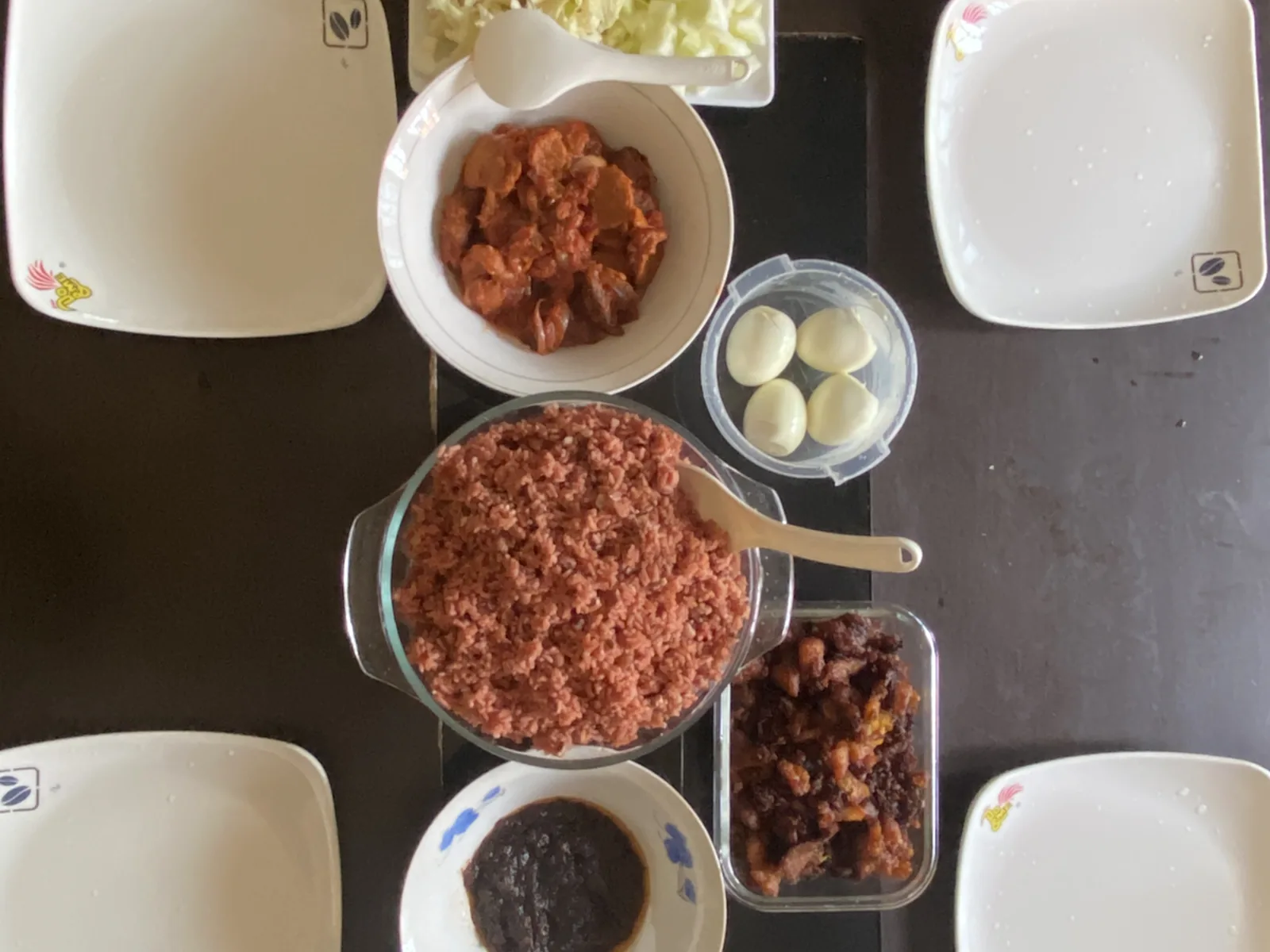
A table of waakye with salad, spaghetti, shito, stew, boiled eggs and fried plantain in Ghana Ghana flag Ghana 1h 40m
Lunch •Accra Street-Food Classic

Waakye

This waakye recipe simmers black-eyed peas and rice together with dried sorghum leaves until the whole pot turns a deep reddish-brown, then serves it with a boiled egg, fried plantain, spaghetti and a spoonful of shito. It is Ghana's beloved street-food plate, sold from morning stalls across Accra. One serving is about 510 g.

Comfort & Warmth

Reddish-brown rice and beans with egg, plantain, spaghetti and shito.

Pairs Well With
Boiled egg, fried plantain, spaghetti & shito
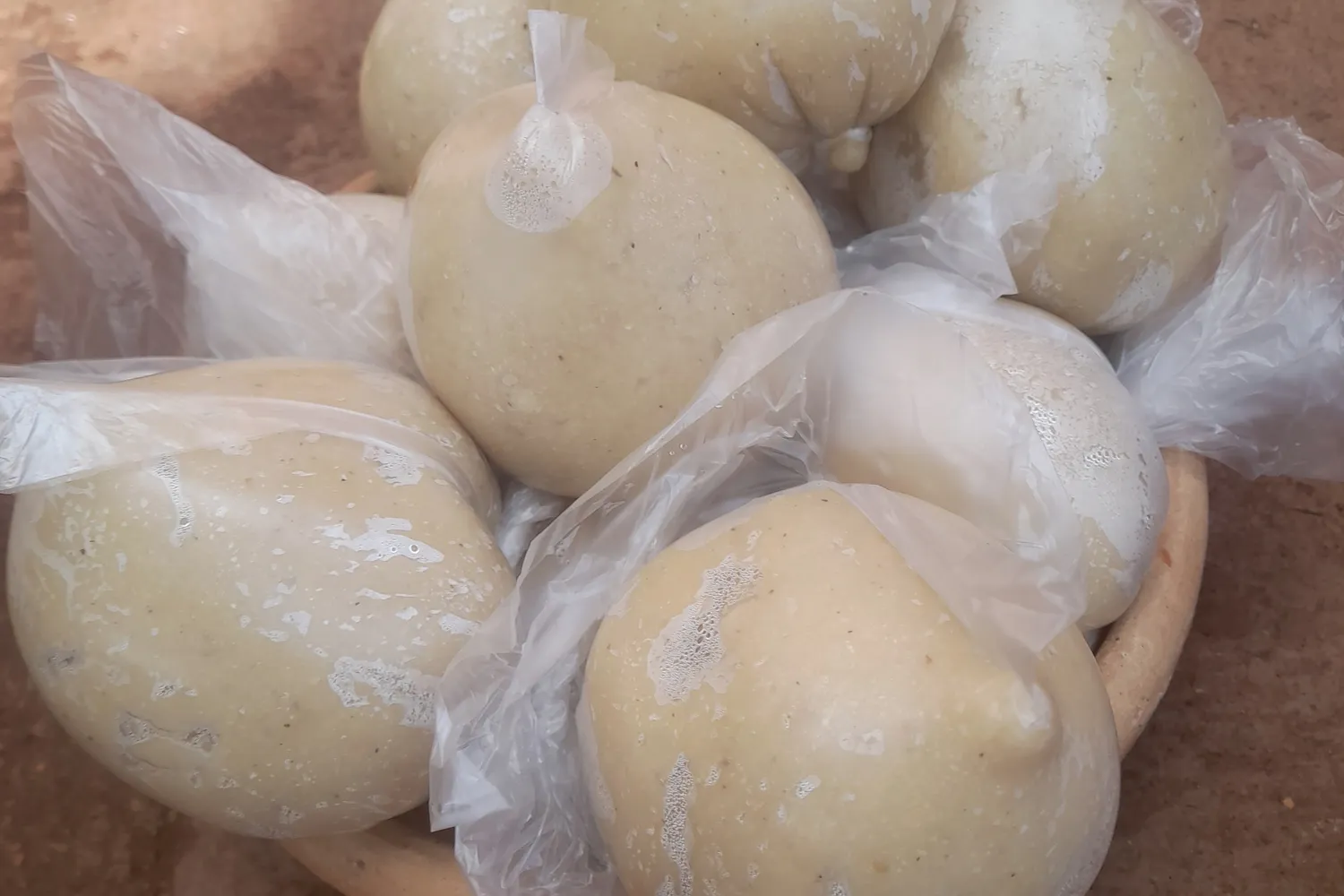
Smooth balls of Ghana banku, pale fermented maize dough wrapped in plastic, in a bowl Ghana flag Ghana 55m
Lunch •Ghanaian Home Table

Ghana Banku

This ghana banku recipe turns fermented maize and cassava dough into smooth, tangy balls with a soft, stretchy bite. The dough is mixed, left to ferment for two to three days, then kneaded in the pot until it pulls away from the sides — that is when you know it is ready. One serving is about 275 g.

Comfort & Warmth

Soft, tangy fermented maize dough balls, shaped by hand and served hot with soup or stew.

Pairs Well With
Light soup or kontomire stew & grilled fish
Fermented / Gut Health
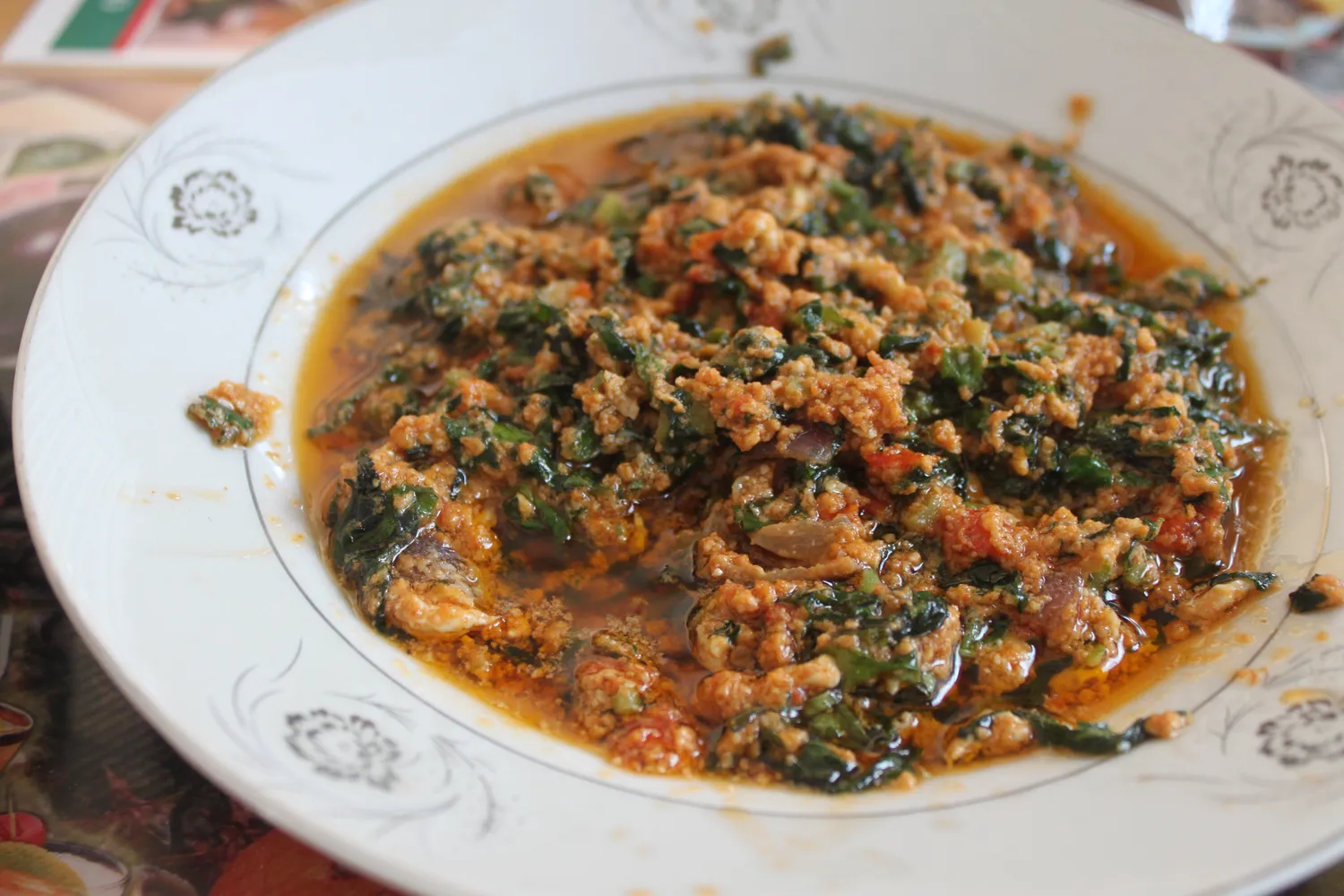
A plate of Ghana kontomire stew, dark green cocoyam leaves in a rich orange egusi and tomato sauce Ghana flag Ghana 1h 5m
Dinner •Akan Home Table

Ghana Kontomire Stew

This ghana kontomire stew recipe simmers cocoyam leaves with egusi, tomato and chilli into a rich palava sauce, the Akan classic also called palaver sauce. The leaves are boiled first until tender, the egusi is left to set in the tomato base, and everything comes together dark green and nutty. One serving is about 260 g.

Comfort & Warmth

Cocoyam-leaf stew with egusi, tomato and chilli — Ghana's palava sauce, made vegetarian.

Pairs Well With
Steamed white rice & boiled plantain
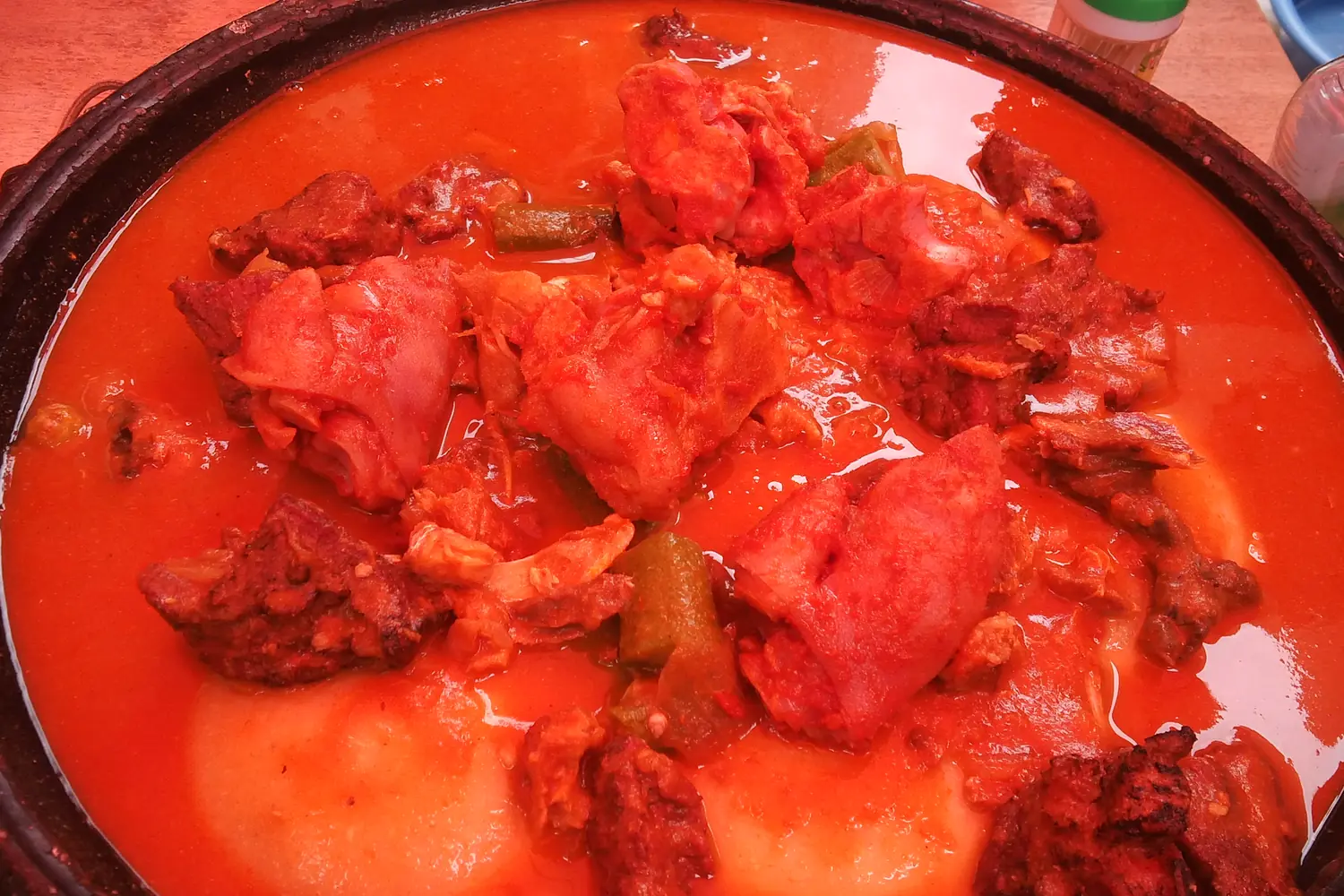
Ghanaian light soup, a thin red tomato broth with pieces of meat and fufu, served in a dark earthenware bowl Ghana flag Ghana 1h 10m
Dinner •Akan Home Cooking

Ghana Chicken Light Soup

This ghana chicken light soup recipe makes the thin, spicy tomato broth Ghana is famous for: bone-in chicken simmered in a blended base of tomato, onion, ginger and Scotch bonnet, with no palm oil, no groundnut paste and nothing to thicken it. The broth stays clear and light, and the chicken cooks in it rather than beside it, so every spoonful tastes of tomato, ginger and gentle heat. One serving is about 600 g of soup, ladled hot into a bowl with fufu on the side.

Comfort & Warmth

A thin, spicy tomato broth with tender chicken, served steaming hot with fufu.

Pairs Well With
Hot fufu, torn by hand and dipped into the thin tomato broth.
Soups & Broths • High Protein

The Dinner Gazette

Never wonder what’s for dinner again

One email a week with easy dinner ideas from around the world — ingredients, steps and nutrition, tested in our kitchen first.

Delivered every Thursday morning. Unsubscribe anytime.