Curated recipes from 193 countries  •  New seasonal Mediterranean issue out now

Overview

Galbi Jjim

Korean Braised Short Ribs, Galbijjim, Braised Beef Short Ribs

This galbi jjim recipe braises beef short ribs low and slow in a sweet-savoury soy sauce with Asian pear, chestnuts, dried jujubes, carrot and Korean radish, until the meat falls from the bone. One serving is about 390 g.

Galbi jjim — literally 'braised ribs' — is the slow-cooked cousin of grilled galbi, and it is the dish Korean families cook for holidays such as Chuseok and Seollal and for birthdays and weddings. Where grilled galbi is quick and smoky, galbi jjim is patient: ribs braised slowly in a soy sauce sweetened with Asian pear, with chestnuts, dried jujubes and ginkgo nuts added for the festive table. The combination of fruit, nuts and root vegetables is characteristic of Korean celebration cooking, where a dish is meant to look as generous as it tastes.

Pairs well with: Steamed rice, kimchi and a small bowl of the braising sauce

Provenance

South Korea flag South Korea

Korean Celebration Classic

East & South Asia

Time Dedication

2h 10m

30m prep • 100m cook

Batch Yield

4 Servings

836 kcal per serving

1 serving ≈ 390 g

Technical Skill

Intermediate

Medium (Slow Braise)

Meal Timing & Digestive Fit

Breakfast

Not Advised

Lunch

Hearty Midday Main

Dinner

Ideal Hearty Main

Snack & Tea

Inappropriate

Occasions: Chuseok and Seollal holidays, birthdays, weddings, a slow Sunday dinner Cost: Medium — about $7–8 per serving at home
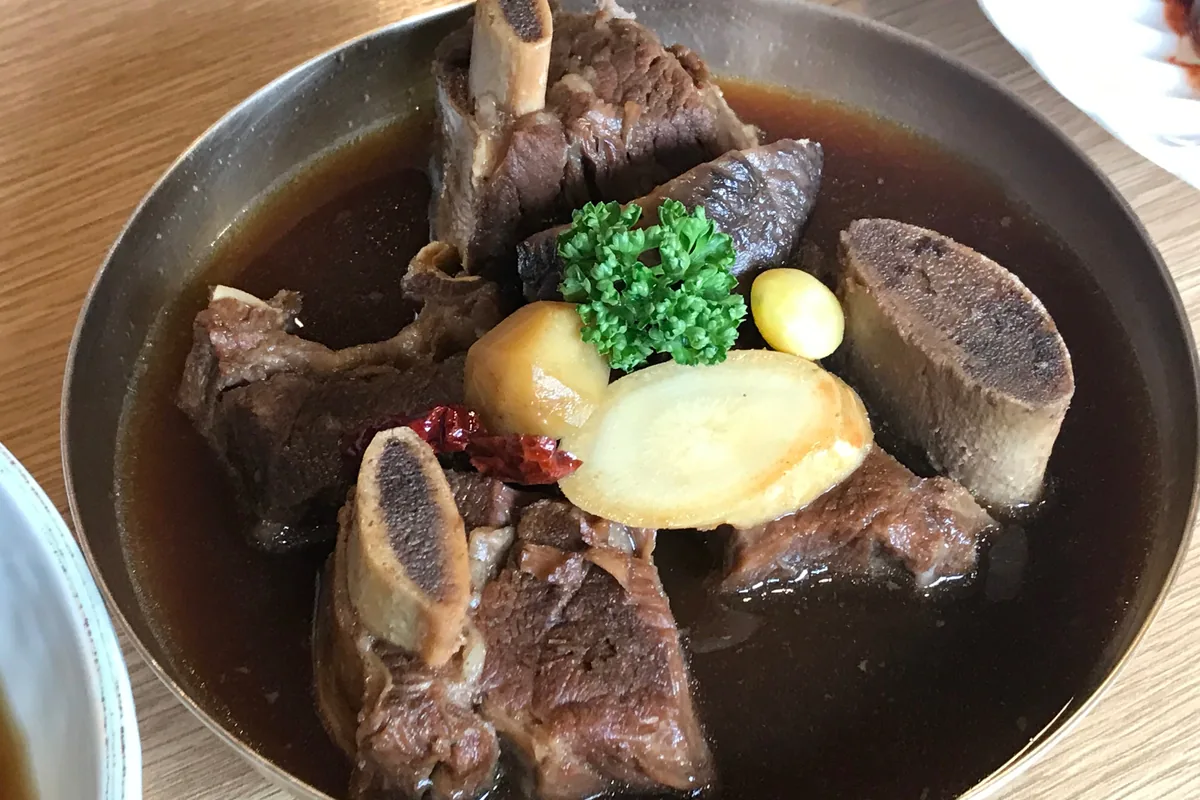
A bowl of galbi jjim — braised beef short ribs in dark soy sauce with chestnuts and ginkgo nuts

Korean Celebration Classic

Photo: lazy fri13th, CC BY 2.0, via Wikimedia Commons

The Heritage Formulary

Measured Ingredients

Estimated cost: Medium — about $7–8 per serving at home (USD)

Good galbi jjim is glossy and deeply flavoured, with meat that yields to a fork and vegetables that have soaked up the sauce without falling apart.

Execution Methodology & Culinary Technique

Step-by-Step Cooking Guide

Active 2h 10m
P

Prep Stage: Soak the Ribs and Mix the Sauce

30 Mins • Soaking & Mixing

Put the short rib chunks in a large bowl, cover with cold water and soak for 30 minutes, changing the water once — this draws out excess blood and keeps the sauce clear. Meanwhile whisk together the soy sauce, grated Asian pear and onion, garlic, ginger, brown sugar, sesame oil, mirin and black pepper. Peel and chunk the carrot and radish, and rinse the chestnuts and jujubes.

Maestro Tip: Do not skip the soak: it is what keeps the braising liquid a clear, glossy brown instead of cloudy.

  1. 1

    Soak and Rinse the Ribs

    30 Mins Cold water, ~20°C (68°F)

    Cover the short rib chunks with cold water and leave them to soak for 30 minutes, changing the water once halfway through. Drain and rinse the ribs under cold running water, then pat them dry with kitchen paper.

    Pat the ribs dry before browning — wet meat steams instead of searing.

    Done when: The soaking water runs mostly clear and the meat looks clean and bright.

  2. 2

    Brown the Ribs

    8 Mins Medium-high heat, ~200°C (400°F)

    Heat a heavy pot over medium-high heat and brown the ribs in a single layer, about 2 minutes per side, until the outside is deep brown. Work in two batches if the pot is crowded, and pour off any fat that pools.

    Browning builds the deep colour and flavour of the finished sauce — do not rush it.

    Done when: Every piece is browned on at least two sides.

  3. 3

    Add the Sauce and Start the Braise

    5 Mins High heat to bring to a boil, ~100°C (212°F)

    Return all the ribs to the pot, pour over the whisked sauce and the water, and stir to coat. Bring to a rolling boil, skim off any foam that rises, then turn the heat down to the gentlest simmer and put the lid on.

    Skim the foam in the first minutes — it keeps the sauce glossy and clean-tasting.

    Done when: The liquid is at a bare simmer with only the occasional bubble breaking the surface.

  4. 4

    Braise Until Tender

    60 Mins Gentle simmer, ~95°C (203°F)

    Leave the pot on the gentlest simmer for 60 minutes, turning the ribs once or twice. The meat should be giving and nearly tender, and the sauce should have reduced by about a third.

    Keep the simmer gentle — hard boiling tightens the meat and clouds the sauce.

    Done when: A fork slides into the meat with light resistance; the sauce coats a spoon.

  5. 5

    Add the Vegetables, Chestnuts and Jujubes

    25 Mins Gentle simmer, ~95°C (203°F)

    Stir in the carrot and radish chunks, chestnuts, jujubes and ginkgo nuts, and simmer uncovered for 25 minutes, turning the ribs once so they glaze evenly. The vegetables should be tender but still holding their shape.

    Adding the vegetables late keeps them from falling apart in the long braise.

    Done when: The radish is silky and translucent, the carrot is tender, and the meat yields easily to a fork.

  6. 6

    Reduce, Glaze and Serve

    10 Mins Medium heat, ~160°C (320°F)

    Lift the ribs and vegetables into a warm serving bowl. Turn the heat up and reduce the sauce for about 5 minutes until it is glossy and thick enough to coat a spoon, then pour it over the ribs. The braise reaches about 95°C (203°F), well above the 63°C (145°F) safe minimum for beef. Scatter the spring onions and sesame seeds over the top and serve at once.

    If the sauce gets too thick, loosen it with a splash of hot water — it should flow, not sit in a clump.

    Done when: The sauce is glossy and clings to the meat; the ribs are fork-tender.

Finishing Touches & Plating

Spoon the ribs and vegetables into a deep serving bowl and ladle the glossy sauce over them, making sure every piece gets some chestnuts, jujubes and radish. Serve hot, with the spring onions and sesame scattered on top.

Nutritional Physiology & Benefits

Nutrition

Energy

836

kcal / serving

Protein

43g

Complete AA

Carbs

40g

Complex

Fats

56g

Healthy

Per serving (4 servings · 1 serving ≈ 390 g)
Energy836 kcal
Protein43 g
Carbohydrates40 g
Fat56 g
Fibre5.8 g
Sugar23.1 g
Sodium1016 mg
Per 100g
Energy214 kcal
Protein10.9 g
Carbohydrates10.2 g
Fat14.3 g
Fibre1.5 g
Sugar5.9 g
Sodium261 mg

Nutrition values are estimated — calculated from USDA FoodData Central values for the listed ingredients.

Vitamins & minerals: Iron and zinc (beef), vitamin A (carrot), vitamin C (Asian pear and radish), potassium (chestnuts and radish).

Protein That Keeps You Full

One serving gives about 42 g of protein from the beef, so a modest portion with rice is a genuinely filling dinner.

Iron and Zinc From the Beef

Beef short ribs are a natural source of iron and zinc, minerals the body uses for healthy blood and everyday immune function.

Slow Food, Shared at the Table

A long, gentle braise is one of the oldest ways to turn a tough cut into something tender — and a dish made to be shared, not rushed.

Food Pairings

What to Eat With

To optimize nutrient absorption and elevate the sensory depth, pair with these authentic accompaniments:

Sides

Steamed Rice

Plain steamed rice is essential — it soaks up the glossy sauce and balances the richness of the ribs.

Vegetables

Kimchi

The sharp, sour crunch of kimchi cuts through the sweet, fatty braise and refreshes the palate between bites.

Drinks

A Light Barley Tea

Cold or warm barley tea (boricha) is the classic Korean table drink with a rich braise — toasty, unsweetened and cleansing.

Full Menus

As the Centre of a Holiday Table

Galbi jjim is a celebration dish: serve it in the middle of the table with rice, kimchi and a few small side dishes, and let everyone help themselves.

Complete menu

Serve the galbi jjim in the middle of the table with steamed rice, kimchi and a couple of small vegetable side dishes, and finish with barley tea — the classic Korean holiday spread.

Digestive Guardrails

What NOT to Combine

To prevent digestive distress, sluggishness, or palate clash, avoid pairing the dish with these elements:

A Second Very Sweet Dish

The sauce is already sweet from pear, sugar and jujubes, so a sugary dessert or sweet drink on the same plate can make the meal feel heavy. Save something sweet for later. This is general guidance, not medical advice.

Rushing the Braise

Turning the heat up to save time tightens the meat and makes the sauce greasy instead of glossy. A gentle simmer is what makes short ribs tender — there is no shortcut worth taking.

General information only, not medical advice — consult a doctor for personal dietary decisions.

Who Should Eat It

Who Should Eat

  • General adultsA rich celebration dinner — one serving with rice and vegetables is a complete, satisfying meal.
  • ChildrenSuitable from about age 3, once the meat is cut small and the sauce is not too sweet for them; the ribs are very tender. Keep portions modest.
  • ElderlyVery suitable — the meat is soft, the vegetables are tender, and the dish is easy to chew. Watch the salt and keep the portion moderate.
  • Pregnant womenGenerally suitable; the beef adds iron, which is useful in pregnancy. Make sure the meat is cooked through and keep the sauce moderate, as it is quite sweet and salty.
  • Breastfeeding womenGenerally suitable; the protein and fluids support recovery — eat a satisfying portion with plenty of rice and vegetables.
  • AthletesA strong post-training meal: about 42 g of protein and plenty of energy from the rice. Eat it after training rather than before, as it is rich and slow to digest.
  • Weight gainA good choice — take a generous serving with a second helping of rice and vegetables.
  • Weight lossA rich dish, so keep the portion modest, favour the vegetables and radish over extra sauce, and skip a second helping of rice.

Health Conditions — Adjust or Avoid

Conditions

  • DiabetesThe sauce is sweet from pear, sugar and jujubes — keep the portion modest, favour the meat and vegetables over the sauce, and ask your clinician about portion size.
  • High blood pressureThe soy sauce makes this a salty dish; use low-sodium soy sauce and keep the sauce light. Ask your clinician about a suitable portion.
  • Kidney diseaseThe dish is high in potassium (radish, chestnuts, pear) and sodium; limit the portion and ask your clinician about portion size.
  • GoutEat occasionally and in smaller portions — red meat and a sweet sauce are not ideal for frequent eating with gout.
  • Stomach issuesThe rich, sweet sauce can feel heavy on a sensitive stomach; eat slowly and keep the portion modest.
  • Cardiovascular diseaseA rich, fatty dish — enjoy it as an occasional celebration meal rather than a regular dinner, and load the plate with vegetables.
  • Fatty liverKeep the portion modest, favour the lean meat and vegetables, and go easy on the sweet sauce.
  • Food allergiesContains soy and sesame. Naturally gluten-free if tamari replaces the soy sauce — check the label of every sauce used.
  • Special therapeutic dietsIf you follow a prescribed low-sodium or low-fat diet, use low-sodium soy sauce, skim the fat from the sauce, and check with your clinician.

If you have a medical condition, consult your doctor before changing your diet.

Storage & Use

Storage & Use

How to store
Cool quickly and store in an airtight container with the sauce.
In the fridge
3 days.
In the freezer
2 months.
How to reheat
Reheat gently in a covered pot until it simmers; reheat to 74°C (165°F). Add a splash of water if the sauce has thickened too much.
Freezing recommended
Yes — the braised ribs freeze well for up to 2 months; freeze the meat with its sauce.
Signs it has spoiled
Sour smell, slimy surface, or mould on the sauce.

More recipes to explore

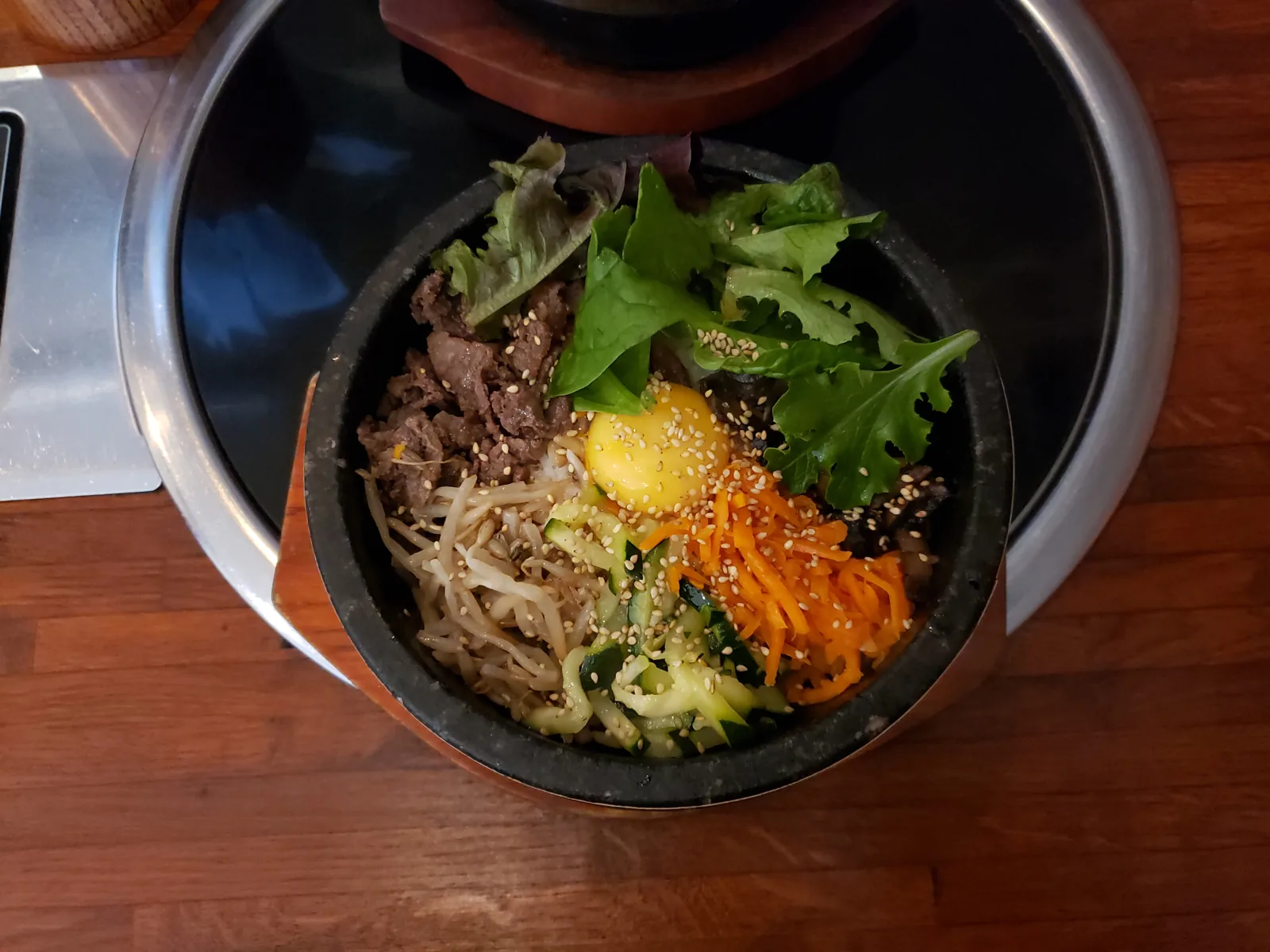
Dolsot bibimbap in a hot black stone bowl — bulgogi beef, egg yolk, carrots, zucchini, bean sprouts and sesame seeds over rice South Korea flag South Korea 1h 5m
Dinner •Korean Heritage

Bibimbap

This bibimbap recipe builds Korea's most famous rice bowl the dolsot way: hot rice in a sizzling stone pot, ringed with five separately seasoned namul vegetables, bulgogi beef and a fried egg, with gochujang to stir through at the table. The stone bowl crisps the bottom layer of rice into golden nurungji while you eat. One serving is about 510 g.

Colourful & Satisfying

Warm rice, five seasoned vegetables, bulgogi beef and a fried egg, mixed at the table with gochujang.

Pairs Well With
Kimchi, kongnamul-guk (bean sprout soup) & barley tea
Korean fried chicken pieces coated in a glossy red yangnyeom glaze South Korea flag South Korea 45m
Dinner •Korean Heritage

Korean Fried Chicken

This Korean fried chicken recipe is the real thing: boneless chicken in a thin potato-starch batter, fried twice — once to cook it through, once at higher heat to drive out moisture and shatter the crust — then tossed in a glossy yangnyeom glaze of gochujang, honey and garlic. The double fry is what keeps the skin crisp under the sauce. One serving is about 250 g.

Crispy & Bold

Double-fried chicken in a thin potato-starch crust, tossed in a sticky sweet-spicy yangnyeom glaze.

Pairs Well With
Pickled radish (chikin-mu), cold beer & steamed rice
High Protein • Quick Prep (<30m)
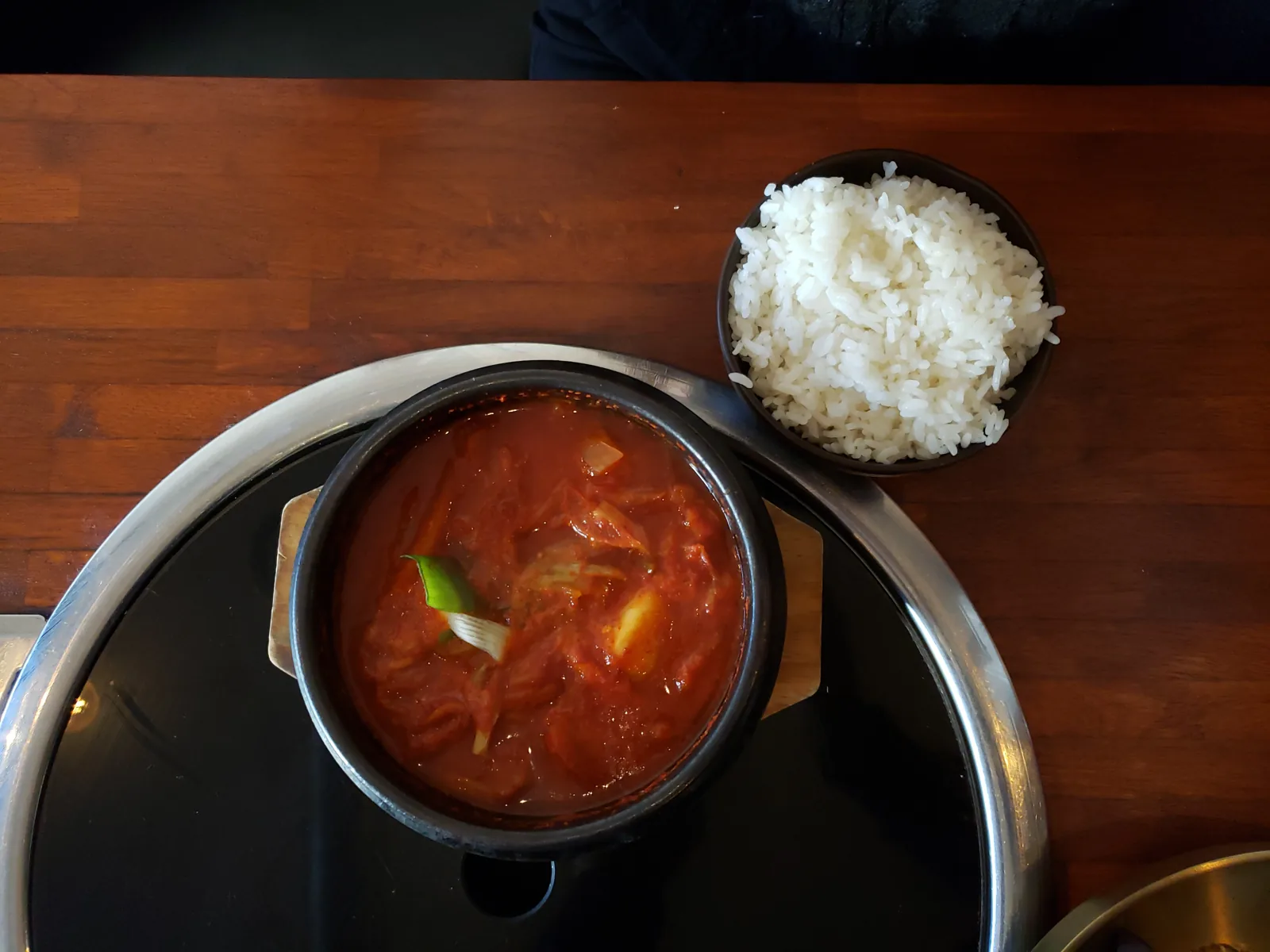
Kimchi jjigae — a red kimchi stew with tofu and spring onions in a black stone pot, served with a bowl of rice South Korea flag South Korea 45m
Dinner •Korean Heritage

Kimchi Jjigae

This kimchi jjigae recipe is the Korean comfort stew: aged, well-fermented kimchi fried with pork belly, then simmered in its own brine with tofu until the broth turns brick-red and rich. It is a stew, not the kimchi itself — the North Korean white kimchi published earlier is the pickled cabbage, while this is what you cook with it. One serving is about 425 g.

Comfort & Warmth

Aged kimchi and pork belly simmered in kimchi brine with tofu — sour, spicy and deeply savoury.

Pairs Well With
Steamed rice, fried egg & banchan
Soups & Broths • Fermented / Gut Health
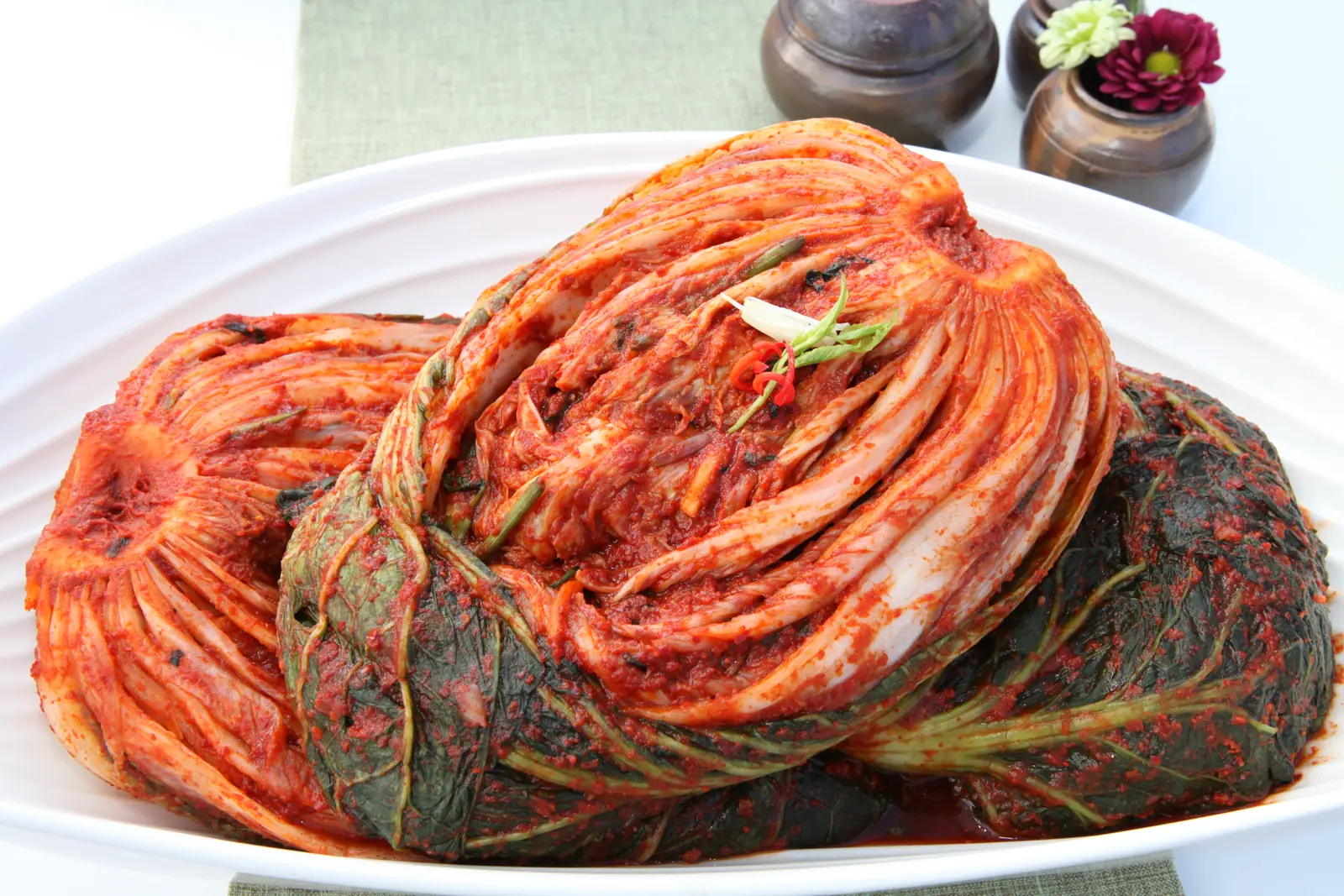
Whole heads of baechu kimchi coated in red gochugaru paste on a white platter South Korea flag South Korea 2h 35m
Dinner •Korean Kimjang Heritage

Baechu Kimchi

This kimchi recipe turns one head of napa cabbage into classic baechu kimchi: salted leaves packed with a bright red gochugaru paste, then left to ferment until tangy and fizzy. It is the spicy southern-style kimchi most people picture when they hear the word kimchi, and it keeps for weeks in the fridge. One serving is about 165 g.

Fermented & Fiery

Crisp, spicy, sour napa cabbage kimchi — Korea's everyday banchan, fermented at home in a jar.

Pairs Well With
Serve a small bowl with steamed rice, grilled meat or a fried egg.
Fermented / Gut Health

The Dinner Gazette

Never wonder what’s for dinner again

One email a week with easy dinner ideas from around the world — ingredients, steps and nutrition, tested in our kitchen first.

Delivered every Thursday morning. Unsubscribe anytime.