Curated recipes from 193 countries  •  New seasonal Mediterranean issue out now

Overview

Gâteau du Vully

Salée au sucre, Vully Cake, Vully Cream Cake, Wistenlacher Kuchen

This gateau du vully recipe bakes the Swiss salée au sucre: a soft yeasted dough pressed into a round tin, dimpled with little wells, and topped with a cream-and-yolk wash, butter flakes and crushed sugar that caramelise in a very hot oven. One serving is about 98 g and carries 326 calories. Serve it warm with coffee, the way the Vully does.

The Gâteau du Vully is the flagship bake of the Vully, the small wine-growing region on the shore of Lake Morat between the cantons of Fribourg and Vaud. It is a leavened cake, not a sponge: a soft yeasted dough pressed into a round tin, dimpled with little wells called puits d'amour — wells of love — and topped with a wash of double cream and egg yolk, butter flakes and crushed sugar that caramelise in a very hot oven. The older version was salted, topped with bacon and cumin and eaten with a glass of Chasselas as an apéritif; the sweet version, the salée au sucre, spread once sugar became an everyday ingredient, and it is the sweet one that made the cake famous. There is no saffron in it, whatever some recipe sites suggest — the gold comes from egg yolk, butter and caramelised sugar. The travelling baker Jasmine Etter, who sells the cake at the Fribourg and Bern markets, is one of its best-known makers today.

Pairs well with: Black coffee or unsweetened tea, and a glass of Fribourg white wine

Provenance

Switzerland flag Switzerland

Vully Heritage

Nordic & European

Time Dedication

1h 57m

105m prep • 12m cook

Batch Yield

8 Servings

326 kcal per serving

1 serving ≈ 98 g

Technical Skill

Intermediate

Intermediate (Yeast Dough)

Meal Timing & Digestive Fit

Breakfast

Not Advised

Lunch

Inappropriate

Dinner

Inappropriate

Snack & Tea

Ideal Light Bite

Occasions: Coffee breaks, Sunday afternoons, village fairs, apéritif with the salted version, family teas Cost: Low — about $1–2 per serving at home

A golden round Gâteau du Vully cake with a diamond-scored cream topping on a white plate

Vully Heritage

Photo: Sandstein, CC BY 3.0, via Wikimedia Commons

The Heritage Formulary

Measured Ingredients

Estimated cost: Low — about $1–2 per serving at home (USD)
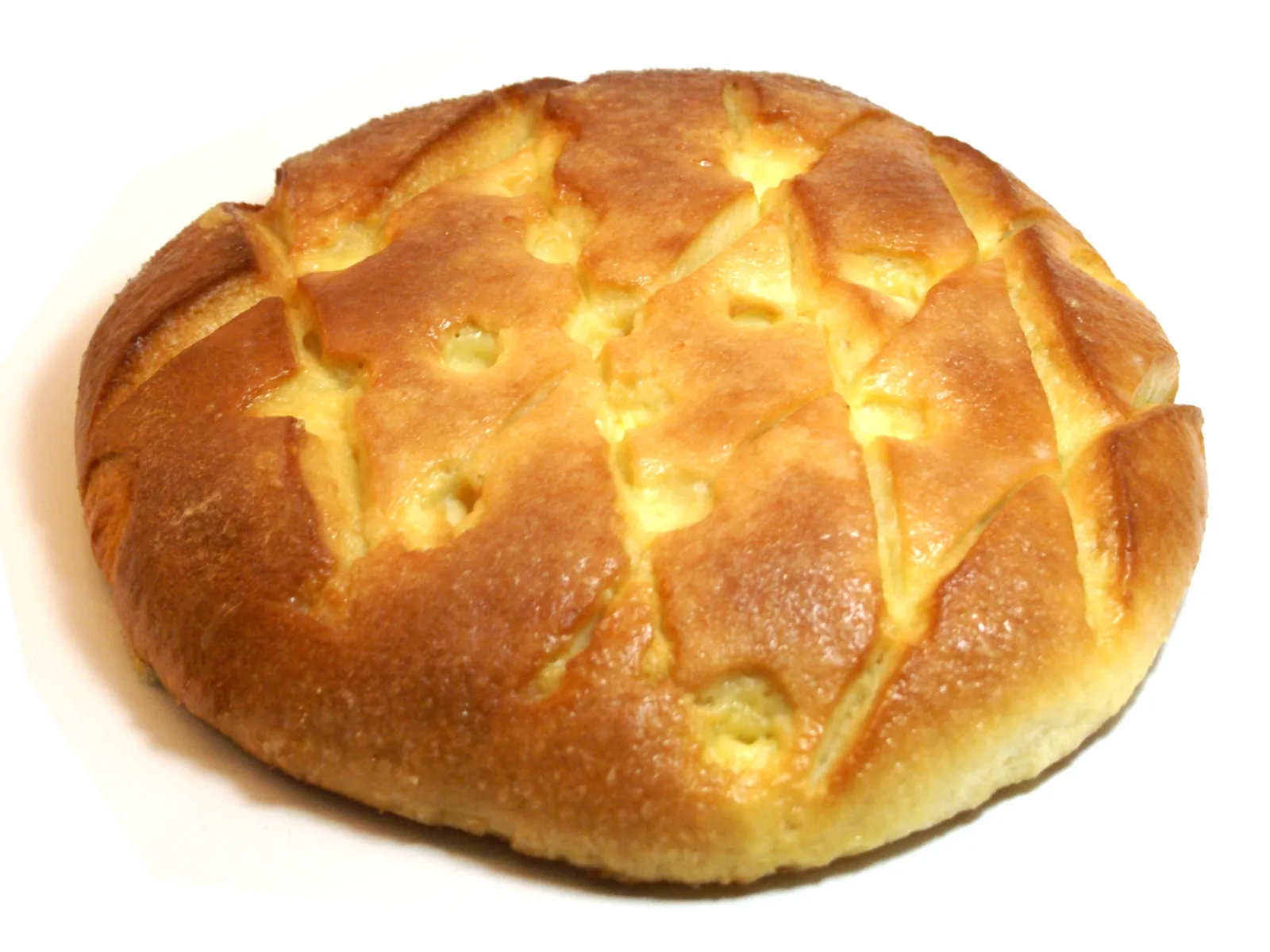
The sweet version is the famous one — the salée au sucre. The same dough with bacon and cumin instead of sugar and cream is the older salted version, served as an apéritif.

Execution Methodology & Culinary Technique

Step-by-Step Cooking Guide

Active 1h 57m
P

Prep Stage: Dough, Rise and Topping

105 Mins • Dough, Rise and Topping

Stir the yeast and 25g of the sugar into the warm milk and rest for 10 minutes until foamy. Mix the flour and salt, add the yeasted milk, the melted butter and the beaten egg, and knead for 10 minutes into a soft, smooth dough. Cover and leave in a warm place for 1 hour until doubled. While it rises, whisk the double cream with the egg yolk, crush the remaining sugar, and cut the cold butter into small flakes. Once risen, press the dough into the buttered tin, dimple the wells, brush with half the cream wash, and scatter the sugar and butter flakes; after baking, brush with the rest of the wash and rest 10 minutes before slicing.

Maestro Tip: The dough is ready when it springs back slowly after a gentle poke — under-risen dough bakes dense and heavy.

  1. 1

    Make the dough and let it rise

    20 Mins + 60 Mins rise Warm milk, about 37°C (98°F)

    Stir the yeast and 25g of the sugar into the warm milk and rest for 10 minutes until foamy. Tip the flour and salt into a large bowl, add the yeasted milk, the melted 50g of butter and the beaten egg, and mix into a soft dough. Knead on a floured surface for 10 minutes until smooth and elastic, then put it in an oiled bowl, cover, and leave in a warm place for 1 hour until doubled in size.

    The milk must feel just warm on your wrist — hotter than 43°C (110°F) kills the yeast and the dough will never rise.

    Done when: The dough is smooth, springy, and twice its original size.

  2. 2

    Shape the cake and press the wells

    10 Mins Room temperature, about 20°C (68°F)

    Heat the oven to 250°C (482°F) and butter a 28 cm round tin. Knock the dough back, roll it out, and press it into the tin, building the sides about 2 cm high. Prick the base all over with a fork, then press your fingertips into the surface to make shallow wells — the puits d'amour — or score a diamond pattern with a pastry wheel, the way the Vully bakers do.

    Press the wells deep enough to hold the cream — shallow dimples let it run off in the oven.

    Done when: The tin is lined, the base is pricked, and the surface is dimpled with wells.

  3. 3

    Brush with the cream wash

    5 Mins Room temperature, about 20°C (68°F)

    Whisk the double cream with the egg yolk. Brush the surface of the dough with half of this wash, getting it into the wells, and sprinkle with half of the crushed sugar and half of the butter flakes. Dust with cinnamon if you like it.

    Keep the second half of the cream wash for after baking — it is what gives the finished cake its shine.

    Done when: The surface is glossy with cream, with sugar and butter flakes sitting in the wells.

  4. 4

    Bake in a very hot oven

    12 Mins 250°C (482°F)

    Bake on the lowest oven rack for 10 to 12 minutes until the cake is deep golden and the sugar in the wells has melted into little pools of caramel. The cake bakes fast in a very hot oven, so watch it from 8 minutes on.

    If the top browns too fast, move the tin down a rack — do not turn the oven down, or the crumb goes heavy.

    Done when: Deep golden top, caramel pools in the wells, and a skewer pushed into the centre comes out clean.

  5. 5

    Glaze, rest and slice

    10 Mins Room temperature, about 20°C (68°F)

    Take the cake out and brush it at once with the remaining cream-and-yolk wash, which melts into a shine. Leave it in the tin for 10 minutes so the topping sets, then lift it out and cut into 8 wedges. Serve warm or at room temperature.

    Cutting it straight from the oven makes the cream run — 10 minutes of patience gives clean wedges.

    Done when: The topping is glossy and set, and the cake holds its shape when sliced.

Finishing Touches & Plating

Serve the cake warm or at room temperature, cut into wedges, with black coffee or tea — the cream wash is best while it is still glossy and soft.

Nutritional Physiology & Benefits

Nutrition

Energy

326

kcal / serving

Protein

7g

Complete AA

Carbs

34g

Complex

Fats

19g

Healthy

Per serving (8 servings · 1 serving ≈ 98 g)
Energy326 kcal
Protein7 g
Carbohydrates34 g
Fat19 g
Fibre1.3 g
Sugar9.5 g
Sodium229 mg
Per 100g
Energy333 kcal
Protein6.6 g
Carbohydrates34.8 g
Fat18.9 g
Fibre1.3 g
Sugar9.7 g
Sodium234 mg

Nutrition values are estimated — calculated from USDA FoodData Central values for the listed ingredients.

Vitamins & minerals: B vitamins (flour, yeast, egg), calcium (milk, cream), vitamin A (butter, egg yolk).

Light, Airy Crumb

The yeast dough and the slow rise give the cake a light, airy crumb that feels less heavy than a butter cake of the same richness.

Coffee-Break Energy

About 34 g of carbohydrate per slice, with cream and butter for staying power — a proper coffee-break lift.

Simple Good Ingredients

Just flour, milk, yeast, butter, egg, cream and sugar: the flavour comes from good dairy and a hot oven, not from additives.

Food Pairings

What to Eat With

To optimize nutrient absorption and elevate the sensory depth, pair with these authentic accompaniments:

Drinks

Black Coffee

Black coffee is the classic partner: its bitterness balances the sweet, buttery topping and resets the palate between slices.

Chasselas White Wine

A glass of dry Fribourg white wine, such as Chasselas, is the local choice — it is light enough not to fight the cake's sweetness.

Vegetables

Fresh Berries or Apple Slices

Fresh berries or sliced apples add a little acidity that cuts through the cream and keeps the cake from feeling too rich.

Sides

Whipped Cream

A spoonful of lightly sweetened whipped cream doubles down on the cake's own topping for a celebration serving.

Complete menu

Serve warm wedges of Gâteau du Vully with black coffee after a light lunch of soup and salad, followed by fresh fruit.

Digestive Guardrails

What NOT to Combine

To prevent digestive distress, sluggishness, or palate clash, avoid pairing the dish with these elements:

Very Sweet Drinks With the Cake

Very sweet drinks or sweet liqueurs double up on the cake's sugar and make it cloying; black coffee or unsweetened tea are better. This is general nutrition information, not medical advice.

Leaving the Cake Out All Day

A cream-topped cake left at room temperature for more than 2 hours can grow harmful bacteria; refrigerate leftovers promptly. This is general food-safety information, not medical advice.

General information only, not medical advice — consult a doctor for personal dietary decisions.

Who Should Eat It

Who Should Eat

  • General adultsA rich, sweet slice for coffee time — one slice is enough with a hot drink.
  • ChildrenSweet, soft and popular with children; cut a small slice and skip the cinnamon if they dislike it.
  • ElderlySoft and easy to chew; serve a small warm slice with coffee and keep the portion modest.
  • Pregnant womenFine when the cake is baked right through and eaten fresh; the egg is fully cooked in the oven.
  • Breastfeeding womenAn energy-rich coffee-time slice; enjoy it fresh and keep to one slice.
  • AthletesA quick energy hit after training — about 34 g of carbohydrate per slice — though it is light on protein, so pair it with yoghurt or nuts.
  • Weight gainA good choice — energy-dense, sweet and easy to eat a second slice of.
  • Weight lossRich and sweet, so take a half slice with black coffee or tea, and save the rest for another day.

Health Conditions — Adjust or Avoid

Conditions

  • DiabetesAbout 34 g of carbohydrate and 10 g of sugar per slice — take a half slice and ask a clinician about portion size.
  • High blood pressureSodium is about 229 mg per serving; keep the salt as written and skip salty sides — ask a clinician for personal advice.
  • Kidney diseaseThe cream, milk and egg add protein and potassium, which some kidney diets limit — ask a clinician about portion size before eating it regularly.
  • GoutNo purine-rich meat here as written, and the cake is vegetarian — ask a clinician if you have questions about your overall diet.
  • Stomach issuesRich cream and butter can bother sensitive stomachs; a small slice, well baked, is usually easier — ask a clinician if symptoms persist.
  • Cardiovascular diseaseAbout 19 g of fat per slice, mostly saturated fat from butter and cream — enjoy occasionally and keep to one slice; ask a clinician about your overall eating pattern.
  • Fatty liverEnergy-dense and rich in saturated fat; keep it an occasional treat and favour a half slice — ask a clinician for personal guidance.
  • Food allergiesContains gluten (wheat flour), milk (butter, cream) and egg. Naturally free of nuts, fish and soy.
  • Special therapeutic dietsVegetarian as written, but not vegan, gluten-free or low-sugar; if you follow a restricted diet, ask a clinician or dietitian before adapting it.

If you have a medical condition, consult your doctor before changing your diet.

Storage & Use

Storage & Use

How to store
Cool completely, then cover loosely with foil or a clean cloth; keep at room temperature for the first day.
In the fridge
2 days in the fridge at 4°C (39°F) or below, covered.
In the freezer
Up to 1 month, wrapped well; thaw at room temperature and warm briefly in the oven.
How to reheat
Warm slices in an oven at 160°C (320°F) for 5 minutes until the centre is warm, about 74°C (165°F); do not microwave, or the topping turns rubbery.
Freezing recommended
Only if needed — the cake is best fresh, and the cream topping softens after freezing.
Signs it has spoiled
Sour or off smell, mould on the topping, or a slimy surface — discard it.

More recipes to explore

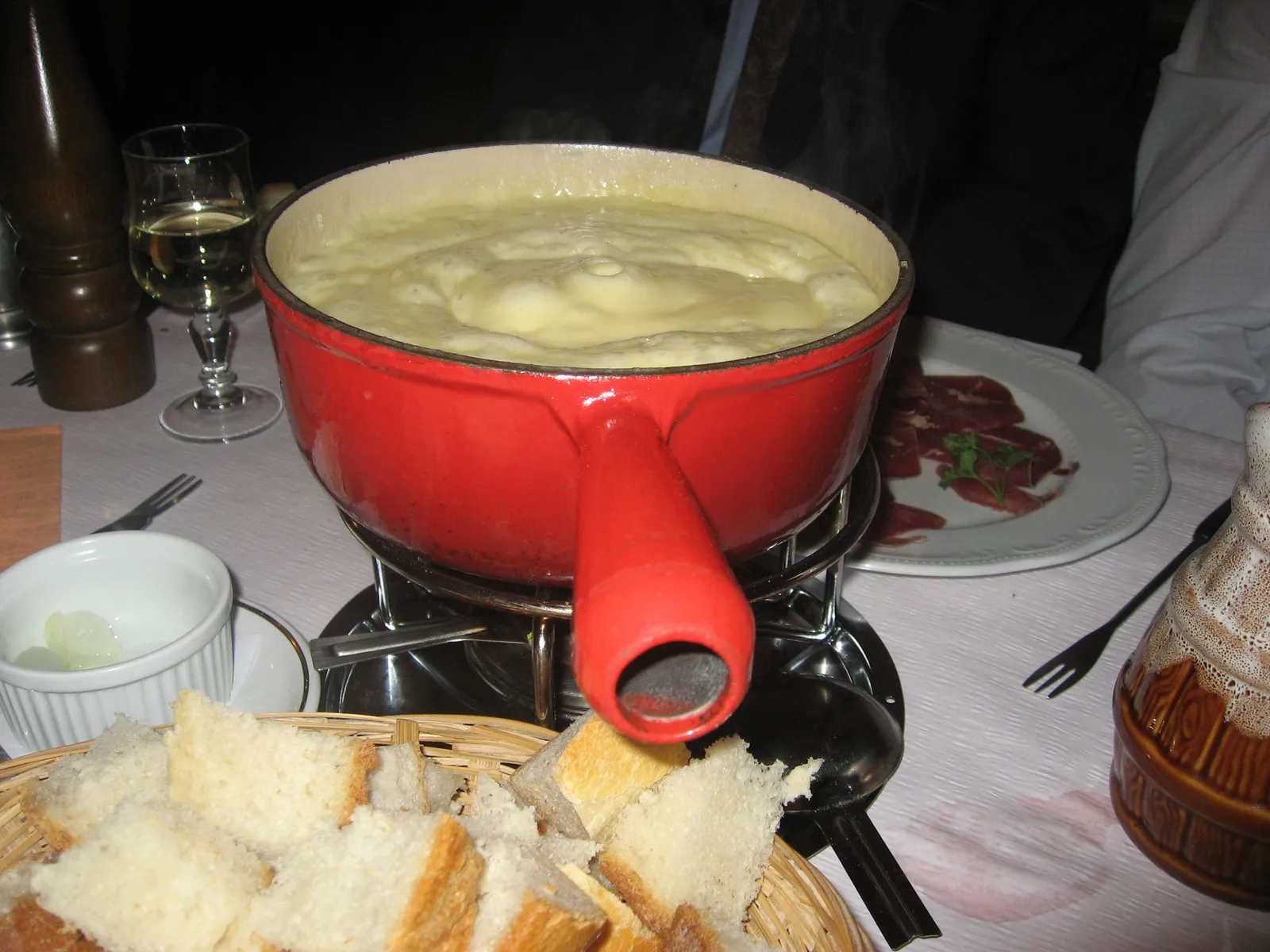
A red fondue pot of melted cheese with bread cubes and a glass of white wine Switzerland flag Switzerland 40m
Dinner •Swiss Alpine Classic

Swiss Cheese Fondue

Swiss cheese fondue is the Alps in a pot: Gruyere and Emmental melted slowly into dry white wine with garlic and a splash of kirsch, kept warm at the table while everyone dips cubes of bread into the bubbling cheese. One serving is about 310 g.

Comfort & Togetherness

Gruyere and Emmental melted in white wine, shared from one pot.

Pairs Well With
Cubes of crusty bread, boiled potatoes and cornichons on the side
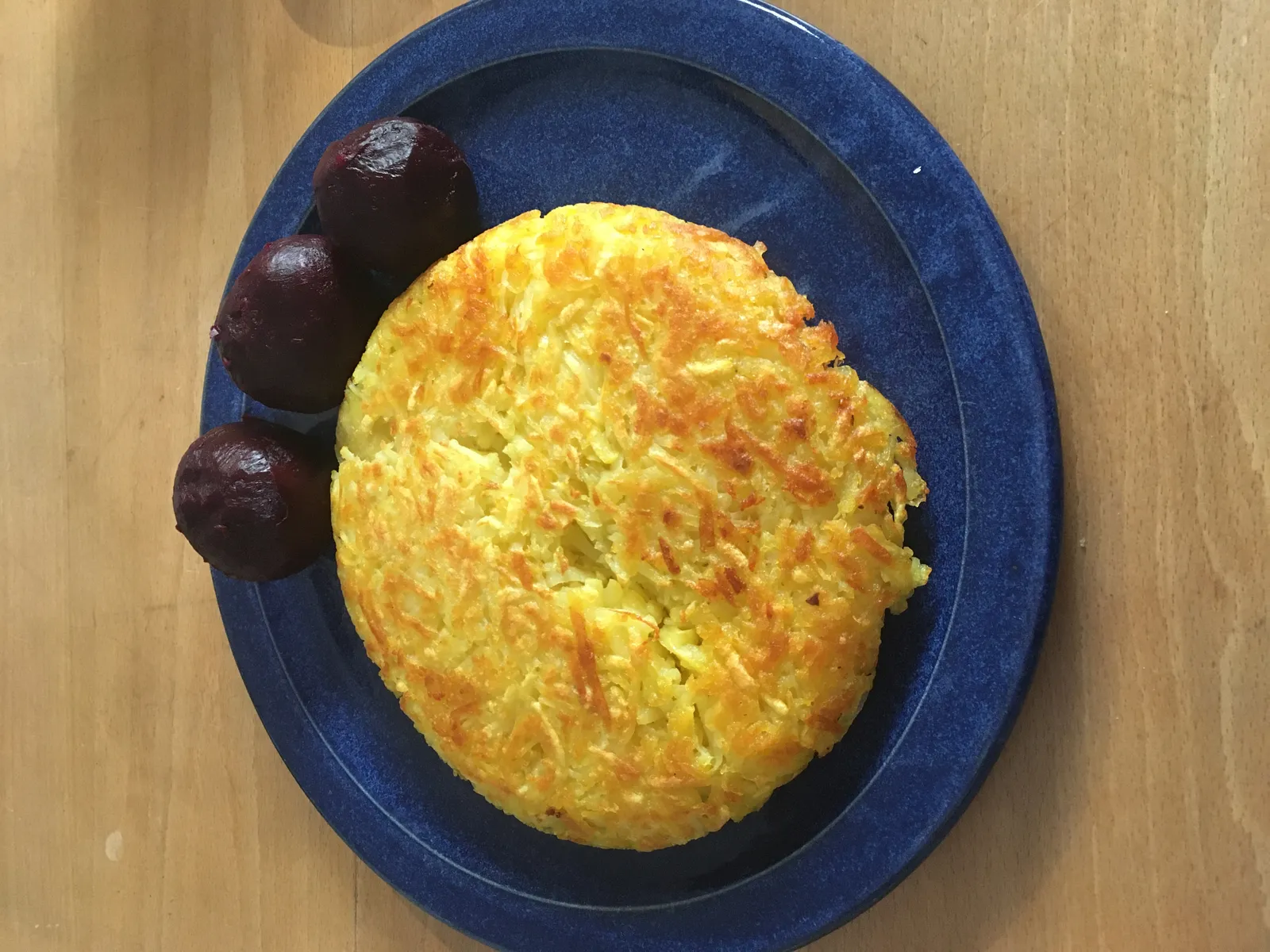
A large golden rosti potato cake on a blue plate Switzerland flag Switzerland 40m
Lunch •Bernese Farmhouse Classic

Rösti

Rösti is Switzerland's crisp potato cake: grated potato pressed into one large golden disc and fried in butter until the outside shatters and the inside stays soft, then topped with a fried egg. One serving is about 240 g.

Simple & Satisfying

One large crisp cake of grated potato, pan-fried in butter and topped with a fried egg.

Pairs Well With
A fried egg on top and a simple green salad with sharp vinaigrette
Quick Prep (<30m)
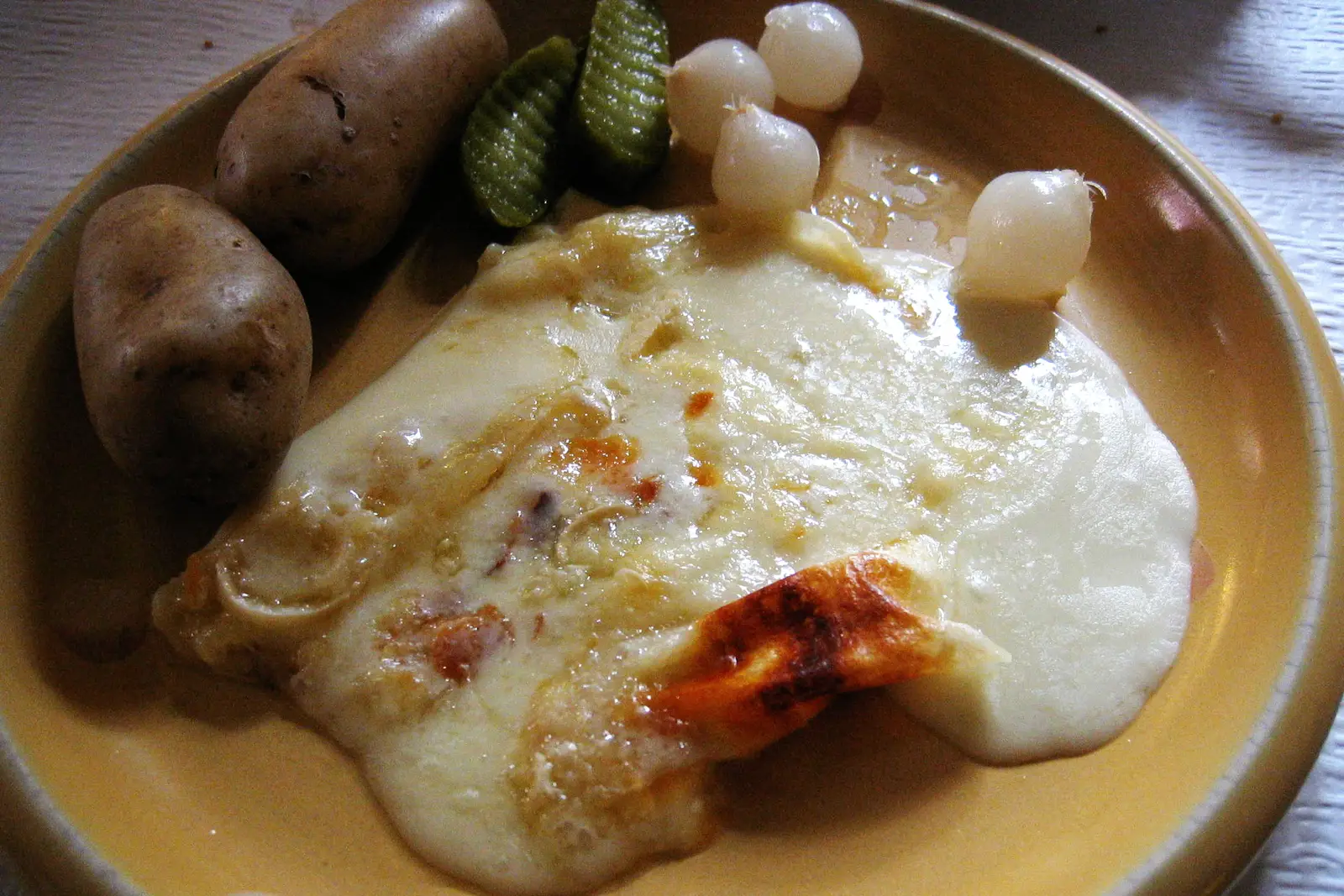
Melted raclette cheese scraped over a plate with boiled potatoes and pickles Switzerland flag Switzerland 40m
Dinner •Valais Alpine Classic

Raclette

Raclette is the Swiss Alps' other great melted-cheese meal: a half-wheel of raclette cheese is warmed until the cut face bubbles, then scraped in ribbons over boiled potatoes, with cornichons and pickled onions to cut the richness. One serving is about 365 g.

Comfort & Togetherness

Melted raclette cheese scraped over boiled potatoes with pickles.

Pairs Well With
Boiled potatoes, cornichons, pickled onions and a green salad
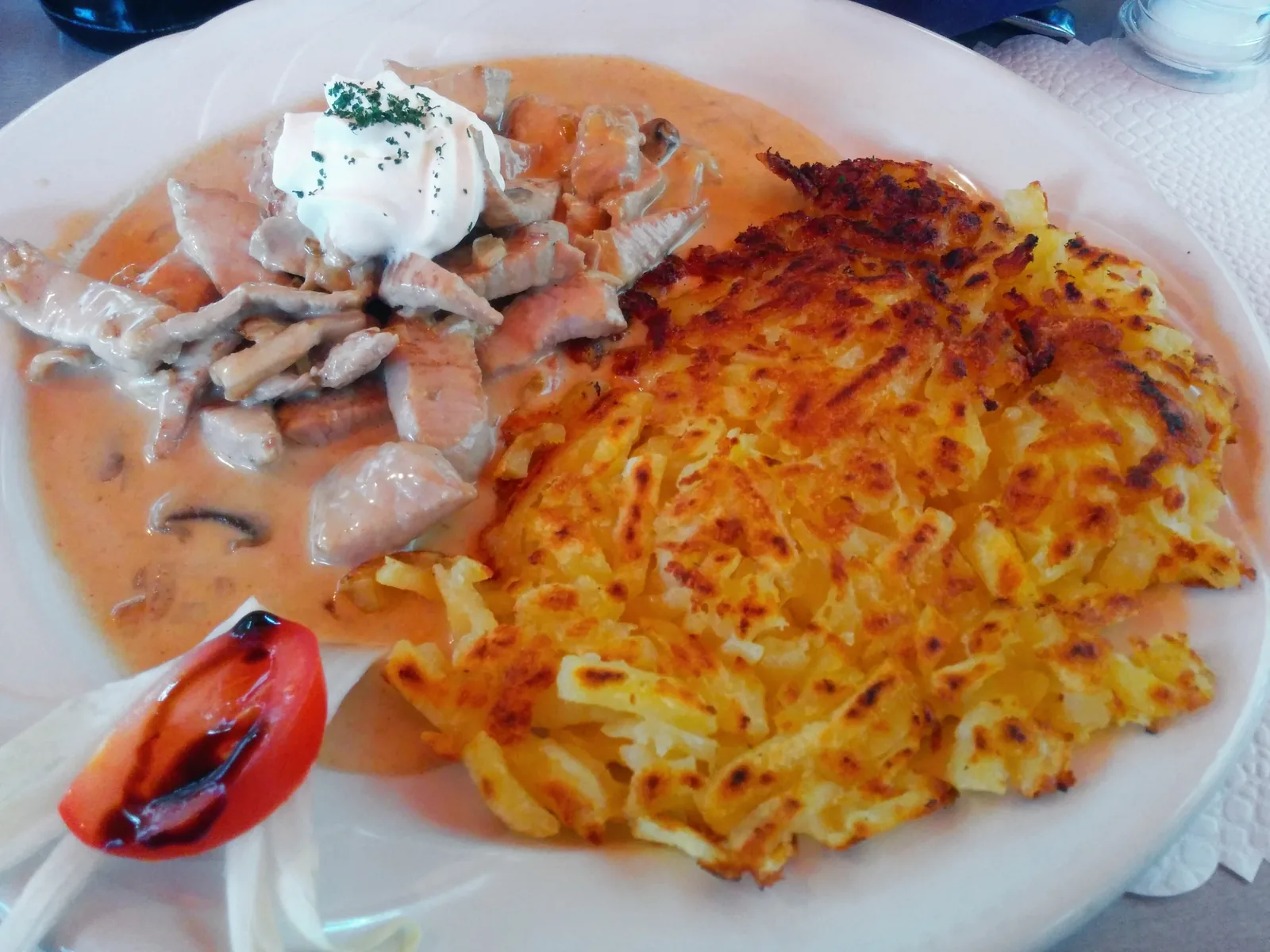
A plate of Zürcher Geschnetzeltes — veal strips in cream sauce with a dollop of cream — beside golden rösti. Switzerland flag Switzerland 40m
Dinner •Zurich Classic

Zürcher Geschnetzeltes

Zürcher Geschnetzeltes is Zurich's signature dish: thin strips of veal quickly seared, then finished in a white-wine and cream sauce with mushrooms and onion. One serving is about 335 g, before the rösti it is traditionally served with.

Rich & Comforting

Tender strips of veal in a white-wine cream sauce with mushrooms — Zurich's classic, with rösti.

Pairs Well With
Serve with golden rösti and a glass of dry Swiss white wine.
High Protein

The Dinner Gazette

Never wonder what’s for dinner again

One email a week with easy dinner ideas from around the world — ingredients, steps and nutrition, tested in our kitchen first.

Delivered every Thursday morning. Unsubscribe anytime.